Animal Affinities

Barbara J King extends anthropologist Marshall Sahlins’s concept of “mutuality of being” – a relationship in which “the individuals involved remain emotionally and cognitively taken up with each other’s lives even when they are not together” – to the animal kingdom:

In 2005, two Moulard ducks were rescued from a foie gras factory and brought to Farm Sanctuary, an organisation with safe-haven properties in New York and California. The two ducks, named Harper and Kohl, had suffered significant emotional and physical trauma at the factory.

When they arrived at the sanctuary, both animals were frightened of humans, both had the liver disease hepatic lipidosis, and each had his own serious medical issues too. For four years at the sanctuary, they were nearly inseparable. When Kohl could no longer walk or his pain be treated effectively, he was euthanised, and Harper was allowed to watch. When Harper approached the still body of Kohl, he first prodded it, but then lay down and draped his neck over Kohl — for hours. In the following days and weeks, Harper withdrew socially, preferring to spend his time alone near a small pond where he had often gone with Kohl. Two months later, Harper died, too.

This sad story moves me because it asks us to think beyond ‘the usual suspects’ at the frontiers of animal emotion and intelligence. While scientists and animal caretakers have only just begun to record qualitative data about animals’ responses to death, and to address larger questions that bear on mutuality of being, we have strong clues that suggest the fully interdependent nature of animals’ non-kin relationships. Mutuality of being need not be expressed only through language. Animals, too, can feel their lives deeply, and they might even feel the co-presence of others — whether related by blood or not — in those lives.

Previous Dish on the complexities of animal life here, here, and here.

Digital Daters

dish_pewonlinedating

Last week, a Pew survey found that one in ten Americans qualifies as an “online dater.” Among the other findings:

In general, online daters themselves give the experience high marks. Some 79% of online daters agree that online dating is a good way to meet people, and 70% of them agree that it helps people find a better romantic match because they have access to a wide range of potential partners.

Yet even some online daters view the process itself and the individuals they encounter on these sites somewhat negatively. Around one in ten online daters (13%) agree with the statement that “people who use online dating sites are desperate,” and 29% agree that online dating “keeps people from settling down because they always have options for people to date.”

Lance Whitney points to other perils:

More than half of online daters said they met someone who “seriously misrepresented” themselves in their online profile. And 28 percent said they were contacted by someone in a way that made them feel harassed or uncomfortable. Around 42 percent of women expressed that feeling, compared with just 17 percent of men.

Read a related Dish thread, “A Dating Site For Every Subculture,” here and here.

Big Pharma’s Chokehold, Ctd

Barry Werth examines how prescription drugs are evaluated for effectiveness and cost. From the intro to the in-depth piece:

Prices are set and raised according to what the market will bear, and the parties who actually pay the drug companies will meet whatever price is charged for an effective drug to which there is no alternative. And so in determining the price for a drug, companies ask themselves questions that have next to nothing to do with the drugs’ costs. “It is not a science,” the veteran drug maker and former Genzyme CEO Henri Termeer told me. “It is a feel.”

There are inherent problems with a system where the government is one of the biggest payers, and where doctors, hospitals, insurers, pharmacy benefit managers, drug companies, and investors all expect to profit handsomely from treating sick people, no matter how little real value they add to patients’ lives or to society.

Drug companies insist that they need to make billions of dollars on their medicines because their failure rate is so high and because they need to convince investors it is wise to sink money into research. That’s true, but it’s also true that the United States, with less than 5 percent of the world’s population, buys more than 50 percent of its prescription drugs. And it buys them at prices designed to subsidize the rest of the industrial world, where the same drugs cost much less, although most poor governments can’t afford them at even those lower prices.

Still, we have to ask: When is the high price of a drug acceptable? Perhaps it is one thing when Vertex [Pharmaceuticals] charges $841 for two pills a day—every day of a patient’s life—for medicine that will save that life, and quite another when [French drug maker] Sanofi offers a cancer drug that is twice as expensive as its alternative but offers no obvious advantages.

Previous Dish on the subject here. Update from a reader:

Your post that touched on Vertex Pharmaceuticals was startlingly well-timed for me. I am a devoted Dish reader. I also have cystic fibrosis, and at this very moment I am doing my treatments for the condition at a hotel, where I’m staying prior to my appointment for a clinical trial of Vertex’s next CF drug in the pipeline.

Your entry brings up several important further issues and questions, some of which are covered in the remainder of the Werth piece. Vertex’s research has been heavily supported by the Cystic Fibrosis Foundation, a charity that supports CF research, so it’s startling to see a charity-funded drug coming in at $300K per year. Vertex has also pledged to provide its drugs free of charge to any patient who cannot afford them or whose insurance will not cover them, which causes one to wonder whether more and more insurance companies would take a look at the situation and decide there’s no reason for them to cover the drugs.

Finally, Vertex has based its pricing based in part on the costs of other CF treatments that patients would theoretically – and hopefully – no longer need. However, living with CF, you learn quickly that if you don’t adhere to your treatment regimens, you can lose your health pretty rapidly, and I bet a lot of patients will be reluctant to simply cease all their other treatments right away, preferring to take their time confirming that Vertex’s drugs work as well as advertised before placing all of their eggs in the Vertex basket.

Thanks for your coverage of this important issue. While CF is a relatively rare disease, it has long been important as a harbinger of emerging trends in medicine, and this is certainly another instance in which that is the case. As our capabilities increase, more personalized drugs will become available or at least possible to produce for a wide range of conditions and diseases – but at what price?

A Moment After The Sun

EW1016558881B_montage_cropped

For Lee Billings, the author of Five Billion Years Of Solitude: The Search For Life Among The Stars, space exploration offers “the only chance available for life on Earth to somehow escape a final, ultimate planetary and stellar death”:

We really owe our progress and our current state not only to our biology, but also to our planetary resources – to the fossil fuels we burn, the ores we mine, the rich diversity of other species we exploit, and so on. We’re presently using most of those resources in very unsustainable ways. We’ve already plucked all the low-hanging fruit, and much of what we are burning and mining and exploiting now is only available to use through our already sophisticated technology.

So if we somehow drive ourselves extinct, if all our great edifices collapse, I think it would be very difficult if not impossible for anything else to rise up and rebuild to where we are now, even given a half-billion or a billion years. People can and will disagree with me about that, but my position errs on the side of caution, on the side that says humanity’s present moment in the Sun is too valuable to treat as something disposable.

And before the Sun dies out, we will continue to get incredible footage like this:

(Photo: Image of the Earth and Moon taken by the MESSENGER spacecraft from a distance of 61 million miles. By NASA/Johns Hopkins University Applied Physics Laboratory/Carnegie Institution of Washington)

A Front Row Seat In Hell

Timothy George considers the cottage industry of “Hell Houses” – theatrical productions of the underworld designed to terrify congregations into remaining chaste and faithful:

There are many variations on this theme: a hayride through hell, a demon-guided stroll in a cemetery, a train trip of terror, and so on—but all presentations have three things in common. First, there is a series of mini-dramas, gruesome, death-centered tableaux always presented in lurid, edgy (some say cheesy), soap-opera style. These run the gamut from smoking-related cancer deaths to school shootings, teen suicides, fiery car crashes, botched abortions, homosexual teens dying of AIDS, and all kinds of family traumas—domestic violence, divorce, sex abuse (including incest), and the like. The aim of the skit is to show the truth of the New Testament dictum, “The wages of sin is death” (Rom. 6:23), not only physical death in this world, but also eternal punishment in hell in the next.

After the “incidents” come the consequences, namely, a visit to hell. “Hell” is a dark, smoke-filled room complete with strobe lights and the shrieks of tortured souls. The dénouement is a Mel Gibson-esque portrayal of the crucifixion followed by a personal appeal to accept Jesus Christ. Sometimes an actor impersonating Jesus makes the appeal himself in a breath-minted, nose-to-nose encounter with those presumably shaken by what they have seen.

The demand has grown since Jerry Falwell pioneered the idea in the 1970s:

Colorado-based Keenan Roberts has led the way with his publication of a how-to kit for pastors and youth ministers who want to put a little scare-mongering into their teen evangelism program. For several hundred dollars you can buy this resource with directions on how to construct an effective Hell House. There are scripts for seven rooms and instruction on how to present a graphic hell scene and a closing “come to Jesus” scenario. If you want some help putting on a sizzling evangelism event this Halloween, then Roberts’ Hell House Outreach Kit just might be what you are looking for! This kit, available in all fifty states and twenty-six countries around the world, is sold to church leaders who want to “get prayed up and powered up” and “prepared for the ride” of their ministry life. The kit comes with this admonition: Shake your city with the most “in-your-face, high-flyin’, no denyin’, death-defyin’, Satan-be-cryin’, keep-ya-from-fryin’, theatrical stylin’, no holds barred, cutting-edge” evangelism tool of the new millennium!

“A Signpost In These Strange Times”

Reading Walker Percy’s novel The Moviegoer alongside Jimmy Carter’s “malaise” speech, Will Di Novi finds the book fitting for our own downbeat era:

[The novel’s protagonist] Binx Bolling is at first glance an unusual poster boy for the current depression, an era in which the quest for self-realization might seem an unaffordable luxury. But the search for meaning has never ebbed and flowed according to the fluctuations of the stock market. Millions of Americans led interior, profoundly solitary lives during the bubble years that started the twenty-first century, and they now confront even more acute feelings of dislocation. Binx is a soulful and profane standard-bearer for that disillusionment, “smelling merde from every quarter” of American life. He fails in his half-hearted love affairs. He confounds his family with his disregard for rectitude and tradition. Alienated from both the Old South and the New America, Binx staggers towards the same sobering realization that dogged Jimmy Carter in the summer of 1979. ”We’ve discovered that owning things and consuming things does not satisfy our longing for meaning,” Carter preached in his speech. “We’ve learned that piling up material goods cannot fill the emptiness of lives which have no confidence or purpose.”

His concluding thoughts on the novel’s enduring lessons:

“Whenever there is a chance of gain there is also a chance of loss,” Binx declares in the frenzied aftermath of a car crash. “Whenever one courts great happiness, one also risks malaise.” There’s something strangely comforting about Binx’s equanimity, his stoicism in the face of forces beyond his control. Like Binx and his Mad Men contemporaries, unaware of the assassinations and race riots and terrifying hairstyles lurking just around the corner, we have no idea what will emerge out of the seismic changes convulsing our national governments and our global economy. Consider The Moviegoer a signpost in these strange times, a beacon lit by the eternal flames of Percy’s imagination: the alienation and despair that persist in times of plenty and paucity alike; the power of language and humor to still these tremors and give them meaning. The malaise will endure, he warns us. The search will continue.

Popenomics

Reviewing Papal Economics by Maciej Zieba, Michael P. Orsi surveys the economic philosophy of pontiffs through history up to recent times:

[Author Maciej] Zieba shows how John Paul II believed that democracy and capitalism were good for the human person. Having come out of a socialist state, the Pope recognized the dehumanizing effect that an un-free political system has on personal creativity and the creation of wealth. The Pope, he claims, in no way promoted a “third way” redistributionist economic system. He rather held to the “ordoliberal” principles, perfected in post-World-War II Germany. Ordoliberals maintain that the role of the state is to establish the rules for a real free market in which capitalism and free competition can cooperate for the common good. …

Yet John Paul was no libertarian, as Zieba explains: “The libertarian approach to the right of private property, through theoretically not an absolute right, is in practice free of social and moral obligations.” Instead, Catholic social teaching calls for the state to make available to all its citizens the bounty of the earth which may be attained through work. In Laborem Exercens, the Pope says humans express themselves in their work. In no way does the Pope call for a welfare state, but he does ask that governments help to provide opportunities for their citizens to earn a decent living. To this end he urges just laws, a fair economic system, sensitivity to and the protection of the rights of minorities, and aid for those who fall below the poverty level.

Meanwhile, the current Pope is doing his best to put his own house in order:

The pontiff may be ostentatiously cutting back, but not without a fight. The Catholic church has a long history of extravagance, and sometimes the old ways are slow to die. Though Pope Francis started off by setting new simple sartorial standards, when it comes to throwing out real estate the Vatican elite may prove more resistant. There is a story doing the Vatican gossip rounds of a cardinal turning up in a church to celebrate mass and being offered a splendid red cappa magna to wear. A cappa magna is the liturgical equivalent of an opera cape – all billowing watered silk and a train that would rival Princess Diana’s wedding dress. The cardinal refused, saying: “I sold mine after the second Vatican council, and gave the money to the poor.” The master of ceremonies gave the curt reply: “It’s a shame you didn’t sell one of your two villas, and give the proceeds from that to the poor.”

It may be just a story, but it expresses the feeling of double standards within the Vatican community over self-conscious economy. The current German row, perhaps a Vatican “duck house” moment, is worth considering in the context of the power play between the Vatican and the German wing of the Catholic church. The independent wealth of the German church comes from the state – it is tax funded. In 2012 the Catholic church in Germany took $7.1bn in tax revenue, from the country’s 23 million declared Catholics who by law pay 8-10% of their income to the church. The autocratic nature of the Vatican means that even if a bishop can clearly afford it, if it doesn’t wash with His Holiness’s vision you run the risk of being defrocked.

Previous Dish on Francis’s and Benedict’s views on economics here and here.

Friendship At First Sight

Ann Friedman believes in not just choosing your friends, but actively courting them:

[M]ost of our courtship narratives are still romantic, which really tends to obscure the importance of friendship’s early stages, and downplay the thought and skill that goes into cultivating meaningful platonic relationships. We tend to second-guess ourselves when we feel that jolt of friend attraction.

A woman I know who recently moved from Houston to Los Angeles was telling me about a woman she met and really wanted to befriend.

“It seems like she has so many friends already though,” said the new girl in town. “Do you think she’d mind if I asked her to hang out?” “You have to ask her!” I said. I have heard many women describe the first time they met a friend and just knew they were destined for years of inside jokes and hang times on the couch and late-night party antics.

“Nearly all friendships are based on a spark of mutual attraction. Some people describe platonic love-at-first-sight stories, wherein they were instantly drawn to a new acquaintance and just knew they would befriend her,” says Carlin Flora, author of Friendfluence: The Surprising Ways Friends Make Us Who We Are. Still, she says, “We often drift into friendships, especially when we’re young and in a work or school setting that makes it easy to automatically ramp things up without having to make a concerted effort to develop the friendship. The main point of my book is that we should be more conscious of how and whom we befriend, since these people have a huge impact on our life trajectories.”

The Easiest Characters To Write

The evil ones, according to C.S. Lewis. Micah Mattix finds this passage from his A Preface to Paradise Lost that explains why:

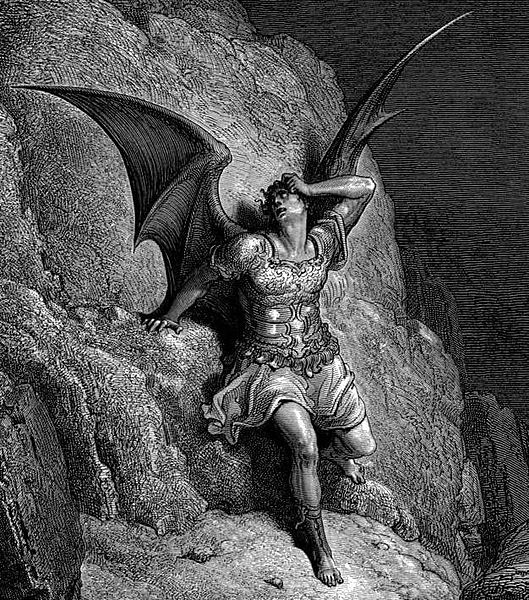
Satan is the best drawn of Milton’s characters. The reason is not hard to find. Of the major dish_satancharacters whom Milton attempted he is incomparably the easiest to draw. Set a hundred poets to tell the same story and in ninety of the resulting poems Satan will be the best character. In all but a few writers the “good” characters are the least successful, and every one who has ever tried to make even the humblest story ought to know why. To make a character worse than oneself it is only necessary to release imaginatively from control some of the bad passions which, in real life, are always straining at the leash; the Satan, the Iago, the Becky Sharp, within each of us, is always there and only too ready, the moment the leash is slipped, to come out and have in our books that holiday we try to deny them in our lives. But if you try to draw a character better than yourself, all you can do is to take the best moments you have had and to imagine them prolonged and more consistently embodied in action.  But the real high virtues which we do not possess at all, we cannot depict except in a purely external fashion. We do not really know what it feels like to be a man much better than ourselves. His whole inner landscape is one we have never seen, and when we guess it we blunder.

Noah Millman rather strenuously objects:

I’m genuinely perplexed what Lewis is talking about. Is he under the impression that the history of literature is bereft of heroes? Presumably, those would be people possessed of “high virtues” if the phrase has any meaning at all. I suspect Achilles wouldn’t pass muster for him as “good” – but if he’s not possessed of “high virtues” then I don’t know what the word means. Or does he think that bourgeois virtue is pale and boring? Is he under the impression that Dorothea Brooke is an uninteresting character? Or Leopold Bloom? Or John Ames?

And what about those evil characters? Iago, yeah, he’s a pretty rotten piece of fruit. But is Othello evil? What about Anna Karenina? Or Captain Ahab? For that matter, is Edgar really less-interesting than Edmund? Really? Are you sure?

And dare I mention in this regard Huck Finn’s own estimation of his damnedness, versus our own estimation of his heroism?

Saying “all it takes” to write a successful character is to release one’s own pent-up desire to do evil is akin to saying that “all it takes” to make a hit movie or television show is to show a little skin. Which is to say: it isn’t correct at all. Writing a successful villain is extremely difficult – because writing any kind of successful character is extremely difficult.

(Depiction of Satan, the antagonist of Milton’s epic poem, by Gustave Doré circa 1866)

How Faith Becomes An Ideology

Eric W. Dolan spots a remarkable recent homily from Pope Francis, a riff on these lines from the Gospel of Luke: “Woe to you, scholars of the law! You have taken away the key of knowledge!” He interprets the phrase as a critique of Christians who turn belief in God into an ideology. From the Vatican Radio transcript:

“The faith passes, so to speak, through a distiller and becomes ideology. And ideology does not beckon [people]. In ideologies there is not Jesus: in his tenderness, his love, his meekness. And ideologies are rigid, always. Of every sign: rigid. And when a Christian becomes a disciple of the ideology, he has lost the faith: he is no longer a disciple of Jesus, he is a disciple of this attitude of thought… For this reason Jesus said to them: ‘You have taken away the key of knowledge.’ The knowledge of Jesus is transformed into an ideological and also moralistic knowledge, because these close the door with many requirements.”

… “The faith becomes ideology and ideology frightens, ideology chases away the people, distances, distances the people and distances  the Church from the people. But it is a serious illness, this of ideological Christians. It is an illness, but it is not new, eh? Already the Apostle John, in his first Letter, spoke of this. Christians who lose the faith and prefer the ideologies. His attitude is: be rigid, moralistic, ethical, but without kindness. This can be the question, no? But why is it that a Christian can become like this? Just one thing: this Christian does not pray. And if there is no prayer, you always close the door.”

“The key that opens the door to the faith,” the Pope added, “is prayer.” The Holy Father warned: “When a Christian does not pray, this happens. And his witness is an arrogant witness.” He who does not pray is “arrogant, is proud, is sure of himself. He is not humble. He seeks his own advancement.” Instead, he said, “when a Christian prays, he is not far from the faith; he speaks with Jesus.”

Dreher comments:

As you know, I have been skeptical of Pope Francis, but this sermon of his really spoke to me. I had made an ideology of my Catholicism. I hadn’t meant for it to be that way, but that’s what happened. It came about mostly because I was rightly (I still believe) concerned with the loss of the sense of the holy, and of morals and doctrines, in contemporary Catholicism. But I made the cardinal error of ceasing to pray, or to pray as often or as well as I should have. I mistook talking and thinking about the faith for being serious about the faith. Ideologization helped make my faith brittle. I’ve found that the Orthodox approach to faith makes it much harder for people like me to make the ideologue’s error, though the temptation is always there.

It is hard to be mindful of right doctrine, and right morals, while at the same time remembering that the purpose of the Christian faith is not to learn how to behave morally. But it’s necessary. I am certain that Francis is onto something when he talks about how serious prayer — by which he means an encounter of the soul with the living God — is the antidote to ideological religion.

Read the extensive Dish coverage of Pope Francis here and here.