How Blogging Makes You A Better Writer

Maureen O’Connor notes growing evidence that, instead of rotting kids’ brains, “technology is making [them] smarter by encouraging hyper-literacy”:

As writing becomes technically easier (try writing 1038 words by hand) and information more abundant, students not only get better at schoolwork — but improve writing and critical thinking skills in their free time. Further studies suggest that 40 percent of student writing occurs outside of the classroom, “everything from penning TV recaps to long e-mail conversations to arguments on discussion boards.” When schools encourage students to blog, the hobby can have a powerful effect on verbal test scores; social feedback motivates students to finesse their rhetorical skills.

When I started blogging – writing as clearly, briefly and colloquially as possible – I worried that my ability to write longer essays or books would suffer. The brain muscles associated with longer compositions, structured essays, or book-length arguments like Virtually Normal might atrophy. My writing might become what Leon Wieseltier would derisively call typing (even as I have never witnessed a faster writer than Wieseltier).

But I was wrong. What it did was help me unclog some of my longer pieces and books – I wrote The Conservative Soul while blogging round the clock – and make them clearer and more succinct. The thing about blogging is that it forces you to stop throat-clearing, its chatty, provisional nature mandates simplicity and clarity, and it punishes long-winded guff. I’ve found that the writing skills of interns improve much faster with blogging than they did with old media writing – and I’m lucky enough to have witnessed both in action as a one-time editor of The New Republic and as the pied piper of the Dish. In other words, Evgeny Morozov could do with blogging more. It would help his writing.

Clive Thompson expands on how educators are catching on to the benefits of blogging:

One reason students phone in their school assignments – and only halfheartedly copy edit and research them – is that they’re keenly aware that there’s no “authentic audience.” Only the teacher is reading it. In contrast, academic studies have found that whenever students write for other actual, live people, they throw their back into the work – producing stuff with better organization and content, and nearly 40 per cent longer than when they write for just their instructor.

Smart teachers have begun to realize they can bring this magic into the classroom. In Point England, New Zealand – a low-income area with high illiteracy rates – the educators had long struggled to get students writing more than a few sentences. So they set up blogs, had the students post there and, crucially, invited far-flung family and friends to comment. At first, the students grumbled. But once they started getting comments from Germany and New York, they snapped to attention.

Affording Good Parenting

Derek Thompson points to research showing that the marriage gap between the rich and poor is creating yet another problem:

[T]here is a persistent and widening parenting gap in America. Rich college-educated families score well on parent quality tests, according to a new paper by Brookings scholars Richard Reeves and Kimberly Howard. But poor, less-educated, and often-single parents are falling short, spending less (and less-quality) time with their kids. Just 3 percent of parents in the bottom quintile – and just three percent of single moms and dads — scored among the best parents in the time-use research collected by Reeves and Howard.

He writes that intervention may be required:

Americans seem less comfortable with direct efforts to make bad parents better, such as sending professionals into houses to teach parenting skills. Families, after all, are considered the most private institution there is. But Reeves and Howard focus on precisely these house visits as an answer to the parent gap.

Timothy Taylor considers the potential of such visits in the US, noting that “other countries like Netherlands and the United Kingdom have much more active programs of home visitation for parents of newborns”:

In the U.S., the Affordable Care Act passed in 2010 allocates $1.5 billion over five years for increased home visitation programs. Studies by the Department of Human Services have identified several home visitation programs that had some effect at least one year after enrollment. A private organization called the Nurse Family Partnership has been testing and expanding approached to home visitation for several decades. Under these kinds of programs, new parents and parents of pre-school children might receive biweekly home visits invitations to regular meeting groups of new parents, and perhaps also some access to educational books and toys.

Again, the evidence about long-term efficacy of such programs, especially at a large scale, is still in a nascent stage. But these authors offer a radical thought: It may well be true that the government should reallocate a substantial share of the money that it currently spends on preschool programs and move it toward parental visit programs for families with very young children.

Kay Steiger is glad the issue is gaining attention, and adds another suggestion:

[T]he gap the media spends the most attention on — those pesky high-income helicopter parents with their attachment parenting styles and how they compare to the “rest of us” who read newsweekly magazines — isn’t really where the focus should be. (Surprise.) Rather, it’s those at the bottom of the income ladder who have the the most to gain from small gains in parenting skills.

The authors lay out some really great solutions — universal pre-K, nursing visits — and miss a pretty major one: Paid family leave. But the idea that parenting is a gap to which attention needs to be paid is worth considering.

The Old Bros Club

Ann Friedman senses a shift in the lexicon:

Mainstream news has been dominated lately by stories lamenting “bro culture” — a term that used to be found solely on feminist blogs — everywhere from Silicon Valley to the U.S. military to the financial sector to pockets of academia. Last week, National Journal published an examination of the military’s fratty atmosphere under the headline “How the Military’s ‘Bro’ Culture Turns Women Into Targets”; and in Sunday’s New York Times, reporter Jodi Kantor examined Harvard Business School’s attempt to de-bro itself. Also over the weekend, at a TechCrunch-sponsored hackathon, two “grinning Australian dudes” got onstage and pitched a “joke” app called Titstare. (Yeah, it’s exactly what it sounds like.) “It’s as if,” wrote the Atlantic Wire, “the brogrammers seen here didn’t know their audience wasn’t all bros like them.”

“Bro” once meant something specific:

a self-absorbed young white guy in board shorts with a taste for cheap beer. But it’s become a shorthand for the sort of privileged ignorance that thrives in groups dominated by wealthy, white, straight men. “Bro” is convenient because describing a professional or social dynamic as “overly white, straight, and male” seems both too politically charged and too general; instead, “bro” conjures a particular type of dude who operates socially by excluding those who are different. And, crucially, a bro in isolation is barely a bro at all — he needs his peers to reinforce his beliefs and laugh at his jokes. That’s why the key to de-broing our culture just might be the straight white guys who aren’t bros.

Sick Of Turbines

Kristen French covers “wind-farm syndrome”:

Those who believe in the syndrome say it’s caused by sound waves released when the giant turbine blades collide with the wind—not just the audible whooshing noise, but the rumbling vibrations created by a low-­frequency sound, or infrasound. Nonbelievers, including most scientists and doctors, say it doesn’t exist, and the Centers for Disease Control and Prevention do not recognize it as a legitimate syndrome.

So what is causing the health issues?

Large-scale population surveys conducted by scientists in Sweden and the Netherlands have found that stress and sleep disturbances were more likely if the turbines were visible and less likely if the individuals benefitted economically from them. Other studies found that having a bad attitude about the turbines and subjective sensitivity to noise were more likely to lead to annoyance and negative health effects than actual exposure to audible sound or infrasound. (Back in 2007, three years before the Falmouth turbines were even built, a handful of residents expressed concern about the potential for illness after reading about symptoms online, and those health effects were even written up in the local newspaper.) And in recent lab tests, subjects who were told to expect side effects from infrasound ahead of time felt some of those symptoms even when they were exposed to sham infrasound.

Simon Chapman, an Australian professor of public health at the University of Sydney, believes wind-turbine syndrome is just the latest in a series of 21st-century technophobias (think of the well-publicized fears about microwave ovens, cell phones, cell towers, and Wi-Fi). “If wind farms genuinely did pose a problem to people who lived near them, you would expect to see a relationship which was fairly consistent from country to country, wind farm to wind farm,” Chapman says, “and that’s far from the case.” In Australia, the majority of complaints come from just six of the country’s 51 wind farms, according to his research. “The six wind farms where people have been getting sick are the ones where the anti-wind folks have been most active, with high-­profile media attention amplifying the word-of-mouth stuff,” he says.

A Pre-Tenderized Meal, Ctd

On the creepy and charming old chap profiled above:

Meet 73-year-old Arthur Boyt, notorious resident of remote Bodmin Moor in Cornwall, and connoisseur of cooking and eating roadkill – nothing is too far fetched or fanciful to end up on his plate. In this film we take a trip into Arthur’s universe and learn how to cook a cracking badger casserole, as well as find out how best to prepare polecat meat before cooking.

Money quote from Arthur:

I ate a badger once that someone else had picked up because they wanted its skull. It was blown up like a horse on the western front and it smelt rather horrible. When I cut into it, the flesh was green but nevertheless I persevered and stewed it. It made the house smell like the old fashioned mental hospitals used too, but boy it tasted delicious!

A few readers add to the thread:

One of my best cocktail party stories recounts the night 25 years ago that my wife hit a deer in Wisconsin (that roadkill could even be a cocktail party topic betrays the fact that I still live in the Upper Midwest).

In Wisconsin, you are allowed to strap a car-harvested deer onto your roof top and bring it home so long as you call the accident into the state patrol and obtain a proper deer tag. The damage to car and carcass was minimal (the car was still drivable, and the blunt force impact didn’t draw blood). It was too late at night to bring the deer straight to the butcher, and it was too warm a night to leave the undressed buck alone until morning. I knew that I needed to gut the deer to avoid the meat spoiling, but (not being a hunter) I didn’t have a clue how to do the job. More importantly, my wife and I were living in a small apartment in downtown Madison, and there was no place where we could even hang the deer (a practice that facilitates the gutting and keeps the dogs away).

A phone call to my father provided a detailed step-by-step; a second call to one of my wife’s former roommates provided the tree. I’ll spare my fellow Dishheads the grizzly details. Suffice to say the job was finished around 4am and the deer was left to hang in the backyard of a rented house just off campus.

But it didn’t hang very long. Unfortunately, the person who said we could borrow the tree forgot to notify his housemates. And the tree was very close to the back of the house, within view of the kitchen windows. So imagine the housemates’ surprise early the next morning when they went to the sink for some coffee pot water, looked out the window, and found themselves face to face with Bambi (with a rope tied around its neck and its tongue sticking out). Did I mention that this housemate was a vegan? Talk about awkward …

P.S. The venison was delicious, especially the bratwurst.

But a member of the New Zealand Meat Industry Association warns:

No – it is NOT OK to eat roadkill. It is potentially dangerous. When an animal is hit by a vehicle, bacteria in the internal organs will probably spill into the muscle (meat). The hide is also likely to be damaged, again, pushing bacteria into the muscle (meat). Some animals have musk glands, which are not going to make eating an enjoyable experience. A lot of wild animals are sick with diseases that are kept under control in domestic livestock (TB in particular). And a lot of wild animals that are killed on the roads are there because they have been poisoned and are dying. In short, roadkill is contaminated and possibly poisonous.

If you repeat bloggers’ comments that it is OK to eat roadkill, could you please, as a public service, also point out that there are real risks.

As If Syria Weren’t Dangerous Enough

Annie Sparrow recently bore witness to the country’s damaged healthcare system:

No vaccination means outbreaks of measles, and no pharmacies mean people dying of hypertension and heart disease. Food insecurity leads to malnutrition, rickets and increased vulnerability to infectious diseases. No contraception and no maternal health care lead to unplanned pregnancies at a time when antenatal and maternal health is denied. Without specialist surgeons, lacerations become loss of function, wounds become amputations.

If we can’t stop the killing in Syria, let’s at least pry open the borders so that aid and medical care will flow freely into Syria, instead of refugees flowing out, and we might at least curtail the spiraling of Syria from a middle-income country into a developing country with the diseases of poverty. And as the world mobilizes to stop the Syrian military’s use of chemical weapons, let us also mobilize to stop its use of another weapon of mass destruction: the deliberate attacks on medical care.

The Catastrophe In Colorado

A reader sends the startling video seen above:

I know that natural disasters aren’t a natural fit with the Dish, but you should know that this isn’t your typical “flash flood out of the mountains”, where a few cars get washed away. What happened here on the Front Range of the Rockies was cataclysmic (some were saying “biblical”).

It really started a week ago Monday, when, as the weather folks say, a plume of tropical moisture from Mexico set up over the Front Range. Then, a cold front moved in and stalled. In Boulder, more than three inches of rain fell in three days, quite unusual at any time of year but just crazy for September, which is normally one of the driest months.

Then things got very interesting.

From Thursday-Friday, we got over 11 inches of rain – 9 inches in a 24-hour period. As a result, all of the roads in Boulder County leading into the mountains were washed out. Estes Park and Lyons were completely isolated because bridges had washed away. Longmont was cut in half by the St. Vrain creek, with nearly 6,000 households forced to evacuate. Many streets were closed in Boulder, and many remain closed nearly a week later.

And of course all that water must go somewhere, in this case the South Platte River. Over last weekend, every city and town along the river was flooded. In several towns, the wastewater treatment plants were beached, and as a consequence they now live in “no flush zones”: no water down any drain (including toilets of course), no washing dishes, no laundry.

Highway 34, which runs through Big Thompson River to Estes Park, had miles of the roadway completely destroyed. It will take months, maybe a year, to repair. Early reports note 1,500 homes destroyed, 17,500 damaged, and 12,000 people evacuated. Starting on Saturday, over 20 Blackhawk and Chinook helicopters started airlifting people out of the mountains.

Ok, I’ll wrap it up. I have a friend who lives about 6 miles west of Boulder, but 3,000 feet above town. He had to catch a ride on a Blackhawk, and he doesn’t know when he will be able to return. [Above] is a short video he uploaded before the flood got really bad. More here.

The People vs The Pundits

Here are some results from a new poll on Syria that should make some of the pontificators blush. Sargent:

An overwhelming 79 percent of Americans support the proposed deal for international control over Syria’s chemical weapons Obama has embraced. There’s continued public opposition to strikes, with only 30 percent in support. The public gives Obama’s overall handling of the situation low marks.

But close to 80 percent approval of the result! More to the point:

Sixty percent say he “sticks with his principles,” roughly unchanged since January 2012. A plurality thinks the initial threat of missile strikes helped the situation by pressuring Syria to give up its chemical weapons — meaning Americans accept Obama’s argument about the impact of the threat (even if they oppose action) and don’t see his change of course as somehow diminishing it. A plurality also says Obama made a good case in his speech the other night — despite widespread pundit derision.

They don’t like his handling of the crisis but see his threat to strike as central to getting the result they want. Not entirely coherent – but surely, in some ways, a sign that the public prefers substance over style. At some point, the commentariat might take note.

Are Female Politicians Less Corrupt?

Denver Nicks flags a study indicating so:

In democratic countries with generally low levels of corruption, the study says, they are less likely to be corrupt and less likely to tolerate corruption than male politicos. The effect does not hold up in countries where corruption is endemic, however. … [Study author Justin Esarey] reportedly theorized that women may feel more bound by the political norms of the society in which they are operating. Simply recruiting more women into politics in deeply corrupt countries would thus not decrease corruption; but in less corrupt countries, recruiting more women into public service may indeed decrease overall corruption.

Kat Stoeffel welcomes the report:

It takes the overwhelming evidence that countries with more women involved in government are less prone to corruption out of a gender-essentialist context. It’s not that women are naturally purer and more honest than men. It’s that women, who are newer, as a class, to governing, make more risk-averse politicians. … “Women have stronger incentives to adapt to political norms because of the risks created by gender discrimination,” they write. In other words, it was hard enough for women to get into politics in the first place. They don’t expect to survive a campaign-financing scandal or an unpopular filibuster or a bad investment.

Beards Of The Week

808457536

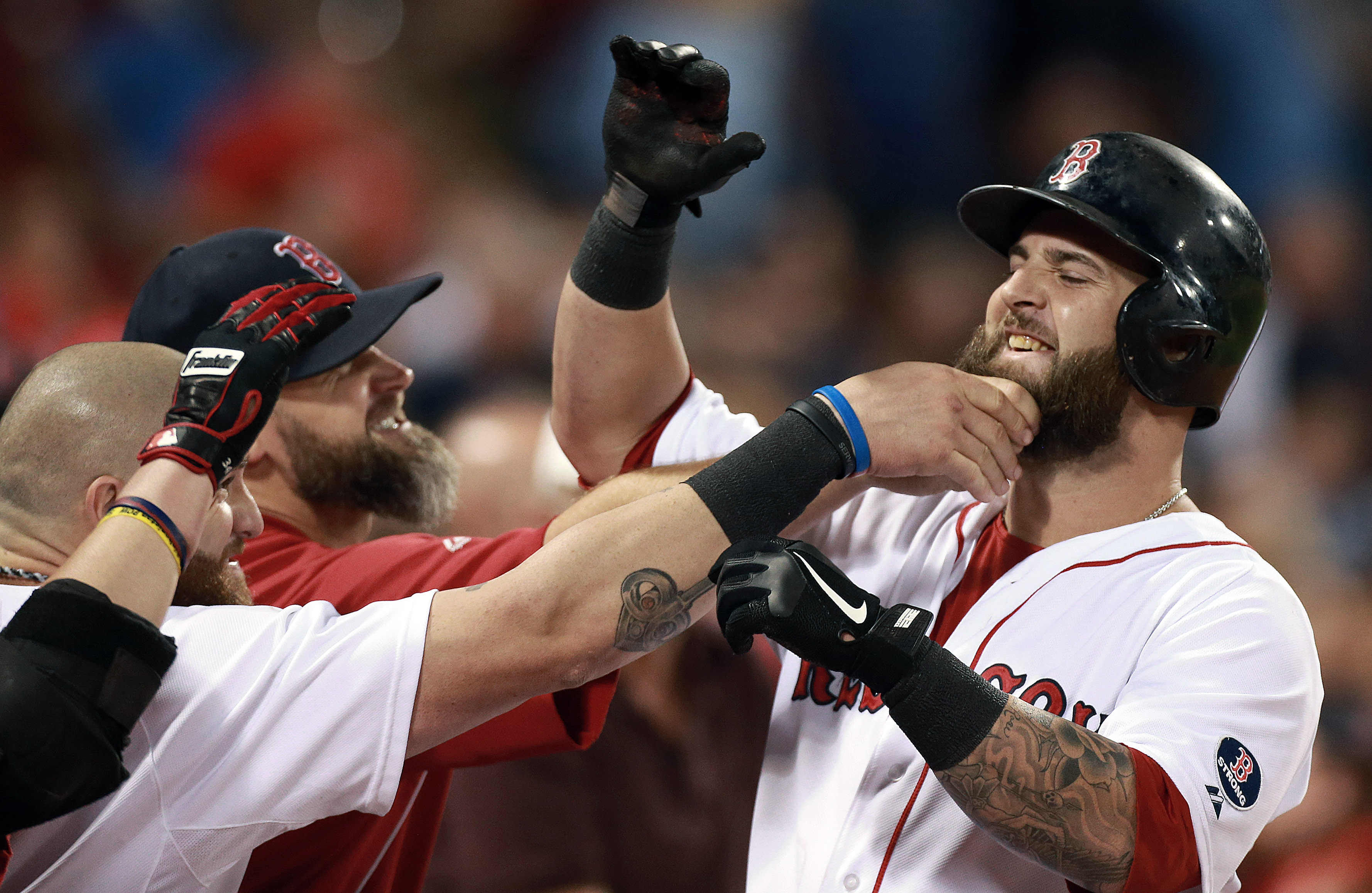
The Age Of The Hairy Us is indeed upon us. Boston has the best record in baseball this season (NYT), but more importantly, they have the most facial hair:

The Boston Red Sox take their craft seriously. Catcher David Ross owns a special comb. First baseman Mike Napoli has reached a level of forestation so impenetrable that a family of squirrels could be living on his face. And pitcher Andrew Miller has stayed true enough to the cause that he said his wife had “given up the battle.” The Red Sox have done two things exceptionally well this season: play baseball and grow beards. … For the team, beards have become more than a hobby. “Baseball players are superstitious,” Miller said, “and it seems to be working.”

Hence the rise of beard-tugging:

Detroit Tigers Vs. Boston Red Sox At Fenway Park

The new home run celebration involves yanking on them like a church bell. “I’m pretty sore,” Mike Carp said after his game-winning grand slam against the Rays last week. “I just got 25 or 26 tugs.”

Tomorrow is “Dollar Beard Night” at Fenway Park, where admission for the bearded is just a buck. Tug on …

(Photo: After yet another Red Sox home run, this one in the bottom of the eighth inning by Mike Napoli, right, he gets the beard pulling treatment from teammates Jonny Gomes and David Ross as he comes back to the dugout. By Jim Davis/The Boston Globe via Getty Images.)