Clinton Courts Obama’s Coalition

The speech Hillary Clinton gave on Monday focused on voting rights:

Nate Cohn sees the political logic of the speech:

Clinton only lost in 2008 because her weakness among progressive activists was paired with Obama’s showing among black and young voters, who combined to assemble a non-traditional Democratic primary coalition.

If she wants to wrap up the nomination quickly, she need to win over these Obama ’08 constituencies. To do that, Clinton doesn’t want to just seem like she’s checking the boxes of the Democratic platform. She wants to be seen as a champion of the causes that animate the different corners of the Democratic primary electorate. If she’s not, someone else could be. At the very least, Clinton doesn’t want to be on the wrong side of a big faction of the party, like she was on Iraq.

Last night’s speech sounded like a first step toward being a champion of a relatively new liberal cause: voting rights. The Clinton folks have to be happy that an issue like this is enflaming the base. It allows Clinton to hit her two relative vulnerabilities among non-white voters and on the left, and there aren’t too many general election downside risks to siding with voting rights. Perhaps as a result, Clinton was pretty unequivocal about her position. If the Clinton folks are smart, they’ll return to this issue with some regularity.

For what it’s worth, I tend to think this is the right call for Clinton – but as Cohn notes, one with limited potential.

After Obama, I suspect the Democrats will likely pick someone less prudent, cautious and leading-from-behind. They’ll want a clearer liberal who leads from out-front, as the broader culture shifts left. Hillary is not a natural pick for that role – so she’s shrewd to start nailing down those constituencies early. But it’s on national security that she’ll really have to prove she’s not a McCainiac. Alex MacGillis predicts the battles over voter suppression and voter fraud will stretch long into the future:

[T]he voting wars didn’t start with Obama and they won’t end with him. Leave aside the obvious big-picture history going back to Jim Crow and the Voting Rights Act; the modern era of the voting battles started back when Obama was but a humble state senator having trouble getting a rental car at the 2000 Democratic convention. They were an outgrowth of that year’s election, which laid bare just how much voting rules could matter at the margin. Democrats took the election as a lesson to be more vigilant against things like the voting rolls purge that eliminated countless eligible Floridians from the rolls; many Republicans drew the opposite lesson, to do everything possible to crimp turnout among likely Democratic voters, to keep states like Florida from ever being so close again.

Thinking Through Stop-And-Frisk

Stop Frisk Outcomes

Heather Mac Donald defends stop-and-frisk’s racial disparities:

[T]hough whites and Asians commit less than 1 percent of violent crime in the 88th Precinct and less than 6 percent of all crime, according to [Judge] Scheindlin 40 percent of all stops should be of whites and Asians, to match their representation in the local population.

Never mind that the suspect descriptions that [Officer Edgar Gonzalez of Brooklyn’s 88th Precinct] was working off of gave blacks and Hispanics as robbery, burglary and shooting suspects. To avoid an accusation of racial profiling, he should have stopped whites and Asians for crimes committed — according to their victims — exclusively by blacks and Hispanics.

That helps us focus on the real issue here: to what extent is the disproportionate racial imbalance in “stop-and-frisk” a legitimate by-product of fighting crime? What metric do you judge it by? The proportion of criminals who are black and Hispanic? The proportion of innocent people who are black and Hispanic? Or some more complex metric? Dylan Matthews complicates Mac Donald’s argument:

The Bloomberg administration says that it’s focusing stops on areas with lots of crime. But [Jeffrey Fagan, a criminologist at Columbia Law School] found that even if you control for the crime rate, the racial makeup of a precinct is a good predictor of the number of stops.

“The percent Black population and the percent Hispanic population predict higher numbers of stops, controlling for the local crime rate and the social and economic characteristics of the precinct,” Fagan’s report explains. “The crime rate is significant as well, so the identification of the race effects suggests that racial composition has a marginal influence on stops, over and above the unique contributions of crime.”

Cassidy adds:

Fagan’s analysis also showed that blacks and Hispanics, once they had been stopped, were more likely to be subjected to the use of force, even though the probability of the stop resulting in further action—like an arrest, or a summons—was actually lower in cases involving minorities than in those involving whites.

That, to me, gets at another core question: how on earth do the human beings tasked with this job not fall into racial profiling and not get hardened in ways that mean more cop violence in minority neighborhoods? You don’t have to believe cops are racist to see that stop-and-frisk by its very nature will often lead to abuse, unless countered by almost super-human virtue. The test for me is whether black and Hispanic citizens who live in high crime neighborhoods believe the trade-off is worth it. And the answer to that is mixed:

Black voters disapprove of stop and frisk 69 – 25 percent while approval is 57 – 37 percent among white voters and 53 – 45 percent among Hispanic voters, the independent Quinnipiac University poll finds …  A decrease in police use of stop and frisk would not lead to an increase in gun violence, voters say 50 – 41 percent, again with significant racial division. Black voters say 63 – 28 percent the reductions would not lead to more crime. White voters believe it would 49 – 39 percent and Hispanic voters agree 52 – 46 percent.

Robert VerBruggen offers another point:

[I]f police are targeting minorities for stop-and-frisk above and beyond their likelihood of being involved in a crime, we might expect searches of minorities to be less likely to uncover concrete evidence of criminal activity. We do see this to some extent: Whites were carrying weapons 1.9 percent of the time; the number for blacks was 1.1, Hispanics, 1.3. For “contraband other than weapons,” the numbers are 2.3 percent for whites, 1.8 percent for blacks, and 1.7 percent for Hispanics.

However, Mayor Bloomberg has said he’s specifically targeting guns, and on that front the trend runs in the opposite direction: 0.16 percent of stopped blacks were carrying guns, as compared with 0.07 percent of whites and 0.09 percent of Hispanics.

Weak. If whites are more likely to be carrying contraband and weapons, the disparity in gun-carrying does not seem to me to be enough to justify the huge racial imbalance in overall stop-and-frisk. And the experience of feeling racially profiled routinely by cops – whatever the actual motivation – is a huge social and constitutional issue. No minority group should feel as if the law is designed to target them because of their race. That cost is real – in political, social and human terms. And the huge escalation of stop-and-frisk in the last decade – long after the biggest drops in crime – suggests we are veering toward something close to a police state in some areas.

Time to recalibrate – as the polling for race for mayor seems to indicate.

(Chart from Mother Jones)

Egypt Is Erupting Again, Ctd

How Best To Challenge Putin?

14th IAAF World Athletics Championships Moscow 2013 - Day Four

Matt Steinglass debates the question:

America has reached a point of relative tolerance for diversity of sexual orientation today. Looking back 30 years, it’s not at all clear that this was destined to be the case. The formation of sexual identity is fraught with fear, and it’s to be expected that social and political players will take advantage of that fear to build in-groups, stigmatise out-groups, and mobilise power. I’m not sure that even Millennials could possibly not know how this works in America, but it certainly ought to be familiar to those of us who remember how culture and politics worked here in the early 1980s. If we’re looking for particular American elements that are lacking in Russia, I would say the most important would be any history of successful civil-rights movements by minorities, which Russia has never really known.

Of course that would suggest that neither a boycott of Sochi nor the display of rainbow flags is likely to accomplish much; and they won’t. Then again, since a boycott has zero chance of happening, what we’re really talking about here is whether to display rainbow flags. And we should. Why not?

That’s my feeling too. What Russia’s law does is something never done in America. In America, the First Amendment allowed for expression of ideas about homosexuality even when social attitudes and legal prohibitions were far harsher. For centuries, the First Amendment was gays’ only real recourse to ameliorate our lot. There would have been no gay rights movement without a free press, without the Mattachine Review, without the Daughters Of Bilitis, without the ability of Frank Kameny and others to march outside the White House in the 1950s. They could take everything from us but our right to speak in public – and yet it is precisely our right to speak publicly that Putin’s neo-fascist government bans.

That’s why Pat Buchanan’s glowing endorsement of Putin is so repellent: not because Buchanan doesn’t know full well how to offend and provoke (his comparison between gay Russians wearing rainbow buttons with the Nazis is lazily Coulterish even for him), but because he is, before anything, a writer and polemicist, and he is effectively supporting the suppression of writers and polemicists and even simple button-wearers in another country. He is so caught up with his own disdain for homosexual equality that he does not see that he is now attacking the very freedoms that made his entire life and career possible. Can you imagine him supporting a foreign country’s right to suppress religious speech? How then can he support one that suppresses simple public expression of the fact of someone’s sexual orientation.

And yet I’m struck by how many gay writers are leery. Jim Burroway:

[I]n Africa, the belief that LGBT rights and that gay people themselves are a product of foreign meddling. Those charges find fertile ground in Africa where European colonialism — and its import of sodomy laws — still casts a long shadow. That is why public threats of cutting foreign aid (as distinguished from private diplomatic engagement in which the same messages have been delivered) have sometimes been much more disruptive than helpful to LGBT advocates on the ground. The same potential effect could conceivably play out in Russia, where an attack on its laws, however repulsive and oppressive to human rights they may be, is seen as an attack on Russian sovereignty itself. This is where foreign protests can backfire.

I can see that. But, as so often with civil rights movements, there is also a very simple need: to speak out in defense of core human dignity. Russia’s ban on even public statements of homosexual orientation, i.e. speaking mere truth, is so sweeping, so all-encompassing, and so likely to spawn brutal personal persecution it simply demands we protest it. We’re Americans. To be told that we cannot even wear a rainbow button in public at an Olympics event is outrageous. What if Russia banned public statements of Jewish or Muslim identity from the stadium or Olympic village? Would there be any question that the Sochi Games would now be over?

This is an attempt to cleanse the public sphere of all references to gay people – and to do so at an international event, allegedly open to all.

It is designed to make gay people, wherever they are from, non-persons, to enforce the closet by force.

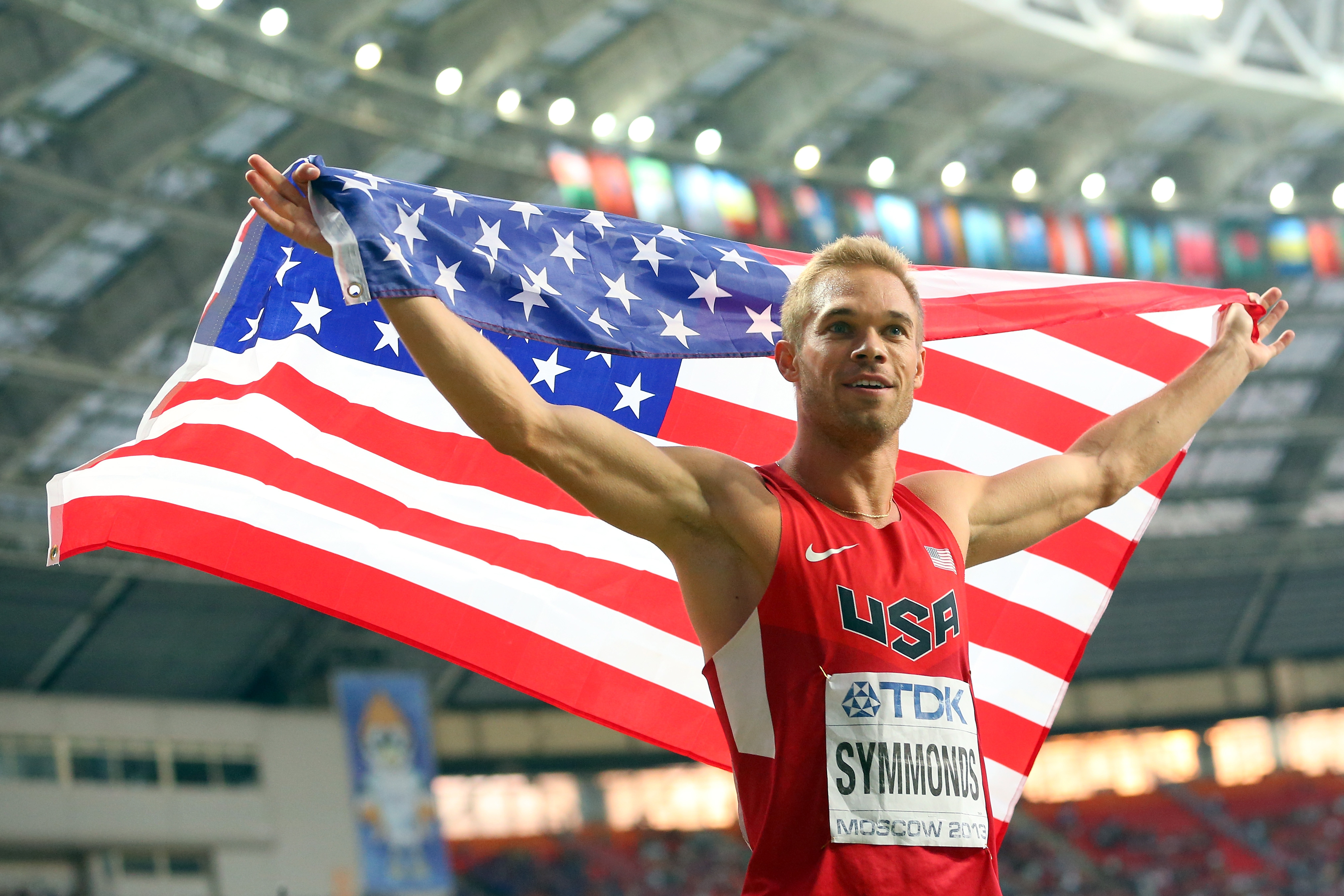
If we stand by and let that occur – and even allow it to be imposed on our own citizens when visiting Russia – we are complicit in the persecution. I’m not a boycotter, but I strongly believe that Putin cannot both get the prestige from the Olympic Games and enforce laws as prohibitive and radical as this suppression of speech. And if we keep our nerve, I think we can call the bully’s bluff. Yesterday, the US track star, Nick Symmonds, showed what’s possible. On Russian soil, he dedicated his silver medal to his gay and lesbian friends:

“As much as I can speak out about it, I believe that all humans deserve equality as however God made them,” Symmonds told Russia’s R-Sport. “Whether you’re gay, straight, black, white, we all deserve the same rights. If there’s anything I can do to champion the cause and further it, I will, shy of getting arrested.” “I respect Russians’ ability to govern their people,” he added. “I disagree with their laws. I do have respect for this nation. I disagree with their rules.”

Let’s see what Putin does to him. I don’t believe in kowtowing to bullies. I believe in standing up to them.

Recent Dish on protesting Russia’s anti-gay laws here and here.

(Photo: Nick Symmonds of the United States celebrates winning silver in the Men’s 800 metres final during Day Four of the 14th IAAF World Athletics Championships Moscow 2013 at Luzhniki Stadium on August 13, 2013 in Moscow, Russia. By Julian Finney/Getty Images.)

The Rise Of Tornado Chasing, Ctd

A reader writes:

You quoted Sam Anderson as saying, “The tradition goes back at least to Benjamin Franklin, who chased twisters on horseback, watching them chew paths through virgin Colonial forest.” While I found the article very interesting overall, this seems a bit fanciful. While Franklin was known for his interest in thunderstorms, it seems doubtful that he ever saw more than one or two tornadoes. Franklin’s home of Philadelphia is far from tornado alley, and while tornadoes do occur along the Eastern seaboard, they do so far less often than the Great Plains (there are some goods maps and data here).

In addition, storms that might be visible from miles away on the plains wouldn’t be in the virgin colonial forest. The Philadelphia area sees between one and three tornadoes per year per 10,000 square miles (larger than neighboring New Jersey; overall Pennsylvania sees 2.22 tornadoes per 10k sq mi per year) and I doubt Mr. Franklin had the means to easily traverse a 100-mile-square area to find these two tornadic storms each year. Even if he could easily ride 10 miles in search of storms, he’d have to wait 50 years before a tornado crossed his neck of the woods.

I’ve lived on the East Coast most of my life and never seen a tornado here (or, for that matter, even in Minnesota, where I lived for several years). While Ben Franklin’s interest in electrical storms is well-documented, I doubt he every paid mind to tornadoes.

Update from a reader:

Look, I don’t know whether Ben Franklin chased tornados or not, but your reader is flat-out wrong about tornados in Philadelphia.  I lived in downtown Philly for 12 years and we had several damaging tornados while I was there. I was in the 1989 tornado that cut a path 50 yards wide through Society Hill and killed a girl from my neighborhood. Here’s a video of the aftermath of the 2011 tornado. Heck, a tornado touched down in South Jersey an hour from Philadelphia this morning.

Another:

Your reader’s response is a novel way of answering the question of whether Franklin saw a tornado. Another way is to go look at what Franklin wrote himself!

A cursory search of the great website franklinpapers.org, which makes his extant writings and incoming correspondence freely available to academics and the public alike, shows that Franklin did write about “whirlwinds.” I didn’t spot any evidence that he saw one in person. The pressing question for him seemed to be explaining waterspouts at sea. These were reported by sailors plying the busy ocean shipping lanes of the eighteenth century. Arm-chair natural philosophers such as Franklin later sought to explain such reports after the fact (and gain some prestige back in Europe while they were at it). A contemporaneous paper presented by one John Perkins to the American Philosophical Society in 1786 seems to have argued that these funnels were formed out of rainwater. I haven’t had the chance to read the paper myself, but an academic review describes it as “essentially extrapolated speculation and almost wholly erroneous.”

Franklin looks to have been closer to the mark by arguing that waterspouts were caused by low atmospheric pressure at their center, pulling up water at sea or debris on land as the vortex descended. I’m sure that other readers can better assess the scientific details of Franklin’s theory compared to our current understanding of tornadoes. At the least, while it would be false to picture Franklin as an eighteenth-century storm chaser on horseback, he did a better job of analyzing the data that other people collected than some of his contemporaries.

The reader follows up:

As a quick addendum to my previous email, it seems that I misunderstood that Perkins piece from 1786.  Perkins makes some correct arguments about rainwater in spouts, despite many other errors in his piece compared to current science.  Rather than having me stray so far from my own knowledge, perhaps you or your readers would be interested in reading Perkins’ paper here.  There must be a waterspout expert somewhere in the world who reads your blog!  And I hope that the point stands that Franklin wasn’t chasing cyclones around on horseback.

(Video: An interview with the author of Storm Kings: The Untold History of America’s First Tornado Chasers)

Gassing Up Mexico’s Economy

Max Fisher argues that Mexico’s new plan to allow global oil giants like Exxon and Shell to invest in its state oil monopoly could “potentially revolutionize the Mexican oil and gas industry.” But not everyone is onboard:

Mexicans opposed to the reforms worry that it may be a step toward privatizing [state-owned firm] Pemex or the entire Mexican energy sector outright, something [President] Peña Nieto pledges not to do. John M. Ackerman, a prominent Mexican law professor and columnist aligned with the political opposition, argued that the proposal “exposes the gross ambition of big national and foreign companies to get themselves an even larger slice of the national wealth.” He disputed what he characterized as the pro-reform view that “greater ‘involvement’ by Exxon-Mobil and Halliburton will automatically benefit the Mexican people.” Ackerman’s view seems to be a common one among those opposed to the plan.

The Bloomberg editors, on the other hand, are excited:

Mexico has much more oil to find, but Pemex lacks the technology and knowledge to tap new and complex deepwater fields.

And because its finances and management are tightly controlled by the government, which relies on Pemex for about one-third of its revenue, it can’t make strategic investments. One analysis says that the money needed to exploit current opportunities is equivalent to 30 years of Pemex’s 2013 investment budget.

Passage of the reforms could unlock tens of billions in needed investment and lift Mexico’s annual growth by as much as two percentage points. A less-heralded but in some ways equally disruptive element of Pena Nieto’s proposal would break the electricity distribution monopoly of the state power company CFE, whose grip on power has left Mexicans with some of the highest electricity costs in the developed world.

The Economist is more pessimistic:

Whatever reforms the government announces, they will stop a long way short of privatising Pemex. It is so wrapped up in a myth of national sovereignty that even the energy minister, a champion of reform, insists that not a “single screw” will be sold. Reformists hope the government will at least let private firms work with Pemex to develop shale, deep-water and other challenging fields. But even this would require constitutional changes, and would face much resistance. Since Mexico has no significant private-sector oil industry, much of the investment would have to come from foreign firms, and for nationalists this would be hard to stomach.

Juan Carlos Hidalgo calls the proposed reforms “timid”:

Peña Nieto’s efforts to bring more private investment to Mexico’s oil industry should be commended. However, even if his energy reform is approved, Mexico will still have the most tightly state-run energy sector in the Americas (even more than Cuba and Venezuela). That, in itself, should indicate how much room for further reform will be needed.

Introducing The Snowden Prize! Ctd

A reader writes:

Rewards to whistleblowers who report fraud against the government?  That’s what I do; I’m an attorney specializing in representing whistleblowers under the federal False Claims Act.  The FCA allows private citizens to bring a lawsuit on behalf of the federal government against those who commit fraud against government programs – Medicare fraud, defense program fraud, and many more.  The Act makes defendants liable for triple the actual damages and – critically – provides that the whistleblowers who bring successful cases can be awarded 15-30% of the amount recovered.

According to the organization Taxpayers Against Fraud, since 1987, False Claims Act lawsuits have resulted in recovery of over $40 billion from fraudfeasors.  The False Claims Act is a critical piece of combating waste, fraud and abuse in government contracting and grants, and has generally enjoyed bipartisan support in Congress.  Many states have their own false claims acts, modeled after the federal act.

The federal government has more recently enacted other whistleblower reward programs (tax fraud and securities law, for example).

Unfortunately, the procedures for these programs, including provisions for the protection, involvement, and payment of whistleblowers, are not as strong, and they have not (yet) been as effective as the FCA.  There are many reasons these newer laws depart from the proven model of the FCA, but much of it has to do with successful lobbying by large corporate defendants, who work to demonize whistleblowers they label as “opportunistic,” and the lawyers who represent them. Never mind that the FCA has strong provisions to bar claims brought by me-too whistleblowers who don’t bring anything new to the table, once the boogeyman of “Plaintiffs’ Lawyers” has been identified, some lawmakers are scared off.

I should add, government employees are generally barred from acting as whistleblowers and receiving rewards under the FCA with respect to fraud they discover in the course of performing their official duties.  Why?  Because we’re already paying them to discover and stop fraud.

The FCA does not, however, help the Snowdens of the world, because he is not reporting monetary losses.  However, the FCA clearly teaches that financial incentives matter.  As Taxpayers Against Fraud puts it:

Incentivized whistleblower laws work because whistleblowers bring hidden information to the government’s attention and their lawyers act as ‘force multipliers’ when cases are investigated and prosecuted.  Because successful whistleblowers [under the FCA] are awarded 10 to 30 percent of the sum recovered, whistleblowers and their lawyers are incentivized to investigate frauds in a timely manner, to find as much fraud as possible, and to present evidence of fraud to the government in way in which it can be easily understood and prosecuted.

No Sacred Cows

In a long essay on the ethics of eating animals, Namit Arora explains the intellectual and cultural backdrop to the West’s comparative indifference and even cruelty to the creatures we raise for food:

What might have arrested this decline in the fortunes of farm animals are big cultural ideas, both religious and secular, that for whatever reasons opposed killing animals. But those did not arise in the West as they did, for example, in India. Depending on whom you ask, Western monotheistic religions, while seeing humankind as God’s special creation, ranged in attitude from passive disaffection to active malice towards animals. Christian doctrine has practically no injunctions against treating animals as a means to human ends, so no sin is committed when mistreating or killing animals. Rather, animals were declared vastly inferior, incapable of possessing souls, and created for the use of humans, who stood right below the angels. And so Western monotheisms have long seen animals as dispensable for human interests, desires, and whims. (This is also true for the “Confucian zone” of East Asia.)

In the modern age, even secular humanism, with its nearly exclusive focus on humans, has shown little regard for the treatment of animals.

“In the West,” writes Mary Midgley in Animals and Why They Matter (1998), “both the religious and the secular moral traditions have, till lately, scarcely attended to any non-human species.” With notable exceptions like Jacques Rousseau, Jeremy Bentham, Arthur Schopenhauer, and contemporary animal welfare organizations like the Society for the Prevention of Cruelty to Animals (SPCA), the dominant strands of Western culture have remained heavily invested in denying moral consideration to animals. Rather conveniently, animals are presumed to lack feelings, thoughts, emotions, memory, reason, intelligence, sense of time, language, consciousness, or autonomy. Until the 1980s scientists entertained the idea that animals do not feel pain. Such self-serving presumptions, enabled by our estrangement from farm animals, certainly made our consciences rest easier. This helps explain why the animal rights movement focuses so hard on demonstrating many of these capacities in animals (sometimes overstating their case). So tenacious can our habits of life and mind be that even today, despite everything we know and the genuine alternatives we have for a nutritious diet, less than 1 percent of U.S. adults have turned away from factory-farmed meat for ethical reasons.

The Anti-Hero’s Other Half

William Brennan asserts that Skyler White “is the best character on Breaking Bad“:

Yes, Jesse’s as smart and loveable as a newborn baby dolphin, and Mike seemed at times a vision of what an older, more sympathetic Walt might have been had things gone differently—we sensed his sense of rules and limitations, however deformed it was. But Skyler is the best character on the show because she’s the one who reminds us that it’s necessary to loathe Walt. She is our moral grounding. “People are griping about Skyler White being too much of a killjoy to her meth-cooking, murdering husband?” Vince Gilligan, the show’s creator, said in an interview this March with Vulture. “She’s telling him not to be a murderer and a guy who cooks drugs for kids. How could you have a problem with that?”

Laura Bennett also focuses on Skyler:

The question of likeability for fictional protagonists has always seemed beside the point. The issue, when it comes to assessing fiction, is not whether we like this person but whether we can identify some psychic strain of ourselves refracted through them, however ugly and small.

That’s what makes Tony [Soprano] and Don [Draper], even in their awful selfishness, even as show creators dared viewers to empathize with them, such good protagonists. Walt no longer offers us such complex psychological grist. He is less tortured evildoer than mythic bad guy, his ambition amplified and motives blurred beyond recognition. Instead of a jumble of lethal insecurities and urges he is all monstrous, abstract greed. Hank is a straightforward hero, easy to root for. Jesse is the adorable underdog, running frantically on the hamster wheel of his conscience. But Skyler—brash, self-righteous, unsure of what it means to do the right thing—is a messier case. And even at her least likeable, she is key to what makes this show overall so compelling: its moral prickliness, the way its view of good and evil can seem at once so twisted and so stark.

The Democrats’ Slipping White Support

Enten argues that Obama’s falling polling numbers can’t be blamed on racism:

The greatest fall for Obama isn’t among whites in the south; it’s in the northeast – you know that region that was on the correct side of the Civil War. Obama went from winning northern whites by 10pt in the election to a -12 net approval now. The next greatest drop is in the west where Obama fought to a near-tie in the election, but now has a net approval of nearly -20 among white voters. Close is his 14pt drop in the midwest where Obama’s net approval is now a measly -23pt.

The one place where Obama’s support among whites hasn’t fallen sharply is in the south. Obama’s net approval there is only a statistically insignificant 3pt lower than it was before the election. In other words, it’s likely he completely bottomed out in that region. Lack of white support for Obama hasn’t bottomed out in other regions.

Nate Cohn believes that, unless Democrats win more white Texans, the Lone Star State won’t be turning blue any time soon:

[I]n a state where half of whites are evangelicals, there’s only so much room for Democrats to improve—at least if they keep nominating progressives.

The point isn’t that Democrats can’t do better among Texas whites. Maybe the next wave of young Texans will get more Democratic. Maybe the next wave of migrants will be more Democratic. Maybe Democrats will nominate a relatively conservative southerner. It’s all possible. The point is that they must if they intend to win any time soon. The growing Hispanic share of the population won’t be enough. And so far, there aren’t any signs of Democrats making big inroads among Texas whites. It might come some day, but it hasn’t; and there are plenty of reasons to question whether it will.