Dissents Of The Day, Ctd

A reader quotes me:

I remain of the view that the best response to this case is to repeal these laws that empower vigilantes and all but encourage the murder of young black men – if you can find one alone, with few witnesses, and a semblance of a suspicion.

Why are you assuming that all “victims” of Stand Your Ground will be young black men? The above is a disgustingly inflammatory statement with no basis in fact. How about some balance in your argument here? All races of men and women have the right to defend themselves under Florida law. You assume whites will seek out and kill blacks because this law exists. This is sick. I, as a white man and a legal gun owner, find that so offensive.

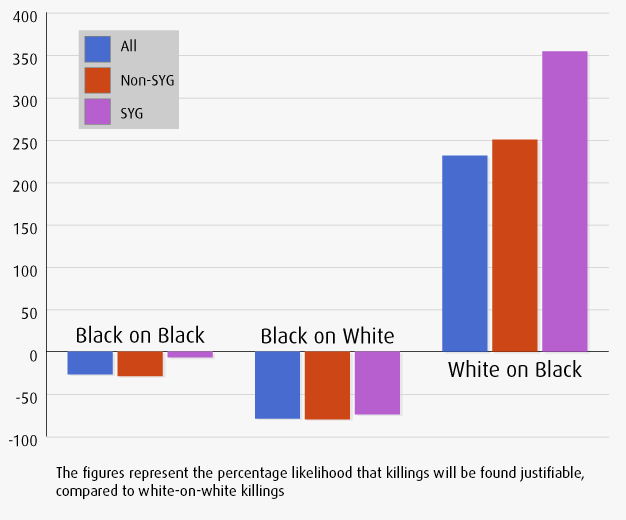
I referred to vigilantes and “some whites” – not all white gun-owners. And my view that black men are disproportionately victimized by Stand Your Ground laws is not a guess. It’s statistically proven. Another defends me somewhat:

People keep saying that Stand Your Ground played no role in the trial, because the defense did not explicitly invoke it during the deliberations.  But the judge DID explicitly use the Stand Your Ground language in her instructions to the jury. This is why people are saying the jury had no choice but to acquit Zimmerman. The attorneys for the defense presumably knew that this language would be in the jury instructions, so they could afford to ignore bringing it up themselves and focus generally on “self-defense.”

And yes, the juror interviewed by Anderson proved that this was a key factor in her judgment. Another reader:

I do not want to pile on, but I wanted to ensure that this post – “And he was told by the cops to stop his stalking. He decided to ignore them.” – was corrected. The transcript of the 911 call does not reflect your assertion:

Dispatcher
Are you following him?
Zimmerman
Yeah.
Dispatcher
Ok, we don’t need you to do that.
Zimmerman
Ok.

The transcript is clear, the 911 operator did not tell him to stop following Martin. Rather, the 911 operator’s comments (not a “cop” see infra) served to show that Zimmerman did not have an obligation or duty to continue to follow Martin. At no time did the operator tell Zimmerman to stop following Martin – this is an important distinction.

Furthermore, 911 operators are not police or cops; they are not deputized law enforcement officers. While this may vary from jurisdiction to jurisdiction, here the 911 operator was not a deputized police officer.

Hanging the argument, as Will did, on a 911 operator saying “we don’t need you to do that” as opposed to “don’t follow him any further” is a slim nuance, it seems to me. If a 911 caller had told me that (in DC, I lived for twenty years on a street-corner named after a gang, and witnessed countless suspicious activity day in and day out, with several gun-murders outside my condo), I’d have let it go. But then I’m not a wannabe hero like Zimmerman. Another:

If you listen to the unedited 911 call Zimmerman made, and look at a map of the neighborhood, you see Zimmerman gets out of his car, follows Trayvon, and then loses track of him. Zimmerman is on the phone for several minutes after he can no longer see Trayvon, talking with the dispatcher, then tells the dispatcher he will meet responding officers at a different part of the complex. He is returning to his car when Trayvon confronts him and the fight ensues. In short, Trayvon could have easily made it home but opted to double-back to engage Zimmerman. This has rarely been mentioned in the media. But this is supported by all the evidence in the case – the 911 call, Zimmerman’s statements to law enforcement and Trayvon’s call to his friend.

The question remains: does engaging in bad thoughts and “profiling” constitute a legal or moral basis for assault? The answer to the former is no. For those who answer yes to the latter, such a position invites the same concerns with Stand Your Ground laws. Can I now shoot someone if I’m profiled?

Another shifts gears:

I have to disagree with your statement, “But Martin was effectively put on trial as well; and an almost all-white six-person jury of women doesn’t seem to represent either Zimmerman’s or Martin’s peers.” It seems to imply that you think the juror should mimic either the defendant or the victim. Logically speaking then, would a white male rapist of a black woman be tried by an all white, all male jury or an all black, all female jury? Would only Wall Street executives serve on the jury if anyone is ever tried for the crimes that lead to the financial crisis in 2008? Who then would serve on a jury if war criminals are brought to trial?

I’m not a lawyer, and can only go by my HS civics class, but I think the premise is that we are all citizens of this nation and in that respect, all citizens are peers. I agree that the jury selected was unusual, but I’d still say they were Zimmerman’s peers and even Martin’s. I hoped for another outcome personally, but with the little that I heard about the evidence, I can understand the decision of the jury. There may be a problem with the laws (self defense, gun and stand your ground), but the system worked as designed.

I don’t doubt that. But the overwhelmingly white jury – without a single man on it – was indeed unusual. An expert goes into further detail on that point:

An accused’s right to a jury in a criminal prosecution is not a “technicality.” It’s a basic entitlement written with crystal clarity in the Sixth Amendment. Constitutional rights are not technicalities; they are enshrinements of basic human dignity. Your long and admirable record of criticism against holding Gitmo prisoners without charges or trial, for example, reflects that you hold such entitlements in higher esteem than dismissing them as mere “technicalities.”

The Sixth Amendment requires, among other things, “a speedy and public trial, by an impartial jury[.]” The word “peers” is absent. I stand to be corrected, but the common understanding is that “a jury of one’s peers” is (or was) an English, class-based practice going perhaps as far back as the Magna Carta: a nobleman was entitled to be judged by other noblemen, not by any commoner of a lower stratum. If that historical origin is accurate, the omission of the word “peers” from the Sixth Amendment is telling and characteristic of the Founding: all Americans are equal, none above or below another, before the law. It would be an ugly process indeed if every criminal defendant had the right to argue who is and is not worthy as his “peer” to consider the evidence against him and decide his fate. Racial politics would not always be the nastiest battleground in that regime.

The ideal of an impartial jury has been elusive, of course, but it did not evade Zimmerman or the people of Florida. Zimmerman had a jury of impartial fellow-citizens who deliberated well into a Saturday night whether or not to send him to prison. You’ve said yourself, and you are right, that they were equal to the task and clearly took it very seriously. He got what he was entitled to, under the law.

More reader pushback here.
A Fool, Not A Murderer?

George Zimmerman Found Not Guilty In Death Of Trayvon Martin

Saletan says that he “was going to write that Zimmerman pursued Martin against police instructions and illustrated the perils of racial profiling.” But, after watching all seven hours of closing arguments in the Zimmerman trial, he thinks better of it:

It turned out I had been wrong about many things. The initial portrait of Zimmerman as a racist wasn’t just exaggerated. It was completely unsubstantiated. It’s a case study in how the same kind of bias that causes racism can cause unwarranted allegations of racism. Some of the people Zimmerman had reported as suspicious were black men, so he was a racist. Members of his family seemed racist, so he was a racist. Everybody knew he was a racist, so his recorded words were misheard as racial slurs, proving again that he was a racist.

The 911 dispatcher who spoke to Zimmerman on the fatal night didn’t tell him to stay in his car.

Zimmerman said he was following a suspicious person, and the dispatcher told him, “We don’t need you do to that.” Chief prosecutor Bernie de la Rionda conceded in his closing argument that these words were ambiguous. De la Rionda also acknowledged, based on witness and forensic evidence that both men “were scraping and rolling and fighting out there.” He pointed out that the wounds, blood evidence, and DNA didn’t match Zimmerman’s story of being thoroughly restrained and pummeled throughout the fight. But the evidence didn’t fit the portrait of Martin as a sweet-tempered child, either. And the notion that Zimmerman hunted down Martin to accost him made no sense. Zimmerman knew the police were on the way. They arrived only a minute or so after the gunshot. The fight happened in a public area surrounded by townhouses at close range. It was hardly the place or time to start shooting.

That doesn’t make Zimmerman a hero. It just makes him a reckless fool instead of a murderer.

I have to say that whether Martin was a “sweet-tempered child” is irrelevant. And inferring that Martin initiated the scuffle because the cops were on their way seems a stretch. The cops were on their way before Zimmerman collided with Martin. I am not second-guessing the jury given the limited evidence available to prove something beyond reasonable doubt. But, unlike Will, I’m not going to infer that Zimmerman had no ill-intent or wasn’t racial profiling in his head.

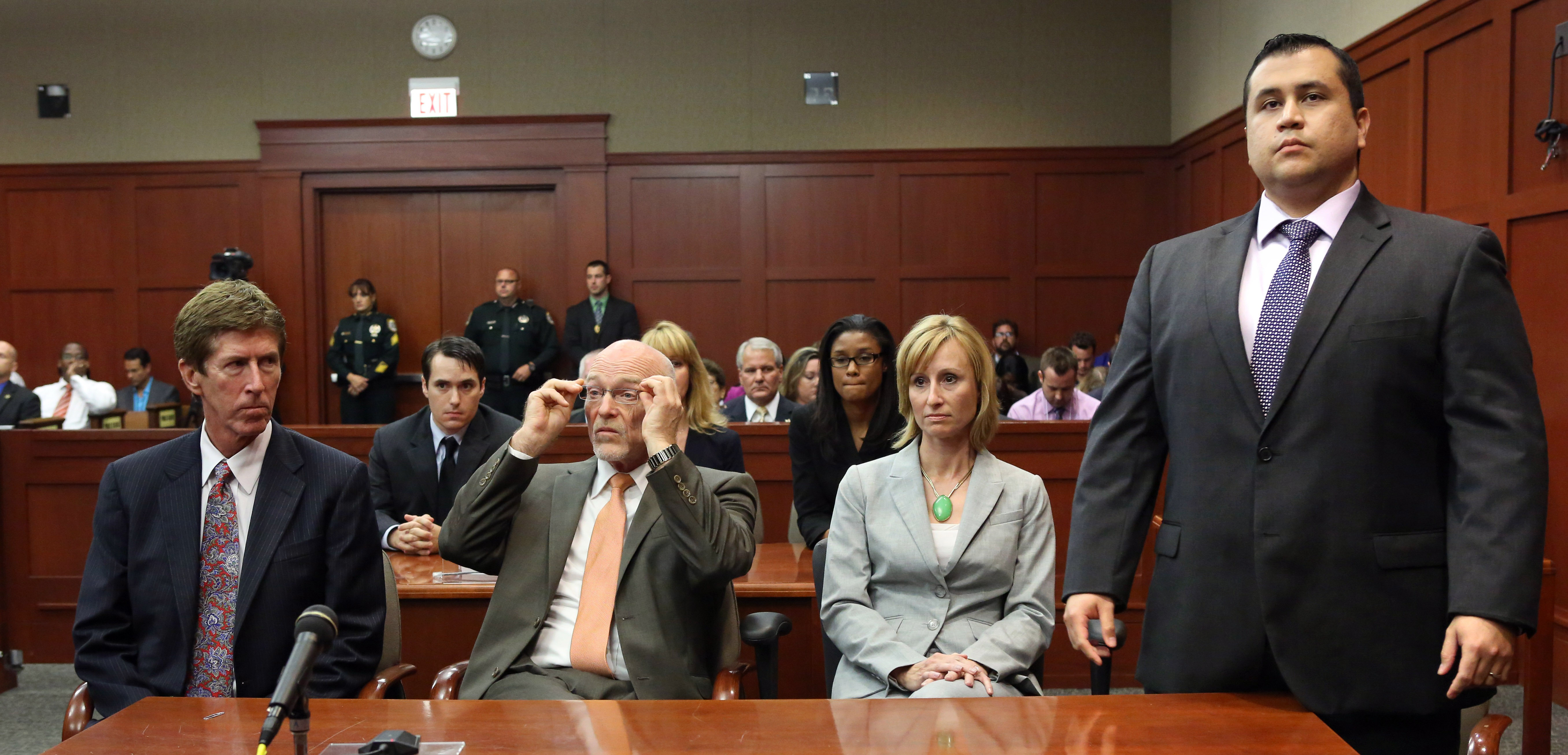
(Photo: George Zimmerman stands as the jury arrives to deliver the verdict, on the 25th day of his trial at the Seminole County Criminal Justice Center July 13, 2013 in Sanford, Florida. Zimmerman was found not guilty of second-degree murder in the 2012 shooting death of Trayvon Martin. By Joe Burbank-Pool/Getty Images)

Should Convictions Be Hard To Get?

Harlem Holds Vigil For Trayvon Martin

Wilkinson thinks so:

In Texas you can get away with shooting someone to death if they’re running away with your property. That’s insane, and it’s easy to see how a law like that rigs the system in favour of people with a lot of property—a class that remains disproportionately white and male. However, on the whole, our criminal-justice system is so frightfully racist because it’s too easy for prosecutors, not because it’s too hard. Of course, in a racist society, rules that help defendants are going to help the most privileged defendants the most, and that’s maddening. But that shouldn’t stop us from recognising that the least privileged, the most oppressed, the most discriminated against, are far and away most likely to stand accused. That’s why I suspect that a legal system making it harder for the likes of Mr Zimmerman to get away with it would be a system of even more outrageous racial inequity.

Cass Sunstein has a different view:

Reasonable doubt is far more difficult to meet than other legal standards, including “preponderance of the evidence” (used for most civil trials), “clear and convincing evidence” (used for deportation proceedings) and “substantial evidence” (used for administrative agency decisions). To be sure, any doubt must be “reasonable”; the law doesn’t require absolute certainty. But a good defense lawyer is often able to obtain an acquittal even if most jurors essentially agree with the prosecution’s account of the facts.

Among other things, the Zimmerman verdict shines a bright spotlight on the reasonable-doubt standard. Lord Blackstone famously said, “It is better that ten guilty persons escape than that one innocent suffer,” and most people think the reasonable-doubt standard reflects a judgment to that effect.

But that judgment isn’t self-evidently correct. If 10 guilty people escape punishment, then the deterrent effect of the criminal law will be significantly weakened, and wrongdoers will be set free to do more wrong, potentially putting innocent lives in jeopardy.

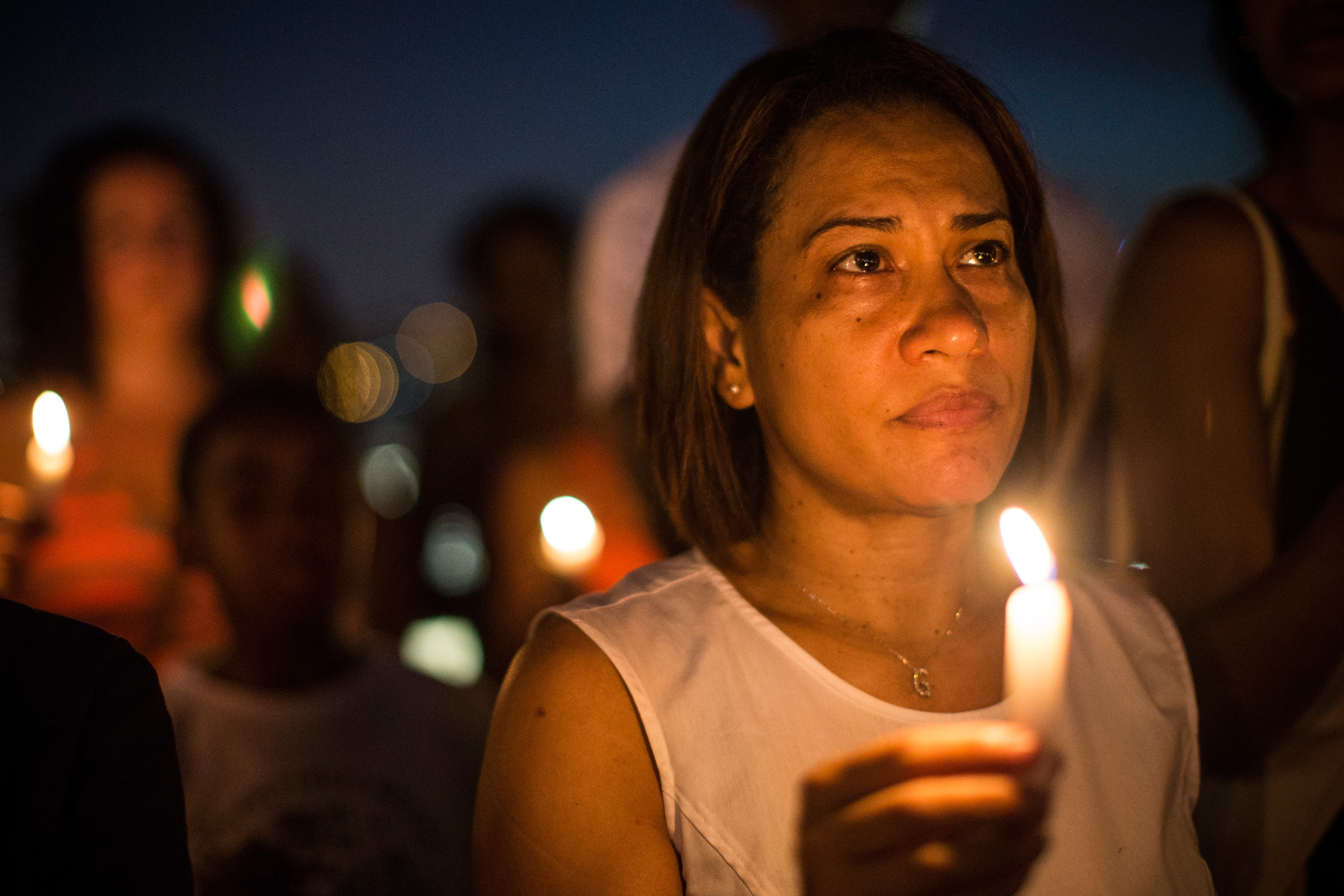
(Photo: Candida Feliz participates in a candle lit vigil for Trayvon Martin, the teenager who was shot and killed in Florida last year, on July 15, 2013 in New York City. By Andrew Burton/Getty Images.)

The Tangible Tome

shackleton_web_1_med

“Books should always remain available in print,” Gracy Howard maintains:

When art enthusiasts enter an art gallery and survey freshly painted works, their first reaction is sensory. The canvases still bear the musty smell of pigments and glisten with wetness. In that moment, the spectator feels close to the painter. While an art aficionado can access Picasso’s paintings online, no one could argue such viewing is equivalent to firsthand observation. When Picasso devotees walk into a gallery, they are solely fixed on the artist and his reality.

Similarly, physical books limit readers and force them to ignore distractions. They enter the world of the author, and are obliged to forget or ignore the world outside. An e-reader allows easy shifts from reading to Facebook or a game app. But for the physical book reader, one must enter another universe.

Rachel Arons notes how lovers of physical books must increasingly reckon with craftspeople who re-purpose the printed page in the name of art:

Internet literary culture has also seen the flourishing of [a group] that celebrates books neither as precious physical objects nor as utilitarian vessels but uses them as the raw materials for works of art. The forms are varied—some are sculptures made from individual books, others use books as the building blocks for larger structures, while still others make books the canvas for paintings or drawings—but these projects have in common a way of playing off the near-spiritual aura that many of us associate with physical books, both augmenting books’ specialness by using them to make something beautiful, and undercutting it by ignoring their original purpose. …

The paper fetishists and text fetishists alike might view this kind of work as sacrilege—it does, after all, involve the destruction or deconstruction of books, and the disconnection of books from the act of reading. And yet, these works serve, perhaps more effectively than more straightforward forms of book worship, as moving expressions of our transforming relationship to books—and the potential for beauty, as well as loss, in that change.

Recent Dish on art crafted from books here and here.

(Image of “Shackleton’s Antarctic Adventure” by book sculptor Justin Rowe)

Being Sexual Without Sex

In an interview, the popular young adult novelist Judy Blume describes what the many letters she receives reveal about the emotional and sexual lives of teenagers today:

There are so many kinds of longing. The longing to fit in, the longing to figure it out, the emotional longing for friendship and being accepted—these are all as important as physical longing. Before all the hormones start raging, it’s the emotional longing that is most important, and boy, you have to learn to figure it out. In my day, the rules were there for us. Back then there was no abortion and no pill, and my friends and I knew that what we called “going all the way” could ruin our lives. It is not that we didn’t have physical sexual longing, but we went out with guys who understood that there were ways to satisfy—and it wasn’t oral sex. We kind of could be satisfied through touching; we could be physically satisfied with what we called petting. I went out with a lot of guys, and there was an understanding. I was never pushed to go all the way.

I think today’s kids miss out on being sexual without having intercourse.

There are a lot of sexual expectations today. Everyone is watching porn now. It turns you on, sure. I’m not saying don’t watch it. But what you see in porn is not what real love and sexuality within a long-term relationship are. Just like kids have to learn that the toy they see on TV is different from different from what it does in real life, I’d like to see the same thing taught about sex. I hate to see girls feeling like they have to emulate what they see in porn, with breast implants and pole dancing. I am actually glad that Amanda Bynes had her implants removed. This was a good development. What would I do if I was 16 now?

Changing Climate, Changing Architecture

William Gething, coauthor of Design for Climate Changewarns that traditional construction materials will “behave differently” in a world wracked by global warming:

Brick, for example, is likely to become more saturated, particularly with increasing insulation standards, so it is likely to be less effective at keeping moisture out. Materials move more in higher temperatures, so joint design will need to take this into account. More intense rainfall events mean that gutters need to be sized differently.

Amid these challenges, Steve LeVine heralds the rise of the “extreme-weather architect”:

The emerging class of architecture suggests the onset of a global design-and-construction industry worth tens of billions of dollars in the coming years. Places such as the Netherlands have had to build around environmental- and weather-related challenges for years. But to the degree that extreme-weather architecture and construction moves to the mainstream, it would become one of the biggest infrastructure businesses on the planet, straddling US, Europe, Asia and Latin America. The cost of one recent set of recommendations alone, by New York Mayor Michael Bloomberg, responding to the ravages of Hurricane Sandy in October 2012, is estimated at $20 billion. Studies of the spending to come around the world range well into the hundreds of billions of dollars.

Recent Dish on Bloomberg and reforms to combat flooding here. As sea levels rise, architects continue to investigate the possibilities of buoyant buildings. One design firm recently finished work on a floating school in Lagos, with a floating neighborhood in the works.

A Teen With An Internet Connection vs Cancer


At age 13, after losing a family friend to pancreatic cancer, Jack Andraka set out to discover why the available tests couldn’t detect the disease earlier and at a lower cost. Amazingly, he stumbled upon a way to do just that – he estimates his method is 168 times faster, 26,000 times cheaper and over 400 times more sensitive than the tests available at the time. He tells his story in the above TED talk. In a companion interview, Andraka provides context:

I was really shocked by the fact that we didn’t have any way to detect pancreatic cancer. I mean, with a lot of diseases you have one test that can detect it. Like with breast cancer you have the mammography, or with HIV/AIDS you have that screening test. But with pancreatic cancer you have to have this really invasive biopsy or you have to go through an MRI or CT scan. All those are really invasive and I couldn’t believe there wasn’t just a routine assay you couldn’t just get to see if you had pancreatic cancer.

Update from a reader:

Oh no, not Jack Andraka again. He took an existing idea and pretends it was his idea.

His statistics all seemed to improve by a factor of 10 from the Intel paper where he first won their prize until two so-called science journalists at Forbes started writing about him. An article at pancan.org correcting some of his errors got scrubbed just before his appearance at the SOTU address.

He did an interesting science fair project and then seemed to get caught up in a huge hype machine that distorted what he did 0 fueled mostly, it seems, by the Forbes “journalists”. All this was happening around the time of the Manti Teo/Lennay Kekua story and Sports Illustrated was getting reamed for not enough fact-checking on a feel-good story. I would love to see Forbes get reamed for their inadequate fact checking on this feel-good story.

Yes, the world needs more people interested in science. But it also needs fewer science journalists passing on bogus data from science fair projects.

Another reader:

This TED talk has recently been making the rounds (I’ve been sent it by two people this week alone).  Alas, here is the take on it from an actual pancreatic researcher I know, at a major US medical school:

This marker was discovered by Anirban Maitra about a decade ago.  The student applied it to an inexpensive device and seems to be getting the credit.  I think the competition judges were wrong on the selection.

From a scientific perspective, the test is useless.  This problem repeats countless times because only clinicians and basic scientists are involved in these studies, no epidemiologists.  The problem is that pancreatic cancer (or ovarian, liver, etc., the rare ones) has a lifetime risk of 1% in the US.  This means that a test that did nothing, said everyone tested was negative, would be correct much more than 99% of the time.  In addition, even if it were 99% accurate in giving positive results, for every person correctly identified as having pancreatic cancer, more than 10 people would be incorrectly identified even though they didn’t have cancer (false positives).  These individuals would then go on to have expensive invasive testing and suffer psychologically before determined that they didn’t have cancer, and there would be some potential morbidity associated with the unnecessary testing.

So the problem is that for a rare disease like pancreatic cancer, a test that is 99% accurate (we say 99% sensitivity and 99% specificity) is still not useful enough as a population screening tool.  The test in question is not close to 99%, let alone better.

Another:

If you find out you have pancreatic cancer early then the most likely outcome is that you know for a longer time that you’re going to die. The survival rates by stage are here. And don’t forget these are also biased. Imagine that if a disease is definitely going to kill you by a certain date then early detection gives the illusion of better survival simply because you know about it earlier.

Kudos to the kid, but until somebody comes up with a cure it’s just false hope. These stories are fundamentally cruel and don’t deserve this kind of publicity.

Secret Santa On Steroids

[youtube http://youtu.be/phoUVH05kEg?t=17s]

Rachel Feltman explains how the online exchange Redditgifts created a culture – and eventually a business – of anonymous gift-giving:

Through a process that [developer Dan] McComas calls “friendly stalking,” users found out their recipients’ likes and dislikes based on the information given, which included their Reddit username, then sent them an anonymous present–laptopslobstersplush sharks stuffed with toys and t-shirtscruises, and even the odd serenade from Jimmy Fallon. In the first exchange, there were 4,375 participants from 62 countries, and they spent $183,118 on gifts for each other. …

In a TED talk this past May, McComas tried to figure out what Redditgift’s “secret” is.

He pointed to the research of  Harvard Business School’s Michael Norton, presented in a TED talk called “Money Can Buy Happiness.” Norton gave students envelopes full of cash, including instructions to spend the money on either themselves or others by the end of the day. At the end of the day, the self-spenders weren’t any happier than they’d been in the morning, but the gift-givers were—whether they’d had $5 to spend on coffee for a stranger in Starbucks or $20 to give to charity. “What he learned,” McComas told the crowd, “is that you can buy happiness with money. You just have to spend that money on a stranger.” The warm-and-fuzzies a Santa gets from spending their cash on someone they’ll never meet are only amplified by a few of the site’s features: Recipients post pictures and descriptions of their gifts, so a Santa knows just how happy she’s made them—plus, each Santa knows that she’ll eventually get a surprise of her own in the mail.

The GOP Exposed, Ctd

Rod Dreher shakes his head at the House Republican’s farm bill, which boosts Big Ag subsidies and forgoes food stamp aid:

The Republican Party is throwing corporate welfare at farmers, but telling people who are so poor they qualify for government aid to feed themselves that they are not a priority. As a matter of basic politics, the Republicans have lost their minds. This is Mitt Romney’s 47 percent remark all over again.

President Obama has vowed to veto this GOP farm bill if it hits his desk, so Congress is going to have to try again. You know who needs to find their voice and use it right now? Conservative Christian pastors and leaders. Christians need to seriously reconsider uncritical support for a political party that prioritizes lavishing subsidies on the agribusiness rich while telling the poor to sit quietly and wait for scraps.

Kinsley is puzzled:

Forget about kids going to bed hungry. (Melodramatic, but accurate.) Can this possibly be good politics?

Are there actually people out there waiting for a candidate who will kill the food stamp program? It takes your breath away. The Republicans have now cornered the heartless vote. But are there enough heartless people in this country to counterbalance the sane people fleeing the other way?

The net effect of the farm bill, as it stands now in the House, is to take money away from a successful program for making sure that no one starves, and giving it to a variety of programs whose goal is to raise the price of food, for the poor and everyone else. Even if you only care about how things look, this does not look good, it seems to me.

Fred Matzner walks through the wreckage of the bill:

To start with, the bill takes aim at the environment by first crippling, and then outright ending, conservation programs, as well as zeroing out mandatory funding for rural renewable energy and efficiency development. Thousands of farmers from every state have participated in these programs, generating income while helping restore wetlands and prairies, reducing fertilizer and pesticide pollution that poison our rivers and drinking water, and decreasing the nation’s reliance on polluting fossil fuels.

In stark contrast, the bill would make permanent billions of dollars in subsidies for corporate farmers. This would upend decades of precedent and lock taxpayers into these high costs, at least creating a deterrent to regular updating and improving of our farm policies, and at worst threatening the continuation of important policies to protect soil, water, wildlife, and public health.

More Dish on the GOP’s big government bill here.

The Senate Is In Play

According to Nate Cohn:

The big news—perhaps the biggest Senate news of 2013—is that Democratic Governor Brian Schweitzer decided not to run for Montana’s open Senate seat. Many thought Schwietzer would run and win—polls showed him over 50 percent and he has strong approval ratings. Now there’s no obvious candidate for Democrats in Montana, a state that will vote for a populist, western Democrat, but still voted for Romney by 14 points last November.

With the GOP’s odds suddenly looking much better in Big Sky Country, their road to 51 seats in the Senate is looking much clearer. Republicans will need to pick-up six seats to make Mitch McConnell the Senate Majority Leader, as Democrats will hold 55 Senate seats after Cory Booker wins in October and Vice President Biden would cast a tie-breaking vote in a divided chamber. Republicans start with easy pick-up opportunities in South Dakota and West Virginia, two open seats on GOP friendly turf where Republicans have a strong candidates and Democrats do not.

Nate Silver agrees:

Republicans might now be close to even-money to win control of the chamber after next year’s elections. Our best guess, after assigning probabilities of the likelihood of a G.O.P. pickup in each state, is that Republicans will end up with somewhere between 50 and 51 Senate seats after 2014, putting them right on the threshold of a majority.

Kyle Kondik joins the chorus:

Because Democrats will have to lose a net six seats — quite a lot in a single year, though with plenty of precedents — we would tentatively give the Democrats slightly favorable odds of retaining control with a reduced majority. But we’ve passed the point where a GOP Senate majority is purely theoretical, and we are approaching the point where Republican takeover of the Senate is easily imaginable, dependent on just a medium-sized wave in November 2014.