How Bad Will The Cuts Be?

Jonathan Cohn expects the sequester to hobble the recovery:

The recovery is already pretty weak. Taking money out of it, which is what the sequester cuts would do, would make it weaker. Non-partisan analysts, including those at the Congressional Budget Office and private firms like Macroeconomic Advisers, predict that the sequester cuts would reduce growth by anywhere from a half to a full percentage point in the next year. That would probably reduce the number of jobs in the economy by a few hundred thousand. The unemployment rate, which has been slowly dropping, would probably remain at around 8 percent.

Sharon Parrott highlights other painful cuts. Alex Koppelman, on the other hand, worries that the sequester won’t be catastrophic:

Obama made much of his reëlection campaign about the necessity of government and the good it does, and his second term will clearly be built on those themes. Important as it is to avoid the sequester going into effect, if he begins his final four years in office by painting doomsday scenarios that don’t actually come true, he may end up undermining everything he has to say about government before he even has time to really get started.

Suderman pounces on this type of argument:

That’s the real fear here: not that sequestration will result in terrible things happening, but that it won’t result in very much at all, that few will notice or be deeply upset by its effects, and that people will learn to live with a government that spends very slightly less than it was planning to over the next ten years (though still far more than it did for the vast majority of the last decade).

Release The Assassination Memos

162132935

I think my patience broke with the revelation that the Obama administration was more willing to give Butters some bullshit info on Benghazi than to give any ground on releasing the full, complete, original memos used to justify the assassination of Americans who have joined the Jihadist enemy. The cynicism was staggering. Those of us who supported Obama need to express our disgust and anger at this – especially those of us who have defended the drone program as, within key judicial and congressional constraints, sometimes the least worst option in keeping us safe.

This cannot be regarded as somehow a state secret. It divulges no plans; it just explains to American citizens the criteria by which their own president can kill them from the sky without any due process. If the torture memos could be released by this administration, as they were, so can these. And not just to some Congressional Committee – to all of us.

Here’s a question Rand Paul has asked of John Brennan and to which the administration has never given an answer:

Do you believe that the President has the power to authorize lethal force, such as a drone strike, against a US citizen on US soil, and without trial?”

What excuse does Brennan have for not answering this? I’m with a recent stellar Greenwald post on this. Until he does, he should be kept from his nominated post at the CIA. This is a core rupture of the Constitution – as core as the rupture of executive torture. It redefines the relationship between the executive and the people he or she serves. It makes our president judge, jury and executioner of any American citizen anywhere in the world, including the US. We already know that the executive seized a US citizen without charges under Bush-Cheney and tortured him into a physical wreck of a broken soul. Torture is always illegal and evil; self-defense in a just war isn’t. But if the war is against your own citizens, then the very least that those citizens deserve is a full accounting of the rationale behind such a disturbing power-grab.

The president promised more transparency on this in his State of the Union. He has not delivered yet. Maybe he will – but I cannot say I’m optimistic with John Brennan potentially running the CIA. But what staggers me is the transition from candidate Obama to president. Many of us thought this one was different; he understood the new era of mass information and social media; he grasped the need to communicate directly to Americans in all sorts of unconventional ways; he pledged to end the abuses of executive power under Bush and he promised to be the most transparent administration in history.

And yet when it comes to how he decides whether to kill you sitting in your living room, he won’t let you know the legal basis for it, or allow a check from another branch of government that is not just a rubber stamp. It’s unacceptable. And this much I know: the CIA has long held presidents hostage and after they literally got away with war crimes, the current CIA appears to be unaccountable to anyone. War criminals who destroyed the evidence of their own crimes, like Jose Rodriguez, strut on the national stage as if they are inviolable, utterly above the law and beyond the public’s scrutiny. Because they are.

It’s time for the president to remind them who pays their salaries. We do. And when the deepest constitutional protections created by the Founding Fathers against the temptation of tyranny are cast casually and arrogantly aside with a “trust us” piece of bullshit, it’s time to get angrier.

(Photo: U.S. President Barack Obama waves after speaking at an event at the Eisenhower Executive Office Building February 19, 2013 in Washington, DC. By Win McNamee/Getty Images)

Leading The Party In The Wrong Direction

Pareene Kornacki bets that Ted Cruz will hold back the GOP:

Cruz is now positioned as a major obstacle to the ideological modernization that the Republican Party is desperately in need of. If his brand of conservatism is treated as the gold standard of purity by the conservative media and conservative activists, Republican leaders will have a hard time moving the party away from its Obama-era orthodoxy. This could affect the calculations of Republican office-holders in the coming months, as Congress tackles immigration, guns and other issues on which the GOP is out of step with mainstream opinion.

Waldman’s take on the controversial new Senator:

A year or two ago, if you asked Republicans to list their next generation of stars Ted Cruz’s name would inevitably have come up. Young (he’s only 42), Latino (his father emigrated from Cuba), smart (Princeton, Harvard Law) and articulate (he was a champion debater), he looked like someone with an unlimited future. But then he got to Washington and started acting like the reincarnation of Joe McCarthy, and now, barely a month into his Senate career, we can say with a fair degree of certainty that Ted Cruz is not going to be the national superstar many predicted he’d be. If things go well, he might be the next Jim DeMint—the hard-line leader of the extremist Republicans in the Senate, someone who helps the Tea Party and aids some right-wing candidates win primaries over more mainstream Republicans. But I’m guessing that like DeMint, he won’t ever write a single piece of meaningful legislation and he’ll give the Republican party nothing but headaches as it struggles to look less like a party of haters and nutballs.

Adults Don’t Need A Night Light

3378601950_6017f06520_z

Paul Bogard cheersnew law in France that will force establishments to turn off their lighting displays after 1 am, starting this July:

The new law promises to reduce carbon emissions and save energy — the annual equivalent of 750,000 households’ worth. Most significant is its potential to turn the tide against light pollution by changing attitudes about our unnecessary overuse of light at night.

In almost every U.S. city, suburb and town, the streets, parking lots, gas stations, and commercial and public buildings are lit through the night. Over recent decades, the growth of this pollution has been relentless, yet slow enough that most of us haven’t noticed. Parking lots and gas stations, for example, are now often 10 times brighter than they were just 20 years ago, and light pollution continues to grow at 6 percent every year.

Josh Harkinson agrees with another of Bogard’s arguments – that light pollution doesn’t make us safer at night:

The data actually speaks more clearly about how light pollution makes us less safe.

A recent American Medical Association report (pdf) concludes that the disrupting effects of nighttime lighting on our bodies’ circadian rhythms may contribute to “obesity, diabetes, depression and mood disorders, and reproductive problems.” Moreover, artificial light causes our bodies to suppress the release of melatonin, elevating our risk of contracting cancer, and especially breast cancer.

Eight in ten kids born in the US today will never see the Milky Way, according to Bogard. Of course, we have it easy at night compared to songbirds, sea turtles, and countless other creatures whose mating and eating habits have been thrown off by our glare.

(Photo by Hussain Khorsheed)

Guess Which Buzzfeed Piece Is An Ad, Ctd

Back in July, Chris Dixon passed along an email BuzzFeed founder Jonah Peretti sent to the company’s investors detailing their strategy:

We care about the experience of people who read BuzzFeed and we don’t try to trick them for short term gain. This approach is surprisingly rare.

How does this matter in practice? First of all, we don’t publish slideshows. Instead we publish scrollable lists so readers don’t have to click a million times and can easily scroll through a post. The primary reason to publish slideshows, as far as I can tell, is to juice page views and banner ad impressions. Slideshows are super annoying and lists are awesome so we do lists!

For the same reason, we don’t show crappy display ads and we make all our revenue from social advertising that users love and share. We never launched one of those “frictionless sharing” apps on Facebook that automatically shares the stories you click because those apps are super annoying. We don’t post deceptive, manipulative headlines that trick people into reading a story. We don’t focus on SEO or gaming search engines or filling our pages with millions of keywords and tags that only a robot will read. We avoid anything that is bad for our readers and can only be justified by short term business interests.

Instead, we focus on publishing content our readers love so much they think it is worth sharing. It sounds simple but it’s hard to do and it is the metric that aligns our company with our readers. In the long term is good for readers and good for business.

He goes on:

A couple years ago, we were trying unsuccessfully to sell social advertising to a market that only wanted to buy banners but things have changed dramatically since then. Now many agencies and brands are refusing to buy banners, companies that rely on traditional display units are suffering, and budgets are shifting rapidly to social advertising. One of our board members, who was initially skeptical of our decision to not run banners, recently said that “social advertising will be the biggest media business since cable television.” Times have changed.

Now we are leading the market, which is a huge opportunity, but it was pure luck that a social advertising market even exists for us to lead. It’s like we happened to start surfing a few minutes before a great wave rolled in. Or we built a locomotive and a few days later the train tracks got built. We were obsessed with social content and ads before anyone else cared and it was extremely lucky that the world shifted toward us when it did. The question now is how well we capitalize on our good fortune.

More:

Some companies only care about journalism and as a result the people focusing on lighter editorial fare or advertising are second class citizens. Some companies only care about traffic which creates an environment where good journalists can’t take the time to talk to sources or do substantive work. Some companies only care about ad revenue and actually force editors to create new sections or content just because brands want to sponsor it.

People don’t do good work when they feel like losers and are second class citizens within their own company. Fortunately we have avoided that problem. We love the silly, we love the substantive, and we love making advertising that is actually compelling. And when we are good at these three things it benefits everyone and the world.

One more highlight:

Our teams focused on social advertising are totally killing it, with a consultative sales team full of ideas for clients, a creative services team making incredibly entertaining and sharable ads, a social discovery team expanding campaigns to Facebook, Twitter, and across the web, and an ad ops team that traffics our campaigns with skill, grace, and dogged determination – it’s not surprising we are blowing away all our revenue goals. Gong!

Should Sex Work Be Legal?

Julie Bindel rails against legalized prostitution:

A third of Amsterdam’s bordellos have been closed due to the involvement of organised criminals and drug dealers and the increase in trafficking of women. Police now acknowledge that the red-light district has mutated into a global hub for human trafficking and money laundering. The streets have been infiltrated by grooming gangs seeking out young, vulnerable girls and marketing them to men as virgins who will do whatever they are told. Many of those involved in Amsterdam’s regular tourist trade — the museums and canals — fear that their visitors are vanishing along with the city’s reputation.

Like me, Daniel Nexon has mixed feelings:

This is one of those issues that I can’t sort out of my views on. My inner libertarian tells me that the state does not have the right to prohibit the exchange of money for sex. My inner pragmatists looks at the experience of some European countries and says, more or less, “that’s nice in theory, but in practice legalization just makes things worse.” My inner lefty responds, “but that’s because of inadequate regulation — if the regulators, parliamentarians, and police did their jobs than selling sex would be little different than offering personal training or non-sexual massage services.” My inner old-school feminist chimes in by pointing out that prostitution is the ultimate in objectification. My inner new-school feminist champions sexual autonomy and de-stigmatizing sex work. And on it goes. Of course, the internet isn’t much help in sorting out fact from propaganda.

I can’t help but note that a third of the brothels, as it were, have been closed. So some regulation is clearly going on. And Amsterdam’s problem may be its uniqueness – attracting far more scumbags than would be the case if sex work were more broadly available and legal. But that’s from where I’m sitting. This is a pragmatic decision, it seems to me. The Dutch will figure it out. They are among the sanest people on the planet.

The Red Prada Shoe Drops? Ctd

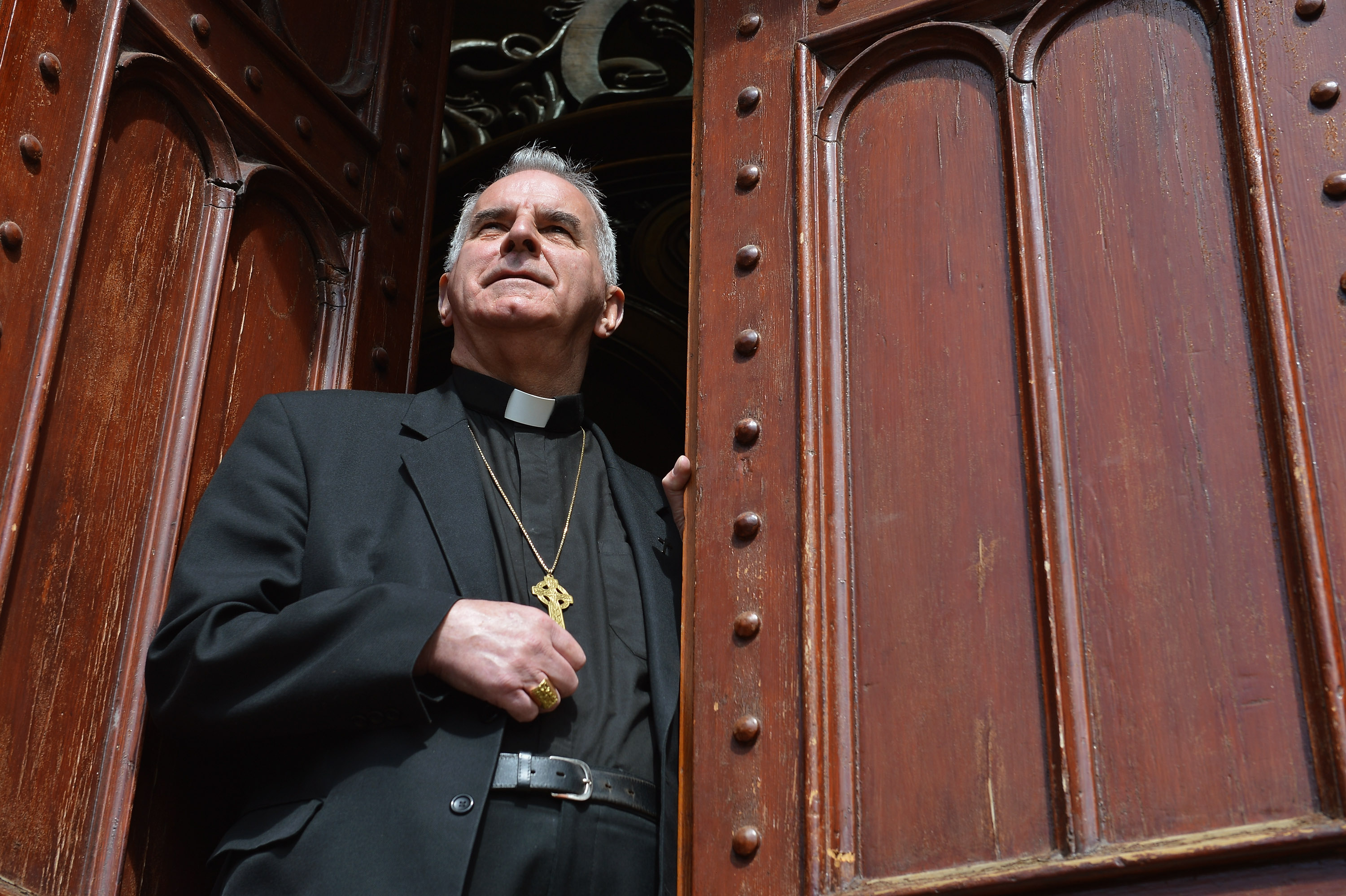
The New Bishop Elect Is Announced For St.Andrew's And Edinburgh

Dreher expects the La Repubblica report—describing a group of gay prelates blackmailed from outside criminal elements—is onto something. Charles P. Pierce derides Dreher’s term, “Lavender Mafia,” and is skeptical of the rumors:

What gives me a little pause is that the “secret gay cabal” theory is an old favorite among those curial powerbrokers for whom Machiavelli was something of a wimp. It also has been a regular trope of conservative Catholics seeking to defend the institutional Church’s inexcusable behavior in the face of the sexual abuse scandal, largely through the rancid technique of implying that being gay and being a pedophile are so closely allied that the former have a reason for covering up for the latter. (The linked piece from the Telegraph makes it clear that “the other side” that so exercised Dreher was not a “Lavender Mafia,” but the usual cast of institutional authoritarians up to and including John Paul II) It also is an old-line reactionary conspiracy theory beloved of, among other people, the late crackpot Malachi Martin.

And it can also be true. Pierce’s detection of the hoary old “lavender mafia” trope is dead-on. Rod’s gay conspiracy-mongering has more than a tinge of sexual panic to it (as does a large amount of Rod’s prose). But nonetheless, this conjecture of Rod’s is of a piece with everything I have heard and seen about the dysfunctional gay men who help run a church dedicated to the marginalization and stigmatization of their fellow homosexuals. Here’s where Rod and I agree:

True, this story is very thinly sourced, which is why I don’t say that I know it’s true. But I expect that it is true because of what I know all too well about the lavender mafia in the US Catholic Church, from things priests in a position to know about the situation in Rome have told me personally, and from situations like the Cardinal Groer debacle.

Where Rod errs, I think, is in believing that covering up child-rape has a direct link to homosexuality.

In some cases, truly fucked-up gay priests may indeed have been involved in the cover-up of child-rape or indeed committed the rapes. But many non-fucked-up gay ones had nothing to do with it and were part of the solution, not the problem. Many straight ones were among the worst conspirators and rapists. (One of the more chilling passages in the psychiatric evaluation of Father Lawrence Murphy, who raped 200 deaf boys in Milwaukee with impunity was about his choice for boys over girls. He said it was because there was no chance of conception if he raped boys.) We’re talking about categories and psyches and pathologies that go far beyond our ideas of gay and straight.

But the high camp sub-culture of the Vatican and large swathes of the Catholic priesthood definitely exists. I’ve seen and heard it with my own eyes and ears. It’s one reason I find the hierarchy so nauseating on this subject. It’s not so much the tortured psyches of these moral leaders, it’s the cynicism that necessarily follows that grieves me. Given the kind of worldly intrigue and politics that practically defines the Vatican, I wouldn’t be in any way surprised that there is a gay faction among the Cardinals; and a gay faction in the Vatican bureaucracy. And it truly saddens me.

The question is whether this faction is for or against reform. I don’t know. But I’ll pause to note that many gay leaders of the church in the past have been among the most conservative. They know their ermined, frilly closets depend upon total secrecy and separation from normal life. So take the latest example – Britain’s Cardinal O’Brien, derailed on his way to Rome because of credible reports of male sexual harassment of his inferiors. He’s no reformer:

O’Brien has been an outspoken critic of gay rights, denouncing plans for the legalisation of same-sex marriage as “harmful to the physical, mental and spiritual wellbeing of those involved”. He was named bigot of the year in 2012 by the gay rights group Stonewall because of his central role in opposing gay marriage laws in Scotland.

I used to think that the gay question was important to me but not that important in the context of the whole church. But as the years have gone by, I wonder if it isn’t actually central to the crisis in Catholicism today. We need honesty – honesty about gay priests who need to come out as a way to buttress their celibacy; honesty about how priests are human beings and can benefit from a stable relationship in ways that enhance rather than detract from their ministry; honesty about the absurdly high proportion of the priesthood that is gay; honesty about the desperate need for wives and daughters to be part of a priest’s life in order to help him understand the flock he is supposed to tend to; honesty about the total arbitrary nature of the ban on women priests; and a recognition that gay priests have been among the greatest leaders of the church and still could be if allowed an option for a loving relationship with another human being – as Cardinal Newman had his whole life.

“Be not afraid!” John Paul II once wrote. “Of what should we not be afraid? We should not be afraid of the truth about ourselves.” This conclave – created by one of the gravest crises in the history of the church – needs to lose fear. It needs to face the truth about itself. And it needs to grasp the opportunity Benedict XVI has given it: the chance for a new birth, a new era, a new broom.

(Photo: Cardinal Keith O’Brien poses for pictures following a conference at Gillis Centre on May 8, 2012 in Edinburgh, Scotland. By Jeff J Mitchell/Getty Images)

The Great Healthcare Scam (And The Future Of Journalism)

[youtube http://youtu.be/I4yIlbh0CwE ]

Steve Brill’s Time cover story is, to my mind, what journalism should now be doing. There is surely going to be a backlash soon against listicles, GIF-swaps and corrupting “sponsor content” in favor of deep, thoughtful reported journalism. Steve Brill is pioneering the next wave in journalism – the long, deep-dive, debate-shifting essay that addresses our reality in an accessible, clear but compelling way. It pains me that The New Republic didn’t run this as its first cover-piece in its new incarnation. It would have been such a fantastic statement about where they want to go (the return of serious reported journalism) rather than a suck-up interview with the president (a media “get” that is so very last decade).

I have only skimmed it and intend to read the whole thing today, and will write soon about it. But the real beauty of the piece is that all it does is go through various healthcare bills line by line and point out the massive mark-ups hospitals put on routine procedures and various drugs. We all knew this already. But what great journalism does is force us to know it better and definitively. Money quote:

When we debate health care policy, we seem to jump right to the issue of who should pay the bills, blowing past what should be the first question: Why exactly are the bills so high?

What are the reasons, good or bad, that cancer means a half-million- or million-dollar tab? Why should a trip to the emergency room for chest pains that turn out to be indigestion bring a bill that can exceed the cost of a semester of college? What makes a single dose of even the most wonderful wonder drug cost thousands of dollars? Why does simple lab work done during a few days in a hospital cost more than a car? And what is so different about the medical ecosystem that causes technology advances to drive bills up instead of down?

Yglesias wants more radical reforms than Brill proposes:

He wants to alter medical malpractice law, tax hospital operating profits, and try to mandate extra price transparency. That’s all fine, but it’s odd. His article could not be more clear about this—health care prices are high in America because, by law, we typically allow them to be high. When foreigners force prices to be lower, they get lower prices. When Americans force prices to be lower (via Medicare), we get lower prices. If we want lower prices through new legislation, the way to get them is to write laws mandating that the prices be lowered.

Sarah Kliff’s related thoughts:

What sets our really expensive health-care system apart from most others isn’t necessarily the fact it’s not single-payer or universal. It’s that the federal government does not regulate the prices that health-care providers can charge. You can see this in Luxembourg, which had the lowest health-care cost growth — 0.7 percent — of any OECD country in the 2000s. Its system allows patients free choice of what doctor to see or what hospital to visit but has the government set all rates for what doctors get paid for those visits.

Martin Gaynor is unsure about the effects of price controls:

[W]e don’t know what the impact of rate setting (price controls) would be on health care spending in the US. It’s possible that rate setting could prevent some of the most egregious practices recorded in the Brill article, but that depends on what’s enacted and how it’s enforced. Whether rate setting would substantially slow the rate of growth of health care spending isn’t clear. Further, the question that must be asked is what is the alternative? There’s evidence to suggest that robust price competition, such as we had with managed care during the 1990s, can perform very well in controlling costs. Unfortunately there has been a tremendous amount of consolidation in health care markets since the 1990s, raising serious challenges to competition. Whether the US decides to go with competition or with regulation, we have some serious work to do to make the system we choose work effectively.

Felix Salmon’s proposal:

Americans should have access to Medicare’s discounted rates — either by being eligible for Medicare, or else by signing up for health insurance with an insurer who allows Medicare to negotiate on its behalf. All of this would be voluntary, of course. If you want your insurance to cover the kind of things that Medicare won’t pay for, then you can do that. But if you think that Medicare-quality coverage is good enough, then you should be able to get it, at only a modest premium to what Medicare itself pays.

The Bloomberg View editors want more price transparency:

If health-care payers — Medicare, Medicaid, insurance companies, public-employee health-care plans — were to make public the prices that they pay, then maybe fees for services, equipment, facilities and medicines would fall. They could also reveal how much their beneficiaries pay out of pocket. Aetna and the state of New Hampshire have started doing this. It is exactly this kind of transparency that will improve the health-care system. Unfortunately, many contracts between hospitals and insurers contain gag clauses prohibiting the public release of pricing information. These gag clauses should be prohibited.

And, after reviewing the data, Drum wonders why Brill considers doctors underpaid:

The bottom line is that compared to other rich countries—all of which pay Medicare rates or less for medical services—American doctors are pretty well paid. The report also shows compensation as a ratio of the average wage in each country, and the story is similar (though GPs look a little closer to the OECD average when you compare their pay to average wages).

So is this more or less than U.S. doctors “deserve”? On that score, it’s worth pointing out that most American doctors have to pay their own medical school bills, a cost that’s picked up by the government in most other countries. Despite that, it’s a little hard to argue that American doctors, especially specialists, have been squeezed to the breaking point.

My specific thoughts ASAP.