The Best Deal The US Is Going To Get

Julia Ioffe observes that the UN Syria deal “is in fact a compromise, and, as such, it is a half-measure–even if, this day in age, half-measures are themselves quite the victory.” She looks at the agreement from Putin’s perspective:

The Russians can … say that they have upheld international norms protecting national sovereignty and insuring against unilateral military action. And whereas American policy on Syria has been mercurial and ever-changing, the Russians’ goal has been steadfast for the entire duration of the Syrian civil war: blocking American military intervention. This resolution, because it tables the use of force and kicks that can down the road, allows them to do that.

Most important, the Russians emerge from this latest scuffle as the world’s master diplomats and, finally, as America’s geopolitical equals.

This has been a major Russian goal—and a major reason for its zealous use of the Security Council veto—for the last decade: restoring Russia as a powerful global dealmaker. “Russia is not a vegetarian country,” says [Dmitri] Trenin [the director of the Carnegie Center in Moscow]. “It is not against the use of force. It just wants the use of force to happen with Russia’s approval. Putin wants these things done on an equal footing, not that he’s just helping America pursue its own agenda and getting commission for it.” Reserving the right to veto any future consequences for Assad’s potential violations of Resolution 2118 allows Russia to maintain this equal footing.

Larison points out that Russia would have vetoed a stronger resolution:

The language of the draft resolution is being treated as proof that Russia now “dominates” the Security Council. That sounds very dramatic, but I’m not sure that it makes much sense. Russia previously vetoed every Syria resolution no matter how “toothless” and unenforceable it happened to be, and now it appears to be willing to support one. That represents a modest shift in Russia’s position away from its previous pattern of vetoing everything that the other members proposed. I suppose one can call this Russian “dominance” of the Council if one wants, but it is the same “dominance” that every permanent member can have when it is willing to use its veto to shield a client from U.N. penalties.

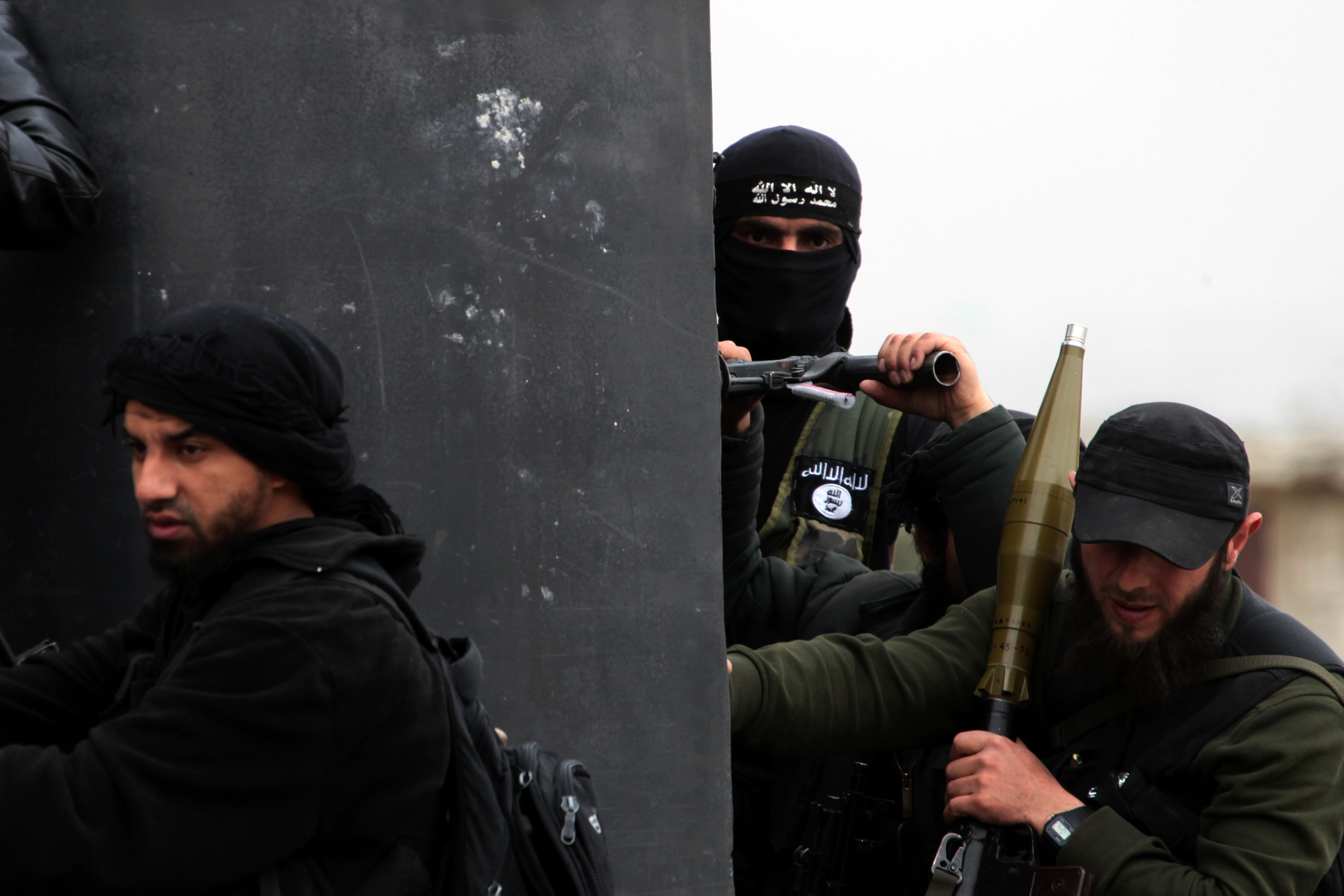
A Jihadi Bazaar

Christoph Reuter reports from Atmeh, a transit station in northern Syria where shopkeepers have created a consumer paradise for the foreign fighters on their way south. “[M]ore than 1,000 jihadists are staying in and around Atmeh, making it the densest accumulation of jihadists in all of Syria,” says Reuter:

The Turkish mobile phone network provides strong reception, and the shops carry Afghan pakol wool hats, al Qaeda caps and knee-length black shirts made of the same coarse material used in the Pakistani tribal regions. New restaurants have popped up, and a company called International Contacts books flights and exchanges Saudi riyals, British pounds, euros and US dollars into the local currency. The pharmacy sells miswak, a teeth-cleaning stick from Pakistan with which the Prophet Muhammed supposedly brushed his teeth.

A third Internet café opened in mid-June to accommodate the many jihadists wanting to communicate with their relatives and friends at home via phone, email or chat programs. This prompted the owner of the first café to hang al Qaeda flags above his computers as a sign of loyalty to his customers. The move has improved business despite the growing competition. The heavily armed customers use Skype to tell their friends at home about what a paradise Atmeh is. The rents are cheap, they say, the weather and food are good, they can walk around with their weapons and, with a little luck, they can even find wives.

The Brutal Weapons That Don’t Cross The Red Line

Charli Carpenter points to an ominous infographic from the UK nonprofit Action On Armed Violence:

IGp-DD-Overview

It shows some of the worst conventional weapons used in Syria:

What NGOs are calling attention to is what Nina Tannenwald refers to as a perverse effect of international prohibitionary norms. While norms can constrain bad behavior, such norms also exert “permissive effects” whereby the social sanction against one type of action implicitly legitimizes others. The international reaction against chemical weapons in Syria, to the exclusion of attention to other types of civilian harm, constitutes such a “permissive effect” on civilian targeting and the indiscriminate use of explosives which should rightly be questioned by human security advocates.

The organization says such weapons have been responsible for about two out of every five deaths in the civil war. Ninety percent of those victims have been civilians.

Neocon FAIL Update

SYRIA-CONFLICT-NUSRA

Remember the debate the Iraq War alliance of neoconservatives and liberal interventionists wanted over Syria? Either we back democratic forces ousting Assad or we are complicit in mass-murder. As with Iraq, they wanted no debate about what might happen after Assad was gone, because that might prompt memories of what happened the last time a Baathist dictator fell in a country riven by sectarianism.

And they were always a little hedgy when it came to the nature of the forces fighting Assad. They ignored the deep sectarian grievances (as they did in Iraq); they spoke of “democracy” as an alternative, even as the exile groups and the Free Syrian Army were unable to muster the kind of intensity and fighting skills of Sharia-law Sunni Jihadists. And now, just a few weeks after the neocon-liberal interventionist chorus demanded we aid the rebels as quickly as possible, we discover the following:

11 rebel groups issued a statement [Tuesday] declaring that the opposition could be represented only by people who have “lived their troubles and shared in what they have sacrificed.” Distancing themselves from the exile opposition’s call for a democratic, civil government to replace Mr. Assad, they called on all military and civilian groups in Syria to “unify in a clear Islamic frame.” Those that signed the statement included three groups aligned with the Western-backed opposition’s Supreme Military Council … “We found it was time to announce publicly and clearly what we are after, which is Shariah law for the country and to convey a message to the opposition coalition that it has been three years and they have never done any good for the Syrian uprising and the people suffering inside,” said [Mohannad al-Najjar, an activist close to the leadership of one of the statement’s most powerful signers, Al Tawhid Brigade].

So Leon Wieseltier and Christiane Amanpour were unwittingly arguing only a couple weeks ago for giving arms to groups increasingly indistinguishable from those determined to impose Sharia law in Syria. It took several years for the errors of that very same pro-war coalition to realize that their equally admirable goals in Iraq were completely overtaken by reality (and I was one of them). It has taken just a couple of weeks for the same kind of brutal reality to bite in Syria.

Can you imagine the pickle we’d be in right now if we’d been aiding the opposition for as long as John McCain wanted? In a civil war, the extremists always gain the upper hand. And we’d have given serious arms – even indirectly – to forces bent on the most brutal methods of Jihad.

(Photo: A Turkish fighter of the jihadist group Al-Nusra Front, bearing the flag of Al-Qaeda on his jacket (C-back), holds position with fellow comrades on April 4, 2013 in the Syrian village of Aziza, on the southern outskirts of Aleppo. By Guillaume Briquet/AFP/Getty Images.)

What Signal Does Not Striking Syria Send?

Fisher claims that it “boosts the credibility of [Obama’s] stated position that he isn’t seeking Iran’s destruction and that he will seek detente with Iran if it first meets his long-held demands on uranium enrichment”:

Here’s where the parallel with Syria is really important: Iranian leaders distrust the United States deeply and fear that Obama would betray them by not holding up his end of the bargain. That’s been a major hurdle to any U.S.-Iran nuclear deal. But seeing Assad’s deal with Obama work out (so far) sends the message to Iran that it can trust the United States. It also sends the message that making concessions to the United States can pay off. Iran’s supreme leader has been talking a lot lately about flexibility and diplomacy toward the West. So it’s an ideal moment for Obama to be demonstrating flexibility and diplomacy toward the Middle East.

Scoblete thinks Fisher goes to far:

[I]t’s going to be very difficult for Iran to accept the idea that the Syrian deal shows the Obama administration isn’t seeking Iran’s destruction when the Pentagon talks openly about arming Syria’s opposition even with a chemical weapons deal in place. That sends exactly the opposite message to Iran, who need only look to Libya to understand the consequences of accepting a Western disarmament deal.

Larison adds:

Iran can’t help but notice that states that agree to disarmament don’t buy themselves security from attack or foreign support for their domestic opponents. The fact that the U.S. continues to threaten Iran with attack in the name of “prevention” must mean more to Tehran than the U.S. decision not to attack Syria. The recent conciliatory gestures from Rouhani are an encouraging sign that tensions between the U.S. and Iran can be reduced, but there has to be some effort on Washington’s part to reciprocate or the chance will quickly be lost. Avoiding an attack on Syria should make diplomacy with Iran more productive, but whether it produces an agreement will depend on the willingness of the U.S. to make the concessions necessary to reach one.

As If Syria Weren’t Dangerous Enough

Annie Sparrow recently bore witness to the country’s damaged healthcare system:

No vaccination means outbreaks of measles, and no pharmacies mean people dying of hypertension and heart disease. Food insecurity leads to malnutrition, rickets and increased vulnerability to infectious diseases. No contraception and no maternal health care lead to unplanned pregnancies at a time when antenatal and maternal health is denied. Without specialist surgeons, lacerations become loss of function, wounds become amputations.

If we can’t stop the killing in Syria, let’s at least pry open the borders so that aid and medical care will flow freely into Syria, instead of refugees flowing out, and we might at least curtail the spiraling of Syria from a middle-income country into a developing country with the diseases of poverty. And as the world mobilizes to stop the Syrian military’s use of chemical weapons, let us also mobilize to stop its use of another weapon of mass destruction: the deliberate attacks on medical care.

The People vs The Pundits

Here are some results from a new poll on Syria that should make some of the pontificators blush. Sargent:

An overwhelming 79 percent of Americans support the proposed deal for international control over Syria’s chemical weapons Obama has embraced. There’s continued public opposition to strikes, with only 30 percent in support. The public gives Obama’s overall handling of the situation low marks.

But close to 80 percent approval of the result! More to the point:

Sixty percent say he “sticks with his principles,” roughly unchanged since January 2012. A plurality thinks the initial threat of missile strikes helped the situation by pressuring Syria to give up its chemical weapons — meaning Americans accept Obama’s argument about the impact of the threat (even if they oppose action) and don’t see his change of course as somehow diminishing it. A plurality also says Obama made a good case in his speech the other night — despite widespread pundit derision.

They don’t like his handling of the crisis but see his threat to strike as central to getting the result they want. Not entirely coherent – but surely, in some ways, a sign that the public prefers substance over style. At some point, the commentariat might take note.

How Many Syrian Rebels Are Terrorists? Ctd

Jamie Dettmer summarizes a new report that sheds light on the question:

IHS Jane’s Charles Lister, an insurgency expert and author of the analysis, estimates that around 10,000 are jihadists fighting for al-Qaeda affiliates (the Islamic State of Iraq and the smaller Jabhat al-Nusra), while another 30,000 to 35,000 are hardline Islamists, who have less of a global jihad vision but share a focus on establishing an Islamic state to replace Assad. Another 30,000 or so are more moderate Muslim Brotherhood Islamists. He estimates that moderate nationalist fighters number only about 20,000, with the Kurdish separatists being able to field only 5,000 to 10,000. …

On his Twitter feed, Lister concedes that it is a “rough science” to estimate rebel numbers and assess their ideological coloring, but he says he has based his calculations on open sources as well as intelligence assessments, and on interviews with opposition activists and militants. He notes that while the al Qaeda affiliates don’t have the largest numbers, “they they have the most resources and best weapons, and they have very good organization.”

Eli Lake reports on fighting amongst the rebels:

The same day the United States and Russia announced a plan to disarm Bashar al-Assad of his chemical weapons, a fresh round of fighting erupted along the Syria-Iraq border. This time, it was rebel versus rebel—specifically, al Qaeda-linked rebels against the more moderate elements of the opposition. … [T]his weekend’s clashes—which came after a Sept. 12 messagefrom al Qaeda leader Ayman al-Zawahri instructing his followers in Syria not to collaborate with the FSA councils—could mark a more violent stage for the opposition’s fractured ranks.

Earlier analysis here.

It Was Assad

U.N. Report on Chemical Attack in Syria by Robert Mackey

This embed is invalid


The UN’s report on the use of chemical weapons in Syria is above. Fisher observes that, while “the investigation was barred from assigning blame, a number of details in the report seem to strongly suggest that the government of Syrian leader Bashar al-Assad was likely responsible.” Among other evidence:

The U.N. investigators analyzed 30 samples, which they found contained not just sarin but also “relevant chemicals, such as stabilizers.” That suggests that the chemical weapons were taken from a controlled storage environment, where they could have been processed for use by troops trained in their use. This would seem to downplay the possibility that the chemical weapons were, as some speculated, fired by rebels who had stolen them from government stockpiles.

Moses Brown likewise thinks the evidence points to the Assad regime:

You have claims the attacks were faked, the victims being Alawite hostages from Latakia, that were somehow driven through hundreds of miles of contested and government controlled territory to Damascus.  There’s claims that this was some sort of accident involving Saudi supplied chemical weapons, which fails to explain how one incident could effect two separate areas.  Other claims centre around the opposition having sarin, based off reports in Turkey in May, where it was reported Jabhat al-Nusra members were arrested with sarin.  The “sarin” was later reported to be anti-freeze, and only this week some of the members are being prosecuted for trying to make sarin, having only a shopping list of ingredients, rather than actual sarin.  It seems to me, that compared to the evidence of government responsibility for the attacks, the evidence of opposition responsibility seems very poor.

Peter Bouckaert is on the same page:

The various theories claiming to have “evidence” that opposition forces were responsible for the attack lack credibility. This was not an accidental explosion caused by opposition fighters who mishandled chemical weapons, as claimed by some commentators online. The attacks took place at two sites 16 kilometres apart, and involved incoming rockets, not on-the-ground explosions. This was not a chemical attack cooked up by opposition forces in some underground kitchen. It was a sophisticated attack involving military-grade Sarin.

C.J. Chivers weighs in:

Put simply, viewed through a common-sense understanding of the limits and conditions of the battlefield, the rebels could not have done this. Claims of rebel culpability are now specious; technically and tactically implausible, they are too outlandish for even a sci-fi script.

Drum adds:

Added to all the other intelligence pointing in the same direction, there’s really no longer any case to be made that this was some kind of false-flag rebel operation. It was a chemical weapons attack mounted by the Assad government.

The Difficulty Of Destroying Chemical Weapons, Ctd

In addition to being time-consuming, it’s costly:

[R]emember that chemical weapons destruction is not just a domestic pursuit. Overseas, the United States has spent $13 billion since 1992 on the Nunn-Lugar Cooperative Threat Reduction Program (CTR), which works with former Soviet states on securing and dismantling nuclear, chemical, and biological weapons. $1 billion of this went to just one project—the Shchuch’ye Russia chemical weapons destruction facility—which has since eliminated more than 2,365 metric tons of chemical weapons.

Still, it’s cheap when compared to actual war:

We spent at one point $10 billion per month during the Iraq War, which was fought over the illusion of WMDs. And in Syria, Chairman of the Joint Chiefs of Staff General Martin Dempsey said, “Thousands of special operations forces and other ground forces would be needed to assault and secure critical sites…Costs could also average well over $1 billion per month.” So destroying all of Syria’s actual chemical weapons for something in the neighborhood of a few billion dollars would be a fantastic financial bargain.

Elsewhere, Megan Garber walks through how to dismantle a chemical bomb.