Ukraine On The Brink, Ctd

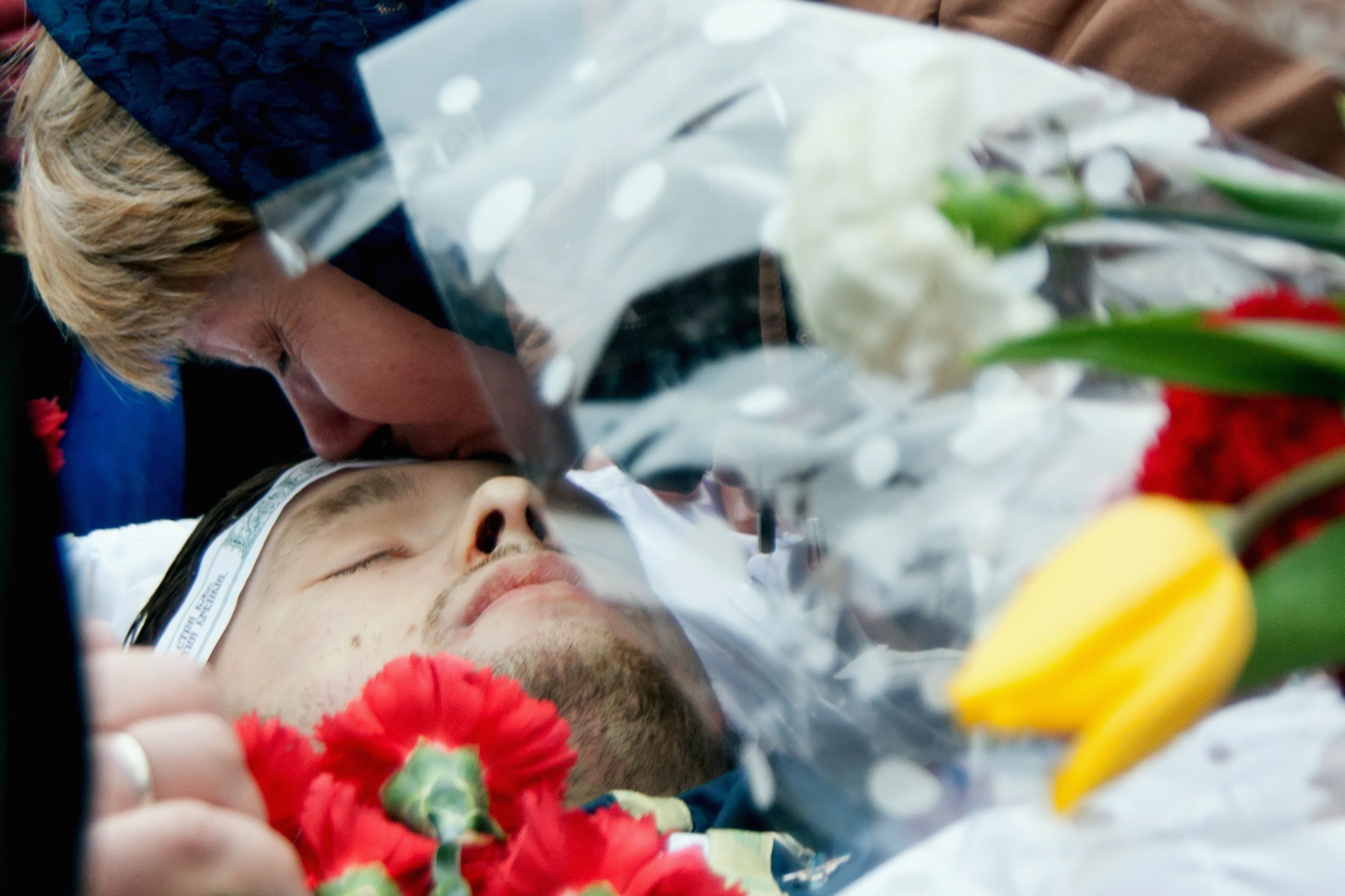
Funeral Ceremony in Kharkov

Readers comment on the ongoing crisis:

We have been failed deeply by the U.S. press on this conflict. If I single out the NYT, it is only because it is the newspaper I read most often, but the NYT has been uncritical in its coverage of the Maidan protests and obsessed with the personality of Putin and the question of Obama’s leadership. There has been very little attempt to explain Russia’s historical relationship with Ukraine; to critically evaluate Western political maneuvering in the region; or to analyze the actions taken by the Ukrainian interim government that have antagonized the population of eastern Ukraine. The French and British press are not much better (example here). This is not to excuse or exculpate Putin’s actions, but simple to insist that we have journalism that is critical and interested in facts, history and the ideological point of view of our putative adversaries rather than simply the pursuit of U.S. foreign policy goals.

In any case, I was very pleased to find your link to Anatol Lieven’s article, and your quote:

I fell prey to this myself, buoyed by obvious and instinctive support for any country resisting the boot of the Kremlin, and too blithe about the consequences of a revolution that overthrew a democratically elected president.

Thank you for including a fuller range of voices in this discussion. I really do believe that your ability to revise your judgment is why so many of us keep coming back to the Dish despite our disagreements with you.

Another isn’t as complimentary:

I don’t think your assessment of Putin is correct; I don’t think he is desperate or panicked. There are real reasons that Putin and Russia think the way they do and why they did what they did in Crimea. Think back to the beginning of the November protests.

They were instigated by a proposed trade union with Russia and fueled by a virulent strain of neo-Nazism and ultra nationalist sentiment. They toppled statues of Lenin, shouted anti-Russian slogans, and brought up memories of World War II. This sent a worrisome message to anyone who was Russian.

Then a deal was struck with Yanukovych, who admittedly did a poor job managing the crisis, and it was enough to keep him in power for another few months. But the right-wing protesters took objection to it, initiated some violence and, as often happens in these cases, it spiraled out of control. Yanukovych fled, and practically the first actions of the new parliament were to disband the Berkut (shades of Iraq circa 2003), vote to try Yanukovych in the ICC (which the Ukraine has not even acceded to), and outlaw the official use of Russian.

So what is Russia supposed to do? Whatever you might say about Putin or the Russian people, they are fiercely nationalistic. Putin’s first job is to protect the Russian people. An autocrat is nothing without his people, and if he isn’t going to do anything when there are visible and real threats to Russians in Crimea, then he isn’t worth anything as a president. What is happening in the Crimea is not the Sudetenland 1938; it is North Cyprus 1974. In fact, the parallels are eerily similar from the coup in Greece to the language used by Turkey and Russia.

Now the Turks were more blunt and direct in their confrontation than Russia, which is fortunate for Crimea, since no blood has been spilled. In fact, Russia’s language and actions have been very consistent – urging peaceful resolutions, not engaging in confrontations, etc. The only bellicose language is coming from the putsch regime in Kiev, which amounts to empty bluster.

President Obama has to be very careful not to misinterpret Russian actions here, which you seem to have done. Trying to “isolate” Russia is laughable: diplomatic impossible due to Russia’s seat on the Security Council, and even at the height of the Cold War American always kept an embassy in Moscow, and economically improbable given Europe’s reluctance to let go of Russian gas. Also, did you not write previously about how isolating an autocratic regime binds the people closer to that regime. This is your whole justification for talks with Iran, right?

Don’t fall into the Munich (Kagan, Kristol) Fallacy; not every international even is analogous to World War II. Let this scenario play out. Putin doesn’t want a war. I doubt he even wants the Ukraine now. What he wants is stability.

Another reader:

I appreciate that you don’t want to see us get militarily involved in the Ukraine (I don’t either), but your analysis seems to focus primarily on whether Russia was right or wrong to move in defense of the rights of ethnic Russians in the Ukraine. Take a step back: Russia has invaded a sovereign nation. We have treaties that recognize and protect the sovereignty of the Ukraine as its own country.  Whether Putin has his reasons for protecting people there or not, he’s still moved his army into the Crimea and ordered the Ukraine forces stationed in that area to disarm.

This was only okay in early 20th-century politics.  This is the kind of thing Iraq did with Kuwait, when it was run by someone who didn’t see how politics had changed since the end of the Cold War.  And it’s really weird to see Putin make a similar mistake; he should be smarter than that.

I really hope that this can be worked out diplomatically, or that coordinated economic sanctions will be the worst that comes out of it.  And we absolutely need to involve other countries and not act alone; we aren’t the only country that has recognized the Ukraine’s sovereignty and right to exist.  But the Crimea can’t be left to Russia.  If Putin is able to take advantage of turmoil in the Ukraine to swoop in and steal a part of their territory, it tells him (and other nations) that opportunistic military action against weaker countries is okay.

Just because we got away with it in Iraq (and we’re now regretting it) doesn’t mean we should ignore it when it happens now.  At least with Iraq we spent months beforehand spreading disinformation to justify our actions; Putin doesn’t even have that.

Another:

This eagerness to dismiss Putin as crazy and foolish worries me. Scary and wrong as he may be, isn’t it possible Putin is crazy like a fox? Isn’t it possible he knows he’s losing a lot in the short term – whether it’s influence in the future Ukraine (arguably minimal regardless, as long as it’s ruled by a Western-oriented Kiev), or popularity in Europe (arguably irrelevant, as long he has so much gas to sell them) – but he doesn’t care, because the world’s outrage (outrage I tell you!) only guarantees everyone will tread lightly around him for ten more years? Surely these limited military moves (so far) buy him major fear points versus all kinds of enemies and frenemies, internally and internationally. If he mounts a full scale invasion, then he’s nuts, but if it’s anything shy of that – I think we have to ask ourselves if he’s not a far better chess player than anyone wants to admit.

This guy lets oligarchs get rich mostly to gather more power to himself, not to build the Russian middle class. Same with foreign investment. If you’re building a modern power structure where fake democracy married to provocative foreign policy serves your one-man-rule purposes best – and let’s face it, he’s one of the world’s most durable leaders of one of the most powerful countries – then maybe he’s playing his game the smartest way it can be played.

Another addresses the nuclear question:

Claiming that the Russian invasion of the Ukraine sends the message that one should never give up one’s nukes is far too facile. Russia didn’t invade the Crimea because Ukraine gave up its nukes. The Russians invaded because the Ukraine couldn’t get their shit together and were descending into a civil war. Do you really think Russia would be less inclined to invade if a nuclear armed Ukraine were coming apart at the seams? More likely is that Russia would step in and “secure” Ukraine’s nuclear arsenal with Europe’s blessing.

The Khadaffi situation is similar. We didn’t invade Libya once Khadaffi gave up his nukes. He was executed by his own people after a popular revolt. Don’t fall for this neo-con nonsense. The arguments have a veneer of truth that fades away as soon as they are subjected to scrutiny.

One more reader:

My ex-husband is an ethnic Russian from Cherkassy (a small city on the Dnieper, about 100 miles outside of Kiev), so our 4-year old son is 1/2 Russian-Ukrainian (the term my ex uses to refer to himself) and our son’s grandparents live there. We don’t communicate much, and when I broached the subject two weeks ago (his parents are planning a trip here at the end of March, and I’m concerned that they either won’t make it here or won’t make it back) he downplayed it – conflicts in Kiev are localized, what is happening on Independence Square is far from the ideas of majority of “normal Ukrainians”. I haven’t been in touch since because I imagine he’s not happy about how things are going (he has praised Putin in the past, and he does consider himself a Russian before Ukrainian) and frankly I’d rather avoid him (we divorced for a reason!). But I do worry about his parents, who are sweet, lovely folks, and recent events make me aware just how little I understand about my son’s family’s complicated social and political background.

So thanks for putting the coverage where I’m guaranteed to see it. A founding subscriber, I check the Dish several times a day.

More reader commentary on our Facebook page.

(Photo: Around 3,000 people attend the funeral ceremony of Vlad Zubenko, who died during the anti-government protests at the Independence Square, on March 2, 2014. By Sofiya Bobok/Anadolu Agency/Getty Images)

The Rationale For Sanctioning Russia

Kimberly Marten explains it:

Sanctions would probably not do much to hurt direct Russian economic interests, given the dependence of many E.U. countries on Russian gas imports and the absence of any key economic levers in Europe or North America. Yet the sanctions threat could still have a negative impact on Russian President Vladimir Putin in an indirect way, by contributing to instability among the elite clans who vie for control over Kremlin policy.

Western pundits have a tendency to equate “Putin” with “Russia,” seeing their interests as one and the same.  But Putin does not rule alone.  Instead he sits at the top of competing informal network groups who vie against each other for political power, in a Kremlin game that Philip Hanson has likened (in an edited scholarly volume) to “dogfights under a carpet.” Putin’s political longevity is testament to his skill in balancing and managing this network competition, as Henry Hale recently argued.  Putin built his reputation on maintaining political and economic stability in Russia, replacing the chaos of the immediate post-Soviet years with order and predictability—and that means containing the dogfights.  If elite battles break out into the open it will be a sign of Putin’s weakness, and will likely lead contenders to emerge to challenge him.

Rosie Gray notes the EU’s reluctance to pursue sanctions:

“The basic issue is that it’s easy to talk about economic sanctions when you don’t really have an economic relationship with Russia, like the U.S.,” said Alex Kliment, director of emerging markets strategy for the Eurasia Group. “They [the EU] have a huge economic relationship with Russia and could inflict significant economic pain on Russia through sanctions.”

“But they also, by virtue of that economic relationship with Russia, are much more vulnerable,” Kliment said. Kliment said Germany, with its dependence on Russia’s vast oil reserves, would be a deciding factor.

Danny Vinik expects Germany to continue to resist sanctions:

Merkel is worried that Putin will cut off exports to the European Union. If that were to happen, it would cut off a huge energy source for Germany, and the rest of Europe, and cause gas prices to skyrocket. The United States would not be immune from higher gas prices, but European nations, particularly those like Germany that are highly reliant upon Russia’s energy exports, could also face shortages that upend their markets. Germany is looking to avoid that at all costs.

Keith Johnson predicts Putin won’t use Russia’s gas exports as a weapon:

Russia would almost certainly lose more in an energy war with Europe than it would gain. Fundamentally, energy trade between Russia and Europe is a two-way street. As much as European policymakers fret about dependence on Russian gas, Gazprom frets about dependence on the European market, which accounts for fully three-quarters of its export sales. More broadly, Moscow relies on oil and gas exports for one half of its federal budget. That makes a prolonged shut off of gas exports to Ukraine and the rest of Europe a dangerous proposition for Russian President Vladimir Putin.

On The Ground In Crimea

Vice reports on the standoff:

Natalia Antelava covers Crimea’s ethnic divisions:

“I don’t mind Ukrainians in principle, but events in Kiev showed their true Fascist face,” Valentina Nikolaeva, a seventy-two-year-old Russian Crimean, told me. “They want to exterminate us.” Every day, she joins pro-Kremlin demonstrators, who gather under a statue of Lenin in front of a local administration building. “Thank God for Putin,” she said. “He is the only one who will protect us.” Nikolaeva told me that she likes her Tatar neighbors, a comment that infuriated a man standing next to us, who shouted, in response, “Tatars are animals! They are waiting for a chance to kill us.” Nikolaeva argued back, but soon she and the man were surrounded by others, all of them shouting, and she was completely drowned out.

Previous Dish on the Tatars here. The second part of the Vice series is after the jump:

Putin-Envy

I described this sad phenomenon on the Cheney-esque right last night. But a reader is particularly sharp on the subject:

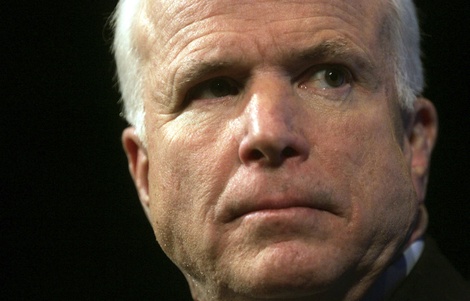
You and I were watching McCain at the same time and thinking essentially the same thing. McCain, GERMANY-CARNIVAL-ROSE-MONDAY-STREET-PARADElike Graham, Bolton and others of that ilk, watch the events in Ukraine and are filled with Putin-envy. Vladimir Putin is a master of the game, they seem to think. Look at his almost effortless projection of force, his willingness to dispatch troops and threaten war with so little hesitation or circumspection. They love it! If only we had our own Putin at the helm!
But how pathetic and short-sighted is this vision? In fact, Putin is stirred to move because he feels humiliated. His puppet was ousted from power by a popular uprising. His plans to seal Ukraine to Russia for another generation are evaporating. His hold on a plausible plurality of the Ukrainian people was shattered. The fuel deals are clearly seen as a crude power-play by most Ukrainians. Even the Russian-speaking Ukrainians of the eastern and southern provinces are slipping out of Moscow’s grasp. There, when we look more deeply into the demographics, we see that even if the 50+ers feel nostalgia for Moscow and support for the Kremlin, the generation of 35-down increasingly sees more promise from an alignment with Europe. The pro-Russian regions of Ukraine will predictably cease to be pro-Russian within a generation.

Putin, the crass intelligence officer, turns quickly to brute force. But what is the cost to him of this step? Not only in Ukraine, but in all the other states of the “near abroad,” the fear of Russia is moved up several notches, the image of Russia as a reptilian predator rises. Even within Russia, most citizens understand the shrill propaganda of ORT (the Russian state TV) for what it is and consider war with Ukraine to be irresponsible nonsense. Putin’s credibility as a leader fades. Increasingly he appears to be someone motivated by fear of loss and failure, not by greatness.

The Putin who shows his face to the world today is not some dynamic new Napoleon delivering a new master stroke. He is a tired, failed leader, who is steadily losing the confidence of his own people, who is seen as hopelessly corrupt, and who is being deserted by Russian elites and detested by the youth in particular. Putin is a spent force. He may hang on for another year or another decade, but in Russia the demand for a new leader will grow steadily from this point.

The McCains, Grahams and Boltons don’t understand this dynamic, and that’s frankly because they are too much like Putin. The worst imaginable thing would be for the leaders of the West to think and behave like Putin.

That would lay the ground for a cold war or even a major new land war in Europe – at a time when this is utterly unnecessary. There are powerful historical forces at play that will achieve what needs to be achieved. Putin is on the wrong side of them. His position is hopeless.

The events unfolding in Ukraine, in Crimea and Moscow are very significant, and perhaps the weightiest developments since the collapse of the Berlin Wall. On the other hand, what we see transpiring in Washington, among its pundits and papers like WaPo and WSJ, fully exposes the bankruptcy of the American chattering classes, and particularly of the world inside the Beltway. They are beholden to a great military machine which seeks conflict where it can find it, and their appreciation of the forces driving the world are laughably simplistic. At this point I thank god for Barack Obama, and even more, for Angela Merkel and other European leaders who have drawn the reasonable lessons of America’s Iraq debacle – even as Americans seem unwilling to think about it.

(Photos from Getty)

A Russian Ultimatum? Ctd

A tense series of tweets from reporters at Time (Shuster) and Haaretz (Pfeffer), embedded in chronological order:

Pfeffer says in his latest update that “Russian commander said would respond to Ukrainian demand by Noon” – which is two hours from now. So the Dish is headed to bed. But you can follow Pfeffer here and Shuster here. Earlier coverage of the ultimatum here. Updates from the morning:

The Best Of The Dish Today

Winter Storm Brings More Snow To DC Area

I happened across John McCain’s speech to AIPAC this afternoon (I was on a treadmill with nowhere to go). It really was a beaut: full of the usual bluster and bravado and bad but winning jokes. And, of course, no strategic sense whatever except bromides about “strength” and “weakness”. Believe it or not, he declared Obama “weak” and all but invited Iran and China and Russia to take advantage of it. This, I surmised, was an act of indirection: he was really goading AIPAC to help secure a war against Iran and permanent annexation of the West Bank. To what end? As I said, you don’t listen to a John McCain speech for strategy, or an exploration of costs and benefits in a dynamic and tense situation. What’s important is strength! As if “strength” without strategy helped us in Iraq or Afghanistan.

But what’s fascinating to me is a kind of Putin-envy. For all the loathing McCain has for the desperate autocrat, he also clearly gets a thrill up his leg when talking about him. If only the US president could see that this is still emphatically a zero-sum world, that moving your military around is the first thing you do when confronted with a foreign policy challenge. If only we could be as tough as Vladimir! You sense in McCain’s worldview – and that of countless others still stuck in 1978 – that we need to out-Putin Putin.

McCain is too amped up right now to see that, in fact, Putin is now out-Putining himself. Russians, it appears, want nothing to do with going to war with Ukraine:

The Kremlin’s own pollster released a survey on Monday that showed 73% of Russians reject it. In phrasing its question posed in early February to 1600 respondents across the country, the state-funded sociologists at WCIOM were clearly trying to get as much support for the intervention as possible: “Should Russia react to the overthrow of the legally elected authorities in Ukraine?” they asked. Only 15% said yes – hardly a national consensus.

From Simferopol, Simon Shuster counts the costs already incurred: $60 billion was wiped off the Russian stock exchange today, and the ruble went into free-fall. Gazprom lost $15 billion in value in one day. Of Putin’s neighbors, almost all have come out against Russian aggression: Kazakhstan wants an end to hostilities right away; China opposes any intervention; Poland would have a strong case, along with the Baltics, for even stronger ties to the West, as do all of Russia’s neighbors with Russian-speaking minorities. And that leaves aside the possibility of cutting off the Western bank accounts of Russian oligarchs and of revoking Russian inclusion in the G-8.

None of this has occurred to John McCain of course. Which is one reason – after his similar “We are all Georgians now!” hissy-fit in 2008 – that Americans elected Obama instead of him. That decision looks wiser and saner by the day, doesn’t it?

Scroll down for complete Ukraine coverage. It’s interrupted occasionally by elephants, cats, dogs, and “Bradley Manning’s” Oscar selfie.

The most popular post of the day was “In Another World?“, followed by “Hobbled By The Iraq Legacy.”

See you in the morning.

(Photo: Snow falls in front of the U.S. Capitol on March 3, 2014 in Washington, DC. By Mark Wilson/Getty Images.)

Putin’s Unintentional Nation Building

Tikhon Dzyadko expects an invasion to bolster Ukraine’s new government:

Questions about the legitimacy of the new government in Kiev will fall away; the IMF and the West will be tripping over themselves to help Ukraine financially; this, in turn, will prop up the government in Kiev, which is currently broke; and, finally, the Ukrainian people will be united in their fight against an occupier—and isn’t this exactly the kind of unity you need after a revolution?

Russia, on the other hand, will be left with international isolation and yet another neighboring territory recognized by no one. In 2008, it was Abkhazia and South Ossetia; now, it is the Crimea. But in acquiring the Crimea, Russia will lose Ukraine, its biggest partner for transporting gas to Europe.

Motyl is on the same page:

If Putin knew his history, he’d know that nothing consolidates post-revolutionary regimes like invasions. Some counter-revolutionaries join the invaders, but most people put aside their differences and rally around the flag. The threat of existential annihilation strengthens post-revolutionary states, invigorates national identities, and encourages leaders to adopt radical change. The ongoing Ukrainian response to Putin’s invasion fits this bill to a tee: even the country’s top oligarchs, all Russian speakers, have condemned the invasion and rejected partition. When the crisis ends, Ukraine will be stronger and its diverse population may finally possess all the features of a modern nation. Ironically, Putin might accomplish what Ukraine’s elites have thus far failed to achieve: effective state building and genuine nation building.

Putin has all the strategic sense of Dick Cheney, doesn’t he?

Did Putin Drink His Own Kool-Aid?

Leonid Bershidsky wonders:

Most Russian media are now under his control, and Ukrainian media were steamrolled by former president Viktor Yanukovych. Dozens of small, unreliable sites provide too much noise and too little in the way of verifiable information. Besides, there is the Russian bureaucracy with its own signals on Ukraine: The Federal Migration Service recently reported that 143,000 Ukrainians have asked for asylum in Russia in the last two weeks.

In his phone conversations with foreign leaders, Putin uses all his eloquence to defend the state-controlled media’s uncomplicated view of the situation, as if his interlocutors had no other sources of information but Russian TV.

It’s enough to make you think that hermetically sealed-off paranoid tryants are not always the best judges of their own interests, doesn’t it?

A Russian Ultimatum?

Russia is allegedly pressuring Ukrainian soldiers in Crimea to surrender:

Ukrainian defence sources have accused Russia’s military of demanding the surrender of their forces in Crimea. Russia’s Black Sea Fleet chief Aleksander Vitko threatened a full assault if they did not surrender by dawn on Tuesday, the sources said. However, Interfax news agency later quoted a Russian spokesman denying that any ultimatum had been issued.

Daniel Berman analyzes the reports:

I make use of the term “supposed” before the ultimatum, as the Russian Foreign Ministry has claimed no such ultimatum has been issued, though they appear to be quibbling more over the use of the word “ultimatum” than its content. As for why Russia issued the ultimatum, the answer is simple. Russia is operating on a schedule.

Regardless of warnings of World War III or a new Cold War, the current conflict will end in a “negotiated” settlement which will in reality ratify the actual situation on the ground. It will ostensibly be an agreement between the Ukrainian government and Moscow, but will in reality be reached between the United States and Russia and imposed on the Ukrainians.

Russia’s interests are in ensuring that when the time comes to sit down and work out the terms of such an agreement, they are in a position to achieve all of their political objectives. As one of their key objectives is to retain control of the Crimea, either de facto or de jure, it is vitally important that no military forces loyal to Kiev remain in the Peninsula when the game of military musical chairs stop.

But the Ukrainian troops don’t seem to be backing down. In one dramatic example, the Guardian shares an exchange between a Ukrainian marine and a Russian general. The Ukrainian:

“From my childhood I have lived right next to Russia, we have always looked at Russia like an older brother or a helper, and we always were thrilled by your courage in different wars and operations, and saw you as a defender and expected help in any situation. Nobody could have imagined that such an awful time would have come to our country, but in our weakest moment, you have decided to do this. Do you not think your current behaviour will ruin not only our country but yours?”

The general responds with a long answer about Russia’s greatness, which culminates in an ode to the Winter Olympics, held last month in Sochi. “The international community trusted Russia to hold the Olympic Games, and not every country in the world is trusted with something like that,” he says

Christopher Miller, editor of the English-language newspaper Kyiv Post, backed up the above tweet with another:

Face Of The Day

Concerns Grow In Ukraine Over Pro Russian Demonstrations In The Crimea Region

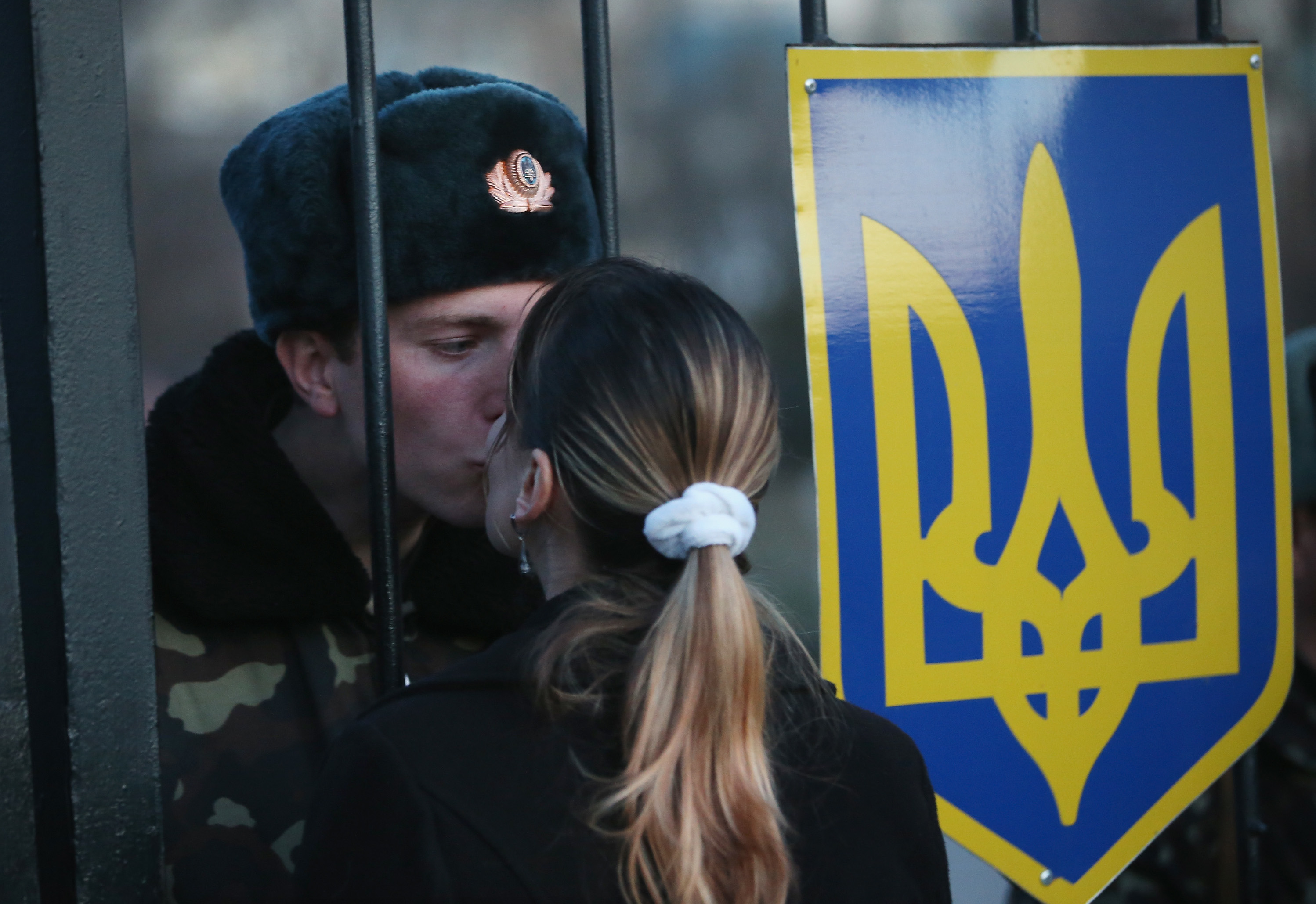
Oleg, a Ukrainian soldier at the Belbek military base, kisses his girlfriend Svetlana through the gates of the base entrance on March 3, 2014 in Lubimovka, Ukraine. Tensions at the base, where between 100 and 200 Ukrainian soldiers are stationed, are high as a 4pm deadline reportedly given by Russian troops for the Ukrainians to surrender passed and locals feared the Russians might attack tonight. By Sean Gallup/Getty Images.