Question? askandrew@thedailybeast.com Video archive here.
Some sound advice from J. Bryan Lowder:
While we undoubtably all have family members who live for nothing more than to stomp on political land mines, I’m deeply uncomfortable with the idea that the Thanksgiving table necessarily must be a forum for working out all of these issues. Call me sentimental, but I like to imagine that for most families—even contentious ones—the holidays are a time to reconnect with loved ones (like me) who fled "fly-over country" for the sinful Big City, not for rehashing tired debates that will almost certainly remain unresolved. When many of us get to see our families so rarely, is it really worth it to arm ourselves for some kind of apocalyptic ideological end-game before we even say hello?
William Shatner falls in and out of love with a turkey deep-fryer:
Freakonomics claims that basically all slaughtered turkeys are the result of artificial insemination:
Turkeys are hardly the only animals that are sex-starved before being trotted off to slaughter. Experts estimate that up to 95 percent of dairy cows and 90 percent of pigs are the product of artificial insemination. Chickens and beef cattle, meanwhile, are almost always brought to us by good old-fashioned reproduction.
Detailed description of the insemination process here – which you may want to read after you eat.
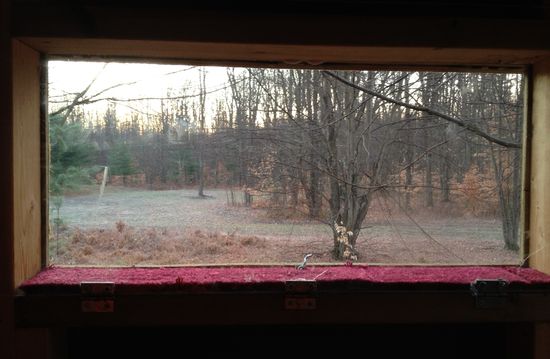
Thompsonville, Michigan, 8.54 am, "Opening day of deer season"
In a podcast, Kiera Butler ponders the holiday's carbon footprint. One of her takeaways:
Geophysicist Gidon Eshel, whom I interviewed for my piece on whether or not vegetarianism is always greener than eating meat, says that in order to lessen the environmental impact of our diets, we should look at the efficiency of foods: How much energy is required to produce them, and how many calories do we gain? From this perspective, labels like "organic" and "local" aren't always the most planet-friendly choices. In colder climates, local spinach and mesclun, for example, are frighteningly inefficient because they have to be grown in greenhouses.
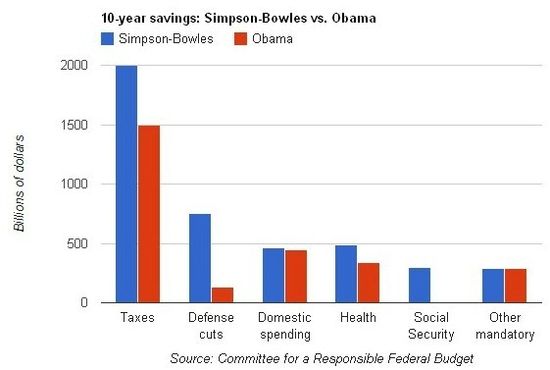
Today on the Dish, Andrew advocated a return to Bowles-Simpson, we collected a second round of foreign policy debate reax, and reviewed Huntsman's plan to end Too Big To Fail. We reevaluated Huntsman's candidacy, Chait refuted the notion that Obama’s "leadership" could have convinced Republicans to accept a tax increase, and a reader took on discontented liberals. Newt comes across as "at least passably presidential," he co-opted Lean Six Sigma, and the GOP dodged entitlement reform. Christianists in Iowa resisted Romney's advances, John Kyl sabotaged the supercommittee, and we assessed US interest rates. Ponnuru repudiated reverse class warfare, and in our AAA video, Andrew explained why European pop music is superior.
We probed the relationship between "violent transnational Islamism and the broader Islamist movement," Egypt's policemen are accustomed to unaccountable power, Saleh stepped down in Yemen, and Bahrainian autocrats confronted torture. We took a second look at the new IAEA report, Putin was booed at a martial arts fight (follow-up here), and two straight guys graced Al-Jazeera with a gay kiss.
The New Yorker related the OWS origin story, the cult of Paterno endures, family income predicts student achievement, and drunk unsafe sleeping kills babies. An 82-year-old grandmother got a kick out of Pop Rocks, polyamory entered the mainstream, and the debate over college sports continued. The Muppets returned, Fallon promoted unfunny casual sexism, and mustard gas is a condiment, "essentially." Andrew went another round on intelligence research, we questioned Twilight's feminism, and Pamela Geller lost it over "stealth halal" turkeys.
Chart of the day here, hathos alert here, quote for the day here, VFYW here, FOTD here, MHB here, "the total economic production of the human race (thus far)" here, and Thanksgiving travel advice here and here.
— M.A.
Christopher Orr insists you see their latest adventure:
Muppet Studios turns out to be less fabled than crumbled. Worse, Walter overhears the plottings of an evil tycoon (played with diabolical glee by Chris Cooper), who intends to tear the place down unless the Muppets, who have long since gone their separate ways, can come up with $10 million to buy it back. So Walter, Gary, and Mary set out in search of Kermit the Frog and, once they find him, in search of everyone else: Fozzie and Miss Piggy, Animal the drummer and Rowlf the Dog and Gonzo the Great, Scooter and Beaker and all the rest. Cue up reels of Getting the Band Back Together, of Putting on One Last Show, and of Learning Valuable Lessons About Love and Self-Worth.
In other hands, this arc might have proven just as saggy as it sounds. But Bobin, Segal, and Stoller propel the proceedings with wit and verve, genre winks tumbling out over timely demolitions of the fourth wall.
That said, this is no Shrekish exercise in exhausting inside-jokery: The Muppets is equal parts tender and hilarious, heartfelt and sly. It's hard to miss that a primary thread is essentially the story of Walter's uncloseting: his discovery, as a puppet/boy, of "The Muppet Show" and the way it made him feel less different and alone; his gradual, grownup realization that he, too, is one of them. The filmmakers wisely decline to make the analogy explicit, instead allowing it to serve as a quiet emotional tether.
More video teasers here.
Jim Pethokoukis hypes Huntsman's new plan for Wall Street:
Huntsman is the only GOP 2012er to have moved beyond "repeal Dodd Frank" (which sounds like a return-to-the-status-quo) and fashioned a serious and comprehensive — and bold — financial reform plan. … Reforming the financial system is low-hanging fruit that Republicans have been reluctant to pick. Huntsman just did.
Joseph Lawler adds:
Inevitably some banks will become too big to fail, or at least big enough to leave the market uncertain as to whether the government will allow them to fail. The government should have a clear and understandable process already in place for resolving such firms in a moment of crisis, so that the uncertainty is reduced. … Huntsman is doing Republicans a favor by criticizing the public's implicit subsidization of large banks — an issue that has both technocratic and populist appeal. Hopefully his plan will be taken as a challenge by the other candidates.
Ezra Klein is also intrigued:
This is similar to the Obama administration’s thinking. They oppose breaking up the big banks or taxing financial transactions tax, but they support a “financial crisis responsibility fee”: a tax on the largest banks to pay back the cost of TARP. Huntsman takes this a bit further, in that his tax would presumably be ongoing. But not much further. … Huntsman is inching towards an interesting and perhaps even courageous position on financial reform.
Mike Konczal is skeptical:
I hope the GOP moves more in this direction generally. But there’s a core missing in it. When it comes to “ending Too Big To Fail” it actually punts on the conservative policy debates, which is a shame. There’s a reference to “Explore reforms now being considered by the U.K. to make the unwinding of its biggest banks less risky for the broader economy” but it is sort of late in the game for this level of vagueness on what we mean by “unwinding.” That unwinding part is a major part of the debate. Especially if you say that you want to repeal Dodd-Frank and put into place a system for taking down large financial firms – well, “unwinding” the biggest financial firms is what a big chunk of Dodd-Frank does.
Related coverage here.
Ramesh Ponnuru chides the GOP for indulging in reverse class warfare, pitting the 53 percent against the 47 percent of Americans who don't pay federal income taxes. He debunks the "freeloader myth":
The ten states with the highest number of non-payers are a strongly Republican bunch: Eight of them went for John McCain in 2008, and nine of them have Republican governors. Keith Hennessey, an economic adviser in George W. Bush’s administration, notes that the historical data suggest that the child credit was the main reason for the increase in the number of non-payers between 1995 and 2007.
Scott Galupo applauds. It's great to see some complication and pushback against this meme. Especially in National Review.
 The Dish