Life Isn’t Like A Video Game

Fenzel meditates on the differences:

[In real life we] don’t just remember the specific things that hurt us, we are drawn to patterns or themes, building into our ancestral stories and wisdom guidelines and rules of thumb that will hopefully help others make better decisions in the future when they encounter situations that may or may not be new to the species. In many video games, these two skills — the skill to figure out which guesses are reasonable, and the skill to build on the information you already have about a situation, aren’t just useless, they are actively counterproductive. 

A lot of the challenge in video games comes from the designers and developers picking smart moments to defy your expectations, prompting you to try the thing that you know isn’t supposed to work — to the point that players are conditioned it might be the best way to approach every problem. Perhaps it has contributed to a generation of contrarian curmudgeons who immediately look to what is wrong with any situation — which isn’t the worst point of view on things, but maybe isn’t always the best.
Should We Have Stayed Hunter-Gatherers?

A provocative question:

Now before you give in to the easy snort and chortle that accompanies a seemingly absurd question like this, I am going to ask you to take the long view. In this case long means billions of years, and billions of planets. We don't want to ask the question: Is civilization good for you (or me)? Instead we want to ask: Is civilization good — in the long term — for planets and their capacity to support life (or at least technologically adept civilizations)?

Can Science Explain Beauty?

GT_Butterflly

John Horgan wonders:

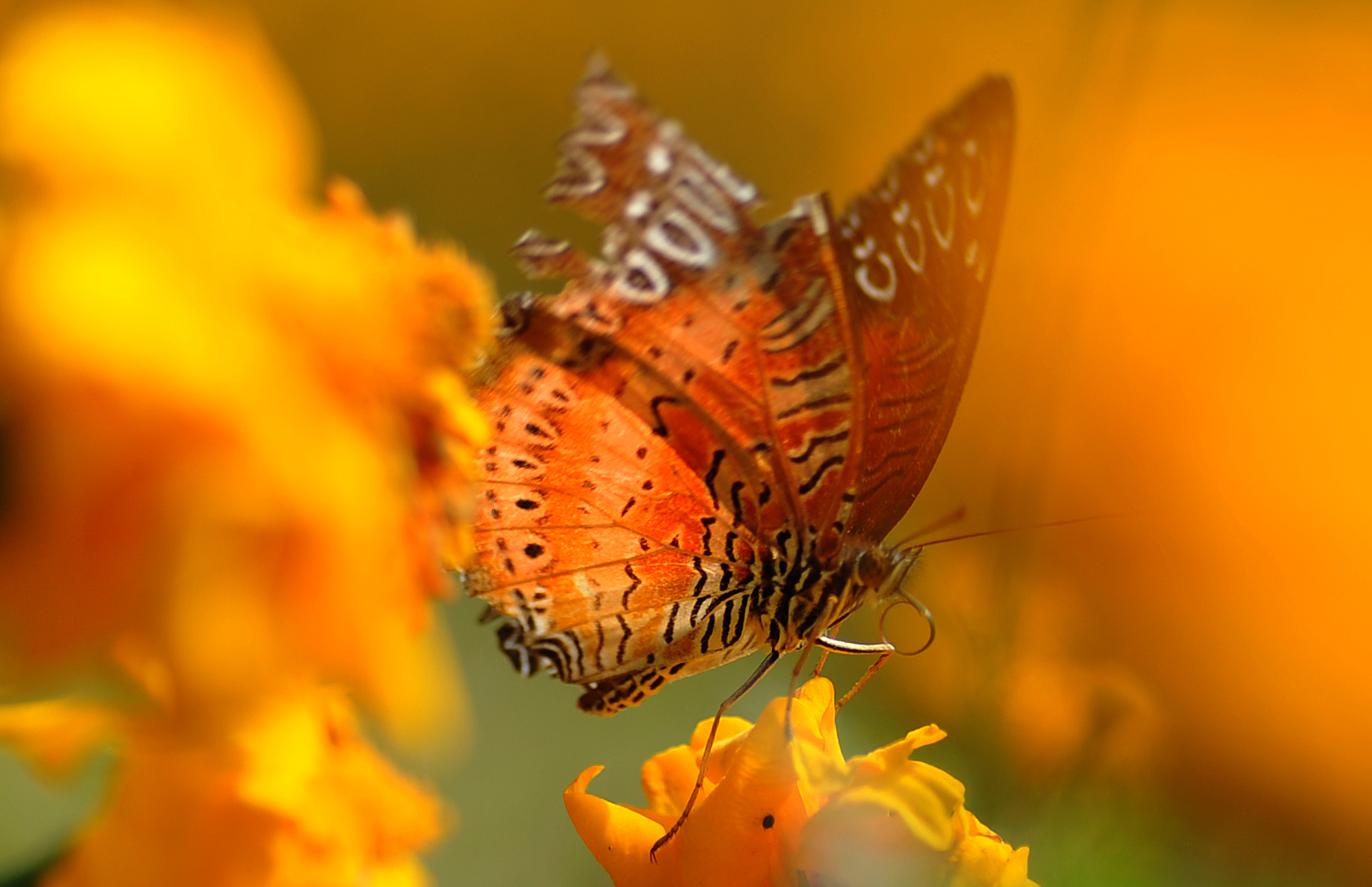
Edward O. Wilson gave it a shot. Wilson suggested that natural selection might have instilled in us a “biophilia,” or reverence for nature, that benefits both us and those creatures with which we enjoy mutually beneficial relationships. But why do we respond to so many things—butterflies, starfish, rainbows, sunsets—from which we extract no tangible, utilitarian benefit?

My thoughts earlier this week here. In a recent BloggingHeads, Horgan talks with David Rothenberg about his theory of "aesthetic evolution." Rothenberg explained the concept back in April:

[H]ow come one bird sings, “Beebooo” and another sings this long complicated song with all these different parts? You can say each species has its own way of doing of things, but there is no real necessity for one bird to sing a twenty-minute song; its life is not different. … That got me thinking that evolution really isn’t survival of the fittest, when it comes to these things, it is more like survival of the interesting, survival of the beautiful, survival of the weird, cool stuff that managed to evolve.

(Photo: A butterfly lands on a marigold flower at the Godavari Botanical garden on the outskirts of Kathmandu on November 15, 2011. By Prakash Mathema/AFP/Getty Images)

When Is A Human Not A Person?

puzzler:

John Locke called person a forensic concept. What he had in mind is that a person is one to whom credit and blame may be attached, one who is deemed responsible. The concept of a person is the concept of an agent. Crucially, Locke argued, persons are not the same as human beings. Dr. Jekyl and Mr. Hyde may be one and the same human being, that is, one and the same continuously existing organic life; they share a birth event; but they are two distinct persons. And this is why we don't blame the one for the other's crimes. Multiple personality disorder might be a real world example of this.

Carrying Extinct DNA

Carl Zimmer reports the findings of Svante Paabo:

Somewhere in the Middle East, humans and Neanderthals interbred. As humans continued to expand into Europe and Asia, they took Neanderthal DNA with them. When humans got to southeast Asia, they mated with Denisovans, and this second addition of exotic DNA spread through the human population as it expanded. Neanderthals and Denisovans then became extinct, but their DNA lives on in our bodies. And Paabo wouldn’t be surprised if more extinct hominins turn out to have donated DNA of their own to us.

Why Don’t People Trust Atheists?

Tom Jacobs finds an answer in recent research from Will Gervais:

Gervais and his colleagues approach this phenomenon from an evolutionary perspective. “A number of researchers have argued that religious beliefs may have been one of several mechanisms allowing people to cooperate in large groups, by in effect outsourcing social monitoring and punishment to supernatural agents,” they write. Religion, in other words, has served a specific function throughout much of human history (beyond assuaging existential fears): It keeps people in line, discouraging them from engaging in selfish acts that hurt the larger community.

Jacobs acknowledges that there's no evidence backing up the assumption that atheists are less moral and elaborates on evidence to the contrary. Talking about Gervais' research a while back, Tom Rees offered his own explanation:

I think there is a special feature of atheism that separates it from many other kinds of predjudice – and that's the fact that atheism is a choice. When there are only very few atheists, then the only people who are going to 'come out' as atheists are likely to be those who are a little maverick. If lots of people choose to be atheists, then it's clearly something that 'normal' people do. In other words, distrust of atheists when they are a tiny minority might well be a perfectly rational rule of thumb!

Hemant Mehta rounds up other theories.

The Illusion Of Life

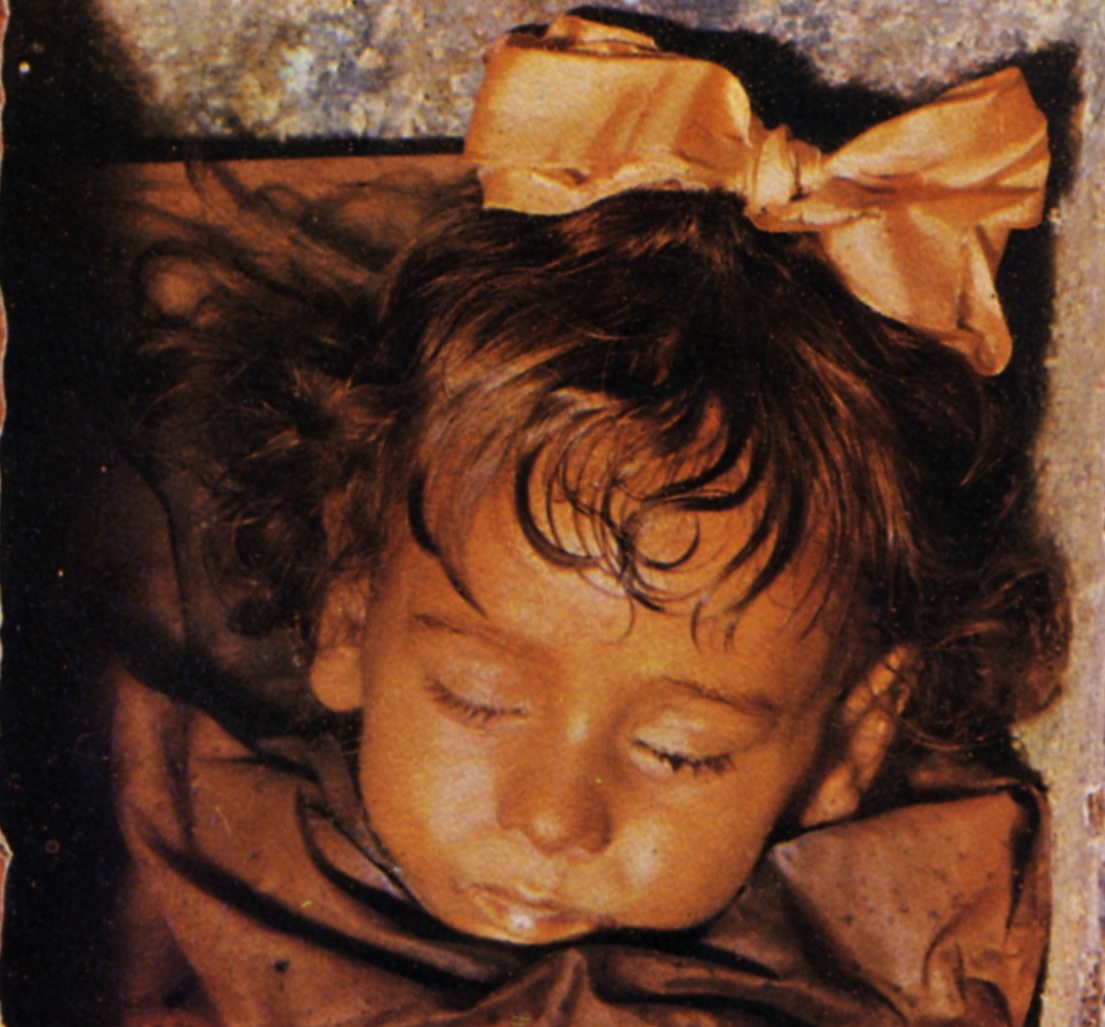
Maaza Mengiste visits the remains of a two-year-old girl named Rosalia Lombardo at the Capuchin Catacombs of Palermo. Lombardo died in 1920 and was embalmed by taxidermist Alfredo Salafia:

Her blond hair still holds its vibrancy, held by a ribbon that has somehow managed to Rosalia  keep its colour. Curls fall across her forehead in wisps, combed carefully into place. Her lashes are thick and so long they seem to brush her plump cheeks. Her lips do not draw back with the shrunken, distorted smile common in the other mummies. She is called ‘Sleeping Beauty’ and rightly so. She looks as if she’s just a breath away from opening her eyes and smiling into your curious gaze. Rosalia was perhaps Salafia’s most glorious achievement, a testament to his skills and the effectiveness of the embalming fluids whose formula he would take with him to his grave. 

(Photo via Wikimedia Commons)

Marrying Outside The Faith

Jesse Bering investigates what happens when atheists and believers intermarry:

[T]here’s a growing trend in which exact denomination matters considerably less for marital satisfaction than does the degree or type of belief. … A shoulder-shrugging agnostic or lukewarm “spiritual but not religious” person, for instance, would probably be able to tolerate an atheist spouse better than a dead-set Muslim could ever hope to do.