Probably 0.1 percenter, no? But the mansion dwarfs Palin's.
Month: November 2011
Moore Award Nominee
"If, like me, you scanned the crowds rioting at Penn State last night after the announcement of the firing of Joe Paterno, you may have noticed that nearly all the people there were white men. The riots were about white men not liking to be held accountable … Paterno’s perseverance in the face of his deficiencies was a beacon of hope for many white men in Pennsylvania who felt their power challenged by liberals and people of color seeking to change their ways," – Mike Elk, MichaelMoore.com.
Sandusky’s Autobiography
Ugh:
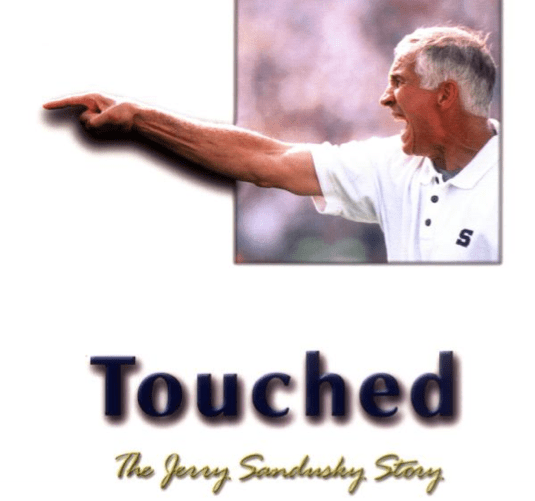
People are pissed:
Jerry Sandusky's rose-colored 2001 autobiography languished in obscurity on Amazon's website until the revelations of child sexual abuse charges against the former Penn State defensive coordinator became public. Now, some Amazon users are asking that it be taken off the site. … Some called for Amazon to remove the book from the site. "How can you, in good conscience, have this book, with the unbelievably ironic title, still for sale?"
How Close Will 2012 Be?
Glen Bolger weighs Obama's strengths and weaknesses:
Given the demographics and the map, it is very unlikely for Obama to lose big. However, given the economy and the political environment, it is increasingly unlikely for Obama to win big. The 2012 election is shaping up to be a very close contest — one in which demographics and the political environment collide.
Alan I. Abramowitz, on the other hand, thinks Obama is likely to be reelected.
Ask Me Anything: Thoughts On The New Atheists
The Riots At Penn State
A reader writes:
I live on the West Coast and woke up to Wednesday's
to my horror that it was a photo of the Penn State riots. I thought when reading the New York Time's coverage that the rioters, like the handful of anarchists who ruined the Oakland OWS march, did not represent the sentiments of the majority of Penn State students. So very wrong. How could thousands of students take to the streets in support of a man who shielded a pedophile and let this boy and many others suffer? Specifically, I would ask those young men in the crowd who were ten years old in 2002: If it were you, if you were the victim, would you be satisfied when dear old JoPA told you he did all he could, he told his boss and that the matter was out of his hands? What an astonishing lack of empathy, mercy and compassion this contempt and scorn for the weak, for victims who could not protect themselves. But I guess winning makes its own rules.
I want to wake up and see this caption: Penn State Students March in the Thousands to Demand Cancellation of the Football Season.
Another writes:
Ten years of war? No riot. Massive budget cuts? No riot. Increased tuition and fees? No riot. Massive sex abuse scandal? No riot. Fire an 84-year-old football coach? Riot. There's something wrong here.
Many readers are downplaying the riot:
While the display on Wednesday night was ugly, I would be very surprised if that pro-Joe sentiment doesn't start to evaporate very quickly. There were interviews with other students who said that while they were very sad about it all, and the loss of stature of someone they perceived to be an icon, they felt he was in the wrong and his removal was correct. I would fully expect that sentiment to grow and many of the people involved in the mob to feel ashamed of it very soon.
A lot of these kids reacted how kids do, with emotion first and thought second. This man has been an icon in PA for 60+ YEARS. And to suddenly find out that he may not be the person his mythology has made him out to be has to be an enormous shock to these students. For many, he and the virtue he represented may have been why they chose to go to Penn State in the first place. That is not about football. That is about the culture of hard work, study and honesty that they thought he illustrated.
The exposure of past events is incredibly shocking, and with a lot of these kids that have spent lifetimes looking up to him, dropping that reverence is not something that can happen instantaneously. The brain needs some time to process and adjust to what is a tremendous loss to their understanding of the world around them, and everything they've ever known. It will come, and you are too fast to make a snap judgement about their "moral climate."
Another:
While the Penn State culture is certainly intertwined with football, the school is also a hardcore party school where excessive drinking is an issue. (There is even an episode of This American Life on Penn State's status as the nation's #1 party school – it's worth a listen.) I can't help but wonder how much of the disruption and destruction was really a protest about Joe Paterno and how much was a party that grew too big and escalated.
Another:
I’ve lived in State College and worked at Penn State for more than 20 years. It's a big place, with more than 40,000 students. So, there are a whole range of student reactions. I’ve even had student tell me they’ve never watched, much less been to, a Penn State game. Even the ones that were out in the streets last night had many motivations. Many are mad that Paterno was fired, but other are more angry about the fact that the others – Curley, Schultz, and McQueary – were not.
The feeling is much more shock and something I can't even say beyond sadness. Seriously, I'm weeping at my keyboard for half of the day during these past several days, so I cannot imagine combining that with the energy, alcohol, and the emotional control of late adolescence.
This place has always believed that it was a little special and different, with the arrogance that entails. And, while I never believed it to the extent that the true blue and white do, I did think that we at least tried, more often than not, and more often than other places, to do things the right way. Now, not only to not believe that, but to contemplate that this place could have been the absolute worst cesspool of college sports, and maybe the biggest college scandal of any type at any time? Try to imagine that feeling.
What you saw the other night was certainly representative of a segment of Penn State, and really of all the football mad coach crazy culture we've created in D1. Penn State has that in spades. But, you probably did not see the kids standing quietly at JoePa's statue to honor the good things he did during his career here. You probably didn't see the students crying at a candlelight vigil for the victims. And you didn't see the students, faculty, staff, and community members just trying to comprehend the horror and how we could have let it happen here. There are a lot of wonderful people here, and they just don't make good CNN and ESPN footage, so you don't see them. (If you want to get a good sense of student views, check out the blog Onward State and their twitter feed @onwardstate.)
So, Andrew, I ask that you and your readers consider putting down the broad brush and do what you often do to understand and explain. There are many good people here who have been as horrified as you and your readers about what happened to children here and how we could have let it happen.
(Photo: A news van is flipped over as students and those in the community fill the streets and react after football head coach Joe Paterno was fired during the Penn State Board of Trustees Press Conference, in downtown Penn State, in the early morning hours of November 10, 2011 in State College, Pennsylvania. By Patrick Smith/Getty Images)
OWS Gets Sick
The NYT reports that germs are spreading in Zuccotti park. Alex Klein warns that the occupation might not survive:
The more gross or scary the occupations seem, the fewer members of the 99 percent will want to take up the cause and set up camp. The movement's power has always rested in its numbers. Now, terrifying headlines and vomiting viruses could make recruiting a great deal more difficult.
Break Up The Banks?
Pat Garofolo parses Jon Huntsman's argument:
Huntsman is absolutely right that a fee would help limit the growth of the biggest banks, assuming that the fee grew heftier as a bank accumulated more assets. Such a fee would also help level the playing field between large and small institutions, negating some of the advantages in access to funding that a large bank has. The Congressional Budget Office has said that a bank tax would “improve the competitive position of small- and medium-size banks, probably leading to some increase in their share of the loan market.”
Jim Pethokoukis adds:
To some degree this is the Obama WH approach with its now-moribund "Financial Crisis Responsibility Fee." But that was sold as a way to repay TARP, while Huntsman seems to want an escalating tax that would a) create a self-financed bailout fund and b) make it too costly for banks to get too big.
Tim Carney sees this as part of a larger shift to free-market populism in the GOP. I think it's a terrific idea – perhaps the first one to emerge from the Republican race.
Quote For The Day
"There’s a fucking art to the first term because you’re always running for a second term the whole time. It’s like Clinton’s first term. You can’t really do your gangsta shit until your second term. … Even Bush couldn’t really fuck up the world until his second term. That’s when he put the hammer down. I’m like everybody, I want more action. But I understand that he’s trying not to piss off a lot of people. But I believe wholeheartedly if he’s back in, he’s going to do some gangsta shit," – Chris Rock.
What Our Generals Can’t Say
General Peter Fuller was recently fired for saying, among other things, that the Afghan government was "isolated from reality." Carl Prine blasts the Army's decision:
The man charged with arming and training hundreds of thousands of Afghan security forces told a representative of the free press, asking a question crucial to our democracy's public debate about the war, that Afghan leaders are corrupt and incompetent; they fail to understand their own ability to sustain their armed forces; they don't see the economic problems roiling the U.S. and our European allies; and the kleptocracy of jug-eared thief Hamid Karzai shows no thanks for the ongoing sacrifice of our troops and taxpayers on their behalf…Fuller revealed a sincere response to a simple question and by so doing represented everything that officers are taught to hold dear in their careers – honesty, integrity, personal courage and moral steadfastness.
Hitch is on a similar page. Joshua Foust counters:
The problem with defending Fuller's remarks … is two-fold: they were not only an inaccurate description and analysis of the politics of Afghanistan, but they actively undermined the U.S. mission and strategy. Far from being a "truth-teller," Gen. Fuller made a serious error of judgment, both in how he understood Afghanistan and how he chose to express that understanding.
Prine, for his part, doubles down. Michael Cohen mostly takes Prine's side. Tom Ricks compiles a list for future generals of things you can't say in public about Afghanistan.
 The Dish