The Paradoxes Of Dogs

Screen shot 2012-09-18 at 5.11.36 PM

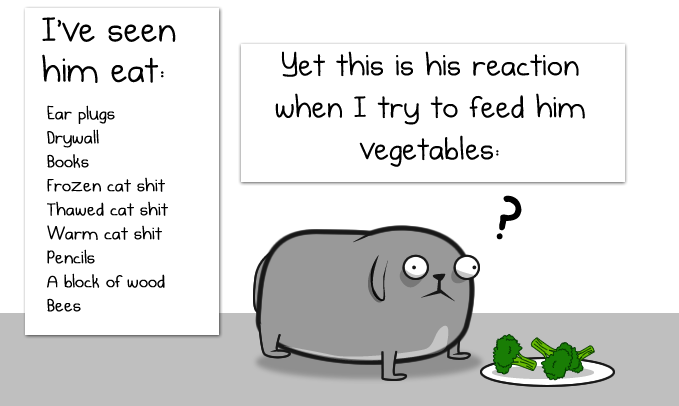
The Oatmeal penned a touching love letter to the dogs in our lives:

So you spend a decade and a half building an affinity for this weird little creature only to have its life extinguished. Maybe that's why we love them: because their lives aren't lengthy, logical or deliberate but an explosive paradox composed of fur, teeth and enthusiasm.

One Reason Obama’s Lead Matters

Early voting has started:

More than one-in-three voters – more than 46 million people — is expected to vote early in 2012 in some form, either in person, by mail, or absentee, according to Dr. Michael McDonald, a professor at George Mason University who studies voter behavior. “Once you turn up the faucet on early voting, you keep turning it up until it’s all the way open,” said McDonald, who predicts that 35 percent will vote early this year. Early voting participation has been on the rise in recent election cycles, hitting an all-time high in 2008, when an estimated 30 percent voted early in the presidential election. That was up significantly from 2004, when slightly more than 20 percent cast their ballots ahead of Election Day.

Matt Lewis lists reasons to oppose early voting. Mataconis is unpersuaded:

I certainly don’t think that every state has to have early voting, or that it needs to be available as early as six weeks before an election, but I don’t see anything wrong with it either. If the people of a certain state want it, then that’s their choice. The argument that early voting somehow interferes with the political process is, mostly, nonsense. If a particular state fabricates rules that allow people to vote starting in September, I really don’t see what’s wrong with it.

The Hottest Century

201208.gif.492x0_q85_crop-smart

We may be living in it. The National Climatic Data Center recently released numbers showing that August 2012 was the fourth hottest recorded since 1880:

August 2012 marks the 36th consecutive August and 330th consecutive month with a global temperature above the 20th century average. The last below-average August temperature was August 1976 and the last below-average temperature for any month was February 1985.

Brian Merchant finds the new stats remarkable:

If the world wasn't in the midst of humankind-induced global warming, you'd expect to see a mixed bag of monthly temps registering both above and below the 20th century average. But, of course, it is, and those 330 months are just some of the first small steps in the long march of global warming.

A Hell Of A Cause

Philip Gourevitch critiques the interventionist impulse:

We have people who say, let’s get rid of this head of state, and that head of state. I’m not just talking about military action. You have lawyers and professors celebrating the International Criminal Court’s indictment of President Bashir in Sudan. It’s an easy call that Bashir’s an awful guy. There’s no defending Bashir’s record. But if you’re calling for a coup d’état, do you have an idea of what you want to happen? That indictment is a standing order for the decapitation of a regime. And if that were to happen, are you going to say, it’s not our problem what comes after that? I find that crazy. And reckless. And it’s usually done by people who are not accountable. It’s usually what you get from activists, intellectuals, lawyers, people who are not popularly elected. Some of them are on the ground. Some of them are brave people, and they put their necks out for their cause. But calling for a coup d’état in a very dangerous place and refusing to answer for the consequences because you say you’re simply concerned with justice—well that’s a hell of a cause.

Addicted To Debt

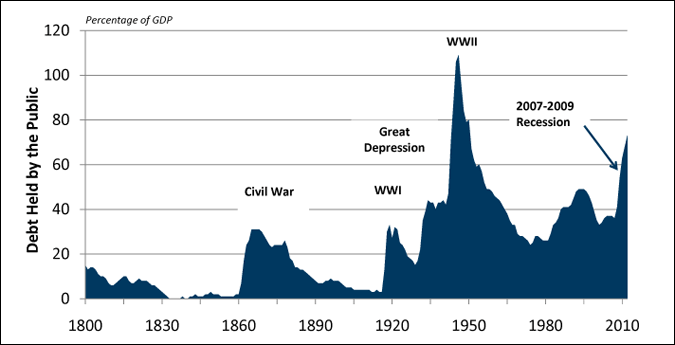
Debt

Scott Reynolds Nelson, son of a repo man, argues that since the beginning America has been founded on credit:

The story of my dad, [his company] Woolco's debtors, and the debts he collected is in some sense the story of America. Americans settled this nation by borrowing goods, land, and more abstract representations of those goods—land warrants, deeds, patents, concessions, and equities. They borrowed with the most optimistic assumptions about their capacity to pay. But when it became clear that Americans were not paying, banks began to doubt wholesalers and called in loans; wholesalers demanded settlement from retailers; retailers sent my dad and thousands like him out into the countryside to recall some portion of their property. I saw the downturn in 1973 unfold outside the window of a Dodge Dart, and in graduate school and after I became fascinated by many other slumps.

Pundits will tell you that the economic turmoil the nation experienced in 2008-9 is the first "consumer debt" crash. The trunk of my father's car—filled with signed debt agreements for consumer goods, most of which, he said, were good for nothing—suggests otherwise.

Meanwhile, Felix Salmon cheers an important trend:

[E]ven as America worries about the rising level of student loan debt, here’s some good news: the level of credit-card debt is going nowhere, and is actually falling in real terms. Let’s keep that up. It will mean lower profits for the big banks, who issue the lion’s share of all credit cards, and it will mean lower interest payments for consumers.

This prompts him to wonder if "the credit-card scam – sell convenience, and then make billions of dollars from overinflated interest rates – is beginning to come to an end."

(Chart from the Peter G. Peterson Foundation)

The Weekend Wrap

Dish

This weekend on the Dish, we focused on matters of faith and doubt, with Andrew providing his take on the debate over a 4th century Coptic text that includes Jesus mentioning his wife. Elizabeth Drescher lamented the lack of preaching about non-violence in Christian churches, Thomas Nagel and Jerry Coyne debated God and science, David Sessions used political theology to critique liberalism, Ted Hughes intimated the words of Jesus with his thoughts on the child within, Scott Aikin and Robert Talisse explored what civility means in the face of religious and moral disagreement, and Bruce Epperly meditated on the connection between God and beauty.

In literary news, Maria Bustillos deemed James Thurber the American Kafka, Kathryn Schulz defended Michael Chabon's use of Obama in his new novel, Laura Krantz highlighted a photographer's take on culinary scenes from great books, James Guida pondered Jay-Z's bonafides as a poet, and Joe Hiland explained why your fiction remains unpublished. William Gibson argued that science fiction isn't very good at predicting the future, Michael McGrath gave the reasons why cinematica portrayals of writers fall flat, Paul Elie described how the Internet changed the biographer's task, Robert McCrum marveled at writers' strange habits, and Nigel Warburton contended for poetry's philosophical merits. Read Saturday's poem here and Sunday's here.

We didn't entirely ignore politics, either. Andrew peered behind the horse race, updated us on the rolling calamity that is the Romney campaign, detailed the latest AIPAC victory in the Senate, noted Romney's sudden dip on Intrade, and savored the karma in Romney's tax return typo. Joseph McMurray examined whether the uninformed should vote, Conservatives in Canada proved to be warriors for gay equality, Walter McDougall critiqued the crusader state, Costica Bradatan explicated why we're moved by self-immolation, and a Dishead from Papa New Guinea sent us a photo of an awesome campaign billboard.

In assorted coverage, Mark Jacobson toured public housing in New York, Alex Stone revealed a magician's trick, Matt Novak analyzed the lasting influence of The Jetsons, Tracy Clark-Flory appraised the evolving science of pregnancy, Alexander Kafka panned a new movie about porn, and Richard Ingham offered a scientific primer on drinking champagne. Torie Bosch contemplated the reasons to elope, Heather Pringle evaluated the evolutionary advantages of honey, and John Fischer visited continuing care retirement communities. We asked TNC anything here and here. FOTDs here and here, MHBs here and here, VFYWs here and here, and the latest window contest here.

– M.S.

(Photo by Zdenko Zivkovic)
Visiting The Internet

Tubesblum07

Journalist Andrew Blum has spent the past few years unraveling the networks of wires that create the global Internet. His research is now collected in the book Tubes: A Journey to the Center of the Internet and a recent TED talk. Over at TED’s blog, Blum shows how a cable comes ashore for the West African Cable System, south of Lisbon. From Geoff Manaugh’s review of the book:

In one particularly memorable description, Blum quips that he “had begun to notice that the Internet had a smell, an odd but distinctive mix of industrial-strength air conditioners and the ozone released by capacitors,” as if even the most amorphous realms of data have their own peculiar body odor. This body—the “tubes” of the internet—leads Blum from underground London to the middle of nowhere in central Oregon, from downtown Milwaukee to locked rooms in Amsterdam, on the trail of the “pulses of light” that give the internet physical and geographic form.

A couple of accidents earlier this year severed undersea cables and slowed down Internet connections for six African countries by 20% until the cables could be repaired. But Clay Dillow insists the tubes are our best bet:

Fiber optic communication, for all of its shortcomings, is actually pretty amazing, and it’s getting better by the year. Accidents do happen. In 2006 earthquakes in the Luzon Strait near Taiwan severed seven of nine cables and wrought havoc on communications networks for weeks, and twice in 2008 cables in the Mediterranean were damaged, disrupting communications in the Middle East, Africa, and the Indian subcontinent (and that’s just two recent examples–there are many, many more). But there’s really no technology that can touch our current fiber optics technology. The solution to problems like those East Africa is currently experiencing is not less fiber optic cable, but more.

The Most Unlikely PIN

Data Genetics crunched the numbers:

In my dataset the answer is 8068 with just 25 occurrences in 3.4 million (this equates to 0.000744%, far, far fewer than random distribution would predict, and five orders of magnitude behind the most popular choice). Warning: Now that we’ve learned that, historically,  8068  is (was?) the least commonly used password 4-digit PIN, please don’t go out and change yours to this! Hackers can read too! They will also be promoting 8068 up their attempt trees in order to catch people who read this (or similar) articles.

Other passwords to avoid? Definitely "1234," used by nearly 11%:

The next most popular 4-digit PIN in use is 1111 with over 6% of passwords being this. In Screen shot 2012-09-19 at 4.37.34 PMthird place is 0000 with almost 2%. A table of the top 20 found passwords in shown at the right. A staggering 26.83% of all passwords could be guessed by attempting these 20 combinations! (Statistically, with 10,000 possible combination, if passwords were uniformly randomly distributed, we would expect the these twenty passwords to account for just 0.2% of the total, not the 26.83% encountered)

The Musical Stylings Of L. Ron Hubbard

Katie Notopoulos rounds up bizarre recordings, which she describes as "approximately as good as the movie Battlefield Earth":

L. Ron became very interested in a particular synthsizer that was popular in the early '80s called the Fairlight CMI. Church of Scientology literature about Hubbard's music career talks about how he discovered untapped potential in the instrument that the inventors of the Fairlight had never considered.

In fact, the Fairlight was very popular in the '80s, so much so that Phil Collins was moved to state in his album notes for No Jacket Required that the Fairlight was NOT used on the record. Kate Bush used the Fairlight extensively on Hounds of Love, proving you can make good music with it, not just weird a weird jumble of horse sounds like Hubbard did.

Above is Hubbard's song "Windsplitter," which is from his album "Space Jazz."

The Birth Of The Great American Novel

Maria Konnikova points to the aftermath of the Civil War and the resulting search for renewed national identity. She deploys "the minimal group paradigm" to make her argument, "a concept that basically says exactly what it is: a way of creating groups, and cohesive groups at that, by using something as minimal as possible to tie them together":

Is it a coincidence that the concept of the [Great American Novel or GAN] was born in 1868, just a few years after the American Civil War—or is there something more to the timing? The GAN had no precedent. There wasn’t a history of Great National Novels, with capital letters, of one Great Work to unite a country. Plenty of great works had been written and acknowledged as such, but there had never been a rush to crown one of them the defining work of the nation that birthed it, for all time and all people. In that sense, the GAN was a first.

And think how clever was the choice of unifying matter: this group paradigm (for that, I would argue, is precisely what it was) wasn’t created on a point of contention, on anything that could reignite the old bitterness or enmity, anything that could serve as a reminder of national divisions. Instead, it was about culture, it was about literature, it was about overall national greatness of pen and spirit, a greatness that would define the country and set it apart from the rest of the world.