It's a very surface-level analysis that says gays were the reason for Obama's reelection. Yes, they could have been part of the critical coalition in FL and OH. But not VA, and not CO. Obama could have lost FL and OH, and still comfortably won the election.
The other missing piece of the analysis is very difficult to ascertain: the cost Obama paid in terms of people who didn't vote for him because he supported gay marriage compared to those who voted for him because he spoke up to support it. It seems as though the former subgroup is getting smaller, certainly smaller than 2004, where this issue helped GW Bush carry OH (which unlike this year, turned out to be a crucial state). I think it's good policy that Obama has to support gay marriage, but I don't think there's good evidence that the gay vote was the crucial piece of his coalition.
Another:
Yes the gays were responsible, just as every other subgroup that also voted for Obama in large numbers. African Americans certainly were responsible (and there were more of them than LGBT in all four of the cited states). Working women were responsible (and there are more of them than either African Americans or gays). Presidents win because of total groups, not just because of small niche demographics.
Please remember to use your head when attacked, no matter how old you might be. Also something about using your elbows? I’m not totally clear on the elbows part, but keep your elbows as a backup option.
Now comes word that applications in this admissions cycle appear to be in something like free fall. As of December 7th, they are down 24.6% from the same time last year, while the total number of applicants has declined by 22.4% year over year. These numbers suggest that law schools will have a total of somewhere between 52,000 and 53,000 applicants to choose from in this cycle, i.e., slightly more than half as many as in 2004, when there were 188 ABA accredited law schools (there are 201 at the moment, with an emphasis on “at the moment”).
To put that number in perspective, law schools admitted 60,400 first year JD students two years ago.
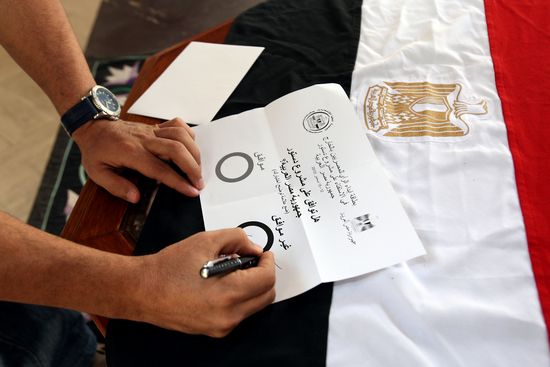
Steve Coll contemplates the role of Egypt's Muslim Brotherhood:
[T]he Brotherhood is at once a revolutionary, antidemocratic movement and an adaptable force that can be co-opted at times into peaceful democratic politics. In that respect, it resembles international Communism during the Cold War: that ideological movement produced both Italy’s elected, technocratic Communist mayors and the Soviet Union’s Stalinist gulags.
Never before, however, has the Egyptian Brotherhood faced such stark choices about accommodating democratic opponents. In part, that is because the Brotherhood has never been so close to holding national power. Turkey’s Justice and Development Party has shown that an Islamist opposition movement can adapt to governing in a pluralistic system (even if the party’s authoritarian tendencies taint the government’s performance, as has happened in Turkey). But many Brotherhood branches have failed to make the transition from fevered opposition to power sharing and governing when given the opportunity. The direction that Mohamed Morsi steers in during the weeks ahead may define the limits—or the potential—of Islamist politics in the Arab world for many years to come.
(Photo: An Egyptian man residing in Oman votes 'No' in a referendum on a new draft constitution at the Egyptian embassy in the Gulf sultanate's capital Muscat on December 13, 2012. A divided Egypt is being called to vote in a referendum on a new constitution that the secular opposition fears will be used by President Mohamed Morsi and his Muslim Brotherhood to usher in Islamist interpretation of laws.By Mohammed Mahjoub/AFP/Getty Images)
Hamish McKenzie checks in on the growing micropayment "ecosystem", including news that Kids filmmaker Larry Clark, following the lead of comedians like Louis C.K., will use the micropayment service TinyPass to stream his next film directly to fans. And others are experimenting as well:
In October [we] reported a story about a freelance journalist in New Zealand who, rather than solicit a publishing fee, asked for donations for a story he posted to a blog. While a magazine might have paid him about $500, the donations he earned via GiveALittle.co.nz brought him in about $5,000. Also in October, Vimeo launched a tip jar, allowing viewers to pay whatever they want to filmmakers who choose to enable the feature. Vimeo will soon also launch a Tinypass-like pay-to-view feature.
Micropayments could also grow hand-in-hand with micropublishing, a trend that is moving beyond blogging and into self-produced digital magazines. One soon-to-be startup, The Periodical, will in the next few days launch a tool that lets individuals publish and monetize magazines across digital platforms with the same ease as starting a blog.
Google Maps for iOS came out yesterday, offering cartographic relief to millions of iPhone users. David Pogue raves [NYT], calling the new app "an astonishingly powerful, accurate, beautiful tool":
So the first great thing about Google’s new Maps is the underlying data. Hundreds of Google employees have spent years hand-editing the maps, fixing the thousands of errors that people report every day. (In the new app, you report a mistake just by shaking the phone.) And since 2006, Google’s Street View vehicles have trawled 3,000 cities, photographing and confirming the cartographical accuracy of five million miles of roads.
If you want to know why Google's Maps are better than Apple's, check out my feature on how Google builds its maps. This is not an easy problem to solve. You need thousands of people hand-correcting maps in addition to all the computational and brain power that money can buy. And those maps will never be perfect; the task never ends.
Robert Kuttner points out that there "are now more than 100 vacancies on the federal bench, out of some 856 federal district and appellate judges, far more than on the day Obama took office":
While the Roberts Supreme Court gets most of the attention, in a typical year, the appellate courts review tens of thousands of cases, while the Supreme Court decides fewer than 100. Many key cases decided by courts of appeal either become the law of the land, or heavily influence how the Supreme Court decides a question. When a majority of district court and appeals court judges are conservatives and resolute liberal jurists are mostly absent, the entire dialogue shifts to the right. The Court of Appeals for the Fourth Circuit, for example, held that “enemy combatants” could be jailed indefinitely without charge, undermined the right of criminal defendants to counsel, upheld Virginia’s mandatory parental notification law on abortions, overturned key portions of the Violence Against Woman Act and the Clean Water Act, denied Civil Rights Act remedies to workers subjected to racial epithets, and ruled that nicotine could not be regulated by the FDA as a drug.
"I'm not averse to Happy Holidays. I just find it somewhat vague and lame." Geez, seriously? "Happy Holidays" is SUPPOSED to be vague. It is premised on the inability to know for certain what holiday the recipient celebrates and a disinclination to operate on the assumption that that recipient is Christian. It sounds lame to you because you ARE a Christian. But what if there were a greeting premised on sexual orientation? What if, at a specific time of year, there were a greeting that assumed every recipient was heterosexual? Wouldn't you, eventually, find that wearying? It's not even that it's offensive; it's just an endless reminder of your presence in a dismissed and disregarded minority.
I'm Jewish. I'm not even that religious. But it's my heritage. And I'm an American. But from my earliest memories, I attended public schools where we sang Christmas carols – and not just "Jingle Bells" or even "Here Comes Santa Claus," but "Silent Night" and "We Three Kings" and others that talk about "Christ Our Saviour." My classrooms were decorated with images of Santa Claus and reindeers and "Merry Christmas" banners. We were given Christmas off – heck, the whole country was: it's a federal holiday.
So if someone wishes me "Happy Holidays," well, that's just one little triumph, one indication that a neighbor/co-worker/merchant has decided to buck the national and historical trend that operates on the assumption that everyone he or she meets is Christian.
Another:
I’m surprised that you don’t prefer "Happy Holidays", because it's actually more specific and precise than "Merry Christmas."
I start saying "Happy Holidays" around Thanksgiving time, because I’m fired up that it’s the holiday season. To me, that season extends through New Year’s. I only say Merry Christmas on Christmas Day. It seems odd to say Merry Christmas two weeks before Christmas Day. I don’t tell people "Happy Birthday" two weeks before their birthday. "Happy Holidays" is a great, catch-all way to let people know you’re in the holiday spirit at the end of the year. What’s lame about that?
Another:
I get why you personally, as a Catholic, might think "Happy Holidays" is lame in comparison to "Merry/Happy Christmas", but as for vague, that's kind of the point. Particularly in retail stores. The people shopping aren't all Christians, and not all are shopping for Christmas presents. Namely me, as I'm Jewish. There are a number of holiday celebrations in December besides Christmas, including Hannukah, Kwanza, Festivus, and others that I'm sure your readers will be happy to share. (Plus the generic New Year's Eve.)
It's one thing when you personally greet someone you know. I know which holidays my family and friends and co-workers are celebrating, so I greet them with the proper holiday salutation. But the salesperson helping me find a specific item, or the person at the checkout counter ringing me up generally has no idea what holiday I celebrate, unless I'm wearing a cross or a Jewish star, or have a pin, or I'm wearing some definitive article of clothing – and even then it's not necessarily clear. When I'm at the bank or the supermarket checkout, I wish those people "Happy Holidays" simply because I don't know which holiday they celebrate. That's the point. It's not about disrespecting people, or religion, or being vague for the sake of being vague. Or even being lame. It's about not being presumptuous while still passing on good wishes of the season.
Fun fact for the day: In 2016, Hanukkah begins on Christmas Eve! On that note, Happy Christmas!
John B. Judis makes the case that raising taxes on the rich "will not only boost the recovery, but will also discourage the wealthy from rerouting their savings into the kind of speculative activity that helped create the Great Recession":
Regressive policies can also lead to financial crises. When firms suffer from global overcapacity or merely from domestic overproduction – when a glut arises of automobiles, ships, textiles semiconductors or fiber optic cable — as happened in the late 1920s and again in the earlier part of the last decade, the wealthy, joined by corporate treasurers and bankers, have tended to pour their money into speculation rather than productive investment. The financial sector has become a casino for the rich, where they have gambled away funds that could have fueled the economy. So redistributing income through tax policy isn’t just fair; it is one way to began restructuring the economy to prevent future slowdowns and crashes.
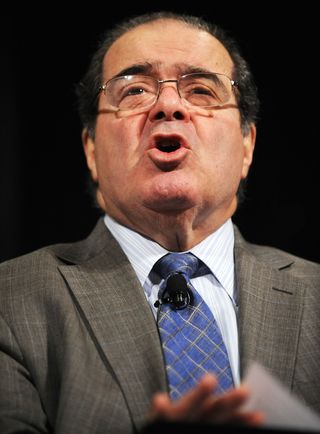
On Monday, Duncan Hosie, a gay freshman at Princeton, confronted Supreme Court Justice Antonin Scalia about Scalia’s anti-gay dissents on landmark gay rights cases. This interview with Duncan is worth watching:
I’m struck first of all by the freshman’s calm civility and sharp logic. It contrasts so vividly with Scalia’s emotionalism and bravado. When a few of us kick-started this issue way back when, this young man wasn’t even born. Now he articulates the same case with polish, confidence and intellectual clarity. I cannot express how moving that is for me and those who lived through the beginnings of this struggle.
But the exchange also brought back something in my own past. Well over a decade ago (I can’t remember when), one of the professors I taught students for at Harvard, Michael Sandel, invited me to debate my former dissertation adviser, Harvey C Mansfield, on marriage equality. It was for Sandel’s legendarily popular course, “Justice”. The fact that Harvey and I both agreed to do it and debated with civility and mutual respect (I revere Harvey as a scholar and as a human being) was, for me, somewhat moving, if also a little personally awkward.
But at one point, Harvey simply said (I’m paraphrasing), “If we cannot disapprove of homosexuality, then what can we disapprove of?” The huge student crowd – over a thousand in Sanders Theater – audibly gasped. The assumption that homosexuality was obviously a profoundly immoral and disgusting thing was what separated the generations. I asked Harvey to make an argument that wasn’t based on a mere assumption, that could show why non-procreative sex for a gay couple was somehow obviously abhorrent, while non-procreative sex for a straight couple was completely accepted (i.e. through contraception). He couldn’t. And since that moment, I think it’s fair to say, his position has softened a little (although I don’t want to put words into his mouth).
The equation of homosexuals and murderers is also, it seems to me, not so much offensive as bizarre. Let’s say, for the sake of argument, that same-sex non-procreative sex acts are as bad as murders. I know that’s completely insane, but bear with me. Murderers still have the core constitutional right to marry the person they love. Even people on death row who cannot even consummate a marriage because they are incarcerated retain the core right to marry, according to Supreme Court precedent. Dead-beat fathers who have abandoned children from previous marriages and failed to provide child support equally retain a constitutional right to re-marry as often as they wish (also ruled on by SCOTUS). All these rights have been upheld strongly by the Supreme Court over the decades (for the precise precedents, check out my anthology, Same-Sex Marriage, Pro and Con).
So lets challenge Scalia on “legislating morals”. The public has every right to legislate morals but not to do so arbitrarily to punish and stigmatize a minority for doing the exact same things that the majority does all the time, i.e., sodomy. If the court has already determined that mass murderers have an inviolable right to marry, how is allowing gay people to marry somehow a sign of moral decline? If the court has already made non-procreative sex constitutionally protected for straight people, how is it that the very same thing, condemned for the very same reasons by Scalia’s and my own hierarchy, is obviously immoral when it comes to homosexuals?
It’s that discrepancy that suggests that this argument is not about legislating morals, as Scalia insists. It is about legislating them unequally, and treating a tiny minority differently for no rational reason. This issue has been settled, as Scalia himself declared in his dissent in Lawrence vs Texas. He rightly said there that that decision essentially made gay marriage a constitutional inevitability. He was right. And he should uphold that precedent in these cases, if it comes to that. Or is he going to contradict himself?
Amy Davidson puts Scalia’s backwardness in perspective:
It was during the AIDS crisis that many people learned what it meant to be married, in terms of having the right to be in a hospital room or plan a funeral, and also how many people they knew who were touched by it. Those lessons, about the legal power of marriage and the enduring force of family ties, have been carried past those years of crisis. They have been joined by, and informed, a drive for marriage as a way to protect the rights of the children of gay parents.
Scalia has no awareness of this, as he is sealed off from it entirely. Paul Campos uses the incident to argue for SCOTUS term limits:
Scalia’s tactless fulminations are, at bottom, a reminder of why life tenure for Supremes is a bad idea, the badness of which increases in direct proportion to our average life expectancy. Put another way, someone who was in law school at a time when 96 percent of the public disapproved of interracial marriage should be considered too old to sit on the Supreme Court.
(Photo: US Supreme Court Justice Antonin Scalia speaks during the American Bar Association 59th annual ‘Antitrust Law Spring’ meeting in Washington, DC, on March 31, 2011. By Jewel Samad/AFP/Getty Images.)

 immoral and disgusting thing was what separated the generations. I asked Harvey to make an argument that wasn’t based on a mere assumption, that could show why non-procreative sex for a gay couple was somehow obviously abhorrent, while non-procreative sex for a straight couple was completely accepted (i.e. through contraception). He couldn’t. And since that moment, I think it’s fair to say, his position has softened a little (although I don’t want to put words into his mouth).
  The Dish
