What’s The Answer To Unauthorized Immigration?

Unauthorized Map

Michael Clemens declares that any “immigration reform proposal serious about reducing unauthorized immigration must focus on creating tools for U.S. business.” He thinks past reforms haven’t helped:

Today’s H-2A visa for seasonal agricultural work is a good example. It is so cumbersome and expensive to use that the vast majority of American farmers—who depend critically on migrant labor—refuse to use it. The program doesn’t help farmers get the labor they need, doesn’t help connect them to workers by facilitating recruitment; it exclusively puts up costly barriers for farmers to fight through in order to access legal migrant labor.

If you’re concerned about the phenomenon of unauthorized immigration or the plight of unauthorized immigrants, pay less attention to the path-to-citizenship. Keep one question foremost in your mind as you read the forthcoming details of the Senators’ and president’s proposals: What are they offering U.S. farmers to get the labor they need without going under? What are they offering U.S. parents to get the childcare they need without breaking the bank? These are the provisions that will shape unauthorized immigration for tomorrow’s America.

(Map from (pdf) the Congressional Research Service. Hat tip: Gillespie)

“The Ice King”

Reid Mitenbuler profiles Frederic Tudor, the entrepreneurial genius who brought refrigeration to the masses:

Tudor’s most ambitious plan came in 1833, when he set out to deliver ice to Calcutta, a voyage of 14,000 miles that involved crossing the equator twice. Tudor and his investors wondered if the ice would even sell. But his extraordinary profits answered that question. Until that time, residents had been importing slush from the mountains for the few weeks during the year when it was available. The prospect of a steady supply of Tudor’s clear, solid blocks prompted English residents in the city to throw parties serving claret and beer chilled with his New England ice. The India Gazette thanked him for making “this luxury accessible, by its abundance and cheapness.”

The Daily Wrap

Today on the Dish, Andrew challenged the president on his weak rhetoric on tax reform, sounded off on the DOJ white paper justifying extra-judicial killing, and took a closer look at what made ACT UP more than agitprop. He fumed at the Church’s ongoing sabotage of justice, vowed to stay diligent about the GOP’s schemes to skewer representative government, and sampled Washington’s reactions to the ACA’s new conciliation on contraception. Elsewhere, Andrew marked the passage of marriage equality in Britain’s House of Commons on contraception, spoke up in defense of America’s smiley service, despite Tim Noah’s objections, endorsed the e-cig counterculture.

Finally, Andrew, introduced readers to Patrick and Chris, the tireless stewards of the Dish, and took on readers’ praise and critique of the new, independent site before unveiling the transcript of an unreleased podcast with his old friend Christopher Hitchens.

In political coverage, Yglesias tried to steer us between overregulation and underregulation, Paul Campos warned of the oncoming higher-ed bubble, and Waldman honed in on the crucial steps toward gun control. Larison anticipated the GOP’s inadequate stand against Hagel’s confirmation while Mick Mulvaney struck a blow for fiscal sanity within the GOP. Corey Robin applauded the admin of Brooklyn College for hosting a BDS event, James Surowiecki spotted serious revenue in lifting the ban on sports gambling, and Fox News let Dick Morris back into the wild.

In assorted news and views, we wondered whether Netflix’s original series will incite a revolution in home entertainment, Andrew Leonard pointed out the company’s ever-expanding view into your personal tastes, and Ryan McGee requested smaller TV portions in general. Ann Friedman outlined her taxonomy of trolls, Maia Szalavitz spotted a drug for when you’ve had too much drugs, and Steve Benen caught the bright side of the Superbowl blackout.

Travis Waldron joined the mounting case against the football industry, Alyssa Rosenberg asked Alex Gibney what the Catholic Church’s crimes reveal about insulated institutions in general, and Michael Signorelli spotlighted St. Francis’s interaction with and toleration of Islam. We felt the breeze in Tucson, Arizona, watched a hitchhiker’s guide to heroism, and gawked as Gangham style leapt from the page in the MHB. Later, we dropped by a heavily-bearded Viking jamboree in the Face of the Day and followed the breadcrumbs to Sinzig, Germany in today’s VFYW contest (whose spinoff game you can now enjoy any time).

–B.J.

Hitch And Sully: Is Religion Fossilized Philosophy?

800px-Dendrites01

The night’s discussion between me and Hitchens several years’ back (see here for context) continues:

H: One can’t be neutral about religion. One can’t just say it’s wrong — one has to say it’s a wicked thing to desire. I mean, why would anyone want it to be true that one was subject to permanent round-the-clock supervision, surveillance, and possibly even intervention, all of one’s waking and sleeping life? And one couldn’t escape it by dying.

It’s worse than any kind of totalitarianism; it means you’re absolutely held as property, that you have no autonomy, that you throw yourself permanently on the mercy of somebody. That is the description of the servile condition; that’s why both Islam and Christianity were both perfectly adapted, and still are in many ways, to feudalism or absolute monarchy, which of course is one of feudalism’s counterparts.

A: But the kind of Christianity that Jefferson espoused—

H: He had no Christianity.

A: Well, he constructed his own Bible.

H: Yes, but only by snipping out, or razoring out, every single supernatural or immoral claim. It left him with, as you know, a very slender volume. And even that he didn’t dare to publish. And I think that if he had been in a position where he did dare to publish – and this is after his retirement from public life – if he felt free to say what he freely thought, I’m confident that he would’ve been at the least, or most, a deist. No more than. Certainly not a subscriber to any one monotheism. And in his braver moments, I think it’s very clear from his correspondence and his reflections that he’d had the experience of being an unbeliever and had not been able to forget it.

A: But a lot of people of faith have had that experience.

H: Of unbelief? Of course. There’s a famous prayer, “Lord, I believe, help thou my unbelief.” It’s an old paradox, in this case a Christian one.

A: There’s also this, that if you strip religion of dogma, i.e. its big empirical truth claims…If one understands mystery to be the core of it — in other words that one is worshipping something one cannot understand, which requires a certain letting go of it — its best expression is something like ritual. Wordless. Then it’s reconciliation to immortality.

H: Then you end up where Simon Blackburn — a professor of philosophy at Cambridge, author of a very good recent study of Plato. He puts it: religion is fossilized philosophy, it’s philosophy with the questioning left out. It’s something that becomes instated and no longer subjected to any further philosophical inquiry. Well, why would that be, from any point of view, a desirable thing?

A: No, because philosophy doesn’t help you live.

H: It’s the only thing that helps one live.

The reflection on why — well, philosophy’s three main reflections or questions are 1) why are we here , 2) what would be justice? and 3) what, if we can answer those two questions, would be a just city or just republic? One can be a philosopher and maintain that those are imponderables…

A: And may also say that discussing them and understanding them does not make it easier to live.

H: By no means, but it’s not supposed to be.

A: No, it’s not supposed to be, its goal is its own sake.

H: Religion’s is to make it easy.

A: Religion is the practical impulse, it is how do we live, how do we get through the day knowing that we could die tomorrow, knowing that we are mortally—

H: But how does the belief that Jesus was born of a virgin help you to do that?

A: That particular belief may not.

H: I would say cannot. It obscures the view of the question. It negates questioning because it depends upon certainty and upon acceptance of unbelievable evidence with no reasoning. It’s a corruption of the whole idea of having a mental process or an inquiring mind.

A: No, it’s a recognition that at some point there are some things that are beyond our understanding and an acceptance of that. And there is a content to that acceptance that can vary from faith to faith.

H: Well now you remind me of what Dr. Johnson said to somebody, I forget who it was, who said, “well I’m willing to admit the existence of the external world,” and Johnson said, “Well you’d better!” For someone to say, “yes, I accept that there are some things that can’t be known or accept that some things are impossible to know” — yeah, well they should! What choice do they have? The choice they have offered by religion is not to accept, and to say, “No, actually, we know. We know there was a creation moment. We know why it was, we know what was intended by it. We know that its reigning deity knows what we should eat, how we should mutilate our genitalia…”

A: It can be. But there are differences in degree and kind in religious experience. The kind of thing you’re talking about I would understand as a fundamentalist version of religion. But I absolutely refuse to believe that is the only form of religion imaginable, or the only form of religion that actually exists, or the only form of Christianity that exists.

To be continued.

(Photo: Manganese oxide dendrites on a limestone bedding plane from Solnhofen, Germany. Via Wiki).


The Gun Reforms That Matter Most

Gun_Murders

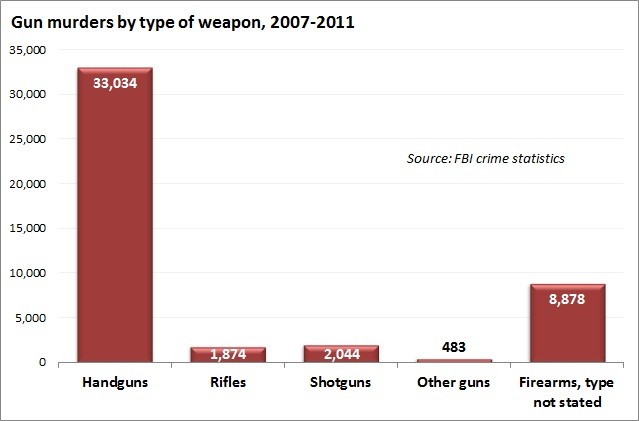
Waldman is unsurprised that 88 percent of gun homicides are committed with handguns:

[D]espite the greater amount of attention given the assault weapons ban, it isn’t the most significant proposal currently on offer; that would be universal background checks. And dropping the assault-weapons ban may end up being the price of getting other proposals through Congress. If the ban gets killed along the way, pro-gun members of Congress can tell their constituents they fought against the most visible restriction on guns being debated, and only signed on to more modest, common-sense (to use everyone’s new favorite expression) reforms that everyone but the most extreme gun nuts can agree on. And that wouldn’t be too terrible an outcome, provided the other measures pass.

The Hagel Holdouts

CNN claims that Hagel’s confirmation is “all but certain.” Larison counts No votes:

We won’t know what the final confirmation vote tally will be, but by my count there are at least 20 Republicans that will definitely vote against Hagel and there are only two definite Republican yeas. Even if all of the remaining Republicans voted to confirm, that would still mean that nearly half of the Senators from Hagel’s own party are voting the other way. It isn’t surprising when the president’s opposition votes in large numbers against a nominee from the president’s party, but in this case Republicans are going out of their way to repudiate one of their own mostly because he is not enough of a jingoist and saber-rattler. Hagel will almost certainly be confirmed, but along the way Senate Republicans are confirming everyone else’s worst fears about their foreign policy views.

A Smarter Bowl

Super Bowl XLVII - Baltimore Ravens v San Francisco 49ers

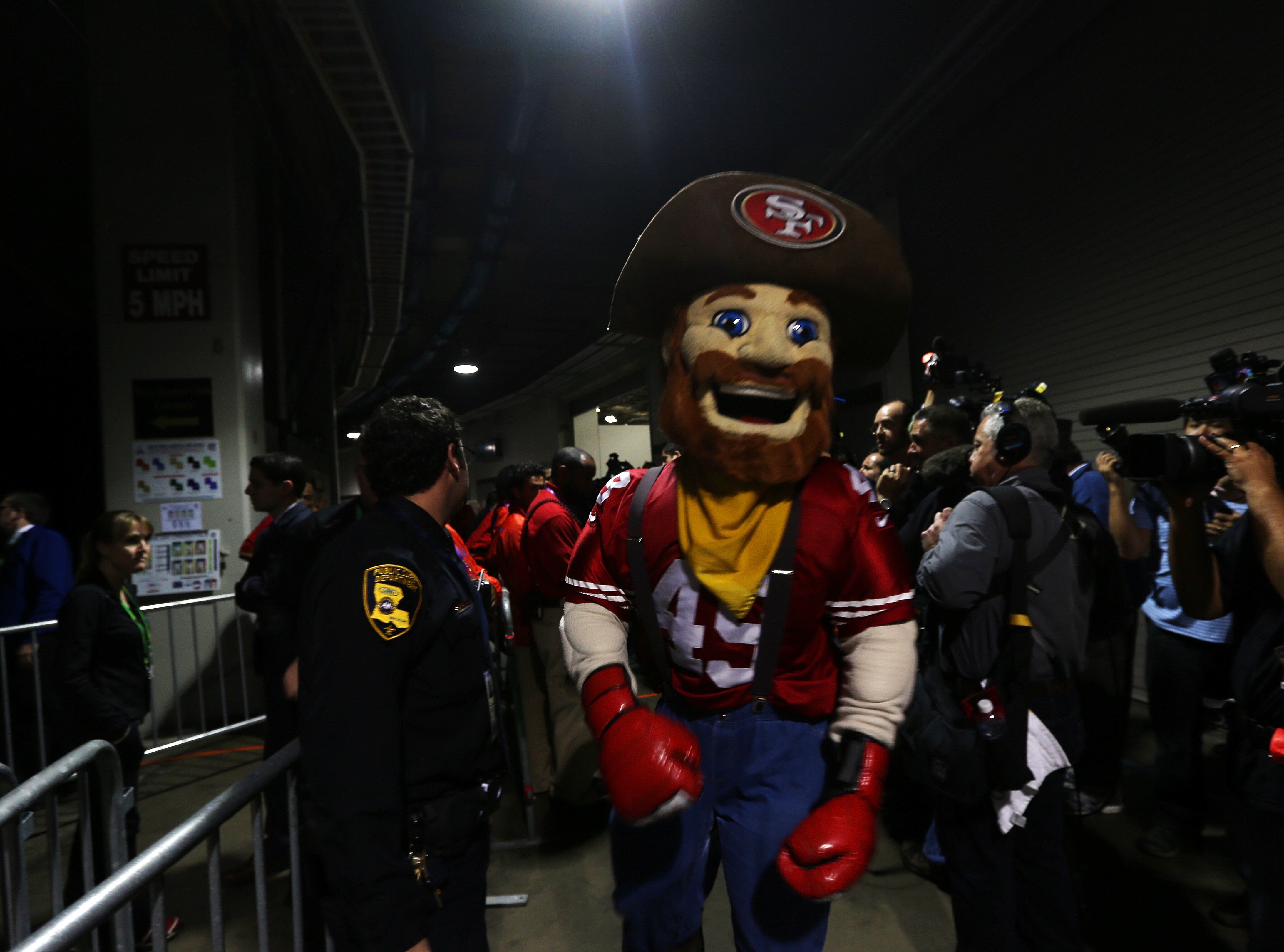
Steve Benen contrasts the blackout at this year’s Super Bowl with the near-blackout at the 2011 Orange Bowl, in which smart grid technology helped keep the lights on. He hopes that the high-profile failure from Sunday will stimulate interest in infrastructure development:

[W]e don’t yet know enough about what happened in New Orleans to say for sure whether smart-grid technology might have prevented the Super Bowl fiasco last night. But as Brad Plumer explained, we do know that smart grids can prevent blackouts: “And that’s no small thing. Blackouts, after all, have become frustratingly common across the country. Between 2005 and 2009, there were 349 power outages in the United States that affected at least 50,000 people. That’s up from just 149 outages between 2000 and 2004, according to Massoud Amin of the University of Minnesota. Problems with the power grid now cost the economy some $150 billion per year.” …

The problem, of course, is that these investments are expensive, and congressional Republicans have come to believe public investments are … bad. … Of course, the private sector has no incentive to make such investments on its own, since the costs are high, and the return on investment comes slowly over time. As a practical matter, the reality is unavoidable: either the government does it, or it doesn’t happen.

(Photo: The San Francisco 49ers mascot stands in the tunnel during a power outage during Super Bowl XLVII at the Mercedes-Benz Superdome on February 3, 2013 in New Orleans, Louisiana. By Bruce Bennett/Getty Images)

An Anti-Overdose Drug

Maia Szalavitz flags new study on naloxone, a drug used to treat opiate overdoses. Szalavitz notes that distributing “naloxone and training people to use it can cut the death rates from overdose nearly in half.” But naloxone isn’t easily avaliable:

Advocates have argued that the medication should be made available over-the-counter since it has little potential for abuse and is nontoxic. The Centers for Disease Control (CDC), the director of the National Institute on Drug Abuse and even the drug czar’s office support making it more widely available, and unlike the case with needle exchange programs, there has been no organized opposition to [Overdose Education and Naloxone Distribution (OEND) programs]. But the Food and Drug Administration (FDA) has no precedent for allowing over-the-counter sales of such a drug: naloxone is a generic medication approved in an injectable form. Without a company to submit an application for its use in the intranasal version, the agency isn’t likely to OK over-the-counter sales.