Don’t Speak For We

Jeremy Gordon examines the reliance on the collective pronoun in making an argument:

Over time, the “royal we” has made its way from the mouths of Queen Victoria and Margaret Thatcher into our writing. At best, it seems a crutch, while at worst it’s an assumed arrogance. Here’s but one example from The New Yorker’s Sasha Frere-Jones, writing a jeremiad against Jay-Z:

However thick the darkness, we drag ourselves into arguments, up to lecterns, because we have not let go of each other yet. We still think we can fix a thing that shows no sign of ever being fixed.

… [I]t’s clear this isn’t a literal case of the royal “we.” (It’s hard to imagine any music writer being that arrogant.) Instead, it’s a rhetorical trick to make the reader say “I guess I do drag myself into the argument despite the thickness of the darkness!” Because with his “we,” who is Frere-Jones speaking for?

Himself, trying to avoid the English class no-no of using first person? The New Yorker, with the “we” a formal endorsement of what’s being discussed? Is it even more far-reaching than that, leaping off the screen to presume how the reader is supposed to feel? Without some kind of clarification, there’s really no way to know.

Writing in Personal Pronouns in English Language, English professor Katie Wales notes the irony: “‘We’ itself is often used, out of modesty, for example, to resist the egocentricity of a potential ‘I’; yet an egocentric ‘meaning’ will often be re-asserted.” In hiding the individual author, a consensus opinion is born. No one person thinks this thing; we do. And because the entire reason of why you’re reading is because you think the writer has something to say, you’re subconsciously agreeing before you’ve even thought otherwise.

Who Could Beat Clinton?

Noting a series of populist victories among Democrats, Scheiber suggests that such forces could pose a serious obstacle for Hillary. He thinks Elizabeth Warren could prove to be a formidable opponent:

It’s hard to look at the Democratic Party these days and not feel as if all the energy is behind Warren. Before she was even elected, her fund-raising e-mails would net the party more cash than any Democrat’s besides Obama or Hillary Clinton. According to the Times, Warren’s recent speech at the annual League of Conservation Voters banquet drew the largest crowd in 15 years. Or consider a website called Upworthy, which packages online videos with clever headlines and encourages users to share them. Obama barely registers on the site; Warren’s videos go viral. An appearance on cable this summer—“CNBC HOST DECIDES TO TEACH SENATOR WARREN HOW REGULATION WORKS. PROBABLY SHOULDN’T HAVE DONE THAT”—was viewed more than a million times. A Warren floor speech during the recent stalemate in Congress—“A SENATOR BLUNTLY SAYS WHAT WE’RE ALL THINKING ABOUT THE OBNOXIOUS GOVERNMENT SHUTDOWN”—tallied more than two million views.

Warren would have her work cut out for her; Harry Enten calls Clinton “the most formidable presidential frontrunner in the modern era”:

The only candidate anywhere close to Clinton was Al Gore for 2000. Gore had long been in the upper 40s to mid 50s. Gore went on to waltz to the nomination in the single strongest non-incumbent performance in the modern era. He won every single primary and took 76% of the primary vote.

Clinton’s numbers look a lot more like an incumbent. Bush was in the low 70s for 1992. Clinton was in the low 60s to low 70s for 1996. Obama mostly was in the low to mid 60s for 2012, even when matched up against Hillary Clinton.

Moreover, Clinton’s edge extends to the early caucus and primary states. Your national numbers can be amazing, but if you don’t win either Iowa or New Hampshire, you’re likely not going anywhere. Clinton is in the mid 60s in New Hampshire and the low 70s in Iowa.

A Word On Israel And Iran

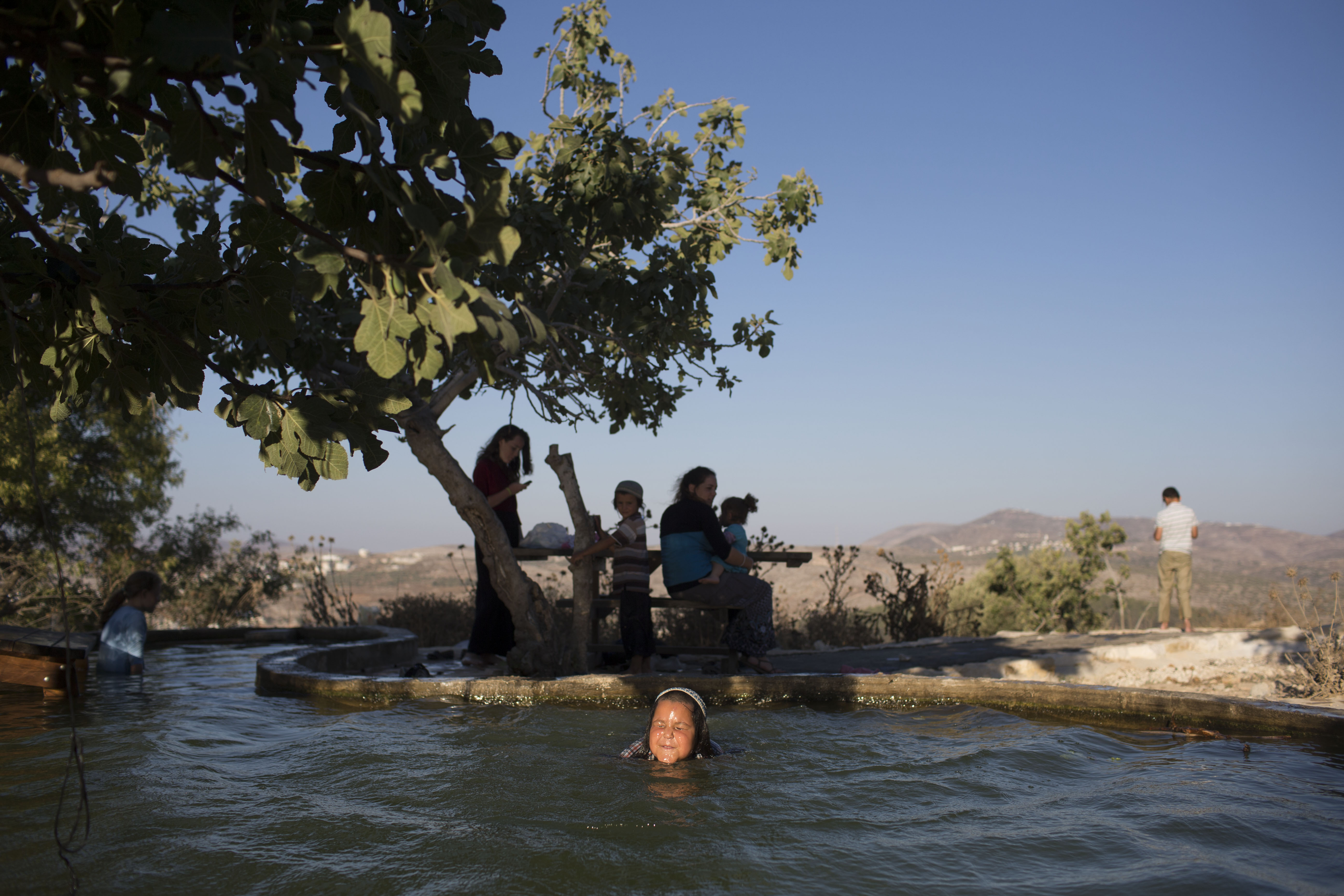
Life Continues In The Havat Gilad, West Bank Outpost

On the very sensitive issue of Israel, there is often little middle ground that isn’t swamped by angry rhetoric on either side of the debate. So, as the critical talks with Iran proceed, I want to clarify a couple of things.

My dismay at Israel’s rightward lurch, its refusal to freeze settlement construction on the West Bank and East Jerusalem, and its apocalyptic fear-mongering about Iran does not and should not mean that I couldn’t care less about the Jewish state. I can understand how, in the rough and tumble of daily blogging, many reflexive – and some thoughtful – supporters of Israel might infer that I harbor some disdain for the Zionist project, or indifference to the dangers Israel confronts on a daily basis. I don’t. For an Irish-Catholic Englishman, I have long been passionate about Israel’s security and success. It was one of the first foreign countries I ever visited, and for many years (shaped, of course, by my time at The New Republic), I completely sympathized with successive Israeli governments’ frustration at the lack of a decent negotiating partner and the continued, foul incitement to anti-Semitism of much of Palestinian culture.

Things changed for me during my unsentimental education about the world-as-it-is during the Iraq War catastrophe. That war was the defining event for me and my own political understanding of the 21st Century world. For others, it was an error or a failing, but their broader worldview remained intact. Mine didn’t. It didn’t make me an isolationist, but it sure radically tempered my belief in the ability of American power to remake the world in our own image – however well-meant that remaking may have been. It became clear to me that a global conflict between fundamentalist Islam and fundamentalist Judaism and fundamentalist Christianity could become apocalyptic, especially in the Middle East. What was urgently required was a move to pragmatism, toward defusing the most polarizing rhetoric, toward healing the wounds of Iraq, and a calmer, if clear-eyed, engagement with Muslim humankind.

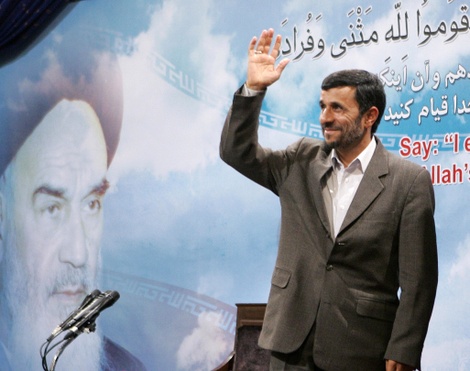
I noticed during this period that, post-Arafat, the Palestinians were no longer an unreliable partner in negotiations. Abbas and Fayyad were ahmadinejadbehrouzmehriafpgetty.jpgabout as good as we were ever going to get, and the Obama presidency was the perfect reagent for a compromise that would defuse some of fundamentalism’s power and return us to the art of the possible. The way in which Israel’s leadership responded – contemptuously – signaled that we were dealing within a very different Israeli government than, say, Rabin’s. Their Gaza war, their hyperbolic rhetoric on Iran, their continued settlement of the West Bank, their constant apartment-grabs in East Jerusalem, and the increasingly extremist tone of Israeli political culture: all this made me see them as the current arrogant problem, and not the Palestinians. The way Netanyahu intervened in American domestic politics to undermine the president also appalled me.
Obviously I am not alone. Someone far more knowledgeable about the country whose views I had long shared – Peter Beinart – also shifted. Many others have among American Jews of the younger generations. And the motive for the shift is not to demonize Israel, but to assert America’s national interest first and foremost, and secondly to save Israel from becoming a pariah state that was hellbent on becoming a permanent occupying power, with all the moral corrosion that occupation implies. It is tempting to say that the moment for a two-state solution is past. But I want to resist that temptation – because without a two-state solution, Greater Israel is not a country the West can support with such largesse indefinitely. And I want to support an Israel that lives up to the best aspirations of its founders.

My support for an agreement with Iran that grants it the right to enrich uranium at low levels and subject to routine, tough inspection regimens is also a function of dealing with the world as-it-is and not as I would like it to be.

The fact is that Iran is a great country with deserved pride, but it’s been run into the ground by fundamentalist fanatics, fascistic in their extreme factions, who spout foul rhetoric and conduct themselves in ways that warrant profound suspicion. The crippling sanctions regime was a proper response to that. But when the Iranian response to years of sanctions is the emergence of a pragmatic faction given legitimacy by support in Iran’s highly constrained elections, and when that faction sends signals it is desperate to end sanctions and eager to rejoin the international community, we have an opportunity, as with Abbas and Fayyad, to defuse the tension.

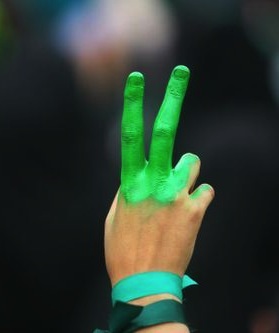
For me, the emotions of June 2009 affect this too. The Green movement proved that Iran’s younger generation is on the side of freedom, not theocracy. And yet that movement, like the regime, also insists that the country has a right to enrich uranium. On this, all of Iran is united. It is not just foolish but impossible to somehow end that fact by making the end of uranium enrichment our non-negotiable stance. It guarantees failure.

Nor can we erase the fact that Iran has developed the capacity to enrich uranium, even under the most brutal of sanctions, and it is seen as a matter of national pride to retain that capacity. As Roger Cohen notes:

Although Western intelligence agencies believe the Islamic Republic has not taken the decision to make a bomb, Iran’s nuclear program has advanced far enough for the country to have the relevant knowledge. Destroying this know-how is near impossible. Iran knows how to produce weapons-grade fissile material; it may not yet be able to make a deliverable weapon. So, as Stephen Heintz, the president of the Rockefeller Brothers Fund, put it to me, “The key for the international community is to put all that capability in a box where it is verifiable, contained and controlled. That is what the deal is about.”

Indeed it is. Given its past behavior, the regime has to meet more exacting standards for a deal than might otherwise be the case. But without a deal, Iran will increase its nuclear activity, Israel will be tempted to pre-empt it, an arms race with the Saudis might follow, and the cycle of green-peacefundamentalist violence would be ratcheted up a notch. It’s the kind of cycle that can lead to catastrophe. Avoiding this – creating a space for hardheaded relations with Iran and a deep commitment to Israel’s security – seems to me easily the most practical move in the global war on fundamentalist terror by defusing it with pragmatism. Winning that war will make Israel more secure, enhance American policy options in the Middle East, bring down the price of oil, and give Iran’s silent pro-Western majority an opportunity to change the country from within.
That’s what I want to see. I know it’s tough, given the history of the Tehran regime. I know that hope is no longer as powerful an emotion as it was five years ago. But I see this moment of opportunity as similar to the one we faced in the late 1980s with the emergence of glasnost and perestroika in the Soviet Union, and for the same reasons of economic desperation, and pent-up popular frustration. Russia too is a great nation whose fundamentalist atheists had also driven into the ground. We found a way to rescue the country from its regime, by engagement after a ramping up of opposition. I hope Obama and Rouhani can become the Reagan and Gorbachev of this moment. Because the alternative is war at some point – sooner or later – and a tragedy for the Iranian people and for Israel’s core security.

Who really wants that? I mean: really? And what other options do we actually have, apart from the last resort of war – which the American people would not, in my view, support? We are in about the sweetest spot history will hand to us. If we squander this opportunity, the world will darken measurably.

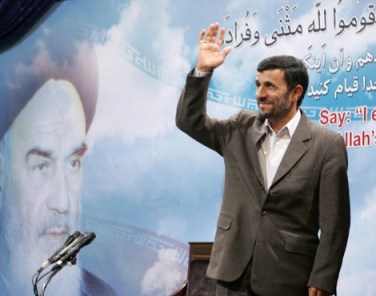
(Photos: A Jewish settler boy swims in a pool near the Jewish outpost Settlement of Har Bracha, West Bank on July 22, 2013. By Uriel Sinai/Getty Images. Mahmoud Ahmadinejad and the Green victory sign by Getty Images.)
If Healthcare.gov Isn’t Fixed In Time

Bob Laszewski thinks the Obama administration needs a Plan B. Among his suggestions:

Encourage people to call the insurers and private exchanges serving their states directly. The administration should post those phone numbers and web addresses on the first page of Healthcare.gov. If they went directly to insurers, people would have to access multiple insurer sites to shop rather than the one-stop shopping the federal exchange would have provided. If they went to private exchanges, they would have the full shopping experience. However, in either case, they would not be able to get a subsidy by going direct as long as the insurers and private exchanges are unable to access the federal subsidy system. But they could get signed up for coverage by January 1. While this would not help people without the money to buy a policy, everyone would ultimately get the entire subsidy they are entitled to as part of their 2014 tax filing.

Build, as the very top system priority, the subsidy calculation bridge the insurers and private exchanges have been requesting for months but the administration made a lower priority well before October 1. If insurers and private exchanges have the ability to access the subsidy calculator and enroll people in the subsidy program, the administration will have built a workaround system for the interim so people who could not otherwise afford coverage would be able to get a subsidy.

Beutler agrees that backup plans are necessary:

Now obviously Obama shouldn’t contemplate doing any of this if the site really will be working by the end of the month. But if and when it becomes clear to administration officials that it won’t be ready, they’ll need to announce the failure and the workaround more or less simultaneously. The absence of a plan B would create a vacuum for congressional saboteurs, and Democrats would probably get sucked into it. Opposing all proposed solutions won’t be sustainable. And at that point Obama would have to entertain the prospect of allowing Republicans to inflict lasting damage upon his signature achievement.

Ask Charles Camosy Anything: Should Christians Eat Animals?

Yesterday Charles outlined the sins of factory farming. Today he considers what Jesus would eat:


In another video, the Christian theologian highlights the biblical case for treating animals as our companions, not our food:

Camosy’s new book is For Love of Animals: Christian Ethics, Consistent ActionMore about him:

Charles Camosy is an assistant professor of Christian Ethics at Fordham University. … His early work focused on medical and clinical ethics with regard to stem cell research and the treatment of critically ill newborns in the neonatal intensive care unit, which was the focus of his first book, Too Expensive to Treat? Finitude, Tragedy, and the Neonatal ICU. His second book, Peter Singer and Christian Ethics: Beyond Polarization, uses intellectual solidarity in an attempt to begin a sustained and fruitful conversation between Peter Singer and Christian ethics.

Our full Ask Anything archive is here.

The Iranian Rubik’s Cube, Ctd

Hooman Majd made important points about the US-Iranian negotiations while they were still ongoing:

Iran and the United States hadn’t talked for five hours in the past thirty-four years. We’ll have to wait to find out whether this is a historic moment, or merely another lost opportunity. But it seems improbable that the Americans and Iranians would make such a production of these talks without some real confidence that signing on the dotted line is within reach. Iran’s Supreme Leader, Ali Khamenei, took to Twitter to emphasize his support for the negotiations and his negotiators, whom he called “children of the #Revolution”—suggesting that hardliners in Tehran would have a difficult time sabotaging an agreement. …

As of Saturday night, it looked like it would take at least one more round of talks to reach a breakthrough. Members of the Iranian delegation indicated that the objections to signing a draft agreement came from the other side, but suggested that the remaining gaps looked too great to overcome in the few hours remaining. Zarif repeated what he had said before these discussions began—that it “wouldn’t be a disaster” if a deal was not signed this weekend.

Reza Marashi makes similar arguments:

One did not have to be in Geneva to see the obvious: more progress was made over the past three days than in the past three decades combined.

The importance of this breakthrough must be contextualized: Compare negotiations under Iran’s former chief nuclear negotiation Saeed Jalili to Foreign Minister Zarif’s current stewardship. It’s night and day, and the metric of success is now clear. The bedrock of these negotiations rests upon a simple but vital premise: It is in the interest of both sides to develop a peaceful solution to the U.S.-Iran conflict, and diplomacy is the only viable pathway that bridges status-quo mistrust to future cooperation.

To that end, both sides acknowledge — and are working to contain — the very real presence of spoilers who seek to maintain or exacerbate a negative trajectory in relations. “We’re not in the business of doing favors,” a Western diplomat told me, smiling. “We’re in the business of pursuing our interests.”However, no less important have been the forces for moderation that do not believe Washington and Tehran need one another as an enemy. As talks concluded, Foreign Minister Zarif and Secretary both emphasized their belief that progress was made and a deal can be reached.

Patrick Brennan’s assessment is much more pessimistic:

Kerry claims he was proud of the work that negotiators accomplished in Geneva this week, but it looks like the parties came to the table remarkably far apart, without any realistic framework for a deal. But the Security Council has passed multiple resolutions demanding that Iran halt its enrichment activities, while Iran’s players seem united in demanding that the deal include a provision explicitly recognizing the country’s right to do so. The International Atomic Energy Agency says there is now a “framework” for a deal with Iran that negotiators will try to iron out over the next three months, but this isn’t what the Obama administration was hoping for — they wanted an agreement on a six-month freeze in enrichment activities, which would then provide time to agree on a broader deal. Now, instead, Iran’s activities will continue unmolested, even if the IAEA’s framework proves useful over the coming months.

Kenneth Pollack notes that any deal will require sidelining Iran’s hard-liners:

We’ve never seen Khamenei actually overrule the hard-liners on an issue of this kind of importance. We’ve seen [previous supreme leader Ruhollah] Khomeini do it, famously, at the end of the Iran-Iraq War. The hard-liners wanted to keep fighting, and [later-president Hashemi] Rafsanjani and the pragmatists wanted to end it. In the end, although he said it was more bitter to him than “drinking poison,” Khomeini agreed to overrule the hard-liners. We haven’t seen that with Khamenei.

Larison argues that France, which derailed the negotiations according to some reports, has made a major mistake:

Iran hawks in the U.S. are predictably pleased with French interference, but no one else should be fooled into thinking that France has done itself or other Western countries any favors. It can’t be emphasized enough that Western actions that block an agreement with Iran on the nuclear issue benefits no one except Iran hawks and Iranian hard-liners, since it makes it more difficult to resolve the issue through diplomacy, and that in turn makes both armed conflict and a nuclear-armed Iran more likely. Perversely, France has given Iran an opening to agree to fewer concessions than it otherwise would have, and by demanding so much in the first stage France has made it less likely that Iran will agree to anything.

Juan Cole echoes:

France can’t possibly want no agreement (unlike Israel), and presumably there must be a way to satisfy Hollande in a confidence-building initial proposal. It may also be that Paris will feel so much heat from everyone else in Europe that they will moderate their hard line.

One thing France must keep in mind is that hawks in Washington actively want a war with Iran, and that if there is no agreement now, that war will be on the front burner if a Republican comes to power in 2017. Since the French opposed the Iraq War and have been traumatized by their participation in Afghanistan, presumably they don’t want to give the American Right such a luscious opportunity, which won’t in the end benefit French interests in the Middle East.

And Scott McConnell leafs through the history books:

France’s relations with Israel have been at least slightly chilly since de Gaulle denounced what he (correctly) perceived as Israel’s desire to hold onto the territory it captured in the 1967 war.  Before that, however, France was Israel’s largest arms supplier and helped get Israel’s clandestine nuclear weapons program off the ground in the 1950s. With Israel and Great Britain, France invaded Egypt in the 1956 Suez Canal crisis, hoping to topple Nasser and cut off aid to the Algerian rebels. The Clash of Civilizations—the fear-inspiring “Islamofascism” narrative—did not originate with Sam Huntington, or American or Israeli neoconservatives, but with French intellectuals trying to bolster international support for their colonial war in Algeria. So it would not surprise me if French strategists imagined a kind of Paris-Tel Aviv-Riyadh triple alliance, unlikely as it sounds, but not much more unlikely than the alliance of Republican France and Tsarist Russia which set the table for World War I.

My thoughts on the Geneva fallout here.

There Is No Shame In Therapy

Iraq War veteran and PTSD survivor Mikey Piro is blogging again. Part of a recent entry:

I am pretty frank about seeing my therapist.  When I tell people (read my civilian coworkers) I am a Veteran who served in Iraq and I sought the help of therapists upon returning home, I usually get one of two reactions. One, the listener doesn’t even bat an eye and listens to me prattle on about this or that. Two, they nod and say, “Of course you did, that makes complete sense. I can’t image what you went through.”

I wish newly returning Veterans could see or hear those reactions from civilians more often. What would be even better, is if we could heard it from more of our own “kind”.

Previous Dish on Mikey and veteran PTSD here, here, and here.

The Iranian Rubik’s Cube

Nuclear Talks in Geneva

So we have two somewhat conflicting narratives coming out of Geneva. The first we aired last night, via Laura Rozen and Marcy Wheeler. There was a general consensus that the French were the ones who derailed the imminent short-term agreement. Their motives? Cozying up to the pissed-off Saudis and also the usual Gaullist need to throw around what’s left of France’s weight. Hollande is set to visit Israel next month as well, inserting France into the occasional glimpses of daylight between the American and Israeli positions on Iran. Christopher Dickey has a must-read on the hardline faction still ensconced in the Quai D’Orsey. Money quote:

Under Sarkozy and his longtime Foreign Minister Bernard Kouchner, the Quai’s policies came to be increasingly dominated by the French version of American neo-cons, many of them former leftists who preached the spread of democracy and dreamed of remaking the Middle East, if necessary, through war.

Sarkozy liked to say if he’d been president in 2003 he’d have backed the American-led invasion of Iraq; Kouchner let it be known he thought an armed confrontation with Iran was more or less inevitable. The key player at the Quai is Jacques Audibert, the director general of political and security affairs, who has pushed a very hard line, insisting that the ideal goal of sanctions and the pressure on Tehran must be the de facto elimination of its nuclear program.

The other must-read is another masterful column from Roger Cohen. On France, he has a more nuanced take:

Its position reflects strong views on nonproliferation, its defense agreement with the United Arab Emirates, and a mistrust of the Islamic Republic that runs deep. There are good reasons for this mistrust. Laurent Fabius, now the foreign minister, was prime minister in the mid-1980s during a wave of Paris bombings that were linked to pro-Palestinian groups but are also believed by French authorities to have had Iranian backing in several instances. Fabius is not about to forget this or cut Rouhani any slack. This is not a bad thing. A deal has to be watertight in blocking Iran’s path to nuclear weapons while acknowledging its right to nuclear energy.

Yesterday, Kerry insisted that the failure of the short-term deal was not a function of French intransigence but of the Iranians being unable to sign off on some of the demands of the P5+1 group, without more consultation at home. In fact, most of the reports coming out today reflect that new consensus. The FT’s take is here. Money quote from Fabius:

“We [France] are not closed . . . we want a deal for regional and international security … France is neither isolated nor a country that follows the herd. It is independent and works for peace.”

Dickey notes:

France insisted that operations of a nuclear reactor at Arak—which is not online yet—be halted, and that current stockpiles of enriched uranium be reduced.These were the sorts of measures that the other negotiators expected to ensue at future stages of the normalization process. The urgent need right now is to stop the enrichment program that exists — freeze it and inspect it — since if it continues Iran soon will be only months, if not weeks, from procuring sufficient material for a bomb. As a result of the French posturing, that enrichment probably will continue, at least for the moment.

So it may be a subtle difference between the ambition of the temporary freeze and the ambition of the later, bigger negotiation. That can still be worked out, it seems to me, because it’s a small nuance. It’s also why this stalling tactic is arguably unlikely to end the process. Because, far from arresting Iran’s nuclear development for six months, it allows it to continue (which no one in the West wants). But you can see how the P5+1 regarded their own unity as more important than an immediate deal and sent the French-fortified proposal to be taken back to Khamenei. The French can say they tried to stop it, and yet not stop it, bolstering their alliance with the Saudis and Israelis while allowing the process to move forward. Win-win. So this became a slightly more aggressive stance designed to test Tehran and vent some of the nervousness about any deal. It could be, in other words, just a bump in the road – and perhaps a somewhat contrived one.

But I should add a caveat here. The crux of these negotiations is unknowable to those outside them. That’s how diplomacy works. We will find out the full story some day, and until then, these parsings of events and statements on an hourly basis need to be seen as entirely provisional.  But as a case study in Great Power diplomacy, it’s crack for poli sci graduates like yours truly.

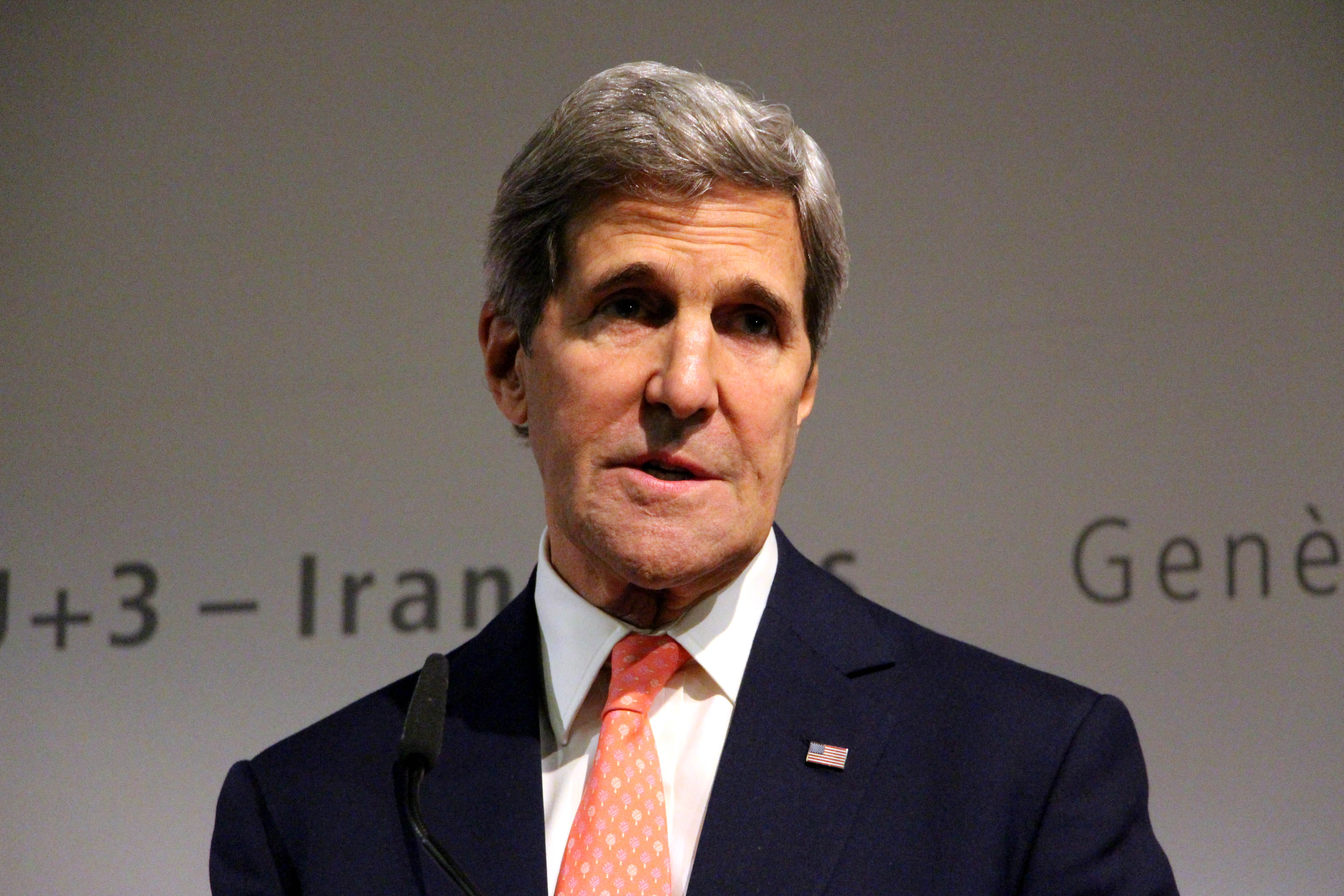
(Photo: US Secretary of State John Kerry speaks at a press conference after the third day of closed-door nuclear talks at the International Conference Center in Geneva (CICG) on November 10, 2013 in Geneva, Switzerland. By Murat Unlu/Anadolu Agency/Getty Images.)

The Reality Of Serious Weight Loss, Ctd

A reader writes:

I am glad you found this piece and are sharing this with your readers.  This is a subject that is as personal and close to me as can be.  Having gone from 425 lbs to 275 without surgery, I certainly expected to feel much better about it than I do."Self"

Make no mistake, I’m proud of what I have accomplished, but the truth is that I still FEEL 425 lbs.  That fact has been incredibly upsetting and frustrating.  More to the point, because the skin is still there, there is a kind of phantom limb feeling that occurs, which reinforces the feeling of still being as obese as I once was.  I too don’t look the way I envisioned when this journey started.  I find that I look like the proverbial 10 pounds of potatoes in a 100 pound bag.

All of this takes an incredible toll on my mental health.  Any happiness at my achievement is immediately mitigated by fact that weight loss was not the panacea for my appearance and mental health that I assumed it would be.  When you lock up your issues in your weight, you assume that shedding the weight will rid you of those issues.  Like an addict who quits drinking or drugs, you feel the initial euphoria (something akin to a sobriety high), but that wears off, and you are left to live the rest of your life in this new way.

That adjustment is hard for addicts – but I would submit that it may be harder for the obese in one way.  Imagine if an alcoholic still HAD to consume some alcohol to live.  Many alcoholics say one is too many, and a million is never enough. Unfortunately for compulsive over-eaters, this approach isn’t an option and leaves you vulnerable to relapse (and would explain why so many people who lose extreme amounts of weight end up putting it back on).

I really hope this can begin a conversation with readers; I feel like this a topic the Dish is built for.

Another reader:

Wow. This really hit home.

A couple of years ago, at the age of 41, I finally got around to doing what had been my New Years resolution for 15 years running: I lost weight.  And not just a few pounds, but quite a few – 100 to be exact. I did it without surgery, through a series of different “programs”… juicing, nutrisystem, calorie counting, and yes, a good brisk 30-minute dog walk a day.  It took me about 10 months and I’ve kept it off.  When you do something for 10 months and are regimented about it, it just becomes the norm.  That’s what I tell people that ask how I did it.  Find something that works for you and is sustainable.  Because at the end of the day, it needs to be a permanent change.

But back to the subject of the post. I too was disappointed that my body did not bounce back to look like It did in my youth.  My belly looks similar to the woman in the photo shoot.  It’s disappointing because fully clothed, I can catch myself in the mirror and feel fantastic about my accomplishment and the way I look, but getting in the shower in the morning … well, that’s a different story.

What I’ve learned though, is that while improving my appearance was always the biggest reason behind getting in shape, it’s health that has become of greater importance to me.  When I finally got off my butt to lose the weight, my blood pressure was through the roof, and my blood sugar was firmly into the pre-diabetes range, bordering on full blown type-2.  I was maybe two years from some serious health issues and the type of medications you take for the rest of your life.

So when I’m getting in the shower and I catch that ugly belly and backside in the mirror, I can shrug it off and be content with who I am.  But there was a 15-year period where I couldn’t.

Another:

After my last major weight loss and regaining it all and more, I recognized that I was excellent at losing weight, but terrible at sustaining the loss. And I sought to understand why.

I once climbed Mt. Rainier, which, at 14,411 feet, requires that you breathe in a methodical way as you ascend to help your body adjust to the decrease in oxygen in the air. Every breath and every step must be done consciously in tandem to prevent altitude sickness. It requires a level of focus that becomes all-consuming. I don’t remember much about the view during the ascent, but I remember that breathing ritual.

That was my experience as well during weight loss. The focus required is total. Nothing passes your lips without also passing the gauntlet of calorie count, nutrient type, whether it is a “good” or “bad” food, eaten in the right quantities, pairings, settings, company, platings, etc., etc. ad infinitum. The step from healthy attention to unhealthy obsession is a short one, and downhill. The cultural obsession with body image is right there, with its hand on your back the entire time.

A function that is natural and necessary to life, becomes stilted, judged and twisted. And if it works, and you lose the expected weight, it becomes a life sentence to maintain it. Ask a dieter how much of their day is spent planning or anticipating the next tightly monitored meal. How much of their workout is spent staring at the fatuous “calories burned” indicator on the exercise machine readout. It is shocking.

I consider it one of my healthiest decisions to reject the very idea of weight loss as a goal. It took me years to purge myself of the toxic ideas of the diet-and-exercise industrial complex and the self-blame and self-hatred those ideas cultivate and profit from. I consider it malpractice for physicians to prescribe an approach that will be unsuccessful in the long term for 95% of the people who attempt it. What a choice: you can be fat or crazy.

Pinning all your hopes on an unattainable body image (with ever-moving goal posts) and placing the authority on what is best for your body on late-night infomercials is a so sad and so wrong and such a waste. I wish I could put Kozerski’s pictures on every billboard nationwide in hopes of breaking the cultural fever and dispelling the illusion of the perfect body attainable forever through diet and exercise. What we could do with all the brain power being wasted!

I am healthy despite my weight. I eat well, I enjoy moving my body and breaking a sweat. I do not own a scale. I am at peace.

(Image: Self from Kozerski’s series Half. More images from the series can be viewed here (NSFW).)