Correction Of The Day

From the WSJ dealing with an op-ed they commissioned from – no, I’m not kidding – Suzanne Somers:

An earlier version of this post contained a quotation attributed to Lenin (“Socialized medicine is the keystone to the arch of the socialist state”) that has been widely disputed. And it included a quotation attributed to Churchill (“Control your citizens’ health care and you control your citizens“) that the Journal has been unable to confirm.

Also, the cover of a Maclean’s magazine issue in 2008 showed a picture of a dog on an examining table with the headline “Your Dog Can Get Better Health Care Than You.” An earlier version of this post incorrectly said the photo showed and headline referred to a horse.

It was not a long article. Update from a reader:

You mock the Wall Street Journal for publishing Suzanne Somers’ silly, error-filled piece on Obamacare. But the Journal’s action was far more insidious than you give on, and goes well beyond a few fabricated quotes:

Suzanne Somers is one of the most destructive celebrity voices doling out healthcare advice. She has promoted the theory that chemotherapy and effective anti-cancer drugs such as Tamoxifen are frauds, and that quackery such as vitamin supplements and coffee enemas are the way to treat the disease (see here and here). That she is given a wide audience on various celebrity talk shows for these dangerous (and if followed, fatal) doctrines is bad enough. That the Journal would raise Somers stature as a health policy “expert” by giving her valuable space in its pages is truly a disgrace. It is the equivalent of deeming Jenny McCarthy competent to opine on such matters because of the nonsense she dispenses about a supposed link between vaccines and autism.

Another:

Suzanne Somers’s “article” was problematic, quite obviously, in several ways.  But as a Canadian I’d like to point out how absolutely sick and tired I am of having right-wing Americans misuse us and our healthcare system as some sort of punching bag in their bullshitty ongoing quest to deprive fellow citizens of affordable medical care.

I’m in my mid-30s, consider myself conservative, and yet there is no chance in hell that I would ever choose the American system over the Canadian one.  Nor would, oh I’d say, 99.9% of my fellow Canadians.  We know that our system isn’t perfect.  It could be run far more efficiently, long wait times are an ongoing scandal, and it can be brutally hard to find a family doctor in some provinces.  But you know doesn’t happen?  People don’t cling to jobs for dear life for fear of losing health insurance.  No one goes bankrupt simply because they get cancer.  No one has to fight with an insurance company just to get reimbursed for expenses that are supposed to be insured.

Canadians pride themselves quite deeply on our system. mi-day-2tier-826253 We believe that helping the sick is the responsibility of all.  And we are terrified of anything even closely resembling the current American system.  To even speak of introducing just the slightest bit of privatized medical care can be political poison for a federal politician.  In the 2000 election, the leader of the right-wing Canadian Alliance party (which is now the ruling Conservative Party of Canada), Stockwell Day, was painted as someone who would introduce American-style healthcare, a charge that he had a hard time battling.  He even went so far as to hold up this sign during the leaders’ debate [see right].

Canadians are perfectly happy with our system. We may fiddle with it in the margins, but socialized medicine is here to stay and that’s how we like it. So could Ms. Somers and her idiot fellow travelers please start coming up with their own fact-based arguments and stop lying about Canada?
The Odd Lie Of Barack Obama

The president repeated incessantly that, under Obamacare, Americans could keep their current coverage:

Lowry pounces:

Rarely has a major domestic program been sold on the basis of a premise so patently untrue. No matter what you’ve heard from the president of the United States, hundreds of thousands of people in states around the country are now receiving notices that their insurance is getting canceled. It raises the question of how the president could be so wrong about a basic element of his own signature initiative.

Greg Mankiw runs through various possibilities. Which is more worrying: that the president only vaguely knew what he was promising or that he consciously lied about it? So, on this issue, he is either a spectator of his own administration or a snake-oil salesman. The truth has always been that the ACA would impose a minimum level of benefits, meaning that many folks with cheap and not-so-great policies in the individual market will have to upgrade. So the ACA punishes a small group of people – those who have been thrifty with health insurance. As Ross points out, this is an odd incentive to impose:

If we want health inflation to stay low and health care costs to be less of an anchor on advancement, we should want more Americans making $50,000 or $60,000 or $70,000 to spend less upfront on health insurance, rather than using regulatory pressure to induce them to spend more. And seen in that light, the potential problem with Obamacare’s regulation-driven “rate shock” isn’t that it doesn’t let everyone keep their pre-existing plans. It’s that it cancels plans, and raises rates, for people who were doing their part to keep all of our costs low.

I must say that Ross’s blog has become indispensable in my understanding of the sane conservative critique of the ACA. Allahpundit tackles the administration’s response:

[White House press secretary Jay] Carney’s reply to this is, essentially, (a) a lot of people will be able to keep their plan if they like it, even if it’s not quite everyone, and (b) those who are getting dropped from their plans will get more comprehensive coverage on the exchanges. The latter point is like having the CEO of DirecTV tell customers that their monthly bill is about to double but they’ll now receive an extra hundred channels in return, maybe one or two of which people will actually watch.

Comprehensive coverage is lovely, but if you’re on a budget basic coverage might be more cost-effective; why pay $1,000 extra a year for a new package that includes substance-abuse treatment, say, if you don’t drink or do drugs? Obama took the option of cheaper catastrophic care away from people because insurers wanted to squeeze healthy middle-class suckers for extra revenue by forcing coverage on them that they don’t need. And yet Carney’s basically selling this as a *good* thing about the law, a sort of upgrade over the basic — but affordable! — plans people have now. Remind me again: Isn’t “affordability” supposed to be a key plank of the Affordable Care Act?

Frakt refuses to defend Obama’s promises about keeping coverage:

Let’s start with “if you like your plan you can keep it.” This is never, uniformly true. Plans change every year, even in the years before Obamacare was conceived. The truth is, if you like your plan, there’s a good chance it will change. That’s just as true, if not more so, under Obamacare. I do not endorse or defend this statement.

What Obama might have more plausibly have said is that Obamacare makes only minor or modest changes to coverage for the vast majority of Americans. Where it makes the biggest change is for the minority of Americans who cannot obtain affordable coverage today. That I could defend, though I am sure others would still contest it.

Chait’s perspective:

When it was originally contemplated, several years away from implementation, the process of imposing regulations on the individual-health-insurance market did not feel like taking people’s health insurance away from them. In the current moment, with cancellation notices going out and alternatives not yet available, it feels exactly like that. Which is to say, a promise that felt like a mere oversimplification at the time, and may eventually feel like one in retrospect, currently feels like a lie.

Earlier Dish on this subject here and here.

The Children Who Need Cannabis

When a Republican state congressman in Utah is in favor of legalizing weed resin because it can transform the lives of children dealing with the trauma of constant seizures, you know the momentum against Prohibition is now unstoppable. But this is the clincher:

Last week, the Food and Drug Administration approved the country’s first studies on the marijuana compound cannabidiol, a nonpsychoactive marijuana component, as an antiseizure medication. Some scientists believe the compound quiets the electrical and chemical activities in the brain that trigger seizures. Extracts are often heavy on cannabidiol, with a negligible amount of THC.

Heads up to all those parents whose children suffer needlessly because of our Puritan past: help is on the way.

Two Out Of Five Babies Are Playing Angry Birds Right Now

Finally, a real sense that I’m not alone! (I’m only a few stars away from nailing the latest Star Wars episode.) Lauren Davidson notes that smartphone and tablet use is catching on among the diaper-wearing set:

Thirty-eight percent of American toddlers under age two have used a mobile device for media, which includes playing games, using apps and watching video. This compares to 10 percent two years ago, when Common Sense Media conducted the first stage of the survey. “The past two years have seen an explosion in the use of mobile media platforms and apps among young children,” the survey explains. “In fact, almost as many children now have their own tablets (7 percent) as parents did two years ago (8 percent).”

I wonder how this will affect future media. Surely, it will be pretty huge. My nephew and I bonded over a Tablet. Its intuitive, tactile, interactive mode is so much more immediate to him than even television. If it becomes even more tactile – successfully mimicking the real feel of the world – it will be even more irresistible.

We need a new Lewis Carroll for today’s kids: Alice needs to go through the Tablet Glass this time. And never leave.

The Real Split In The GOP

Mitt Romney Finishes His Four Day Bus Tour In Ohio

Class:

At the grassroots, the key divide in today’s Republican Party isn’t between downscale Tea Partiers and affluent pro-business moderates. It’s between relatively affluent Tea Partiers, who want government radically downsized, and working-class conservatives who want government to help them get ahead, the people Ross Douhat and Reihan Salam called “Sam’s Club” Republicans.

In the Obama era, these downscale whites have streamed into the GOP. In 2004, notes Pew, whites with a high school education or less leaned Republican by six points. By 2012, they leaned Republican by 16 points. In 2004, Democrats enjoyed a nine point advantage among whites who earned less than $30,000. By 2012, that margin was down to two points. You can see this shift in West Virginia, a low-education, low-income, historically Democratic state where Barack Obama in 2012 lost every single county.

Pew calls these white working class migrants into the GOP “disaffecteds.” Like Tea Partiers, they’re religious, oppose gun control, want tougher enforcement of America’s borders and take a dim view of the federal government. But unlike Tea Partiers, they’re not angry at the federal government because they see it as a leviathan crushing their economic freedom. They’re angry because it’s not an effective ally in their economic struggles. Ninety-six percent of “staunch conservatives” favor a smaller government that provides fewer services over a larger one that provides more services. But among “disaffecteds,” there’s an almost even split. Among “staunch conservatives,” the deficit represents the biggest economic worry, by far. Among “disaffecteds,” it’s rising prices and the lack of jobs.

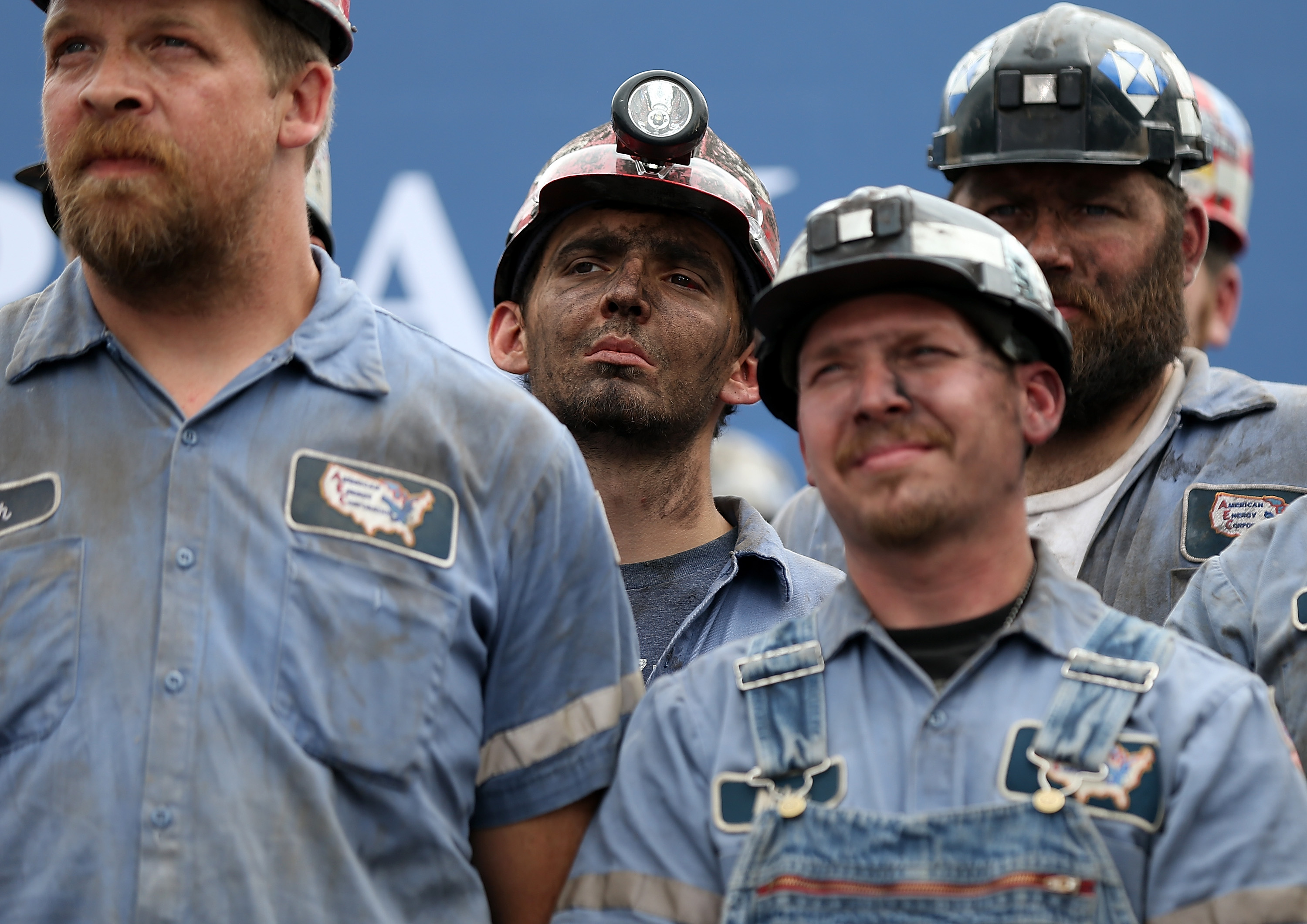
(Photo: Coal miners look on as Republican presidential candidate Mitt Romney speaks during a campaign rally at American Energy Corportation on August 14, 2012 in Beallsville, Ohio, near the border of West Virginia. By Justin Sullivan/Getty Images)

The Saudis’ Temper Tantrum

Totten – seconded by Roger Cohenwarns that “American-Saudi alliance is in danger of collapsing”:

Foreign Policy 101 dictates that you reward your friends and punish your enemies. Attempts to get cute and reverse the traditional formula always lead to disaster. Yet Barack Obama thinks if he stiffs his friends, his enemies will become a little less hostile. That’s not how it works, but the Saudis have figured out what Obama is doing and are acting accordingly. …

The Saudi regime is in a dimension beyond distasteful. It’s an absolute monarchy wedded to absolute theocracy. It’s worse than merely medieval. Human rights don’t exist. The regime—and, frankly, the culture—offends every moral and political sensibility I have in my being. I’d love to live in a world where junking our “friendship” with Riyadh would be the right call.

But the United States and Saudi Arabia are—or at least were until recently—on the same page geopolitically. For decades we have provided the Saudis with security in exchange for oil and stability, and we’ve backed them and the rest of the Gulf Arabs against our mutual enemies, Iran’s Islamic Republic regime and its allies.

The alliance isn’t deep. It’s transactional.

But the possible deal with Iran would upset all that – for good reasons, from the American point of view, it seems t0 me. If the US were to develop a transactional relationship with Iran on the lines of the Saudi relationship, it would transform the regional dynamics that the Saudis have used to promote their Sunni brand of Islamism. It would give the US a more balanced relationship with both Sunni and Shiite strands of Islamism, and enlarge our spectrum of policy choices. It could also give us more leverage over Israel’s destabilizing right-wing, and potentially unleash democracy over the long run, as Iranians, many of whom despise their regime, slowly develop more of a prosperous middle class, empowered by new media and eager to join the world of the West. The Saudi temper tantrum seems to me a sign of a monarchy that views the Shi’a as inferior, and sees Persians a threat to Arabs. I can see why they see things that way. But why should we?

Kaplan, unlike Totten, doubts that the Saudis are going to walk:

First, they have nowhere else to go.

The Saudi army and air force are structured along the lines of the American military, which provides them with tremendous amounts of weaponry, support, and training. The French and Russians could offer some assistance, but not nearly as much—and their political interests and alliances wouldn’t align so neatly with the Saudis’ either.

In fact, Bandar’s stratagem may reflect a growing awareness of Saudi weakness.Figures released earlier this month reveal that the United States has overtaken Saudi Arabia as the world’s biggest supplier of petroleum. To put it another way: The Saudis need our arms more than we need their oil.

Walt’s perspective on America’s relationship with Saudi Arabia, Iran, and Israel:

[T]he United States is not about to abandon its current allies or entirely reverse its long-standing regional commitments, and widening our circle of contacts won’t immediately force others to leap to do our bidding. Nor do I think it should. But a bit more distance from Tel Aviv and Riyadh, and an open channel of communication between Washington and Tehran would maximize U.S. influence and leverage over time. It’s also a useful hedge against unpredictable events: when you become too strongly committed to any particular ally (as the U.S. was once committed to the Shah of Iran), you suffer more damage if anything happens to them.

Because the United States is not a Middle Eastern power — a geographic reality we sometimes forget — and because its primary goal is the preservation of a regional balance of power, it has the luxury of playing “hard to get.” That’s why it’s not such a bad thing if our present regional allies are a bit miffed at U.S. these days. Remember: they are weaker than the United States is and they face more urgent threats than we do. And if they want to keep getting U.S. protection and support and they are concerned that our attention might be waning a wee bit, they might start doing more to keep U.S. happy.

Thatcher From The Inside

Artist Joe Black Large Scale Murals Of World Leaders Past And Present

Reviewing Jonathan Aitken’s new posthumous biography, Margaret Thatcher: Power And Personality, Glen Newey is surprised to read such a scathing account of the woman the author calls a close friend:

Over 700-plus pages she is described as ‘abnormal’, ‘petty’, ‘overindulgent’ (to [son] Mark), ‘deplorable’, ‘hubristic’, ‘hysterical’, ‘embarrassing’ and ‘ursine’, which is a bit hard on bears. Thatcher’s astounding amour-propre is a constant. Aged nine, she tells a teacher who congratulates her on winning a poetry recital competition that ‘I deserved it’; at her father’s funeral in Grantham, she moans to Muriel, ‘They don’t know how to treat a cabinet minister, do they?’ and is told: ‘This service isn’t about you’. As Aitken says, ‘the few knew perfectly well’ that Thatcher ‘showed remarkably little interest or sympathy for the deprived.’ One for whom Thatcher does show sympathy is the ex-con who comes to pay court on his release from Ford open prison.

She was certainly not one to worry about pleasing people. And power corrupted her to higher and higher levels of self-regard. But perhaps that kind of personal immunity to empathy also helped her make decisions – many necessary – that hurt many at the time but helped countless in later ears. Simon Hoggart echoes the sentiment, but points out that Aitken is “overall, a huge admirer”. And yet Aitken’s judgment of Thatcher’s domestic policies is pretty damning:

He believes she was sound and brave on most foreign affairs: the Falklands, the ending of the cold war, the liberation of Kuwait, and the euro (though he suggests that she rewrote history when declaring she was always against our membership of the ERM).

Her judgment was less reliable in domestic affairs. Aitken points out that she could not distinguish between the striking miners and Arthur Scargill, regarding them all as members of the enemy within. That contempt for the working-class people of the north and the Midlands brought a cost that the Conservative party is still paying. The poll tax: surely the product of a disordered mind? She began to treat the people closest to her with evident contempt, most of all Geoffrey Howe who received a bollocking in cabinet that no schoolteacher would be allowed to administer today.

When the “stalking donkey”, Anthony Meyer, stood against her in 1989, she had a good campaign team in place, but the whips warned her that on top of the handful of votes Meyer got, there were all the abstentions, spoiled ballots and dozens of MPs who had to be arm-twisted into supporting her. The situation was therefore far more dangerous than it appeared. She brushed their fears aside as the hobgoblins of lesser minds, and a year later insouciantly cleared off to Paris for a ceremonial summit, which she could easily have skipped. But she loved mingling with world leaders, and telling them where they were wrong.

(Photo: A woman admires an artwork by Joe Black of Margaret Thatcher entitled, ‘Broken Britain’, which is made from thousands of hand-painted nuts and bolts, in the Opera Gallery on October 14, 2013 in London, England. By Oli Scarff/Getty Images.)

The DNA Of Human Society?

Ed Yong ponders the ramifications of human DNA when compared to chimps and bonobos:

We might think that people from different corners of the world look very different, but our genomes tell a story of unusual uniformity. You can find are more genetic differences between chimps living in the same troop, than among all living humans. …

Less varied genomes mean that people (and children or neighbours in particular) become more similar, in both their physical traits and behaviour. In a population like that, “a cultural innovation like art or language might be more likely to persist,” says Gage. “If you have a unique event, like say a Picasso invents cubism, and you introduce it into the pack, it has a greater chance of being assimilated into the culture.”

This is all speculation for now.

The Many Meanings Of “Dude”

J.J. Gould contends that dictionaries aren’t enough:

Dude may be the most Mandarin Chinese word in American English. In Mandarin, depending on how I intone the single syllable ma, I could be saying “mother” (), or I could be saying something as radically distinct as “horse” (). Dude has a comparable quality. Just think of the last time you did something awesome in the presence of a friend who affirmed your awesomeness with the exclamation Duuude! Or the last time you said something objectionable to someone who began setting you straight with a firm and sober Dude. There may not be any obvious difference in denotation between these cases, but the difference in connotation is, you’ll appreciate from experience, pretty major.

Update from a reader:

This may be the first instance in the history of the Internet that someone has email-forwarded the work of Rob Schneider, but he unpacked the varied meanings of dude back in the late-’80s:

And there’s this classic beer commercial:

Selling A Piece Of Your Future

Surowiecki profiles Upstart, a website that gives you cash in exchange for a small percentage of your earnings over the next five to ten years:

Upstart is still an experiment; fewer than a hundred people have completed funding so far. Critics argue that the idea is inherently flawed—that borrowers will hide their income or just take the money and slack off. And to some the concept seems uncomfortably close to indentured servitude. As Girouard puts it, “There is that gut reaction that says, Ugh, I don’t know about this.” It’s an understandable reaction, but the analogy is flawed: a share of your earnings isn’t a share of yourself. And you could say that young people are already indentured—to their student loans and to credit-card companies. There are precedents, too: Muhammad Ali’s early boxing career was funded by a syndicate of backers who paid for his training in exchange for a share of his winnings. Tournament poker players are regularly staked by investors. Creative work is often funded in a similar way. Publishers advance authors sums of money and take the vast majority of the profit until the advance is recouped.