The Utter Disaster Of Healthcare.gov, Ctd

Readers continue to contribute to our ongoing ACA coverage:

I recently made like the Dish and went independent, moving to my own business instead of working for an employer. This was done largely out of necessity. I am married with two kids and am at the moment the sole earner, as my kids are small. Health insurance is our single biggest expense. We’ve had help with our premiums from my parents, thank goodness, because they haven’t been affordable. I will almost certainly qualify for a subsidy.

I heard the reports of the glitchy site, and since coverage doesn’t start until January 1 anyway, I have not had a sense of urgency. Yesterday I dove in, and spent a couple of hours on healthcare.gov. Well, it still sucks. I had to re-do whole sections of the application, It took me a long time just to register for a username, and after I finished the application, I was not able to see the results. I still haven’t been able to. I have no idea where things stand, because it just gives me a blank page.

I am not to worried, as I’m sure I’ll be able to get it figured out by Jan 1. If nothing else, I am highly motivated and will give it the necessary time. But my experience certainly reflects the consensus that it is still a buggy pain in the ass.

On the other hand, a reader sends the above video, which was uploaded October 8 and has close to a million views:

This video of a guy signing up for Obamacare does put the website problems in perspective, since he demonstrates how maddening it is to register for health insurance under the status quo. Not sure why others aren’t doing the same thing.  Not to rationalize the online kinks and trouble with the ACA roll-out, but here’s another perspective.

Another reemphasizes an important point:

Yes, the ACA website has been a mess, but for all the hyperventilating over the “disaster” I’ve not seen anyone make the point that its going fairly well in states that set up their own exchanges.

The disaster is primarily an issue in states that oppose Obamacare and refused to set up state exchanges, therefore subjecting their citizens to the federal government bureaucracy and its website. So much for states rights, local control, and conservatism! (Not to mention the millions in states that now have coverage due to expanded Medicaid, which those same “conservative” state governors rejected.) The ACA is mostly working for those who want it to work – for those it’s not, that’s partly Obama administration incompetence, but more so the result of those who don’t want it to.

Another gets technical:

First, to get it out of the way – I am a long-time reader of yours, and since this is my first time writing an e-mail to the Dish, I’d just like to congratulate you on the success of your subscriber model. The lack of ads makes for a great user experience and the quality of your insight is superb as ever. Keep it up!

I’m writing to you today to try to provide a simple explanation of an 834 – I read the article from WaPo you posted earlier and I wanted to try to simplify this. I am a database/application developer and I work for an insurance company. I have actually overseen the development and implementation of 834 processing applications and I think it’s important to clear some things up.

The 834 is not a form. It’s a standard file format that is used to communicate member information from a sender (the government, for example) to a receiver (Aetna, United, BC/BS, etc). Think of it as a complex-looking version of Google translate that is meant for computers to understand. Basically, healthcare.gov should be doing the following:

1) Collect the data – a user enters data in forms on the website (name, address, SSN, etc)
2) Organize and save the data – the user submits (clicks OK) and the website saves the data by writing to a database
3) Translate the data – a separate, completely unrelated application reads that data, formats it and spits out a file (which is in “834 format”)
4) Send the data to someone else – deliver the 834 to a receiver (the insurance company you want to sign up with)

Most of the work is completely invisible to the user – and it should be! The errors we have seen raised by the website seem to indicate poor database design and/or applications that don’t interact well with the database. If the federal exchange system is unable to generate 834 files correctly, it’s probably one of the following:

1) The website is not properly writing to the database (some data is not being captured, in other words)
2) The translator that is trying to create an 834 is not reading the data correctly in the database
3) Some combination of A and B

These are very fixable, but the actual corrections are incredibly time-consuming. Debugging code is tricky even when you are the developer who wrote the program; this whole idea of a “tech surge” is a bit silly, they will have to spend weeks trying to learn what the database structure is and how the applications work/interact with it. The best chance you have of fixing these issues quickly is to leverage the team that did the application and database design.

For the record, I am a supporter of the ACA and I would love to see it work, but as an IT professional I am more than a bit irritated about the coverage of the rollout. These kinds of scenarios where the technical side of a business is trying to alert everyone else about what can go wrong, trying to raise red flags – they are extremely common in the private sector too. Think of all the times Microsoft has had to hastily patch a batch Windows update release!

Thank you for taking the time to read my e-mail, I hope I was able to shine some light on the 834 and what the likely problems are.  Of course, only people who can see under the hood, as it were, can know for sure – but these types of errors during implementation are common, they just usually don’t get aired publicly.

What’s It Like To Be Pagan?

Jia Tolentino interviews Brian, a clergyman at the Summerland Grove Pagan Church in Memphis:

What do you mean when you say you work with [gods]?

I pray to them, I offer them time, I meditate on them. When I say that I work with a god, I mean that I engage in a practice of reciprocal gift-giving. I develop and maintain a relationship with my god by giving gifts to them and thanking for the gifts they give to me.

That’s a really nice, simple way of putting it. Do you feel that you also atone for yourself to them? Is there an analogue to Judeo-Christian punishment and repentance within paganism?

With paganism being so varied, there’s no set code of ethics. Most pagans tend to believe that people know what the right thing is. They don’t need a father figure to say, “Don’t kill people, and don’t steal.” Most pagans believe in a variation of the Hindu belief in karma, and the variation comes from the fact that pagans tend to believe that what you do will come back to you not in the next life but in this one. …

What do you think are the biggest misconceptions of paganism?

Here’s the biggest one: that we’re anything but normal, that we’re evil, that we’re devil worshipers, that we’re going to steal your baby in the middle of the night. I mean, we all have day jobs and families. I’m just about to start a family. My wife is due in March. …

What’s something that you believe that could apply to anyone?

I really try to accept people for who they are. I very much believe in an individual’s decision to lead their lives for themselves and find meaning however they want, and that process is a beautiful thing. That’s one of the reasons I became a minister, was to help people find what gives meaning to their lives.

And this is true for any religion, but I should say that it’s very difficult for a single individual to be representative of paganism as a whole, because our faith structure is a postmodern one. Paganism—neo-paganism—only really broke on the scene in the ‘50s when England repealed its anti-witchcraft laws. So, fairly uniquely, paganism has always been defined by ease of access to information, which led us to emphasize diversity over orthodoxy, and promote tolerance, and acceptance of people walking their own paths.

King Shines On?

Joshua Rothman raves about Stephen King’s new novel, Doctor Sleep, a sequel to The Shining:

In place of its predecessor’s unsettling familial violence, “Doctor Sleep” has thrilling gunfights, absurd satanic rituals, and wildly entertaining telepathic showdowns. In a chatty author’s note, King more or less admits that he didn’t try to make “Doctor Sleep” as terrifying as “The Shining”: “Nothing can live up to the memory of a good scare,” he writes, “especially if administered to one who is young and impressionable.” Instead, he says, he set out to tell “a kick-ass story.” He succeeded.

“Doctor Sleep” underscores an interesting fact about King: he’s not really, or not exclusively, a horror writer. If there were a Stephen King Plot Generator somewhere out there on the Web, it would work, most of the time, by mashing up ideas from all of what used to be called speculative fiction—including sci-fi, horror, fantasy, historical (and alternate-history) fiction, superhero comic books, post-apocalyptic tales, and so on—before dropping the results into small-town Maine. Often, too, some elements of the Western, or of Elmore Leonard-esque crime fiction, are mixed in. “Horror,” in short, is far too narrow a term for what King does. It might be more accurate to see him as the main channel through which the entire mid-century genre universe flows into the present.

Alexander Adams, on the other hand, argues that King has lost his touch, calling the book “pedestrian and painfully formulaic”:

It is perhaps an indication of how far expectations have fallen that one finishes Doctor Sleep not with a sense of disappointment with such a predictable story but a feeling of relief that one didn’t see a favourite disfigured by a sequel (the way Star Wars fans did with Lucas’s prequels). King is a talented writer who has not written a wonderful novel in many years, perhaps not since Misery in 1987. He has written far too much – no novelist has 50 decent (let alone good) novels in him. Although evoking horror is an important component of King’s talent, reliance on the magical and supernatural weakens his writing. Doctor Sleep confirms that King is at his best in short stories and novellas, where his problem with plotting and his reliance on deus ex machina do not intrude too much.

Update from a reader:

I was a fan of King from the day I read The Shining over one glorious weekend.  I was probably fourteen or fifteen and was home alone that Saturday night.  I read the guts of the book that night.  Every light was on and whenever I got up to use the bathroom or get something to eat, I advanced through the house very carefully.

I was a fan for many years, but the man can no longer write a new story.  I lost interest about a decade ago, but for some reason I kept reading his works.  The last three books have been monumentally disappointing for me.  I was done reading him, but I kept getting lured back in by promises that each new book was something different.  He had broken the mold and Book X wasn’t like anything King had ever written.

The only problem is that all of those claims were fundamentally untrue.  I wonder if the marketing geniuses realize that King has nothing left in the tank, that he’s trotting out the same story over and over again.  Thus, they keep repeating now the claim that he’s done something new.

11/22/63 was sold this way.  It wasn’t.  Joyland was sold this way.  It wasn’t.  And, now, Doctor Sleep was sold as King’s return to true horror.  Only it wasn’t.  A man who wrote some great, great stories in his prime has become a one-trick pony.  The same set of characters facing off in the same battle of good against evil.  It’s a shame, but it also points to another reality.  Creative people only have so much creation in them.  Most musicians have only a handful of great works in them.  It seems the same with authors.

Recent Dish on King’s new novel here.

Face Of The Day

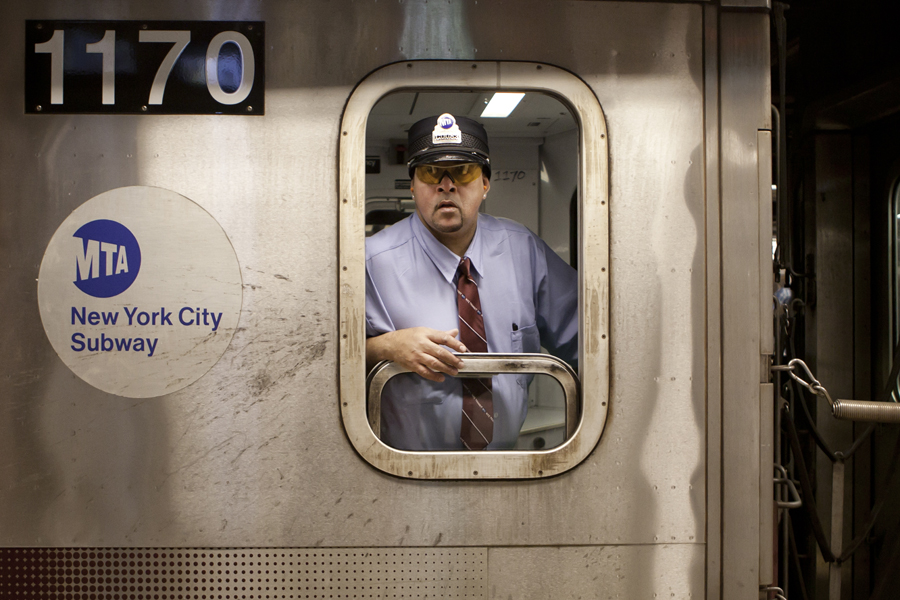
New York Subway Drivers - Copyright Janus van den Eijnden (8).jpg.CROP.original-original

Jordan G. Teicher spotlights a subway series:

On assignment in New York in 2008, [Dutch photographer Janus van den Eijnden] started photographing underground, following in the tradition of Bruce Davidson, whose photographs of the subway in the 1980s he admired. Van den Eijnden spent hours underground day after day, waiting for the moment when the conductors didn’t notice him or their surroundings, looking lost in thought. “In almost every photo, the conductors are unaware they are being photographed,” he said. “Most of them noticed me a couple of seconds later, but those photos are much less interesting.

More of his work can be seen here. Update from a reader:

This has no chance in hell, but what the hell.  I saw your “Face of the Day” and thought of my brother, who is an amateur photographer from Denver and gaining some notice for his work.  He too has sometimes focused on commuting – also waiting patiently for the door to open:

DIGITAL CAMERA

Is Obamacare Too Complex To Work?

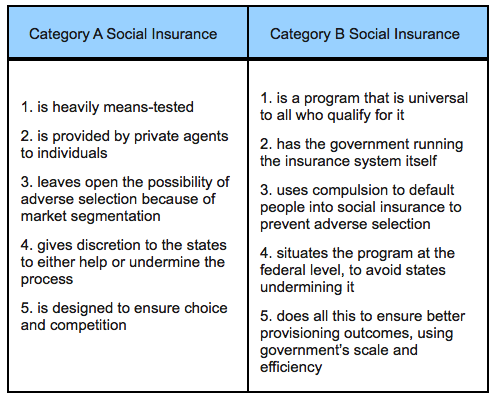
Mike Konczal blames Obamacare’s technical problems on the law’s design. He contrasts Obamacare’s form of social insurance, which he labels “Category A,” with previous forms of social insurance, such as Medicare and Social Security, which he labels “Category B”:

What we often refer to as Category A can be viewed as a “neoliberal” approach to social insurance, heavy on social_insurance_categoryprivate provisioning and means-testing. This term often obscures more than it helps, but think of it as a plan for reworking the entire logic of government to simply act as an enabler to market activities, with perhaps some coordinated charity to individuals most in need.

This contrasts with the Category B grouping, which we associate with the New Deal and the Great Society. This approach creates a universal floor so that individuals don’t experience basic welfare goods as commodities to buy and sell themselves. This is a continuum rather than a hard line, of course, but readers will note that Social Security and Medicare are more in Category B category rather than Category A. My man Franklin Delano Roosevelt may not have known about JavaScript and agile programming, but he knew a few things about the public provisioning of social insurance, and he realized the second category, while conceptually more work for the government, can eliminate a lot of unnecessary administrative problems.

Drum pushes back:

If I had my way, we’d have a fairly simple, universal, single-payer health care system in the United States. It would work better; provide broader coverage; and probably be cheaper than what we have now. But countries like Switzerland and the Netherlands demonstrate that an Obamacare-like system can work reasonably well too.

Konczal is certainly right to mock conservatives who don’t seem to understand that Obamacare is fundamentally a pretty conservative design for national health care—which means that if it fails, it will hardly be a failure of old-school liberalism—but I think he goes too far when he tries to blame the rollout problems on that design. There was never any realistic hope of wiping out the entire private insurance industry and instituting a single-payer system anyway, which makes this all a bit academic, but even if Obamacare is a second-best design, it’s still one that other countries have shown can be implemented effectively. I imagine that, over time, the same will be true here.

Douthat complicates Konczal’s argument:

If the Obamacare exchanges are a mess and the individual market is facing cost spirals, then conservatives are going to face some understandable skepticism (more even than usual!) from voters if they talk up the virtues of free market health care and the individual marketplace in 2016 and beyond. But in principle, the distinction between Obamacare’s approach to health policy and the conservative version of means-testing, block-granting, and competitive marketplaces is clear enough. That’s because while Obamacare may be using neoliberal rather than New Deal-style means, it’s still chasing essentially left-of-center ends: It seeks a level of universality and comprehensiveness that conservatives don’t think is necessarily worth pursuing. And it’s that quest, those goals, that require the complicated mandate-regulate-subsidize combination that could undo the individual marketplace if the enrollment isn’t where it needs to be and the subsidies and fines and regulations aren’t successfully fine-tuned.

In other words, pace Konczal, the potential problems with Obamacare aren’t necessarily “driven by means-testing, state-level decisions and privatization of social insurance.” They’re driven by the law’s attempt to employ these (notionally) decentralized means while still seeking essentially centralized ends.

Reihan thinks health reform should have had a default option:

The idea of a default option comes to mind in light of the difficulties facing the new health insurance exchanges. Even in the absence of technical difficulties, I’m starting to wonder why anyone thought that a substantial majority of healthy young people would sign up for coverage, including heavily subsidized coverage. The threat of a penalty is one obvious reason. Yet the Obama administration and its allies have been reluctant to emphasize the punitive dimension of the individual mandate, for obvious political reasons. Rather than using the threat of a penalty to spur enrollment, coverage expansion advocates have emphasized the benefits of insurance, hence the (apparent) reluctance of the architects of the exchanges to expose consumers to the full, unsubsidized cost of the new insurance options.

Don’t Judge A Restaurant By Its Line

They’re often not worth the wait, according to Tyler Cowen, author of An Economist Gets Lunch:

Let’s say a restaurant allows a line to form outside the door. Why don’t they just raise their prices?  Well, for one thing the line, and the accompanying difficulty of getting a reservation, is a way of marketing the restaurant to potential customers. Which means the place needs marketing in some manner, which means its audience is in some way not so well-informed about where they ought to be eating.  They tend to be trendy people who follow… lines. Conformists, in other words.

A lot of places with lines are quite good, but when they fall, they fall hard. In the meantime, the presence of a line indicates the place extracts consumer surplus in some fairly inefficient ways, so why should you go, especially if you are not a conformist?

You are better off going to an empty Caribbean joint:

[Ethnic restaurants] may make their livings doing catering or weddings. In those cases, emptiness is often a sign of quality. It means they make their food for truly demanding customers who demand the best for ceremonial purposes. It means they have not learned how to sell out or dumb down their food, and they just don’t have enough compatriots in the neighborhood to put many people in the seats on a regular basis (for these reasons, emptiness is not a good sign in say the Eden Center, where the number of Vietnamese diners is quite high, or say in Mexican restaurants on Kedzie Street in Chicago, and so on). Very often empty restaurants come from cultures where consumption is intensely seasonally cyclical, and that is positively correlated with food quality.

For more dining tips from Cowen, check out his Ask Anything series.

The Rape Double-Standard, Ctd

A reader keeps the thread going:

All of your reader stories are very sad, especially so the men describing life inside abusive relationships. Our culture definitely has difficulty understanding male victims, not just of sexual assault. It’s one of the causes of damaging silence about child abuse, which helps make prevention and justice close to impossible in far too many lives.

But I really can’t let pass the notion that if the genders were reversed, the perpetrators would go to jail for a long time – which more than one reader mentioned. This just isn’t true, and people who say it is make me doubt their motives. Women have a difficult enough time reporting rapes that fall very far outside the gray areas of abusive relationships and bad sex – ones that fall very squarely in the black and white world of being raped while unconscious or physically assaulted by acquaintances. And if they do report, prosecutions are difficult and often end up being trials about victims instead of rapists – with few of them ending in convictions. What would happen if a woman who was raped in the more gray areas mentioned in your reader stories reported her experiences to law enforcement? I think we know: she would be dismissed, just as these men would be. There is no prosecutorial double-standard.

On that note, if you haven’t yet caught wind of the rape story out of Maryville, Michael Shaffer sketches out the main details:

Last Sunday, a New York Times reporter visited Maryville, Missouri to report on the existence of a grave threat to the town’s bucolic, Real-America essence: “Ever since The Kansas City Star ran a long article last Sunday raising new questions about the Nodaway County prosecutor’s decision to drop charges against a 17-year-old football player accused of sexually assaulting a 14-year-old girl, the simplicity of small-town life here has been complicated by a storm of negative attention.” …  There are two ways the town could have lived up to the Times’ rose-colored description of its status quo ante:

1. Beforehand, by not sexually assaulting ninth-graders, videotaping the incident, and leaving a victim asleep on her front lawn in freezing weather.

2. After the fact, by not ostracizing the victim’s siblings, firing her mom from her job, dropping the case inexplicably, and burning the family’s house down.

A reader backs up the first one:

As a former prosecutor who has handled a fair share of sexual assault cases, I’d like to clear up a misconception that seems very widespread in this discussion. Several readers have described being sexually assaulted by a female, and many of them have said something like “If the situation were reversed, I would have been in jail.” That isn’t necessarily true.

The kind of case that is being discussed would be extremely difficult to prosecute regardless of the gender of those involved. Juries, in my experience, are very reluctant to convict people of sexual assaulting an adult unless they are absolutely certain that the sex wasn’t consensual. Basically, if a defense attorney can give them any remotely plausible reason to believe that the sex might have been consensual, then they are probably not going to convict.

In the cases your readers have described, there are many such reasons: the defendant and the victim are in a relationship together; they willingly sleep in the same bed; they begin a relationship after the sexual assault occurs. Any one of those facts would make a conviction unlikely and might even be enough for a prosecutor to decline the case. Sometimes even the fact that the defendant and victim have a history of flirting with each other can doom a case.

You might say that’s unfair: surely a young woman should be able to go to sleep with her college boyfriend without giving up her right to say no. Well, yes. But convicting the guy if he subsequently decides to have sex with her while she’s asleep in going to be very difficult.

I want to be clear that I am not saying that any of this is good or bad, or that female on male sexual assault is any less serious or traumatizing than the reverse.  I only want to make clear that the reason that the women in these stories were not convicted of rape is not necessarily because they are women, but rather because proving an adult rape charge is much more difficult than society in general seems to think.

Social Media Is Old News

Justin Peters is intrigued by Tom Standage’s Writing on the Wall: Social Media – The First 2,000 Years, which argues that “modern users of Twitter and Pinterest are ‘the unwitting heirs of a rich tradition with surprisingly deep historical roots.'” Andrew Hill elaborates:

Letters used to be exchanged with the regularity of email, with messages sometimes sent and received many times daily. In 1910, each person in Britain sent on average an extraordinary 116.7 items of mail. What we think of as a 21st-century phenomenon – social media – is rather “a return to the way things used to be”, claims Tom Standage in Writing on the Wall. … In his account, Cicero’s letters survived because they were copied and passed on to others. “Cicero and his web of contemporaries became so used to exchanging information by letter, with messengers coming and going throughout the day, that they considered it an extension of spoken conversation,” Standage writes.

The parallels with modern social media are clear.

“How Luther Went Viral” is the title of the chapter about how Martin Luther’s 95 theses were circulated, at a time when the number of editions of pamphlets was the equivalent to “the number of Likes, retweets, reblogs, +1s, or page views” a piece of content generates online today. The social networks of the past, such as the coffee-houses of London in the 18th century, had their critics, who condemned them in strikingly similar terms to those used by 21st-century sceptics, for “distracting people and encouraging them to waste time sharing trivia with their friends when they ought to be doing useful work”. Standage makes a strong case that the 150 years or so when mass media – from newspapers to television – centralised opinion and news and peddled it to passive readers and viewers were an aberration in the long historical domination of social media.