This Is Where We Are

This embed is invalid

 
This is a fascinating speech from today’s rally at the World War II veterans’ memorial. It’s fascinating because it’s a riveting, candid insight into the forces that are behind the government shut-down and the debt-ceiling blackmail of the country and the world. They do not believe this president is a legitimate president. It is beyond their understanding that he was re-elected handily, or that he commands, even during this assault on our system of government, far more support than the Tea Party. Let’s not be mealy-mouthed. This speaker, Larry Klayman of Freedom Watch, accuses the president of treason in this speech, of deliberately pursuing policies to kill members of the armed services, because he is an Islamist, and allegedly “bows to Allah”. What he is saying is the president is a deliberate mole of foreign agents determined to destroy the American way of life. And there is no pushback from the crowd and no pushback from GOP leaders.

This is what we’re dealing with. This is not an alternative budget; it is not another way of insuring millions and cutting healthcare costs; it is not a contribution to anything but to the logic of nullification of an election. It is yet another declaration of cold civil war – a call for a nonviolent refusal to be governed by a re-elected president because he is pursuing policies with which an electorally defeated minority disagree. Simply pursuing those policies has rendered Obama a “monarch” who is arguing “his way or the highway.” But all Obama is doing is implementing a campaign promise and settled law, while governing under a continuing resolution that reflects the sequester’s level of spending, a level agreed to by the Republicans. He wants a budget agreement between the House and Senate in a conference that the Republican House has long resisted entering. He has said that he is happy to negotiate with anyone on anything as long as the blackmail of a government shut-down and of a threatened global depression are ended. And his record shows that he has compromised again and again – as his own most fervent supporters look on in dismay.

I’m not privy to the negotiations now going on in the Senate and can only glean from outsiders what the meetings with legislators have been like. But I’m not distorting the raw facts of the situation here, or trying to distract from them. And I’d love a much more expansive Grand Bargain on taxes and entitlements, that could ease our long-term debt (but it would have to be a bargain, not merely a set of Republican demands). But the rank threats of unimaginably radical consequences if a re-elected president doesn’t junk what he was re-elected to do are so foul in their lack of concern about the common good, so poisonous in their slander of a president, and so contemptuous of our orderly system of government, that it is vital the threats do not work and are not accommodated. No president of any party has any right to legitimize such an attack on the American system of government and the way it conducts business – by elections, debates, compromises and budgets, not threats of total government shut-down and the collapse of the dollar if our global credit rating is effectively destroyed overnight.

I hoped we’d be nearing some kind of deal at this point, rather than witnessing this upping of the ante from the forces that truly live on the fringes of the far right, but which, without any resistance, have now defined the Republican party. It is no accident that among those addressing this rally to blackmail the country and the world were Sarah Palin and Ted Cruz. I can see a very powerful populist electoral ticket with both of those on it – either of a third Tea Party or of an even more  radicalized GOP. And perhaps that is the only way to expunge this nihilist extremism from our system. Except that it may succeed in expunging the system and the economy before we can test it where in a democracy we are accustomed to test it: in elections, not in the chaos of economic blackmail.

Quote For The Day

“One thing we’re certain around the table, it was that if there is that degree of disruption, that lack of certainty, that lack of trust in the U.S. signature, it would mean massive disruption the world over. And we would be at risk of tipping yet again into a recession. That was the impression around that big table,” – Christine Lagarde, the IMF’s managing director, on the fiscal crisis in the US.

Face Of The Day

dish_reflections

Photographer Tom Hussey’s Reflections series depicts elders gazing into mirrors that reflect back images of their younger selves.  Tiffany Diamond spoke to Hussey about his inspiration:

I don’t care how old you are, when you look into a mirror, you think of yourself as younger than you are. You have a memory of a time in your life that was pivotal — be it when you got your drivers license, your senior year in High School, or maybe the year you married.

(Photo by Tom Hussey)

The Mind’s Enduring Mysteries

Michael Hanlon reminds us of why human consciousness eludes our understanding:

The problem is that, even if we know what someone is thinking about, or what they are likely to do, we still don’t know what it’s like to be that person. Hemodynamic changes in your prefrontal cortex might tell me that you are looking at a painting of sunflowers, but then, if I thwacked your shin with a hammer, your screams would tell me you were in pain. Neither lets me know what pain or sunflowers feel like for you, or how those feelings come about. In fact, they don’t even tell us whether you really have feelings at all. One can imagine a creature behaving exactly like a human — walking, talking, running away from danger, mating and telling jokes — with absolutely no internal mental life. Such a creature would be, in the philosophical jargon, a zombie.

Why there’s no end in sight to the problem’s intransigence:

Nearly a quarter of a century ago, Daniel Dennett wrote that: ‘Human consciousness is just about the last surviving mystery.’ A few years later, [David] Chalmers added: ‘[It] may be the largest outstanding obstacle in our quest for a scientific understanding of the universe.’ They were right then and, despite the tremendous scientific advances since, they are still right today. I do not think that the evolutionary ‘explanations’ for consciousness that are currently doing the rounds are going to get us anywhere. These explanations do not address the hard problem itself, but merely the ‘easy’ problems that orbit it like a swarm of planets around a star. The hard problem’s fascination is that it has, to date, completely and utterly defeated science. Nothing else is like it. We know how genes work, we have (probably) found the Higgs Boson; but we understand the weather on Jupiter better than we understand what is going on in our own heads. This is remarkable.

Paper, Print, And Prayer

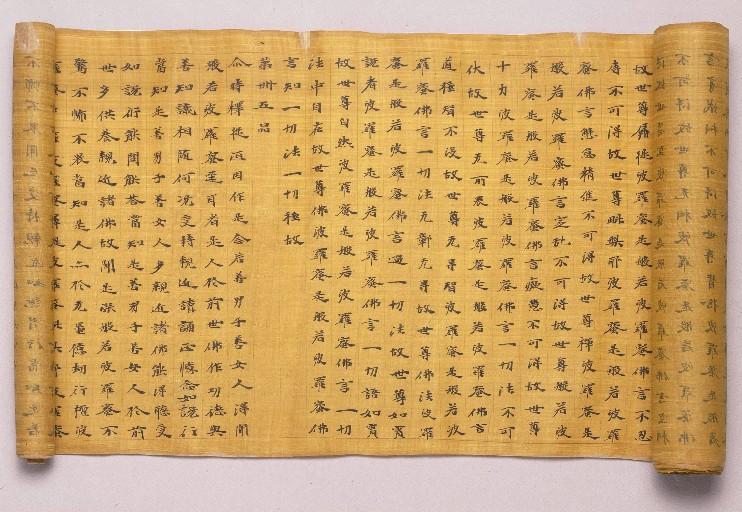
dish_sutra

The Dunhuang Library, discovered in a cave in western China in 1900, housed “more than five hundred cubic feet of bundled manuscripts” dating from the 5th to 11th centuries. Jacob Mikanowski considers the origins of these long-preserved artifacts:

The profusion of paper in Dunhuang … makes it a perfect place to study the development of this often overlooked technology. Paper was developed in China, originally as a wrapping material, and only gradually spread west, first to Central Asia, then to the Islamic world, before finally arriving in Europe in the fourteenth century. The library itself may owe its existence to the scarcity and preciousness of the material. Researchers from Japan and Britain have recently suggested that its manuscripts were offerings, donations left to honor the memory of a notable monk. When the little room that held them filled up, it was closed, and then forgotten.

The paper items preserved in the Library also shed light on the origins of another information technology: print. The Diamond Sutra, one of the most famous documents recovered from Dunhuang, was commissioned in 868 A.D., “for free distribution,” by a man named Wang Jie, who wanted to commemorate his parents. In the well-known sermon that it contains, the Buddha declares that the merit accrued from reading and reciting the sutra was worth more than a galaxy filled with jewels. In other words, reproducing scriptures, whether orally or on paper, was good for karma. Printing began as a form of prayer, the equivalent of turning a prayer wheel or slipping a note into the Western Wall in Jerusalem, but on an industrial scale. This might be the most enduring lesson of Dunhuang: the whole “Gutenberg galaxy” of paper and print didn’t begin in Europe. Print was a Buddhist invention, and its aim was salvation, not profit.

(Image: 5th century Chinese manuscript via Wikimedia Commons)

A Physicist And His Faith

In a review of Newton and the Origin of Civilisation by Jed Buchwald and Mordechai Feingold, Jonathan Rée takes note of the scientist’s attitude toward religion:

Apart from trying to please his readers, Sir Isaac – as he became in 1705 – also sought to reassure them about his theological opinions. He was known to have ducked out of ordination in the Church of England, which was formally a condition of his professorship, and his reputation as a divine genius had a whiff of blasphemy about it. He had avoided any discussion of God or creation in the Principia (in the first edition, that is, where God is mentioned only once), and could not pretend to be interested in priests, rituals or religious ceremonies. On top of that there were well-founded rumours that he regarded the doctrine of the Trinity as a papist fabrication. But if his version of orthodoxy differed from that of the established church, there could be no doubt about his reverence for the Bible. To anyone wondering about the truest form of Christian worship, his advice was clear:

‘search the scriptures thy self,’ he said, with ‘constant meditation upon what thou readest, & earnest prayer to God to enlighten thine understanding’. He was convinced the Bible was, essentially, a sacred text, and he sought to honour his maker by studying it closely, every day, sometimes for hours on end. He read it repeatedly, in English, Latin, Greek and Hebrew, weighing every word, syllable and letter. ‘Mr Newton is really a very valuable man,’ as John Locke put it, ‘not onely for his wonderfull skill in Mathematicks but in divinity too & his great knowledge in the scriptures where in I know few his equals.’

Newton read the Bible with the same exactness he brought to his mathematical inventions or his experiments with prisms, and with the same disregard for tradition and common sense: he always refused, as one critic put it, to acknowledge ‘any one’s having ever consider’d the same Things before him’. He fled from controversy in religion as he did in mathematics, but he was convinced that his discoveries in the two domains supported each other, maintaining that the leading doctrines of the Principia – heliocentrism and universal gravitation – had formed part of the primitive biblical religion from which all others derived, and were explicitly endorsed by Moses before being passed to the Greeks and winning general assent in ‘the earliest ages of philosophy’. Mathematics could thus unite with the biblical narrative to proclaim the reasonableness of Christianity.

Demonology In Dixie

On the 40th anniversary of The Exorcist, Noel Murray ruminates on the film’s unique significance in the religious South, where he grew up:

The popularity of The Exorcist had the effect of popularizing exorcism itself—or at least that was what I heard around my school, where there were rumors of parents setting their children on fire because they thought their kids were possessed.

Give some credit (or blame) for this to [writer William Peter] Blatty’s studiousness, and [director William] Friedkin’s gifts for documentary like realism, which lent The Exorcist plausibility. Even though the demon in The Exorcist isn’t Satan—and isn’t even part of Christian mythology—the film does reinforce the idea that there are dark forces at work, requiring the righteous to remain vigilant. …

I’ve identified this mentality with the South, because that’s the part of the world I know best (and love, honestly). But The Exorcist is set mostly in Washington, D.C., and is heavily Catholic. The Catholic strain of devil paranoia differs from Southern Baptist devil paranoia. (Wine-drinking vs. teetotaling may have something to do with that.) Some religious people see The Exorcist as merely metaphorical, capturing the spiritual rootlessness of the 1970s, while others see it as much more black-and-white, and love it for that. Down here, we’ve worked “wariness of Satanic influence” into a way of life far removed from the more academic approaches of the fictional Father Karras and the real Father Gallagher. Down here, we stew in it.

How We Depend On Our Descendents

Philosopher Samuel Scheffler argues that, regardless of our individual views about a personal afterlife, we all have a stake in believing that others will live on after we’ve passed:

One thing that happens when you start to think about how you would feel if you knew that life would end shortly after your own death, lots of the things that you now do might come to seem pointless. Like, if you’re a cancer researcher, will you still find it meaningful or valuable to pursue cancer research? Quite likely not. I think we implicitly take it for granted that our activities belong to an ongoing temporal chain of human lives and generations, and that if we imagined that, you know, a giant asteroid were going to destroy the earth so there was no future for humanity, suddenly lots of what we now regard as valuable would seem pointless. …

Many people who believe in the afterlife as traditionally understood think that if there isn’t such an afterlife then the value or purpose or meaning of what we do here and now is diminished, or perhaps lost altogether.

I’m suggesting that if there isn’t an afterlife in my sense, that really would diminish the point and value and meaning of what we’re doing. The nice thing about my kind of afterlife is that we’re actually in a position to take steps to make it more likely that human beings will survive long into the future — or, unfortunately, less likely. …

I think we don’t take sufficiently seriously the importance of insuring that human life continues. And, you know, some people are trying to change that, but often they do it by appealing to some sense of moral obligation — “we owe it to our descendents.” I’m suggesting that it’s not just that they’re dependent on us — there’s also a sense in which we depend on them. Without them, if there are no future generations, the value of what we’re doing here and now is threatened.

When The Threat Of Apocalypse Fades

In The Sacredness of Human Life, David Gushee traces “the history of Christian pro-life thinking—and our failure to live up to it.” David Neff identifies the “the linchpin of his argument”:

The sacredness of human life as portrayed in the Bible and the church fathers is not anchored in any particular human quality. Philosophers have tried to locate our human essence in various things, from our ability to reason to our capacity for relationship. But in biblical thinking, humans are sacred only because the Creator-Redeemer God ascribes such worth to them. This theocentric view is vital because infants, those with mental disabilities, and many elderly lack key capacities, yet are still of ultimate worth to God.

How did the church lose its radical commitment to life? One key factor, Gushee writes, was that the apocalyptic framework of Jesus’ teaching faded. Jesus promised to come back soon to establish his kingdom. But centuries passed, the Christian population grew, and the kingdom of God became associated with a church endowed with state power and a state blessed by church leaders. Belief in the sacred worth of all people does not serve the interests of power. War shifted from a necessary evil to a divine command. “The Christian glories in the death of the pagan,” wrote medieval mystic Bernard of Clairvaux, “because Christ is glorified.”