The Tao Of Pinkman

Life is suffering:

This embed is invalid

 
It’s even worse for Jesse’s girls. For more Breaking Bad Internet goodness, check out this ingenious mashup of the series with The Walking Dead. And find out what finally becomes of Huell. Meanwhile, a reader asks:

How did you feel about the final run of Breaking Bad? I know you’re a fan. I can’t be the only one to be wondering. Perhaps trivial considering everything else that’s going up, but we would love to know.

It felt calming to me. I confess that I found it close to impossible to want Walt to face his true-come-uppance. I wanted that ricin to be used the way it was; I wanted Jesse to escape the way he did. For me, Flynn is the tragic figure and Skyler the true complicated, compromised heroine of it all.  As for Hank? He lost me in his fanaticism toward the end. And Marie? May she live in her forever purple.

But like all great dramas, this one defied easy judgment. It remains one ghastly, murderous, prideful, greedy, needful mess.

I can think of only two words to express my final feelings: Kyrie Eleison.

How Does The Shutdown End?

Douthat wonders:

[I]f the base has been told true commitment should lead to actual legislative victory (and that this might be the “last chance” to stop Obamacare), then merely threatening a shutdown, or letting one happen for a few days and then cutting a deal, is as likely to disillusion conservative voters heading in to 2014 as it is to mobilize them. And if the G.O.P. doesn’t want to disillusion them, then it doesn’t have an obvious way to back off or quickly make a deal – in which case the party is risking a real debacle with non-base voters, who might forgive a brief shutdown but probably won’t forgive Republicans if it turns into a lurching political and economic crisis.

Waldman predicts that, no matter how long the shutdown lasts, that the base will blame failure on Republicans giving up too soon:

[T]he idea that conservatism can never fail, it can only be failed, extends beyond ideology to its tactical extension, eternal and maximal opposition to Barack Obama and everything he wants to do. Fighting Obama is a strategy that can never fail. If failure happens, it can only be because we didn’t fight him hard enough.

Once this is all over, they’ll be telling everyone the same old story. If only the party had been stronger, if only Boehner had stood firm, if only we had kept the government closed for another week or another month, everyone would have seen we were right, Obama would have been crippled for the remainder of his term, we would have won a smashing victory in the 2014 mid-term elections, and the blow that led to Obamacare’s inevitable death would have been struck. But we were betrayed by Boehner and the other cowards and quislings.

Obamacare Is Experiencing Technical Difficulties

Kate Pickert notes that the “insurance exchange web sites scheduled to launch this morning were riddled with glitches, rendering many unusable”:

The exchanges, or marketplaces, are where millions of uninsured Americans are expected to sign up for new health insurance plans and access federal subsidies to make coverage more affordable. An open enrollment period lasts until March 31, 2014, and the earliest new coverage can begin is Jan. 1, 2014, so there is time correct web site snafus. But widespread glitches have complicated the Obama Administration’s efforts to heavily promote the law the same day Republican opposition to the Affordable Care Act led to a shut down of other parts of the federal government.

Yglesias expects the shutdown to decrease reporting on these problems:

The reality is that the first few days are likely to be rough and then the experience will improve. Absent a government shutdown, though, the rough first few days would be a dominant political story and cover everyone’s perception. With eyes glued on the shutdown this week, HHS will have the chance to do fixes and anyone who can’t log on today will just come back next week.

Ezra agrees that the shutdown “gives the administration, as well as the states, a bit more breathing room to find and fix bugs in the early days without seeing the law declared a failure.” But:

The downside for the law is that less focus on Obamacare means fewer people hearing that the insurance marketplaces have gone live, and thus fewer people knowing they should go and sign up for coverage. The Obama administration, some of the states, and a consortium of outside actors all have plans to promote the law through paid media in the coming weeks and months, but the launch could’ve earned them a lot of valuable free media.

Will The GOP Lose The House?

Nate Cohn would be surprised:

That doesn’t mean there aren’t costs to Republican shenanigans. A tea party-led shutdown would reinforce just about every reason why the public doesn’t like the Republican Party—that they’re extreme, unconcerned with real problems, and unwilling to compromise. That may not concern representatives running for reelection in safe districts, but it could matter in the Senate, where the GOP needs to beat Democratic incumbents, not just defend safe seats. The GOP’s image problem will make life more difficult for its eventual 2016 nominee. And with 28 percent of the time between Obama’s reelection and the 2016 Iowa caucuses now in the rearview mirror, the GOP can’t afford to reinforce and deepen its existing problems.

Trende downplays the electoral consequences:

The bottom line is this: The shutdown will probably not be a good thing for the GOP, and there’s a good chance Republicans won’t achieve their intended goal of limiting Obamacare’s reach. But at the same time, a lot of the prophecies of doom for Republicans are heavily overwrought. Unless things get too far out of control, the predictions of heavy GOP losses from a shutdown are likely overstated.

“The Right To Regret”

In today’s video from filmmakers Martha Shane and Lana Wilson, they explain how the doctors of After Tiller screen and counsel women who are considering late-term abortions:

After Tiller is a new documentary looking at the lives of the only four remaining doctors in the country who have provided third-trimester abortions following the assassination of George Tiller. (That event led to one of the most compelling reader threads we have ever aired on the Dish: the “It’s So Personal” series, a collection of first-hand accounts of women facing the extremely difficult decision of whether or not to have a late-term abortion, mostly due to the sudden appearance of severe fetal abnormalities.) The film is now playing in New York, and on Friday it will open in Los Angeles and Toronto, followed by many more cities. Trailer here. Martha and Lana’s previous videos are here. A reader responds to the one we posted yesterday:

The video reveals a simple fact: a non-trivial number of late-term abortions are committed for the personal convenience of the mother. Copping to our inability to know what a mother is actually thinking is a diversion. Speculating on the mother’s sex education, whether she was coerced, whether the in-laws would make good parents – these are distractions from the central question: Is abortion ever immoral?

And the answer, of course, is yes; sometimes it is. Abortion’s morality may be complex, there may be shades of gray, but shades of gray don’t necessarily preclude black and white. The sooner pro-choice advocates acknowledge this, the sooner we can start having more honest discussions and hopefully more humane (and sane) public health policies.

Can Congress Stop Peace With Iran?

Fred Kaplan suspects so:

In exchange for cutting back on their nuclear program, the Iranians will certainly demand, at the very least, a drastic easing—perhaps a lifting—of Western sanctions, which have so crippled Iran’s economy. But who takes the first step, and how big should that step and each subsequent step be? How does this process go forward in a way that builds trust, not suspicion? President Obama can lift some of the sanctions, but some of them can only be lifted by Congress. Many in Congress don’t want to solve Iran’s nuclear problem through diplomacy. First, they don’t trust Iran (not without reason). Second, they want “regime change” in Iran, and they believe (correctly) that an arms-control accord—even, or especially, one that thwarts any nuclear ambitions the regime might have—would legitimize and thus perpetuate the regime. Third, they don’t want to hand a historic foreign policy triumph to Obama.

Once again, on that final point, pure partisan spite would trump national self-interest and a president’s foreign policy power. And there is no question that AIPAC will do all it can to kill any chances for an agreement that would leave Iran as a country able to enrich uranium as is its right under the NPT. But, as Kaveh Waddell explains, the Congress isn’t the only body with sanctions in place, giving the Obama administration some lee-way for action despite the nullification-driven House and AIPAC-dominated Senate:

The myriad sanctions on the Islamic Republic originate from different actors.

The U.S. has always led the charge for economic sanctions, but since 2006, the United Nations and the European Union have also been involved in creating an international sanctions regime. This means that the U.S. would have to coordinate with the international community to provide any meaningful relief. Even within the U.S., the origin of sanctions laws varies: the current armada of sanctions is made up of 16 executive orders and nine congressional acts. Obama could annul the executive orders easily enough, but to lift the remaining, harder-hitting sanctions, he would have to go to Congress, hat in hand, at a poisonous moment in American executive-legislative relations.

Much better to get Congressional agreement. But if it’s stymied by the usual nihilism and war-mongering among the Christianists and neocons, I can see the administration easing the international sanctions it has cobbled together with our allies, and lifting those US sanctions it can do so unilaterally by executive order. The question, it seems to me, is how to time these relaxations right, in tune with greater and greater Iranian transparency, how to prevent Israel from launching a pre-emptive war, and how to prevent further sabotage from the GOP in Congress. They do not acknowledge the right of a Democratic president to enforce a duly enacted law, let alone conduct foreign policy. This will be a tight-rope to the very end. But it is not impossible.

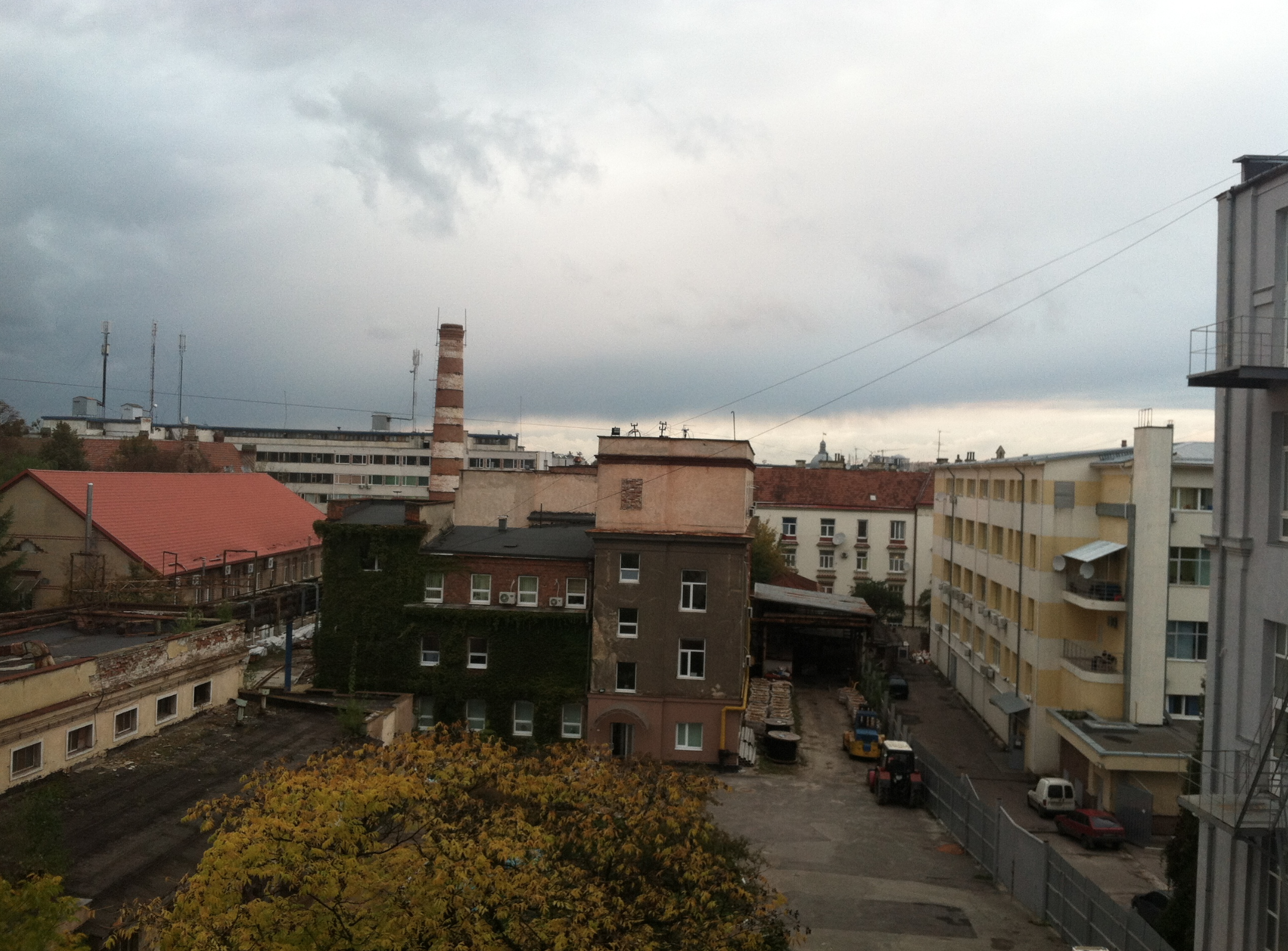
The View From Your Window Contest: Winner #173

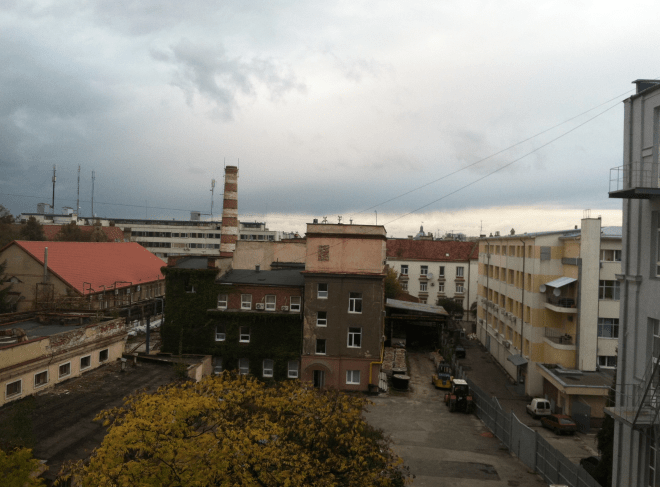
vfyw_9-28

A reader writes:

Looks like a dump; Ford Capri on one side; Victorian brickwork, dome, and chimney stacks. Then the Jesus and Mary Chain came on my stereo at random, which I took as a powerful omen.

Another:

Bilious looking weather, the first signs of fall already on the trees, a general air of damp – it’s definitely northern Europe.  But where?  There’s an almost total lack of landmarks in this one. Instead, I’m going with style – the Hanseatic League-ish old architecture, the slightly Germanic style, the Eastern Bloc recent architecture, what I can make of the license plates on the cars, what looks like a Russian-made Lada Samara hatchback parked in the alleyway, the Baltic Sea-like cloud cover, the obviously flat terrain – so I’m going to go with Szczecin, Poland.  I’m open to the idea that it might be a smaller, more farming-oriented town nearby due to the prominently parked tractor, and maybe a bit inland what with the wall-mounted AC units, but Szczecin is my bet for the closest major city.

Another:

Here’s an “above-the-fold” guess for you: Indianapolis. That dome … I swear it’s the Indiana statehouse. Where the rest of the skyline went, I cannot say. Nor can I explain the Lada in Indiana. I’m writing it off as the mother of all red herrings. And those air conditioner units sure look like the ones from the Procredit Bank contest (number 147?). But that dome. Indianapolis.

Another:

The closest I got was Belgrade, Serbia, with the Soviet-style buildings, satellite dishes and split ACs. Could be the Serbian national assembly building with the dome in the background.  Ah this was fun, even though I did not find the location.

Another:

I’ve spent a lot of time in Russia, and a combination of the crumbling plaster, doors, fencing, overcast sky, the red car foreground right, and general look of the interior courtyard (dvor) makes me think Russia. The dome on the horizon looks to me like the dome of St. Isaac’s Cathedral in St. Petersburg, and that just might be a Russian flag flying from it.

Another:

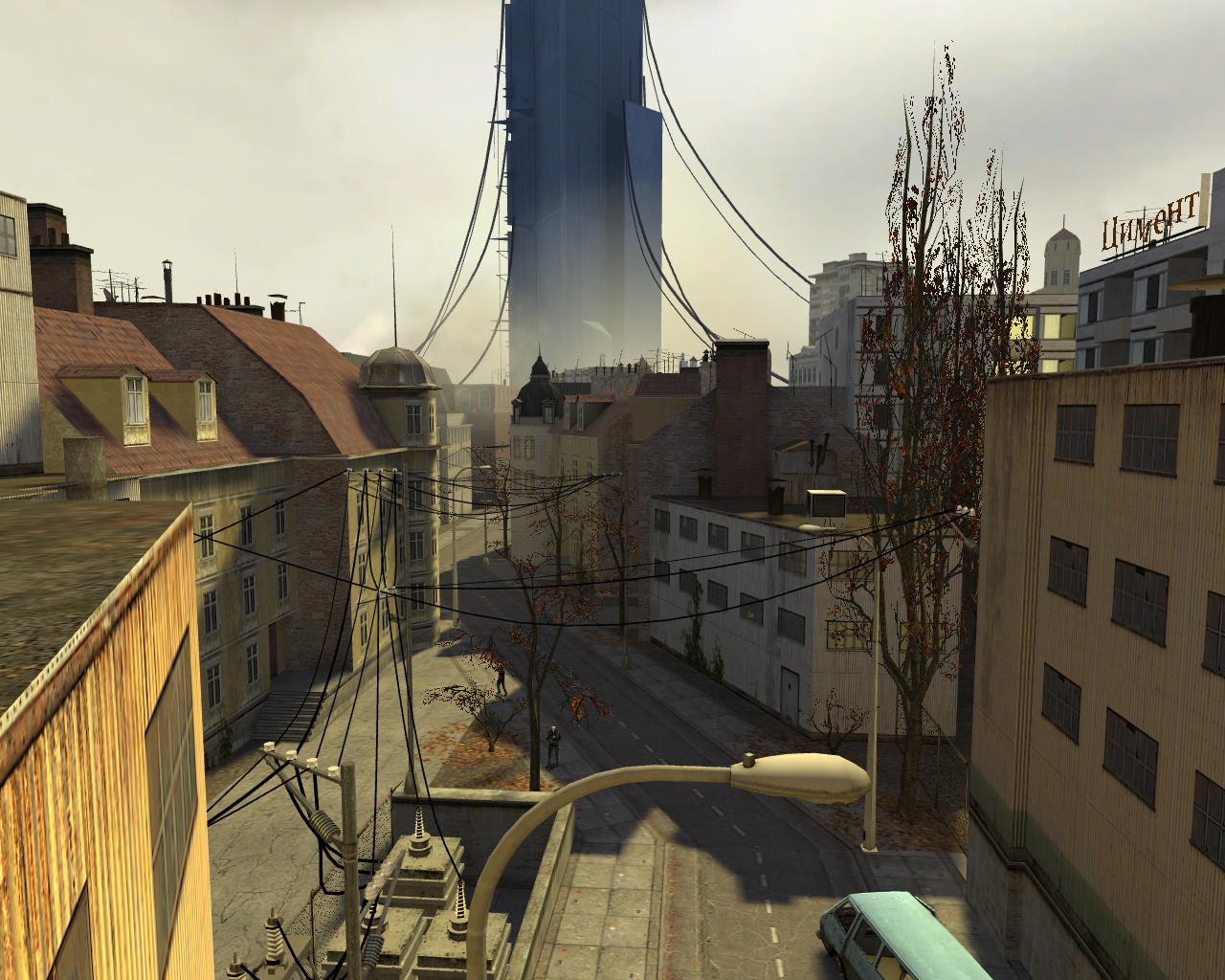
It’s City 17. I knew this immediately, having spent hours in this place during the Uprising. Pretty clever of the photographer, though, leaving the Citadel out of the frame. I’ve attached another view from down the block where it’s nice and prominent:
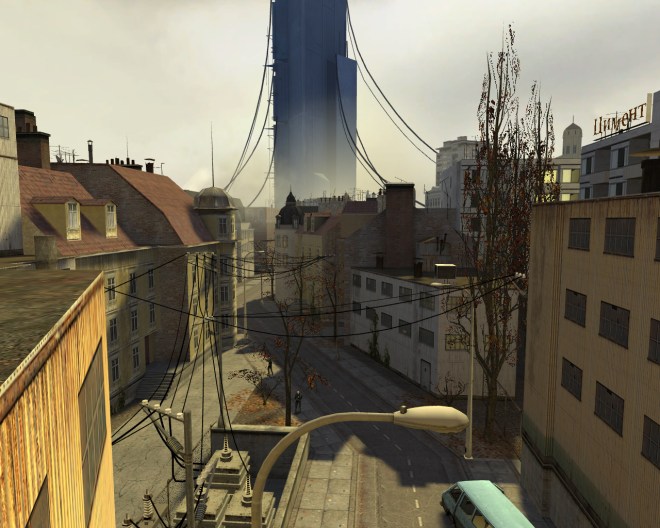
HalfLife2_City17_Street

You can also see a Combine police officer in the street.  I don’t think the street has a name.

Another:

That looks like the steeple of an Orthodox church on the skyline, which is all I’m really going on. At first I thought it might be Yerevan, Armenia, but the flora seems too lush and the general apparent level of prosperity seems too high to be Armenia, so I’m going with Georgia. Tblisi?

Another:

The architecture of some of the buildings feels a little 1960s Eastern Bloc. But the industrial smoke stack in the middle of apartment buildings reminds me of places I’ve seen to in China.  So I’ll guess Guangzhou.

I’m speculating that the only possible way to locate the view would be for someone to recognize the dome with the cupola and flag.  But that’s beyond me.  Plus the scene is so depressing it inspires no wanderlust at all or the desire to go Googling.  However, in addition to trying to figure out the view, recently I have started to guess how many people, if any, I think will get the correct window.  This week I say no one gets it.

A reader gets it:

Hi, this is my second entry and the second time I’ve actually solved it! It’s Lviv, Ukraine. The window looks north toward the Lviv railway station tower peeking just over the darker red tile roof in the right-center of the frame.

Our window is on the back side of the gray building whose wing comes into view at the right edge of the frame. The front of our building (facing south) extends along the north side of Fed’kovycha Street, between Smal’-Stots’koho Street to the west and Yaroslava Pasternaka Street (intersecting one block to the east). I couldn’t actually find our building on Street View, but I found that red tile roof building, and its neighboring structure (to the right in our frame) with the yellow and white two-toned exterior. The fronts of both those buildings both face a square (”skver”) with street names that aren’t indicated in Google Maps, but the square is marked. Judging from our view of that yellow and white building, I think our window is on the fifth floor.

I started by looking at Eastern European church towers, first Riga and Vilnius, and then looked at the map of Ukraine and decided to start with Lviv. There is just enough of that dome, showing in our picture, to allow for a match and also a decent guess about our distance. It took several minutes, but I actually found the dumpy, horizontal white building on the left of our frame (behind the smokestack) in Street View.

I can report that I am definitely not yet jaded or blasé about being able to solve these! I am getting better, but still suppose that anything I can solve will be obvious to several hundred others. I will still keep fingers crossed!

Only one other reader correctly answered Lviv, and not only did she get more specific than the previous reader, but she has participated in four times as many contests, so she’s the clear winner this week:

The last few weeks I’d gotten discouraged, and not just because my husband had found the right site for the Portugal one and let me spend several more hours wandering around France in Google Earth.

This is Lviv, Ukraine. The picture was definitely taken from this building, listed as Turoperator TATUR ulitsa Fedkovicha, 60, 433 Lviv, Lvovskaya oblast’, Ukraine 79000, but from inside the lot/courtyard area. I haven’t been able to find a picture of that side of the building, but it looks like it was taken on the 3rd floor, ENE side of the building? There are a few businesses with names in English listed on the side of the building, PWC office, Tebodin, and others, which might be good candidates for Dish readers, but I can’t tell which one would be on the right floor and side of the building. Or maybe this is a stairwell? Bathroom?

It felt like Eastern Europe – I spent a lot of time in Poland, then Latvia, then Lithuania. I thought the old factory-type setting would be the key, and figured the dome in the background was too generic. Not so – turns out, that shape is pretty unique and most domes like that are from churches and have crosses on top, not flags. I’d almost given up last night to do my real work when I took one final stab and did a Google image search for Lviv to see if anything stood out, and I yelped when I saw the railway station dome with the flag on it.

Lesson learned: Always avoid your work just a little longer to work on the VFYW contest.

From the submitter:

Imagine my surprise when I saw my window on the weekly contest. I am based in the US and spend 4-6 weeks a year in L’viv. This is the view from my window of the team room I work from, at Fedkovycha Street, 60a. The photo was taken from the third floor, second window from the left, at 7:00pm local time, 9/27/2013. The area is a mix of commercial office buildings and flats with old manufacturing thrown in. The dome in the distance is the train station a little over .5 KM away.

I’ve attached a picture to show the window it was taken from:

LvivWindow

Thanks for posting my window!

One more notable entry:

This week’s contest subject was particularly sadistic, but I suppose there have been a few easy contests in a row, so I suppose one like this was due.

The scene has a particular post-industrial ex-Soviet feel to it, with the funky windows on the prefab building in the background, the rusty ex-chemical or gas plant at left with the dilapidated stack, and the dead giveaway … the unofficial national mascot of Russia – a Lada hatchback parked in the foreground!

The only real unique identifier this week was the flagged dome over the top of the buildings. The dome topped with a flag was unique enough – very few domes seem to be adorned with flags – most have statues or religious icons. The flagged domes I could identify that also had a prominent cupola were: The Indiana Statehouse, Munich’s Hofgarten, The Serbian Parliament in Belgrade, and St. Isaac’s Cathedral in Petrograd.

Indianapolis made no sense given the Lada and the shape of the license plate, but the other three weren’t so easy to eliminate. The Hofgarten isn’t very tall and surrounded by other, taller buildings, and the scene seemed too shoddy be in gentrified Munich. The spire wasn’t the right shape to be the Belgrade parliament, so that left the cathedral in St. Petersburg.

Placing the smokestack wasn’t so straightforward. Based on the facing of the satellite dishes we were most likely looking north – as the northern hemisphere must look south to see the Clark belt satellites. This put us in a relatively small cone of St. Petersburg – but based on the attached photo, I couldn’t ascertain where our stack was located:
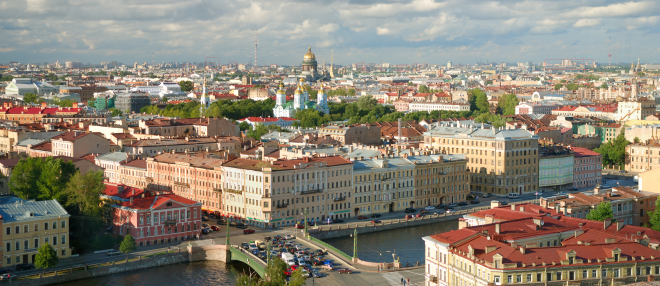
St-Petersburg stacks circled

So, I patrolled the area on Street View, but couldn’t find any matching architecture, so I’m pretty sure this is St. Petersburg/Petrograd, but in a back lot within a 1-2km radius cone south of St. Isaac’s.

(Archive)
Yglesias Award Nominee

“Perhaps because compromise as a concept is so unpopular these days–at least if my recent correspondence and conversations with those on the right is any indication–it is important that those of us who are conservative remind ourselves of its virtues. To point out that compromise is not always synonymous with weakness. That our problems, as significant as they are, pale in comparison to what the founders faced. And that compromise still belongs, in the words of Rauch, in the “constitutional pantheon.” Even the Obama presidency, as frustrating as it might be, cannot undo the marvelous handiwork and enduring insights of James Madison,” – Pete Wehner.

I have to say, though, that I fail to see any way in which this president has refused to compromise on almost anything, except his constitutional right to govern as president. I think that’s what so enrages them. Does this symbolic figurehead not know his place?

“What Kind Of World Do These People Live In?”

Senate Majority Leader  Harry Reid

“When I think of the Republican Party, I don’t think of principled conservative legislators who are men and women of vision strategy. I think of ideologues who are prepared to wreck things to get their way. They have confused prudence — the queen of virtues, and the cardinal virtue of conservative politics — with weakness. I know I’m very much a minority among conservatives in this, but the behavior of Congressional Republicans pushed me out of the party two years ago, even though I almost always vote Republican, or withhold my vote.

I am not a liberal, and do not want to vote for liberals, especially on social policy. But I told a Louisiana conservative friend the other day that the Congressional Republicans are making me consider the previously unthinkable: throwing my vote away by voting for a Democrat in the special election next month to replace my GOP congressman, who just resigned to take another job. The GOP candidates in this local race are hot and heavy to overthrow Obamacare. I think about how poor this district is — 26 percent of the district lives in poverty, making it one of the poorest Congressional districts in America — and how badly we need jobs and economic growth, and I think: What kind of world do these people live in?” – Rod Dreher.

You can tell I’m in the same camp, although I gave up completely on the GOP a decade ago as I saw its craven acquiescence to an imperial presidency, its love of massive, unfunded spending, its dogged support of wars of doomed nation-building, and its Christianist loathing of almost anything vibrant in modernity. But these past few days, by pure accident, I’ve thought about them in a slightly new perspective. I’ve been in Washington, DC, for a bunch of minor medical procedures: my thrice-yearly testosterone implant; my flu shot; a booster pneumonia shot; an HPV vaccine; an impending colonoscopy; an HIV blood test; and last, but by no means least, a repair of an umbilical hernia that has had me immobile since Friday. My compromised immune system requires constant check-ups, and the Dish now pays for my COBRA insurance – which will soon have to be traded in for Obamacare because my options are running out.

A word to Republicans: why would you want to deny someone these basic forms of healthcare? Or force them into bankruptcy because of them?

I could struggle on for a while without them and without my HIV meds. But sooner or later, I’d start running out of money, probably get a bad case of pneumonia, or an uptick in likelihood of cancer if my HIV breaks out again, or a hernia operation that was urgent rather than precautionary, or a debilitating bout of flu likely to make my asthma-ridden lungs even weaker in the future. This is the fragile reality I live in as a spectacularly privileged, if immuno-suppressed inhabitant of one of the most advanced societies on earth. But take any of it away and my well-being and basic health begin to fray.

Are you, Republicans, prepared to say that the countless working Americans who cannot now afford any of this should carry on without it indefinitely? People only have one life, you know. It can erode pretty quickly. On what moral grounds do you consign people to this fate when it is currently unnecessary?

I understand the important arguments about cost control, and any number of arguments about how to construct a system like this. I think I’ve heard them now for close to three decades – and we’ve all benefited from the arguments. But these needs are about as real as any can be. And our system has passed a remedy of sorts. It will need adjustment, reform, cost-cutting, and constructive criticism to make it work as well as it might. But seriously, after all we’ve gone through, you’re prepared to bring our entire system of government to a halt in order to prevent sick people from getting access to this kind of treatment?

What hallucinating, self-serving monsters have you become?

(Photo: Conservative Senator Mike Lee (R-UT), Senator Ted Cruz’s partner on defunding Obamacare, after the Senate voted to amend the House’s spending bill by removing language defunding the Affordable Care Act and voted to fund the government at a $986 billion annual level through Nov. 15, on September 27, 2013. By Melina Mara/The Washington Post via Getty Images.)

The Country Doesn’t Want A Shutdown

https://twitter.com/joshgreenman/status/385067766849761280

Quinnpiac’s new poll numbers are bad news for Republicans:

American voters are divided on Obamacare, with 45 percent in favor and 47 percent opposed, but they are opposed 58-34 percent to Congress cutting off funding for the health care law to stop its implementation. Republicans support the federal government shutdown by a narrow 49-44 percent margin, but opposition is 90-6 percent among Democrats and 74-19 percent among independent voters.

Tomasky sighs:

[T]hese are devastating numbers for the GOP. If their private polling is close to this, we’ll see a deal soon, probably. Except that…individual right-wing members polling their own right-wing districts will see that locally, their numbers are going up! And that is the problem in a nutshell right there.