It’s So Personal On The Silver Screen, Ctd

A reader writes:

As a patient of one of the doctors in After Tiller, I can, most unfortunately, assure you and the reader who doubts the scarcity of late-term care in this country: No, wealthy women don’t get to have these procedures in hospitals. Very few people do, and in those cases, it is almost always the case that the woman is in imminent danger of dying because of her pregnancy. Even then it’s a maybe, not a certainty. Because of legal restrictions or simply lack of comprehensive doctor training in this procedure, many women have to be flown ASAP to late-term abortion doctors to have their lives saved when they, say, experience organ failure from pregnancy-related illness.

When I learned of my need for a late-term abortion, the doctors at my hospital – my HUGE, important, very legitimate hospital for high-risk pregnancies in Boston, the city of medicine and liberalism – did not know whether or not I had ANY options for termination.

They turned up one clinic – only one in the entire country – and it was nowhere near here. I think that two of the doctors here might have been able to help me (not all four do the procedure as late as I needed it), but nobody in Boston could. So even if there may be a few more reputable doctors who practice late-term abortion, none materialized out of all of Boston when I needed help. Money and good insurance will not save you. Know that these few doctors serve most cases of late-term abortion in the Americas (including Canada) and even Europe.

I have heard of other doctors who practice late-term procedures coming out of the woodwork lately – unscrupulous doctors who operate illegally or in sketchy legal territory and take unacceptable risks with their patients’ well-being – doctors like the convicted Kermit Gosnell, and another operating out of New Jersey. They have terrible safety records, but they provide cheaper care.

Despite there being no hidden network of upper-class abortion providers for the latest-term procedures, money is a huge issue for access anyway. You hear “abortion clinic” and you think “cheap!”, but the doctors in this film preform a serious four-day procedure at a place that has to constantly stave off frivolous lawsuits filed constantly by political “pro life” activists, defend its right to exist in its legislature over and over and over again, and has to provide comprehensive protection from “pro life” terrorist attacks. The doctors are not getting rich off of this, but the procedure is not cheap. Mine cost $25,000. Because of the medical urgency of the situation, I had only one business day to come up with the cash or the credit – a business day I had to spend on an airplane to reach my destination. I incurred an additional $3,000 in travel expenses. My “Cadillac” insurance plan, which claims to cover this procedure, has only deemed a small fraction of it worthy of reimbursement. I can choose to sue or eat the difference. A woman without established and supportive connections (or a huge personal fortune) would have been out of luck.

I hope that this perspective is a little bit illuminating. My need for a third-trimester abortion was a deep personal tragedy. I lost a baby I loved and wanted, and she lost her shot at life – but our other options were just so much worse. To endure this situation, to travel this journey of loss … it added layers of pain and fear that I couldn’t stay home in my local care network.

My heart is full of gratitude for the doctors in this film. One of them saved my life and my baby’s life, too. But I will never get over that sense of fleeing into the night to find the care that was appropriate for my needs. It hurts me to hear the scarcity of care dismissed by those who erroneously assume that there are other doors open for care. The scary truth is this: I am an educated woman of reasonable means. When I needed my care, I could only find one door. I was lucky it was the door of one of these four capable and reputable doctors. In my desperation, I could easily have fallen into much more dangerous hands.

TV’s Counter-Counterculture

Tim Riley argues that we no longer portray drugs as we did in the 60s and 70s. He uses series like Breaking Bad and Nurse Jackie as evidence:

In cable terms, “drug culture” has graduated from free love to grandiose narcissism. Nurse Jackie turns hedonism into a daily grind; Breaking Bad‘s Walter White descends into villainy. …

Jay Leno’s 1984 standup opener put it best: “I know it’s wrong, but when Nancy Reagan says ‘Just Say No,’ it makes me want to shoot up in the gutter and die.” Both Breaking Bad and Nurse Jackie riff on the war on drugs as a kind of mass psychosis we all participate in, incentivizing purer and more violent potions, dealers, and tactics. Across boundaries of race, class, demographics, and gender, these shows portray the resultant drug culture as mass expressions of self-centeredness that, paradoxically, still define our immigration policy and eat at our public health solvency. Professional displays of decency from doctors and nurses (often inebriated), enforced by familial connection (DEA Schrader), now mask a gnawing hypocrisy. Communal purpose has collapsed. It’s Woodstock in reverse.

Ask Kate Bolick Anything

This embed is invalid

Kate Bolick is a contributing editor for The Atlantic and writes regularly for ElleThe New York TimesThe Wall Street Journal, and Slate. Her 2011 Atlantic cover story, “All the Single Ladies”, addressed why more and more women are choosing, as she did, not to get married. From the piece:

[W]e keep putting marriage off. In 1960, the median age of first marriage in the U.S. was 23 for men and 20 for women; today AllTheSingleLadiesit is 28 and 26. Today, a smaller proportion of American women in their early 30s are married than at any other point since the 1950s, if not earlier. We’re also marrying less—with a significant degree of change taking place in just the past decade and a half. In 1997, 29 percent of my Gen X cohort was married; among today’s Millennials that figure has dropped to 22 percent. (Compare that with 1960, when more than half of those ages 18 to 29 had already tied the knot.) These numbers reflect major attitudinal shifts. According to the Pew Research Center, a full 44 percent of Millennials and 43 percent of Gen Xers think that marriage is becoming obsolete.

The Dish debated the piece here and here. Kate is currently working on her first book, Among the Suitors: On Being a Woman, Alone, to be published next year by Crown/Random House. To submit a question for her, simply enter it into the Urtak survey after answering all of the existing questions (ignore the “YES or NO question” aspect and simply enter any open-ended question). To vote, click “Yes” if you have a strong interest in seeing her answer the question or “No” if you don’t particularly care.

“Republicans Have Taken Themselves Hostage”

Ezra dubs GOP opposition to Obamacare a “campaign of self-sacrifice”:

The current crop of Republican strategies ask conservative congressmen to hurt their constituents and their political prospects, conservative governors to hurt their states, and conservative activists to hurt themselves. It’s a kamikaze mission to stop Obamacare. … Republicans have taken themselves hostage. They’re threatening to hurt themselves and their states and their voters and their most committed activists if Democrats don’t give them their way on Obamacare. It’s evidence of their extraordinary dedication to the cause, but also to their increasingly extreme view of how American politics works.

Reihan takes issue with Ezra’s thesis:

[T]he problem isn’t that Republicans aren’t being responsive to the interests of their voters.

Rather, the real political problem is that the core Republican electorate looks less and less like the country as a whole (i.e., the core Republican electorate is less dependent on transfers, more likely to be a part of married households, and more likely to be privately insured), and this makes it harder for GOP policymakers to craft policies that are responsive to the interests of swing voters. While Ezra’s charge that Republicans are harming the interests of their own voters and activists isn’t very strong, one could more plausibly claim that Republicans are neglecting the interests of people who don’t vote for them, and this tendency is both wrongheaded on normative grounds and politically self-defeating over the long-term.

The Zimmerman Verdict And My Block … And Yours

donotletfearenter

A reader shares two riveting tales of racial violence:

This quote from you about the violence on your block in DC [17th and Euclid, seen in the above photo by Alex Ogle] broke my heart:

Will that change my attitude when I manage to return from NYC? No. Does it deeply depress and anger me? Yes.

I have been living in NYC for 20 years and most of it in Brooklyn, yet I come from a very small town in Massachusetts. There was one black family in my town, where they lived in a cramped and battered shack – wait for it – outside the gate to the town dump.

I have lived in various places in the city, ranging from slightly dangerous to incredibly dangerous.  During the first five to seven years, I found the black anger at white people to be very real and rather surprising and disconcerting (as well as very understandable).  I must admit that over time I felt attacked for simply being white and began to, in my mind and heart, generalize the black population.  Until …

I lived in a decidedly tough neighborhood in 1995, when my very clearly gay roommate was beaten and mugged, where a neighbor was stabbed to death one door away and the pool of blood on the sidewalk larger than anything I have seen since. One summer evening I saw something unreal unfold before me from the beginning to the horrible end; I watched four white men, all very tough looking – dressed very preppy actually – in a red Mustang drive up and begin to taunt a group of neighborhood black men sitting (as they did every evening) on the stoop in front of my building. At first I assumed they were just Jersey guys looking for trouble. The driver was arguing with the black guys but it was difficult to make out. The guys on the stoop seemed incredulous, wary and attempted to appear tough.  However, they eventually quieted down and backed off. It seemed like it was over.

But the white guys wouldn’t let them be.

It was clear that the driver was trying to get a reaction – an excuse – to fight.  Over and over and over from the driver’s side window pointing his finger insultingly saying “Don’t you say one more word … not one more word.” And they didn’t, so he kept at them, repeating “one more word, one more f!@#in word” until one of them finally dropped an F bomb and they jumped out of the car – all of them actually undercover cops – and proceeded to beat the hell out of them and arrest them guns draw.  All the guys had were a couple of 40 ounce bottles of beer.

A slight, skinny man was pistol-whipped in the head so hard he didn’t just fall over; he crumpled into a pile unconscious.  As I watched from my window, I noticed a gallery of people from every window slowly gather and watch as I had, cheering on the one remaining (and VERY large) guy still upright, named Arturo (the name they chanted) as he managed to simultaneously fend off and speak incredibly calmly to the police, who literally circled him like a pack of dogs trying to find a way in to nail him.  All he kept repeating to them in a calm voice was “Why you trying to bust me up?  I’m just sitting on my stoop.”

Finally more cars arrived and an ambulance, so the undercover cops moved in.  They knew they had backup imminently.  Arturo managed to really hurt one of their knees inadvertently as he was being jumped by four guys. Eventually ten more uniformed cops with batons beat him mercilessly a la Rodney King while the angry gallery of onlookers begged and yelled for them to stop.  They loaded him and two more guys into the ambulances. Another one was cuffed and pressed into the hood of a car.  The man, in clear agony, simply stayed calm and repeated ad nauseum, “Will you please let me go? I was just going home.  Will you please let me go?  I was just walking by.” The cop holding him in this horrific position realized he just grabbed a random black passerby, frantically looked around for someone to tell him what to do and eventually he uncuffed the guy and let him walk away.

Now here’s the cherry on top of this S!#$@ sandwich:

One guy from the gallery of onlookers in the building directly across from my window was yelling “I got you on tape!  I got you on tape you bas!@#ds!! Why did you do that?!  I got you on tape!”.  What did the police do then?  Well about five of them got into his building, went up the six stories and arrested him and dragged him out in handcuffs put into a cruiser and driven away.

That solidified for me the incredibly disparate set of rules of engagement city cops have with white versus black people.  I have recounted that story many times to friends, but this type of profiling has come to light so many times it sadly seems to only merit a head shake, a sigh and a shrug and then everyone goes back to The Voice.

Another story:

Last year in May, I went running on the very safe outer ring of  Prospect Park in Brooklyn, in broad daylight, when I saw four black youths taunt a female jogger about 30 yards ahead of me.  They let her pass but whispered something in her ear that I couldn’t hear.  They just seemed like, well, KIDS.  I had about ten seconds to decide:  Should I give them the benefit of the doubt and run right past them or be the scared white guy and give them a wide berth?  I decided the former.

As I passed them, they parted two by two and one of them swung around and tripped me so high on my leg that I slung to the pavement and broke my eye socket. What ensued was an all-out brawl, where I was beaten, kicked, and punched, with many on-lookers doing nothing.  One good Samaritan finally tried to advise them they should leave me alone.  Well, he got three stitches in his eye for that.

We managed to find all four and they are being dealt with via the justice system, as they should be.  It dawned on me recently that in the wake of that traumatic experience, I managed to quite honestly not ever consider race in the incident.  All I kept thinking about was that they are ignorant kids, who are very stupid and make foolish choices and how fragile I have been since then.  I am angry, nervous, scared and scarred, but interestingly race has never entered into the equation for me. It was the brutality, the mindlessness of it (they didn’t even steal anything; it was just for fun).

If I were to be asked to imagine myself in this situation having happened rather than having actually gone through it, I would quite honestly bet that the opposite would have been my reaction.  We all have places within us that need to be exposed and learn from them until you can manage find a truer path, but it CAN be accomplished.

“The Emperor Palpatine Of African Politics”

ZIMBABWE-POLITICS-VOTE

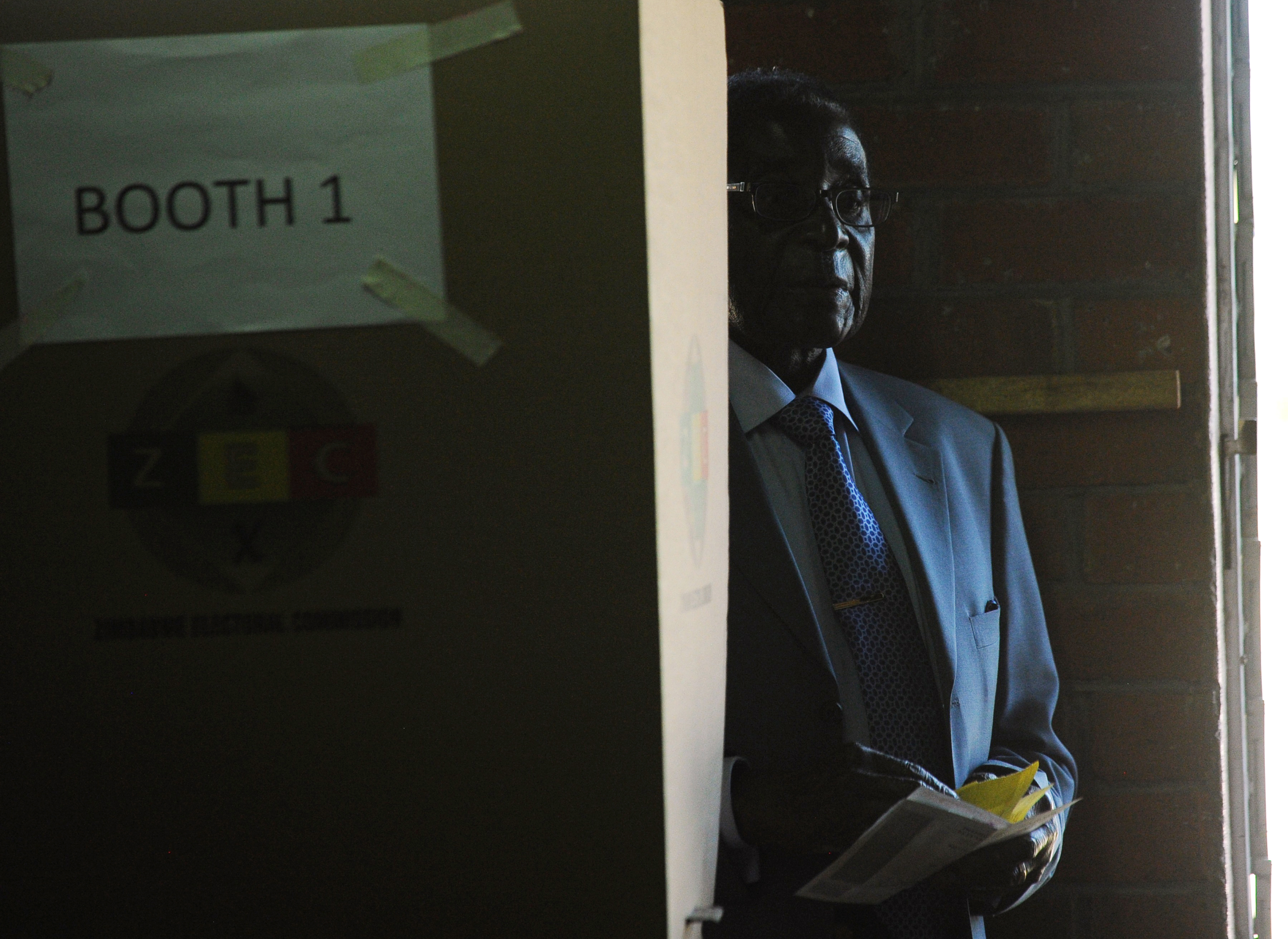
Robert Mugabe continues to cling to power:

Describing the Zimbabwean general election last week, Olusegun Obasanjo, the head of the African Union observer mission, used the word “free” readily, but the term “fair‘‘ caught in his throat. Was the voting — based on a roll that included 1.7 million voters who are missing or dead, and featuring 35 percent more ballots than people casting them – – fair? Obasanjo shrugged, turned his hands palm up, cocked his head and uttered, ‘‘fairly.’’

The AU and the Southern African Development Community nevertheless endorsed the election, allowing Robert Mugabe, 89, the world’s longest-serving ruler, to declare victory in the presidential race, with 61 percent of the vote. His party, which had held a minority of parliamentary seats, claims to have won a two-thirds majority, enough to change the constitution on its own.

Jon Lee Anderson says Mugabe “seems determined to die in office”:

Indeed, few politicians in modern times have been as willfully enduring or as spitefully determined to hang around, wraithlike, as Mugabe.

(A notable exception is Fidel Castro, though he did step down, in 2008, after forty-nine years in power.) Earlier this week, Mugabe, the Emperor Palpatine of African politics, gave a press conference in Harare, flanked by stuffed lions and cheetahs, in which he promised to “surrender” if he lost the election. But, when speaking to Lydia Polgreen, of the Times, he scoffed about his age being a political liability: “The 89 years don’t mean anything. They haven’t changed me, have they? They haven’t withered me, they haven’t made me senile yet, no. I still have idea, ideas that need to be accepted by my people.”

Fisher reviews the dire situation inside the country:

[Since 2002] Zimbabwe’s economy actually got much worse, suffering from hyperinflation so bad that the finance ministry one day announced that it would redenominate the currency by removing ten zeros from each unit, so that a $10 billion note would become worth one Zimbabwean dollar. In February 2009, the currency ballooned in value again and the finance ministry cut 12 zeros from the denominations. That April, it suspended the currency altogether. Since then, the free-fall has slowed and the economy is not in such dire shape.

Mugabe won the 2002 election against Tsvangirai but was widely accused by election monitors of vote fraud. In 2008, Tsvangirai ran against Mugabe again. Although Tsvangirai initially won more votes, the count was close enough to require a second round of voting. Between the two rounds, violence against Tsvangirai supporters and activists was widespread, with some human rights groups accusing Mugabe’s party of setting up “torture camps.” Tsvangirai withdrew but international outrage was such that Mugabe was forced to accept a power-sharing arrangement with Tsvangirai, although it’s not clear how much power the opposition leader actually holds.

Simukai Tinhu runs through five options the opposition has to fight back against Mugabe’s latest power grab.

(Photo: Zimbabwe President Robert Mugabe casts his vote at a polling booth in a school in Harare on July 31, 2013. Crisis-weary Zimbabweans were voting today in a fiercely contested election dominated b Mugabe’s bid to extend his 33-year rule and suspicions of vote rigging. By Alexander Joe/AFP/Getty Images)

Since When Was Free-Loading A Conservative Value?

There are several ways to see the campaign of FreedomWorks and others to persuade young adults to forswear getting health insurance through Obamacare. Perhaps it’s a publicity stunt, a way to vent against what the protestors see as the creeping leftist collectivism of our time. Or it can be seen as sabotage – a spiteful bid to undermine the effectiveness of a law, duly voted on by Congress and backed by a twice-elected president. But what it cannot be seen as, it seems to me, is a principled conservative defense of individual freedom.

For conservatives, freedom is always coupled with personal responsibility. Your right to be free from government interference is also an implicit statement that you can take care of yourself – and won’t at some point suddenly change your mind. This is the core of conservative Road_to_Serfdomlibertarianism: an assertion of radical independence, responsibility and self-sufficiency.

In many areas, this makes perfect sense – but healthcare isn’t one of them. Disease and accident make no distinctions among us. And since 1986, hospitals have been legally required to treat anyone seriously ill who presents himself at an emergency room, with clear medical needs. In the most fundamental way, that was the moment the US socialized medicine – and Ronald Reagan signed the bill. Alas, like so many Reagan domestic initiatives, there was no federal money provided to pay for this. And we all know what happened next: all those extra costs for the uninsured drove up premiums for everyone else, drove up hospital costs, giving them a reason to raise prices even further, and played a role in rendering healthcare unaffordable for many others.

What Obamacare does, like Romneycare before it, is end this free-loading.

The law is telling these young adults that if you want to go without insurance, you are not going to make everyone else pay for it if your risk-analysis ends up faulty. You have to exercise a minimum of personal responsibility to pay for your own potential healthcare. In other words, rights come with responsibilities in a liberal democracy. At least that is what I always understood the conservative position to be.

So why is an allegedly conservative organization actively encouraging personal irresponsibility? Why are they encouraging one sector of society – the young and the fearless – to rely on everyone else’s sacrifice to get bailed out if they have an accident, or contract cancer, or need a hospital to deliver a baby? This is not freedom as the Founders understood it; it’s recklessness, irresponsibility and short-sighted selfishness. Now, if the twentysomethings cannot afford it, it’s one thing – and part of our healthcare cost crisis. But now that Obamacare has removed that excuse and demands that every citizen actually contribute to the insurance pool, that completely defensible excuse is over. No more free-loading, in other words.

So I ask again: why is free-loading now a conservative value?

It is not being independent; it’s being potentially dependent on others while giving nothing in return. And insurance is an inherently collective endeavor. That’s how it works. It’s one area where going it alone makes very little sense. And, of course, the bigger the insurance pool, the lower the premiums. This is not socialism. It’s a simple insurance principle, used by free countries for centuries. It certainly passed muster with Friedrich Hayek, a man you would think would be an influence on the Tea Party’s political program. I’ve cited this before but it’s worth citing again:

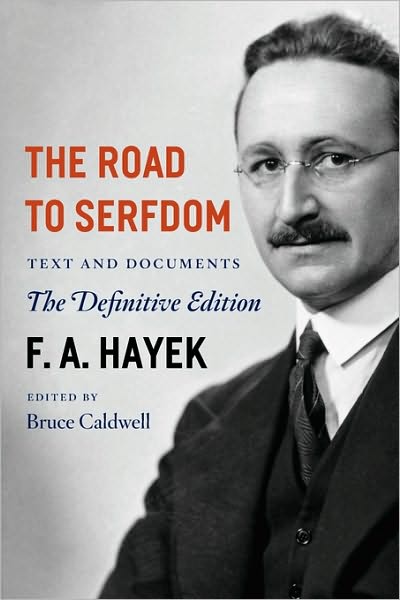
Nor is there any reason why the state should not assist the individuals in providing for those common hazards of life against which, because of their uncertainty, few individuals can make adequate provision. Where, as in the case of sickness and accident, neither the desire to avoid such calamities nor the efforts to overcome their consequences are as a rule weakened by the provision of assistance – where, in short, we deal with genuinely insurable risks – the case for the state’s helping to organize a comprehensive system of social insurance is very strong … Wherever communal action can mitigate disasters against which the individual can neither attempt to guard himself nor make the provision for the consequences, such communal action should undoubtedly be taken.

That’s from The Road To Serfdom, one book of the libertarian and conservative Bible. And it’s common sense. It’s leveraging a simple principle – pooling risk – and extending it as far as possible to guard against the “common hazards of life.” There is nothing leftist or socialist about it. And it demands that each of us be personally responsible for the costs our own encounters with illness or accident impose upon our neighbors, rich and poor, young and old. If FreedomWorks were consistent, it would encourage twentysomethings to “burn their Obamacare card” while simultaneously pledging never to seek medical care under any circumstances. That would be coherent, if bonkers. What’s incoherent is claiming that refusing to contribute to a system you nonetheless intend to use is anything but a scam.

In fact, what FreedomWorks is encouraging is the real socialism. It’s using the 1986 law to force hard-working Americans to pay for free-loaders’ care. Since when did conservatives believe in that forced redistribution of wealth from the hard-working to the reckless? Since when did conservatives prefer socialism to personal responsibility?

Since Barack Obama proposed it, that’s when.

The Privilege Of Speaking English

Ta-Nehisi encounters it while learning French in Paris. Other students are from “Italy, Spain, Japan, Korea, Kazakhstan, Portugal, Brazil, Venezuela, Germany, China, Australia and everywhere else”:

I am the only person in the class who speaks only one language. I tell my friends there that I wish more people in America spoke two or three languages. They can’t understand. They tell me English is the international language. Why would an American need to know anything else? Their pursuit of language is not abstract intellectualism. A command of English opens job opportunities.

I am getting some small notion of what it feels like to be white in America. What my classmates are telling me is that the Anglophone world is the international power. It dominates. Thus knowledge is tangibly necessary for them in a way that it is not for me.

Of course the flip-side of this calculus is that power enables ignorance. Black people know this well. We live in a white world. We know the ways of white folks because a failure to master them is akin to the failure of my classmates to learn English. Your future dims a little. The good slave will always know the master in ways that the good master can never know the slave.

Corrections Don’t Get Coverage

IRS Scandal

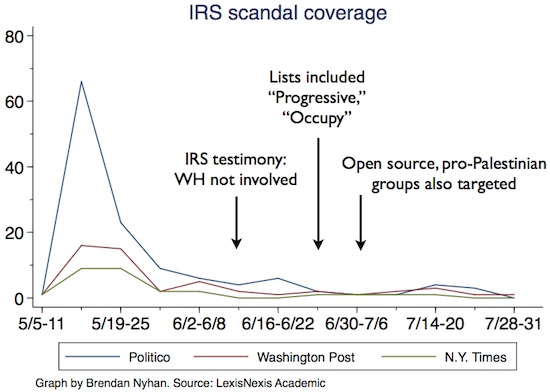
Despite the deflating of the IRS scandal, Brendan Nyhan believes that it could “have serious consequences for the IRS”:

As The New Republic’s Alec MacGillis argued [last] week, Peggy Noonan’s comparisons to Watergate may be hyperbolic but the reputational damage to the agency that she describes could be real.

The problem is what we might call the “scandal attention cycle.” George Washington University political scientist Danny Hayes has described how the “issue attention cycle” results in a surge in news coverage of a new issue like gun control followed by a fairly rapid decline, which received increased attention after the Sandy Hook massacre but ultimately trailed off, following a similar trajectory to previous high-profile shootings. A similar pattern often occurs for scandal—there’s a surge in initial interest as reporters rush to embrace the scandal narrative, but the press quickly loses interest after the most sensational charges are not substantiated. The problem is that it often takes time for the full set of facts to come out. By that time, the story is old news and the more complex or ambiguous details that often emerge are buried or ignored.

Waldman adds:

[I]t’s likely that the idea that “the IRS targeted conservative groups” is going to live pretty much forever, even though it isn’t true. And of course, the people who care—conservatives who believe the Obama administration is guilty of pretty much every crime one could imagine—will do their best to keep it alive, facts or no facts.

The Right’s Brand Of Populism, Ctd

Chait dismisses the idea of Republican populism:

[Y]ou could eliminate every business subsidy in Washington, and you’d still have in place a massive income gulf and a wealthy elite able to pass its advantages on to the next generation (through proximity to jobs, social connections, acculturation, spending money on education) that have nothing to do with government. The egalitarian laissez-faire economy is a fantasy.

Wilkinson pushes back:

I agree that egalitarian laissez-faire is a fantasy, but I deny that rooting out all corporate welfare would do so little and that progressive transfers would do so much.

Mr Chait has set up a false alternative. To say that the “main driver of inequality today is the marketplace” is a fairly empty observation. The marketplace is a complex system of institutions itself created by legal rules, and these rules are mostly established by government. The law constitutes and codifies the corporate form. The law defines the scope of property rights, including intellectual property rights. These political artefacts specify the contours of the marketplace and have vast, systemic distributive consequences. These facts are usually trotted out to correct free-market enthusiasts in the grip of the fallacious idea that “the market” somehow exists outside politics, and that the pattern of income and wealth emerging from the operation of market exchange is therefore “natural” and not already thoroughly political. I’m sure Mr Chait has made these points himself, so it should be be easy for him to see that to say that the marketplace drives inequality is just to say that government does, because the marketplace is a creature of politics.