Calculating A Fair Trial

Dana Mackenzie does the math to determine the ideal size and design of a jury:

In a very provocative 1992 paper, George Thomas, a law professor at Rutgers University, and his student Barry Pollack, now a partner at Pollack Solomon Duffy LLP in Boston, argued that the function of a jury is to serve as a proxy for society. In ancient Greece every citizen of the polis served on the jury. In the modern world this is impractical, so we settle for juries of 12. …

If you pick 12 people at random, how likely is it that they will disagree unanimously with the majority of society? Not very likely. How likely is it that they will disagree with society by a 9-to-3 majority? Thomas and Pollack crunched the numbers, and Suzuki recrunched them. And they found a surprising consistency. For every margin that the Supreme Court has allowed to stand (6- to 0, 10 to 2, 9 to 3), the probability of a disagreement between society and the jury is less than 1.5 percent. And for every margin that the Supreme Court has ruled unconstitutional (5 to 1, 5 to 0), the probability of disagreement is greater than 1.5 percent. Thus, without realizing it, the Supreme Court has consistently held that there should be less than a 1-60 chance that the jury will disagree with society. Judicial hunch meets mathematical rigor!

The Daily Wrap

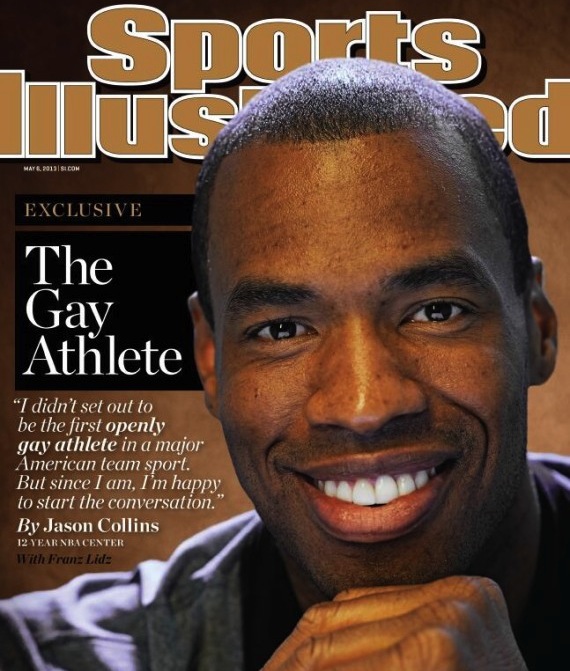
jason-collins-openly-gay-athlete-570x758

Today on the Dish, Andrew praised the words of Jason Collins and didn’t buy Charles Barkley’s explanation for why so many athletes stay in the closet. He also pondered America’s next move in Syria in light of the news of chemical weapons, echoed Joe Biden’s call for the torture report, and recognized that the struggle of our time is not against religion but its militant strains. Elsewhere, Andrew, testified to the democratic power of the Internet and sighed at the reunion of Ron Paul and his ugliest comrade, while Brian Phillips’s brush with frosty death touched off Andrew’s own personal story of a friend’s demise.

In political coverage, we parsed the politics of sequestration, gathered reax to Jason Collins’ coming out, and got a better sense of how the upper crust finds work in tough times as Matthew O’Brien despaired over Spain’s labor market. We didn’t find much in the Tsarnaev’s Svengali connection, Bostonians didn’t take kindly to Alex Jones Corps, and Pete Wehner earned an Yglesias Award nomination for calling out Palin-pathos. Rebecca Rosen found a way to bust PR copy in the news, Michael Wolff delivered a prognosis for the NYT Book Review, and Joshua Rothman provided a heuristic account of grad school. Finally, we measured the economic benefits of biodiversity as EJ Graff suggested decentralization for the Boy Scouts’ policy on gays.

In assorted coverage, Graeme Wood took on Sam Harris in jiu-jitsu, Gavin McInnes took a melodramatic trip on pot, and readers asked Rod Dreher where cancer fits into God’s design. We checked Facebook’s status updates en mass, Ann Curzan noted the linguistic significance of ‘slash,’ robots tugged at our heartstrings, and we discovered that good taste is a matter of practice.

Jay Griffiths took William Golding to task, readers wrote in their recommendations for female hitchhiker-lit, and David Mikics relayed the story of history’s final blood libel case. We read an unnerving account of a radically controlling fiancé and registered concern over modern man’s vanishing virility, while Scandinavians glugged the most coffee worldwide. We caught sight of a wounded woman following a gas blast in Prague, an older bro spun tricks for the MHB, and peeked at Pittsburgh for the VFYW.

–B.J.

Sex After 25

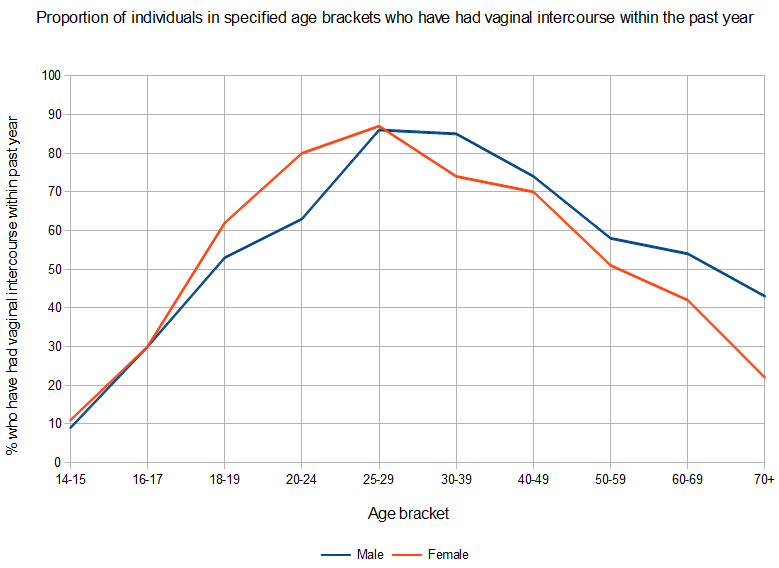
Razib Khan distills a 2010 study of American sexual behavior:

Before the age of 25 it seems that women are more likely to have sex in a given year than an equivalent age man. After the age of 25 this starts to reverse, and men are more likely to be having sexual intercourse in a given year.

In the comments section, Khan adds:

I put this post up because it seems to quantify what I’ve heard of/seen anecdotally. e.g., I have attractive (young looking) female friends in their mid-30s who are shocked all of a sudden how difficult it is to date because now they’re competing with women 10 years younger. To make things work they have to move up themselves to 45 year olds, and they’re not always willing to do so…. The converse is that to some extent immature and broke 20 year old males compete for the same women with 25 and 30 year olds who have jobs and are more seasoned.

Unrequited Empathy

A study demonstrates that people who observe affectionate treatment of robots can feel for them much as they do for fellow humans:

Affectionate interaction towards both, the robot and the human, resulted in similar neural activation patterns in classic limbic structures, indicating that they elicit similar emotional reactions.

Daniel Akst notes that, “Perhaps reassuringly, though, brain scans of people shown videos of abusive behavior were more empathetic when the victim was a human being than when the sufferer was a robot.” Natt Garun adds that the study “explains why I cared so much about poor Wall-E when he was getting crushed in the Axiom, or the adoration I have for R2D2 and its smart, resourceful ways”:

What this all means is that robots, which often have the characteristics of a living being, have the tendency to tug at our heartstrings more than just any ol’ lifeless item. ”One goal of current robotics research is to develop robotic companions that establish a long-term relationship with a human user, because robot companions can be useful and beneficial tools,” said one of the team’s researchers Rosenthal-von der Pütten.

“I Loved An Imaginary Being”

Michelle Legro recounts a cruel, cautionary tale, as told in Wendy Moore’s How to Create the Perfect Wife:

In the spring of 1769, twenty-one-year old Thomas Day received a letter informing him that his fiancée was breaking up with him. Margaret, the attractive, cultured, and spirited sister of a friend he had met the summer before, was clearly no match for the awkward, sullen, and serious Day, who had resolved at a young age to live a hermetic life with a devoted wife at his side. Margaret’s ultimate folly wasn’t that she was in every way incompatible with Day, but instead that she had been corrupted by the world by simply living in it.

Women were “universally shallow, fickle, illogical, and untrustworthy.” But Thomas Day wasn’t bitter. He had simply thought he could bend the will of a grown woman into his perfect partner. He would have to experiment with a less fully formed individual. He wrote to a friend:

There is a little Girl of about thirteen upon whose Mind I shall have in my Power to make the above mentioned Experiment … she is innocent, & unprejudic’d; she has seen nothing of the World,& is unattach’d to it.

Thomas Day used Rousseau’s novel Émile as a model:

Day poured hot wax into Sabrina’s arms; he threw her into a lake, unable to swim; and he fired unloaded pistols at her to accustom her to loud noises.

He would also test her “feminine” will by giving her a new dress, the first she ever had, and commanding her to throw it into the fire and watch it burn. The tests left Sabrina confused, angry, and willful. Her education made little sense, as did her place in Day’s household, where he continued to tell her he was training her as a housekeeper. At fourteen, an age when her “wifely” qualities should have bloomed, Sabrina was no closer to Day’s perfection. Annoyed, he packed her off to boarding school, providing her with an allowance and a dowry, but otherwise discarding her as a failure. …

How to Create the Perfect Wife is the tale of a modern Pygmalion, whose intentions, however misguided, reflected an extraordinary age of educational reform for children, male and female alike. Writing to a friend about his former fiancée Margaret before he began his lifelong quest to train a wife, he had an uncharacteristic moment of insight that would have served him in his desire for a perfect partner: “I loved an imaginary being.”

Face Of The Day

CZECH-EXPLOSION-GAS

A police officer and paramedic wrap a thermo foil around a woman injured by a powerful gas blast on April 29, 2013 in Prague’s historic center. The blast injured up to 20 people, four seriously, rescuers said, adding that it was possible some people were buried in the rubble. By Michal Cizek/AFP/Getty Images.

Out In The NBA: Reax


Jon Wertheim tells the story behind Jason Collins’ decision to come out:

Collins didn’t do this to make a political statement, much less to satisfy a sponsor. To his great relief, he didn’t do it under duress; that is, he wasn’t outed or “caught” by the smartphone paparazzi … Collins had simply grown tired. Tired of being alone; tired of coming home to an empty house; tired of relying on Shadow, his German shepherd, for company; tired of watching friends and family members find spouses and become parents; tired of telling lies and half-truths — “cover stories like a CIA spy,” he says with his distinctive cackle — to conceal that he’s gay. He was also tired of … being tired. For most of his life, he’s had trouble sleeping, which he attributes to struggles with his sexuality.

Collins’ twin brother Jarron, who played ten seasons in the NBA, further explains Jason’s motivation for the announcement:

What does Jason want out of this? He wants to live his life. He wants a relationship, he wants a family, he wants to settle down. He wants to move forward with his personal life while maintaining his life as a professional basketball player. That’s all, really.

Marc Tracy compares Collins to Jackie Robinson:

I can’t help feeling that Collins is equally as brave as Robinson was. It is true that Robinson accepted more risks, including to his physical security. The stakes were higher for Robinson. But so were the rewards. Robinson was offered the chance to be a superhero, and he took it, and he is now, indeed, a superhero. More than that, he is one of the most important American figures of the 20th century—not only in sports, but in everything. By contrast, what incentive did Collins have? It was already unclear whether he was going to get another payday, and his coming out could plausibly make his signing by an NBA team less likely. (Horrible, but true.)

Shaun Powell looks ahead:

Had he kept his private life to himself, he’d be a last-minute addition to any team, not a free agent in big demand this summer. But now, will his announcement affect his chances, good or bad, of seeing a 15th season? General managers can’t speak on the record about Collins, but one scout said: “It’ll have no effect whatsoever. If someone needs him, someone will sign him.” It’s very possible that an organization will need Collins for his ability and also want him because of his announcement. He’s a solid presence in the locker room, a quiet leader with an intelligent voice and can still defend big centers. And he’s not expensive. … Any team looking for a veteran backup center who brings more than just basketball ability could do a lot worse than Jason Collins. Expect to see him this fall.

June Thomas wants to see Collins play:

As a free agent, he’s currently on the job market, and I hope a front-office bean counter somewhere in the league realizes the business opportunity Collins has just opened up.

I’ve never been to an NBA game, though I’ve twice lived within walking distance of an arena. If someone signs Collins next season, I’ll gladly head down to the Barclays Center and slap down an outrageous sum to cheer on a pioneer—a guy who can take a charge and knows gay history. I’ll even buy a T-shirt.

Nate Silver finds that 61 percent of pro-basketball players around Collins’ age with comparable stats have gone on to play another year:

My concern is that if no team signs Mr. Collins, it may incorrectly be deemed as a referendum on whether the league is willing to employ an openly gay player — when players in Mr. Collins’s position see their N.B.A. careers end fairly often for all sorts of reasons. Alternatively, if a team does sign him, it may be incorrectly dismissed as a publicity stunt — when 7-footers who can provide some rebounding and defense off the bench often play well into their thirties.

Josh Barro urges more pro-atheletes to come out:

[Collins] says he waited out of “loyalty to his team” and not wanting his homosexuality to become “a distraction.” In other words, he was concerned about impacts on his career. Those concerns were probably reasonable. But civil rights causes, including gay rights, don’t advance without personal sacrifices on the part of pioneers. Gay athletes will expose themselves to career risk by coming out. They ought to do it anyway because of the broader positive effects they can create.

Will Leitch happily notes the widespread support Collins’ announcement has received:

Like a lot of people, I combed through Twitter to look for any sort of negativity, and while there were a few cretins (Twitter being Twitter), I couldn’t find a single “respectable” person doing anything other than being unequivocally supportive. The NBA basically pushed its playoffs coverage down its Website to splash out the news, Kobe Bryant tweeted that he was “proud” of Collins and even Bill Clinton weighed in positively. NBA players, across the board, came out on Collins’ side, as if there is such a “side” to take in someone simply saying who he is. And that was about it. By 1 p.m., ESPN was back to Tim Tebow, and everyone on Twitter was back to self-promotion again. It was fantastic.

Cyd Zeigler applauds:

We knew this day would come. We didn’t know if it would be this week or next year. But now that it has, I get the feeling that, unlike David Kopay 40 years ago, this may open the door to many more in the near future when everyone sees it worked out just fine for Collins. He did it in the perfect way: In his own words. The column he wrote was strong, and it sends a clear message: I’m OK with who I am.

We’ve said for years that the best timing for this announcement would be early in the offseason. Just two weeks after his regular season ended, and six months before the season starts, it couldn’t be a better time to do this. The media will get the story out its system before tip-off of the next season.

And Brian Phillips urges everyone to just “be happy” for Collins:

[I]t’s good news; it’s an occasion for simple happiness, and God knows there aren’t enough of those. But we of the Internet have all become such sophisticated consumers of media that it takes only about five minutes for any cultural conversation to become confused. We have a tendency, or anyway I do, to skip past the important part of any given issue, which we usually grasp right away, and stake out positions on some knowing or contrarian periphery. … [W]hatever your angle vis-à-vis complex media metanarratives, Jason Collins is a person, and he just did something that was hard for him to do, and that thing will help other people. That’s what matters here. That’s what happened.
Stay-At-Home Healthcare

Ezra Klein worries that Medicare is missing a big opportunity by discontinuing support for Health Quality Partners, which provides chronically-ill Medicare patients with regular home visits from a professional nurse and has dramatically reduced those patients’ hospitalizations and Medicare costs:

I asked a half-dozen seniors what difference Health Quality Partners made in their lives. Every one of them began the same way: They could ask their nurse questions, they said with evident relief. They could get help understanding and navigating their doctor’s orders. They didn’t feel like they were being a burden if they needed to ask one more thing, or have their medications explained to them again.

Ezra zooms in on importance of the 33% reduction in hospitalizations among Health Quality Partners patient pool:

If there is a secret to the success of Health Quality Partners at preventing hospitalizations, it’s this: No one else is checking in with [elderly couples like] the Bradfields or the Allens every week. Medical technology — from pills to devices to surgical procedures — is so advanced and so competitive that making further gains requires enormous investment and rarely brings high returns. But the exciting field of knocking-on-the-Bradfield’s-farmhouse-door is almost totally empty. Medicine has been so focused on what doctors can do in the hospital that it has barely even begun to figure out what can be done in the home. But the home is where elderly patients spend most of their time. It’s where they take their medicine and eat their meals, and it’s where they fall into funks and trip over the corner of the carpet. It’s where a trained medical professional can see a bad turn before it turns into a catastrophe. Medicine, however, has been reluctant to intrude into homes.

For the most part, the medical system treats the old very much like it treats the young. It cares for them when they’re sick and ignores them when they’re well. Coburn’s basic insight is a discomfiting one. He doesn’t really believe in “better,” at least not for elderly, chronically ill patients. He wants someone going over frequently to see if they’re depressed, if their color is good, if they understand their medications, if there’s anything they need. This isn’t medicine so much as it’s supervision.