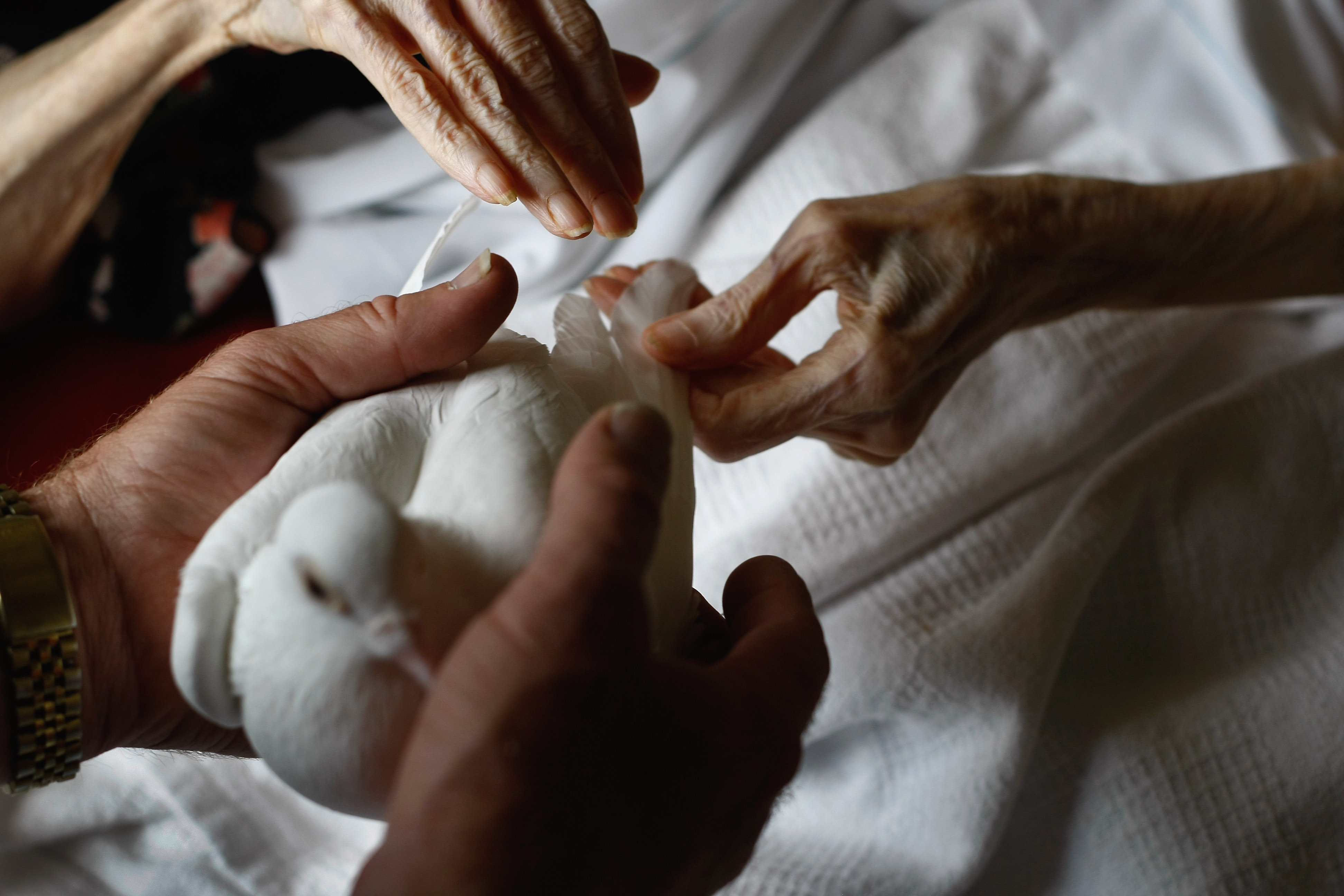
Victims are in shock and being treated at the scene of the first explosion that went off near the finish line of the Boston Marathon. By John Tlumacki/The Boston Globe via Getty Images.
Victims are in shock and being treated at the scene of the first explosion that went off near the finish line of the Boston Marathon. By John Tlumacki/The Boston Globe via Getty Images.
[Updated from 4.54 pm to 5.22 pm]
This is the most vivid, chaotic and frightening video so far of the Boston explosion, as it happened.youtu.be/046MuD1pYJg
— Jim Roberts (@nycjim) April 15, 2013
BREAKING: TPM has confirmed a 3rd explosion at JFK Library.Boston PD says no injuries.editors.talkingpointsmemo.com/archives/2013/… via @tpm
— Josh Marshall (@joshtpm) April 15, 2013
Via my sister who works at JFK Library: small mechanical fire in new addition, everyone got out safe.
— Zach Green (@140elect) April 15, 2013
Seeing many tweets saying Library incident was unrelated/mechanical.We’re going on statement via phone from Boston PD.
— Josh Marshall (@joshtpm) April 15, 2013
Boston Police confirm two bombs were placed in trash cans at finish line. A third unexploded bomb was discovered. via @weei #bostonmarathon
— Richard Hall (@_RichardHall) April 15, 2013
A very, very graphic photo ending the @in_focus slideshow from Boston. Please use caution: bit.ly/15gtFJP
— Andrew Katz (@katz) April 15, 2013
RT @passantino: AP: Cellphone service has been shut down in the Boston area “to prevent any potential remote detonations of explosives.”
— WhiteHousePressCorps (@whpresscorps) April 15, 2013
Terrorism in purest sense RT @ap: BREAKING: Boston police commissioner urges people to stay indoors, not congregate in large groups
— Patrick Galey (@patrickgaley) April 15, 2013
NYPD has stepped up security at strategic locations & critical infrastructure, including subways: bit.ly/11bbwaT
— Mike Bloomberg (@MikeBloomberg) April 15, 2013
Couple just reunited. twitter.com/megansarahj/st…
— Megan Johnson (@megansarahj) April 15, 2013
For families in search of loved ones:1-617-635-4520 #BostonMarathon
— Ann Curry (@AnnCurry) April 15, 2013
A team of Newtown parents who were running the Marathon in tribute to the victims of the Sandy Hook massacre are reportedly safe.
— Michael Skolnik (@MichaelSkolnik) April 15, 2013
#heroes MT @nbcsn: Reports of Marathon Runners that crossed finish line, continued to run to Mass General Hospital to give blood
— Andrew Kaczynski (@BuzzFeedAndrew) April 15, 2013
Def a good time to make a point about abortion RT @jrubinblogger Not writing on Boston. It is a local crime story for now.
— Dan Amira (@DanAmira) April 15, 2013
Oh my fucking God, Jane Harman is speculating about a link to AQAP’s Inspire magazine. Facts first please.
— attackerman (@attackerman) April 15, 2013
CNN speculates that “right wing extremists” may be responsible bit.ly/YY4x6I Shameful. Simply shameful.
— toddstarnes (@toddstarnes) April 15, 2013
Someone who works for Fox actually tweeted “Kill All Muslims” in response to Boston rightwingwatch.org/content/erik-r…
— Zack Beauchamp (@zackbeauchamp) April 15, 2013
First tweet reax here.
[Updated from 3.49 pm to 4.23 pm]
LIVE VIDEO: Explosion at Boston Marathon nbcnews.to/15b1V9b
— NBC News Videos (@NBCNewsVideo) April 15, 2013
BREAKING NEWS: 2 dead, 22 injured in Boston Marathon explosions.
— Boston.com News (@BostonDotCom) April 15, 2013
Video of the first explosion, lots of screams. Runners stopped in their tracks. youtube.com/watch?feature=…
— Andrew Kaczynski (@BuzzFeedAndrew) April 15, 2013
CBS reports “people have seen dead bodies” at the blast site, some children wounded and people unconscious and with amputations. #boston
— NYC ARECS (@nycarecs) April 15, 2013
I saw people’s legs blown off. Horrific. Two explosions. Runners were coming in and saw unspeakable horror. — Jackie Bruno (@JackieBrunoNECN) April 15, 2013
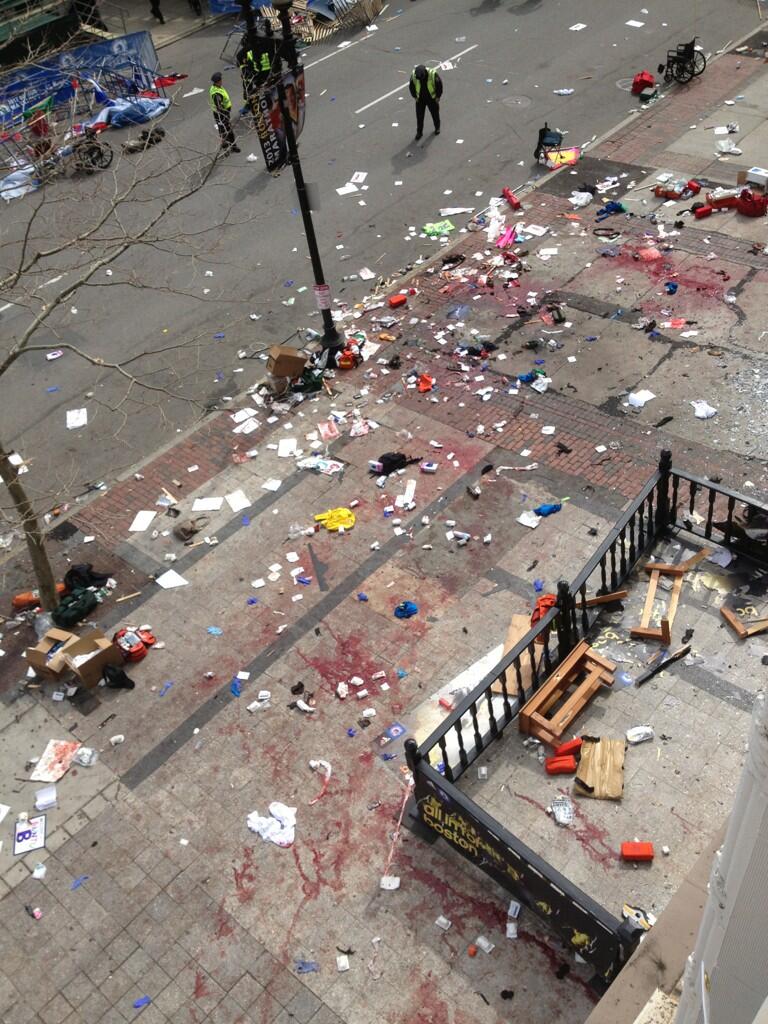
I was in office right above it. There was a primary and a secondary explosion. I ran outside to help. Blood on sidewalks & 10-12 casualties.
— Bruce Mendelsohn (@brm90) April 15, 2013
Video: @bostonglobe video of moments after explosion – youtu.be/gOzoq1rxyOw [graphic]
— Dave Wyllie (@journodave) April 15, 2013
Police say are they still finding “secondary devices,” pleading with crowd to go home
— Jim O’Sullivan (@JOSreports) April 15, 2013
! RT @sarah_boxer: NBC: Law enforcement officials who spoke to @nbcnews believe the explosion was at least 1 small IED – a homemade bomb
— Andrew Kaczynski (@BuzzFeedAndrew) April 15, 2013
RAW video of second explosion: youtu.be/7jMYObtjToU #bostonmarathon @wbur
— Dæn Russell (@deanwrussell) April 15, 2013
BREAKING NEWS: Police will have controlled explosion on 600 block on Boylston Street
— Boston.com News (@BostonDotCom) April 15, 2013
New York Times map of Boston explosionstwitter.com/digg/status/32…
— Martin Gelin (@M_Gelin) April 15, 2013
Boston EMS/police/fire saying they need ppl on social media to let ppl stuck in bars & restaurants to know a street sweep is happening
— attackerman (@attackerman) April 15, 2013
If you know someone in Boston: don’t call their cell; leave open for emergencies. Send text messages. If you know they’re ok, connect later.
— Seth Mnookin (@sethmnookin) April 15, 2013
Biden Responds To Boston Explosion While On Gun Conference Call livewire.talkingpointsmemo.com/entry/biden-re… via @pemalevy
— Josh Marshall (@joshtpm) April 15, 2013
Assuming it’s real, I have a feeling this is going to be the iconic image. Boston’s finest twitter.com/BGlobeSports/s…
— Sam Graham-Felsen (@samgf) April 15, 2013
RT @stevebruskcnn John King told by state and local officials there was no known credible threat prior to the explosions.
— Andrew Kaczynski (@BuzzFeedAndrew) April 15, 2013
TV networks: could you wait before rolling out terrorism experts for worst-case speculation? Bloomberg TV, looking at you
— James Fallows (@JamesFallows) April 15, 2013
Fox just said “terrorist attack” too.
— Zack Beauchamp (@zackbeauchamp) April 15, 2013
The Globe’s websites are down. But those looking for a reliable source for information can follow this live blog: bo.st/XCLv4T
— Matt Viser (@mviser) April 15, 2013
Mackey is also live-blogging, as is The Guardian. Short clip of the explosion here. Top photo by Bruce Mendelsohn. Deadspin is compiling many more.
Michael Zhang is wowed by Michael Wolf’s photography:
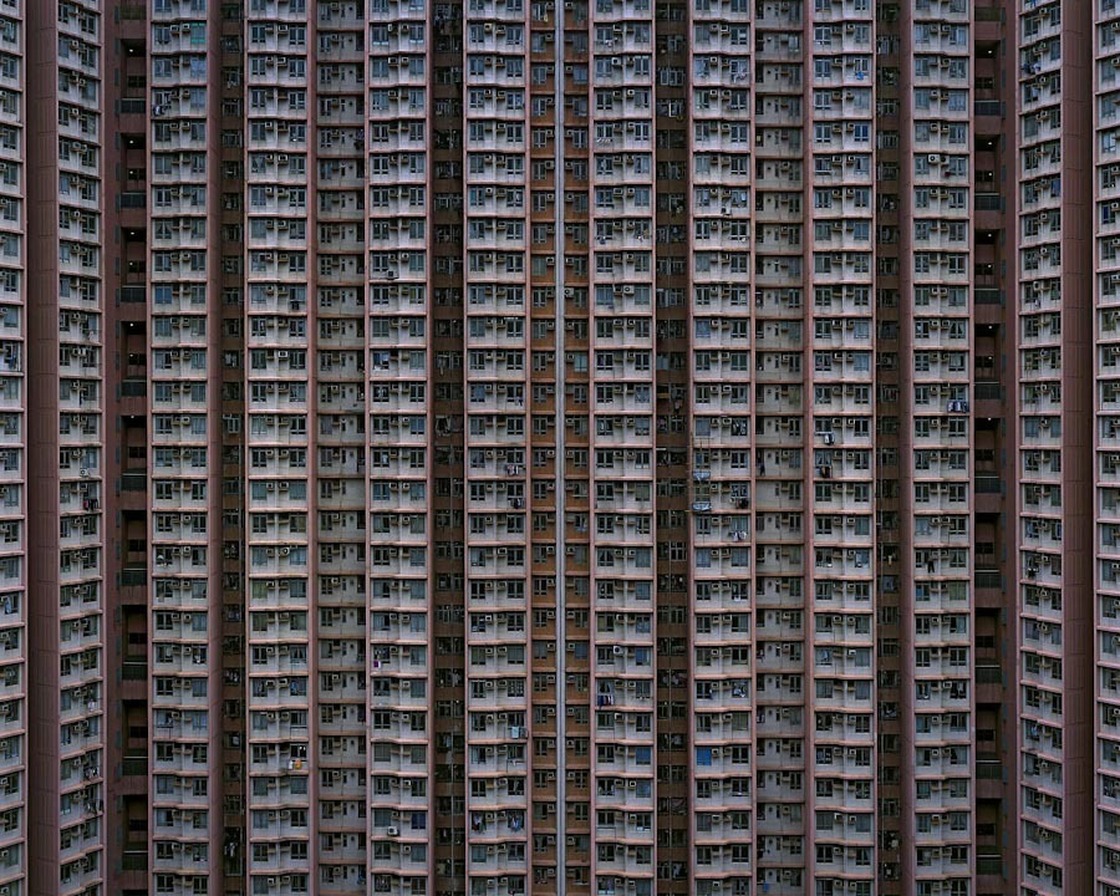
With a population of over 7 million people packed into an area of 426 square miles, Hong Kong is one of the most densely populated places in the world. As with other places where development cannot expand horizontally, apartment buildings tend to get taller and taller in order to provide living space for all the inhabitants. German photographer Michael Wolf decided to capture this population density through a series of photographs studying the architecture of these high rises. The project is titled “Architecture of Density.”
The photographs offer a closeup view, turning the buildings into mesmerizing patterns of edges, windows, balconies, and air conditioning systems. In most of the photographs, the buildings completely fill up the frame, and the repetition is disorienting.
(Photo by Wolf, Architecture of Density)
Ken Cuccinelli joins Paul Ryan in embracing a total philosophical contradiction:
What book would he write about if he had to write a college-admissions essay? … Ultimately, he picks Ayn Rand’s Atlas Shrugged.
Rand, Cuccinelli says, “captured an awful lot of the battle for our government that’s going on right now” and saw “the natural course of bigger government, [the problem of] relying on it for everything, and the control it takes over everything as it goes down that path.” … Still, he doesn’t consider himself a Randian, because of Rand’s “Objectivist philosophy” and “very selfishly focused” mindset. He notes “the foundation that she appears to be building upon” and finds it to be not “consistent with the Founders’ vision for the country.”
If I were grading a term paper, that would be a D. The profile is a fawning embarrassment – like assigning K-lo to profile Maggie Gallagher.
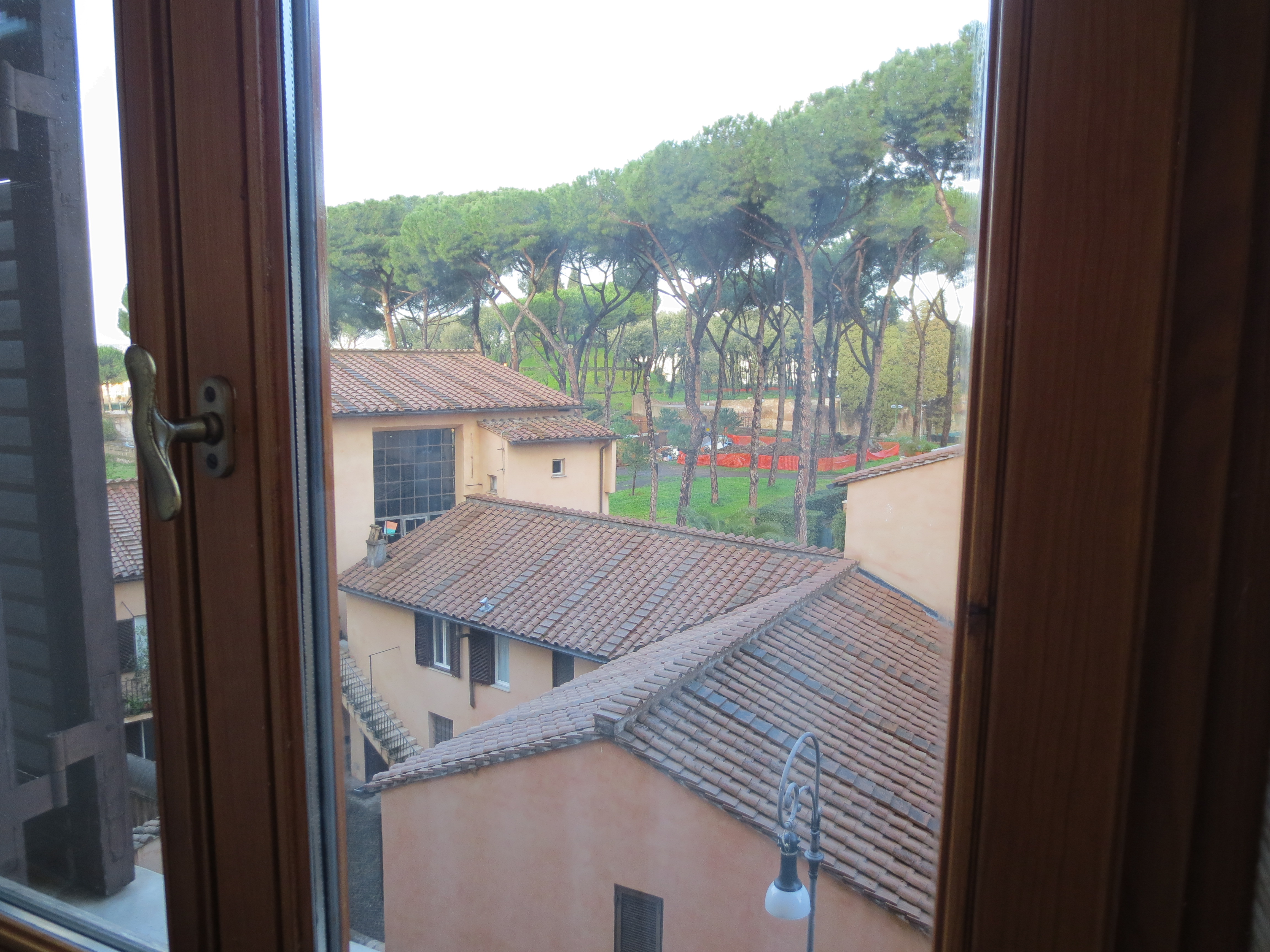
Rome, Italy, 1.59 pm
In the wake of Rand Paul’s trip to Howard, TNC provides constructive criticism:
If you are a libertarian and dismayed by the largely critical reaction to Paul’s speech, you should understand that much of it is because black liberals, like me, actually expect more of Rand Paul than we expected of Mitt Romney. Again, a lot of us have family whose politics are not very different from Rand Paul’s. These are people who don’t like foreign wars, who don’t like our incarceration rates, and don’t like our deficit.
These people are not me. But the fact that we end up voting for the same guy is a distortion of democracy. We deserve to fight it out. Having that fight doesn’t require the GOP to fully embrace Obamacare. It requires the GOP to stop attempting to limit the number of people who are voting, and start competing for them. At this moment, the GOP has a choice. It can embrace the “Gifts” logic of Mitt Romney which holds that black people will never vote for a Republican, or it can make a pitch and compete.
Expecting more is a good thing. Better still would be a franker conversation between African-Americans who see what TNC sees and Republicans actually willing to listen. Maybe Howard was just the beginning of that conversation. My only hope is that it isn’t the end.
Seamus O’Mahony, a physician, reads Hitch’s Mortality:
I am intrigued by Mortality for one main reason, which is this: Hitchens’s beliefs about his advanced cancer and its treatment were, for a man whose fame rested on his scepticism, uncharacteristically
optimistic. I hesitate to use the word delusional, as he admitted that he would be very lucky to survive, but he clearly steadfastly hoped, right to the end, that his particular case of advanced cancer might lie on the sparsely populated right side of the bell-shaped curve of outcome statistics.
He famously mocked religious folk for their faith in supernatural entities and survival of the soul after bodily death, yet the views expressed in Mortality are just as wishful and magical. “The oncology bargain (oncology is that branch of medicine which deals with the treatment of cancer),” writes Hitchens, “is that in return for at least the chance of a few more useful years, you agree to submit to chemotherapy and then, if you are lucky with that, to radiation or even surgery.” Years? I must now confess to a professional interest. I am a gastroenterologist in a large acute hospital, and I have diagnosed many patients with oesophageal cancer. “Years” is a word not generally used when discussing prognosis in Stage Four oesophageal cancer, “months”, in my experience, being a more useful one.
I’ve no watched two friends – an atheist and a Christian – go to extraordinary lengths to extend their lives against great odds. They were both relatively young – especially David at 34 when he found out. No one wanted them to go. But I wonder if all that medicine – which was, in fact, a form of poison – was worth it. David got ten more years, and two young children. But he also endured a disfiguring, disabling, brutal physical battering from the surgeries and chemo-sessions that tackling a tough brain tumor allow for. I say “allow for” because “required” is not the right word. What the chemo did to Christopher was beyond description – and what’s left of your body, even if the chemo works, can be extremely vulnerable to infections and diseases that can be worse than the cancer.
It seems odder to me for Christians to be as exercized by life-extension as the atheist. Put that down to the strange extremism of Ratzinger’s innovations on the question of “life”. But our culture’s gradual alienation from the fact of our deaths – our distancing ourselves even from the old and infirm in ways previous cultures didn’t and couldn’t – is not, in my view a healthy thing.
No one should seek to die or give in to a disease they can legitimately fight. God knows how many pills I take a day to keep the virus – and all its and their side-effects at bay. But I get to live healthily and meaningfully. The way some elaborate and cutting edge treatments all but kill the patient in order to save her troubles me. It’s a loss of perspective as well as immensely expensive for the entire system. Unquestionably, these sophisticated treatments are taking healthcare money away from the young, taking up more and more of our collective healthcare resources, and extending lives only be perpetuating continuous agony and nausea and pain for the patient and devastating consequences for families and friends.
We will all die. We should not seek it. But we should not flee from it for ever. I walked a 94-year old friend home last night in her wheelchair after a visit. She told me that she had worse and worse panic attacks. What are you afraid of? I asked. “Death,” she replied, with characteristic candor. I cannot blame her. And I cannot blame all of those who do everything and anything to avoid it. But at some point what seems to me to matter more is not the length of our lives but the content of them and the manner of our deaths.
At some point, medicine is a function of a social disease of modernity: the flight from our own mortality. But fleeing it does not defuse it. Only facing it does.
(Photo: John Moore/Getty.)
Marc Lynch tries to explain the Muslim Brotherhood’s post-revolution incompetence in Egypt:
It has become clear that the Brotherhood was more profoundly shaped by its inability to actually win power than has generally been recognized. Almost every aspect of its organization, ideology, and strategy was shaped by the limits Mubarak placed upon it. The revolution removed those boundaries — and the Brotherhood has struggled badly to adapt. Its erratic, incompetent, and often incomprehensibly alienating behavior since the revolution comes in part from having utterly lost its bearings in a new institutional environment. The chance to rule forced it to confront a whole range of contradictions that Mubarak’s domination had allowed the group to finesse.
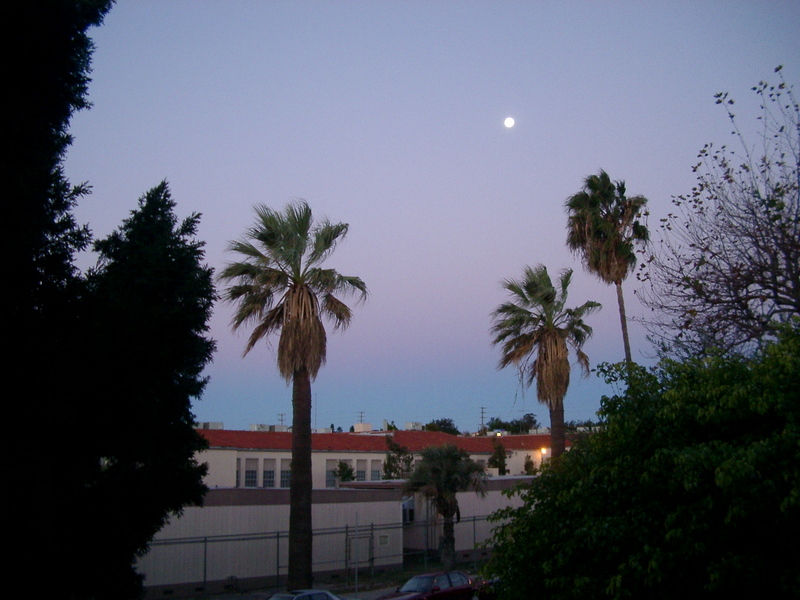
Los Angeles, California, 4.47 am.
It was posted on May 22, 2006, accompanied by the following post:
One of the strange things about having a blog, especially a one-man outfit like this one, is that, over time, you get to find out more about me, but not much about each other. Yes, you get to read some of the smartest emails on the web, but you don’t get to know who your fellow-readers are, where they live, what they do, what they see as they look out their window each morning. I get a little sense of it from the roughly 500 emails I get a day. But it’s still opaque.
Hence this idea, which may be nuts or inspired. We’ll find out. This week, get out your digital cameras, and take a picture of the view from your window. It can be your living room window, bathroom window, car-window or office view. If you’re serving in the military, or traveling, it can be just the view from where you’re standing or sitting. Email it to me, put “View From My Window” in the contents line, and I’ll post as diverse and as interesting an array of reader photos as I can all week. Just send it via the email option on the right, include the place and the time of day. By place, I mean town, state or county, and country. If you live outside America, I’d love to capture some of the exotic places I often get email from. Special treatment for those of you in the military, wherever you are. No names will be given: this blog’s rule of reader anonymity will remain. And by sending it, you give me the right to publish it. So show me – and every other reader – your world. Don’t pretty it up; just show it as it is – a glimpse through the looking glass of a blog, at the world its readers live in.
To see the resulting first week of reader photos, go to this Dish page. As you will notice, many of the initial VFYWs featured animals and rainbows, which are banned from the feature nowadays. And very few of the earliest VFYWs contain a portion of the window frame inside the photo frame – a requisite for the feature now. Money quote from the end of that week:
This feature is officially over, but I had so many sublime or touching submissions that I didn’t post I’m going to publish a few of the remainders over the coming weeks, every now and again. Please don’t send me any more. It took most of my weekend to download and organize just the hundreds I received. I now have one week’s worth of images from around the world – an astonishing display of the web’s power and diversity. When I get a minute, I’m going to find a way to gather them all together and publish them somehow – either on the web or on paper. So stay tuned.