Institutions Or People?

That’s the real choice for new media. Some are beginning to see how news needs to be channeled online with a personal touch. We use the web normally for peer-to-peer interactions: emails, Facebook updates, instant messaging. To go from that world and seek news from an august “institution” is alien to the intimate nature of the medium. It won’t work. But there is an obvious alternative:

There has been much talk about the need for journalists to establish a “personal brand” that transcends their outlet. Some news personalities now play a strong role on Twitter and Facebook, but they often get little institutional support for this, and such participation and engagement remain merely part of a narrow web traffic strategy.

But what if news outlets decided to flip their model, so that the editorial staff was not subservient to the brand, but the “brand” became a platform for talent? What if news organizations confronted the reality that nearly all media will be “social media” a decade hence?

The main reason for news organizations’ resistance to this is that it reduces their power to control what they produce and whom they publish. No one gives up power willingly. Some indeed will have to have it pried from their cold, dead, newsprint-covered hands. But by then it will have become an illusion anyway.

An Abortion Horror Story, Ctd

Sarah Posner, like Irin Carmon, argues that the press did cover the Gosnell case:

Is Gosnell’s trial getting the same level of coverage on cable as, say, the Jodi Arias trial? No. But that’s a question about the media’s priorities in general, rather than some sort of ideologically-driven fear that the pro-choice position would be exposed. Proponents of safe, legal abortion do not fear any light shed on this awful episode. To the contrary, they were some of the first to condemn Gosnell when the details of a grand jury report were made public in January 2011 and Gosnell was first charged.

Drum points out that most of the right-wing media wasn’t covering the Gosnell trial until recently:

Why hasn’t the Gosnell trial caught on nationally? Beats me. I’ve often wondered just what it is that causes some local crime stories to become media sensations and others to molder in obscurity. But the interest of the conservative press is pretty obvious, and it has little to do with the grisly nature of the case itself. After all, they’ve been well aware of the Gosnell trial all along, because both Breitbart.com and conservative pro-life sites have been covering it extensively. Despite this, they barely mentioned it themselves. Obviously, even conservative editors didn’t it consider it newsworthy on a national scale. Their outrage only kicked into high gear when they spied an opportunity to pretend that this was a story about the liberal media ignoring a grisly abortion story.

Allahpundit weighs in:

[I]f Gosnell’s actually a case study in why we need more higher-end clinics, not less, why hasn’t the media been using him to that effect since he was indicted? Why a blackout instead? You know why: Because no one who sees that picture of the baby with its neck sliced thinks, “We need to make this easier, and to make the slicing happen a bit earlier in development.” The blackout strategy was smart. It just didn’t work.

Ambers urges readers to think “about the many different ways in which the failure to catch Gosnell’s horrible practices early enough represents significant systemic failures that have little to do with abortion”:

If it were easier and more socially accepted to get safer and earlier abortions in Pennsylvania, the demand for his services wouldn’t be as high. Cutting funds for Planned Parenthood and other providers with reputations for medical excellence means that more people will seek the modern day equivalent of back-alley abortions. Also, if health care inequalities weren’t as pronounced, doctors like Gosnell would be kicked out of the market much earlier, or discovered much earlier.

Ed Krayewski’s view:

The case of Dr. Kermit Gosnell, horrific on its own, is not helpful as a stand-in or argument in the wider debate about abortion and reproductive rights (because what he did is already illegal), just as the case of Adam Lanza, horrific on its own, is not helpful as a stand-in or argument in the wider debate about personal safety and gun rights (because what he did is already illegal).

And McArdle admits that she should have paid more attention to the case:

I knew about the Gosnell case, and I wish I had followed it more closely, even though I’d rather not. In fact, those of us who are pro-choice should be especially interested. The whole point of legal abortion is to prevent what happened in Philadelphia: to make it safer and more humane. Somehow that ideal went terribly, horribly awry. We should demand to know why.

People Who Like Doing Taxes

They exist:

When asked why they like doing their income taxes, 29% say that they are getting a refund, while 17% say they just don’t mind it or they are good at it; 13% say doing their taxes gives them a sense of control, while the same percentage cites a feeling of obligation – that it is their duty to pay their fair share.

Sprung outs himself as someone who gets “some satisfaction out of the process.” Among his reasons why:

A feeling of contributing: call me a dupe, but I like being a modestly productive member of society. I know some of our tax dollars are wasted — a lot, actually, in defense, and a lot in medical overpayments to doctors and hospitals and other healthcare providers, and a lot, particularly here in Jersey, in waste fraud & abuse. But you go to life with the government you have, and I don’t think that starving the beast makes it more efficient.

A Vatican Spring?

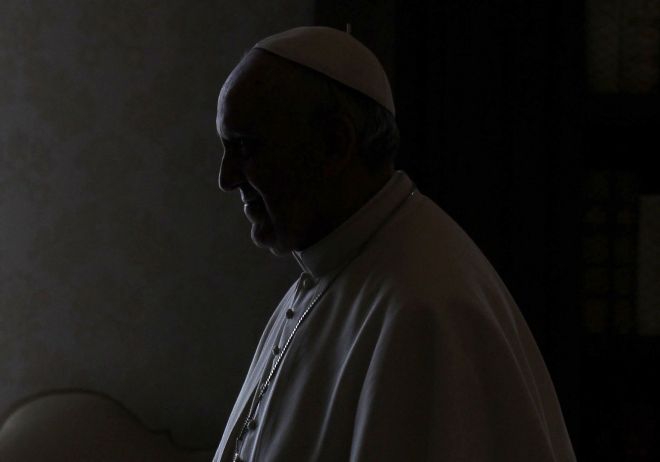
francisshadow

That was Hans Kung’s hope before the recent Conclave. It seemed somewhat naive to me at the time – but naivete in the face of the workings of the Holy Spirit is a good thing for Catholics to have. And we will certainly have to wait some time before we can assess whether the signs of reform become reality in any tangible fashion.

But we can say this much: almost every single action and statement from the new pontiff signals a radical departure from the past 44 years of the Wojtila-Ratzinger church. My favorite unofficial story about the new Pope was relayed to me by hearsay. But at the moment before he was to appear as the new Pope, he was allegedly presented with the papal mozzetta – the big red cape his predecessor loved to wear and an increasing must for any aspiring priest of bishop for the last decade (it had seasonal variations). He turned to the Vatican official who tried to put it on him, waved him away with one hand and said, simply, “Carnevale e finito.” The carnival is over.

Is it? That is the question. Is the Wojtila-Ratzinger era of reaction coming to an end?

You can see the theoconservative religious project from 1979 – 2013 rather as you might the neoconservative political project in the same years. After a major and arguably necessary course correction in the 1980s, by the first decade of the new millennium, the two isms had ended where isms always do: on earth. The theoconservative project ended in a collapse of the church’s moral authority inside the beadazzled Liberace outfits of its intellectual architect, Joseph Ratzinger. The neoconservative project ended in the blood and sands of Mesopotamia.

Benedict claimed he’d bring Europe back to the faith using the sublime, pristine self-evidence of a “new” natural law and the total authority of the Bishop of Rome. But after global rock-star version of the papacy under John Paul II had faded, the increasingly extremist and fastidious orthodoxy that he and Ratzinger had innovated lost altitude fast. It had been propped up by charisma, an evanescent form of authority. And when the prissy Inquisitor, Benedict XVI – with no popular appeal – inherited this mess, he gradually, gaffe after gaffe, fashion accessory after fashion accessory, disappeared beneath his meticulous vast wardrobe. He resigned for reasons we may never fully know – but after an internal dossier on church abuse – financial and sexual – had laid out his failure in stark terms. But he had ceased exercising any moral authority for most Catholics long before that.

All of that project required re-establishing the papacy as something the Second Council had explicitly disavowed: a near-dictator in theological and political and social debate. Conversations were silenced; debates ended; theologians silenced. Vatican II’s insistence on equal authority for scripture and for the laity of the church alongside the papacy were slowly downplayed, while restoring the Pope as some kind of medieval queen – down to the ermine and jewels and over-starched lace – was the objective. In his early years, John Paul II carried all before him in a sweep of drama. But he was to the papacy what Diana was to the monarchy. In the end, he was a dazzling distraction from reality, not a reinvention of it. It was under John Paul II that the rape of children became truly endemic, the cover-up the worst.

The establishment of a global council of advisers – a kind of global cabinet to counteract the Vatican bureaucracy and take the Pope down a notch or two is, in that context, a huge move:

The Italian church historian Alberto Melloni, writing in the Corriere della Sera, called it the “most important step in the history of the church for the past 10 centuries”. For the first time, a pope will be helped by a global panel of advisers who look certain to wrest power from the Roman Curia, the church’s central bureaucracy. Several of the group’s members will come to the job with a record of vigorous reform and outspoken criticism of the status quo. None has ever served in the Italian-dominated Curia in Rome and only one is an Italian: Giuseppe Bertello, the governor of the Vatican City State.

You need not have dramatic doctrinal change – and I don’t expect any on the issues that the Western laity has already moved on from. But you could have real institutional change. Here are my benchmarks: if Bergoglio closes or insists on total transparency for the Vatican Bank; if he defrocks leading bishops and cardinals who have been implicated in any way in the cover-up of child molestation, regardless of statutes of limitations; and if he allows the question of priestly celibacy to be revisited. He has chosen a collegial manner, but he is well known as a decisive man who makes up his own mind and exhibits few qualms about enforcing it.

All of this requires some patience and vigilance. But I fail to see how this new Pope could have more dramatically demonstrated that he intends to move the church away from the last forty years. Where he will lead it is anyone’s guess. But I’m merely relieved there seems to be a recognition that the Benedict path was, in many ways, a dead end. And the church must find new life again – in service to the poor, the sick, the lonely, the imprisoned and the outsider. It must get out of itself and into the world. And it’s happening.

(Photo: Pope Francis stands in the pontiff’s library on April 11, 2013 at the Vatican. By Alessandro Di Meo/AFP/Getty Images.)

Ask Dreher Anything: Hometown Outsiders

With a follow-up about people who didn’t have a hometown to begin with:

Yesterday Rod discussed how we should follow the example of his late sister, the subject of his new book, The Little Way of Ruthie Leming: A Southern Girl, a Small Town, and the Secret of a Good Life:

[The book] follows Rod Dreher, a Philadelphia journalist, back to his hometown of St. Francisville, Louisiana (pop. 1,700) in the wake of his younger sister Ruthie’s death. When she was diagnosed at age 40 with a virulent form of cancer in 2010, Dreher was moved by the way the community he had left behind rallied around his dying sister, a schoolteacher. He was also struck by the grace and courage with which his sister dealt with the disease that eventually took her life. In Louisiana for Ruthie’s funeral in the fall of 2011, Dreher began to wonder whether the ordinary life Ruthie led in their country town was in fact a path of hidden grandeur, even spiritual greatness, concealed within the modest life of a mother and teacher. In order to explore this revelation, Dreher and his wife decided to leave Philadelphia, move home to help with family responsibilities and have their three children grow up amidst the rituals that had defined his family for five generations – Mardi Gras, L.S.U. football games, and deer hunting.

Some praise for Rod’s book:

“If you are not prepared to cry, to learn, and to have your heart cracked open even a little bit by a true story of love, surrender, sacrifice, and family, then please do not read this book. Otherwise, do your soul a favor, and listen carefully to the unforgettable lessons of Ruthie Leming.“ Elizabeth Gilbert, author of Eat, Pray, Love

“The Little Way of Ruthie Leming is Steel Magnolias for a new generation.” Sela Ward, Emmy Award-winning actress and author of Homesick

Ask Anything archive here.

An Abortion Horror Story, Ctd

A reader writes:

I think you should post something about how the media is not deliberately covering up the Dr. Gosnell case. In fact, several media outlets have been covering it since 2011, as detailed by Irin Carmon.

Another writes:

Regarding the Gosnell case, I’m in the Philadelphia region, so I was a little baffled by the claims of a lack of coverage. The detailed descriptions have been in the local news for some time, so all of this is old news. But I also read a lot of blogs/journals from the left, where it’s been discussed a lot. Heck, Patrick had a good post back in 2011 for the Dish, citing several other posts talking about it.

The distinction is that while there may be a lack of coverage by national mainstream media outlets at this time (I’ve seen posts from 2011 from NYT, CNN and others), the interesting part is that the idea that the MSM is part of a vast left-wing conspiracy. The left has been all over this story since the beginning. But for many, there is no distinction between the left and the so-called “liberal media”, so when they turn on CNN and don’t see any mention of the story on this particular day, it’s clear to them the liberals are burying this story.

Also, Ross Douthat made some interesting points about how people on the various sides of the issue are treating it in a general sense. I normally roll my eyes at his analysis, but I may have to rethink how I read him going forward given how thoughtful his approach is at the moment.

Another focuses on what the Gosnell story means for the abortion debate:

As someone who favors womens’ access to safe, affordable, and legal abortion, but who also favors added restrictions the closer the pregnancy has come to term, I wonder about another angle to this story.  As more and more state governments seek ways around Roe v. Wade to shut down their last abortion providers, and those that remain are subject to constant extra-legal intimidation, I’m afraid that more and more women will be exposed to the Kermit Gosnells of the world when they can no longer access facilities run by Planned Parenthood or similar well-regulated providers.

Another is more direct:

When abortion is legal, it’s one of the safest medical procedures out there. When it’s made illegal and pushed underground, Gosnell is what happens. Women become desperate and will do anything, include risk their lives with an unlicensed provider, to be not pregnant. This is what pro-choice activists are fighting AGAINST. We are just as horrified as so-called “pro-life” supporters about what Gosnell did. However, OUR policies will prevent it from happening again. Anti-abortion policies encourage it.

Another comes from a very different direction:

In reference to your “It’s So Personal” series on the matter, I think it is important to point something out: The difference between what Gosnell did to the babies, and what George Tiller did, was merely a matter of inches.  Where Gosnell fully extracted the child before severing the spine, Tiller only did partial extractions before the “snip” – so as not to be accused of murder.  Like you, I am opposed to abortion but I can live in a world where it’s legal in early term.  But in the barbarity of what needs to be done to terminate a 3rd trimester pregnancy, I see no difference between Tiller and Gosnell.  Just because Tiller had a clean clinic and treated the mothers with dignity and care does not excuse what boils down to simple infanticide.  Both men are monsters.

Update from a reader:

Your reader who insisted that the difference between Tiller and Gosnell is “a matter of inches” ignores that Tiller took patients with third trimester pregnancies who met legal standards for abortion, i.e., who carried fetuses with severe or fatal birth defects or who faced a “substantial and irreversible impairment of a major bodily function” as result of the pregnancy certified independently by two other doctors, while Gosnell, on the evidence, seems to have taken desperate, often poor patients with late pregnancies but apparently no medical need, and failed to treat them by any proper medical standard. The anti-abortion movement wants desperately to make this about the possibly viable baby, but the legality depends upon whether the pregnant woman is receiving appropriate medical care.

The saddest part for me is that so many of Gosnell’s patients were women who had to save money for an abortion and missed the cut-off for standard medical abortion. I used to think of abortion as a moral issue, but the more time I spend working in poor neighborhoods, the more I realize that birth control and abortion is primarily an economic issue for poor women, who can’t afford to miss work, to take time off from jobs, to pay for a larger family. The stories from Gosnell’s clinic are heartbreaking, but the right ought to see this outrageous moral failure as the consequence of a series of smaller failures.

Is It “Too Soon To Tell” On Iraq? Nope.

People Pay Their Respects To The Country's War Dead At Arlington National Cemetery's Section 60

Paul Wolfowitz isn’t ready to declare the Iraq War a failure:

It may be a long time before we really know the outcome of the Iraq war. To put that in perspective, consider that the Korean armistice was signed 60 years ago, but South Korea struggled for decades after that. Even after 30 years, only an extreme optimist would have predicted that South Korea today would not only have one of the world’s most successful economies but also a democratic political system that has successfully conducted six free and fair presidential elections over the last 25 years.

So too, it may be many years before we have a clear picture of the future of Iraq, but we already do know two important things. An evil dictator is gone, along with his two equally brutal sons, giving the Iraqi people a chance to build a representative government that treats its people as citizens and not as subjects. And we also know that Americans did not come to Iraq to take away its oil or to subjugate the country. To the contrary, having come to remove a threat to the United States, Americans stayed on at great sacrifice and fought alongside Iraqis in a bloody struggle against the dark forces that sought to return the country to a brutal tyranny. Iraqis rarely get enough credit for their own heroism in that struggle, but roughly 10,000 members of the Iraqi security forces are estimated to have died in that fight (twice the American total) in addition to tens of thousands of Iraqi civilians.

It’s a testament to the power of ideology and pride that Wolfowitz is actually still using the South Korea example. South Korea. How many sectarian divisions are there? Was not the war there in order to prevent Communist take-over of the entire peninsula? What possibly equivalent threat existed in sanctioned, impoverished Iraq? There is not a single sentence of personal accountability in the entire piece, not even a flicker of conscience about what his utopianism wrought. His only mention of Abu Ghraib, where torture policies authorized by his own president were exposed, destroying the entire moral case for the war, is about Abu Ghraib under Saddam. No apology for the death of a hundred thousand Iraqis because of a bungled operation. No apology for torture. No apology for sending thousands of Americans to die so that the new Shiite prime minister could actually cancel the coming elections in two critical Sunni areas: Anbar and Nineveh, as the sectarianism Wolfowitz insisted was over by 2003 still somehow consumes a country he never understood. No:

What did require a U.S. apology—which the ambassador to Iraq, Jim Jeffrey, offered in the Fall of 2011—was the failure to assist the Shia uprising in 1991, in the aftermath of Saddam’s defeat in Kuwait.

At this point, you realize you’re dealing with someone psychologically ill-equipped to reflect with even the slightest sense of responsibility on the carnage and chaos his self-righteousness wrought. He’s back to the exhausted tropes of 2002, when he last had even the faintest credibility, repeating them as if, by some magic, they will make his catastrophic error of judgment less obvious. One wonders: when exactly did Wolfowitz have his sense of shame surgically removed? Did Allan Bloom help him out? James Joyner disagrees with Wolfowitz’s view of the US’ motives:

[R]oughly 4712 Americans were killed fighting in Iraq—which is to say, 98 percent of all Americans killed fighting in Iraq—after Saddam’s regime was out of power. 94 percent of the total American KIA died after his sons were killed. 88 percent were lost after Saddam was captured, no threat to return to power, and no longer a plausible cause for the fabled “regime holdouts” to rally around. Even after Saddam was hanged, another 1548 Americans died.

From this, I would conclude that American war aims were something other than merely toppling Saddam’s regime, making sure his “equally brutal sons” did not replace him, or even assuring that Saddam was brought to justice. Because, otherwise, we could have gotten out with only 92 dead American troopers.

Larison draws a key distinction:

Wolfowitz claims that it “may be a long time before we really know the outcome of the Iraq war,” but that’s a very silly thing to say. It may be a long time before we can assess the full historical significance of the Iraq war. That’s true of any major event that happens in one’s own lifetime, to say nothing of a war. Andrew Bacevich addressed that question here, and suggested that the Iraq war might prove to be no more significant over the long term than the War of 1812 was for the later history of the United States. The Iraq war was unnecessary, appallingly destructive, and extremely stupid, but perhaps the most damning thing that will be said about it one day in the future is that it ultimately didn’t matter very much. The outcome of the Iraq war is much more straightforward: it was a costly, wasteful failure. It advanced no concrete American interests, and instead did real harm to U.S. security. Then again, that was clear to some of us over eight years ago.

And yet Wolfowitz is incapable of intellectual evolution, let alone moral responsibility. In fact he’s still blaming Shinseki for speaking the obvious: that we needed 300,000 troops to invade and retain order. Yes: all these years later and Wolfowitz is still dreaming that if only he had controlled everything … then the very fantasies he concocted would have come true. And his main point now? That the US should be more involved in the internal sectarian clusterfuck of Syria. Here’s Wolfowitz’s version of atonement:

“I realise these are consequential decisions. It’s just that they’re consequential both ways.”

The word weasel springs to mind.

(Photo: A sun-bleached flower sticker is adhered to U.S. Army Captain Russell B. Rippetoe’s headstone in Arlington Cemetery’s Section 60 on the 10th anniversary of the beginning of the war in Iraq March 19, 2013 in Arlington, Virginia. Rippetoe was killed in a suicide bombing at a checkpoint near the Hadithah Dam northwest of Baghdad, Iraq. He was the first soldier killed in Operation Iraqi Freedom to be buried at Arlington National Cemetery. By Chip Somodevilla/Getty Images)

The Sound Of The Big Bang

University of Washington’s John G. Cramer simulates what the Big Bang would have sounded like, using “pockets of radiation know as cosmic microwave background (CMB) that still speckle the universe”:


Rebecca Rosen reacts to the audio:

This is not to say this is what you would have heard had you been present in the years following the initial explosion (if through some weird wormhole magic that were even possible *and* you managed to live for the entire 760,000 years). Cramer calls the early universe a “bass instrument,” because its expansion stretched out the sound wavelengths, making their frequencies lower and lower — far too low for a human to hear. In order to make the simulation audible, he had to scale up the sound frequencies by an enormous factor: 1026. As you listen, you can hear a distinct rise and fall of the CMB emissions’ intensity, peaking at 379,000 years.

The simulation is part science, part art — the conversion of data into something you can experience and explore.

The Advantages Of Uh

Research suggests that “filler” words may be more necessary than we realize:

One study had people sit in front of an array of objects, then grab and manipulate a specific sequence of objects, as directed by a computer voice. Sometimes the computer voice said things like, “Move the box.” Other times it added a filler word, saying, “Move the, uh, box.” The task wasn’t complex, and people had no trouble following the directions. Still, they were quicker to follow directions that involved objects they hadn’t yet manipulated when their instructions included an “uh.” To listeners, “uh” indicates that something new, which requires more mental processing on the part of the speaker, is about to be introduced. This helped the study participants put themselves in the right mindset of choosing from the as-yet unfamiliar objects.

So even a word that’s no more than a grunt is helpful. Which is good, because all languages have verbal filler. American Sigh Language has a sign for “um,” and most languages have some monosyllable that has no meaning but indicates a pause.