[A]n unfortunate circumstance of space life: Microgravity affects humans’ taste buds, making it hard for astronauts to taste flavors in their food even when those flavors are technically present and technically delicious. Without gravity to pull blood toward the feet, especially during the first few days in space, “your head sort of inflates like someone is squeezing the bottom of a balloon,” explains current astronaut Chris Hadfield. The results are clogged sinuses and the hindered flavor reception that comes with them. “It’s kind of like having a cold; you’re kind of stuffy,” Charles Bourland, formerly NASA’s manager for space station food, puts it.
Year: 2013
Are Electric Cars Worth It?
Bjørn Lomborg distrusts the “lavish” subsidies for electric cars, which can mean “amounts up to $7,500 in the US, $8,500 in Canada, €9,000 ($11,700) in Belgium, and €6,000 even in cash-strapped Spain”:
If the car is driven less than 50,000 kilometers on European electricity, it will have emitted more CO2 overall than a conventional car. Even if driven much farther, 150,000 kilometers, an electric car’s CO2 emissions will be only 28% less than those of a gasoline-powered car. During the car’s lifetime, this will prevent 11 tons of CO2 emissions, or about €44 of climate damage.
Given the size of the subsidies on offer, this is extremely poor value. Denmark’s subsidies, for example, pay almost €6,000 to avoid one ton of CO2 emissions. Purchasing a similar amount in the European Emissions Trading System would cost about €5. For the same money, Denmark could have reduced CO2 emissions more than a thousand-fold.
The Weekend Wrap
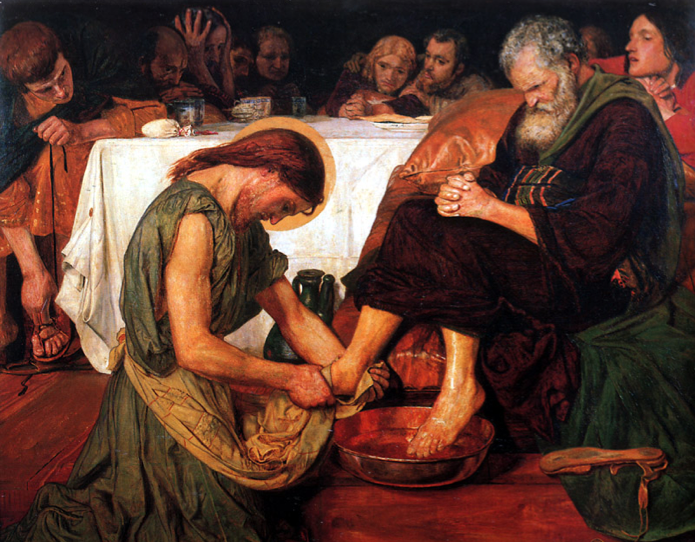
This weekend on the Dish, we provided our usual eclectic mix of religious, books, and cultural coverage. In matters of faith, doubt, and philosophy, Marilynne Robinson remembered Dietrich Bonhoeffer, Francis Spufford thought about Jesus and self-righteousness, and Rachel Held Evans pondered the perils of sharing your faith. Eve Tushnet reflected on the religious imagery of pre-Raphaelite paintings, Karen Armstrong offered a meditation on science and religion, and Susan Jacoby explained how and why people convert to atheism. Ashley Makar reflected on what her cancer diagnosis taught her about Jesus in the Garden of Gethsemane, Erich Fromm taught us how to love, and Barry Lenser found life’s mysteries at the heart of Rod Dreher’s new book. Costica Bradatan reminded us of why failure matters, Jonathan Haidt examined the morals of business students, Priscella Long recoiled at a neuropsychologist’s experiment on human decision-making, and Leanne Ogasawara answered a timeless cocktail party question.
In literary and arts coverage, Robert Silvers divulged the muddled phrases that drive him crazy, David Yezzi provided a searing critique of contemporary poetry, and Ian Crouch wondered if the writer can truly retire. Jeff Sharlet considered the phrase “reads like a novel,” Tom Jokinen recalled Graham Greene’s dream diary, and a transgender woman appeared in the pages of DC Comics’ Batgirl. Stephen Akey praised the French poet Baudelaire for confronting our failures, Lydia Kiesling searched for the great tech novel in San Francisco, and Ann Napolitano toured Flannery O’Connor’s childhood home in Georgia. Maureen O’Connor proclaimed the death of the celebrity sex tape and a new documentary explored Stanley Kubrick’s The Shining. Read Saturday’s poem here and Sunday’s here.
In assorted news and views, DVD technology held promise for cheaper HIV testing, Evan Hughes looked back at the first stirrings of discomfort about New York’s gentrification, Oklahoma football coach Bob Stoops dismissed the need for college athletes to get paid, Jessica Freeman-Slade reviewed Rosie Schaap’s memoir, Drinking with Men, and the conversation continued about Jay-Z and Beyoncé’s trip to Cuba. MHBs here and here, FOTDs here and here, VFYWs here and here, and the latest window contest here.
– M.S.
(Image: Ford Madox Brown’s Jesus Washing Peter’s Feet, 1876, via WikiPaintings)
Will Invisibility Cloaks Ever Be Real?
Lawrence Krauss isn’t optimistic:
In the first place, even if you could be invisible, it wouldn’t be all it is cracked up to be. It is a simple law of physics that interactions are two-way streets, so if you are invisible because nothing interacts with you, then alas, you wouldn’t be able to see—your retina would not intercept light. So there goes all the fun.
But all may not be lost:
Incidentally, as one who has always been a fan of low tech, my favorite form of invisibility cloak is simply one with a big screen in front and a camera behind. The screen projects the image of what is behind the object. This idea has not only been used to hide houses but is also being explored for camouflaging troops in battle. It is called active, or optical, camouflage , and while it doesn’t exploit any new physics, it may do the job.
Similar technology is featured in the 2009 news report from Japan seen above.
Does Your Backyard Smell Like Semen?

If so, hopefully it’s just the Callery Pear, “a deciduous tree that’s common throughout North America” which “blossoms in early spring and produces beautiful, five-petaled white flowers—that smell like semen”:
I said that Callerys are “common”: A preposterous understatement.
In Manual of Woody Landscape Plants, which is for horticulturists what the DSM is for psychotherapists, Michael Dirr says that the Bradford Pear—a Callery cultivar—inhabits “almost every city and town to some degree or another” and warns that “the tree has reached epidemic proportions.” There’s one between my apartment and my favorite coffee shop in Brooklyn, and there’s probably one between your apartment and your favorite coffee shop. The last time New York’s Parks Department conducted a tree census, from 2005 to 2006, there were 63,600 Callery Pears, making it the third-most popular species in the city, after the London Planetree and the Norway Maple. …
The way I see it, there’s weirdly little attention paid to the fact that, for a few weeks each year, there’s a good chance your street smells like semen. We just carry on as if that were normal.
Update from a reader:
My high school in the southeastern US was covered in bradford pear trees. The rumor was that the school administration had wanted to plant dogwoods all over the campus but found the price too steep, so they bought the pears instead (which do indeed look similar to a certain kind of dogwood.) In different versions of the story, the administrators either didn’t know what the trees smelled like when they bloomed, or did know and couldn’t care less. Either way, the smell was definitely not lost on us, though depending on the tree or time of year (I was never sure which) the smell kind of runs the gamut between semen and old fish. Regardless, it’s an unpleasant biological odor.
We of course did what any industrious high school students would do, gathering up grocery bags full of the fallen blossoms and then dumping them unexpectedly into idling buses at the end of the day, or shoving them through the slats of someone’s locker.
Another:
Thank you for clearing up what has been a two-decades-long puzzle for me, ever since my early teen years when I gained a reference point for the strange smell of those trees ;) My high school, or perhaps the neighborhood around it, must have been filled with Callery Pears, because every spring the whole campus would start smelling funny and yet nobody ever seemed to notice, or would pretend to have no idea what I was talking about when I mentioned that the air smelled like cum.
That was the weirdest thing to me – that everyone just ignored it even though I know they noticed it, and they pretended to have no idea what I was talking about. Right, as if a bunch of teenage boys don’t know what semen smells like. It all made me feel like I was in some kind of X-rated Twilight Zone episode … that, or I was crazy and/or perverted, which was the unfortunate reaction I got when I mentioned the phenomenon to a girl I liked. And trust me, she knew what I was talking about.
Anyways, I’ve been baffled by this annually for as long as I’ve been ejaculating, and I had chalked it up to either a strange hormone-induced brain trick or male gingko trees (which, I think, are the ones that smell like vomit). Thanks for finally putting my mind at ease.
(Photo by Flickr user slgckgc)
Germs For Sale
All over your grocery store:
There’s yogurt, of course, but there’s so much else. You can buy pills for your gut, creams for your face, tablets for your breath. You can buy blueberry juice with germs, and pizza with germs.
But none of the products are scientifically proven:
While the microbiomes of humans are similar to one another, each of us has a mix of species and strains that’s unique–a mix that also changes from day to day. That variability makes it hard to say that adding in one particular species is going to make a different to anyone who’s sick with a particular disease. Even an exquisitely rare microbe might play a crucial part in the overall ecosystem.
None of these hurdles has blocked the growth of the business of the microbiome. But the $8.7 billion industry has thrived because the microbiome occupies a fuzzy middle ground in the regulatory landscape. Purveyors of germ-loaded products can vaguely hint that their wares will bring you medical benefits. But to the U.S. government, their products are not, officially speaking, medicine. They’re food or cosmetics. It’s possible that the bottle of probiotics you buy in the drug store really will help your digestion, or your immune system, or your bad breath. But it’s also possible that the bacteria you’re buying will get annihilated in the ruthless jungle that is your body.
Update from a reader:
I love the variety of topics on your site. On germs and probiotics, there is a lot of bad science going on out there and a lot of dumb products on the market (I am sick to death of Jamie Lee Curtis discussing her digestive issues on TV). But I have had my own experience with our microscopic hangers-on and I have to give a shout out re: the usefulness of the right probiotic.
I switched toothpaste brands a few years back, after having used a particular brand for a decade or so (the fizzy kind with peroxide in it). Switching to a non-peroxide hippy brand, I started having sores in the corners of my mouth that would not heal. Assumed it was a cold or canker sore, tried all the OTC remedies – no dice. Went to see the doc, who told me I had angular cheilitis – which can be caused by all kinds of things, but often it’s a bacterial or yeast overgrowth. I tried the medicine she prescribed, it sort of worked but the sores kept coming back.
Finally I tried some oral probiotics, meant to aid with breath odor and tooth health, and what do you know. Gone. I assume that the foamy peroxide stuff had been killing off my normal mouth flora for years (good and bad), and once I stopped killing everything, something icky took over. Once I repopulated with some helpful little guys I haven’t had any more problems – my gums look healthier too, my dentist has said. It would seem that probiotics (the right ones, for the right problem) can help.
A Modern Martyr
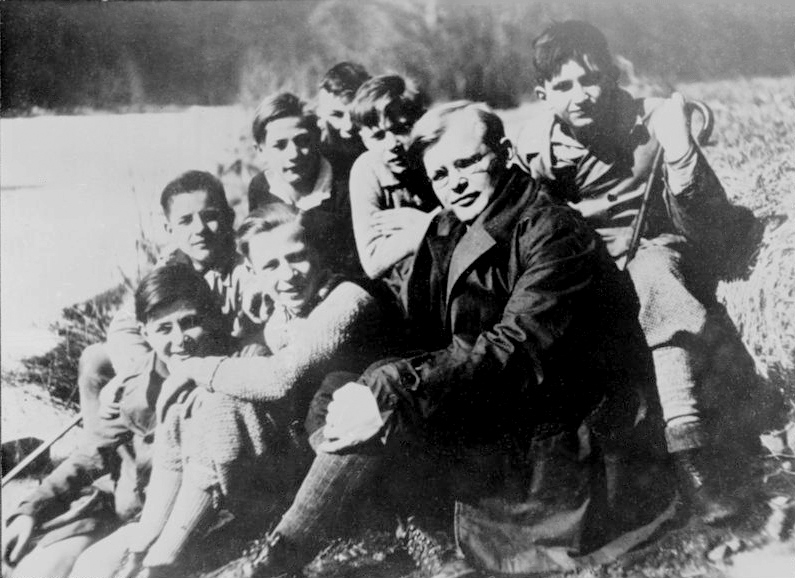
This past week in 1945, the Nazis executed the German pastor and theologian Dietrich Bonhoeffer for his role in a plot to assassinate Hitler. Marilynne Robinson’s essay collection, The Death Of Adam, contains an essay on Bonhoeffer. An excerpt from it:
The day after the failure of the attempt to assassinate Hitler, in which he and his brother and two of his brothers-in-law were deeply involved, Bonhoeffer wrote a letter to [Eberhard] Bethge about “the profound this-worldliness of Christianity.” He said, “By this-worldliness I mean living unreservedly in life’s duties, problems, successes and failures, experiences and perplexities. In so doing we throw ourselves completely into the arms of God, taking seriously not our own sufferings, but those of God in the world — watching with Christ in Gethsemane. … How can success make us arrogant, or failure lead us astray when we share in God’s suffering through a life of this kind?” These would seem to be words of consolation, from himself as pastor to himself as prisoner. But they are also an argument from the authority of one narrative moment. The painful world must be embraced altogether, because Christ went to Gethsemane.
(Bonhoeffer in 1932, via Wikimedia Commons)
Quote For The Day
“[Jesus] has a lot to say about self-righteousness, which he compares, not very tactfully, to a grave that looks neat and well cared for up top but is heaving with ‘corruption’ down below. Maggots, basically. And the point of this repulsive image is not just that the inside and outside of a self-righteous person don’t match, that there’s a hypocritical contradiction between the claim to virtue and the actual content of a human personality: it’s also that, for him, being sure you’re righteous, standing on your own dignity as a virtuous person, comes precious close to being dead. If you won’t hear the bad news about yourself, you can’t know yourself. You condemn yourself to the maintenance of an exhausting illusion, a false front to your self which keeps out doubt and with it hope, change, nourishment, breath, life. If you won’t hear the bad news, you can’t begin to hear the good news about yourself either. And you’ll do harm. You’ll be pumped up with the false confidence of virtue, and you’ll think it gives you a license, and a large share of all the cruelties in the world will follow, for evil done knowingly is rather rare compared to the evil done by people who’re sure that they themselves are good, and that evil is hatefully concentrated in some other person; some other person who makes your flesh creep because they have become exactly as unbearable, as creepy, as disgusting, as you fear the mess would be beneath your own mask of virtue, if you ever dared to look at it,” – Francis Spufford, from his recent book, Unapologetic.
Previous Dish on Spufford here.
A Poem For Sunday

“Friendship” by Dan Chelotti:
A friend gives a friend
a woodcut that defines
friendship and says that
sometimes the things
that don’t need to be said
are the things that need
to be said. It is true:
look at the woman who
climbs the mountain
with an ironing board
strapped to her back.
What is she after?
Should I bend
with the remover to remove
her hat? Interpret
her skull to reveal
the mystery? Reduce
the world to fact?
Or should I simply
Embrace the woodcut’s
trite smile, and grin
because her linen
is oh so crisp, her head
like a piano on a wire
four stories up.
(From x © 2013 by Dan Chelotti. Reprinted with kind permission of McSweeney’s Poetry Series, San Francisco. Photo by Flickr user Horia Varlan)
Which Historical Figure Would You Spend A Day With?
Leanne Ogasawara answers the timeless cocktail party question:
To meet Proust would have been delicious and the sight of John the Baptist incredible, and yet, in the end, I knew I could not really top the allure of Voltaire. In terms of a day spent, I just have to believe that Voltaire really had what it takes. I mean, he kept Madame du Châtelet happy for decades in her grand chateau, right?
We know at Cirey, the two lovers would spend their days absorbed in the respective studies. Working at opposite ends of the vast chateau, it is said they passed notes constantly during their days spent working apart; liveried butlers would deliver handwritten love-letters on silver platters whenever one of the lovers had something to say to the other. In the evenings, though, Madame and Voltaire would always come together to dine. Oh, can you imagine the sparkling conversations? Those dinners alone make him worthy of a wistful sigh.
I love Voltaire. And, like a favorite landscape, Candide is a book that I seem to return to again and again.


