The Daily Wrap

Today on the Dish, Andrew answered readers on why he changed his mind on Iraq, Harry Enten found support for immigration reform at critical mass, and Pew measured escalating support for post legalization. Felix supplied a fairly grim reason to sweat the bitcoin boom, Iraq asked Obama to pass the drones, and we checked in on the Gitmo hunger strike. We also surveyed the coming inter-activist skirmishes over fracking, discovered another cholera scandal rocking the UN, and Shafer yearned for a new vocabulary for North Korea coverage.

Elsewhere, we continued to argue libertarianism vs. Christianism, questioned the efficacy of the presidential pulpit, Harry Levine described the appeal of stop-and-frisk from a cop’s perspective, and Cowen factored alcohol into the pursuit of gun control. Brian Merchant found out how much Republicans like renewable energy, we considered cutting back on the GOP’s traveling debate roadshow in 2016. Readers spoke up about the low budget weddings, disapproved of UPenn’s no-smokers policy, and doubted any connection between the tactics of the NRA and Black Panthers.

In assorted coverage, we paid respects to the late, great Roger Ebert, let readers ask Josh Fox anything, and remembered Bruce Springsteen’s intense relationship with the Big Man. We read the brochure for pot’s Nappa Valley, flagged some major Sully bait, and heard readers sound off on the limits of graphic war imagery.

Later, Oppenheimer explored the limits of his parenting skills, Richard Nieva spotlighted the share-economy and its discontents, and we considered the status of Pixar films in light of the Nemo-sequel. We met a member of the US chemical battalion in the Face of the Day, made it through the MHB bit-by-bit and took a breath in North Galiano Island, British Columbia for the VFYW.

–B.J.

Roger Ebert RIP

by Chris Bodenner

Independent Spirit Awards

From a September 2011 essay by the great film critic:

I know it is coming, and I do not fear it, because I believe there is nothing on the other side of death to fear. I hope to be spared as much pain as possible on the approach path. I was perfectly content before I was born, and I think of death as the same state. I am grateful for the gifts of intelligence, love, wonder and laughter. You can’t say it wasn’t interesting. My lifetime’s memories are what I have brought home from the trip. I will require them for eternity no more than that little souvenir of the Eiffel Tower I brought home from Paris.

(Photo: Film critic Roger Ebert attends the 2002 Independent Spirit Awards in Santa Monica, California on March 23, 2002. By Frederick M. Brown/Getty Images)

Listening To The Waves

By Zoe Pollock

Stefan Helmreich meditates on the act of cupping a seashell to one’s ear:

For generations, people who live by the sea have held that, when pressed to the ear, seashells resound with something like the roar of the ocean—a sensation whose explanation has offered a puzzle pleasurable and provocative to scientists and lay listeners alike.

In his 1915 Book of Wonders, popular science writer Rudolph Bodmer suggested that the association followed from the symbolic power of shells: “The sounds we hear when we hold a sea shell to the ear are not really the sound of the sea waves. We have come to imagine that they are because they sound like the waves of the sea, and knowledge that the shell originally came from the sea helps us to this conclusion very easily.” But the likeness, he urged, had a technical explanation—though one in which similitude still figured. Both sea and seashell sounds were generated by waves: “The sounds we hear in the sea shell are really air waves”—waves, that is, of concentrated, resonant noise from the listener’s surroundings.

Face Of The Day

by Chris Bodenner

SKOREA-US-NKOREA-MILITARY

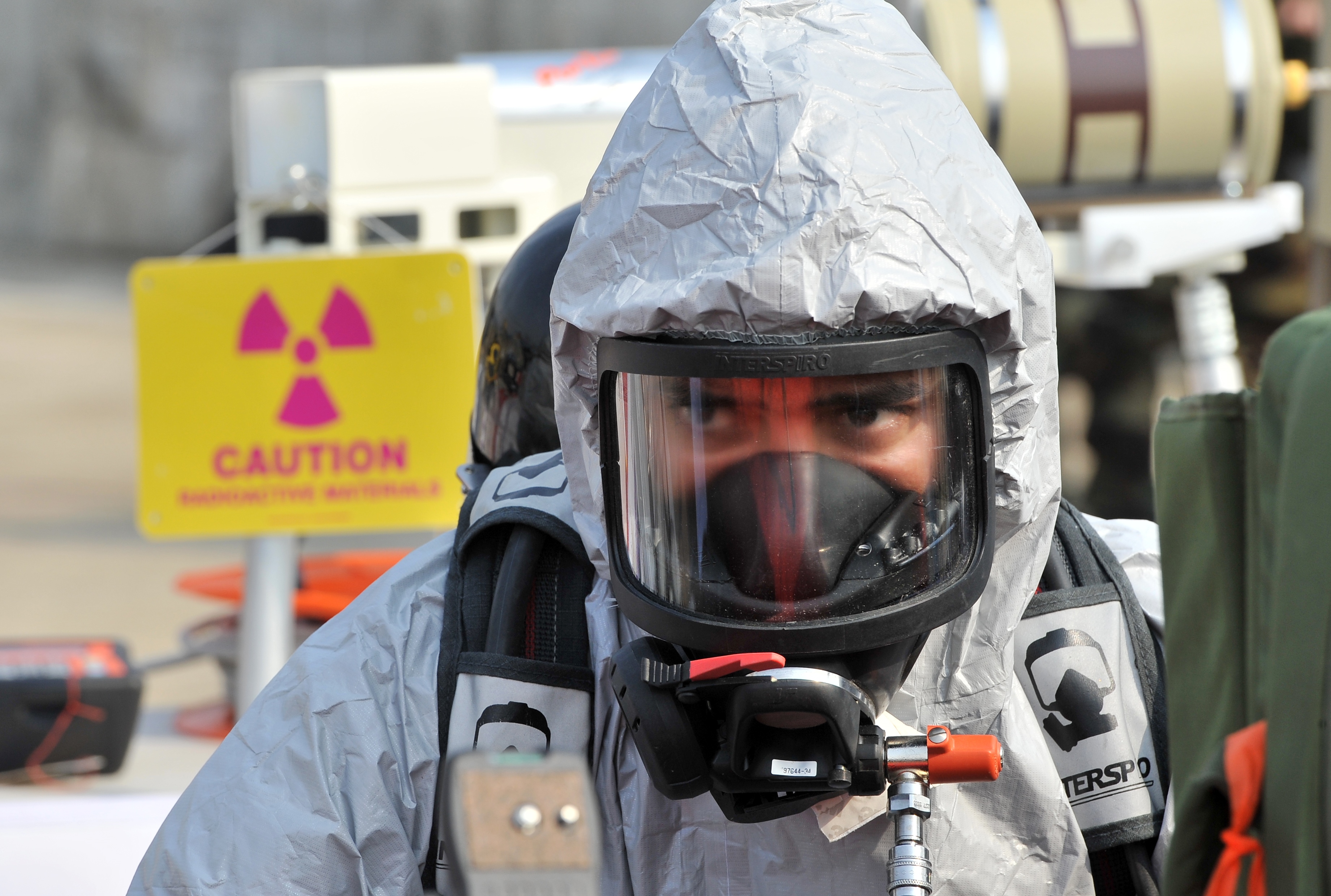
A soldier of the US Army’s 23rd Chemical Battalion wears protective gear to give a demonstration of their equipment during a ceremony to recognise their official return to the 2nd Infantry Division located in South Korea, at Camp Stanley in Uijeongbu, north of Seoul, on April 4, 2013. The 23rd Chemical Battalion left South Korea in 2004 but the battalion with about 250 soldiers returned to the South in January 2013. The battalion will provide nuclear, biological and chemical detection, equipment decontamination and consequence management assistance to support US and South Korean military forces. By Jung Yeon/AFP/Getty Images.

The Foreign Correspondent Formula

by Patrick Appel

Shafer wishes North Korean coverage wasn’t so predictable:

Pyongyang reliably remains defiant; talks have resumed or been proposed, canceledor stalled, while a U.S. envoy seeks to lure the North back to those talks to restart the dialog; North Korea is bluffing, blustering, or is engaging in brinksmanship; tensions are grim, rising, or growing—but rarely reduced, probably because when tensions go down it doesn’t qualify for coverage; North Korea seeks recognitionrespect, or improved or restored relations, or to rejoin the international community, or increased ties to the West that will lead to understandingdeals with North Korea are sought; North Korea feels insulted and is isolated by but threatens the West; the Japanese consider the North Koreans “untrustworthy“; the West seeks positive signs or signals or messages in North Korean conduct but worries about its intentions; diplomats seek to resolvesolverespond toovercomedefuse, the brewingseriousreal crisis; the escalating confrontation remains dangerous; the stakes are high, but the standoff endures.

Your Creations Can Get You In Trouble

by Patrick Appel

Brendan Koerner profiles Alfred Anaya, who created hi-tech “traps,” hidden compartments in cars. Making traps, in and of itself, is not illegal, but Anaya is serving a more than 24 year sentence because some of his clients used his traps to transport drugs:

A common hacker refrain is that technology is always morally neutral. The culture’s libertarian ethos holds that creators shouldn’t be faulted if someone uses their gadget or hunk of code to cause harm; the people who build things are under no obligation to meddle in the affairs of the adults who consume their wares.

But Alfred Anaya’s case makes clear that the government rejects that permissive worldview. The technically savvy are on notice that they must be very careful about whom they deal with, since calculated ignorance of illegal activity is not an acceptable excuse. But at what point does a failure to be nosy edge into criminal conduct? In light of what happened to Anaya, that question is nearly impossible to answer.

Bruce’s Bromance

by Chris Bodenner

Bruce Springsteen

A reader builds off this post:

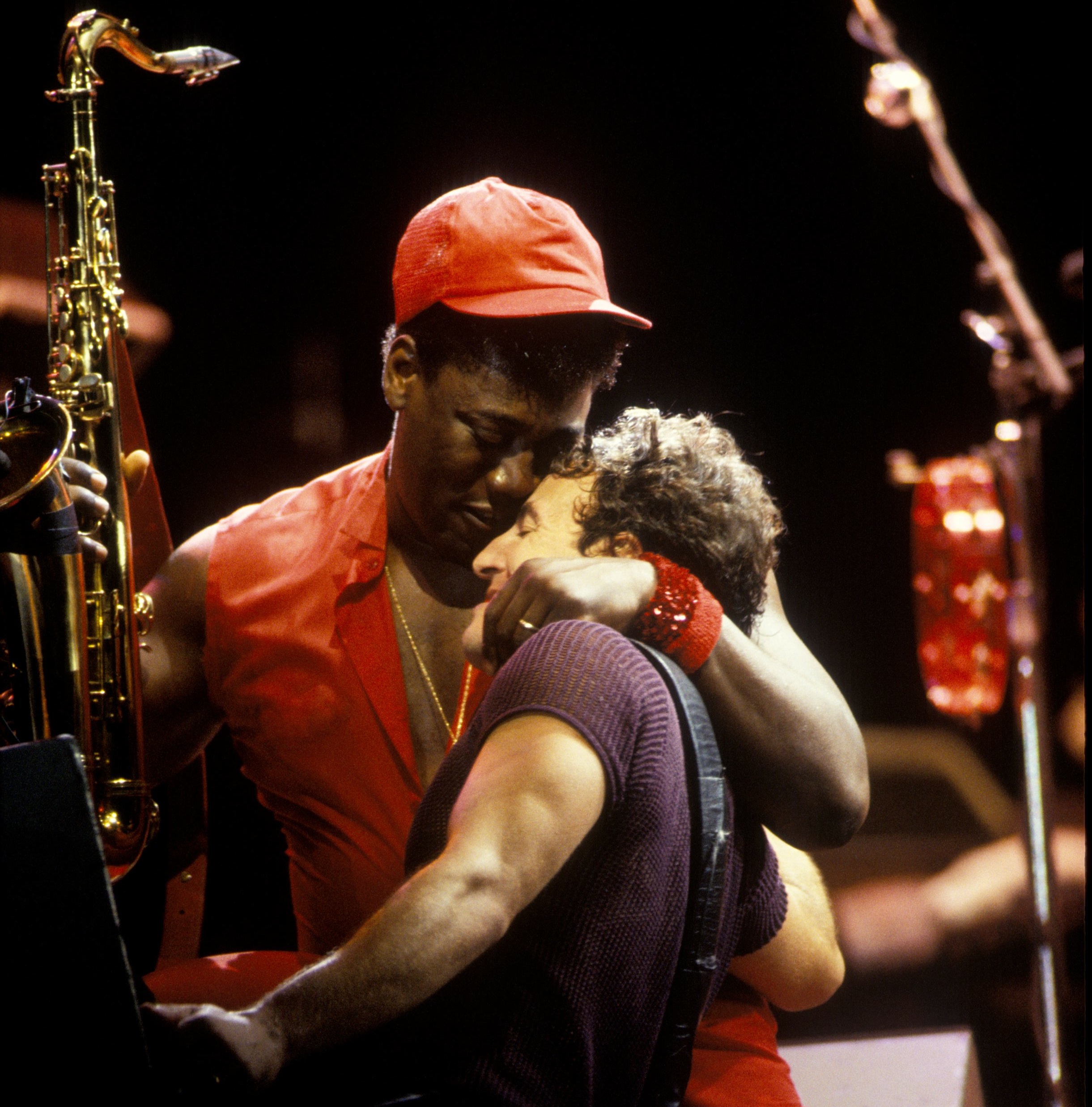
Whenever I hear discussions about high-profile men jokingly (or not?) expressing sexual attraction to other men, I’m always curious that no one mentions Bruce Springsteen. To most people, obviously, Bruce is the pure embodiment of unfettered American masculinity. And yet for the 40 years he played beside Clarence Clemons, until Clemons’ death in 2011, the two men had this clearly intense, complicated relationship that was enacted and re-enacted every night onstage – culminating in a long, deep kiss on the mouth – without irony or camp, just pure, exuberant love between two men, without a need to be defined as straight or gay.

See it here, in a series of quite touching and beautiful photos. There’s also a fleeting shot of it live, in the official “Born to Run” video, at about 0:18. (Though note that commenters continue to feel the need to provide the “NOT gay” disclaimer.) Of course, both men married women (multiple times each) and have large families. Who knows and who really cares what their sexuality is? I think it’s sort of beside the point. More interesting to me is the sheer intensity of their love and their fearlessness in expressing it without the need to declare, “Of course we’re both straight!”

To the contrary, when Clemons described the kiss in 2009, he didn’t bother to mention sexual orientation:

It’s the most passion that you have without sex. Two androgynous beings becoming one. It’s love. It’s two men – two strong, very virile men – finding that space in life where they can let go enough of their masculinity to feel the passion of love and respect and trust. Friendships are based on those things, and you seal it with a kiss.

(Photo: Clarence Clemons and Bruce Springsteen of the E Street Band embrace while performing on stage in Los Angeles c.1981. By Richard E. Aaron/Redferns)

Everything You Never Wanted To Know About Digestion

by Patrick Appel

Bee Wilson enjoyed Mary Roach’s new book, Gulp:

If you’ve ever wondered why some people complain of gassiness after beans, while others eat them with impunity, Roach has the answer. If you’ve never wondered, too bad; Roach is going to tell you anyway. Apparently, half of the population lack a certain enzyme in the colon that is needed to break down the complex carbohydrates in legumes. As a result, they are “troubled by beans.” When the colon inflates, releasing gas, it is a “warning system”: “Because stretching can be a prelude to bursting, your brain is highly motivated to let you know what’s happening down there.”

In an interview about her book, Roach sings the praises of saliva:

[I]n saliva there’s these histatins which help wounds heal. So when someone kisses a baby’s booboo, like a scrape, or when a pet licks its wounds, it’s actually – because you think oh, oh, it’s full of bacteria, don’t do that. But there’s these healing elements. Saliva was a home remedy for cuts and scrapes and shankers and things. People would apply the spittle of a – first-thing-in-the-morning spittle of an old man or something would be, like, the remedy. But there’s some medical sense to it.

The Most Harmful Drug, Ctd

by Doug Allen

Tyler Cowen connects alcohol to the gun control debate:

In part our guns problem is an alcohol problem.  According to Mark Kleiman, half the people in prison were drinking when they did whatever they did. … There are connections between alcohol and wife-beating and numerous other social ills, including health issues of course.

It worries me when people focus on “guns” and do not accord an equivalent or indeed greater status to “alcohol” as a social problem.  Many of those people drink lots of alcohol, and would not hesitate to do so in front of their children, although they might regard owning an AK-47, or showing a pistol to the kids, as repugnant.  I believe they are a mix of hypocritical and unaware, even though many of these same individuals have very high IQs and are well schooled in the social sciences.  Perhaps they do not want to see the parallels.

Previous Dish on alcohol as the most harmful drug here.