by Chris Bodenner

Tourists enjoy the sights while visiting Times Square and its giant advertisement billboards on April 3, 2013. By Emmanuel Dunand/AFP/Getty Images.
Tourists enjoy the sights while visiting Times Square and its giant advertisement billboards on April 3, 2013. By Emmanuel Dunand/AFP/Getty Images.
Calvin Trillin recalls his early days working at Time magazine. He was a “floater,” an editor “who was brought in to a section when, say, the person who wrote Sport was home with the flu, or when one of the World writers was on vacation”:
There were some enjoyable aspects of being a floater. When I settled into the desk chair of, say, the Education writer, someone who presumably pored through the education quarterlies and lunched with school reformers and kept abreast of the latest disagreements about how best to teach reading, I could feel myself imbued with the authoritative tone favored in those days at Time; I called that “instant omniscience.” I had become adept at using one of the tools employed to assert Time’s authority—what I thought of as the corrective “in fact,” as in “Democrats maintain that the measure would increase unemployment. In fact…” There were no bylines in Time then, so the readers had no way of knowing whether the Art section’s critique of the new Coventry Cathedral had been written by someone steeped in the history of church architecture or by a floater who’d moved in after a short stint in Medicine that had left him with no words in the magazine for two weeks and a more detailed knowledge of loop colostomy procedures than he’d ever hoped to have.
Adam Alter explains:
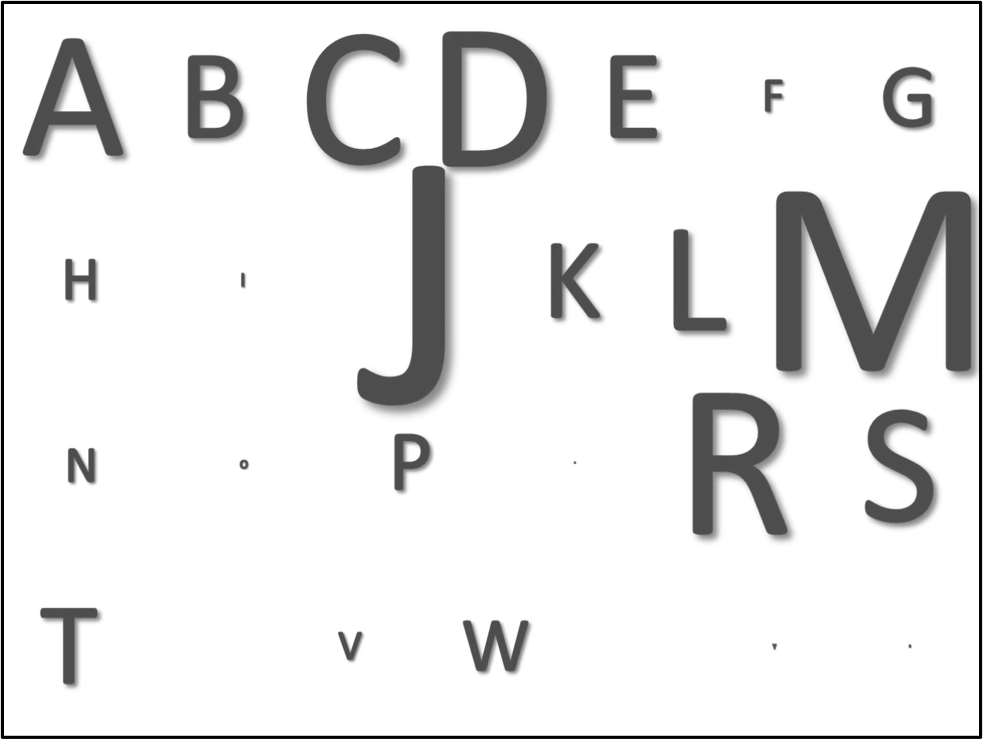
[P]sychologist Jesse Chandler and his colleagues found that people donate significantly more money to hurricanes that share their initials. So Roberts, Ralphs and Roses donated on average 260% more to the Hurricane Rita relief fund than did people without R initials. Also in 2005, people with K initials donated 150% more to the Katrina relief fund, and in 2004 people with I initials donated 100% more to the Ivan relief fund.
This information isn’t just idly interesting. Since we know that people are more likely to donate to hurricanes that share their first initials, the World Meteorological Organization has the power to increase charitable giving just by changing the composition of its hurricane name lists. In the United States, for example, more than 10% of all males have names that begin with the letter J—names like James and John (the two most common male names), Joseph and Jose, Jason, and Jeffrey. Instead of beginning just one hurricane name with the letter J each year (in 2013, that name will be Jerry), the World Meteorological Organization could introduce several J names each year. Similarly, more American female names begin with M than any other letter—most of them Marys, Marias, Margarets, Michelles, and Melissas—so the Organization could introduce several more M names to each list.
Alter provides the above figure, which “illustrates the relative frequency of each first name initial in the U.S. population by linking the size of each letter to its frequency as an initial.”
Pareene wonders whether they will make an appearance in 2016:
The question for someone considering whether or not to support Clinton in 2016 is, will a Clinton 2016 campaign pass the Mark Penn Test? The Mark Penn Test, which I just invented, determines whether or not a person should be trusted with the presidency, based solely on one criterion: Whether or not they pay Mark Penn to do anything for their campaign. Paying Mark Penn means you’ve failed the Mark Penn Test.
His larger point:
Mark Penn is just the worst example of the general Clinton family habit of associating with the most repulsive party hacks the Democrats have to offer. Her campaign was a dream team of generally useless hacks, from sweatered communications director Howard Wolfson to charmless fundraiser Terry McAuliffe to ill-tempered Harold Ickes (who, unlike the rest of the campaign, at least seemed mostly competent). These are the same Clintons who are responsible for the national stature, such as it is, of Dick Morris.
Fraggle Rock was even more morbid than you remember:
Update from a reader:
I loved Fraggle Rock when my kids were small in the ’80s. It was soooo well done. It was genuinely amusing for them and for me. There was always a thoughtful issue – something concerning the competing populations or something universal to all of them – gently introduced in each episode in interesting and sympathetic ways kids could consider. I’ve thought many times over the years that it’s really quite amazing that it hasn’t come back for subsequent generations. Beats any of the programming available to my grandson today hands down! It’s a great loss.
(Hat tip: Scott Beale)
A reader writes:
I can’t tell you how happy I am to hear of the 2008 paper on “sneezing induced by sexual ideation.” I have “suffered” with this problem my whole life and have made futile web searches to understand this issue. (I use quotations around “suffered” because it isn’t that big of a deal.) For as long as I can remember, sex and sexual arousal – literally just thoughts of sex – have made me sneeze and get a runny nose. If I am very mentally aroused, I might sneeze 6-8 times and my nose just gets flooded, so this doesn’t have to be associated with any physical contact whatsoever.
It’s not a big deal in that I have been married for over 20 years and have a rich and rewarding sex life. When we were first dating, my wife thought I was allergic to her – quite the opposite, I can assure you dear! Nevertheless, it’s not exactly convenient to get a runny nose during intercourse. When you fancy yourself a smooth player, it kind of kills the fantasy each time you have to stop and blow your nose (“oooh, does that feel good, yeah, yeah – oh, just a sec – [grabs tissue] HOOORRNK!”).
However, after all these years, I think it bothers me more than it does my wife – i.e., I will forever be super self-conscious of this odd affliction where she is just fine with me as I am (or at least does a good job of not making me feel weird about something that cannot be helped). So the thing that sucks the most about sneezing associated with arousal is that it makes it almost impossible to hide what you are thinking.
Thankfully I have entered my mid-40s and occasionally think about something other than sex (occasionally). Because of this privacy issue I have obviously not shared this with other people even though I am generally a very open person and not even remotely prudish. I ask, would you want your kids, parents, or friends thinking you were being a horn dog every time you sneezed! “Whew, lot of pollen in the air today.” Of course I sneeze infrequently for all kinds of reasons unrelated to sexual arousal and the last thing I want is everyone in the room wondering why I am being such a pervert over an innocent sneeze while I watch The Antiques Roadshow. It’s bad enough that every time I sneeze I get that “boy, I know what you are thinking” look from my wife.
Ultimately, I guess I should just be pleased to report that, after 20 plus years of marriage, my wife can still make me sneeze like nobody else!
Andrew published it on February 13, 2007:
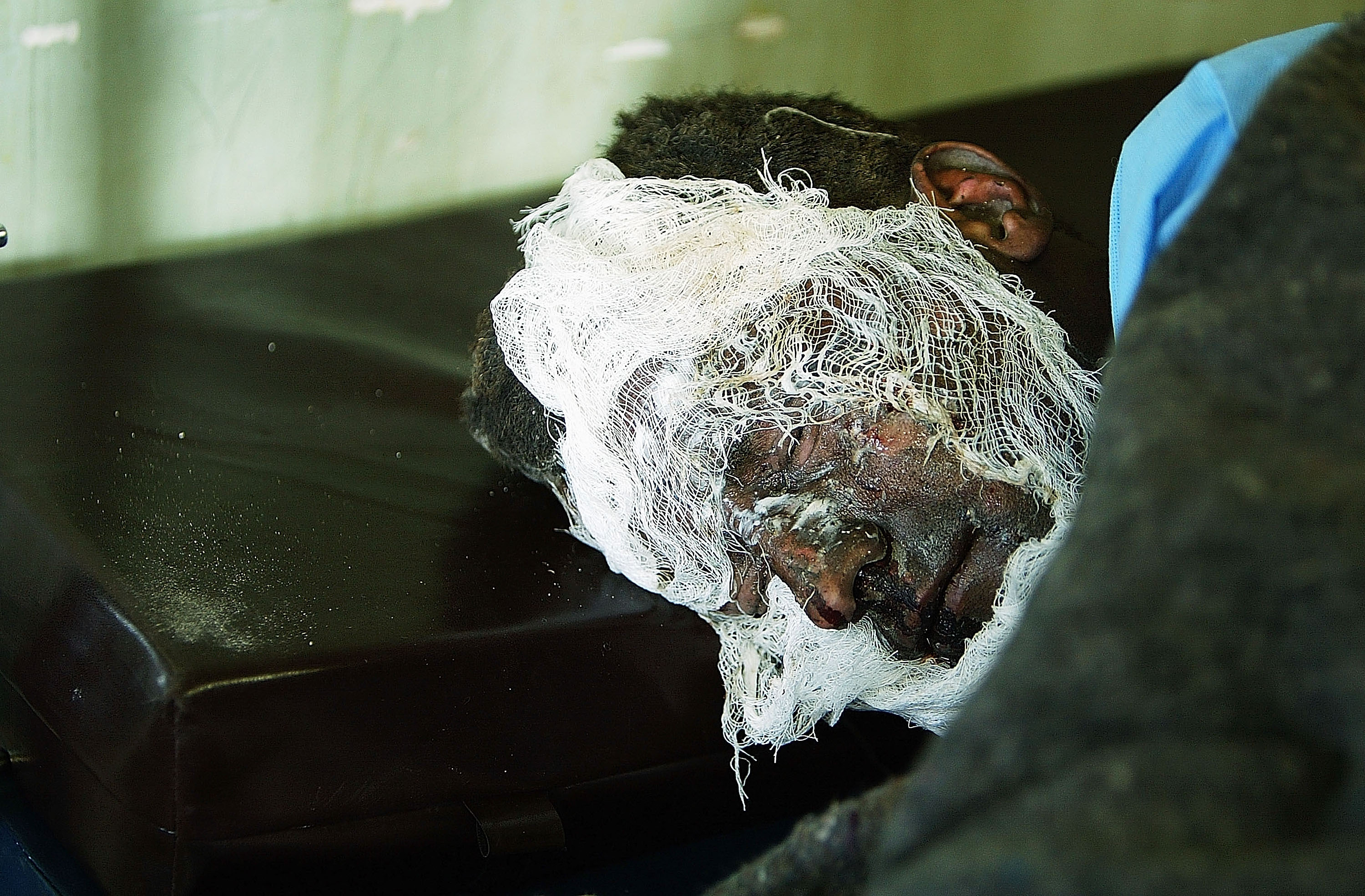
With this photo, I’m going to try to introduce a new feature, made possible by the Atlantic’s Getty Images subscription. I hope to take the time each day to review as many of the news photographs in the past 24 hours and find a simple face to express something somewhere that is going on in the world. This is a depressing start, but I hope to include the full variety of human experience captured by Getty’s superb photographers. The criteria are simply a face and the past day.
The caption:
An Iraqi man injured in a car bomb explosion lies on a hospital bed February 12, 2007 in Baghdad, Iraq. On the anniversary of the attack on the Al-Askariya Mosque, five explosions went off in Baghdad including at least two car bombs at the Shorja market killing at least 80 people and wounding approximately 190. By Wathiq Khuzaie/Getty Images.
A reader who teaches student-athletes disagrees with Jon Green on the athlete work ethic:
I teach classes at a MAJOR sports university and have students who are going into the NFL draft. Every one of my student athletes is among my most conscientious, polite, and hardworking students. In fact, if I took my student-athletes of any sport and put them up against the regular student body, I would choose to teach the athletes every day of the week. Sure, they have a support system that keeps them in school, makes them go to class, and offers tutoring, but, um, good? I have problems with the exploitation of student athletes, but I have never had any problems with their in-class conduct. In fact, quite the opposite. I think that a few bad student-athletes get the press and tarnishes all of their reputation, but do you really believe that athletes who are monitored constantly are worse people and/or students than your average frat house? In my experience, the athletes are WAY better.
Another reader lists some of the support she received as a student-athlete:
Every medical expense I ever needed during college, for any reason, was covered by the athletic department. This included birth control, routine eye appointments, contact lenses. For those who had any major injury, surgery was completely paid for. To help with rehab, there were daily visits with personal trainers who tailored programs to your specific injury.
When I became depressed my senior year, the athletic director immediately sent me to a therapist. I’ll never forget the day she told me, “we will pay for every visit you need, and we will do everything we can to get you better.” They even paid for anti-depressants, and this continued even after my eligibility was up. Did I mention I was a non-revenue-producing women’s soccer player, it was not a sports-related injury, and the grand total of my care over four years must have cost unimaginable sums of money?
While this is by no means every athlete’s experience, I’m guessing most large (football) schools provide their students with similarly extensive care, especially to high-profile athletes in revenue sports. And for those of you getting ready to pick a college, you might want to consider not only where you want to get your degree if you’re severely injured and can’t play again, but also where you’re able to get the best resources to get you better again.
Another distinguishes between the big-money sports and others:
Both football and basketball have high-paying professional leagues that apply exclusionary age rules to their labor pool and rely heavily on college sports for player development. So an NBA-caliber college freshman – or an NFL-caliber freshman or sophomore – isn’t being treated to a free education enriched by some athletic competition; he’s being screwed out of a chance to get paid in the draft before risking injury in an NCAA season.
Not every NCAA athlete is getting screwed. Hell, not every football or basketball player is getting screwed. It’s great that you enjoyed playing sports in college, and it’s great that lots of other people also have their experience enriched by playing on a team. But please, please don’t be so dense as to let that obscure the fact that there are hundreds of kids who play so well at popular sports that their labor would be worth hundreds of thousands or millions on an open market, who are playing college sports for free because there is no open market to sell it on. That’s the trick the NCAA wants to pull, and it isn’t helpful to be credulously repeating it.
It seems to me that this reader has more of a problem with the draft eligibility rules that prevent these athletes from going straight from high school to the pros than with the funding of college athletes. As to the point that “there is no open market to sell it on,” that’s simply untrue for basketball. Current Milwaukee Bucks star Brandon Jennings opted [NYT] to play professional basketball in Italy out of high school rather than attending the University of Arizona, and the NBA Development League (pdf) allows all players over 18.
Another reader questions the relevance of my own experience:
With all due respect to your Ultimate Frisbee career (just a guess, but amirite?), you’re conflating two very different things. No one is suggesting that schools do away with sports that don’t make money, or paying athletes that compete in those sports. We are talking about allowing some of the money generated by a huge enterprise to go to those who make it possible. No one wants to take your experience on a club team away from you, but neither is anyone demanding that you should have been paid for it. This is about relatively simple economics, and I’m not sure that your point has any relevance to the actual discussion.
This reader is right, I played Ultimate in college. But I was not trying to argue that I should have been paid for my experience (I definitely should not have), I was simply pointing out that the opportunity to play a sport at the college level could be considered a reward in and of itself, and that is something to take into account when discussing whether or not student-athletes are being “exploited.” I was willing to pay out-of-pocket for this chance, and this is why you see students trying to walk on to teams even if there isn’t a scholarship available for them: because playing on a team at a competitive level can be fun and rewarding.
I’m not so sure that this is a case of “relatively simple economics,” either. Most of the discussion of student-athletes assume that the benefits flow only one way: scholarship athletes in big-money sports get nothing (except for scholarships, medical care, tutoring, the opportunity to showcase their skills…) while the schools reap all of the rewards. But I think the relationship is more symbiotic than that. College sports teams get the benefits of a built-in fan base. Across all 338 teams in NCAA Division 1 basketball, attendance at each home game averaged over 5,000 fans during 2012 (with schools like Louisville as high as 21,000 per game), while the 16 teams in the NBA’s D-League averaged about 2,800 fans per game in the 2010-2011 season despite an arguably higher level of play. Fans flock to see their favorite programs play, not necessarily the star players.
As I said before, I would like to see more long-term thinking from colleges to help ensure that sports-related injuries like Ware’s don’t force the athlete to leave school for financial reasons. But paying athletes? I’m just not there yet.
Nicholas Spice, unnerved by the power that Wagner’s music has always held over listeners, asks if the German composer is “bad for us”:
In the early days, the expressionistic intensity of Tristan und Isolde produced violent reactions in its audiences. The young Belgian composer Guillaume Lekeu fainted and had to be carried out of the theatre (he was to die of typhoid from eating a contaminated sorbet a day after his 24th birthday); Chabrier and Ravel both burst into tears while listening to the Prelude. But Berlioz, while reviewing the opera positively, privately admitted to being disgusted by the music, and Tristan became associated in some quarters with loss of self-control and moral atrophy. …
[Composer Claude] Debussy said that it was ‘hard to imagine the state to which the strongest brain is reduced by listening for four nights to the Ring … It is worse than obsession. It is possession. You no longer belong to yourself.’
We don’t tend to give music this much credit anymore, but there’s a reason why Wagner’s music formed the backdrop to some of the most horrific episodes of European history, and, more recently, one of the more chilling depictions of the Vietnam War, seen above.
Matthew O’Brien spells out why the Euro is doomed:
The euro is the gold standard minus the shiny rocks. Both force countries to give up their ability to fight recessions in return for fixed exchange rates and open capital flows. But giving up the ability to fight recessions just makes it easier for recessions to turn into depressions. And that puts all of the pressure on wages to adjust down when a shock hits — the most painful and destructive way of doing things.
Avent runs with the comparison:
The gold standard was a powerful idea which delivered unquantifiable benefits and unquantifiable costs. The powerful fear of the unknown kept the gold standard intact even as the costs of Depression mounted. But once the dominoes began falling, they fell quickly. Even America, with enormous gold reserves and therefore, seemingly, a strong interest in maintaining the standard, only remained on gold for two more years after the system began to unravel in 1931. The threat that disaster might befall any euro member to drop out may continue to keep economies in line. But America represents a wild card that wasn’t present in 1931: a very large and very rich economy not on the prevailing standard and not suffering for it. The gap between the euro zone and America is the counterfactual, the but-for path, that helps illustrate just how damaging the single currency has been. Leave the euro area and you may not immediately spring back to that alternate path, leaders around the periphery may think, but at least you’ll stop sinking, and you can sell your wares to the world’s healthy economies at a steep discount relative to your neighbours.

