
Seville, Spain, 7.45 am
Seville, Spain, 7.45 am
In a nutshell:
(1) Spring break can be great for some small businesses and bars that make their money selling cheap rooms and liquor on volume; BUT …
(2) It’s not a dependable revenue generator for the counties at large, which suggests the economic benefits of the event are overrated, even for the most popular destinations; AND …
(3) The only local industry that is clearly and consistently stimulated by spring break is law enforcement.

A reader writes:
I think “blood phobia” is a misnomer. As described, it seems to be an autonomic neurophysiologic reaction involving activation of the vagus nerve, which slows the pulse and drops the blood pressure resulting in syncope (fainting or passing out). In my youth, I passed out having blood drawn, during dental work and while looking at a photograph of an automobile accident. Fortunately by the time I became a physician, these episodes had stopped. There was never any associated fear, panic or avoidance behavior.
My arachnophobia, on the other hand, is an entirely different kettle of emotions. The very mention of the S-word or visualization of such a creature in life or image produces an intense, screaming panic and avoidance. I once jumped into the back seat from the driver’s seat of a car I was driving when one scurried (ugh!) across the windshield. That’s a phobia.
Another reader:
I’ve done a lot of thinking and researching this topic and thought I’d share my experience with bloody squeemishness.
When I was younger I was always okay with blood. I wanted to be a doctor. I worked as a phlebotomist in college and my mom assured me this was a marketable skill to have. After college I started a research assistantship that involved taking blood from children. One day something changed. I’m sure it was a culmination of factors but seeing children fainting from their experiences sent me in to a panic attack. I thought I too would faint and it wasn’t just about the blood; asthenophobia is the fear of fainting. Soon it became an overwhelming fear, so much so I couldn’t go to work. I always had to be well-hydrated and make sure my blood sugar was up. I started therapy, some medication for anxiety and I have been managing it ever since, 8 years later. I have a great job in the medical field but behind a desk and I couldn’t be happier with it. However, I’ve often thought about what would’ve happened if I couldn’t just give up that dream of being a doctor.
Another:
I have never seen blood phobia described before, but my father has it. Good to see he is not unique. In addition to passing out at the sight of blood – even on screen – he sometimes has convulsions. But it has to be REAL on-screen blood – he can watch a Western or an old James Bond movie, for example, and not react. A documentary or science show, though – watch out!
He can’t give blood. He used to try once in a while, like when one of his students was seriously ill and needed donations. But he passed out every time and caused the doctors too much trouble. And even talking about anything to do with blood or cutting makes him feel faint.
In high school, he once convulsed during a science class movie, kicking over an entire row of bolted-together seats and their occupants. Excused from gory classes after that! As an adult, he was a frequent guest lecturer to archaeological societies. At one pre-speech dinner he sat (unknowingly) between an undertaker and a surgeon. They started talking shop, and he quietly lost consciousness and slid under the table. They had to revive him, so he could give his talk. When one of us scraped our knees in childhood, the refrain was always, “Don’t show it to Daddy! Don’t show it to Daddy!”
(Photo by Flickr user numberstumper, who captions: “The scene: Toby ices Gabe’s finger in the kitchen while Mom and Dad watch All About Eve in the living room, blissfully unaware that their daughter’s fingernail just lost a fight with a paring knife.”)
Daniel Victor questions the effectiveness of the hashtag:
If you lace your tweet with topical signifiers like #china, #food or #art, or of-the-moment news stories like #marchmadness or #prop8, you’re calculating that there will be a lot of people searching for it, but not so many using it that your tweet would be overwhelmed. It’s a narrow set of circumstances. When the goal is to increase your audience, the hashtag’s effectiveness depends entirely on how many people are searching for it, a number to which we have no access. …
Does this mean the millions of Twitter users who deploy such hashtags to increase their reach are all wrong? Well…yes. We certainly have a history of carrying out myths in technology. Shaking a Polaroid picture didn’t make it develop any faster. Blowing on Nintendo cartridges didn’t help, either. We’ve all been told at some point that hashtags connect you to more people, and it’s been widely accepted as fact.
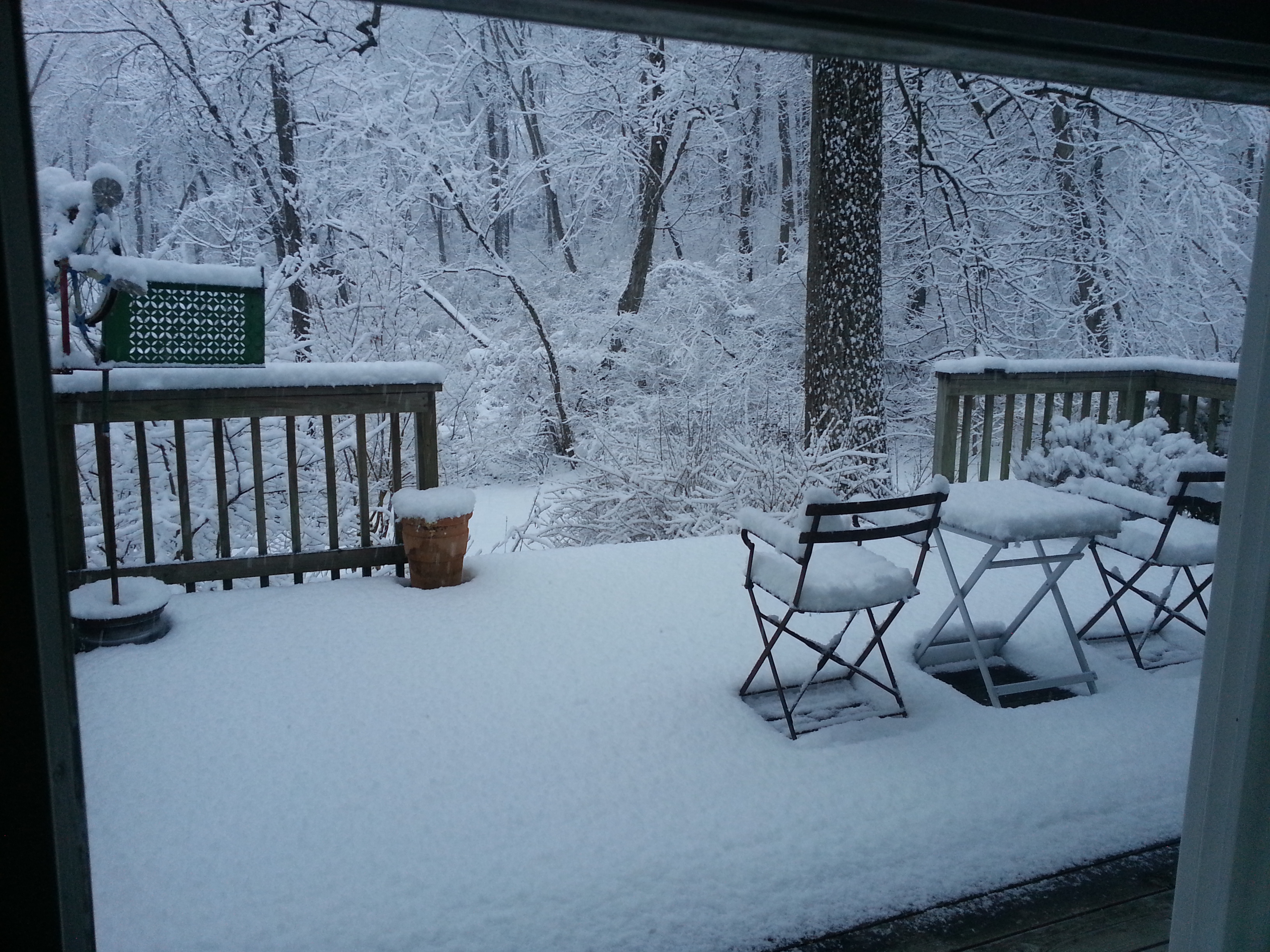
John Vidal figures that climate change is probably causing the unseasonably cold weather:
Climate scientists have linked the massive snowstorms and bitter spring weather now being experienced across Britain and large parts of Europe and North America to the dramatic loss of Arctic sea ice. Both the extent and the volume of the sea ice that forms and melts each year in the Arctic Ocean fell to an historic low last autumn, and satellite records published on Monday by the National Snow and Ice Data Centre (NSIDC) in Boulder, Colorado, show the ice extent is close to the minimum recorded for this time of year. …
According to [professor Jennifer] Francis and a growing body of other researchers, the Arctic ice loss adds heat to the ocean and atmosphere which shifts the position of the jet stream – the high-altitude river of air that steers storm systems and governs most weather in northern hemisphere. “This is what is affecting the jet stream and leading to the extreme weather we are seeing in mid-latitudes,” she said. “It allows the cold air from the Arctic to plunge much further south. The pattern can be slow to change because the [southern] wave of the jet stream is getting bigger. It’s now at a near record position, so whatever weather you have now is going to stick around,” she said.
(Photo from a reader in Glen Arm, Maryland, taken at 7.15 am on Monday)
@smarx @x3rames clearly.I made comment on HN I didn’t agree with his employer firing him.
— Adria Richards (@adriarichards) March 19, 2013
Many more readers continue to debate the Adria Richards incident and the broader topic at hand:
Why would Richards have chosen to contact the conference organizers publicly rather than privately? I’m guessing it’s because she wanted to hold them to their word. Was she justified in worrying that the code of conduct wouldn’t be enforced? Yes, if other tech conferences are an indication. So I can understand why she did it. Hopefully, PyCon will justify their new ban on tweeting photos of people without permission by continuing to enforce their code of conduct even when complaints are made that don’t identify the rule-breakers publicly.
Another reader:
Why is everyone talking about how Adria Richards got a guy fired? She didn’t. Richards wasn’t his employer or boss; she had no power to fire him or get him fired. His employer did that. She posted a picture and expressed an opinion online. That’s all. Andrew, you do that every single day! Her action may have made people angry or upset but she didn’t do anything wrong. I can’t believe she’s being vilified for this.
Full disclosure: I have worked in tech for more than two decades and I’ve heard more than a few infantile sexual jokes and have always shrugged them off. I’ve never imagined that a joke could get someone fired. I wonder if she was as surprised as I am.
Another makes a connection with the big story of the week:
I just want to point out that decades before Edie Windsor became a pioneer for gay rights, she was also one of the very first female programmers IBM hired. And we know she faced a lot of sexism/sexual harassment there because she said so herself. For example, I’ve seen in various publications the story about her being featured in multiple IBM brochures because the men there liked her rear end. Not really sure where I’m going with this, other than to reiterate that Edie Windsor is a BAMF.
Another circles back to the Richards row:
I don’t know what else there is to be said about this, but one of the things that bothered me most about her conduct is that, although she professes to want to be accepted in this male-dominated field, she took the most hostile way possible to deal with the situation.
I don’t see how some geeky tech guys making a geeky tech joke that was sexual, and not directed at her or any woman, could really be construed as “sexist,” unless any mention of sex is inherently sexist, which, in my opinion, would be a sad state of affairs. But be that as it may, if she really found it offensive, couldn’t she have just leaned over and asked them, politely, or even not-so-politely, to knock it off? If they had persisted in making their juvenile jokes at that point, then perhaps their behavior would actually have become an act of hostility toward her, or toward women, if she somehow represents all women. Then she could have escalated if necessary.
I work a lot with men. The people I work with most are men. It has been this way for my entire
career. I am not easily offended, at least not by sexual, even arguably “sexist” jokes. (I am probably fairly easily offended by criticism of my work, I don’t have a very thick skin.) But even as someone who is not easily offended, there are times when the guys cross the line, or where I know their comments or conduct would cross the line for most women, and they should know so. It has become kind of a running joke that I will say “that one’s going in my book,” meaning the book of evidence for my potential sexual harassment or hostile workplace lawsuit. They know when I say that to back off. And honestly, after so many years working together, I am usually more direct than that. Last week, I had sent an e-mail to two men I was working with explaining a case that was helpful. Less than 24 hours later, one of them sent an e-mail back, attaching the same case, with the same explanation, with no acknowledgment of my prior e-mail. One man replied to the other’s e-mail and said “wow, that’s really helpful. Can you send a copy of that?” I was probably being petty, but I marched into his office, and asked “so do you just ignore my e-mails, or do you ignore all e-mails written by people without penises? Was the case more helpful when pointed out by someone with a penis?” He laughed, but more importantly was embarrassed.
We still work in a very sexist world. But haven’t we come far enough that we can talk to each other about the things that bother us? Sure, sometimes the power differential between a man and a woman is such that a woman is afraid to speak up directly to the man. But there is nothing about Adria Richard’s conduct to suggest she was afraid to speak to those men. She just couldn’t be bothered to give them a chance to do the right thing.
Another recommends that men take action too:
I work for a large organization that was conducting a government-sponsored test of some hardware, with participation by several other large organizations and government representation. (I’m being deliberately vague about an event that happened several years ago.) Late one day one of the participants representing another organization made some sexist remark in a group of 15 or 20 men. I don’t even remember what it was but it wasn’t the type of thing i was accustomed to hearing in the workplace. He actually made this remark in the presence of a young female engineer on his own technical team. Except for a couple of our technicians not present during this incident, she was the only woman on the project with perhaps 40 or 50 men, mostly middle-aged or older engineers, scientists, software jocks, and managers. I was working at a desk, not participating in the conversation, but I turned around, glanced at the young woman to see if she was going to say anything, and seeing that she was silent I said a few words to the effect of “We don’t make comments like that around here. We can get fired if we do.” Then I went back to my work, and conversation went on. No fuss, no hassle, no more sexist comments.
The next morning the young lady approached me. Apparently my words had given her the courage to report the sexist remark to her management and the offender had been fired overnight. She asked if her management could phone me and apologize to me directly, but I politely declined the opportunity. I don’t know any more about what happened, but I suspect that she used me as an excuse, i.e. “he was offended; we should apologize” was an easier position for her to take than “I was offended; he should apologize”.
I was glad to help her achieve a harassment-free workplace. And I was offended by the comment, too, although my remark was made in a mild tone and I’m not sure that it was blatantly evident that I was offended. I was offended not because I’m a woman; I’m a 60-ish man with three children including a young-adult daughter and grandchildren. I ask myself “what if she were my daughter or grand-daughter, would i want her to have to endure that?” I’m not sorry this jerk got fired but I would have flipped out if the young woman got fired for making a complaint.
It’s the responsibility of every person present to object to sexist remarks, especially those made in the presence of someone likely to take offense. No woman, no person should be forced to defend herself or to suffer in silence. No more than we should tolerate racist comments or homophobic comments, or heaven forbid “ageist” comments. It will stop only if someone speaks up EVERY time it happens. Furthermore, knowing that someone is on your side can be very important to the victim of that kind of remark. And if speaking out gets sexist/racist/whatever people fired, “pour encourager les autres” – so be it.
Update from another regarding the second-to-last reader above:
Her anecdote immediately brought to mind a greeting card my wife once received from a friend that pictured a board of directors (with one woman) sitting at the boardroom table with the CEO stating, “That’s an excellent suggestion Ms. Windsor, perhaps one of the men at the table would like to make it?”
(Image sent by a reader, who adds: “I saw variants of this ad running in the old Byte and PC Magazine back in the ’90s. It’s a rather obvious joke.”)

Today on the Dish, Andrew traveled the long road from persecution to equality, highlighted key DOMA moments, and hammered the Clintons for their opportunism on marriage equality. Elsewhere, he was encouraged by the Atlantic’s movement on sponsored content.
In politics, history repeated itself with concerns about children in unconventional marriages, Tom Goldstein balanced DOMA and Prop 8, and EJ Graff prepared for the marriage equality fight to continue beyond the DOMA ruling. Maggie Gallagher waited for divine judgment as the anti-equality movement continued to fade. The Greater Israel Lobby kept the West Bank under Israeli control, marijuana reform marched on, and the War on Terror aggravated the recession while torture thwarted justice.
In miscellaneous coverage, Frum traced the origins of America’s gun culture, a reader plugged domestic uses for drones, and a dongle divided the tech community. Ronald Bailey looked ahead to smaller farms, Reuven Brenner cashed in on early graduation, and Jake Blumgart cheered on his alma mater with sweatshop-free apparel. Marriage created the commitment that strengthened relationships, a reader shared his pre-nup horror story, and we crunched the numbers on rape in the gay community.
Elsewhere, The Americans impressed, Ferris Jabr toned with the help of tunes, and readers mouthed off on our monthly subscriptions. Buzz Bissinger splurged on Gucci, Mark Dery considered the American love of the British Monarchy, and anti-Semitism lingered in Britain. Jon Hamm’s privates begged for privacy, the Economist unveiled modern attitudes toward sex in the Arab world, and TNC felt more afraid in Paris than on the streets of Baltimore. We traded german shepherds for St. Bernards in the MHB, attended a retro lesbian wedding in the FOTD, and watched a backyard blizzard in the VFYW.
– D.A.
(Photo by Adam Jan/AFP/Getty Images)
While I was working on a book last year, I got to interview Daniel Gilbert, who told me a great story. Gilbert is one of the nation’s leading happiness researchers, and one of the points he makes in his great book, Stumbling on Happiness, is that the human brain will actively craft happiness out of any situation we can’t change. Once we’ve accepted that we can’t change it, the brain goes to work figuring out reasons why it’s really pretty great.
At one point, he got into a conversation about this with someone who said, “So marriage isn’t something you do to signal your committment and love; it’s something you do to create the committment and the love.” Gilbert thought about that for a minute and then said, “My god, that’s exactly right!”
“So I went home,” he told me, “and I proposed to the woman I’d been living with for 12 years, and he was right, I love her even more now than I did before we got married.”
TNC is still drinking in France:
I tell you again that this is as far from home as I’ve ever been in my life. I was more afraid walking the streets of Paris than I have ever been walking through the projects. American violence, I know well. Your raise your hands. You run. You curl up in a ball. You choke a man out. You stay strapped. This is a dialect of my early years. I think of that scene [above] in The Wire where Bunny Colvin is working with group of alleged scrappers. These kids have seen the worst of West Baltimore. Then Bunny takes them to a steakhouse, where they are flummoxed by the specials, the quietness, the difference between the waitress and the hostess. The curtain fails away to reveal our hardrocks presently transformed into shook ones. On North Avenue we are kings. In Ruth’s Chris we are peasants. And we know this.
EJ Graff puts this week’s court cases in perspective:
This roller-coaster ride has a long way to go. No matter what the Court issues in its opinion come June, the question of my marriage is not going to be settled for a while. DOMA’s Section 2 will stay in place, telling the states that they needn’t recognize other states’ same-sex marriages. Which is part of why, when my family travels outside of New England, I take copies of the various legal papers that say my wife and I belong to each other. Not my marriage certificate, which would be meaningless in Texas. I take, rather, a packet of things like health-care proxies and wills. If we were to be sick or struck by a car in a foreign country like the Lone Star State, where my brother’s family lives, I have no idea whether the paramedic or medical examiner we’d encounter would be from the past or future universe. So I come prepared.

 The Dish
