Time-Shifting Television

Tom Vanderbilt analyzes the state of contemporary TV. One highlight:

Today, it’s not rare for a huge portion of a show’s audience to watch it well after it originally aired. CBS, for example, recently released data showing that the viewership for its Sherlock Holmes reboot, Elementary, skyrocketed when seven days were tracked—its rating among the valuable 18- to 49-year-old demographic shot up 64 percent. (And there’s no reason to stop at seven days. Millions of hours of TV get watched beyond the one-week cutoff. Science fiction shows, it turns out, are particularly likely to be watched more than a week after they air.)

A recent study found that “29% of weekly TV viewing is recorded content.” Alyssa comments:

That 29 percent seems like a number that’s likely to grow, rather than to shrink, particularly as long as networks are scheduling shows with unpredictable gaps in between episodes.

Does This Photo Make You Faint?

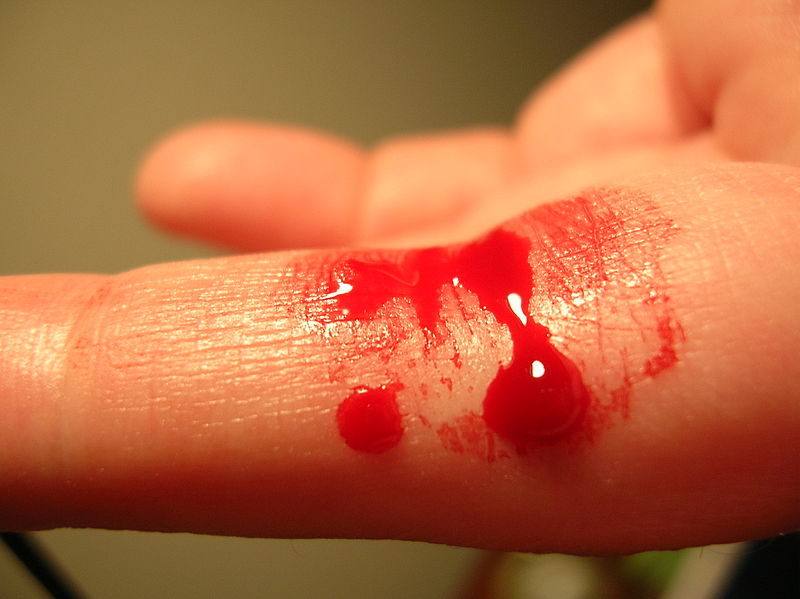
Bleeding_finger

Then you’re definitely a blood phobic. As a former one himself, John Sanford was curious about the physical response associated with the fear:

Observing blood seep from a wound, flow into a syringe or spatter on the ground, blood phobics initially will respond like other phobics — that is, their heart rate and blood pressure will increase. But then something else will happen: Their heart rate and blood pressure will suddenly drop, causing dizziness, sweatiness, tunnel vision, nausea, fainting or some combination of these symptoms. … why would the sight of blood, or for that matter the sight of being stuck by a hypodermic needle, trigger a physiological response that is so different — practically diametric — to that of other phobias? This is the mystery.

Rachel Nuwer examines some possible reasons:

Some say that fainting at the sight of blood may be the human equivalent of playing opossum—pretending to be dead so that a dangerous predator will lose interest. Others think that the physiological reaction some experience at the sight of blood may be an evolutionary adaptation. If a caveman got stabbed in the foot while out on a hunting trip, Sanford explains, he may have a better chance of surviving if his blood pressure drops, helping him to avoid bleeding to death. … So besides being useful for dramatic effect in the movies, it seems blood phobia—perhaps like the appendix or wisdom teeth—is an evolutionary throwback that has largely outlived its usefulness.

(Photo from Wikimedia Commons)

Another Hacker Hounded By The Feds, Ctd

A reader writes:

The analogy made by your software developer reader is misleading. The vulnerability is not like forgetting to lock your door, allowing someone to rummage around in your house. It’s like having a household policy that anyone who calls you on the phone, and asks for a specific family member’s email address, can have it. You don’t publicize the number, but millions of people have the number in their phones. So Auernheimer’s friend called the number millions of times, guessing at family names, and gave Auernheimer the resulting emails, which he then publicized. If you use a database to look up the emails when someone calls, is the caller illegally “accessing” (much less “hacking”) your database? Should someone who publicized those emails go to jail for several years?

Another:

Your reader misses the point about the nature of the data. This was not AT&T’s data; it was the data of their customers. Companies have an extra responsibility when it comes to data of their customers. They should be held liable for loosing that data, just as your insurance company will not pay out when you leave your door unlocked. Experience also shows that companies like AT&T would have done shit if Auernheimer had politely pointed out the security leak. Naming and shaming is the only way that works. He provided a public service – for free – and got jailed for it. Meanwhile, AT&T has not been held accountable for its lack of care of its customer’s data. Is that right?

Another:

Your reader’s analogy to “locking your house” is ridiculous, as most analogies between digital and physical spheres are.

AT&T didn’t forget to lock the door; they publicly posted the emails in a way that anyone could access them, and that anyone with computer know-how could copy them all.  There were no passwords or other security that would prevent someone unauthorized from accessing the email addresses.  Nothing was hacked.  Weev accessed ill-designed public websites in a way that AT&T didn’t like.  Think the opening scenes from The Social Network, only Zuckerberg is going to jail for several years and we never get Facebook.

The ability of the government to turn anything that a website owner doesn’t like into a felony is a problem with the computer crime laws, not a fun feature.  Beyond whether what Weev did in this case was right, the government shouldn’t be able to turn accessing public information or any misuse of a website into a crime, as it just opens up a whole can of worms criminalizing ordinary conduct.  Giving a site a fake email address?  Jumping on another computer so you don’t have to worry about your “read more” limit?  All potential felonies under an expansive view of the CFAA.  If this is a crime, it’s an example of why we need to reform the CFAA, and so far the government has moved in the opposite direction.

For more on the case and the technical/legal details look at this post by Orin Kerr, a computer crime expert representing him on appeal pro bono.  There are lots of other serious issues with the government’s theories, including a fun way of interpreting the law to make every CFAA violation a felony, despite Congress explicitly including a distinction between misdemeanor and felony violations.

The Dish: Now Just $1.99 A Month!

dustygate

[Re-posted from yesterday]

Well, you [tinypass_offer text=”asked for it”]. In fact so many asked for it, so quickly, we feel bad it took us this long to get there. But today, we can announce a new way to subscribe to the Dish, which will, we hope, accommodate those of you (a considerable number) who are going through tough economic times and could use a lower barrier to entry and the option of canceling in the future if your budget tightens again. Here’s how one reader put it:

I’m not sure if your clan has considered it, but setting up monthly subscriptions would be a great option for those of us happy to pay more than $20/year but who just don’t have the all-at-once cash. I’d happily sign up for $5/month which would work out to three times the subscription rate.

That’s a super-generous offer. $1.99-a-month seems a more reasonable sum – an app-like fee that simply gives you more options for payment. Like the $19.99-a-year option, we’re also leaving it up to you if you’d like to pay more – even if that’s only $2 or as much as $5. The point of course is to make this available to as many people at as many Screen shot 2013-03-25 at 1.34.34 PMprice points as you want and need, above a minimum baseline. You can buy your new full access $1.99-a month subscription [tinypass_offer text=”here”].

As for our progress, we are purring along. Our gross income is now $653,000 toward a goal of $900,000 by next January 1. That’s 72 percent of our goal in almost three months – but almost all the likeliest subscribers have joined already. It gets tougher from here on out. That $900,000, by the way, is simply the sum of our fixed costs (servers, legal costs, health insurance, salaries for staff, video equipment, photo agencies etc.) and an attempt to pay the three co-owners of the company, Chris, Patrick and me, something close to what we were paid in the past. Alas, it can’t pay for much more than that: our desire to start commissioning the kind of long-form journalism that is disappearing from many magazines, and acquiring a long-form editor to craft the essays, reports and arguments we want to run. But we really do want to reinvent the whole concept of a magazine – starting from a blog outwards – and by the most honest and simple way possible: purely reader support.

It may not be possible; but we didn’t think what we’ve done already would be possible not so long ago. You made it possible – and a large number of media outlets are watching this experiment closely to see if they can follow us. We hope they can, and we can begin to rebuild a model for serious, calm journalism in an era of page-view mania, sponsored content, noisy comments sections and cheap SEO gimmicks.

Think of it: $1.99 a month for a noise-free, carefully edited, always lively, provocative daily read. It isn’t much – but it could help set a model to recapitalize and re-stabilize an entire industry. You can help build this new model by getting an annual or monthly subscription [tinypass_offer text=”here”]. Please help us. It could also at some point help a hell of a load of others.
The Daily Wrap

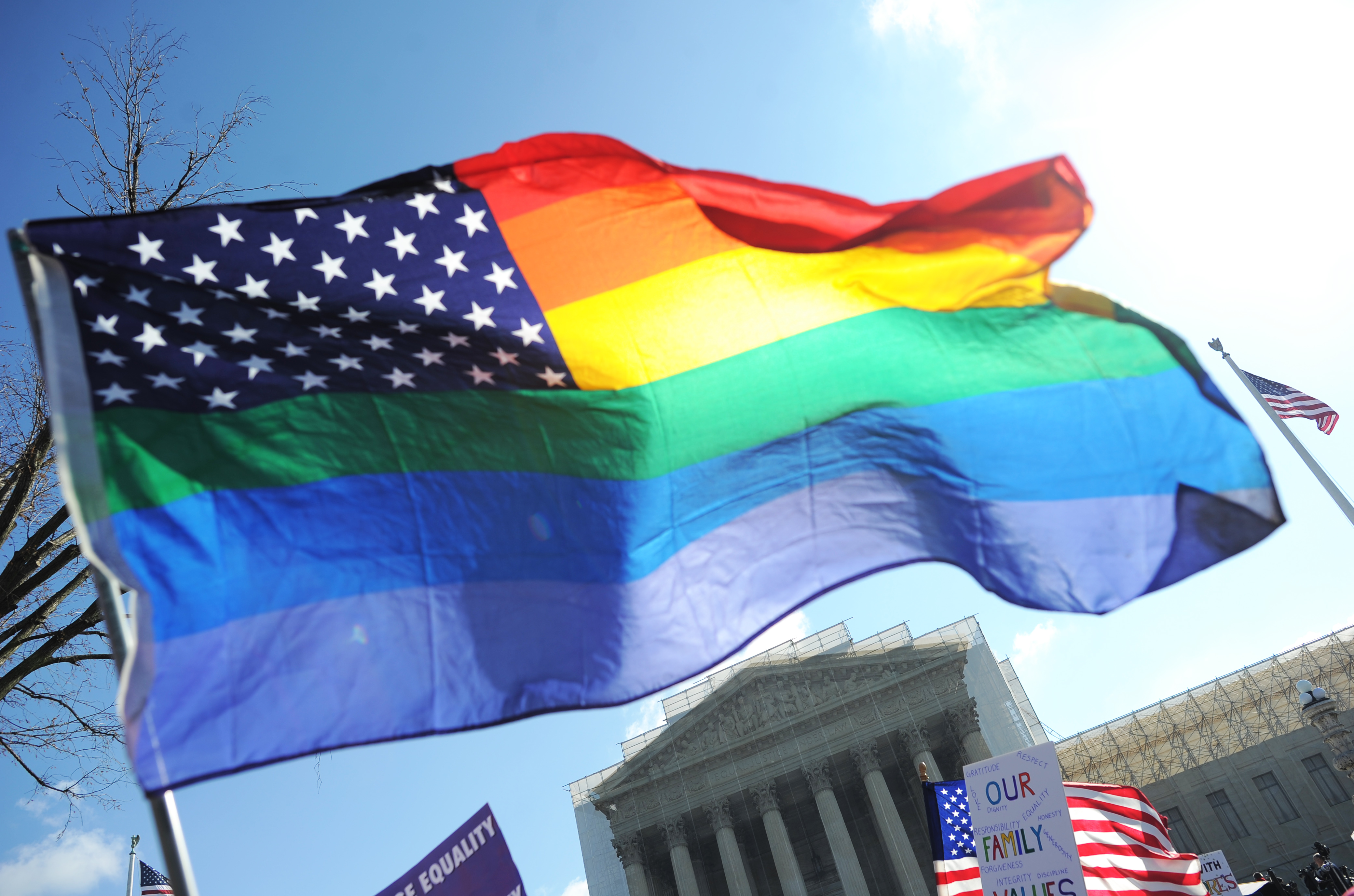
US-JUSTICE-GAY-MARRIAGE

Today on the Dish, Andrew examined the differences between his appearance on Charlie Rose and the WSJ’s editorial, hoped that the benefits of marriage would soon be equal opportunity, parsed the arguments, and celebrated the early signs of a moderate outcome. Elsewhere, Douthat described a world without the Iraq war and Boris took a beating from the British press.

As the Supreme Court heard arguments in Perry v. Brown, past SCOTUS decisions bucked popular opinion, Cass Sunstein explained the benefits of a narrow ruling, and Greenwald heralded the defeat of defeatism. Josh Barro made the fiscal case for marriage equality as Frum completed his turnaround, McArdle connected marriage equality and “traditional morality,” and Allahpundit looked ahead to marriage equality’s role in the 2016 primaries. Nate Silver found hope in marriage equality’s steady polling advances, as Republicans divided along demographic lines and Christie picked the wrong side of a Jersey wedge issue. We took Twitter’s temperature on the hearing, compared Perry to Roe as readers chimed in, and applauded straight allies. Scalia and Olson exchanged questions, we reviewed “standing,” Lyle Denniston played out the possibilities in a deadlock, and Dale Carpenter read the tea leaves, as even the lawyers had trouble making predictions. After all this time, MLK Jr.’s and Hannah Arendt’s words continued to ring true, and the struggle for marriage equality was nothing new.

In assorted news and views, a reader pointed out Weez’s wrongdoing, Freddie deBoer poo-pooed the Pebble watch, smartphones proved a popular target for thieves, and robots took over the valet stand. Carl Zimmer defended “basic research,” money mattered in March Madness, and we envied the “sleepless elite” while distracting ourselves to get rid of earworms.

Meanwhile, we pondered prenuptial agreements, Elizabeth Samet questioned the belief that soldiers make the best politicians, Brits narced on their neighbors, and TNC dove into the deep end to learn french. A butterfly perched precariously in the FOTD, we stopped by Senegal in the VFYW, and peeked in on panda playtime in the MHB.

D.A.

(Photo: Jewel Samad/AFP/Getty.)

The GOP’s Looming Gay Crisis, Ctd

The CNN poll tells you all you need to know about the public’s view of the core argument tomorrow – that the feds have no right to choose which state-sanctioned civil marriages it recognizes:

In total, 56 percent of respondents supported federal legal recognition of same-sex marriage while 43 percent opposed it.

The breakdown among party affiliation and generation is stark. Admong those 18-34-years-old, 77 percent support federal recognition. Among those over 65-years-old, just 39 percent support it. Those in-between 34 and 65 hover around the 50 percent mark.

Along party lines, 75 percent of Democrats, 56 percent of independents and 28 percent of Republicans support recognition.

The GOP is increasingly isolated, with Independents closer to the Dems on this, and the next generation overwhelmingly for it. Meanwhile the fundamentalist base cannot change their minds – since their minds are made up by the Bible, not current reality. And the court’s seeming reluctance to end this debate will only prolong the agony. I think of this wedge boomerang as Karl Rove’s parting gift to the Republican coalition he played such a central part in destroying.

“Standing”

The best legal summary for the argument that the opponents of Proposition 8 have no standing in federal court to reverse the state court’s ruling is here – Walter Dellinger’s (pdf). A reader chimes in:

As a proud, native Californian, I’ve thought a lot about the standing question (nerdy as that is). And I think your inclination on standing misses the key point: Politics.

You say, “But if a state’s elected leadership refuses to intervene to defend a popular initiative, doesn’t that make a mockery of the entire system?”

No, it doesn’t. The elected leadership are all political actors, and make political calculations, pretty much for a living. The decisions not to defend Prop. 8 were not made casually, and each one was made knowing that that politician would be subject to future elections.

I can’t see how that’s not an incredibly important fact. “The entire system” includes the proponents and the voters, and the politicians who represent all of the people. If the politicians make a decision that is widely rejected, they run a risk of not being reelected, a risk that gets higher as the rejection of their position increases.

Our governor and attorney general, and others, made their decisions not to defend Prop. 8, and if they are wrong about that, they have put their own jobs on the line. That, too, is the system. I think they made, not only the right decision based on the principle of equal protection, but as a matter of their own political survival. But no matter what, they are accountable.

So if the court rules that this particular set of citizens doesn’t have standing to defend Prop. 8 (in federal court only, remember — they had full standing to challenge it in our state courts, and did so), it’s not as if they are without remedy. Yes, it would involve extra effort to get those damn politicians out of office, but that is the same remedy we all have, all the time. And, in California, in addition to the initiative, we also have the recall, specifically to get rid of politicians prior to the next election, if that’s what we want. We got rid of a governor that way not so long ago.

How Much Sleep Do You Need?

It depends on your genes:

[T]here are a few very rare individuals who can manage with only five hours sleep a night without experiencing deleterious effects. They are sometimes known as the “sleepless elite”. In 2009, a team led by geneticist Ying-Hui Fu at the University of California San Francisco discovered a mother and daughter who went to bed very late, yet were up bright and early every morning. Even when they had the chance to have a lie-in at the weekend (a tell-tale sign that you are sleep-deprived) they didn’t take it.

Tests revealed that both mother and daughter carried a mutation of a gene called hDEC2. When the researchers tweaked the same gene in mice and in flies, they found that they also began to sleep less – and when mice were deprived of sleep they didn’t seem to need as much sleep in order to catch up again.

Face Of The Day

Butterflies Are Released Into The Natural History Museum's Sensational Butterflies Exhibition

(Photo: A butterfly lands on a girl in the ‘Sensational Butterflies’ exhibition at the Natural History Museum in London, England. The live, tropical butterfly house will be stationed on the Natural History Museum’s east lawn from March 29, 2013 until September 15, 2013. By Oli Scarff/Getty Images)