Edan Lepucki, who runs an advice column for writers at The Millions, was recently asked about how to approach first drafts. She turned to various novelists for their thoughts. Here’s Ramona Ausubel:
For me, the first draft is really just a big mud-rolling, dust-kicking, mess-making time in which my only job is to find the story’s heartbeat. I allow myself to invent characters without warning, drop them if they prove to be uninteresting, change the setting in the middle, experiment with point of view, etc. I figure that the body will grow up around the heart, that it’s always possible to bring all the various elements up and down, sculpt and polish, as long as I’ve got something that matters to me. The second draft (and the 3rd through 20th, Lord help me) involves getting out the tool belt and thinking like a carpenter. But the first draft is all dirt and water and seeds and, hopefully, a little magic.
Of course, this method means that my first draft is almost unreadable. Maybe someday I’ll invent a way of making a slightly cleaner mess, but until then, I try to enjoy the muck.
Khalil A. Cassimally reports on the prospects of “drone journalism”:
Journalists can use drones to report on disasters such as hurricanes, tornadoes and wildfires. Having an above-the-ground view may give journalists a better perspective of the extent of a disaster. By making use of sensors attached to drones, journalists can measure numerous parameters such as radiation levels in inaccessible areas. An environment journalist may also be keen to use drones to collect specimen such as polluted water samples while an exploring nature journalist can use them as communication relays so that they can touch base when reporting from remote areas.
Drone journalism appears to make so much sense that two universities in the US have already incorporated drone use in their journalism programs. The Drone Journalism Lab at the University of Nebraska and the Missouri Drone Journalism Program at the University of Missouri both teach journalism students how to make the most of what drones have to offer when reporting a story. They also teach students how to fly drones, the Federal Aviation Administration (FAA) regulations and ethics. … [O]perating drones for commercial purposes, which includes journalistic purposes, will probably become legal as early as 2015.
Recalling an interview he did with the director in 1993, Jeff Lin ponders what the two-time Oscar winner endured until fame finally arrived:
From age 30 to 36, he’s living in an apartment in White Plains, NY trying to get something — anything — going, while his wife Jane supports the family of four (they also had two young children) on her modest salary as a microbiologist. He spends every day at home, working on scripts, raising the kids, doing the cooking. That’s a six-year span — six years! — filled with dashed hopes and disappointments. “There was nothing,” he told The New York Times. “I sent in script after script. Most were turned down. Then there would be interest, I’d rewrite, hurry up, turn it in and wait weeks and weeks, just waiting. That was the toughest time for Jane and me. She didn’t know what a film career was like and neither did I.” It got so discouraging that Lee reportedly contemplated learning computer science so he could find a job during this time, but was scolded by his wife when she found out, telling him to keep his focus.
Put yourself in his shoes. Imagine starting something now, this year, that you felt you were pretty good at, having won some student awards, devoting yourself to it full time…and then getting rejected over and over until 2019. That’s the middle of the term of the next President of the United States. Can you imagine working that long, not knowing if anything would come of it? Facing the inevitable “So how’s that film thing going?” question for the fifth consecutive Thanksgiving dinner; explaining for the umpteeth time this time it’s different to parents that had hoped that film study meant you wanted to be a professor of film at a university.
The lesson Lin draws:
If you’re an aspiring author, director, musician, startup founder, these long stretches of nothing are a huge reason why it’s important to pick something personally meaningful, something that you actually love to do…
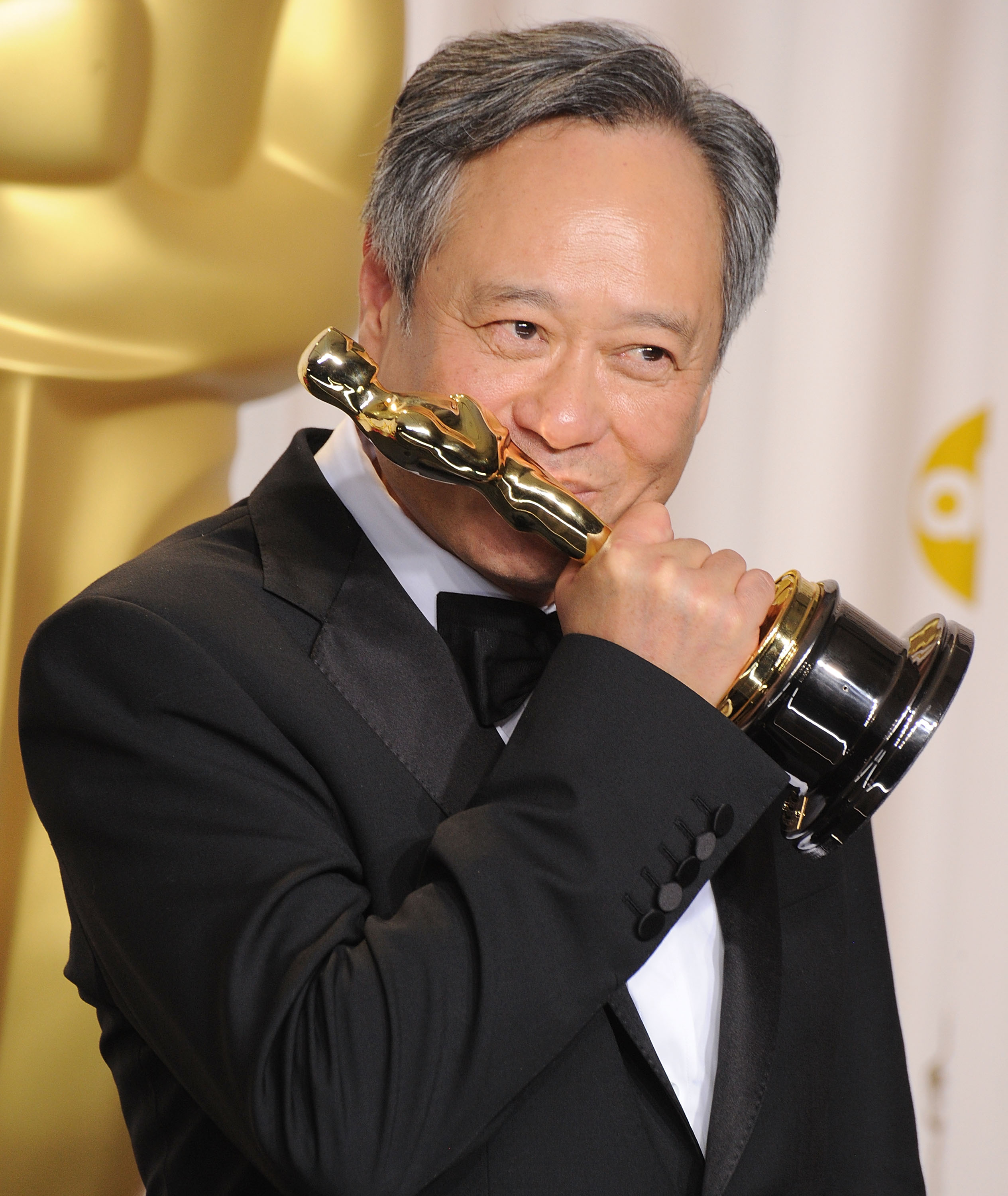
(Photo: Ang Lee poses at the 85th Annual Academy Awards at Dolby Theatre on February 24, 2013 in Hollywood, California. By Steve Granitz/WireImage)
Prehistoric humans didn’t have toothbrushes. They didn’t have floss or toothpaste, and they certainly didn’t have Listerine. Yet somehow, their mouths were a lot healthier than ours are today. “Hunter-gatherers had really good teeth,” says Alan Cooper, director of the Australian Centre for Ancient DNA. “[But] as soon as you get to farming populations, you see this massive change. Huge amounts of gum disease. And cavities start cropping up.” And thousands of years later, we’re still waging, and often losing, our war against oral disease.
Giving up the “paleo diet” is probably to blame:
[T]he researchers found that as prehistoric humans transitioned from hunting and gathering to farming, certain types of disease-causing bacteria that were particularly efficient at using carbohydrates started to win out over other types of “friendly” bacteria in human mouths. The addition of processed flour and sugar during the Industrial Revolution only made matters worse.
Expecting women to rededicate themselves to producing children is not in the cards, even with the kind of family-friendly policies that Last and some others support. One only has to look at what is going on in Europe where such policies have been tried at great expense to see that they are not likely to be very effective.
I go to great lengths in the book to detail how vital immigration has been, and continues to be, to our demographic profile. I also discuss its limits. For instance, while immigration provides a great deal of demographic relief it is, as an objective technical matter, inferior to baby-making in that it does not provide the same rejuvenation effect on a society’s age profile. For a deeper exploration of the math on this, I’d point readers to Carl Schmertmann’s work. I would have thought that Sawhill might at least acknowledge some of these limitations in the course of making her broader argument.
Friday on the Dish, Andrew endorsed both Obama’s and Ilya Shapiro’s approaches to marriage equality, wondered why the Voting Rights Act wasn’t left to the legislature, and echoed Kenneth McIntyre’s description of Oakeshott. He agreed with a reader on gluten-free diets as he watched BuzzFeed’s sponsored content spread.
In politics, the sequester struck and the public wearied of war, but Boehner exhibited rare bipartisanship in the House. Beinart mulled over the reasons for Obama’s Israel trip, Jeffrey Goldberg recounted his own Gene Sperling threat, and Arkansas negotiated a new option for the Medicaid expansion, while Chris Soghoian pocketed more information than ever and Yochai Benkler worried for future whistleblowers.
In assorted coverage, we probed the cracks in the arguments in favor of the Keystone pipeline and considered the risks and rewards of cannabis for canines, uChek democratized urinalysis, and Sadie Dingfelder’s Korean spa didn’t quite live up to Andrew’s russian baths experience. Laura Bennet saw unrealized potential in Dan Harmon and Robin Nagle brought san men into the spotlight. Tattoos got a hi-tech upgrade, the Myo amazed, a robotic dog learned to play fetch without threatening workers, and Emily Elert helped firefighters clear the smoke. NFL player Brendan Ayanbadejo spoke out against discrimination wherever it occurred, while a reader added a personal touch on trans surgery insurance and Keith Kloor gave us a green light to dial.
Meanwhile, readers explained why they haven’t yet logged in to the New Dish, defended doctors against Yglesias, and chimed in on advertorials, while Matt Drudge made millions with clearly labeled ads. Smeagol covered Tears for Fears in the MHB, Bloomberg looked on in the FOTD, and the TransAmerica building showed us just the tip in the VFYW.
– D.A.
Rest of the week below the jump.
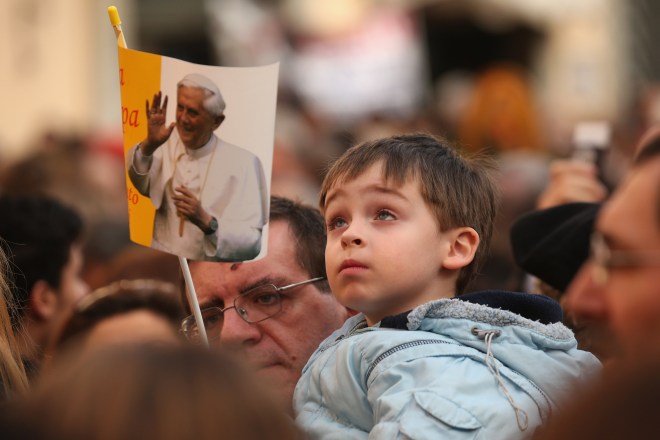
(Photo by Oli Scarff/Getty Images)
Thursday on the Dish, Andrew bid a not-so-fond farewell to Benedict XVI and fisked Bob Woodward’s claim of White House intimidation. Amy Davidson analyzed the bottom line for marriage equality while Jesse Green anticipated a wave of same-sex divorces, Erick Erickson reminded conservatives about the basics of reporting, and the Supreme Court entangled privacy advocates in a Catch-22.
As sequestration loomed, Mike Riggs grinned at the possibility of DEA budget cuts and we predicted that the gradual phase-in will slow but not stop growth. We debated whether smart people had “flip-flopped” on the deficit, contemplated the long-term Republican strategy, and Kornacki put Hillary at the head of the 2016 Democratic class. In foreign policy coverage, Douthat found reason for optimism in Rand Paul and we considered America’s next step in Syria in light of restrained interventionism at home.
In assorted new and views, Christina Larson sifted through Chinese secrecy on soil pollution while we struggled to adapt to melting at the poles. Andras Forgacs manufactured meats, 3-d printing redefined the parameters of the gun control debate, and Robin Sloan butted up against online language barriers. Ivory Toldson pulled apart the stats on college-bound black men, Sarah Kendzior worried over the effect of internships and adjunct professorships, Andrew Mason shocked us with his honest resignation, and readers looked for alternative motives in Yahoo!’s ban on working from home. The trans community found a surprising ally in its push for insurance coverage and A. Barton Hinkle condemned cities for being choosers when it came to beggars.
Elsewhere, Benjamin Lennett forecast trouble for Netflix addicts, Keith Ellison expressed ambivalence about deleted scenes, we deconstructed hatred for Anne Hathaway, and watched an audition for Lena Dark Thirty. John Patrick Leary shared tales of untimely doggie deaths, gluten-free diets elicited mixed feelings, and we exposed the sinister side of a sartorial movement. A young pilgrim waved a goodbye to the outgoing pope in the FOTD, drought knocked out a Texas dock in the VFYW, and we gesundheit’d through a super-cut of canine sneezes in the MHB.
(By Drew Angerer/Getty Images)
Wednesday on the Dish, Andrew welcomed big businesses to the ranks of the marriage equality supporters, raised his eyebrows at news that Benedict will continue to retain his personal secretary even as the latter services the new Pope, and then wondered who would be left at the Conclave if closeted or enabler Cardinals were excluded. Reihan connected the pace of change on the right to the rise of young pundits on the left, Peter Beinart traced the roots of the right’s Hagel hatred to the Dubya era, Frum elucidated his change of heart on marriage equality, and conservative commentators weighed the wisdom of CPAC’s Christie snub. John Cluverius plotted the popularity of government policy, Kent Sepkowitz felt ill over the possibility of sequester cuts to immunizations, and Freddie deBoer was unsatisfied with Sully’s defense of Saletan.
Looking abroad, Jonathan Katz calculated a way to compensate Haitians infected by UN peacekeepers, Naunihal Singh predicted that the next Pope will be an African, and Italian blogger Beppe Grillo threw a wrench into Italian politics. In cannabis coverage, we pondered the forthcoming regulatory framework for marijuana, Robert Frichtel worried about potency, and John Schwartz called for more research on potential health benefits.
In assorted coverage, Alex Knapp ushered in the post-piracy era, rom-coms turned inward, Rebecca Makkai unknowingly committed identity theft, and Sara Naomi Lewkowicz documented domestic abuse. David Roberts heralded the rise of decentralized power systems, Cheryl Katz dredged up some innovative flood management in the Netherlands, and Lucy Weltner questioned environmental vigilantism. The Harvard Grant Study highlighted the importance of intimacy, winning lost out to sportsmanship, and readers debated grocery store layouts while we worked through the work-from-home debate. Hans Rosling illustrated worldwide demographic convergence and Samuel Arbesman found computers that make geniuses look dumb. We pulled a cool ad out of thick air, frolicked through fallen leaves in the MHB, caught a glimpse of a former Cardinal in the FOTD, and enjoyed a seaside sunset in the VFYW.
Tuesday on the Dish, Andrew marked more signs of progress on the Right and found a silver lining in the ridiculousness of the sequester. Later, he demanded transparency on targeted assassinations and processed an historic Republican breakthrough on marriage equality.
In political news and views, we considered the impact of Senator Cruz, debated the pain of the sequester, and ideas actually mattered in 2012. In health care coverage, Yglesias focused on the impact of doctor salaries on costs. We forecast the effects of changing weather on work, Douthat fretted over the demographic profile of those dropping out of the workforce, and Yahoo! terminated telecommuting. Abroad, Italy voted for “Ingovernability” in their recent election.
In assorted coverage, Gabe Habash gawked at Matt Kahn’s reading list and Amber Forcey rejected self-righteous nostalgia. Jen Doll dove into the craaaaaazy language of Twitter, Erica Westly explored her fascination with outsourced paperwork, and a reader drew parallels between BuzzFeed and Politico. William Deresiewicz celebrated the timelessness of good food, J-P Metsavainio brought nebulas down to earth, and Thomas Dixon cast a critical eye over theories on tears. A reader pointed to a Portuguese middle-ground in bullfighting, Ambers corrected Glenn Beck on the party of pro wrestling, Laurie Santos and Jesse Bering discussed disgust and sex, readers chimed in on the merits of live music, and two Michelles had a dance-off.
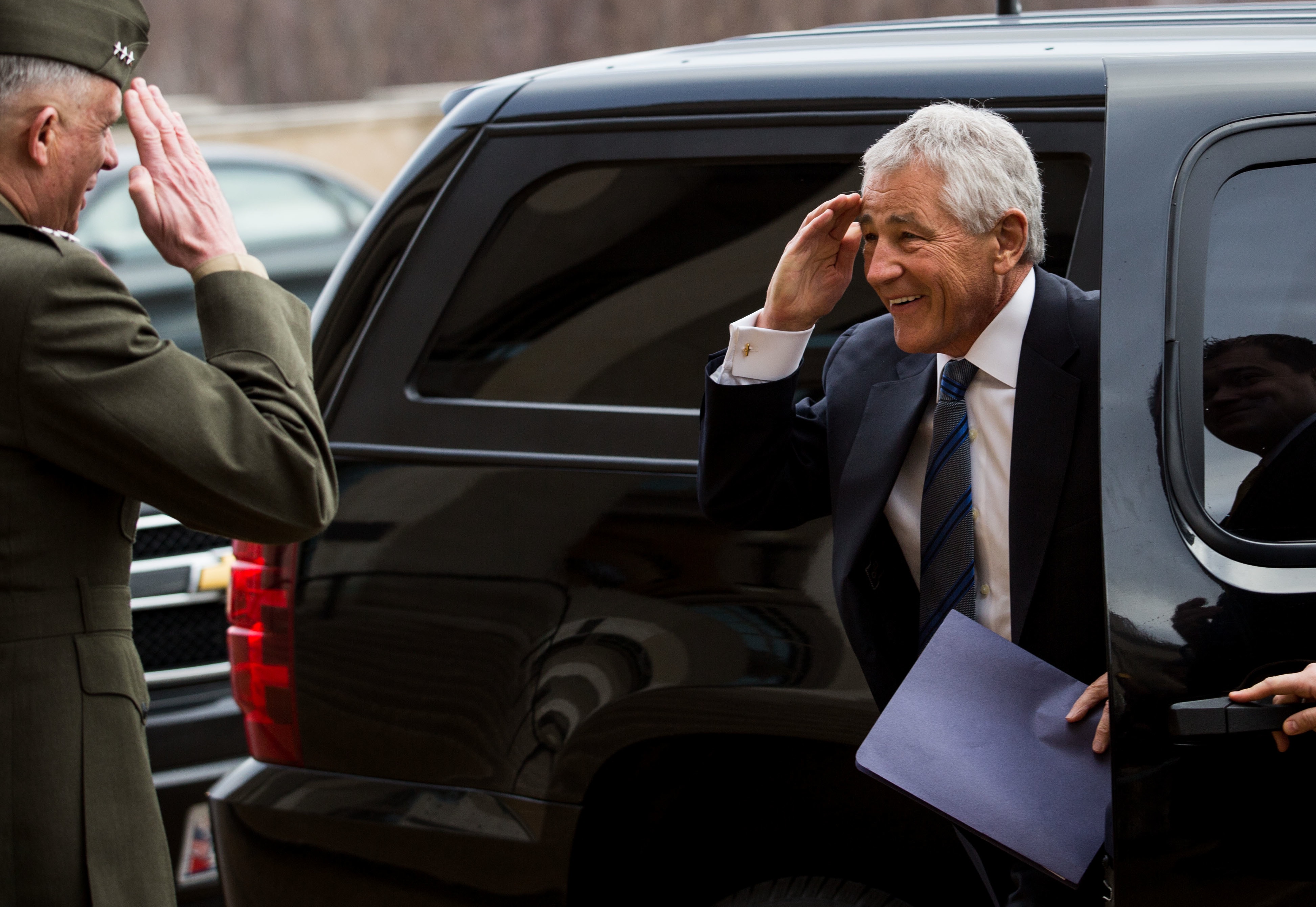
Garance Franke-Ruta meditated on the ups and downs of an activist youth while we mourned the passing of an evangelical Surgeon General who refused to let faith trump science and navigated the tensions of faith, and . We revealed the home of the Rodeway Inn in this week’s VFYW contest, breezed through the Caribbean in the VFYW, de-memed the Harlem Shake in the MHB, and Marine recruits prepped for a test in our FOTD.
(By Franco Origlia/Getty Images)
Monday on the Dish, Andrew mulled over legalized prostitution, hoped for a new era to emerge from the coming Papal Conclave, and updated readers on the status of the New Dish. He glimpsed the new generation of Journalism in Steve Brill’s health care essay and shook his head at the Republican management of the sequester.
In political coverage, we looked ahead to the fallout from the sequester and Josh Barro laid the blame for epistemic closure at the door of Republican think tanks. Felix Salmon was skeptical that the BuzzFeed model could scale, Jonah Peretti described the advertorial strategy while employees Jeff Greenspan and Mike Lacher aimed for ads that feel like editorials, and readers saw little to worry about. Overseas, Gianluigi Nuzzi wondered at tales of unquestioned cruelty from the Vatican.
In assorted coverage, Seth MacFarlane’s manatees failed to impress on Oscar night, Stefan Kanfer rebelled against recorded music, and Scott Adams bulked up with video games. Simon Park made us squirm at the thought of getting calls on our cells, Joshua Topolsky got an early glimpse at Google Glass, and France was unafraid of the dark. Eric Nusbaum weighed a bull’s cushy life against a grisly death, James Surowiecki dug into the black betting economy in American sports, and Howard Megdal noted parallels between Lena Dunham and Philip Roth.
Elsewhere, Gregory McNamee mapped out the grocery store while Nicola Twilley revealed rampant genetic modification in the produce aisle, Adam Clark Estes wasted nothing in addressing the food shortage, and Marlene Zuk pushed back against paleo nostalgia. Wayne Curtis recalled the golden age of the USPS, Jennifer Kabat exposed the perils of making snow, Beth Skwarecki couldn’t explain birth rate patterns, Shane Koyczan illustrated the haunting effects of bullying, and Amanda Marcotte debunked the myth of chatty women. FLOTUS busted a move in the MHB, we recognized the distant Rockies in the VFYW, and shared the sorrow of a mother mourning her child in the FOTD.
Last weekend on the Dish, Andrew continued to think through Buzzfeed’s “sponsored content” model for online ads, pointed to an incisive comment on the issue from Kevin Drum, briefly riffed on the Atlantic’s new guidelines for native ads, offered a theological critique of Zero Dark Thirty, and noted what’s different this time about who will be selecting the next Pope (and if you’d like to be Pope, here’s some helpful tips). We also provided some helpful background to this year’s Oscars here, here, and here.
There was a lot of sex and drugs on the Dish this weekend, too. Connor Habib wondered what drives gay porn starts to take their own lives, Jon Millward combed the archives of the Internet Adult Film Database, Melissa Gira Grant revealed America’s pioneer prostitutes, and Margaret Hartmann looked at a rash of sexting cases among FBI employees. Ned Beauman surveyed the online recreational drug marketplace, Robert Morrison credited Thomas De Quincey’s Confessions of an English Opium-Eater for making drug culture highbrow, and Miles Klee considered accidental and involuntary highs.
We also offered our usual eclectic mix of religious, books, and cultural coverage as well. In matters of faith, doubt, and philosophy, Will McDavid mused on the relationship between love and justice in the work of Andre Dubus, Bill Vallicella unpacked Simone Weil’s understanding of God, Richard Holloway grappled with political theorist John Gray’s vision of life without redemption, and Irene Klotz reported on what the Higgs boson particle might teach us about the lifespan of the universe. Kevin Hartnett asked which religions are the most chaste, Giles Fraser contemplated the right way to pray, and Adam Kirsch reviewed the place of anti-Judaism in western thought and culture.
In literary coverage, Jeannette Winterson praised Virginia Woolfe’s Orlando, Michael W. Clune explored the artist’s impulse to overcome time’s defeat of novelty, Alexander Nazaryan pushed back against literary sprawl, and Juliet Escoria realized she’d never be a novelist. Andrew Gallix pondered the purpose of intentionally difficult books, Michael Bourne uncovered the core of Truman Capote, Adam Kirsch tackled contemporary essayists, and Sean Wilentz deconstructed Oliver Stone’s revisionist take on American history. Read Saturday’s poem here and Sunday’s here.
The Economist investigated social networking data getting factored into credit scores here. Your weekend dose of really gay here and the latest viral dance meme here. MHBs here and here, FOTDs here and here, VFYWs here and here, and the latest window contest here.
Readers push back on Yglesias’ claim that physicians get paid too much:
I am a highly specialized physician and Obamacare supporter who is likely be considered one of those “overpaid” doctors. I think what is often missed is what hidden expenses and opportunity costs, in total, those reimbursements defray. I was in school (paying tuition) or in training (earning $20-$30K per year) for 12 years after college and collecting more than $150K in debt at a public medical school while others my age and background were moving up in their careers, earning increasingly higher wages (some made millions in the Internet bubble), increasing their retirement nest egg, buying houses, etc. I made my first paycheck from “overpaid” reimbursement at the ripe age of 33.
Another reader:
As an attending, my husband works a minimum of 55 hours a week. He gets four weeks of vacation a year. He’s often on call weekends and nights, and works several holidays a year. We crack the six-figure mark in salary. (Medical students live on about $15,000 in loans a year; residents and fellows make between $40,000 and $60,000 a year.) One quarter of our take-home pay goes to pay student loans and will for many, many years to come.
I’m not going to pretend we don’t live a comfortable life. Of course we do. We own a mortgaged 1,200 square foot house. We have insurance. We can put away for retirement and college for our kids and we own two cars. Most Americans don’t make six figures. But I’m sorry, my prematurely grey husband is not responsible for rising healthcare costs. He makes way less than several of his siblings in the business world who have less training, work fewer hours, and do, frankly, a little less for the world.
Another points to possible problems with the studies that Yglesias cites:
First: Not all physicians, or specialties, are the same.
I’m an IT manager for a big global company. I actually earn more money than a friend of mine who is a pediatrician. But my salary doesn’t hold a candle to other MDs in specialties like vascular surgery or anesthesiology. Which of those doctors is “overpaid”? Which are not? None of these studies bother to make this distinction. They are all lumped into the same category as “doctors” and then use average salaries, rather median salaries, across the totality of the United States.
Which leads to other big problem with these studies: beware of any study that compares the United States, as a whole, to tiny homogeneous nations like The Netherlands. There is no way to compare the two – even “adjusting” for population size. The US is too large and diverse to make those kinds of comparisons and studies that do so should be disregarded as invalid right from the start.
Another:
If we took Matt’s advice and cut their salaries to what looks to be the European average on his chart, they’d be making closer to $60k, once the costs of getting the job are taken into account. Given that you can get an IT job with just a couple years of training and experience and no overhead that pays $60k (or more), what idiot would bother going into medicine? The smart ones wouldn’t. Which is of course exactly what we want – stupid doctors.
And, for the record, my late father retired from medicine in 1989. He paid $24k in annual malpractice (Southern California) at that time. He recommended I not go into medicine. I’m in IT.
Laura Bennet calls the comedy tour of “Community” creator Dan Harmon, who was axed from the show last spring, “a cautionary tale of a showrunner feeding off the hermetic flattery of a self-constructed feedback loop.” Why was he fired? Poniewozik explained it thusly:
Harmon is notoriously, and by his own admission, not the easiest guy to work with. He’s clashed, loudly, with NBC and Sony for three seasons over the show’s creative vision (the network and studio wanting him to aim for less complex, more accessible storylines in hopes of higher ratings). … [M]aybe most important, Harmon didn’t manage time, budget or personnel well–he controlled the show’s vision down to the most minor details, but by his own admission, he was not great at keeping the trains running on time (or keeping its various engines happy).
Bennet, who thought “Community” under Harmon was one of the best shows on television, warns about the insularity of believing too much of your own praise:
We may have entered an age of TV auteurship—in which the totalizing visions of creators like Lena Dunham and Louis C.K. and Matthew Weiner are behind some of our most critically-acclaimed series—but the process of making a television show, especially a network sitcom, has always been collaborationist. There is the writers’ room, the relentless feedback from executives, the rotating cast of directors from episode to episode.
Though she laments the current state of “Community”, she doesn’t see Harmon as having learned how to keep any of his upcoming shows on the air:
Harmon has deals with both Fox and CBS for next season, which is great news for network comedy. But in [a recent Grantland profile,] he certainly does not seem too eager to leave the “Harmontown” bubble. He unleashed a full tirade against the current television landscape. “You only have to take a couple steps back before you realize that you’re looking at a bunch of goddamn baby food made out of corn syrup,” he told [Grantland’s Alex] Pappedemas. “It’s just a big blob of fucking garbage. The medium is dispensed to people who can’t feed back, can’t change it.”
But the one person who could have changed “Community,” of course, was Harmon himself. Instead he felt the cultishness of his audience, and he reveled in it. He let it justify his iron-clad resistance to conceding any small part of his vision. And listening to “Harmontown”—its indulgence, its rancor, its charming self-deprecations and flashes of brilliance—it is hard not to think about the showrunner Harmon could be, if only he would force himself outside his own head, outside the fortifying enthusiasm of his fans.
Russian baths are a bit different than the 24-hour Korean spa, as Sadie Dingfelder recently learned:
I am sitting boob-deep in tepid water, sous-viding the burrito I ate for lunch a half-hour ago. Around me float a dozen women representing almost as many age and ethnic groups. An elderly Korean lady accidentally grabs my thigh while, outside of the pool, a young blonde woman towel-dries her crotch. It is a typical Friday afternoon at Spa World, the sprawling South Korean-styled bathhouse in Centreville, Va.
This unincorporated community in Fairfax County isn’t at the forefront of many international trends. But when Spa World opened in 2008, it was during the height of South Korea’s public-bath craze and just a year behind the opening of New York’s largest jimjibang, Spa Castle. Since then, Spa World has done brisk business relaxing the D.C. area’s fast-growing Asian population as well as various tightly wound constituencies, including between-assignment State Department officials, Groupon users, and expats pining for the sentos, banyas, or hammams of their youth. There’s no shortage, after all, of type-A Washingtonians hoping to shed their stress (and, clearly, their clothes).



 The Dish