Charles Kenny finds evidence that the US has attracted more than its fair share of immigrant innovators:
[Carsten] Fink and his colleague Ernest Miguelez found that in 2010 about 10 percent of inventors worldwide lived outside their country of nationality when making their international patent application. The proportion of international patent applications made from the U.S. by non-nationals was twice as high—around 20 percent. That proportion approximately doubled from 1985 to 2010, and it’s the highest share out of any large economy. It compares with a non-national share of international patent applications of about 2 percent in Japan and closer to 5 percent in Germany and France.
The U.S. is by far the biggest global net beneficiary of innovator migration. Between 2001 and 2010, 14,893 inventors with U.K. nationality applied for international patents while residing in the U.S., for example. And there were three times as many Chinese inventors in the U.S. than British ones. That illustrates the U.S. has done particularly well in attracting innovative talent from the developing world—more than half of the U.S. non-national innovator population comes from countries outside the Organisation for Economic Co-operation and Development club of rich countries.
He goes on to worry about “more and more Indian and Chinese graduates of U.S. universities are returning home rather than dealing with the hassle of American immigration procedures.” Reihan isn’t as concerned.
According to Book Riot’s survey of books readers pretend to have read, the chart-toppers are Jane Austen’s Pride and Prejudice and James Joyce’s Ulysses. Sadie Stein comments:
While the usual lengthy suspects—Ulysses, Moby-Dick, Infinite Jest—are represented, Pride and Prejudice is a surprise dark horse number-one. (Maybe after investing six hours in the BBC miniseries, people feel they’ve got the idea?) Other surprises include the relatively short To Kill a Mockingbird and Great Expectations—perhaps purely due to their inclusion on hundreds of syllabi?—Harry Potter, and, somewhat mysteriously, Fifty Shades of Grey. And this prompts several follow-up questions: When you listen to a book on tape, does that count? Is there a point at which, via osmosis, adaptations, and self-delusion, one can actually begin to believe he has in fact read a book, and is there a German compound word for this phenomenon?
Jeffrey Goldberg believes – surprise! – that Kerry getting Israelis and Palestinians to sit down for fresh negotiations is “a fool’s errand” and that “the collapse of these talks, which is almost inevitable, could have dangerous consequences.” Nevertheless, Goldberg gives Kerry advice:
Kerry is understood in Israel as a true friend; his lobbying could be effective. If the Israelis would take small, unilateral steps on settlements, they could change the Palestinian calculus and improve Israel’s reputation (which has become a genuine national-security concern). On the other side, Kerry might want to try a bit more aggressively to help the Palestinian Authority become a viable governing body with a functioning economy and a bureaucracy that is reasonably free of corruption. Strengthening the Palestinian Authority (and working to weaken Hamas) while cajoling the Israelis to wean themselves from their addiction to settlements are two steps Kerry could take to advance negotiations.
Addiction to settlements? As if it’s some kind of compulsion rather than a long-thought-out, relentlessly implemented strategy for territorial expansion. And how on earth is Netanyahu able to take “incremental steps” when Goldberg himself concedes in the same column that
the Jewish settlement movement on the West Bank is now the most powerful political force in Israel. This is a movement whose leaders and Knesset representatives and cabinet ministers will subvert any peace process that would lead to the dismantling of even a single settlement, including any of the dozens of well-populated ones far beyond Israel’s West Bank security barrier.
As for a viable, much less corrupt governing body on the West Bank, let me simply quote Leon Wieseltier (as slippery as Goldberg on this subject):
Nobody lifted a finger to help Salam Fayyad, who was the Palestinian leader we were all waiting for. No Palestinians and no Israelis. He came and went. It’s a historical scandal of the first magnitude.
(Notice that Wieseltier has to blame the Palestinians as well, for fear he might stumble onto the truth about the settlements and their centrality to the problem.) And yet Goldberg returns to a critique that could have been made in the 1990s. (And Wieseltier, of course, like the entire American Jewish Establishment, was one of those who didn’t lift a finger even on his keyboard when we had a chance for progress five years ago. He preferred to go an an anti-Semite hunt, which is his default position on everything.) Maysoon Zayid notes the deliberately weakened position of the Palestinian Authority:
[President Mahmoud] Abbas, who will decide the fate of the Palestinians if Kerry and the USA have their way, has been a lame duck for the past four years. … Simply put, he is no Yassir Arafat. Unless this agreement on a two-state solution includes a Palestine with the ’67 borders, East Jerusalem as its capital, and addresses water rights as well as the right of return, it will not fly with the average Palestinian on the street or in the camps.
Yuval Diskin, former director of Israel’s Shin Bet, doesn’t sound optimistic:
This is Netanyahu’s moment of truth. He can prove to all of his most vociferous naysayers and critics (me among them) that he is not just a politician passing his—and our—time in the prime minister’s office, but a leader who is capable of grasping the gravity of the situation; a leader capable of freeing himself of his trepidations, fears and secret advisers; a leader capable of understanding the critical need to rise above himself and establish a proper set of priorities; and, most important, a leader capable of shepherding the nation (or, at least a majority of it) to the right path. I have huge doubts as to whether Netanyahu is such a leader, but I will be the first one to praise him if he proves otherwise.
Yeah, right. I suspect Netanyahu would rather ethnically cleanse the West Bank than cede an inch of it. Stephen Walt predicts “a lot of talk, but ultimately no action”:
The Palestinians have nothing left to give up (save for symbolic concessions over the so-called “right to return”), and I can’t see Netanyahu offering them a deal that comes even close to a viable state. And while Kerry’s tenacity is admirable, I’ve yet to see any sign of a genuinely different U.S. approach. Remember: Assorted U.S. diplomats have spent thousands of hours going back and forth with both sides over the years and have ended up with bupkis. So I think we’ll see more talks, along with more settlement building, and ultimately no agreement. And then Obama and Kerry will be gone, and another “opportunity” for peace — if it even is one — will have been lost.
Which is the point, of course. Still, Shibley Telhami thinks peace talks are more necessary now than ever:
[T]he conflict remains the prism of pain through which Arabs view Washington and much of the world — even more so since the region’s uprisings. In October 2011, when I askedArabs in Morocco, Egypt, Saudi Arabia, Jordan, Lebanon, and the UAE what two steps the United States could do to improve their view of Washington, 55 percent of respondents said “brokering Israeli-Palestinian peace” based on the 1967 borders, with 42 percent choosing “stopping aid to Israel” as the second step. In comparison, only 12 percent suggested providing more economic aid to the region, and 11 percent proposed greater efforts at democratization. In a 2012 poll in Egypt, 66 percent identified brokering peace followed by 46 percent who recommended stopping aid to Israel; only 12 percent suggested that Washington do more to spread democracy.
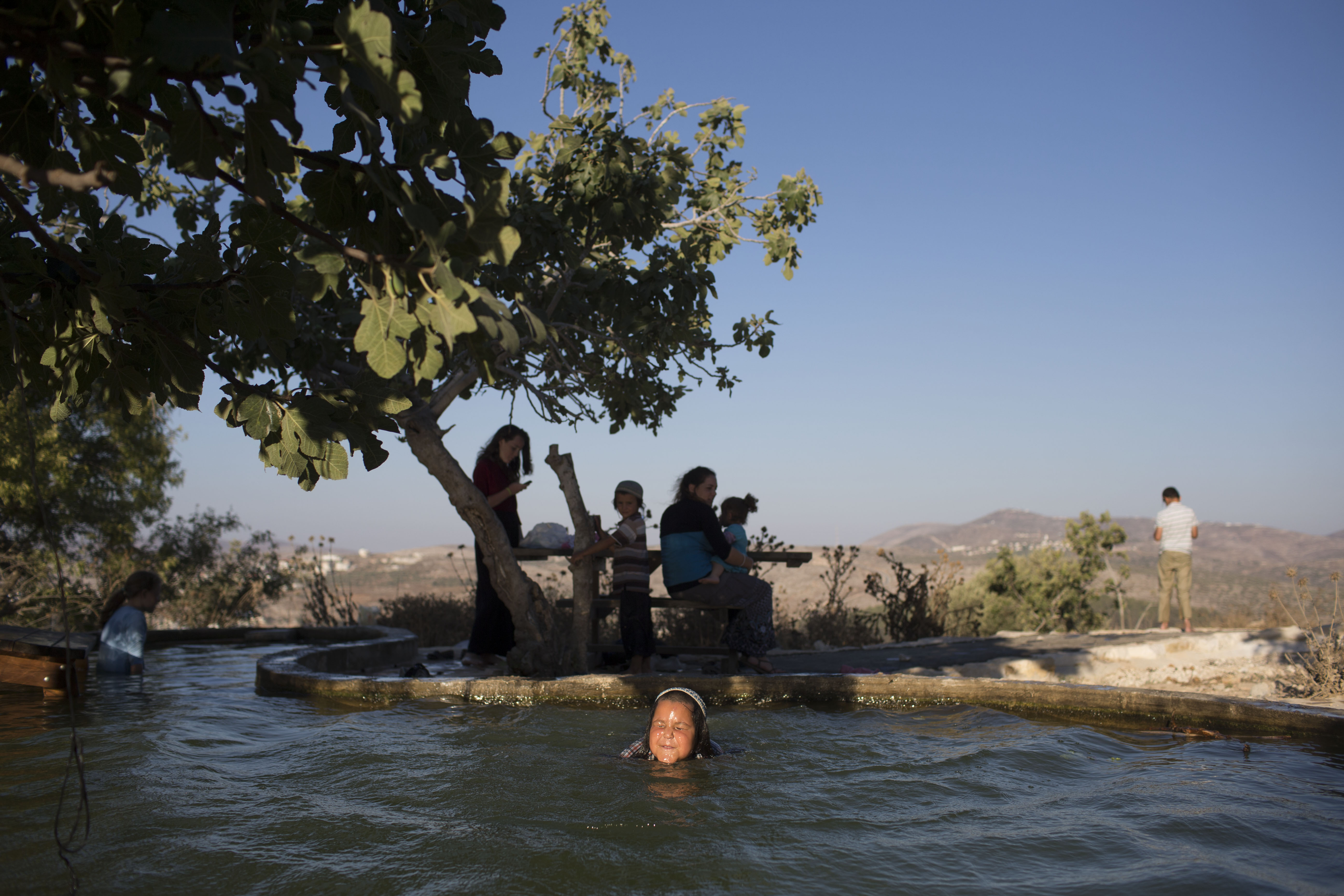
(Photo: A Jewish settler boy swims in a pool on July 22, 2013 near the Jewish outpost Settlement of Har Bracha, West Bank. By Uriel Sinai/Getty Images)
Thanks for the discussion thread. But as a daughter who endured her father’s suicide when I was 12, I get upset when people like your readers say the act is selfish. My dad suffered from mental illness and depression, and if hanging himself from a bridge brought him relief, I can understand. One thing that helped me greatly was reading William Styron’s Darkness Visible. Styron was able to describe his depression succinctly and convincingly; I read the book in a few hours and immediately found the forgiveness I guess I needed.
Another:
Like many of your readers, I’ve had up close and personal experiences with suicide – family members, friends, acquaintances, sick, healthy, etc. I have thought repeatedly about doing so myself. I’m part of that 30% for whom SSRIs and other meds don’t seem to work, and talk therapy can only do so much. For me depression is as painful as I imagine a chronic debilitating disease and I have made peace with the fact that it has become the defining issue of my life.
I recently had a heart attack, and must admit that at a certain point I thought I could take advantage of the opportunity and not dial for help. Had the pain been less intense, I might not be writing this to you. I know exactly, without a moment’s hesitation, how much I am loved and how much pain it would cause if I were to follow through. The question for me: Would it cause more pain than me keeling over dead from a heart attack or refusing treatment for an incurable disease or any number of ways life presents us with returning our energy to the universe. Why is that? Why are those deaths socially acceptable?
Another:
I’ve been following your recent thread about suicide with a kind of bemused interest. Barring a bus or car accident or being shot randomly on the street, my death almost certainly will be suicide.
I agree with your commenter several posts ago who received such a violent negative reaction: A right to life is meaningless without the right to choose death. It is for me a matter of when, not if. I cannot imagine not wanting to be proactive about choosing when and how I will die.
My first thoughts about suicide surfaced in my 30s, while I was under therapy. It was the one thing I could not name in the voluminous journals I wrote to my therapist. I could write around it, but I knew that if I named it, he would be legally (as well as professionally and morally) obligated to take action to take away my right, to remove whatever mechanism I had in mind. But still, the power and finality scared me then – especially since I am an atheist, confident that death is an end – full stop. However, even though suicide frightened me then, I was more scared by the possibility of relinquishing the right.
I am now in my 50s, and the idea of my suicide has been a constant companion for more than a decade. I think about it daily and I have grown comfortable with it. Indeed: It is sometimes the only thing that keeps me living, keeps me moving forward.
The last few years have been a difficult struggle. The amount of work it takes to sustain life far exceeds any pleasure to be found in being alive. This is not depression talking; I went through depression in my 30s and came out the other side. This is simply the cold calculation of reality. It takes way too much work just to stay alive for way too little payoff. It is only knowing that staying around to fight another day is a positive choice rather than an obligation that makes staying around bearable.
Another:
Thanks for bringing up the topic of suicide. Discussing it in the public forum helps to alleviate the stigma for those of us who have lost loved ones to suicide. I lost my 21-year-old son three and a half years ago. Like some of your other readers, I’ve done a lot of reading and talking to people since then.
I don’t think of suicide as a selfish act. As one person has told me, “Suicide is not chosen; it happens when pain exceeds the resources for coping with the pain.” I don’t believe that my son wanted to abandon his family and friends; he loved us deeply. I do believe that he wanted to end the terrible pain he endured.
I also don’t think of suicide as a sign of weakness. To the contrary, it takes a perverted sense of courage to complete the act of suicide. I raised my son to be strong and courageous, and to meet problems head on. I think it was those characteristics that he used … but again, in a perverted use of those usually admirable traits.
I agree with the reader who cited Dr. Thomas Joiner’s work, but with this refinement. Joiner says that the first two elements, perceived burdensomeness and perceived loneliness can come and go; but the third element – the fearlessness of death – is learned and then stays with you forever. And the way one “learns” not to fear death is through habituation to various forms of violence. This explains why combat veterans, police officers, prison guards, and doctors all have a higher rate of suicide than the general population. (And here’s a link to an article that describes interesting research going on at Harvard.)
Over the weekend, al Qaeda-linked insurgents staged well coordinated attacks on Taji and Abu Ghraib prisons, freeing at many as 500 inmates, including senior al Qaeda members:
Suicide bombers drove cars packed with explosives to the gates of the [Abu Ghraib] prison on the outskirts of Baghdad on Sunday night and blasted their way into the compound, while gunmen attacked guards with mortars and rocket-propelled grenades. Other militants took up positions near the main road, fighting off security reinforcements sent from Baghdad as several militants wearing suicide vests entered the prison on foot to help free the inmates.
Hayes Brown thinks the consequences go beyond Iraq’s borders:
The sudden influx of a large number of trained fighters and convicted terrorists into Iraq would be a problem even if there wasn’t a civil war next door. Given the ongoing conflict in Syria, however, this could mark a radical shift in how the war proceeds.
While talks of a merger between the two have gone back and forth, AQI and Syrian rebel group Jahbat al-Nusra have been cooperating for months, to the point that the State Department has listed Nusra as a subsidiary of the terrorist group. Aaron Zelin, Richard Borow Fellow at the Washington Institute for Middle East Policy, told ThinkProgress that it will be interesting to see if those who escaped do go to Syria, whether they will bring with them some of their more radical tactics. At present, according to Zelin, there are jihadi groups who provide social services to civilians and perform other acts that could see themselves undermined by an influx of “hardened fighters” captured during the U.S. “surge” in Iraq.
Michael Crowley worries that Iraq is “living on borrowed time”:
“[Al Qaeda’s fighters have] got the wind at their backs from the Syrian rebellion,” where Sunni rebels are fighting an Alawite Shi‘ite regime, says Kenneth Katzman, a Congressional Research Service analyst who recently completed a detailed report on Iraq. “Their goal is to destabilize and bring down the Maliki government, and they think igniting sectarian conflict might accomplish that.”
Sectarian violence in the country has killed at least 2500 people since April. More evidence that nothing – not even the surge – produced anything of any long-term benefit to the US, Iraq or the Middle East. Just carnage and chaos.
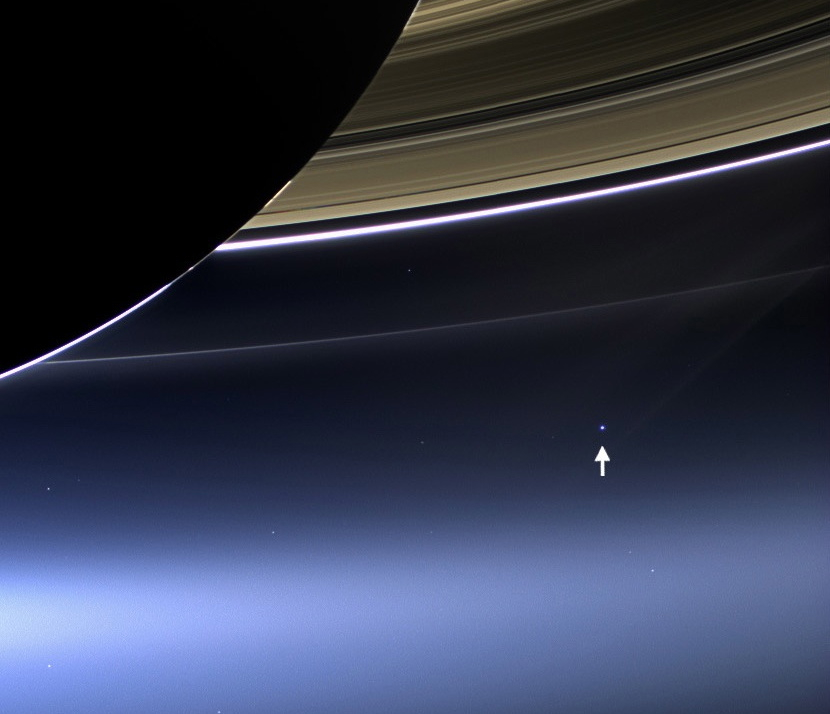
Earth is the bright, starburst-looking flash of light at the middle of the photo, our moon the speck just down and to the left. From Saturn, our planet is hardly distinguishable as the orb we know and love. That being said, I’d love to see you snap a photo this good from 898,410,414 miles away. And remember, this is a raw, unprocessed image–just one in a huge batch that Cassini beamed down to Earth on Saturday.
Cassini also captured Saturn and Earth in the same frame:
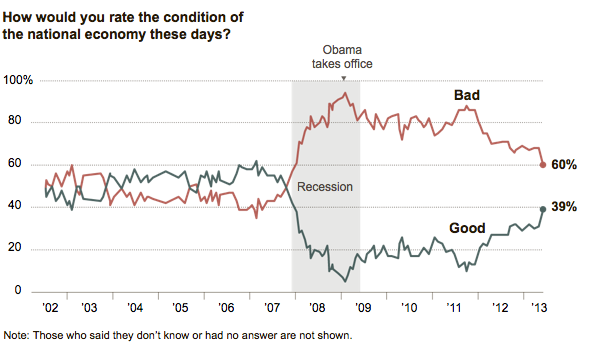
Steve Benen has a must-read on the GOP attempts to sabotage universal healthcare. Not oppose, which is perfectly legitimate, but, having lost two presidential elections, to sabotage.
Looooongtime reader, but this is my first VFYW contest entry, so I’m probably wrong. But I’ve taken float planes from downtown Vancouver to beautiful Vancouver Island many times. The 20 minute trip is a blast, and the picture looks just like the view a couple of minutes after water takeoff, passing over their gorgeous park (named after the same guy as the hockey CUP). So to use the old “Clue” game format, I’m calling it Stanley Park, in Vancouver, from a seaplane.
Another:
Ticonderoga, New York? Fort Ticonderoga is slightly left of center.
Another:
I approached this VFYW with confidence, armed with the recent pointer from a previous winner: identify bridges. Unfortunately, this view didn’t have any. What it does have is a fort, with an American flag. Now we can narrow the view down to navigable rivers in the United States. The abundance of quaint little churches hints at the Northeast. Perhaps the Hudson or the Susquahanna. The fact that the river seems to be making a 90 degree angle leads me to guess this is where the West Branch and the North Branch of the Susquehanna Merge. If that is the case, this picture was taken from Shikellamy State Park. Wikipedia offers this promising view, which may or may not feature the vista in question. Unfortunately, there doesn’t seem to be a fort here. Which means I’m not looking hard enough, or all rivers look the same.
Thanks for a fun Sunday afternoon; this may take over the niche previously occupied by crossword puzzles.
Another:
Is it Vicksburg, Mississippi? Glad to see the Stars and Stripes flying there again …
Another:
Thanks for giving us an easier one this week. I know it’s easy because I could get it.
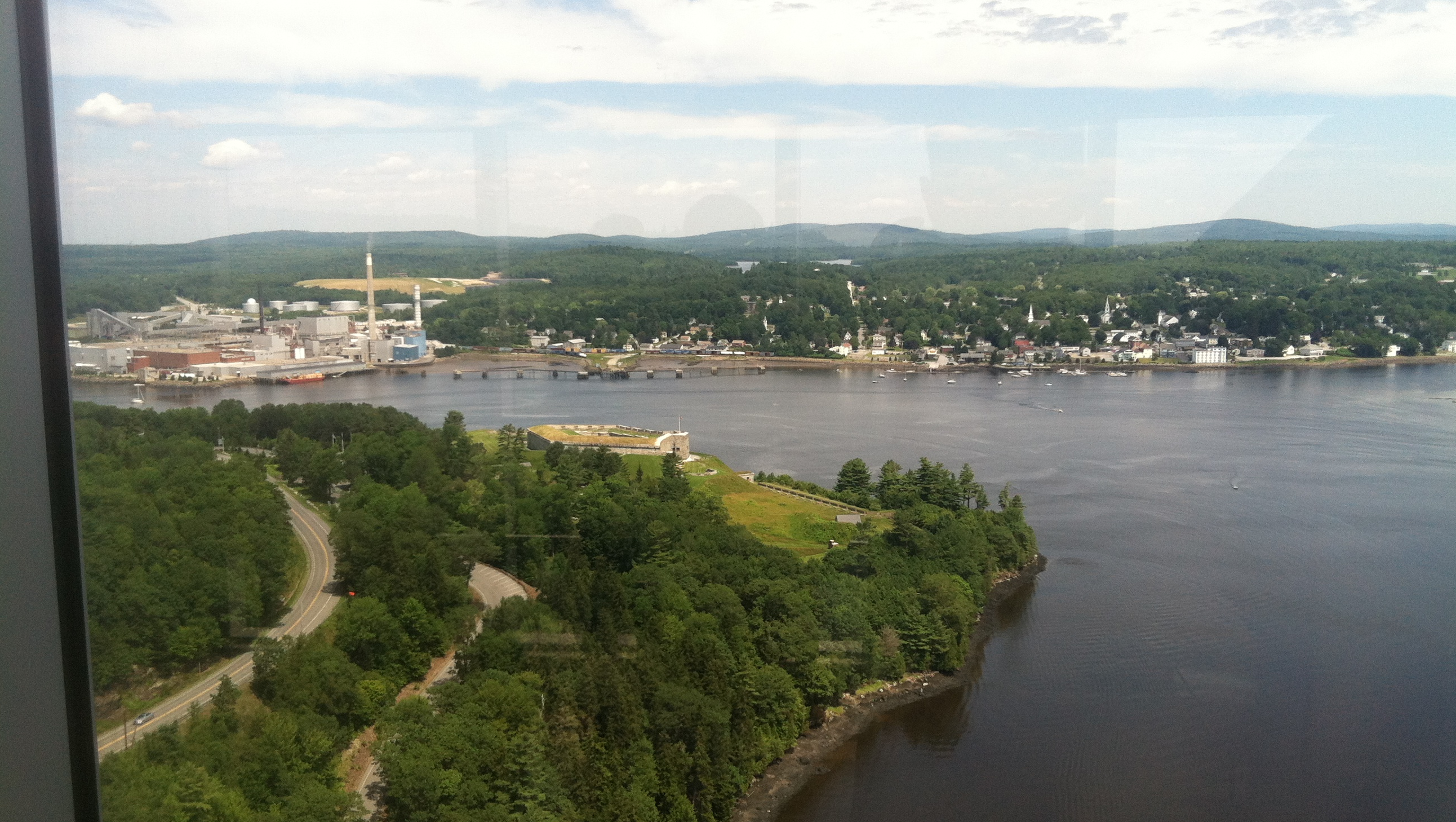
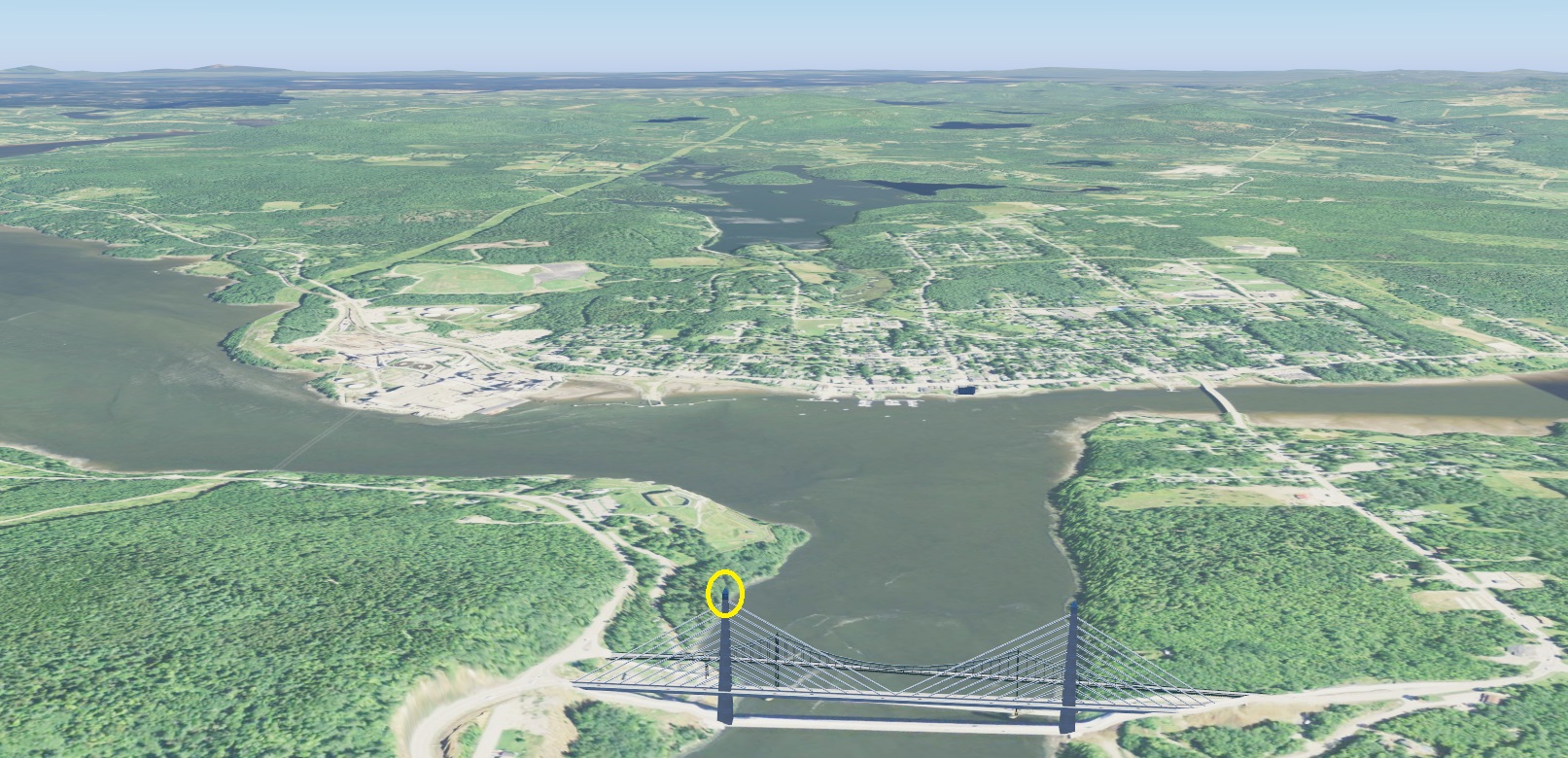
The view screamed Northeastern US, especially with what appeared to be a 19th century fort in the foreground. After a little fruitless searching in the Hudson river Valley (Ticonderoga?), a search for New England forts quickly came up with an identical picture. The contest photo was taken from the Observatory built into the Penobscot Narrows Bridge, looking out over Fort Knox, the town of Bucksport, Maine and the Verso Paper Company’s Bucksport Mill. The observatory has three levels, so let’s guess it was taken from the highest level, center window, as the reflections of the windows behind the photographer are on both sides of the frame.
One of these days I’ll get a hard window, and get on the list of people who can win.
Another sends a view from above:
Another reader:
So after a few tough weeks (Ethiopia? Really?), you ratcheted down the difficulty level. This wasn’t a difficult view at all, but I’m pretty sure you chose this one just to blow my mind. I mentioned a few weeks back in the Portugal contest how bridges are an important part ofviewfinding and that lately I’ve become obsessed with bridges. Well, well, didn’t bridges go notably absent for a few weeks?
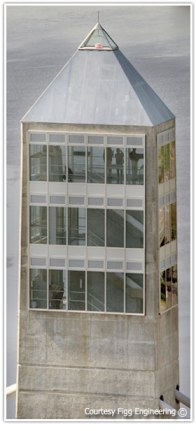
And no bridge here, either. But that’s because – wait for it – the view was taken from INSIDE A BRIDGE! This M. Night Shyamalan twist is from the Penobscot Narrows Observatory, a cable-stayed bridge (like Portugal) that boasts the fastest elevator in Maine, New Hampshire, or Vermont. How fast? Fast enough to get you to the top of the world’s tallest public bridge-observatory in the world in one minute.
What you see once the adrenaline wears off is a rather pretty view of bucolic Bucksport, Maine across the Penobscot River, with the slight eyesore of the Verso paper mill to the left. No doubt your submitter is a VFYW junkie on his way to Bar Harbor and Acadia National Park who couldn’t resist the urge to send in a view from an unconventional window.
Another:
Apparently this is the first, tallest and only bridge observatory in the US, and one of only four in the world. The form of the bridge towers were designed to mimic the Washington Monument, as some of the stone used to construct the more famous obelisk was sourced from nearby quarries. Fort Knox below was constructed following the Aroostook War, which was never really a war, but rather a state of tension between the US and Britain over the boundary with New Brunswick. Interestingly, one consequence of the diplomatic intervention which forestalled actual warfare in the Aroostook “War” was the establishment of a railroad right-of-way which would eventually become part of the Montreal Maine and Atlantic railway, most recently in the news for the tragic disaster which struck Lac-Megantic, Quebec and spurring on a renewed debate as to the safety of transport of tar sands oil by rail versus long-distance pipelines.
Another sends a video from the observation deck:
Another reader:
Usually I spend about an hour on this contest every week. But today, I am very, very lucky that I opened this week’s VFYW with my girlfriend sitting next to me. She recognized it instantly as the Penobscot Narrows Observatory, overlooking Fort Knox and Bucksport, Maine. (The tower is technically in Prospect, Maine). She drives past the observatory every time she visits her grandparents, who live just a few miles away. She and I are moving in to an apartment together this month, and now I can’t stop imagining The View From Your Window Book as our first coffee table book! Crossing my fingers that we’re the winners!
There are 18 windows total on the north face of the observatory, so I hope the tiebreaker isn’t whoever guesses the exact window. But if I have to guess, I’ll say that the picture was taken from the top floor of the three observatory decks, the easternmost window on the north face of the tower. I found a 360 degree view of the top floor, and the three western windows on the north face are in the stairway area (it looks like an awkward place to take a picture), so I suppose it’s a guessing game between the three eastern windows.
Details from the submitter:
Should be a pretty easy contest. It’s from the highest bridge observatory in the world on the Penobscot Narrows Bridge in Maine. I think it’s from the third window from the left on the north side of the observatory, top floor. (The elevator only goes to the floor below so you get a 360˚ view).
Driving back from my first trip to Acadia in way too long, we stopped at the observatory. When it was rebuilt as a cable-stayed bridge in 2007 (after the previous 1930s-era bridge was found to be structurally unsound due to corrosion) it was built with what is now the highest bridge deck observatory in the world. It was totally worth the price of admission to zoom up in an elevator and wander around the observatory watching the river below. Usually, such observatories are found in cities, this is in a rural area with a view of the paper mill and the rolling hills in all directions – all the way back to Cadillac Mountain in Acadia.
When you step out of the elevator you’re only two or three feet from the windows, and you’re told to look first at the horizon to dispel issues of vertigo from looking straight down 420 feet. This reminded my girlfriend of the a story about the rickety old bridge. In high school, her cross country team was going on a trip to Acadia for a training camp. The bus driver got to the bridge and refused to drive across. Not because it had been condemned at that point, but because the driver was afraid to drive across high bridges. He would only cross if someone else drove and he could lie on the floor and not see out. Apparently this was deemed too much of a liability, and the bus took the 30-mile detour to Bangor, where the bridges aren’t quite so high above the river.
By the way, If you need me to vet windows, just email me and I can give thumbs up or downs. I seem to have a knack for submitting VFYW contest photos from observation locations – I submitted Enger Tower in Duluth a few years back. And maybe some day I’ll win a book : )
More than 250 readers entered the contest this week and nearly all of them correctly answered the bridge observatory, making it one of our easiest contests ever. Since more than a dozen correct guessers of previous contests also guessed the correct window this week, the tiebreaker goes to a long-time correct guesser who has entered at least 20 contests without yet winning:
To use a standard VFYW contest cliche, the church spires in the background “screamed New England.” For once, the screaming was correct. A search for “New England coastal forts” produced Fort Knox (the original Fort Knox, I guess). The nearby bridge observatory is the only place that could produce that view.
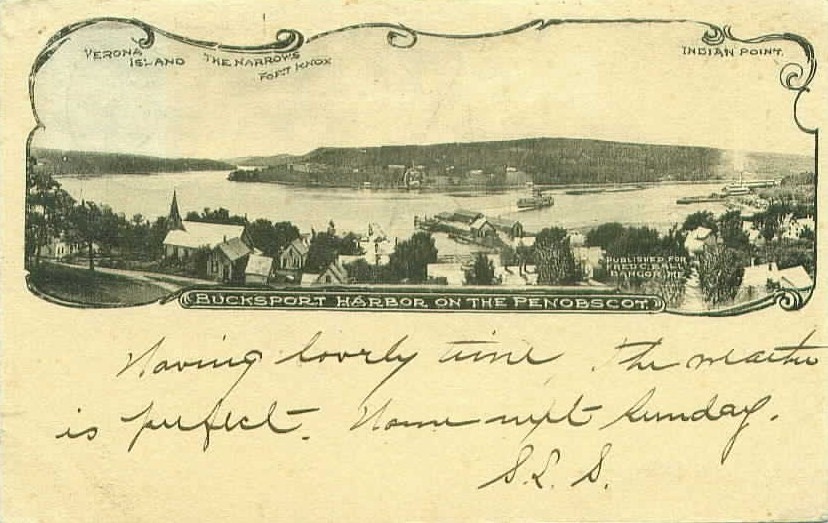
One more reader sends “a postcard from 1905 showing the reverse view (of the fort from the town, without the bridge)”:
Kelly: From the beginning, we’ve combined this strategy with a proactive policy of engagement. We stop and question individuals about whom we have reasonable suspicion. This is a widely utilized and lawful police tactic, upheld by the U.S. Supreme Court in its 1968 decision, Terry v. Ohio, and authorized by New York State Criminal Procedure Law and the New York state constitution. Every state in the country has a variant of this statute, as does federal law; it is fundamental to policing.
The “worksheet” officers must fill out after carrying out a stop-and-frisk contains boxes in which police officers can explain what led to the frisking — what the “reasonable suspicion” was, in other words. The single most common reason for a stop in the year 2008 was “furtive movements.” The third-most common was “other.” “Furtive movements” is cited in more than half of the forms reviewed by criminologist Jeffrey Fagan, a plaintiff’s witness in the class-action suit against the NYPD. Fagan, who believes a stop based solely on “furtive movements” is an unconstitutional stop, has calculated that the NYPD has carried out more than 200,000 illegal stop-and-frisks.
Read the whole thing. 400,000 young black men have had their futures ruined by patent racial profiling for petty marijuana possession. End racial profiling (only 11 percent of “stop and frisks” were initiated by a description of an alleged criminal and 88 percent of stops were of innocent people, overwhelmingly men of color, doing something “furtive”). And end Prohibition. Then fight crime.



 mentioned a few weeks back in the Portugal contest how bridges are an important part ofviewfinding and that lately I’ve become obsessed with bridges. Well, well, didn’t bridges go notably absent for a few weeks?
 The Dish

