
Paulinskill Lake, New Jersey, 7.51 am
Paulinskill Lake, New Jersey, 7.51 am
In the UK, when two officers interview a suspect, one of them asks questions while the other simply takes notes. A new study examines the effect of the note-taker’s demeanor:
Over 100 hundred students and university staff were allocated to either tell the truth in answering detailed questions about a real job they really had, or they were asked to lie and answer questions about a fictional job. After having three days to prepare, the participants were invited to a psychology lab for questioning. A female interviewer with a neutral style asked the questions (e.g. “If you were training me to do your job for a day, what things would I need to know about it?”) while a second male interviewer took notes. Crucially, this male interviewer either struck a supportive demeanour (smiling and nodding his head), a neutral demeanour, or acted as if he had suspicions (frowning and shaking his head). The participants were incentivised with the promise of a £5 reward if they fooled the interviewers.
Here’s the headline result – the truth-telling participants gave more detailed answers than the liars, but only when the second interviewer provided a supportive presence. This runs entirely counter to the aggressive questioning styles so often portrayed in fiction. By creating a reassuring atmosphere, the second interviewer encouraged the honest interviewees to open up more, which made the the lack of detail given by liars stand out.
Another sign of deception was the amount of negative comments made by liars about their (fictional) boss. But again, this difference only appeared when the second note-taking interviewer acted supportive. [Researcher Samantha] Mann and her team said this was the first time a study had shown the beneficial lie-detecting effect of having a supportive second interviewer.
The interactive map shows the various rates of traffic deaths around the world:
The map is part of “Roads Kill,” a series of reported pieces on global traffic safety. Editor Tom Hundley notes that traffic fatalities around the world have reached 1.24 million per year and could triple by 2030. In the developing world, road accidents will soon overtake HIV/AIDS, malaria, and tuberculosis to become the fifth leading cause of death. A number of countries are profiled individually as part of the project, including Egypt, where journalist Lauren Bohn writes that yearly traffic fatalities are roughly equal to the number who died in 2011 uprising and cost the country more than $1 billion per year.
Maggie O’Farrell explains:
I had a really bad stammer in my childhood and adolescence, and that imbues you with two things. First, a hyper-sensitivity to grammar, because a stammerer will have problematic sounds, impossible verbal stumbling blocks. To get around these pronunciation traps, you’re editing and rewriting sentences in your head before you say them. Second, writing is just such a joy when you have a problem with speaking. It’s so astonishing to watch language coming out of your pen without any hesitation or dysfluency. … Stammerers become skilled at sentence construction and synonyms: we have to be. Faced with a problem word, we need to have instant access to eight others we could use instead—ones we could say without stumbling.

Megan Garber relays the latest findings on whether life is possible on Mars:
[T]he answer is probably most definitely not. And that’s because Mars, it seems, has no methane. Or, at least, the Curiosity rover that’s been tooling around the surface of the Red Planet for more than a year, taking measurements of the air and the soil, has found no methane. And that means, essentially, that life as we know it does not — cannot — exist on the planet. Methane is the byproduct of microbial respiration; no methane, basically, no microbes. “It just isn’t there,” Dr. Sushil K. Atreya, a member of Curiosity’s science team, told The New York Times.
Bill Andrews adds:
It’s surprising but not shocking, since there was already so much confusion about the methane levels. (Plus a fair amount of controversy, since anything that has to do with extraterrestrial life often leads to emotional rather than rational discussion.) It’s possible the previous findings were accurate, and that some unknown process has destroyed or removed the methane (such as a dust devil creating an electric field that zaps away the gas), but there’s no evidence to support this.
So it looks like reports of underground life on Mars have been greatly exaggerated. To be sure, the odds of Mars currently hosting life were never enormous, but now they’re that much lower. (But still not zero!)
Last week, California’s state legislature approved a bill that would provide condoms to prisoners:
Opponents of the current bill maintain that supplying condoms for inmates when inmate sex is on the books as a crime is tantamount to encouraging prisoners to break the law. Correctional officers have also expressed concern that condoms could encourage more sex or be used to conceal or transport weapons—or even be used as a weapon itself (via a phenomenon called “gassing” where bodily fluids are weaponized …look it up). Improper disposal of condoms, they say, could also pose a health risk.
But numerous studies of populations among which condoms are distributed have not observed a rise in security risks, health concerns or in self-reported sex among prisoners. Moreover, studies of prison populations indicate that, legal or not, sex occurs between prisoners and between prisoners and prison guards. Without condoms available, most sex goes unprotected.
Some things never get old: JD Salinger on the sheer intelligence of the Jesus in the Gospels; the genius of Wordsworth’s poetry; the feel of physical books; a belly that brews its own beer; the holiness of prostitutes; Rocky’s famous 50K run montage.
The most popular post of the weekend was The Rebirth Of Catholicism – my close reading of Pope Francis’ extraordinary 12,000 words; and The View From Your Blog Cave.
See you in the morning.

Watching the theocons respond to the rebirth of Christianity in the Catholic church was bound to be a bewildering experience. For thirty years, the Ratzingerian dynamic held sway – an era in which papal authority was elevated far above the faith of the people of God, in which doctrinal orthodoxy in every single particular was the highest virtue and the one by which all other virtues were judged, in which a pure, orthodox, doubt-free and smaller church was supposed to somehow convert all of Europe back to Christianity, in which liturgical esoterica became neurotic fixations, and outreach meant finding ways to bring opponents of the Second Vatican Council, including even Holocaust deniers, back into the fold.
In every single, defining characteristic of Ratzinger’s long rule – from the era of Ratzinger as head of orthodoxy to Pope Benedict XVI himself disappearing inside a fabulous flurry of fabric and jewellery – Francis has turned a corner. Definitively, bluntly, unmistakably. So what do the the “reactionaries and legalists” (Francis’ own words) have to say now? Matthew Schmitz grapples:
The pope certainly does mean to propose an adjustment, though the nature of that adjustment isn’t immediately clear. The hope of many (and too-eager suspicion of some) that he was muzzling the Church’s moral witness was immediately disappointed. A mere day after the publication of his interview, he denounced abortion in the strongest terms of his papacy, some of the strongest of any papacy …
The Pope’s approach is one familiar to any reader of the gospels. Pharisees try to discredit the gospel by trapping its teacher; the teacher refuses the terms of their question and raises the spiritual stakes. The point here is not to compromise on or back away from truth, but rather to reject its caricature. This is good practical guidance. If it’s what he meant in his broader remarks, then those remarks offer wise advice well worth taking.
Note that he immediately has to grasp onto a short statement after the 12,000 word interview to try and belittle the seismic shift. As if Francis were likely to change a deep moral truth about life in the womb. John Zuhlsdorf, in contrast, just goes into total denial:
People who focus just on the comments that Francis made about compassion for homosexuals and “social wounds” or about not talking about abortion all the time or that the Church has no right to “interfere” with people (as if to say that Francis thinks homosexuality is okay or that the Church should be silent in the public square or that we mustn’t talk about abortion) without also underscoring that Francis was talking about things which need healing and that they are matters for confession (read: sins) have distorted his meaning.
Really? Homosexuality is not okay for Francis in exactly the same way it was not okay for Benedict? Let me offer two direct quotes from both pontiffs. Benedict XVI:
Although the particular inclination of the homosexual person is not a sin, it is a more or less strong tendency ordered toward an intrinsic moral evil; and thus the inclination itself must be seen as an objective disorder. Therefore special concern and pastoral attention should be directed toward those who have this condition, lest they be led to believe that the living out of this orientation in homosexual activity is a morally acceptable option. It is not…
The proper reaction to crimes committed against homosexual persons should not be to claim that the homosexual condition is not disordered. When such a claim is made and when homosexual activity is consequently condoned, or when civil legislation is introduced to protect behavior to which no one has any conceivable right, neither the Church nor society at large should be surprised when other distorted notions and practices gain ground, and irrational and violent reactions increase.
There is even a hint that gays deserve bashing for pushing society too far. And this edict was issued as the AIDS epidemic was destroying so many lives – and where Francis’ view of the church as a “field hospital” could not have been more appropriate. Instead: condemnation, marginalization, cruelty, tone-deafness.
Francis, in stark contrast:
A person once asked me, in a provocative manner, if I approved of homosexuality. I replied with another question: ‘Tell me: when God looks at a gay person, does he endorse the existence of this person with love, or reject and condemn this person?’ We must always consider the person. Here we enter into the mystery of the human being. In life, God accompanies persons, and we must accompany them, starting from their situation.
And these words cannot but be understood as a gentle but nonetheless revolutionary rejection of the entire John Paul II-Benedict XVI era, which was fixated first and foremost on doctrinal orthodoxy in all things, from legalistic details about coverage of contraception to refusing even to employ gay people in lay services for fear they might be infected with the horror of a civil marriage. Can the theocons not read? Or is it too much right now for them to absorb? Francis could not be clearer:
The dogmatic and moral teachings of the church are not all equivalent. The church’s pastoral ministry cannot be obsessed with the transmission of a disjointed multitude of doctrines to be imposed insistently.
Remember the American nuns under investigation – still ongoing? Why were they under investigation? Because they were not being insistent enough on the issues of abortion, homosexuality and contraception! They were too busy serving the poor. What did the new Pope just say?
We cannot insist only on issues related to abortion, gay marriage and the use of contraceptive methods. This is not possible.
But this insistence was not just possible, it was mandatory in the US Conference of Catholic Bishops for the last several years, with their ridiculous Fortnight of Freedom, their obsession with contraception in Obamacare – ignoring the vast moral sea-change of universal coverage in their cramped Pharisaical insistence on these sexual matters – and their bitter, nasty, divisive attacks on gay Catholics and our loves, even as they shielded child-rapists from exposure and from accountability.
Now, of course, the Pope is not about to alter core doctrines nor does he have the authority to do so. But what he has insisted upon is that the truth of the faith is not guarded by one man alone, as John Paul II and Benedict XVI tried to argue. Their deliberate attempt to ratchet power back into the papacy, to use that authoritarian office to purge heretics, freeze debate and chase out the “luke-warm” liberal Catholics in favor of a smaller “purer” church … has been replaced by something much more like John XXIII’s and John Paul I’s vision and the Spirit of the Second Council. Francis understands the appeal and temptation of strong authority. Because he once tried it:
My authoritarian and quick manner of making decisions led me to have serious problems and to be accused of being ultraconservative. I lived a time of great interior crisis when I was in Cordova. To be sure, I have never been like Blessed Imelda [a goody-goody], but I have never been a right-winger. It was my authoritarian way of making decisions that created problems.
What replaces that? The authority of the people of God in a journey of faith:
The church is the people of God on the journey through history, with joys and sorrows. Thinking with the church, therefore, is my way of being a part of this people. And all the faithful, considered as a whole, are infallible in matters of belief, and the people display this infallibilitas in credendo, this infallibility in believing, through a supernatural sense of the faith of all the people walking together. This is what I understand today as the ‘thinking with the church’ of which St. Ignatius speaks. When the dialogue among the people and the bishops and the pope goes down this road and is genuine, then it is assisted by the Holy Spirit. So this thinking with the church does not concern theologians only.
No, abortion is not okay. It remains profoundly wrong to take life away from the vulnerable and unborn. But when recognition of this truth springs up from the life of the people of God and does not seek to coerce others by law or intimidation – it has so much more moral authority than when it is imposed by a distant, political monarch in ermine.
One way to ignore these seismic reprimands of the recent past is the following from First Things:
God’s mercy on sinners is the key in which Francis exercises the Petrine ministry. This represents no great change from the pontificates of John Paul II and Benedict XVI, who spoke frequently of the mercy of God and the reality of sin and, in the case of the former, wrote an entire encyclical on the divine mercy.
Sorry – but weak. Read the whole thing. And absorb how deep, penetrating and yet charitable a refutation it is of almost everything that has defined the hierarchy of the last three decades. And rejoice.
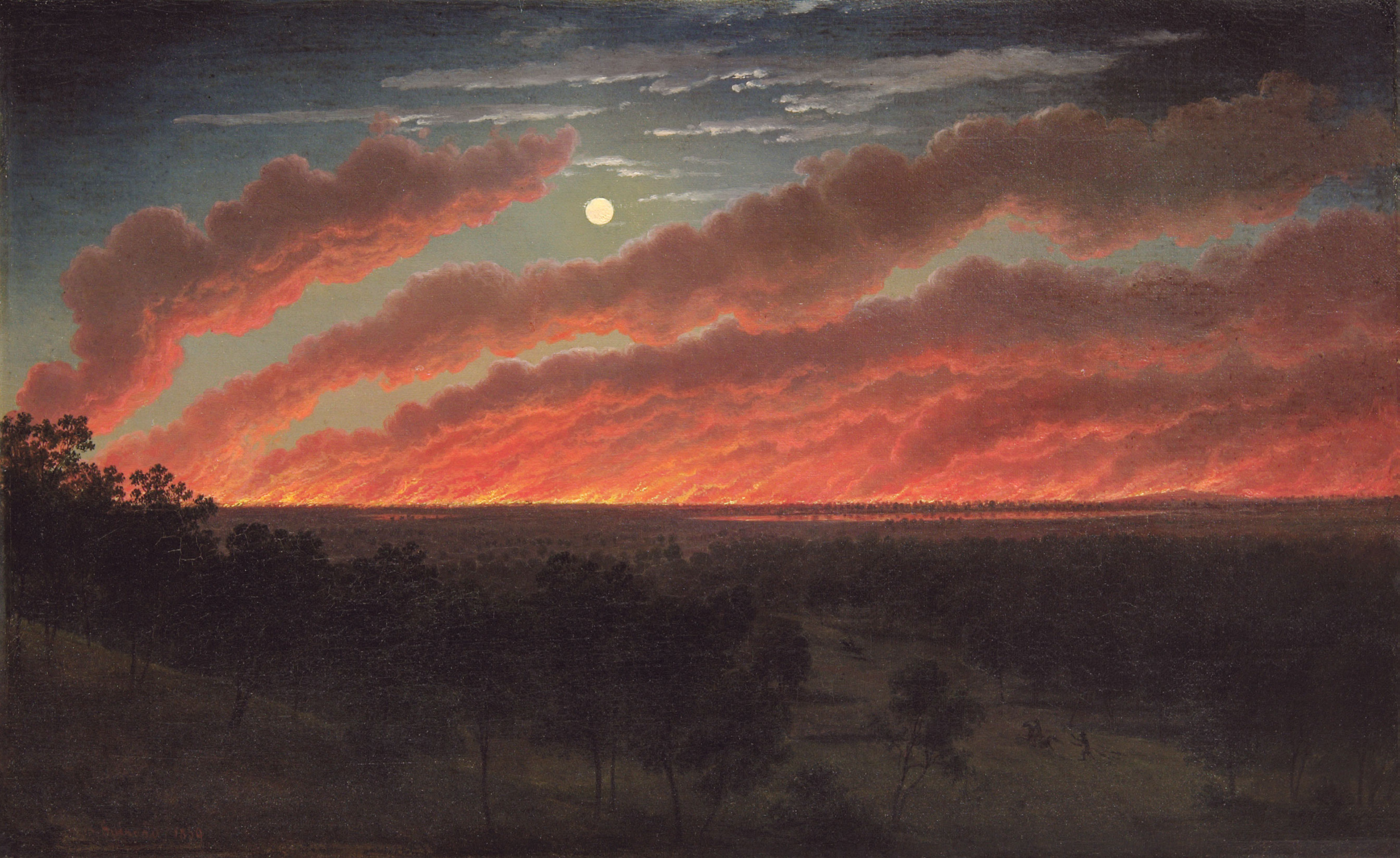
Michael Prodger highlights a new Royal Academia of Art exhibit, Australia, which showcases the painting produced since the continent’s colonization:
The point of the exhibition, with more than 200 works, is to provide an overview of two centuries of paintings that have been little seen or appreciated outside Australia itself. The last two significant surveys here were held in the Tate and Whitechapel galleries in the early 1960s. While Aboriginal art, with its “dreaming” and “creation” themes, has had its moment in the sun as an artistic-anthropological hybrid, the tradition that stemmed from the first settlers has not had the same exposure.
This tradition, with its roots in 19th-century European painting, is based on the land. Kenneth Clark wrote: “In Australian landscape painting, as in all great landscape painting, the scenery is not painted for its own sake, but as the background of a legend and a reflection of human values.” The legend and values are Australia’s foundation myths — the blood and soil ocker mentality that grew from the hardscrabble life and the morally dubious origins of the first settlers. And like the Hudson River School in another young country, America, there is in Australian art a continuous sense of surprise and pride at the vastness of nature.
(Bushfire by Eugene von Guérard, 1859. From Wikipedia Commons.)
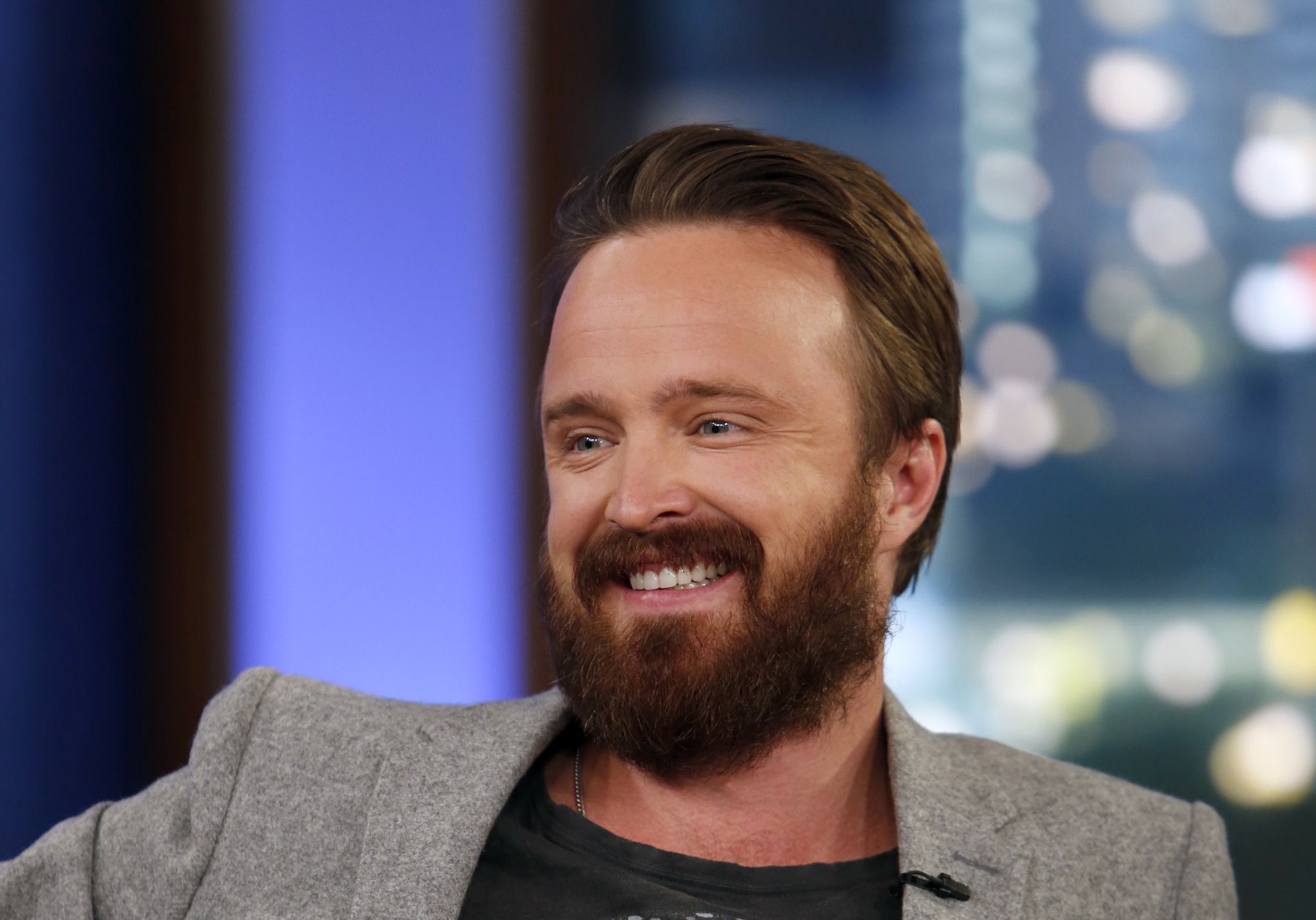
Let’s hear it for Aaron Paul, the unforgettable Jesse on Breaking Bad.
(Photo by Randy Holmes/ABC via Getty Images.)
 The Dish
