Milk Doesn’t Necessarily Do A Body Good

Aaron Carroll challenges the conventional wisdom:

In another dietary diatribe, Baylen Linnekin criticizes the government’s Dietary Guidelines Advisory Committee:

The DGAC is actively dreaming up ways for the government to meddle in your diet. A look through the transcript of last week’s hearing reveals the word “policy” (or “policies”) appears 42 times. The word “tax” appears three times. And the word “regulation” appears 13 times. The words “meat,” “salt,” “soda,” “sugar,” and “trans fats” came up countless times in the context of things you really should be eating less frequently. One of the most nefarious things I’ve seen about the DGAC recommendations so far is the suggestion that the government involve itself in the lives of obese people by sending them regular text messages. (I’ve dubbed this this the DGAC’s “Chubby Checkers” program.)

The Victims Of False Rape Accusations, Ctd

A reader revives the thread with an upsetting story:

My daughter was falsely accuse of raping her girlfriend in October of this year. I know she was falsely accused because the girl who accused her said things happened in my home while I was supervising the girls. The girl who accused my daughter has an active fantasy life and had published a story online about being raped in exactly the way she claimed my daughter had raped her almost a year before they met. When the police asked me about what happened, I explained that it could not possibly have happened because my wife and I were supervising the girls the entire time my daughter’s friend visited.

Our exculpatory testimony was ignored. My daughter’s denials were ignored.

She was pulled out of school without the opportunity to talk to her parents and processed at the district court. She was not placed at an alternative school until almost two months had passed.  She was placed on electronic monitoring prior to trial. During that monitoring period (October 24 – January 22), she was not permitted to leave the house, even to exercise.

I was ordered to pay for a court-appointed attorney or find one for my daughter. We ended up paying almost $10,000 in attorney fees to defend my daughter. We intended to contest the matter in court but eventually had to take a plea deal because we ran out of money. My daughter’s guilt or innocence wasn’t really important because our justice system decides guilt or innocence based on your ability to pay.

I don’t doubt that rape happens far more often than false rape accusations. To believe that rape is so uniquely damaging that it is always worse than a false rape accusation is to place an inordinate amount of faith in our legal system. Considering how many innocent men have been sent to death row enjoying far greater legal protections than common defendants, it’s hard to understand how anyone could have that much faith in our legal system. Justice may be blind, but she is somehow able to tell how much you’ve got in your pockets.

Breaking Better

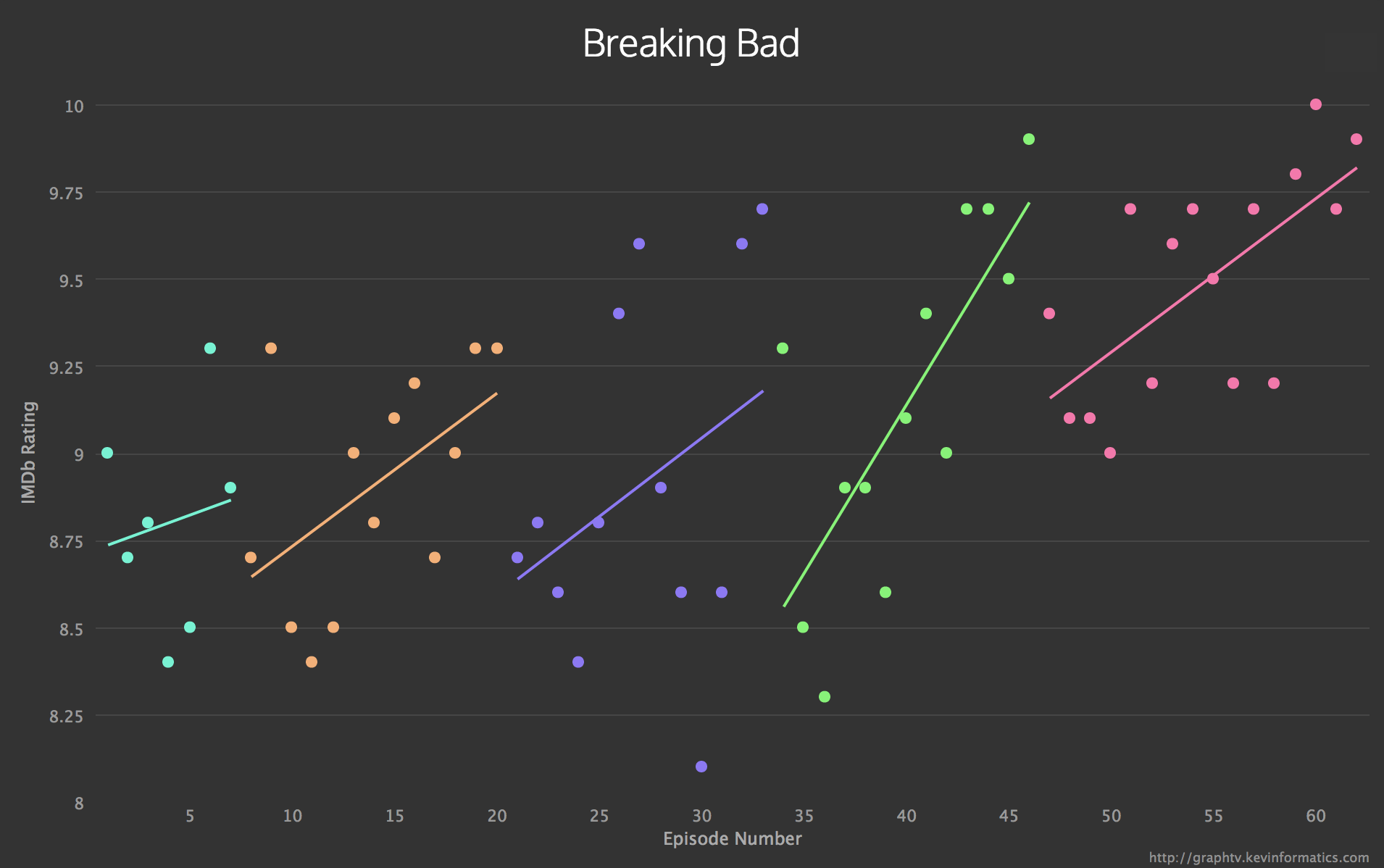
GraphTV - Breaking Bad

Dan Selcke introduces a new graphing tool:

Arguing the merits and demerits of a favorite TV show is an exercise plagued with uncertainty. What some viewers see as a well-developed, three-dimensional character, others may see as a grating waste of space, and one person’s daring plot twist is another person’s nonsensical cop-out.

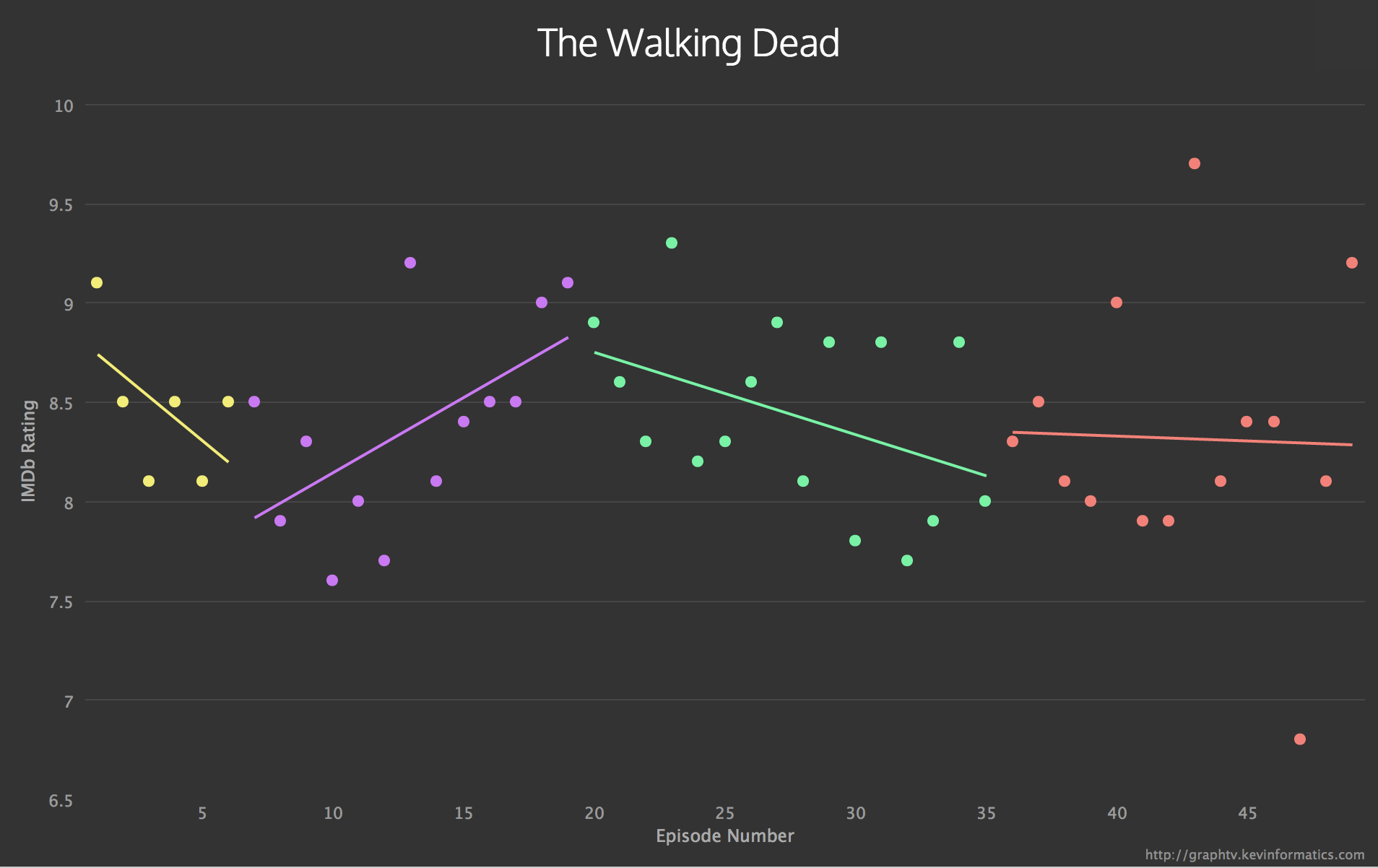
With Graph TV, this is no longer a problem. The website, created by software engineer Kevin Wu, looks up the IMDB user ratings for every episode of a given TV show and turns them into points on simple graphs that show the ebb and flow of public opinion over the course of a series. Each season of the show is coded with a different color, so users can see, for example, which seasons of Dexter received more praise as they went on and which ones tumbled down the Y-axis faster than an Olympic bobsled team with nothing left to lose.

The Walking Dead‘s inconsistency is charted below:

GraphTV - The Walking Dead

A Faith-Based Tax

Mark Movsesian describes a disturbing move by the Islamic State in Iraq and the Levant (ISIL), an al-Qaeda offshoot:

ISIL has taken the eastern [Syrian] town of Raqqa and reinstated the centuries-old dhimma, the notional contract that governs relations with Christians in classical Islamic law. According to the dhimma, Christians may live in an Islamic society as long as they pay a poll tax called the jizya, accept restrictions on their activities—for example, they may not engage in public religious displays, affect equality with Muslims, or carry weapons—and refrain from cooperating with Islam’s enemies. If they break the terms of the contract, Christians forfeit the protection of Islamic society and become subject to retaliation. ISIL has updated the dhimma for Raqqa’s several thousand Christians. For example, Haaretz reports,

According to the 12 clauses in the accord, the Christians will commit to pay a twice-yearly poll tax of “four gold dinars”—which at today’s rate, comes to about $500 per person—with the exception that members of the middle class will pay half this amount, and the poor will pay a quarter of it, on condition they do not conceal their true financial situation.

Rashid Najm talked to an Egyptian scholar who calls the tax “theft”:

The imposition of “jizya” on Christians in Syria is nothing but “a new fad, one of many launched by terrorist groups stemming from al-Qaeda, which have no legal authority to issue such edicts and rulings,” said Sheikh Abdul Zahir Shehata, a lecturer at Egypt’s Al-Azhar faculty of sharia and law. This imposition is “a form of theft that uses religion as a cover,” Shehata told Al-Shorfa. “Jizya” is not a pillar of Islamic law, he said: It emerged during the Islamic expansion era and was paid by non-Muslims who were capable of fighting in return for protection, while zakat was collected from Muslims, with proceeds going to the Muslim treasury where public funds were held.

“ISIL contradicts itself,” Shehata said. “On the one hand they say they are implementing the provisions of Islamic sharia, including the ‘jizya’, however the Islamic state must be a full-fledged state and recognised by its citizens and subjects, which is not the case in the areas where ISIL is imposing its control by force and bloodshed.”

But Mark Cohen argues that premodern dhimmi status meant Jews were better off in the Mideast than in parts of Europe:

In the premodern Muslim world Jews, like all non-Muslims, were second-class subjects, but they enjoyed a considerable amount of toleration, if we understand toleration in the context of the times. They were a “protected people,” in Arabic, dhimmis, a status that guaranteed free practice of religion, untrammeled pursuit of livelihood, protection for houses of worship and schools, and recognition of communal institutions—provided that able, adult males paid an annual head-tax, accepted the hegemony of Islam, remained loyal to the regime, and acknowledged the superiority of the Muslims. …

On the plus side, Islamic society was a pluralistic mosaic of different religions and ethnic groups and Jews were not the only marginal group. Moreover, as the smallest of the minority groups, Jews were rarely singled out for special attention. In Latin Europe, by contrast, Jews constituted the only non-conforming religion (heretics were considered bad Christians), and accordingly suffered more frequent and severe persecutions.
Quote For The Day II

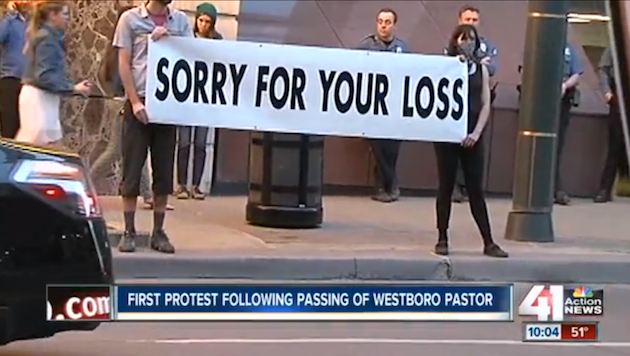
Westboro Baptist Church Case to be Heard by Supreme Court

Loss

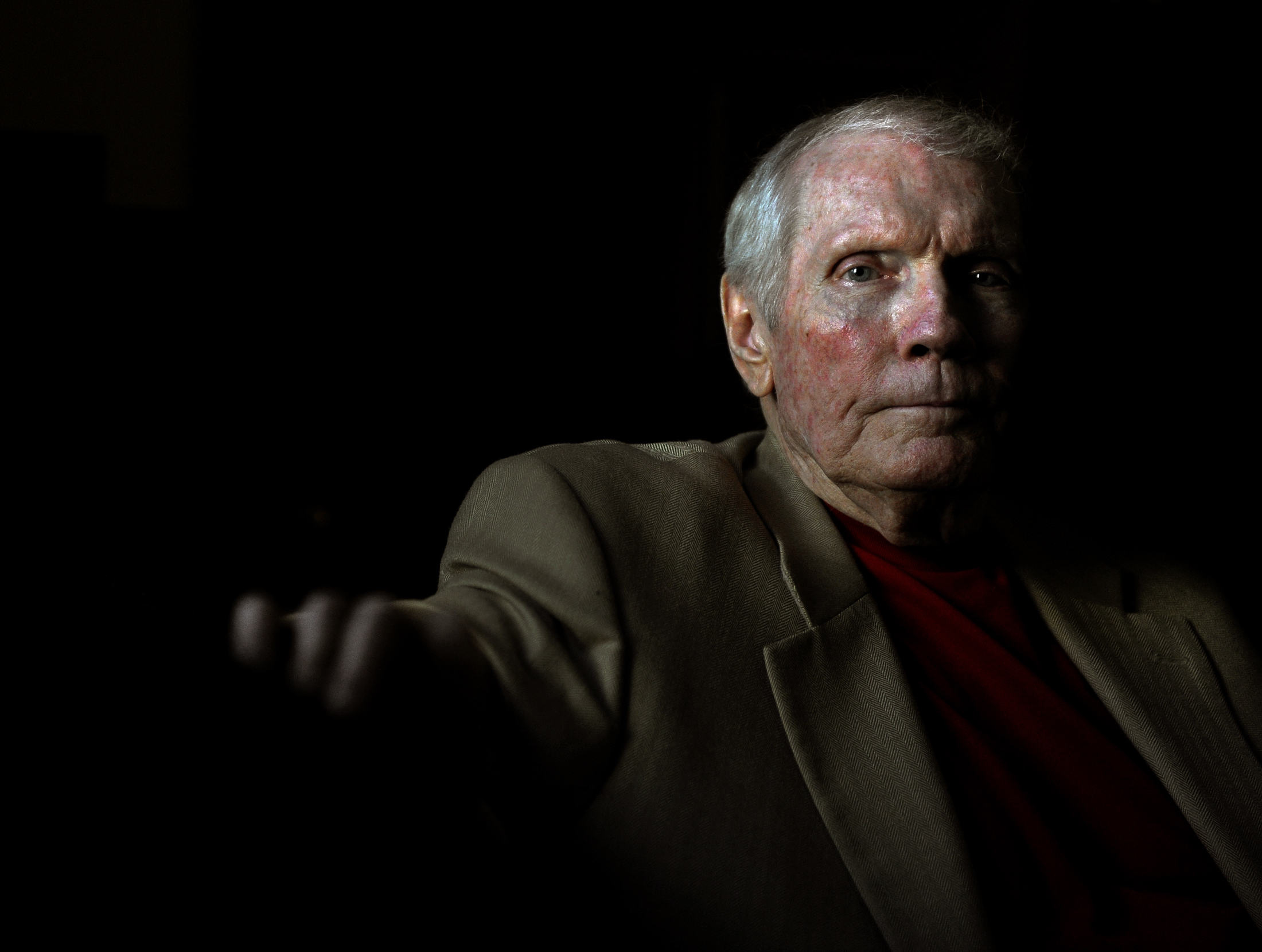
“At times we are able to humiliate our worst enemy. Inevitably, his weak moments come and we are able to thrust in his side the spear of defeat. But this we must not do. Every word and deed must contribute to an understanding with the enemy and release those vast reservoirs of goodwill which have been blocked by impenetrable walls of hate,” – Martin Luther King, Jr., Dexter Avenue Baptist Church; Montgomery, Alabama, Christmas Sermon, 1957.

(Photo by Michael S. Williamson/The Washington Post via Getty Images. Details of the KSHB screenshot here.)

Pre-K Prejudice?

Harsher punishments for African-American students start in preschool, according to a new Department of Education analysis:

Black children constitute 18 percent of all kids attending preschool but account for 48 percent of all students suspended more than once, the new data show. Across K-12 schools, black students represented 16 percent of the student population but 42 percent suspended more than once in the 2011-12 school year.

Earlier studies have found that these high suspension rates for black students – males in particular – exist among older students as well, Yale associate professor Walter Gilliam said. The race gap “was bad then, and it’s bad now,” Gilliam said. “You don’t have to be able to split hairs to see how disproportionate it is.” Gilliam’s own research has found high expulsion rates among black preschoolers, but there has been little prior research on suspension.

Bouie notes that the disparities aren’t limited to suspensions:

Compared to their white counterparts, black boys are three times more likely to be placed in remedial or “problem” classes, as opposed to receiving counseling or a diagnosis. School-related arrests are depressingly common, and in 70 percent of cases, they involve black or Latino students. The same goes for referrals to law enforcement – in one Mississippi school district, for example, 33 out of every 1,000 students have been arrested or referred to a juvenile detention center, the vast majority of whom were black. This has far-reaching consequences. Suspensions lead to more absences, as students become disconnected from the school. In one study of 180,000 Florida students, researchers found that just one suspension in ninth grade can drastically reduce a student’s chance of graduating in four years.

Marcotte sees a larger problem:

Social-justice activists have been raising the alarm for years now about the “school-to-prison pipeline,” which the ACLU describes “as a disturbing national trend wherein children are funneled out of public schools and into the juvenile and criminal justice systems.” It works like this: Students, especially students of color, are hit with outrageous and disproportionate disciplinary measures in the school system. At best, that causes them to fall behind in their classes, but it can also result in students being suspended or shuffled off to separate classes for troublemakers, causing higher dropout rates and the subsequent higher unemployment and imprisonment rates. Sometimes schools turn to the police, who then arresting kids for minor infractions, treating them as criminals instead of young students who need support.

Related Dish on the subject here.

Plagiarism As Poetry

MoMA poet laureate Kenneth Goldsmith takes the spotlight in the following preview for Noriginals: The Art of Uncreativity, a “multi-platform feature documentary” exploring creativity in the age of algorithms:

Meanwhile, Johannah King-Slutzky explores the field of robopoetics (RP):

Is anything about computer-generated poetry radically new? Mostly, yes. Robopoetics challenge several conventional theories about literature and bolster other claims (like Barthes’ death of the author) with hard, non-theoretical proof. In electronic literature there is no dyadic author and text: the new creative schema is a triad of programmer, robotic author, and text. Robopoetics shifts the burden of creativity onto programming and the selection of source materials. (If you’re feeling contrarian you might argue that this contemporary triad isn’t so different from the classical muse-author-text model, but anyway.) …

I’ve written and read more than the average amount of poetry, but somehow amidst all the difficult poetry, I forgot that relatability and straightforwardness are the marks of a mature poet, too. Once, I read computer-generated poetry for 10 hours straight. The next week I could only stomach plainspoken Du Fu. I had to turn the clock back 1200 years. In this and other ways, games like Bot or Not might be a good learning tool. The same skill you refine by playing Bot or Not—the detection of gibberish—can also assist in separating the livejournal from the laureate. … In the words of Bot or Not’s creator, “The ability to tell whether something is of human or computer provenance … might become really important. We will all be like blade runner people, trying to tell if a text is human.”

Under Water?

Flood insurance rates are spiking:

President Obama has signed a law that would reduce rates for residents of coastal areas. Tracey Samuelson summarizes the news:

President Obama signed the Homeowner Flood Insurance Affordability Act into law, which dramatically slows down the federal government’s effort to end subsidies for the program. The law was fought for by coastal homeowners who feared that previous attempts to reform the National Flood Insurance Program, passed by Congress in 2012, would make insurance premiums unaffordable. … The legislation caps premium increases at 18 percent a year and reinstates subsidized rates for properties that had begun to be phased out under the 2012 reforms. Those restored subsidies apply to properties which were built in compliance with earlier flood elevation recommendations and ensures that those rates will apply to new homeowners, if a property is sold.

Scott Gabriel Knowles believes the 2012 law, the Biggert-Waters Flood Insurance Reform Act, should have been left intact:

Its stipulations were firm: Properties built before the NFIP were no longer grandfathered into the program; homes that flood repeatedly (“Repetitive Loss Properties”) were denied coverage; and insurance premiums would be recalculated to accurately reflect real actuarial risk. The law further mandated the formation of a Technical Mapping Advisory Council, a body of experts empowered to advise FEMA on best practices in floodplain mapping. Biggert-Waters marked a rare moment in American disaster politics: enlightenment. Local interests were sacrificed for something bigger – preparing the nation for the storms on the horizon. …

For advocates of sustainable development, Biggert-Waters held out the hope that the longstanding promise of the NFIP—controls over rampant real estate development in hazardous terrains—could at last be realized. Intense lobbying by homebuilders at the state level has a long history of thwarting local zoning restrictions. And many governors and local officials were eager to hand out relief checks and spur a return to the shore after a flood rather than waiting for impact studies that might restrict post-disaster reconstruction. The weakened act is much less likely to slow down coastal development in flood zones, and that’s bad news for advocates of an aggressive climate change policy.

Previous Dish on flood insurance here, here, and here.

What Will Our Sanctions Do?

Oliver Bullough is concerned that America is helping Putin consolidate power:

Since coming to power, Putin has made it his goal to restore the Kremlin’s power: by crushing Chechnya, by cancelling elections, by controlling the media and by squashing over-mighty oligarchs who felt they could challenge him. A natural next step is to enhance his control over the remaining oligarchs’ money by forcing them to repatriate it. John Christensen, executive director of the Tax Justice Network, which campaigns to open up the shoal of tax havens that are all that remains of the British Empire, says that bringing the money home would both increase Russia’s tax take and improve the Russian economy by forcing businessmen to invest productively rather than in London property or U.S. basketball teams.

Jamile Trindle also evaluates the impact of the sanctions:

“The real potential damage to Russia’s economic future is self inflicted,” said Chris Weafer of Moscow-based consultancy Macro-Advisory, in a recent research note.

“The real damage from a prolonged conflict in Ukraine,” Weafer said, “may be to radically slow the inflow of much needed investment capital.” Weafer recently cut his forecast for the Russian economy in 2014 from 1.9 percent to 1 percent growth.

Investors’ cooling interest in Russia could make it more expensive for Russia to borrow money in international markets. Rating firms Standard & Poor’s and Fitch Ratings both downgraded Russia’s outlook from stable to negative, after the U.S. rolled out new sanctions Thursday. The Russian Finance Ministry has said it might delay plans to sell $7 billion in Russian sovereign bonds this year. Russian Finance Minister Anton Siluanov acknowledged Friday that Russia’s borrowing costs are going up.

Packer’s take on the Ukraine crisis:

A successful election in a stable Ukraine is half the battle against Putin’s aggression. The other half is deterrence. It would be naïve to take Putin at his word that Russia has no designs on territory outside Crimea. He needs an atmosphere of continuous crisis and grievance to maintain support at home, to distract his own public from the corruption, stagnation, and repression that are his real record as a leader. Deterrence can be designed to expose Russia’s weakness: non-lethal military aid to Kiev, escalation of sanctions against Putin’s cronies, and the ultimate threat of financially targeting Russia’s energy sector. But no strategy will work if the U.S. and the European Union don’t act together, and America can no longer simply expect Europe to follow its lead. That was a different era.

Lastly, Larison continues to ask why we are sanctioning Russia:

[W]hat is the purpose of the punishment beyond proving that it can be done? If a punitive approach makes Russia more antagonistic and intransigent, as it seems likely to do, how is that a desirable outcome? Another illusion that needs to be dispelled is the belief that punitive measures achieve anything other than increasing tensions and making conflicts in the future more likely.

Face Of The Day

CHINA-MALAYSIA-MALAYSIAAIRLINES-TRANSPORT-ACCIDENT

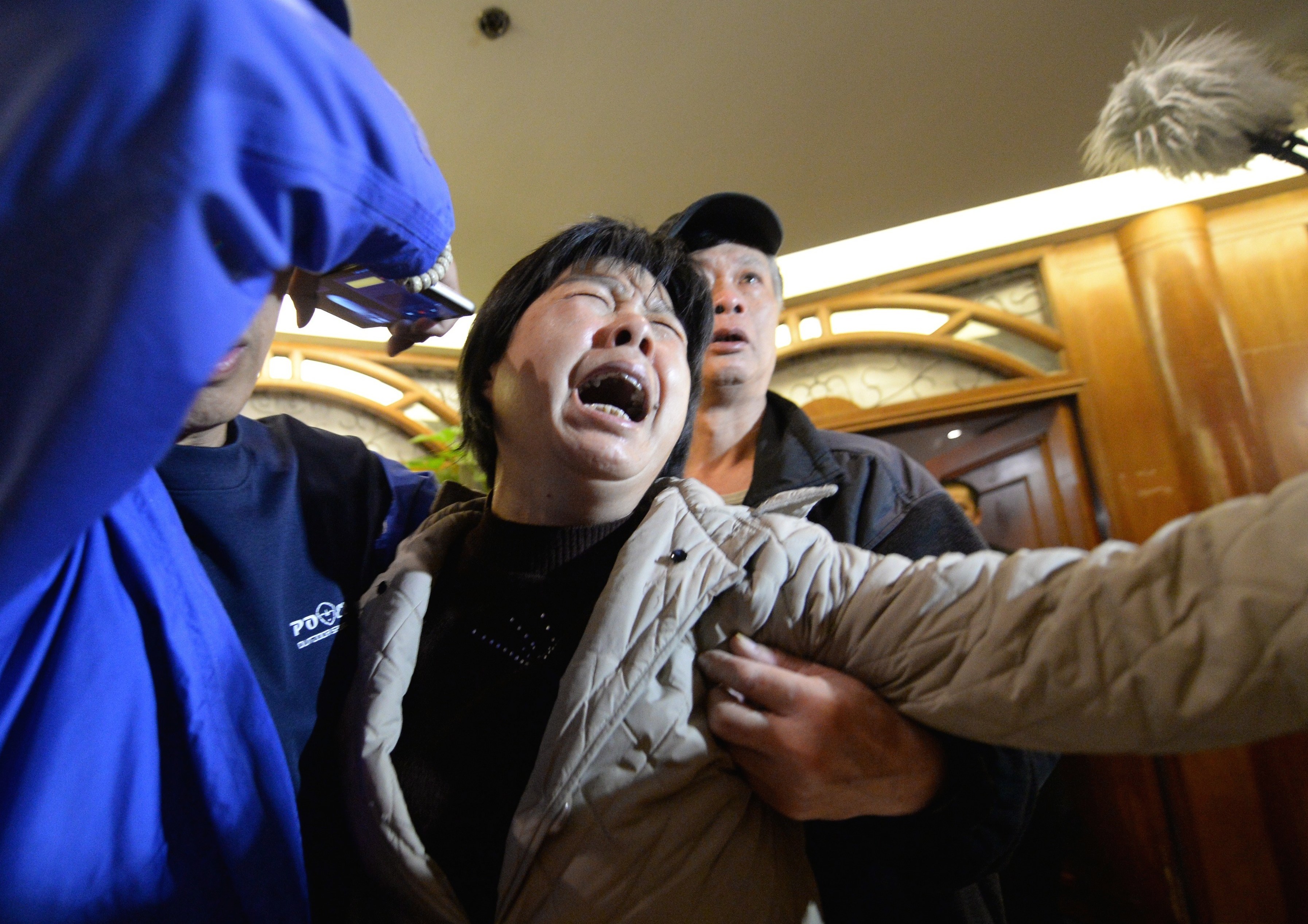
A relative of passengers on Malaysia Airlines flight MH370 cries at a hotel in Beijing on March 24, 2014 after hearing the news that the plane plunged into the Indian Ocean. Prime Minister Najib Razak made the announcement today as the airline reportedly told relatives that none on board survived. By Goh Chai Hin/AFP/Getty Images.