Face Of The Day

New Orleans Holds Citywide Mardi Gras Celebration

Members of the Krew of Mondo Kayo Social Marching Club march through the rain during the Mardi Gras parade on March 4, 2014 in New Orleans, Louisiana. Fat Tuesday is the traditional celebration on the day before Ash Wednesday and the begining of Lent. By Sean Gardner/Getty Images. Meanwhile, Richard Campanella celebrates the city’s much-maligned Bourbon Street:

Las Vegas has been called America’s most honest city for its undisguised pursuit of profit. Perhaps Bourbon rates as our most candid street, for the clarity of its deal: accessible pleasures offered for a price to the passing parade. For all its flamboyance and swagger, Bourbon Street is one of the least pretentious places in town. It’s as utterly uncool as it is wildly successful, and in an era when “cool capital” is increasingly craved and fiscal capital increasingly scarce, there’s something refreshing about a place that flips off coolness and measures success the old-fashioned way: by the millions.

And authenticity?

Not only does Bourbon Street not try to be authentic, it doesn’t even think about it. If, as Sartre once said, “you seek authenticity for authenticity’s sake, you are no longer authentic,” then perhaps the opposite is true as well. For all its ruses and illusions, Bourbon Street puts on no airs, requires no subsidies or handouts, has no need for the kindness of strangers, and lets the loquacious literati and the fuming fundamentalists fulminate alone. What you see when you peer past the neon is exactly what you get.

Why Doesn’t Aid Win Any Friends?

Noting that the US is decidedly unpopular in most of the countries that receive the largest tranches of aid money, Keating explains why that is and why it might be a problem:

On one level, this makes perfect sense. The U.S. doesn’t give aid to those countries as a reward for good behavior. To put it bluntly, it’s because we’re worried there are people in those countries who will try to kill us, (or kill our friends, or get their hands on nuclear weapons) and we want their governments to do something about it.

The problem is when this aid starts to look like a perverse incentive. An analysis by Navin Bapat of the University of North Carolina found that between 1997 and 2006, U.S. military assistance correlates with a 67 percent increase in the duration of terrorist campaigns in the country receiving the aid. This could suggest that governments like Yemen, Afghanistan, Iraq, and Pakistan actually need a certain baseline of militant activity to continue in order to keep the U.S. aid money flowing.

Meanwhile, Paul Brinkley thinks it was a mistake to put USAID under the State Department’s purview:

The verdict is now in on this transition. USAID is not effective in carrying out its principal mission: delivering cost-effective outcomes that advance U.S. foreign policy goals. In addition, the agency’s humanitarian mission has been broadened to encompass areas that are incompatible with its culture — including economic development.

The priority of the State Department — from staffing, to allocation of resources, to a forbidding security posture that inhibits local engagement of war-torn populations — is to fulfill a diplomatic mission. Not to run foreign assistance programs. Realigning organizations, like this move of USAID into State’s sphere, is a poor means of carrying out presidential policy.

The Economic Battlelines

Matthew Klein looks at Russia’s growing economic troubles:

Real gross domestic product growth has already slowed from 5.1 percent in 2011 to just over 1 percent in 2013. Car sales fell by 5.5 percent in 2013, despite the Russian government’s introduction of subsidized auto loans. If that weren’t bad enough, European demand for natural gas — about 30 percent of which comes from Russia — has been steadily falling since 2010. Additional supply could come on line in the coming years from the U.S. and Israel at the same time as Russia expands its own production capacity. The net effect could be a glut that would lower prices and further reduce Russia’s access to hard currency.

Its neighbor is much weaker:

To put the Ukraine’s economy into some perspective, let’s go to the CIA World Factbook.

The annual gross domestic product of the country is $175.5 billion. That is about 4 days of GDP in America. Indeed, the entire stock-market capitalization of the Ukraine is about the size of Walt Disney Company. Ukraine’s per capita income is a touch higher than Egypt’s. In other words, it is not very economically significant.

And for now, Ukraine relies heavily on Russia for fuel:

Ukraine depends on Gazprom for the vast majority—70 percent in 2011—of the gas needed to heat homes and keep its industry functioning. This is a matter of no small import given its usually harsh winters. “Ukraine just hasn’t paid attention to the gas problem at all,” [Fiona] Hill [of Brookings] said. “It’s had too many people getting rich acting as middlemen for Russian gas.”

It might take Ukraine three to five years to bring its gas sector up to speed, she added. But Clifford Gaddy, a Brookings Institution economist who specializes in Russia, pointed out that “Ukraine . . . has not found alternatives to Russian gas, and it will not be able to. They are too expensive. Gas is and will always be a Russian lever.”

Update from a reader:

I think it was very useful to present some quantification of the differences in the economies and militaries of Russia and Ukraine, but those numbers are quite misleading as markers for how a shooting war between Russia and Ukraine might proceed.

First, while the Economy of Russia is vastly larger, the Russian economy is freakishly reliant on the Ukraine. The modern economy of Russia is built primarily on the export of natural gas (e.g., oil and gas exports provides 50% of all government revenue) and 2/3 of their exported gas transships the Ukraine. The Russian economy that would be fighting a shooting war with Ukraine would be much weaker than the one assessed in 2013 because those gas lines would certainly be shut down, possibly for a protracted period. A true war with Ukraine … even one with a relatively quick “victory” for Russia, will result in a severe economic contraction Russia if the Ukrainian nationalists destroy pipeline infrastructure. Put another way, the value to Russia of the gas that transships Ukraine is worth more money than the entire economy of the Ukraine.

Second, while all of Ukraine’s (limited) military resources would be devoted to defending its territory, Russia has simmering territorial or political conflicts with nearly all of its neighbors, as well as a perceived threat from the United States. Russia may have 40,000 armored fighting vehicles, but it cannot use them all in the Ukraine without wars opening up on other fronts. Similarly, a large part of Russian military spending is for weapons systems that are designed for conflict with the US and could not be used against Ukraine (e.g., nuclear subs, ICBMs).

If Ukrainians chose to fight an invading Russian Army, they could extract a stunningly high cost both militarily and economically from Russia. My view is that Putin’s movement of unmarked troops and agitators into Crimea/Ukraine makes tactical sense only as a test to determine if Ukrainians would actually chose to fight an invasion by Russia. Putin is putting a toe in the water to determine the temperature. If he can get Ukrainian military commanders in to surrender without firing a shot, then an invasion is likely. If not, he has still not risked that much.

It’s The Combo That Kills

Keith Humphreys isn’t surprised by the results of Philip Seymour Hoffman’s autopsy released on Friday:

Hoffman’s tragic overdose was absolutely the norm: He died from a combination of drugs, not from impure or unusually strong heroin. The benzodiazepines may have been particularly lethal in that they, like alcohol, seem able to lower acute tolerance for opioids, thereby turning a user’s standard dose into an “overdose”.

Sullum has more on mixed-drug overdoses:

Drug combinations like this are typical of deaths attributed to heroin or other narcotics. Data from the Drug Abuse Warning Network (DAWN) indicate that “multi-drug deaths” accounted for most fatalities involving opiates or opioids in 2010: 72 percent in surburban New York, 83 percent in Los Angeles, and 56 percent in Chicago, for example. Back in the early 1990s, the share of heroin-related deaths reported by DAWN that involved other drugs was even higher, 90 percent or more. (Note that the numbers in the table are misaligned and need to be shifted downward.)

In short, when someone dies from what is described as a heroin overdose, the actual cause is usually a fatal mixture of two or more substances, frequently including depressants such as alcohol or prescription tranquilizers.

Cool Ad Watch

Andy Cush captions the first mainstream TV ad for marijuana aired in the US:

The above minute-long spot for MarijuanaDoctors.com began airing yesterday on CNN, Comedy Central, The History Channel, and A&E in New Jersey, making it the first weed commercial to be shown on major U.S. TV networks. In it, a fast-talking faux drug dealer slings high quality raw fish in back alleys before a voice-over asks, “You wouldn’t buy your sushi from this guy, so why would you buy your marijuana from him?” Then, of course, you’re directed to check out the company’s site, which hooks up patients with medical cannabis doctors.

It isn’t the first weed commercial ever to air in the U.S., however: back in 2010, the Sacramento dispensary CannaCare ran a spot advertising its services on local Fox affiliate KTXL. And it didn’t even use the m-word.

Fighting Putin With Platitudes

James Mann tires of the administration’s rhetoric on Russia:

The administration loves to brand actions it doesn’t like as relics of the past. “It’s really nineteenth century behavior in the twenty-first century,” Kerry said of Putin’s Crimean gambit. A senior administration official who sounded like either National Security Advisor Susan Rice or Ben Rhodes told reporters on background, “What we see here are distinctly nineteenth- and twenty-first century decisions made by President Putin to address problems.”

Well, to start with, by definition Putin’s decisions are taking place in the twenty-first century. The administration here seems to be using the centuries like a teacher handing out a grade: twenty-first century is an A, twentieth century is a C, nineteenth century is an F. More importantly, talking this way raises an uncomfortable question: Does the reality of the twenty-first century conform to what Obama administration officials think it is?

Dmitri K. Simes makes related points:

We are speaking very loudly. We are carrying a small stick. We are not really disciplining the Russians. We are not clearly defining what is important to us. We are acting like King Lear. We are issuing pathetic declarations which nobody is taking seriously.

When I saw Secretary Kerry on television yesterday, I think it was a very sad performance. He was visibly angry. He was visibly defensive. He was accusing Russians using very harsh language of violations of international law. His description of the political process in Ukraine which led to this situation was incomplete and disingenuous at best. And then, after he said all of these things, he did not say, “Well, because of the Russians violating international law, threatening international security, that because of that the President of the United States is moving our naval assets in the Black Sea!” With the language he was using, that’s what you would expect him to do. But he was carrying a small stick.

Rhetoric is not policy and sounding tough doesn’t roll back Russia’s advances. The administration will have to do something that does not come naturally to it: think strategically. This means taking steps, preferably quietly, to demonstrate our commitment to the security of the Baltic States. It means considering strengthening the Ukrainian military if the conflict escalates. But it also means avoiding empty public threats, respecting Russia’s dignity and avoiding creating an impression that it’s our way or the highway.

The full Simes interview is worth a read.

Mental Health Break

Justin Page plugs a talented dude:

Los Angeles writer, comedian and “man of a kajllion voices” Brock Baker has released a new video where he does impressions of 33 characters from The Simpsons in five minutes. Previously, we wrote about Brock’s impressions of Spongebob Squarepants, The Muppets, and Family Guy characters.

Cleavers Of Mass Destruction, Ctd

Heather Timmons puts in context Saturday’s knife attack, which the Chinese are attributing to “Xinjiang separatists”:

Tensions in resource-rich western China have been escalating for years, as Han Chinese emigrate to the [Xinjiang] region, in many cases taking the best jobs while locals, especially those who don’t speak Mandarin, face widespread poverty and growing unemployment. The Chinese government has clashed with Xinjiang citizens many times in recent months, resulting in dozens of deaths, and six weeks ago authorities detained the group’s best-known moderate voice, economics professor Ilham Tohti. He was recently charged with “inciting separatism,” a charge his lawyer and wife deny.

But international terrorism experts and influential Chinese commentators believe China’s policies in the Western region are just one factor contributing to rising terrorist activity like this weekend’s attack. China’s economic rise, and particularly its growing reach in the Middle East and North Africa, areas contested by extremist Islamic jihadi organizations, could also be fueling terrorism inside the country itself.

Evan Osnos has more on why “militant Uighurs are motivated largely by resentment of their relationship to Han Chinese”:

Xinjiang’s Uighur population has dropped from ninety-five per cent, in the early twentieth century, to forty per cent, in 2008, thanks to an explicit migration policy intended to bind the country more tightly. On the ground, the development policy has created vast new infrastructure and economic activity, but, crucially, it has also accentuated the socioeconomic gaps between Hans and Uighurs. In Xinjiang today, Hans hold more than thirty five per cent of the region’s the high-income jobs, while Uighurs hold thirteen per cent. The ratio is widening by the year, fuelled by, and creating, even more resentment and suspicion. The events of 3/1 will make that worse.

Nisid Hajari argues that the “Chinese might want to think twice before they start adopting the U.S.’s politically charged, post-Sept. 11 enthusiasm for labeling terrorists and terror attacks”:

The Chinese regime has tagged Uighur separatists as “terrorists” at least since Sept. 11, 2001, when Beijing sought to link long-running tensions in Xinjiang to the newly sexy “war on terror.” The discovery of several Uighur men in Afghanistan after the U.S. invasion bolstered China’s claims. Some of the fighters were indeed looking for insurgent training; others may have been traveling through the country on their way to the Middle East.

But of the 22 Uighurs who landed up in Guantanamo Bay, U.S. officials eventually determined none had any real links to al-Qaeda or the Taliban leadership. Indeed, more than a decade after the 9/11 attacks, concrete ties between Uighur extremists and the global jihadist movement are hard to corroborate.

Many Chinese are furious, however, that the US government and Western media outlets have declined to use the t-word:

A post by the official account of the U.S. Embassy in Beijing fueled the outrage. It did not, as many Chinese had hoped, characterize the attack as terrorism, but instead called it a “senseless act of violence.” Almost all of the more than 50,000 comments left on the post accused the U.S. Embassy of a double standard when it comes to violence in China. “If the Kunming attack were a ‘horrific, senseless act of violence,'” the most up-voted comment reads, “then the 9/11 attack in New York City would be a ‘regrettable traffic accident.'” (The United Nations Security Council released a statement late Sunday condemning “in the strongest terms the terrorist attack.”)

Some of the fallout from the embassy’s statement stems from an unfortunate translation. “Senseless violence,” a common diplomatic phrase the Obama administration has also used to describe the 2012 attack on the U.S. Consulate in Benghazi, which killed the U.S. ambassador to Libya, read as “meaningless violence” in Chinese.

Julie Makinen points out that the attack took place far from the Uighur heartland of Xinjiang province:

Analysts said the location and nature of Saturday’s attack — a “soft target” in the balmy, tourist-friendly capital of Yunnan province in southwestern China — indicates further bloodshed well beyond Xinjiang’s borders is likely. “It shows that Uighurs are, like Chechens in Russia, expressing their discontent throughout the country, not just where they are based,” said Dru Gladney, a professor at Pomona College and author of “Muslim Chinese: Ethnic Nationalism in the People’s Republic.”

“It’s a sad day for China and a sad day for Uighurs,” he added. “Many Han think all Uighurs are violent, and this could lead to a real backlash.”

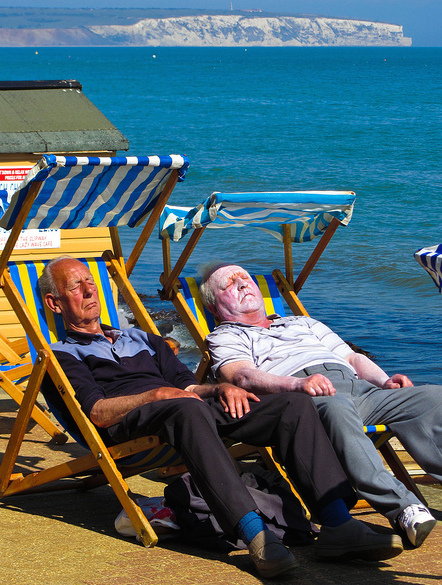
Evolving To Black?

Gemma Tarlach surveys research suggesting that dark skin evolved as an adaptive trait to protect against skin cancer:

Darker skin gives individuals much greater protection from UV light-induced skin cancer. Pale-skinnedSunblock people are roughly 1,000 times more likely than individuals with dark skin to suffer from the three most common skin cancers. But for years, researchers believed the lowered risk was an incidental benefit, not one derived through the pressure of natural selection. Even Charles Darwin poo-poohed the notion that pigmentation could be an adaptive trait. A new study, however, finds evidence that skin cancer was in fact a driving evolutionary force for early hominids to have darker skin.

The findings were based studying people with albinism in equatorial Africa, which has the highest UV radiation exposure on the planet. The study, based on medical records, found that more than 80 percent of people with albinism in this region developed terminal skin cancer before the age of 30, or roughly at one’s reproductive height. Thus, researchers say, individuals with light skin were likely to die sooner— and produce fewer offspring — than those with darker skin.

(Photo by Garry Knight)

Plan G

Generic morning-after pills will finally be available over-the-counter. Nora Caplan-Bricker explains why the cheaper generic version will come with an age warning, while the brand-name version, Plan B One-Step, does not:

The logic behind the distinction wasn’t scientific: It was commercial. FDA protocol grants three years of exclusivity every time a drugmaker conducts new clinical studies that result in a major change to the product—it’s an incentive for companies to bankroll costly research to improve their wares. In this case, since [Teva Pharmaceuticals, maker of Plan B] was behind the studies that made the case for allowing girls under 17 to buy the morning-after pill without a prescription, the FDA was looking for a way to protect Teva’s share of the market.

Now, according to a letter to the makers of generics from Kathleen Uhl, acting director of the Office of Generic Drugs, the FDA has decided that “the exclusivity is too broad,” so it’s letting the generics out from behind the counter. But it’s requiring generic drug makers to include the special label, in order—as Uhl’s letter puts it—to “carve out” some exclusivity for Teva.

Irin Carmon zooms out:

Until getting rid of most of its age restrictions on the drug, the U.S. was one of the few countries to have age restrictions at all.

Confusingly, the FDA’s most recent letter says the generics will be repackaged to say they are “for use by women ages 17 and up.” It appears that provision won’t actually be in force, since now no one is required to show proof of age, and that the new label is, according to the letter, intended to “appropriately carve out Teva’s exclusivity” per an earlier agreement. But the wording could still sow confusion in pharmacy aisles.

The drug has repeatedly been shown to be safe for women and girls of all ages, but the specter of adolescents having sex has haunted American politicians. In 2005, the top FDA official for women’s health, Susan F. Wood, quit in protest of the Bush-era politicization of the agency, particularly around emergency contraception.

Back in August, Tara Culp-Ressler reported that existing regulations had already caused mass confusion about the drug:

Aside from medical misconceptions about the contraceptive, moving Plan B out from behind the counter has not been without its own complications. Outside investigations have found that not all pharmacies may be stocking their shelves with Plan B yet. Some are still choosing to keep emergency contraception under lock and key because they’re worried that people might try to shoplift the expensive product — Plan B One-Step, which is manufactured by Teva Pharmaceuticals, generally costs between $40 and $50. That means that people who want to purchase the morning after pill may still have to ask a pharmacist about it, something that can make some customers feel too uncomfortable or give pharmacists an opportunity to turn them down.

Another point of confusion is the fact that the FDA currently has a “sweetheart arrangement” with Teva Pharmaceuticals when it comes to over-the-counter emergency contraception. Until 2016, Teva’s Plan B One-Step is the only type of emergency contraception that young women or men under the age of 17 are allowed to purchase. Other generic versions — which tend to be cheaper — still require older customers to show an ID to prove that they’re old enough to buy it. The cost barrier may prevent some of the people who need emergency contraception from being able to purchase it, whether or not it appears on their local pharmacy shelves.