The Price Tag On That New Year’s Resolution

It’s highly variable:

High-end gyms catering to individuals with intensity and ample disposable incomes are proliferating, particularly in urban markets. The infamous and fast-growing SoulCycle costs an eye-watering $34 a class. (If you buy a 30 pack, it works out to just $28.33.) Work out four times a week for a year, you’re facing a nearly $6,000 tab. Going to CrossFit looks cheap in comparison, at about $2,500 a year in Manhattan. Ditto for all those boxing gyms, Pilates and barre studios, and outfits offering massages and juice bars.

But amenity-lite, low-end gyms catering to budget consumers are proliferating too.

For the same price as a single one-off SoulCycle class, you could work out for a month and a half at a Blink Fitness outlet or for three whole months at the Planet Fitness in Brooklyn. “From 2010 to 2014, many small, low-cost gyms with few amenities and month-by-month contracts have fared well,” said an industry report by IBISWorld. “Poor economic conditions, coupled with many consumers continuing to be budget conscious over the period, have caused new trends to emerge.”

It is the middle that is growing more slowly, with some chains struggling to demonstrate their value to consumers — your Bally Total Fitness, now all but defunct, or Curves. It is the gyms with considerable but not intolerable monthly fees and decent amenities, but no sheen of luxury or promise of extraordinary results.

Welcome To The Eurozone … Now Empty Your Pockets

Screen Shot 2015-01-05 at 11.38.07 AM

The dubiously elite continental currency club admitted a new member over the holidays:

On Thursday, Lithuania became the 19th country to join the euro zone. The move made it the last Baltic nation to adopt the currency, and the timing was inauspicious—the euro looks more and more like an economic death sentence as depressions spread across the continent. Proving skeptics right, less than 24 hours later, the currency’s value dropped to a four-year low after European Central Bank President Mario Draghi seemed to suggest that the bank might start printing money to combat what he called “excessively low” inflation. The Financial Times noted that with the latest dip, the euro’s value “has fallen by 12 percent against the dollar in the past six months.”

Matt O’Brien calls Vilnius’s gambit “another reminder that the euro, which isn’t so much a currency as a doomsday device for turning recessions into depressions, has always been much more about politics than economics”:

In Lithuania’s case, those politics come down to four words: breaking free of Russia.

That, after all, sums up their last 100 years of history. … Indeed, it’s no coincidence that Lithuania’s support for joining the euro has gone from 41 percent in 2013 to 63 percent today in the wake of Russia’s incursion into Ukraine. Freedom, in other words, is worth a euro-induced depression. It’d better be, because that’s what Lithuania has gotten. It pegged its currency to the euro back in 2002, you see, so it’s been importing the euro-zone’s monetary policy for over 12 years now. And, like the other Baltics, that’s ended quite poorly for them. Lithuania went on a borrowing binge — its current account deficit reached a staggering 14 percent of GDP in 2007 — as rates that were too low for its still-catching up economy pushed housing prices if not into the stratosphere, at least into the lower level clouds.

At the same time, Mike Bird notes, the chances the Greece will take the heretofore unthinkable step of exiting the euro have increased:

That’s because Syriza, the radical leftist coalition that wants to tear up the country’s bailout rules, looks likely to win [the general election on Jan. 25]. That means a game of chicken with the EU institutions and International Monetary Fund. If either side refuses to back down, there could be market chaos, bank runs, and a forced exit from the euro. … It’s not Syriza’s official policy to leave the euro, but a solid portion of the group are happy that route, and others may join them — if pushed.

The Greeks’ disillusionment with the currency stems largely from the European Central Bank’s unwillingness to take steps to boost employment in peripheral countries at the risk of increasing inflation, which Germany (the eurozone hegemon) fears. However, David R. Kotok thinks that’s about to change:

The economies of Europe are on a very flat growth path. They have high unemployment, large structural impediments, no apparent inflation, and either extraordinarily low growth or actual shrinkage, depending on which country we examine. The tool of European fiscal policy is hampered by huge deficits and lots of unfunded social liabilities.

Monetary expansion is the only game in town. Interest rates have already fallen to levels below zero in some shorter-term instruments and near zero in others. We expect a large monetary stimulus to originate from the European Central Bank as early as the end of this month. Markets are building this expectation, which will mean a huge market disappointment if the ECB does nothing.

(Chart via xe.com)

Who Does Torrenting Hurt?

Freddie identifies “pro-torrenting cliches that need to die.” At the top of his list:

Studies say pirates pay for more content than people who don’t pirate. Those studies are old, small, and of dubious methodology, involving self-reported data. Of course, none of the people who constantly invokes them cares to look at them too closely. They are believed because they tell people what they want to hear. But even if this claim is true, it doesn’t prove what the people who say it think it proves. The question is, do these pirates pay enough to replace the revenues that are lost to the system, as a whole, from piracy? And given the way that the music industry’s revenues have cratered, and the ongoing slowdown in the movie industry, the answer appears to be no.

Unluckiness Is A Leading Cause Of Cancer

Cancer And Luck

That’s what a study released last week found:

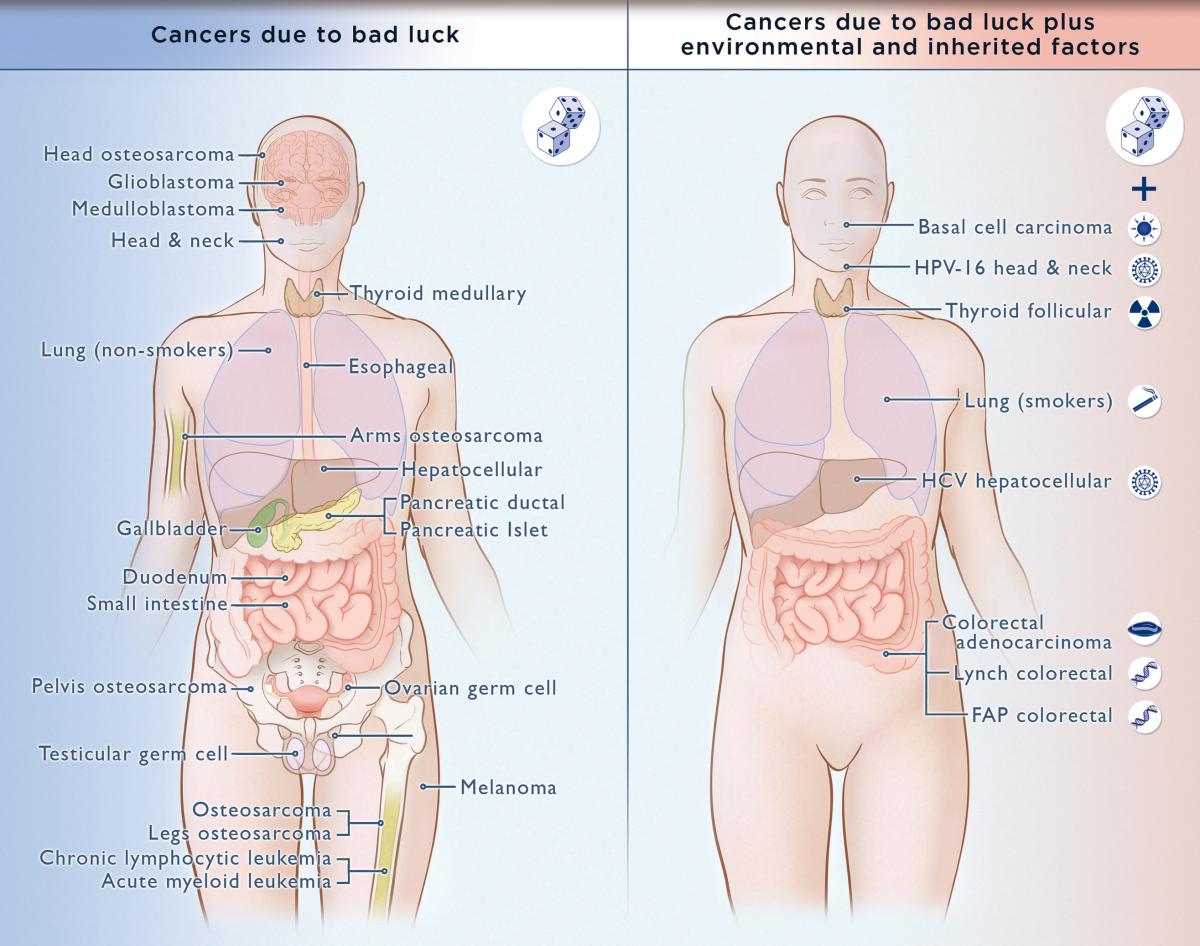
Bert Vogelstein and Cristian Tomasetti of Johns Hopkins University have put forth a mathematical analysis of the genesis of cancer that suggests many cases are not preventable. Drawing on the published literature, they estimated the number of cells in an organ, what percentage of them are long-lived stem cells, and how many times the stem cells divide. With every division, there’s a risk of a cancer-causing mutation in a daughter cell. Tomasetti and Vogelstein reasoned that the tissues that host the greatest number of stem cell divisions are those most vulnerable to cancer. When Tomasetti crunched the numbers and compared them with actual cancer statistics, he concluded that this theory explained two-thirds of all cancers.

George Dvorsky unpacks the findings:

Take colon cancer, for example, which is far more common than cancer of the duodenum. The researchers found that there are about about 1012 stem cell divisions in the colon over a lifetime, compared with 1010 in the duodenum. This would explain why certain tissue types give rise to cancers millions of times more often that other tissue types. As the researchers note in their paper, “[The] lifetime risk of cancers of many different types is strongly correlated (0.81) with the total number of divisions of the normal self-renewing cells maintaining that tissue’s homeostasis.”

In all, the researchers found that 65% of cancer incidence can be attributed to random mutations in genes that drive cancer growth.

But Annalisa Merelli doesn’t want us to think of cancer as simply about luck:

Notably, some types of tissues associated with cancer that are often linked to lifestyle habits—skin and lung, for instance—did show an increase in mutation as a consequence of environmental factors (essentially confirming that quitting smoking and avoiding excessive sun exposure are very good ideas). Further, the study didn’t include two of the most common cancers, breast and prostate. Tomasetti himself had this to say:

“I’m not claiming any cancers, overall across the population, are the result of pure chance,” Tomasetti told the BBC. “But what I am claiming is there are some tissues—for example blood cancer—where there is very little evidence of any hereditary or environmental factor.”

Tara Culp-Ressler adds more context:

“If two-thirds of cancer incidence across tissues is explained by random DNA mutations that occur when stem cells divide, then changing our lifestyle and habits will be a huge help in preventing certain cancers, but this may not be as effective for a variety of others,” Cristian Tomasetti, an assistant professor of oncology at Johns Hopkins and one of the co-authors of the study, told BBC News. “We should focus more resources on finding ways to detect such cancers at early, curable stages.”

As Tomasetti alludes to, the findings don’t mean that doctors should stop encouraging lifestyle changes that can help lower Americans’ risk of developing cancer. Certainly, some cancers are greatly influenced by individual choices.

Has Medical Marijuana’s Moment Passed?

Kleiman wants to “move ahead with genuinely medical cannabis products, and stop using ‘medicating’ as a euphemism for getting wasted”:

If I have an infection and go to my internist, she does not say to me, “You have an infection. I have heard reports that antibiotics can treat infections. I recommend that you take some antibiotics.” No, she writes me a prescription for (say) 100 mg. of amoxicillin, three times a day, with meals, for seven days. “Blow some weed” is not a prescription. That’s the reason that “rescheduling” cannabis to recognize its medical value is a non-starter legally; rescheduling needs to follow clinical research, and would apply only to specific products, not to the plant generically. …

People who really want to make cannabis medicines ought to be arguing for freeing clinical research from its bureaucratic chains, not pretending that taking an unknown amount of an unknown mix of chemicals is the same thing as taking a pharmaceutical drug. And as states move to legalize the sale of cannabis without a medical recommendation, the justification for having a parallel “medical marijuana” supply system disappears. Unfortunately, the people making money from running that system will fight to the bitter end against any threat to their business, and do so in the name of “protecting patients.” Those battles are already being fought in Colorado and Washington.

Now that “medical marijuana” has served – as the advocates intended – to legitimize non-medical legalization, perhaps it’s time to drop the mask and have that debate on its own merits.

Why We Love The Living Dead

Tor_Johnson

Michael Shermer unpacks our fascination:

Zombies, for one thing, fit into the horror genre in which monstrous creatures—like dangerous predators in our ancestral environment—trigger physiological fight-or-flight reactions such as an increase in heart rate and blood pressure and the release of such stress hormones as cortisol and adrenaline that help us prepare for danger. New environments may contain an element of risk, but we must explore them to find new sources of food and mates. So danger contains an element of both fear and excitement.

We also have a fascination with liminal beings that fall in between categories, writes philosopher Stephen T. Asma in his 2009 book On Monsters (Oxford University Press).

The fictional Frankenstein monster, like most zombies, is a being in between animate and inanimate, human and nonhuman. Hermaphrodites fall between male and female, and hybrid animals fall between species. Our innate templates for categorizing objects and beings are modified through experience, and when we encounter something or someone new, we check for category matches. Moderate deviation from the known category generates attention (friend or foe?), Asma says, but a “cognitive mismatch” elicits both dread and fascination. Add the emotion of disgust triggered by slime, drool, snot, blood, feces and rotting flesh, and we may find ourselves both repelled and drawn to such liminal creatures.

Previous Dish on the “uncanny valley” here. And further proof that our fascination with zombies endures: Walking Dead was the most tweeted show of 2014.

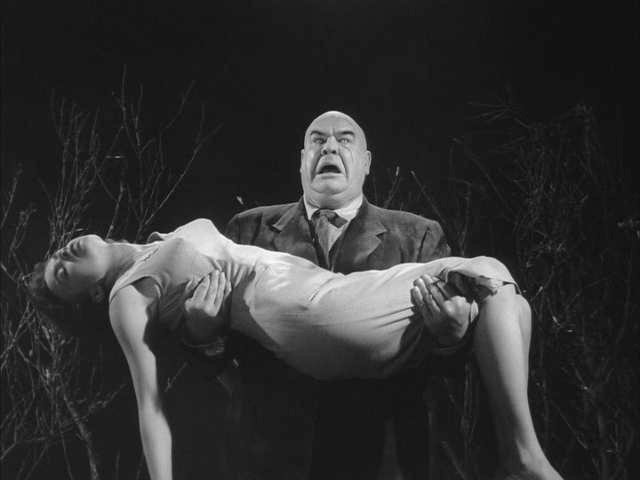
(Photo: Tor Johnson as a zombie in the 1959 cult movie Plan 9 from Outer Space, via Wikimedia Commons)

Leelah Alcorn’s Last Words, Ctd

Three readers keep the thread alive by questioning the second emailer in this post:

“Why are all gender non-conforming kids being actively encouraged to transition or to take puberty-blocking drugs?” really made my blood boil. I have a young relative who is trans, and I remember the great pain he had when his parents held back at first from fulfilling his wish to get puberty-blocking drugs because they were afraid that his transgenderism might have been just a phase. I highly suspect that there are many more trans youth who clamor desperately for such drug treatments than there are parents who choose on their own that their kids need to go on hormone-blockers.

A transexual writes:

Your reader asks why gender non-conforming kids are being pressured to transition, saying “maybe in a subset of the community this is advisable”. I greatly appreciate this acknowledgement, but I realize that to a transexual person this “maybe” sounds like denial of something most basic. All transexual people face a great deal of pressure not to transition from all directions, including their own rational selves.

This includes gender non-conforming folks, even some transexuals, who see transitioning as a sad and even threatening capitulation to norms. Let me testify that there are definitely transexuals who benefit from transitioning and definitely benefit from some intervention at an earlier age. Also, one can be a teen or younger and be diagnosed (and I bring in the medical aspect intentionally). I know it is unpleasant for the queer community to include this “subset” who seek surgery and hormone therapy, who make it a medical thing.

I’m a transexual woman who transitioned in my thirties. I’ve been successful beyond my hopes, but I am somewhat lucky, physically. I have support, a good job, anonymity, and an understanding boyfriend. My teens were before internet, so I don’t know what they are going through now, but I can imagine. I clipped newspaper articles on Renee Richards that I hid in terror.

When the internet did arrive, I navigated through the cross-dressing sites and greatly mixed emotions. Women’s clothes and gender transgressions were by themselves momentarily thrilling, I suppose (I’m not especially femme), but they were ultimately depressing. I had a dark time when I saw no options or felt that I had missed my opportunity. I had missed it, but I’ve managed to make up for it to a degree that is remarkable, but also far short of what is possible. I’ve had lots of surgeries, too many revisions. Ultimately, I’m satisfied, but there is a cost to waiting.

Of course, kids who begin transitioning early will regret what cannot be undone or redone. Such is life.

A different view from a self-identified “cis-woman”:

“What’s wrong with ugly women?” This, This, a thousand times this! How is the prospect of transitioning to being a slightly more masculine-looking woman worse than the prospect of wrongly taking early interventions to change your sex???  Children who delay gender-changing medical interventions might be unhappy with their looks in adulthood? Welcome to being an adult human!

If, at 13, I could have taken a pill or hormones or doused myself in battery acid in order to look like Cindy Crawford, I absolutely would have done it. That doesn’t mean it would have been good for me.  Feeling, at your core, that you are a woman with the wrong body is a world away from feeling, at your core, that you are meant to be pretty. Most people don’t have that choice, and those of us without the money to buy a new jawline or more slender wrists (mine look like tree branches) must learn to live with those deformities.

What Leelah went through sounds terrible, and I cannot imagine what it must be like to have those feelings and have NO ONE listen to you, or for everyone to tell you how wrong you are. But there is a difference between the kind of intolerance Leelah went through and loving parents who just want the best for their child and want to wait for medical interventions.  Her parents were doing what they thought was right: thoughts born of a sheltered and intolerant world-view, but genuine thoughts and feelings, nonetheless.

Huckabee Flirts With A Run

Huckabee Evangelicals

This is big news for the 2016 race. But Huckabee is gonna need to raise some serious cash:

“You’re going to need $150 million to win the nomination, and probably $75 million to get you through Iowa, New Hampshire and South Carolina,” Ed Rollins, a former Huckabee adviser, said in an interview. “That means 200 to 300 fundraising events and a vast, focused apparatus. Mike didn’t have that last time, and he still has to prove he can develop one.”

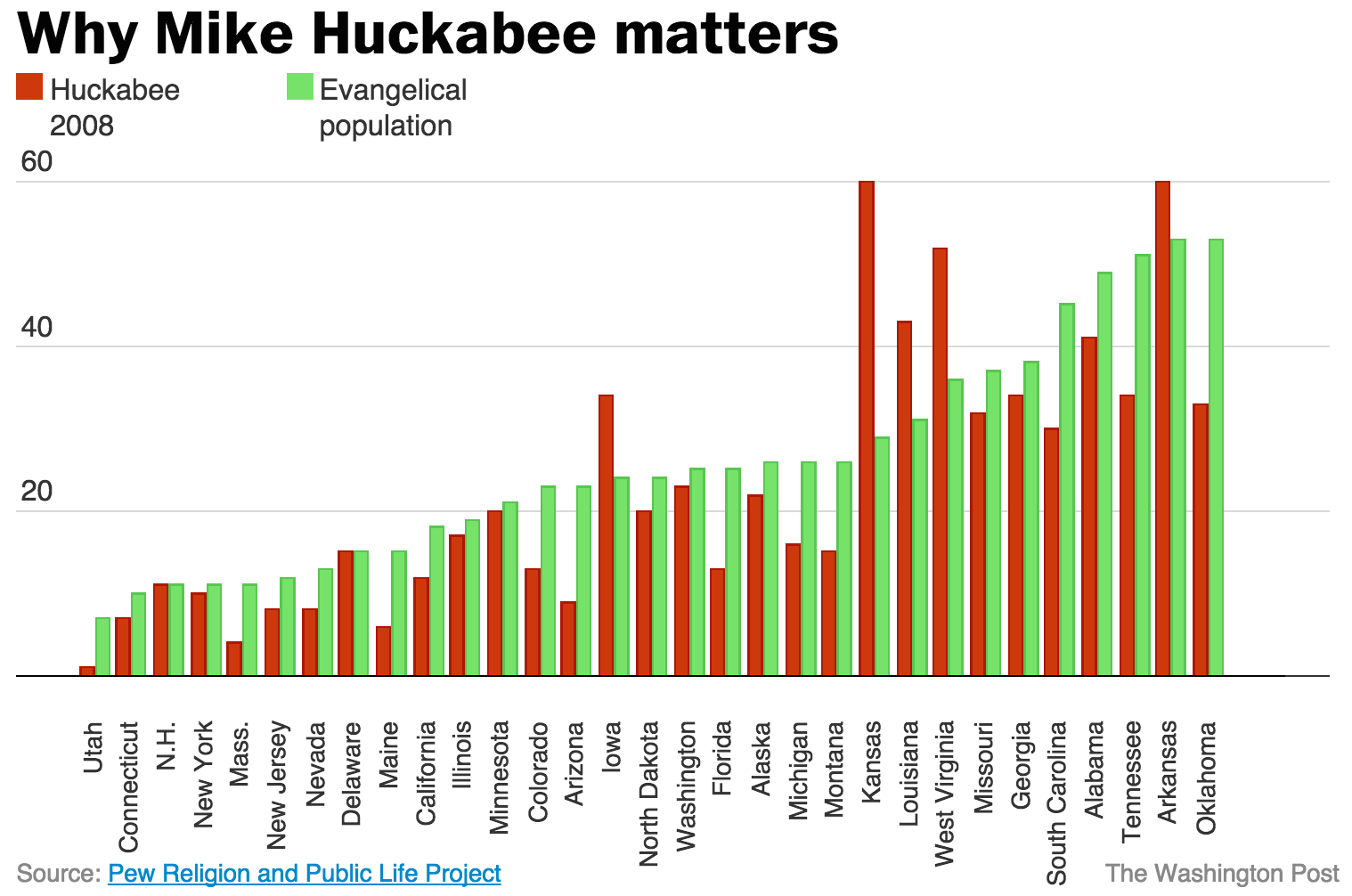
Aaron Blake, who posts the above chart, focuses on Huckabee’s Evangelical support in 2008:

In all but eight of these states, Huckabee’s showing was within single digits of the evangelical population — or better. Now, does that mean Huckabee has a chance to win or will carry these states in 2016? Not necessarily. His devoted base is both a ticket to the dance and the reason he’ll struggle to win the nomination. There quite simply aren’t enough evangelicals out there. In fact, there is no state outside the South and the lower Midwest that is more than one-quarter evangelical.

Weigel also eyes the Evangelical vote:

In current polls, Huckabee earns roughly three times as much Iowa Republican support as Santorum. In conversations Saturday night, even strategists who planned to work for other candidates called Huckabee the Iowa frontrunner.

They also argued that he was weaker than he’d been in 2008. The likely 2016 field would be more competitive than 2008’s, when Huckabee only had to get past the somnolent Fred Thompson and Mitt Romney, who spent heavily in Iowa but struggled to win over voters skeptical of his Mormonism and past pro-choice views.

Paul Mirengoff takes Huck seriously:

In my opinion, none of the candidates most widely discussed as a possible GOP standard bearer has demonstrated people-to-people political skills that match Huckabee’s. And his popularity among among evangelical voters, which probably has grown since 2008, is enough to make him seem formidable.

Huckabee would become the instant favorite in Iowa, where he won the caucus in 2008. And as the Iowa caucus winner, Huckabee would automatically become a first-tier candidate. If he could then win in South Carolina, not an impossibility, he might become the front-runner.

James Antle III considers how he’ll impacts the rest of the field:

Perhaps Huckabee can top his 2008 showing. If Jeb Bush runs but Chris Christie proves more durable than Giuliani, Huckabee may be positioned to win more states with 25 to 30 percent of the vote. That probably wouldn’t suffice for the nomination by itself, but it could buy him more time to broaden his base.

The likelier scenario is that if Huckabee is once again the evangelical candidate, he will prevent other conservatives with non-evangelical appeal—and probably more money and better organizations—from gaining steam.

Which is why Peter Spiliakos thinks Huckabee has “a target on his back”:

I don’t see any path for a Republican populist that does not include a very large share of the conservative evangelical vote. If Huckabee dominates among conservative evangelicals, there is no room for a Ted Cruz or a Rick Santorum and much less room for Rand Paul to improve on his father’s 2012 performance. In order for these alternative candidates to have a chance, they would have to break apart Huckabee as a viable candidate (Rand Paul has already started). If they can’t do that, they don’t have anything. Those are the incentives

Larison is puzzled by the run:

Huckabee is vaguely populist on economics in affect if not on policy, and that causes pro-corporate Republicans to break out in hives. He openly dislikes libertarians, and the feeling is mutual. Though he does his best to take hard-line positions on most foreign policy issues, he doesn’t offer the hard-liners anything they can’t already get from someone else, and he has no foreign policy experience worth mentioning. As an evangelical and former preacher, Huckabee also clashes culturally with much of the party’s donor and pundit class. Last time, many movement conservatives could barely conceal their contempt for Huckabee’s background, and I imagine this time around there will be no attempt to conceal it. Huckabee is in for a bruising, and unrewarding presidential campaign. It makes no sense why he would want to do this.

And Rich Lowry sees this as potentially good news for Jeb:

We’ll see if the Republican field lines up as you would conventionally expect it to, with Jeb dominating the establishment slot. If it does, the early handicapping has to be that every candidate who gets in on the right, fracturing that part of the field, marginally helps the former Florida governor.

Taking A Stand On The Can, Ctd

stalls

A helpful reader points out:

You omitted the web motherlode of bathroom graffiti: “notes from the stall

A few photos from that tumblr are above. A dozen more readers submit their own examples of latrinalia:

My very favorite bathroom graffiti was seen in a women’s room in a bar on 6th street in Austin in about 1976 or so.  Someone wrote “My mother made me a lesbian.”  Below that, in another ink and hand: “If I get her the material, will she make me one too?”

I laughed then and I laugh now.

Another:

I’m so glad to have a Dish thread to share this with. It’s one of my fondest memories of my time at UCLA when I was working on my MS in Computer Science. This was written on one of the stalls in the women’s restroom in Boelter Hall, the engineering building:

A mathematician named Paul
Had a hexadronical ball.
The cube of its weight
Plus his pecker times eight
Is his phone number, give him a call.

Equally nerdy:

My favorite piece of graffiti yet: “I’ll see you in the Eighth Circle of Hell, Counselor!” From the bathrooms of the Law School of the University of Chicago. (The Eighth Circle is the Circle of Fraud, of course.)

Well of course. Back to the peckers:

Found in the bathroom of Strawbridge&Clothiers, Neshaminey Mall, early 1970s:

I’m nine inches long and four inches round. Are you interested?
Fascinated. How big is your dick?

And another:

Seen above a urinal in a Jr. High 60 years ago: “The future of America is in your hands.”

Heh. Another updates a previous example:

In response to one of your readers: no, no, NO! The correct verse is “Here I am all broken hearted, tried to shit but only farted!”

It’s all downhill from there:

Here’s my all-time favorite, which appeared as a critique below a long string of back-and-forth commentary when I was an undergraduate:

Men who write on bathroom walls roll their turds in little balls.
And those who read these bits of wit can go and eat these balls of shit.

Another:

From a rest area in Oklahoma, ten years ago: “here I sit, cheeks a flexin’, just gave birth to another Texan.”

Oh snap. Another:

I was living in Grunge-era Seattle when I went to a bar in town called The Comet. Written on the bathroom wall: “Smells like teen urine.”

And another:

From an Irish-American ginmill in the Bronx, many years ago: “Paddy, how many times do I have to tell you? Cunnilingus is not the name of an airline”.

Another:

Here’s something I read decades ago:

She offered her honor
I honored her offer
And all night long
It was honor and offer.

One more for now:

Seen at the Connor Byrne Pub in Seattle: “I fucked your mother”.  Underneath, in different handwriting: “You’re drunk, Dad. Go home.”

The Long Legacy Of Laying Down The Law

David Carpenter, who recently published a new translation of the Magna Cartareflects on its 800th anniversary:

In 1215 Magna Carta was an elitist document, yet by the end of the 13th century it had become known across society, dish_magnacarta and all sections of society, legitimately or not, were laying claim to its benefits. … Already in 1215 itself the Charter had been translated from Latin into French, the vernacular language of the nobility. By the end of the 13th century the Charter was being proclaimed in English, the language of everyone else.

In around 1300, the peasants of Bocking in Essex … appealed to Magna Carta in a struggle against their lord’s bailiff. In the 1350s, legislation defined the “no free man” as “no man of whatever condition”. The Charter seemed increasingly to have a universal application. It had established the base from which it would go around the world. Its appeal lay not in its precise details, but in its assertion of the rule of law. Everything is of its own time, but only some ideas are taken up and spread. When human rights are still trampled on in many parts of the world, what happened in a meadow by the Thames 800 years ago retains its significance. Let us hope Magna Carta will still be celebrated 100 years from now.

Nick Higham also pays tribute to the document:

As to all the modern-day brouhaha around the anniversary – that rests particularly on another principle bequeathed by the charter to subsequent generations, a principle fundamental to British law and the law of many other nations, including the United States.

Magna Carta’s most famous clauses forbid the king to sell, deny or delay justice, and protect any free man from arbitrary imprisonment “save by the lawful judgement of his peers or by the law of the land”.

“Free men” in 1215 accounted for less than half the population – the rest were serfs, to whom the charter did not apply. And “men” meant men – women, except for widows, merit barely a mention in Magna Carta. But the principle was established. The law could serve as a bulwark against tyranny. And once established, it has never been revoked.

(Image of Magna carta cum statutis angliae (Great Charter with English Statutes), early 14th-century, via Wikimedia Commons)