A Fuller Picture Of The Presidential Past

On a day that Americans typically celebrate with patriotism, Clarence Lusane calls attention to “a largely hidden and silenced black history of the U.S. presidency“:

George Washington’s stated antislavery convictions misaligned with his actual political behavior. While professing to abhor slavery and hope for its eventual demise, as president Washington took no real steps in that direction and in fact did everything he could to georgewashington.jpgensure that not one of the more than 300 people he owned could secure their freedom. During the 10 years of construction of the White House, George Washington spent time in Philadelphia where a law called the Gradual Abolition Act passed in 1780. It stated that any slaves brought into the state were eligible to apply for their freedom if they were there for longer than six months. To get around the law, Washington rotated the people working for him in bondage so that they were there for less than six months each. …
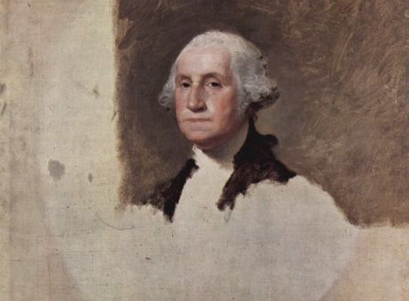
In textbooks and popular history, the White House is figuratively constructed as a repository of democratic aspirations, high principles, and ethical values. For many Americans, it is subversive to criticize the nation’s founders, the founding documents, the presidency, the president’s house, and other institutions that have come to symbolize the official story of the United States. It may be uncomfortable to give up long-held and even meaningful beliefs that in many ways build both collective and personal identities. However, erasing enslaved African Americans from the White House and the presidency presents a false portrait of our country’s history. If young people—and all the rest of us—are to understand a fuller, people’s history of the United States, they need to recognize that every aspect of early America was built on slavery.

What The Hell Just Happened In Kansas? Ctd

Some good news: the sheer breadth of the sanctioned discrimination in the bill designed to protect religious freedom has apparently doomed it. Maybe it was because, as I noted, it would be a terrible self-inflicted blow for the forces who want to stop gay couples from having stable marriages; or maybe because anti-discrimination really is now a universal maxim for the far right as well as everyone else:

Susan Wagle, a conservative Republican who is president of the Kansas Senate, raised opposition to the House measure, saying she had “grown concerned about the practical impact of the bill” and “my members don’t condone discrimination.”

A couple of final thoughts: it’s possible to mount real resistance to various crackpot, far-right initiatives … and win. And once even the far right oppose anti-gay discrimination, the terms of the debate have been set up for victory for gay equality.

Update from a reader:

I’ve enjoyed your coverage of the Kansas far-right implosion, especially since I have been working at the center of this mess for the past two weeks. I thought it might be helpful to highlight why the overwhelmingly negative response to this bill resulted in action from conservative Republicans. It’s a simple equation:

public outcry + legitimate opposition candidates = policy change. Without a legitimate challenger to Gov. Brownback, this bill could have gone forward and been signed into law without any repercussions. But the fact that Paul Davis, the presumed Democratic nominee for governor, raised over a million dollars in just four months and beat Brownback head-to-head in the only public poll to date made it impossible for Republicans to push this legislation forward over public objection.

Kansas Republicans did not wake up and realize discrimination is wrong. They did not have an awakening on the policy. Anti-discrimination is not a universal maxim in the Republican Party. Sixty nine GOP House members (out of 92) voted for this bill knowing it discriminated against the LGBTQ community. This vote shows how far-right Kansas Republicans think and act when people aren’t paying attention.

Political survival is a much more universal maxim and Gov. Brownback did not want to make a decision on this bill, so he had his Senate leaders spike it to protect his re-election campaign. It’s a less uplifting narrative, but also a helpful reminder of how to accomplish change in American politics – get organized, get loud, and scare both political parties into taking your demands seriously.

Faces Of The Day

Screen shot 2014-02-10 at 12.05.21 PM

Photographer Alex John Beck creates two portraits of a person by reflecting the left and right sides of his or her face:

Beautiful faces, both in fashion and real life, are often described as symmetrical. As such, Beck decided to reproduce the faces of several people, as though each half of their face was a mirrored replica of the other. Neither of the portraits in each pair of images offers a realistic portrayal of the subject, but rather a greatly manipulated version. It reveals how unsymmetrical faces really are and how different one would look, were they to be completely equal on both sides. The series also forces one to think about the definition of beauty.

More images from the series here.

(Photo by Alex John Beck)

Muhammad In Moscow

Robert Crews surveys Russia’s policies toward its 20 million Muslim citizens:

Moscow deals with all religious groups in Russia … in a similar way: by attempting to co-opt them. It takes only one state-backed voice to make an alleged deviation from religious orthodoxy a crime, whether that authority is from the Orthodox priesthood or a Muslim cleric loyal to and cultivated by the Kremlin. The state’s support of one interpretation of a religion may prompt the persecution of those who adhere to another interpretation.

But the government’s selective promotion of Islam corresponds with Putin’s foreign policy goals. Putin’s affirmation of Islam’s historical ties to Russia, together with then President Dmitry Medvedev’s 2009 declaration in Cairo (which Putin repeated in Ufa) that Russia was an “organic part” of the Muslim world, has framed Moscow’s quest to restore its great-power status in Asia and the Middle East. Such pronouncements also represent an answer, however muted, to the growing domestic chorus of xenophobic and racist invective that populist politicians and right-wing organizations direct against Russia’s immigrants.

What We Can Learn From Downton Abbey

Peter Lawler claims the show is ideal viewing for conservatives, as it offers lessons “on how to make our nostalgia astutely selective”:

Downton Abbey shows us what’s best and what’s ridiculous—if not necessarily much of what’s worst—about being aristocratic. It also cele­brates the decent business sense of the middle class, the realistic love of the American woman, the nobility of living in service to a lord, the humane achieve­ments of modern medical sci­ence, the struggle of both aristo­cratic and servant young women to become somewhat displaced in a world that has their whole lives figured out, and even what’s admirable about the progressive idealism that liberates women and the Irish. Downton highlights the tension between aristocratic tradition­alism and modern progress, and forces conservatives to confront the good and bad in both.

George Will isn’t as impressed, seeing Downton as a sop to progressives:

It is fitting that PBS offers “Downton Abbey” to its disproportionately progressive audience. This series is a languid appreciation of a class structure supposedly tempered by the paternalism of the privileged. And if progressivism prevails, America will BE Downton Abbey: Upstairs, the administrators of the regulatory state will, with a feudal sense of noblesse oblige, assume responsibility for the lower orders downstairs, gently protecting them from “substandard” health insurance policies, school choice, gun ownership, large sodas and other decisions that experts consider naughty or calamitous.

Lawler thinks Will is missing the point:

Who can deny that today our upper class—our meritocratic cognitive elite—lacks and could benefit from some of the class of the Earl of Grantham and his family? That’s not to deny that the Lord Grantham is not so astute when it comes to the personal longing for freedom, turning a profit, tolerance of religious diversity, modern science, and even good government. He is astute enough, though, to accept, if reluctantly, changes that will make his way of life more sustainable and even admirable. He is also astute enough not to embrace the popular moralism that turns sins into crimes or even reasons for dismissal. My friend George Will, who finds me “normally wise and lucid,” mistakes, partly by presenting a quote out of its ironic context, my praise of the relational place called Downton Abbey as a progressive and paternalistic endorsement of the welfare state. There’s a huge difference between an aristocratic manor and a government bureaucracy! And I said Downton is an exaggeration for our edification—not a real place.

Stephen Mufson focuses on the economic lessons of Downton. Among them? “Beware of speculative bubbles fueled by cheap foreign capital”:

Faced with cash-flow problems for years, [Lord Grantham] married his rich American wife, Cora (a sort of corporate merger that only later grew more sentimental), to gain access to foreign investment, namely her family money. Nothing wrong with that: China in its early economic-reform days tapped U.S. and other foreign investment, and now many U.S. companies are looking for investments by successful Chinese firms.

Alas, Grantham violates the basic rules of financial management and fails to put his wife Cora’s injection of capital to good use. Instead of investing in his family business (the estate and its many tenant farmers) or diversifying his investments, Lord Grantham gets swept up in a speculative bubble, sinking virtually all of his wife’s money into a Canadian railway scheme that goes bust. Had he been alive today, he’d have been buying subprime mortgages or giving all his money to Bernie Madoff.

First In Faith?

Timothy George argues that Lincoln was “the most spiritually minded president in American history”:

So why did he never join a church himself? Two reasons. First, he was offended by the religious rivalry and braggadocio of the frontier preachers of his day. None of them made a compelling case to his lawyerly mind that only one denomination was right and all the others wrong. Further, Lincoln was reticent, “the most shut-mouthed man I know,” as his law partner William Herndon said. He did not want to cross the thin line between sincerity and self-righteousness. There was nothing smug about Lincoln’s faith.

Lincoln’s great achievement was to see the terrible times through which he lived in the context of God’s providential purposes. He referred to America as the almost-chosen nation and came to see himself as a “chosen instrument in the hands of the Almighty.” His firm belief that God is concerned for history and reveals his will in it drew on the wisdom of the Hebrew prophets, the teachings of the New Testament refracted through the tradition of St. Augustine, and the Calvinistic Baptists among whom he grew up. Though he read Voltaire as a young man, he had no interest in a deist God who dumbly peers down on human struggles. The God of Lincoln meets us in judgment and mercy and in the crucible of suffering that shapes the destiny of us all.

So Close …

[Re-posted from yesterday]

Here’s the latest data, as of this morning, for Dish revenue since our independence over a year ago:

Screen Shot 2014-02-15 at 2.22.18 PM

You’ll remember that we managed to beat January 2013’s total last month. And we’re at the very brink of equaling all of February 2103’s by the end of today. The total last February was $105,500. As of this writing, we’re at $104,800 on February 15. Can we beat last February in almost half the time? Help us get there. Subscribe here.

By the way, the total number of auto-renewing subscribers is now 26,070. There’s no other online-only journalism site with that kind of subscriber base. We really are building the future of the web – without pageview whoring, sponsored content, auto-playing videos, pop-ups, slide-shows and corporate propaganda. If you value all that white space, and a time each weekend for less frenzied cultural and intellectual coverage each weekend, then help us make this model truly lead the way for others.

Subscribe here. Under $2 a month or more if you love us. Update from a new subscriber:

Sorry it took so long. I just checked my email archives and the first email I sent you was on 9/7/06 (to your AOL account?!). I’ve been reading steadily since then, so really I should have been one of the first people to sign up. Keep up all the great work. Your blog is the only site I read on a regular basis now.

Another subscriber:

I just got a friend a year of the Dish for her birthday tomorrow. I had to search the “gift the dish” page though. That shit should be a “keeper” on the right side of the page, no?

It’s actually right there in the sidebar, in cartoon form between our Keeper Archive and our Recent Threads (unless you aren’t signed in). The gifting link is here for quick access. One more update:

Sorry it took me so long to renew, but life has gotten in the way recently with a death in the family andit’s been hard to make time for the little things. I chipped in forty bucks this go ’round, an arbitrary number that I could probably howler beagleexplain by saying that I’ve paid that much before for dead-tree magazine subscriptions, ones that don’t give me a full magazine’s worth of reading EVERY GODDAMN DAY.
Regardless of what’s going on in life, and in fact often specifically because of what is going on in life, I always, always make time for The Dish. There are few things that I consistently derive as much pleasure and interest from as this blog. Y’all have a good thing going here and you managed to cycle through your first year as a free agent without screwing it up. If anything y’all keep getting better.

On Saturdays I eagerly await my Window View contest and on Tuesdays I look forward to the reveal. On any given day my wife and I cull a topic for discussion. The running threads are wonderful and well-curated. Through the years you’ve posted some of my emails (and thankfully ignored some of the shitty ones), and I feel this is a truly unique community with the best moderated dialogue on these here Internets. And there’s an ever-creeping dose of sports now! Last week you even posted my wife’s VFYW pic. In a word, neato.

Thanks again for all you and your team do. I’m happy to stay onboard and love knowing that on any given day I get to help steer this fucker.

Now do make some t-shirts.

Stay tuned.

Venerating Vermeer

Morgan Meis marvels at the ability of Johannes Vermeer to portray people in “various states of attention, of self-awareness and of the immediate moments just before or just after becoming self-aware,” instances he terms “threshold moments.” He goes on to explore the painter’s interest in the sacred:

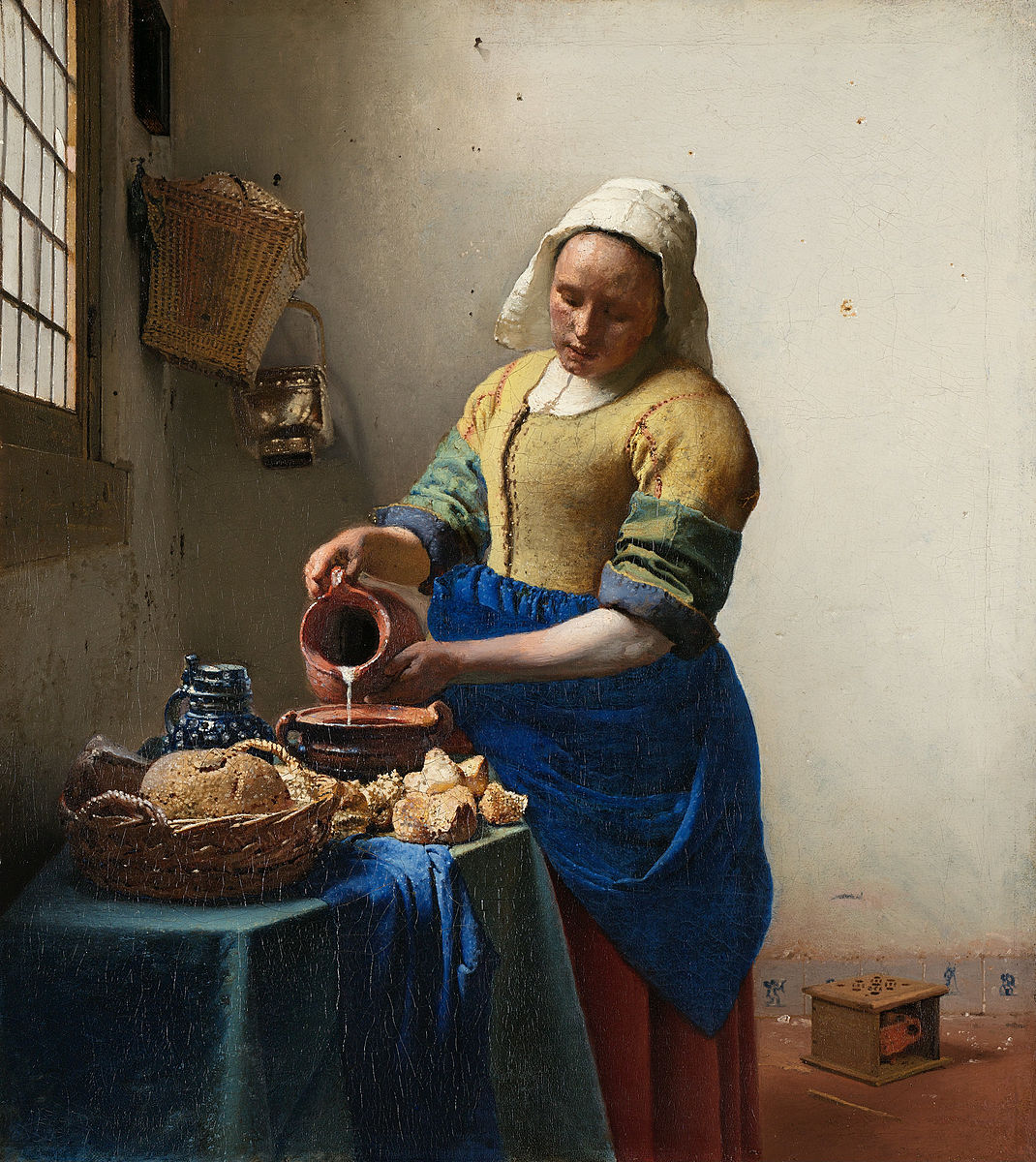
Even in the Vermeer pictures that do not expressly take up religious themes or dish_vermeer imagery, the quality of the sacramental is unmistakable once you know how to look for it. It is there in the gentle, attentive, worshipful manner in which the maid pours out the milk from the jug. It is there in the incredible presence of the woman who puts on a pearl necklace. As the writer Siri Hustvedt once noted of this painting, “Vermeer brought the miraculous into a room just like the rooms he knew, and he endowed the features of an ordinary woman with spiritual greatness. “Woman with a Pearl Necklace” is a painting that makes no distinction between the physical and the spiritual world.” It is that lack of distinction between the physical and spiritual world that creates the sense of mystery. You know you are looking at something more than what you seem to be looking at. Threshold moments are, in Vermeers, hidden and obvious simultaneously. It is not Vermeer’s intention to pull away the veil, to reveal the hidden structure of these daily sacraments. It is his purpose to show them to us as hidden and as right there, eternally holy in their sacramental character.

Update from a reader:

Here is another, less serious look at Flemish portraits; the artist has done magical things with items at hand while on an airplane.

Previous Dish on Vermeer and his methods here, here, and here.

(Image of The Milkmaid by Vermeer, c. 1660, via Wikimedia Commons)

In So Many Words

Brad Leithauser considers the power of sparse verbiage in literature. He takes Hemingway’s The Old Man and the Sea as an example:

His hero, the aged fisherman Santiago, was once a figure of legendary prowess and strength up and down the coast of Cuba. … Santiago is also, explicitly, a Christ figure, and the sea he journeys on is saline as well as, potentially, salvational; he sails the waterways of the human soul. Of course, Hemingway understood that linking Santiago and Jesus would irk readers. Some critics lambasted him for heavy-handedness, or even for blasphemy. Still, Hemingway, showing his typical belligerence toward critics, wrote the following sentence to describe the moment when Santiago makes a sound—“Ay”—as marauding sharks arrive to feast on the fish that Santiago has so painfully, miraculously secured: “There is no translation for this word and perhaps it is just a noise such as a man might make, involuntarily, feeling the nail go through his hands and into the wood.” You can almost hear the author declaring “And screw you …” to his critics as he set the words down.

And you can hear something else, far nobler. For this is the moment of the book’s greatest daring. It’s what might be called the incarnational instant, the one in which Santiago enters the body of Christ, or Christ the body of Santiago, and the divine flesh gasps, as it did on the Cross, at the agony and the betrayal of earthly existence. I first read the sentence in my teens, and still recall self-defensively closing my hands as the words struck home.