Where’s All The Snow?

Sochi NASA

Brian Merchant flags NASA’s photos of Sochi:

Satellites don’t lie, and Sochi doesn’t have much snow. Meteorologists say that enough has fallen to ensure high quality competition for the Winter Games, but from space, it looks pretty sparse. Despite a national initiative to import half a million tons of snow and a Herculean snow-making effort that helped the Russian city produce 1,000 football fields worth of powder, humans weren’t able to add a whole lot of white to Sochi’s arid ridges.

Tim McDonnell interviews Porter Fox, author of Deep: The Story of Skiing and the Future of Snow, about the impact of climate change on the Winter Olympics:

Sochi is a very interesting situation. I didn’t study it particularly in the book but I’ve been keeping up on it ever since, and it’s a bit of a disaster right now.

They stored, I believe, 16 million cubic feet of snow last season to use this season in case this happened. And they did that because they had to cancel several exhibition events last year in February, because it was too warm and there was no snow. It already happened last year. They bulldozed all this snow into giant piles, covered it with insulating tarps and basically kept it cold for this season so they can bulldoze it back onto the slopes, which looks like exactly what they’re going to have to do. If you look at the Whistler Olympics, they had to do the same thing. They weren’t prepared for it, so they lifted by helicopter tons of snow onto the slopes so they could do the skiing events. But it’s a sign — it’s a sign of things to come. It’s going to be harder and harder to find a solid snowpack as the decades pass.

(Photo from NASA/GSFC/METI/ERSDAC/JAROS, and U.S./Japan ASTER Science Team)

Distressed Babies And Clueless CEOs

AOL’s CEO Tim Armstrong invited outrage last week when he said changes to the company’s 401(k) plan were necessary due to high medical costs, singling out two women whose “distressed babies” cost the company as much as $1 million each. Deanna Fei, one of the mothers in question, strikes back:

Let’s set aside the fact that Armstrong—who took home $12 million in pay in 2012—felt the need to announce a cut in employee benefits on the very day that he touted the best quarterly earnings in years. For me and my husband—who have been genuinely grateful for AOL’s benefits, which are actually quite generous—the hardest thing to bear has been the whiff of judgment in Armstrong’s statement, as if we selfishly gobbled up an obscenely large slice of the collective health care pie.

Suzy Khimm questions Armstrong’s numbers:

Most likely, AOL is taking on the brunt of its employees’ health care costs because, like many large employers, it is a self-insured company: Rather than having employees’ premiums go directly to insurers, the employer itself assumes the medical costs and risks, collecting the premiums and contracting with insurers itself. (AOL has declined to answer questions about its employee benefits.)

But Larry Levitt, senior vice-president of the Kaiser Family Foundation, points out that self-insured companies typically have a “reinsurance” program to protect them from such catastrophic events. “With reinsurance, their liability for a high cost case like a premature baby would likely be capped well below $1 million,” he says. And if AOL doesn’t have such a protection plan, acquiring would seem to be the logical first step in cost-reduction.

Ezra holds this up as an example of what’s wrong with our employer-based health insurance system:

An irony of Armstrong’s predicament is that Obamacare, which he partly blames for his company’s increased costs, might be its salvation. Starting in 2017, states can choose to let large employers enter state health-care exchanges. That means companies would be able to add their employees to a much larger risk pool  — in some cases, millions strong. Those companies would no longer have to worry about a bad year for employee health. Their insurers couldn’t ceaselessly jack up prices because expenses soared in one year, or because employees are getting older or sicker. If insurers flock to the exchanges, it could — finally — be the end of our insane system in which each workplace is a tiny welfare state unto itself.

After outrage at Armstrong’s comments, he apologized and AOL reversed the 401(k) benefits change.

The Best Language To Learn

Simon Long nominates Chinese:

China’s economy is going to be the biggest in the world – the only question is when. You can make your own educated guess by using the clever interactive infographic at economist.com/chinavusa. The default option is 2018. Already China’s spectacular 30-year boom has transformed our lives. When I grew up in London, there were no Chinese tourists, and nothing we owned was made in China. And now? The Chinese economy is likely to continue to outpace the rich world’s for decades to come, tilting the balance of economic power. Learn Chinese, not to impress your future boss, but to understand what she is saying.

A reader responding to the recent thread on learning French calls Chinese an “aspirational” language for Americans to learn:

When Americans talk about the utility of Chinese, they are talking about their fantasies of their kids joining the one percent (or staying in it) by mastering the tongue of the current journalistic A-list up and coming economy.  Brazil is a vast and growing economy, but no one is talking about teaching Portuguese in US high schools.  Learning Chinese is aspirational, but not necessarily rational.

Another insists that “learning to speak Chinese is like learning to speak European”:

There are people who speak Mandarin, but try to speak Mandarin in most of China and it’s about as useful as speaking English to someone in France. On the other hand, learning to speak Mandarin is as useful as learning to speak English if you are Japanese and plan on taking a 21-day tour of Europe. You’ll be able to find someone who speaks English everywhere in Europe and someone who speaks Mandarin everywhere in China. It doesn’t do you much good when you go to India, where it’s real easy to find people who speak passable English. Or Japan. Or Argentina. Or …

Memories Of Molestation, Ctd

Another remarkable story from a reader:

My dad did things to me, similar to what Woody did to Dylan. The main difference is I’m a male. No sodomy, penetration, etc. He always used “normal” situations as cover – showers, locker rooms, bath time, under-the-cover “parties”, etc. All very “jockish” and Sandusky-like. Hiding in plain sight, as they say. Once when I was about 9, I asked him why we were going to church for something called “Feast of the Circumcision”. His response impressed upon me the importance of not asking questions. He was smart – 160 IQ supposedly. Good at manipulation and not getting caught.

I can’t get too worked up about the possibility that Mia “coached” her daughter. I doubt it. But even if Dylan was coached, every mistreated kid should be so lucky. I wish someone had coached me.

I had a meek obedient mother who turned a blind eye and a complicit much older sister (she may not have known about the sex stuff, but she knew about everything else). My dad was always getting fired, so we moved around the country constantly. My mom’s 60+ aunts, uncles, nieces, and nephews, who otherwise might have intervened, had long since been left back east, never to be seen again. My dad’s siblings stopped speaking to him years before (who knows why). My dad did a good job alienating just about everyone else, so no one came around much. We were isolated, which provided extra cover. Dylan is lucky that there were people around to intervene – and yes, even to “coach”.

In addition to his interest in young boys, my dad was violent – lots of street fighting in his teens, 20s, and beyond. He considered himself a man’s man, a tough guy. In addition to brawling with the local Italian kids (some of whom required hospitalization, he boasted), he was also a “gay basher”, to use the current term. He and his friends used to target men who looked gay and beat them up. Years later, when my dad discovered I was gay, he threatened to kill me. He disappeared for a few days, sleeping at hotels, roaming aimlessly around the suburbs. Death threats from my dad – both angry and “light hearted” – were nothing new. But my mom said he was acting strangely even for him, and this time the threats might be cause for concern. He was down at his office where he kept his gun. So, at age 19, I was kicked out of the house.

That was in essence the first day of my life. Despite my childhood, I’ve created a good life. Much pain and much rebuilding. Much happiness eventually. I’m proud of the things I’ve done and how I’ve lived. I worked my way through school on part-time jobs, loans, and scholarships. I’m a good person, happy most of the time. I know Dylan will be happy one day too.

My dad killed himself a few years ago, at age 83. About three weeks before his death, I told him his care needs were becoming a burden on my sister, causing problems in her marriage. It was true. But I admit I said it to be mean, not to help my sister. It was out of character for me. I don’t normally do that kind of thing. I never would have said it if I thought suicide was possible. It is possible my words contributed to his decision to jump off the roof – nine stories.

At first I was crushed with unimaginable guilt. But gradually I lost that. Now, to be honest, I see the hand of God. I believe God wanted me to have a role in his death. Most victims of childhood abuse never get justice and they take that deep gnawing injustice to their graves. But I admit to feeling a sense of vindication in how his life ended; that he did not die peacefully in bed, but instead left this world tortured and alone on a deserted rooftop at 2AM.

I think Dylan’s letter will give her a sense of justice. She is entitled to that.

I’ll never know for sure if my words contributed to my dad’s suicide. God knows he had many other issues. But if my words were a factor, all I can say is good. Perhaps one day I’ll forgive. But for now, I just think of him up on that roof. The anguish he must have felt, is minor compared to the pain he caused me and others.

Previous posts in the thread here and here.

The American Catholic Schism

In a fascinating must-read, Patrick Deneen considers the real division to be not between “left” and “right” but between those who hold that there is “no fundamental contradiction between liberal democracy and Catholicism” and a radical school that “rejects the view that Catholicism and liberal democracy are fundamentally compatible”:

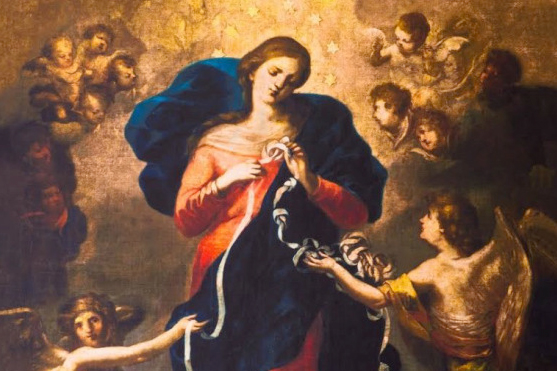
Because of these positions, the “radical” position—while similarly committed to the pro-life, pro-marriage teachings of the Church—is deeply critical of contemporary arrangements of market capitalism, is deeply suspicious of America’s imperial mary-knots-SD-thumbambitions, and wary of the basic premises of liberal government. It is comfortable with neither party, and holds that the basic political division in America merely represents two iterations of liberalism—the pursuit of individual autonomy in either the social/personal sphere (liberalism) or the economic realm (“conservatism”—better designated as market liberalism).

Because America was founded as a liberal nation, “radical” Catholicism tends to view America as a deeply flawed project, and fears that the anthropological falsehood at the heart of the American founding is leading inexorably to civilizational catastrophe. It wavers between a defensive posture, encouraging the creation of small moral communities that exist apart from society—what Rod Dreher, following Alasdair MacIntyre, has dubbed “the Benedict Option”—and, occasionally, a more proactive posture that hopes for the conversion of the nation to a fundamentally different and truer philosophy and theology.

I find myself torn between both camps – but the dismaying long-term consequences of America’s individualistic materialism, in which the pursuit of happiness has become merely the pursuit of money, and in which the planet is apparently dispensable, have pushed me more to the radical camp. I always believed that the easy conflation of Catholicism and America from John Courtney Murray on is too facile. I don’t believe America’s Founders were closet natural law theorists. I don’t believe that the core framework of the American project is Catholic in any meaningful sense of the word.

But I wouldn’t go as far as attempting to change the political order – because liberalism (broadly construed) has emerged triumphant for very good reasons as the least worst way to manage such a fractured, diverse and querulous place like America.

And liberalism allows for a kind of personal freedom that, once given, can never be taken away, and that, to my mind, has created far more than it has destroyed. I’d simply posit Catholicism as a necessary thorn in America’s side, a corrective counter-culture, an aspect of civil society that could actually help balance the more utilitarian and individualistic forces that dominate liberal polities, and can make us all more miserable and less fulfilled as human beings. Catholicism therefore greets American capitalism not with socialism, or with any rival socio-political order, but with the simple Gospel insistence that money does not lead to happiness and in fact is one of the greatest impediments to it. This Catholicism would aggressively promote the necessity of a much more radical personal charity and commitment to the poor; it would care for the sick and the homeless, the needy and those in prison; it would advance arguments in defense of the natural world against the demands of money; and it would create space for art and beauty that have no commercial ends. It can be in America, but not entirely of it. And for these reasons, it would never have the total coherence that Deneen wants from it. It could be co-opted neither by liberalism nor by liberalism’s enemies.

It would remain in constant tension and without any settlement between religion and politics. But it would demand of us that we understand both more completely, and don’t mistake the familiar for the good. This is enough for the purposes of existing in a political order, and making sense of it. And if we can simply accept this essential tension in this fallen world, we can perhaps more adequately divert our attention to the world beyond this one.

Syrians Need Not Apply

Syrians-Europe

Daniel Trilling describes the challenges of those seeking refuge in a reluctant Europe:

Syria’s refugee crisis already compares in scale to that of Afghanistan in the 1980s. Millions who have fled their country are now resigning themselves to a long exile, looking not just for safe haven, but a way to earn a living. Yet by and large the doors of European countries have remained closed. Since the conflict started, only 10,000 refugees have been resettled formally in western countries – and that includes the United States. In December, a report by Amnesty International said the EU had “miserably failed” to provide support.

The excuses range in tone: some politicians, such as the Italian foreign minister Emma Bonino, say that harsh restrictions are necessary because there might be terrorists among the refugees. Bulgarian tele­vision channels have focused on the cost of accommodation – or on the dirt and chaos at the camps, implying that Syrians are bringing disease with them. And the British government, while pointing to the large sums it is donating to humanitarian efforts, says it thinks refugees would be better off in Syria’s neighbouring countries.

Previous Dish on Syrian refugees here, here, and here.

(Map via Business Insider)

Woody Allen Keeps Digging

Woody Allen’s response to Dylan Farrow’s allegations of sexual abuse (NYT) is a must-read, especially when you absorb Maureen Orth’s succinct summary of some key points in dispute. Kathleen Geier thinks the op-ed will only damage him further:

Woody did himself no favors by launching a slut-shaming jihad against Mia Farrow in the piece. Farrow’s sexual history — Woody bitchily recounts Mia’s age when she married Frank Sinatra, the fact that her second husband was still married when she became involved with him, and the possibility that she cheated on Woody with Sinatra — is completely irrelevant to the question as to whether or not Woody Allen sexually abused Dylan Farrow. Woody’s misogynist slurs here were creepy as hell, as were his attempts to romanticize the fact that he slept with his kids’ own sister (Soon Yi). The man is clearly a world class narcissist who still, after all these years, hasn’t the foggiest notion that doing what he did (seducing his kids’ sister) was wrong. It’s chilling, actually.

Jennie Gritz agrees that Allen did himself no favors:

Granted, it’s a bit challenging for a man to empower confused child victims while denying the accusations his own child made against him. But he could have done this.

In fact, he could have gone out of his way to make the distinction, emphasizing that he was disputing Dylan’s story because it was untrue, not because it was recounted by a halting and bewildered child. If nothing else, he could have expressed hope that his family’s sordid tale would prevent other parents from misusing their children in any way—either as victims or as instruments of vengeance.

But Allen didn’t do any of those things. Instead, he made himself appear even less sympathetic to an already critical public. And he made an already ugly situation even uglier.

Alyssa piles on:

There’s the idea that it’s irrational for Mia Farrow to have resented Allen’s relationship with Soon-Yi Previn, her adopted daughter, a rather strikingly myopic expression of the idea that Allen’s self-actualization should be prized at any cost. There’s the exceptionally bitter resentment of Allen’s having had to pay child support for Ronan Farrow, who at the time, Allen believed was his son, a sentiment that’s in keeping with some of the uglier ideas behind men’s rights advocacy. And then there’s the invocation of one of Allen’s neuroses — his claustrophobia — as supposed proof positive that he couldn’t possibly have abused Dylan, at least not in a way that was consistent with the story she told then as a child and has told again recently.

Jessica Winter disputes Allen’s version of the facts:

Dylan Farrow’s allegations did not emerge in the midst of a custody battle. According to Phoebe Hoban’s 1992 New York magazine story, as of early August 1992—eight months after Mia Farrow had discovered Allen’s sexual relationship with her daughter Soon-Yi Previn—Allen had been “prepared to sign a 30-page document that virtually precluded his seeing the children he doted on without a chaperone.” Then, on Aug. 4, 1992, Dylan told her mother that Woody Allen had sexually assaulted her in Mia’s Connecticut home. At that point, Mia and Dylan went to Dylan’s pediatrician, who reported the allegations to authorities. Allen did not sue for custody of Dylan and her two brothers, Moses and Ronan, until Aug. 13, 1992, a week after he was informed of Dylan’s accusations.

Dylan has already responded to the op-ed. Meanwhile, Judis calls Kristof’s decision to air Dylan’s accusation in his column “out of bounds”:

I know that columnists get wide latitude in saying what they want, but I don’t think that should be granted in an instance where someone is being accused of committing unpardonable crimes. I think in such an instance every effort has to be made to be objective, and that includes who reports the story. Kristof, who appears to be a good friend of Mia Farrow, Dylan’s mother, would strike me as the very last person capable of offering a clear and fair view of that matter. That’s not a judgment on his journalism. I’d say this about anyone reporting on a matter where a friend was involved.

Paul Campos’ bottom line:

What seems clear is that a terrible crime was committed against Dylan Farrow when she was seven years old. What will remain unclear is what that crime actually was.

My first take on the allegations is here. Dish readers sounded off here.