A Rebirth Of Storytelling

Hugh Howey forecasts the future of literature:

If these are the end times for literature, then we must be traveling in circles, for the death of storytelling looks an awful lot like its birth. The novel itself isn’t all that old. Sure, we can find a handful of examples going back thousands of years, but you have to stretch your definition of novel the further back you go. Really, the idea of an immutable and unchangeable text dates only to the printing press. Before that, every scribe tasked with producing a tome thought he was an author. Like movie producers dabbling with plot, it was difficult for the hand-copiers of text not to make a tweak here or there. Books were ever-changing. Stories evolved. And that was the way things were until Gutenberg’s time.

Fast forward to 2012, where 1 out of every 5 books sold was part of the 50 Shades of Grey series. Originally a work of Twilight fan fiction, the monumental success of 50 Shades of Grey turned a spotlight on the shadowy world of fan-generated literature. Soon, publishers were seeking out other popular works of fan fiction and signing authors to mega deals. Then Amazon announced its Kindle Worlds program, which commercialized fan fiction and opened up licensed worlds for exploration. To purists—who mix a love of history with a thin understanding of the past—the sanctity of the written word was in jeopardy. It was raining frogs. The volcanoes were angry. These lovers of the very modern novel clamored for a return to our roots. And yet—that is precisely where we are heading.

A Short Story For Saturday

A passage from Edgar Allan Poe’s disturbing 1838 tale, “A Predicament“:

Leaning upon the arm of the gallant Pompey, and attended at a respectable distance by Diana, I proceeded down one of the populous and very pleasant streets of the now deserted Edina. On a sudden, there presented itself to view a church—a Gothic cathedral—vast, venerable, and with a tall steeple, which towered into the sky. What madness now possessed me? Why did I rush upon my fate? I was seized with an uncontrollable desire to ascend the giddy pinnacle, and then survey the immense extent of the city. The door of the cathedral stood invitingly open. My destiny prevailed. I entered the ominous archway. Where then was my guardian angel?—if indeed such angels there be. If! Distressing monosyllable! what world of mystery, and meaning, and doubt, and uncertainty is there involved in thy two letters! I entered the ominous archway! I entered; and, without injury to my orange-colored auriculas, I passed beneath the portal, and emerged within the vestibule. Thus it is said the immense river Alfred passed, unscathed, and unwetted, beneath the sea.

Keep reading here. Peruse Poe’s Complete Tales and Poems here. Previous SSFSs here.

What’s Different About Poetry?

Nick Laird spells it out:

Poetry is a way of being alone without feeling alone. It allows you to experience another mind, I suppose. And it does that more fully than other art forms, I think. It doesn’t simply describe an experience, or a feeling, or a moment: it evokes it through, say, rhythm or tone or diction or metaphor. It creates a mood. A poem communicates before it is understood; it’s not a fully paraphrasable form, which distinguishes it from other forms of writing.

It’s also perhaps the oldest art form. We can go back to an age-old idea of naming things, the Adamic impulse—to give something a name has always been an immensely powerful thing. To name something is to own it, to capture it. A poem is still a kind of spell, an incantation. Historically, a poem also invoked: it was a blessing, or a curse, or a charm. It had a motile power, was able to summon something into being. A poem is a special kind of speech-act. In a good poem there’s the trance-like effect of language in its most concentrated, naked form.

On a similar note, Canada’s new Poet Laureate, Michel Pleau, describes in a recent interview what he’d like to achieve over his two-year term:

You speak about poetry as being fundamental to what makes us human.

Poetry has existed since the beginning of humanity. Our ancestors gathered around the fire and tried to communicate with mysteries bigger than themselves. That’s still what we do with poetry. We write with the hope there’s someone at the other end of our poem.

But you also think poets are the object of too many clichés.

When you see poets, it’s in places like the Just for Laughs Festival. They’re caricatures and they’re always a bit ridiculous – you know, a guy with a beret on his head and a scarf around his neck who says inane things in rhyme. It makes people laugh. But poetry is deeper than that.

You want to change that image?

Yes. My goal would be to make people feel that maybe they love poetry more than they imagine. Our relationship to poetry is often a bit academic. Sometimes it’s linked to bad memories from having to learn poems by heart and reciting them in school. People often don’t realize they’re surrounded by poetry. At the very least, it’s in the songs they listen to. I often say that lovers’ words – when they whisper them to one another in the ear – are an expression of poetry in our daily lives.

A Poem For Saturday

Dish poetry editor Alice Quinn writes:

The winsome English poet Stevie Smith (1902-1971) is most famous for the poem we’re posting today and for her legion of admirers—among them Robert Lowell (“On gray days when most modern poetry seems one dull colorless voice speaking through a hundred rival styles, one turns to Stevie Smith and enjoys her unique and cheerfully gruesome voice”) and Sylvia Plath (“I am a desperate Stevie Smith addict”). She was a great chider, as anyone call tell from her poem “To an American Publisher”:

You say I must write another book? But I’ve just written this one.
You liked it so much that’s the reason?  Read it again then.

In a review of her Collected Poems, published in 1975, Seamus Heaney captured the quality of “these odd syncopated melancholy poems” describing how “her gift was to create a peculiar emotional weather between the words, a sense of pity for what is infringed and unfulfilled” citing the poem below as a supreme example. New Directions has a brand new Best Poems: Stevie Smith, richly illustrated with her own drawings, from which we’ll be selecting poems today and in the days ahead.

“Not Waving but Drowning” by Stevie Smith:

Nobody heard him, the dead man,
But still he lay moaning:
I was much further out than you thought
And not waving but drowning.

Poor chap, he always loved larking
And now he’s dead.
It must have been too cold for him his heart gave way,
They said.

Oh, no no no, it was too cold always
(Still the dead one lay moaning)
I was much too far out all my life
And not waving but drowning.

Update from a reader:

Another reason I renewed: “Dish poetry editor Alice Quinn writes:”

(From Best Poems: Stevie Smith © Stevie Smith 1937, 1972 and © New Direction Publishing Corporation 1988, 2014. Reprinted with kind permission of New Directions)

Kids Can’t Handle The Fiction?

Natasha Vargas-Cooper suggests that “maybe the novel is not the best device for transmitting ideas, grand themes, to hormonal, boisterous, easily distracted, immature teenagers”:

[M]ost high-school-age kids … go to overcrowded, underfunded schools, staffed by largely well-intentioned adults who don’t have the resources, or sometimes even the intellectual vigor, to make emotional landscapes of the western front, nineteenth-century London, or Pamplona very real to sixteen-year-olds. … Maybe there is a better format and genre to spark a love of reading, engage a young mind, and maybe even teach them how to write a coherent manner. Thankfully this genre exists: It’s called non-fiction.

Journalism, essay, memoir, creative nonfiction: These are only things I started reading as an adult because of how little I enjoyed reading novels in high school. Surely, the un-made-up stuff would be more of bore, I thought. Yet when I finally read In Cold Blood, Into Thin Air, the works of Hunter S. Thompson and Joan Didion, I continually pleaded aloud my friends in their twenties, “Why didn’t anyone make me read this in high school?!”

Margaret Eby agrees with Vargas-Cooper that most high schools may be unequipped to make novels appealing to teenagers, but “that’s not the point of teaching novels”:

At its loftiest, the idea of a high school curriculum—really, the idea of education in general— is to get students to think about, react to, absorb, and otherwise navigate situations that they wouldn’t have to outside of school. Solve a calculus problem. Dissect a frog. Memorize the preamble to the Constitution. These aren’t just party tricks for later, the point is the introduction. Just because teenagers might not totally grasp the implications and nuances of a subject doesn’t mean we shouldn’t expose them to it. Realizing that you don’t understand something is how you begin to understand it.

She adds:

What’s striking about the hypothetical syllabus Vargas-Cooper caps her essay with—one that’s brimful of literary journalism gems—is that the authors on it all owe a tremendous debt to fiction writing.  Truman Capote’s “In Cold Blood” and Adrian Nicole LeBlanc’s “Random Family,” to name two selections from Vargas-Cooper’s list, are engrossing reads not just because of the extensive research their authors conducted, but because they deftly employ the storytelling conventions of novels in their writing. I’m willing to bet that none, or very few, of the writers on her list got to where they are without reading novels.

The View From Your Window Contest

vfyw_1-18

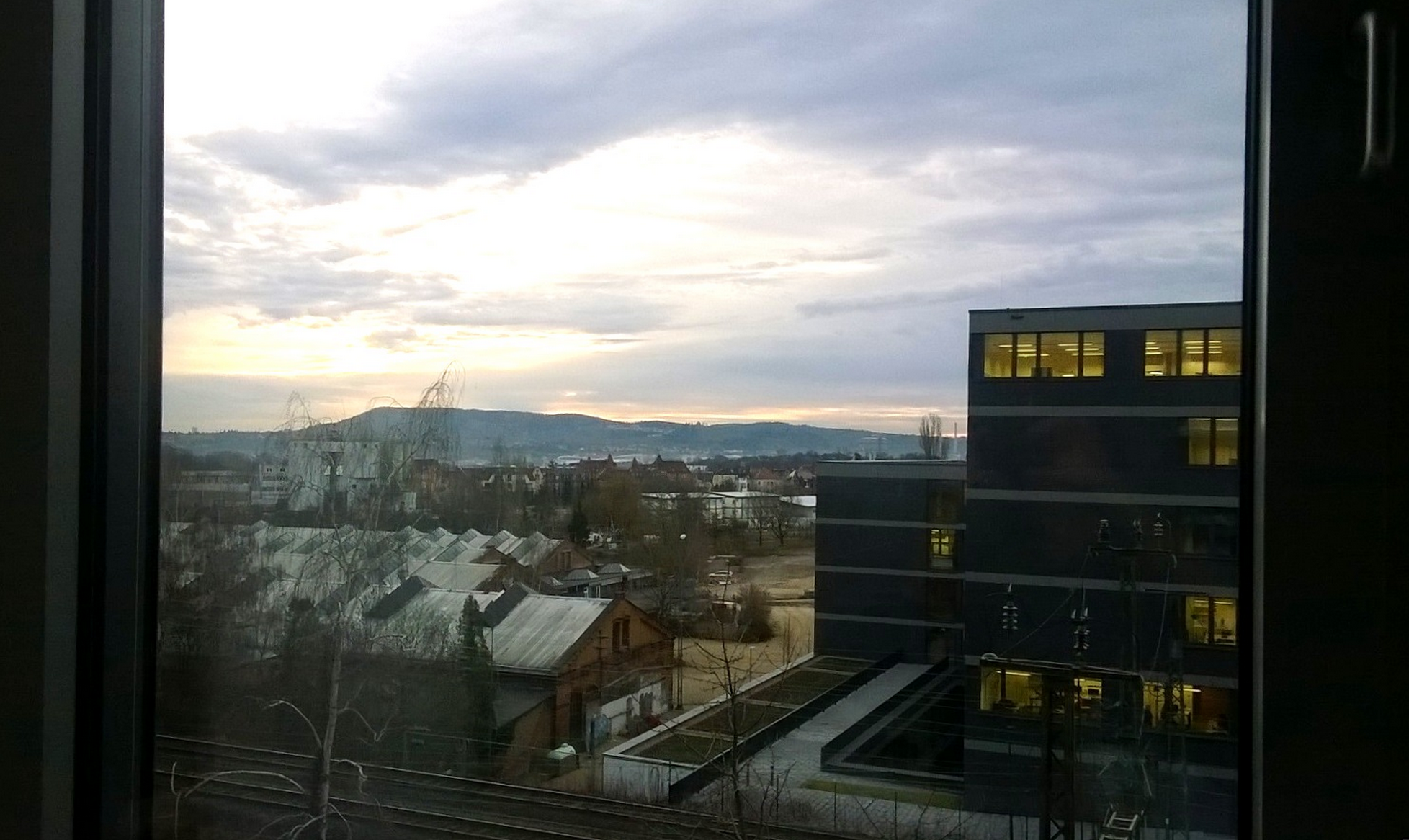
You have until noon on Tuesday to guess it. City and/or state first, then country. Please put the location in the subject heading, along with any description within the email. If no one guesses the exact location, proximity counts.  Be sure to email entries tocontest@andrewsullivan.com. Winner gets a free The View From Your Window book  or two free gift subscriptions to the Dish. Have at it.

The Diets That Died Off

Meg Favreau compares past and present:

Really, there are just two main differences I found between turn-of-the-[20th]century diet fads and modern diet fads. First of all, the goal of the old-timey diets was always the prevention and cure of disease. Sure, you can argue that’s also a goal of today’s diets, but come on — everybody really wants to be sliding into their skinny jeans. Turn-of-the-century diets were more life and death — remember, this was a time before antibiotics, when gout was a common ailment instead of an amusing old-timey reference, and an outbreak of cholera could kill over 10% of a local population. Hell, there were still literal cesspools attached to houses.

The second difference between the old diets and modern diets?

The recipes from the 1800s and early 1900s diet cookbooks I researched taste like hot cardboard (or, in the case of the “unfired” recipes, cold cardboard). Yes, on the surface, a text like 1854’s New Hydropathic Cook-book has similar principles to Michael Pollan – eat mostly plants; don’t bury your food in fat and sugar. But the book also preaches a complete abstinence from salt, vinegar, and lemon, aka “flavor.” [John Harvey] Kellogg had a similar philosophy — but John Harvey, my man, when you’re making a cracker whose two ingredients are grain and water, you need to put some damn salt in it.

Meanwhile, David Katz offers a stern warning that “we are missing the big picture when it comes to nutrition”:

Embracing the notion that we actually have to eat well, overall, and be active, to optimize our health suppresses magical thinking in ways we seem unwilling to sanction. So, instead, we continue to focus — as we have now for calamitous decades — on one food, nutrient, nutrient grouping, or ingredient at a time, all the while missing the big picture.

have written beforemore than once, about how egregiously misguided this is. It does nothing but play into the designs of Big Food, which is delighted to reshuffle their very short list of favorite cheap ingredients into new versions of junk and profit from our preoccupation du jour. If we fixate on cutting fat, we can have low-fat cookies. If we fixate on carbs, we can have low-carb brownies. If we fixate on fructose, we are privileged to trade not up but sideways to equally sugary but now “high-fructose corn syrup free” versions of the same rubbish. … If we fixate on gluten, we can have gluten-free junk. If grains are bad, there are innumerable ways to eat badly without them, just as there are with them. If meat is the enemy, there is a whole universe of variations on the theme of vegan junk food to explore.

This is not theoretical. We have been inventing new ways to eat badly for literal decades, with the profound ills of modern epidemiology to show for it. The suspended animation of common sense and an apparent unwillingness to learn from the follies of nutritional history consign us to repeat them again and again.

(Hat tip: 3QD)

The Sexist Ads Of Yesteryear

article-2295267-18C2186D000005DC-308_634x825

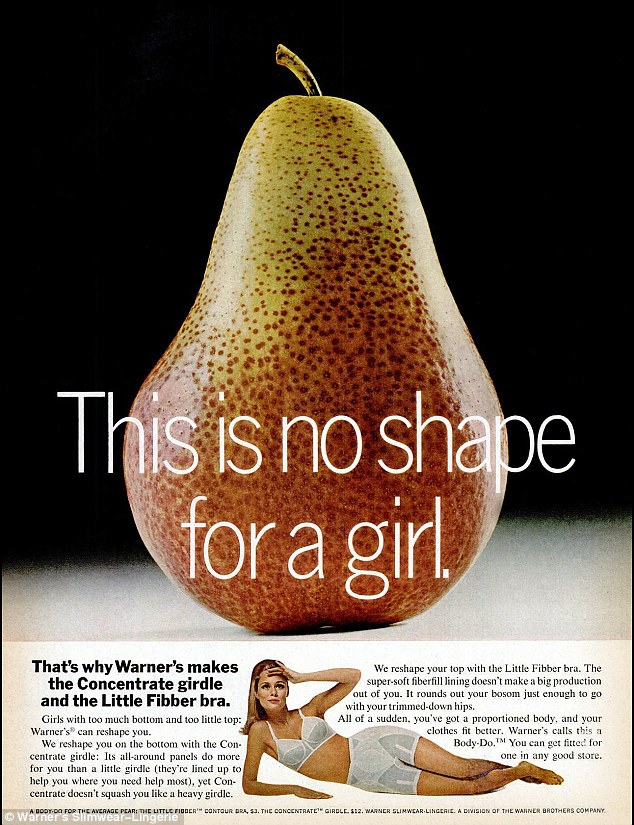
Cynthia Petrovic blogs about vintage ads geared toward female consumers.  In an interview, she talks about how her interest developed:

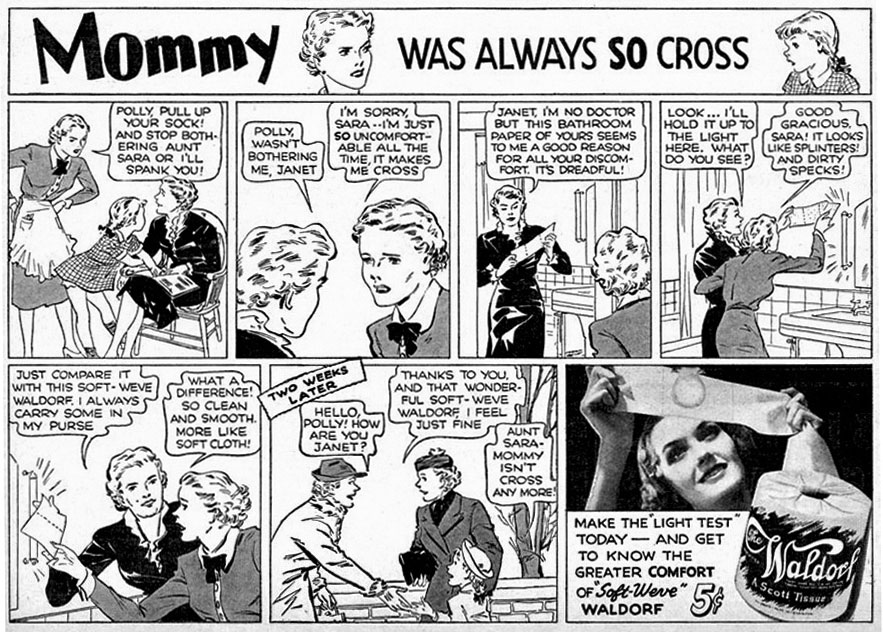
When I was in college, I came across a 1930s romance magazine called “True Story” in an antiques store in Orange, California. Flipping through the pages, I found an ad for Waldorf toilet paper, which was a little comic strip. A man has become so cranky toward his wife that their marriage is on the rocks. As it turns out, cheap toilet paper is the thing that’s driving him crazy because it has bits of splinters in it. The couple holds the tissue up to the light, and they see little pieces of wood in it. Waldorf advertised repeatedly in these magazines. In some of the ads, the wife was cranky, and then it was their little girl. Eventually, the whole family was affected by this scourge. I found it so funny.

After that, I got addicted to finding these old romance magazines from the ’30s and ’40s—“True Romance,” “True Story,” and “True Secrets”—as well as the homemaking magazines like “Woman’s Home Companion” and “Ladies’ Home Journal.” But the romance magazines were where I found the ads that really take the cake. They’re the most entertaining, and just shameless. The most common premise is that a woman does not want to offend a man. These ads speculate about whether your husband is going to walk out on you because you’re not using a feminine hygiene product or your scalp smells when you’re dancing or you have undie odor.

What she’s observed about advertising trends:

In the late 19th century, magazines took over the advice and care of your family. As magazines were available to more and more people, you could read about what to buy, how to take care of your kids, what you should look like, and what you should be thinking and doing. People turned to the magazines to get information and form opinions about themselves. Suddenly strangers were telling people what they should look like, buy, and think. Today, that’s exploded with the Internet.

I noticed a fever pitch building up during the 1930s. By the late ’30s, the advertisers were on a roll. You open up any of these magazines now, and you burst out laughing. But during World War II, I would say about 80 percent of those ads that manipulate you, the ones that say you stink or you’re not socially acceptable on some level, vanished.

By the way, here’s that comic-strip ad for Waldorf toilet paper:

dish_vintageads

Browse through countless others at Petrovic’s site.