Past Your Bedtime As A Pastime

Researchers are finding that bedtime procrastination – “failing to go to bed at the intended time, while no external circumstances prevent a person from doing so” – runs rampant:

In [one] study—whose results will soon be published in Journal of Health Psychology— [researcher Floor] Kroese looked at a representative sample of twenty-four hundred and thirty-one Dutch adults, who responded to an online survey and kept a sleep diary every day for a week. The participants reported what time they wanted to go to bed, what time they actually went to bed, and, if there was a discrepancy between the two, whether that reason was outside of their control (crying baby, sick husband, waiting up for a tardy daughter) or within it (good TV). … [H]er team found that a large number of people got insufficient sleep and that, as the report states, “people who have low self-regulation skills are more likely to keep watching the late night movie, or play yet another computer game despite knowing they might regret it the next morning when waking up tired.”

“When you’re in these situations, it’s sort of a foggy state, a foggy inertial state,” [researcher Joel] Anderson said. “You need to get going, you need something to get you out of that. You need a greased skid to help you.” This might be a timer that switches off your television, or an alarm on your phone—anything to switch off the illicit zombie impulse that makes you keep scrolling through Twitter under the bedcovers. “It’s not magic, but the effect is robust,” he went on. “If there’s a clear cue, and a clear plan of action lined up, then there are ways of managing yourself.”

The Best Of The Dish Today

Queen Elizabeth II And Duke Of Edinburgh Visit Northern Ireland

Goldblog and the Dish – in some strange solstice convergence – are on (roughly) the same page again with respect to Iraq. Jeffrey fisks Elliott Abrams’ deranged piece in Politico called “The Man Who Broke The Middle East.” As an insight into the hermetically sealed neocon mindset, Abrams is always worth reading. As an insight into, you know, reality, not so much. Anyway, a great fisk, Goldblog! Money quote:

In reference to a “contained” Iran, I would only note that Iran in 2009 was moving steadily toward nuclearization, and nothing that the Bush administration, in which Elliott served, had done seemed to be slowing Iran down. Flash forward to today—the Obama administration (with huge help from Congress) implemented a set of sanctions so punishing that it forced Iran into negotiations. (Obama, it should be said, did a very good job bringing allies on board with this program.) Iran’s nuclear program is currently frozen. The Bush administration never managed to freeze Iran’s nuclear apparatus in place. I’m not optimistic about the prospects for success in these negotiations (neither is Obama), but the president should get credit for leading a campaign that gave a negotiated solution to the nuclear question a fighting chance.

Think of the careful and global coalition Obama assembled to isolate Iran on the nuclear question – Russia, France, Britain, the US, China all on the same page, leading to a successful preliminary agreement and coming to a conclusion soon on the second (or maybe not). Now remember Walter Russell Mead’s contention that

There is also the question of whether the earnest White House types who have piled up such a disastrous record in the Middle East could negotiate their way into a used car lot, much less handle a complex negotiation involving Russia, Iran, Assad, and a bunch of other canny operators.

Blogger, please. And notice one of Mead’s more hysterical moments of criticism – when Obama decided against striking Syria in favor of Putin’s offer to coordinate the extraction of all of Syria’s WMDs. Yesterday, the final shipment left Syria’s shores. We were all told this would never happen. It just did. Now ask yourself: if Obama had bombed Assad, do you think those chemical weapons would now be secure? And if they were still in Syria, with ISIS raging nearby, we’d have a real international crisis, wouldn’t we? Dick Cheney’s nightmare – Jihadists with WMDs – would be one step closer to reality. But, thanks to Obama (and not Bush) the threat of those WMDs from Syria has evaporated, and Iran’s nukes could be next. Without invading anywhere or torturing anyone.

I’m still trying to figure out how Rebekah Brooks was acquitted today, but the shoe that really dropped was the news that Scotland Yard will soon be formerly interrogating Rupert Murdoch himself about the widespread criminality on many of his papers over a long period of time.

Today, we also witnessed America’s initiation into the loss and grief of the World Cup; wondered if NATO expansion had made Europe less secure; noted the sudden lurch downward in Obama’s approval ratings; and continued the greasy, bacterial thread on grocery bags (now with GIFs!).

The most popular post of the day was Spurious Correlations from May (a gem); next up was my fisking of Walter Russell Mead, Raging Against Obama – And History.

Many of today’s posts were updated with your emails – read them all here.  You can always leave your unfiltered comments at our Facebook page and @sullydish. 15 more readers became subscribers today. You can join them here – and get access to all the readons and Deep Dish – for a little as $1.99 month. One subscriber writes:

It’s seriousness and sanity that Dishniks like me crave and value. Not for nothing, in other words, that you call them “Mental Health Breaks.” They feel like an intrinsic part of the sanity of The Dish, not a luxury option or frill. I’m going to get your brutal, naked self-examination of your position on the Iraq War, but I also get sloths as beards (and groan-worthy reader updates about beavers).

I skip over most but not all of your religion-themed posts (as one might expect from an atheist), but I’ll stop to marvel at the ingenuity of the VFYW contestants along the way. Then you’ll write something mildly infuriating about social constructionism or whatever it is you mean by “post-modernism” and I’ll begin a tart retort in high dudgeon, only to be side-tracked by one of your insightful assessments of the sanity of Obama … or by some shameless beagle-bait (you could do more of that, actually). And so I’ll be reminded once again that my redoubtable dudgeon switch can be safely disengaged. Dishness achieved once again; we now return you to your regularly scheduled program.

Which will continue in the morning; see you then.

(Photo: Queen Elizabeth II meets cast members of the HBO TV series ‘Game of Thrones’ Lena Headey and Conleth Hill as she views some of the props including the Iron Throne on the set of Game of Thrones in Belfast’s Titanic Quarter on June 24, 2014 in Belfast, Northern Ireland. By Jonathan Porter – WPA Pool/Getty Images.)

Raging Against Obama – And History

President Obama Delivers Statement On Situation In Iraq

[Re-posted from earlier today]

If you’re looking for a majestically sweeping indictment of everything president Obama has achieved in foreign policy over the last six years, go read Walter Russell Mead’s screed. The rise of an ISIS-led Sunni insurgency in Iraq is, apparently, “a movement that dances on the graveyard of his hopes.” No one wants to take on the emperor with no clothes or “the full and ugly course of the six years of continual failure.” He’s not done yet: “Rarely has any American administration experienced so much ignominious failure, or had its ignorance and miscalculation so brutally exposed.” And on it goes. The Obamaites “have piled up such a disastrous record in the Middle East” that they couldn’t be trusted to “negotiate their way into a used car lot.” And the final denouement:

The President isn’t making America safer at home, he doesn’t have the jihadis on the run, he has no idea how to bring prosperity, democracy, or religious moderation to the Middle East, he can’t pivot away from the region, and he doesn’t know what to do next.

Inevitably, when one reads a piece like this, you expect the author to tell us what he would do next. If the results of specific Obama policies have been so disastrous, then surely he must be able to point to several mistakes, offer an alternative in hindsight, or, heaven forfend, provide a constructive proposal today. But you will, alas, find no such thing in the screed. The most you’ll get it this:

How could the U.S. government have been caught napping by the rise of a new and hostile power in a region of vital concern? What warning signs were missed, what opportunities were lost—and why? What role did the administration’s trademark dithering and hairsplitting over aid to ISIS’s rivals in the Syrian opposition play in the rise of the radicals?

Indeed, I’m sure those questions will be debated by pundits and historians. But Mead has no answers. He supported arming the “moderate” Syrian rebels, sure, but even he acknowledged this could end up in tears. And when you grasp his admiration for ISIS’ strategic chops, it seems quite likely that American arms could have ended up in the Jihadists’ hands. After all, one result of the US’ arming, training and equipping the moderate Iraqi army are the humvees and arms being paraded around Iraq by the Sunni-ISIS insurgency today. Arming any single side in a complex, metastasizing conflict is fraught with unintended consequences and the constant risk of blowback. But even if we’d been able to arm genuinely “moderate” Syrian rebels, does anyone believe they would prevail in an internecine war with the true fanatics?  From the record of the last year or so, almost certainly not.

Mead also manages to blame Obama for the failure of the democratic revolution in Egypt. Quite how the US president could have changed the course of Egyptian politics in a period of massive unrest and revolution is not entirely clear. And that’s really the deepest flaw in the case against the president. There is an assumption – even now! – that the world is controlled by the US and that everything in it is a result of American hegemony. So there are no places on earth where the US is not a factor, and any bad things that happen are ipso facto a consequence of poor foreign policy. The planet is “Obama’s brave new world,” and the actual actors in it, from Moscow to Fallujah, from Qom and Cairo, are denied the real agency they have and keep exercising. And of course, whatever Obama has done has failed. When we don’t intervene, as in Syria, the result is a disaster. When we do intervene, as in Libya, the result is “an unmitigated disaster from which not only Libya but much of north and west Africa still suffers today.” So what does Mead suggest? This is as good as it gets:

The U.S. might do better to try to strengthen the non-ISIS components of the Sunni movements in Syria and Iraq than to look to Tehran and the Kremlin for help.

As they still say in Britain’s Private Eye, er…. that’s it. We should actually be arming the very Sunni forces that are trying to take Baghdad, and somehow hoping they’ll turn around and beat the fanatics if we ask nicely. Well, thank you very much, Mr Mead. How could the administration have ignored your genius for so long?

I think what’s missing from Mead’s harrumph is any sense that the world is, in the end, not about us; that the Arab and Muslim worlds are in a historic convulsion that has been fed by countless tributaries from the past and will forge many unexpected paths in the future; that the generational shifts, the impact of new technology and media, the decay of traditional Islam, the rise of an Internet Islamism, the legacies of the sectarian war in Iraq and the Assad despotism in Syria, and the rise of a new Shiite awareness … all these represent forces we have no way of arresting, let alone controlling, let alone micro-managing, as Mead suggests. Our role, if we are not to become insane, is not to manage the unmanageable; it is to understand that some historical processes have to take place and that some of them will not necessarily be in our interests.

Interventionists, in other words, can become like addicts.

Yes we need the courage to change the things we can change (like our surveillance, security and intelligence apparatus), but also, critically, the serenity to accept the things we cannot change (like the future of the younger Arab and Muslim generations or that of the ancient Sunni-Shia struggle), and the wisdom to know the difference. Interposing ourselves even now as the indispensable overseer and arbiter of the fate of Iraq and Syria and the Middle East is to further engage in the fantasies that still linger from the elysian period of 1989 – 2001. If we haven’t learned from the last decade and a half that our assumption of that control is a self-defeating chimera, then we’re incapable of learning anything.

Even with unlimited resources, a decade of effort and death and suffering on a vast scale, we were unable to change the reality of Iraq: a divided traumatized, sectarian mess, where the Sunnis believe they have a right to rule, the Shia have somehow regained power, and the Kurds could give a shit about either. Maybe it should have occurred to us that there has not been majority Shiite rule in Iraq for so long for a reason. Maybe Maliki’s dictatorial impulses were not some wanton decision to destroy Iraq, but a rational move if you are actually trying to govern Iraq as it is, just as Saddam’s despotism was. What amazes me about critics such as Mead is that they have learned no deeper lessons from this; they still, rather pathetically, cite the surge as a success, when it clearly did nothing but bribe a phony peace into temporary existence in order for us to leave … and the old order of things return. And they still cling to a worldview in which everything is run from Washington.

But it isn’t. Our long-term goal is the emergence of a peaceful, democratic Middle East that does not export terror and medieval fanaticism across the globe. And we’ve seen the first spasms of that process: the ousting of tyrants, the failures of revolutions (with one notable success in Tunisia, one place where we haven’t intervened), and the ructions of a youth movement in Iran. But we have barely seen the next phase – and it will surprise us, I’m sure. The great religious wars in Europe burned (literally for some) for a couple of centuries. And it was only the bitter, collective experience of those endless, brutal, bloody wars that persuaded the majority that they weren’t worth fighting any more. At some point we have to ask: why are we spending lives and treasure and attention to prevent that outcome from coming sooner rather than later?

(Photo: Barack Obama yesterday by Chip Somodevilla/Getty.)
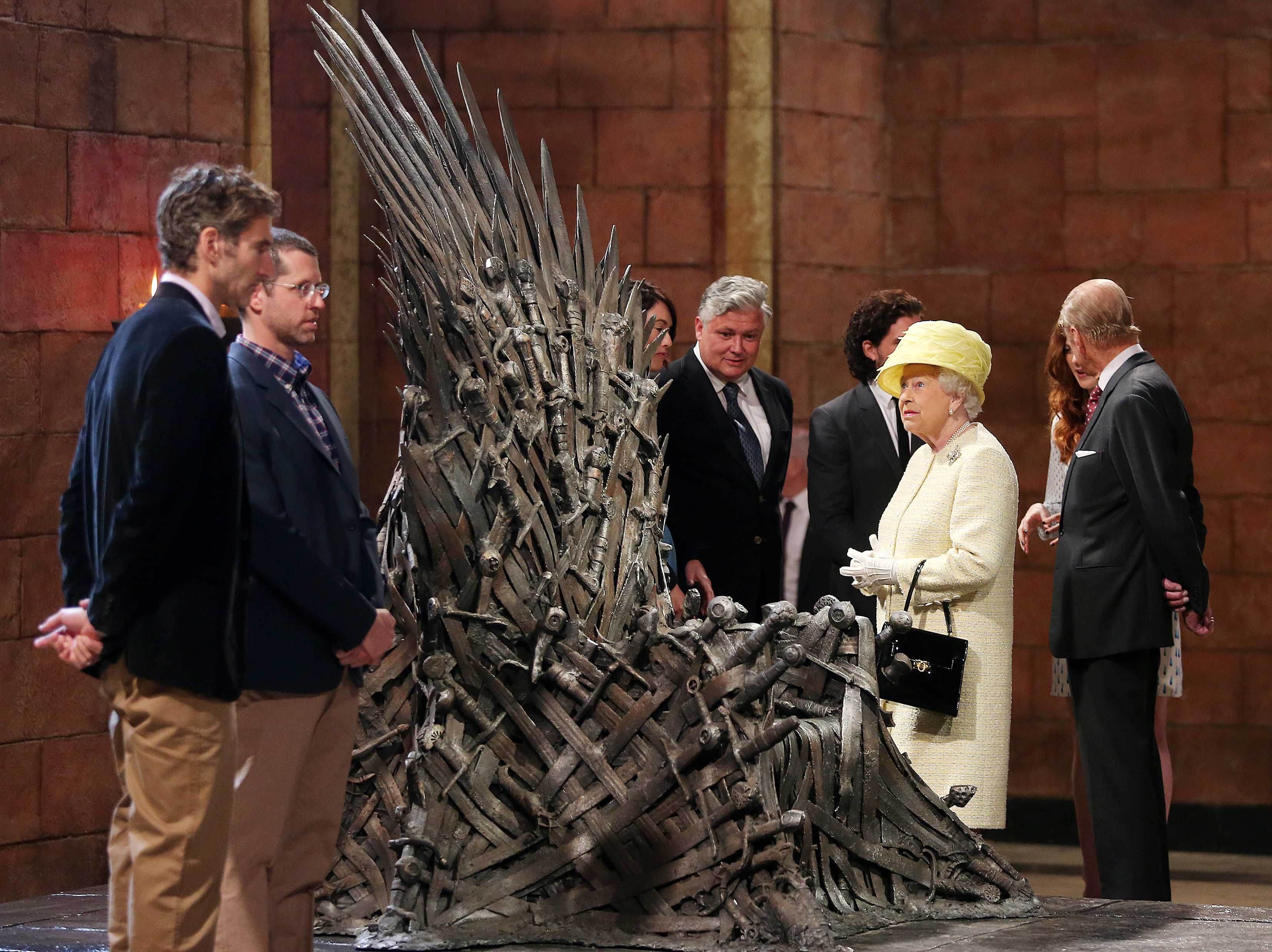
Chart Of The Day

Screen-Shot-2014-06-18-at-5.05.59-PM

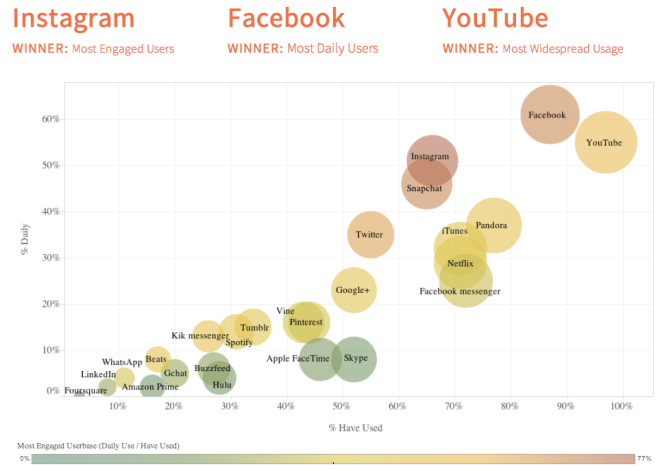
Derek Thompson shares the results of a recent survey about teenagers’ Internet habits. One of his takeaways:

If you’re confused why digital publishers obsess over Facebook and social media, make this graph your smartphone wallpaper. Even the most popular site among teens – BuzzFeed – has fewer daily visitors than any network or app in the graph. (Even Beats, which is considered a tiny music service, has more daily users than any website in the survey.) Seventy three percent of teens don’t read BuzzFeed, 84 percent don’t read Reddit, and 96 percent don’t read Mashable or Gawker.

For young people, Facebook is the newspaper, and websites are the authors.

Inherit The Windfall, Ctd

Jared Bernstein “didn’t think [Mankiw] made much of a case” in his defense of inherited wealth:

In fact, in an article based on nervousness over a wealth or inheritance tax—they’re not the same thing but their differences are not germane to what follows—there was a conspicuous lack of any discussion of such taxes in practice.  As with any tax, the question is: given its magnitude and scope, what is its distortionary impact on behaviors relative to the benefits its revenues provide?

In the US case, the current estate tax—a tax on the value of estates at death—is tiny.  As we point out here, because individuals and couples can exempt $5.25 million and $10.5 million, respectively, “fewer than 2 of every 1,000 estates will owe any estate tax in 2013.”  In other words, “everybody dies, but only the richest 0.14% of estates pay the estate tax.” Though the top statutory rate on estates is 40%, because of the exemption and other provisions that to reduce the liability of heirs to the estate, the effective rate—the average share of the estate paid in taxes—is about 16%.

Danny Vinik also knocks Mankiw:

[A]ll of this misses a fundamental argument against substantial sums of inherited wealth: fairness. Kids from wealthy families already have numerous advantages over low-income children, including receiving a better education and having access to more social capital. Huge inheritances only exacerbate those advantages.

A particularly strong point from Vinik:

Not only are these huge disparities unfair, but they also reveal a double standard among conservative policymaking.

Republicans often argue that giving people money – or health insurance – will disincentivize them from working and reduce economic growth. … If [Paul] Ryan is so concerned about Obamacare discouraging low-income Americans from working, he should have the same qualms about huge inheritances discouraging kids from wealthy families from working. But you never hear that argument from Republicans.  Apparently, free money – whether from the government or your parents – only acts as a disincentive to work when poor people receive it.

Krugman joins in:

[T]he larger criticism of Mankiw’s piece is that it ignores the main reason we’re concerned about the concentration of wealth in family dynasties – the belief that it warps our political economy, that it undermines democracy. You don’t have to be a radical to share this concern; not only did people like Teddy Roosevelt openly talk about this problem, so (as Thomas Piketty points out) did Irving Fisher in his 1919 presidential address to the American Economic Association.

A few readers get their say:

Mankiw’s argument that inherited wealth is not something to worry about is dubious at best. The argument assumes that investing in productivity, and the storing of wealth necessary to make those investments (“financing capital”) are desirable pursuits. And I think many of us would agree that this is the lynchpin of civilization. But what is not at all clear from Mr. Mankiw’s argument is that a system of inheritance is an efficient way to both save and invest this wealth in capital. Are those who inherit money more likely than any other entity to invest it in capital, and to do so wisely?

The part about rising wages is even worse. Mankiw’s writes, “[H]eirs induce an unintended redistribution of income from other owners of capital toward workers.” Now, I’m not a professional investor, but I believe the point of investing in capital is to yield a better return on your money then you would get from labor. I mean, sure, some people’s wages will increase. But that will be more than offset by the number of man-hours saved. So in the end there is a smaller share of money going to workers as wages and a larger share going to owners of capital. That is the whole point of owning capital.

Historically, labor has done OK because new capital has created a larger demand for skilled labor. But as automation becomes increasingly sophisticated and better able to replace skilled labor, it is not at all clear that this will continue to be the case. And if the rate of labor replacement outstrips the rate of job creation, what do we do with all of these unemployed people? Wealth that is locked into blood lines by inheritance sure isn’t going to help them.

Another objects to Mankiw’s characterization of Capital in the Twenty-First Century:

He dismisses Piketty’s book as “provocative speculation.” It might be speculative in the sense that it makes some broad assumptions about the future (with equally broad caveats), but its predictions are supported by data. Manikaw’s article is mostly a series of unsupported assertions. For example, he says that “because increased capital raises labor productivity, workers enjoy higher wages,” which is obviously not true if you observe the last 20 years or so – the gains from increased worker productivity don’t necessarily go to workers, especially in an environment of ever-increasing pay for executives.

Mankiw also talks about how the “regression toward the mean” is some sort of natural enemy of inequality. However, part of Piketty’s point is that we’re returning to the historical “mean” rates of growth and return on capital: something like 1-2 percent growth and 5-7 percent on capital annually (with larger fortunes getting higher gains). He goes on to show how this basic mathematical inequality resulted in economic inequality throughout recorded history. For now, we’re still waiting for a rebuttal of Piketty’s book that’s based on data and actual research.

The Genre That Refuses To Ride Into The Sunset

Noah Gittell checks in with the Western:

To try and understand the western’s return, it’s important to understand why it left in the first place. There are many theories out there, but a lot of film critics attribute the decline of the western to the Vietnam War. Most films of the genre are essentially war pictures, detailing combat between American Indians and frontiersmen. J. Hoberman wrote that “save for a handful of releases, the western itself has remained defunct since the fall of Saigon,” noting that the ugliness of the conflict rendered the often blindly patriotic tone of the western obsolete. …

The underlying subject of nearly every western is the tension that erupts when an ascending civilization comes into conflict with the savage wilderness. Whether it is a sheriff chasing an outlaw or a homesteader fighting off an Indian attack, classical westerns depict an America trying to balance its frontier spirit with the need for manmade justice and order. Films like Stagecoach, My Darling Clementineand High Noon show the difficult process of extending a young nation into new territory. Perhaps that’s why westerns resonate less and less: Precious few among us would still call America a country on the rise.

An Abrahamic Turducken

_75635371_floorplan

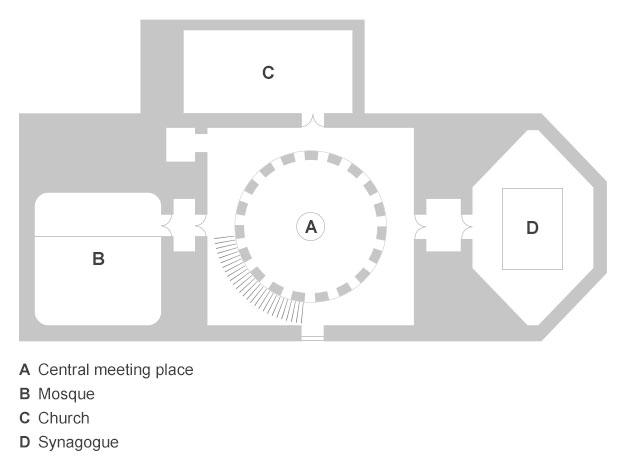
A design has been chosen for the House of One, a project that aims to bring a church, a mosque, and a synagogue under one roof in the heart of Berlin:

Each of the three areas in the House will be the same size, but of a different shape, architect Wilfried Kuehn points out. “Each of the singular spaces is designed according to the religious needs, the particularities of each faith,” he says. “There are for instance two levels in the mosque and the synagogue but there’s only one level in the church. There will be an organ in the church. There are places to wash feet in the mosque.” He and his team of architects researched designs for the three types of worshipping place and found more similarities than expected.

“What’s interesting is that when you go back a long time, they share a lot of architectural typologies. They are not so different,” Kuehn says. “It’s not necessary for instance for a mosque to have a minaret – it’s only a possibility and not a necessity. And a church doesn’t need a tower. This is about going back to the origins when these three faiths were close and shared a lot architecturally”.

Update from a reader:

While never a bad idea, it’s not as new as people seem to think. For example, in Ann Arbor, a Jewish synagogue and an Episcopal church have been sharing space for going on 30 years. Maybe a little easier for two faiths to share the same sanctuary when they have different days of worship, of course, but it’s not a new idea.

Another:

Check out the tri-faith campus in Omaha. It has run into a little bit of controversy that resulted from the anti Muslim people but I know that in the end common sense and good will will win out.

Face Of The Day

Verdicts In Phone Hacking Trial

Former government Director of Communications and News of The World editor Andy Coulson leaves the Old Bailey on June 24, 2014. Coulson has been found guilty of conspiracy to hack phones after an eight month trial at the Old Bailey. Rebekah Brooks, former editor and News International Chief Executive, has been found not guilty of all charges against her. The charges of phone hacking were brought by numerous celebrities and members of the public against the media company and forced the closure of the News of the World newspaper. By Alex Huckle/Getty Images.

Sponsored Content Watch

A reader points up north:

Your watchful eye on the metastasizing world of advertorials and so-called “native ads” is an essential counterpoint to what’s becoming an alarming trend, even outside of US borders. Case in point: a series of unmarked oil industry advertorials that recently made it to print in newspapers owned by Canada’s right-leaning Postmedia. Hawk-eyed readers were able to connect the dots and alerted Advertising Standards Canada (whose webpage is emblazoned with the motto “Truth in Advertising Matters”). After a review, the organization decided not to issue a ruling.

An increasingly desperate oil sands industry is pulling out all the stops to curry public favour with Keystone on wobbly ground and the Northern Gateway pipeline being met with fierce public opposition. It’s discouraging to find that all too many media organizations are willing to undermine the tireless work of their reporters with deceptive advertising practices.

A Canadian economist, Robyn Allan, tried to write a rebuttal to a piece about the oil industry that she read in a Postmedia newspaper:

[She] took issue with the economic claim [that Canada is losing $50-million a day due to limited export markets]. When she submitted an opinion piece in response, she was informed it couldn’t be run because the article she was responding to was actually a paid advertisement.

It wasn’t labeled as such; yet, as our reader noted, Advertising Standards Canada declined to censure Postmedia, which owns nearly every broadsheet daily in the country. Then it happened again – another paid pro-oil-industry piece not labeled as such. It gets better:

Earlier this year, the Vancouver Observer reported on a Postmedia presentation that outlined a content strategy that includes several Financial Post “Special Report” sections, with topics to be arranged by Postmedia and the Canadian Association of Petroleum Producers [CAPP]. … Add to that the tone of the leaked Postmedia presentation, which is graphically designed to follow the route of a cartoon pipeline (snazzy!) and includes this note from Douglas Kelly, the publisher of the National Post:

From its inception, the National Post has been one of the country’s leading voices on the importance of energy to Canada’s business competitiveness internationally and our economic well being in general. We will work with CAPP to amplify our energy mandate and to be part of the solution to keep Canada competitive in the global marketplace. The National Post will undertake to leverage all means editorially, technically and creatively to further this critical conversation.”

Huh. You almost get the impression that Postmedia sees itself as being on the same team as CAPP — which is rather disconcerting.

And the beat goes on.

Thin Skin Deep

1400383770284.cached

As summer-camp season approaches, Alyson Krueger reports from Eden Village, a Jewish organic farming program that has a “no-body-talk” rule for kids:

“The specific rule is while at camp, we take a break from mentioning physical appearance, including clothing,” said Vivian Stadlin, who founded the camp six years ago with her husband, Yoni Stadlin. “And it’s about myself or others, be it negative, neutral or even positive.”

On Friday afternoon, when the campers, girls and boys from 8 to 17, are dressed in white and especially polished for the Sabbath, they refrain from complimenting one another’s appearances. Rather, they say, “Your soul shines” or “I feel so happy to be around you” or “Your smile lights up the world,” Ms. Stadlin said. Signs posted on the mirrors in the bathroom read, “Don’t check your appearance, check your soul.”

Marcotte is wary:

It sounds wonderful on paper to live in “this wonderful, utopian kind of place where you’re not judged on anything except your spirit,” as one parent described Eden Village. But in the real world, there are plenty of legitimate reasons to include the body as part of your overall judgment of a person, such as when you are picking people to be on your tug-of-war team or auditioning potential sex partners. Doing things like covering up mirrors, which one camp does, treads a little too far in the direction of treating the body like it’s a source of shame instead of helping campers embrace their bodies for what they are and what they can do for them.

She offered similar criticism of a New York City ad campaign last year featuring the slogan “I’m a girl; I’m beautiful the way I am”:

No doubt it satisfies adults to pat little girls on the head and tell them they’re perfect and beautiful just the way they are, but kids often have better BS detectors than adults give them credit for. A handful of slogans on local ads will not change the fact that, in the real world, girls and women do suffer relentless judgment about their looks and are, whether they like it or not, frequently treated as if how they look matters more than anything else about them. For kids already picking up on this grim reality, having adults tell them that they’re perfect just the way they are has a strong chance of being read like yet another bit of adult wishful thinking.

Katy Waldman also criticized the campaign:

[W]hat’s with the slogan? As Kat Stoeffel at the Cut notes, “There’s something slightly contradictory about the NYC Girls Project message—‘Don’t worry about how you look. You look beautiful!’ ” Isn’t the point of the program to encourage girls to disassociate their sense of worth from their physical appearance? Why couldn’t the slogan simply be, “I’m Awesome the Way I Am?”