
Murfreesboro, Tennessee, 2 pm
Murfreesboro, Tennessee, 2 pm
Readers keep the popular thread going:
It’s remarkable how to me how much of the ADHD discussion has focused on people who seem to have been, even before diagnosis and medication, abnormally high achievers: elite college graduates, law school graduates, medical students.
But only about a third of this country attains the level of a bachelor’s degree. I think a large part of people’s knee-jerk skepticism about ADHD stems from the fact that, at least anecdotally, this condition seems to disproportionately afflict people at or near the top of the income/education distribution. I don’t doubt the sincerity of your readers who describe what a life-changing experience it was to start taking amphetamines, and I’m sure their diagnoses have allowed them to thrive in the rarefied ranks of fast-paced, high-pressure fields like law and medicine. But it’s the preponderance of ADHD cases among exactly those kinds of people that causes the suspicious looks from the pharmacists and the eye rolls from people like me.
Is it not worth considering the possibility that the pressures and expectations of modern-day elite occupations are, for lack of a better word, insane?
That the person who can simultaneously excel and be happy under the typical demands of, say, a medical resident or first-year law associate is a very rare psychological outlier? My sense is that the strong feelings some people have about the (over)diagnosis of ADHD has to do with the fear that we’re trying to medicate our way out of an existential crisis: most people were simply not designed to thrive under the conditions that society holds up as the very height of achievement.
Update from a reader:
There’s been a lot of great posts in the discussion, but your latest email alerted me to something that is probably just an inherent bias of your readership. Yes, lots of “high performers” are likely seeking stimulant meds when they run up against adversity, and these are accounting for a lot of the diagnosis “explosion.” But the other side to that coin that I’ve turned up in research for my own book (I was RX’d as ADD when I was 8 and am now 37) is the “explosion” of diagnosis in the poor, impoverished, foster children and minority populations.
I feel like one responder touched briefly on this, but it deserves more attention. These are kids who are living in modern “war zones” where they are exposed to violence, hunger, and any number of other emotionally and psychologically damaging social experiences on a daily basis. But somehow they’re supposed to sit and pay attention and attend to their school work just like their classmates. And when they can’t, or they act out, the course of easiest action and least resistance is usually something like an ADHD diagnosis and stimulant RX. Sometimes these kids may really have ADHD that is made worse by their circumstances, but often it’s the psychosocial trauma alone and until that is addressed, we’re doing more harm than good by giving them pills and a label.
Another makes a broader point:
Your reader states, “I think a large part of people’s knee-jerk skepticism about ADHD stems from the fact that, at least anecdotally, this condition seems to disproportionately afflict people at or near the top of the income/education distribution.” I have a condition, endometriosis, which also seems to disproportionately afflict people at or near the top of the income/education distribution. It takes, on average six doctors and over ten years to accurately diagnose (definitive diagnosis requires endoscopic surgery and a doctor who doesn’t dismiss the problem as ‘just really bad cramps’). My condition has been periodically debilitating, but was manageable until this last year when it caused me to take two months of medical leave. If I had not had the excellent health insurance that I do and an employer with a very generous medical leave policy, I would likely not have gotten a correct diagnosis and found one of the few doctors who knows how to effectively treat this condition while leaving my fertility intact.
My point is that sometimes, things that seem to disproportionally affect wealthier people are just as prominent in the general population, but most don’t have the resources to push until they find accurate answers. I am fortunate that I did, and my hope is that the more of us that do, the fewer people will have to in the future.
The Colombian writer Gabriel García Márquez, known as “Gabo” to fans, died yesterday at age eighty-seven. Nick Caistor reflects on the Nobel laureate’s legacy:
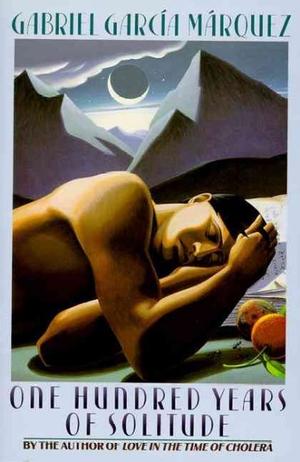
[I]t is as a writer of fiction, enjoyed by everyone from untutored readers to academics in universities around the world, that García Márquez will be remembered. By the mid-1960s, he had published three novels that enjoyed reasonable critical acclaim in Latin America, but neither huge commercial nor international success. His fourth novel, One Hundred Years of Solitude, first published not in Colombia but in Argentina, was to change all that. It tells the story of succeeding generations of the archetypal Buendía family and the amazing events that befall the isolated town of Macondo, in which fantasy and fact constantly intertwine to produce their own brand of magical logic. The novel has not only proved immediately accessible to readers everywhere, but has influenced writers of many nationalities, from Isabel Allende to Salman Rushdie. Although the novel was not the first example of magical realism produced in Latin America, it helped launch what became known as the boom in Latin American literature, which helped many young and talented writers find a new international audience for their often startlingly original work.
Josh Jones remarks on the “magical realism” label inextricably linked with García Márquez’s work:
While the term has perhaps been overused to the point of banality in critical and popular appraisals of
Latin-American writers (some prefer Cuban novelist Alejo Carpentier’s lo real maravilloso, “the marvelous real”), in Marquez’s case, it’s hard to think of a better way to describe the dense interweaving of fact and fiction in his life’s work as a writer of both fantastic stories and unflinching journalistic accounts, both of which grappled with the gross horrors of colonial plunder and exploitation and the subsequent rule of bloodthirsty dictators, incompetent patriarchs, venal oligarchs, and corporate gangsters in much of the Southern Hemisphere.
Nevertheless, it’s a description that sometimes seems to obscure García Marquez’s great purpose, marginalizing his literary vision as trendy exotica or a “postcolonial hangover.” Once asked in a Paris Review interview the year before his Nobel win about the difference between the novel and journalism, García Márquez replied, “Nothing. I don’t think there is any difference. The sources are the same, the material is the same, the resources and the language are the same.”
In that 1981 Paris Review interview, the author continued:
In journalism just one fact that is false prejudices the entire work. In contrast, in fiction one single fact that is true gives legitimacy to the entire work. That’s the only difference, and it lies in the commitment of the writer. A novelist can do anything he wants so long as he makes people believe in it.
Michiko Kakutani also considers (NYT) how nonfiction shaped the novelist’s voice:
[T]he magic in Mr. García Márquez’s work always remained grounded in a carefully observed reality — a skill honed by his early years as a reporter. From that start, Mr. García Márquez slowly developed his own distinctive voice — a voice with the sinuous rhythms of Faulkner and Joyce, the metaphorical reach of Kafka, the dreamlike imagery of Borges. In later years, the fevered flights of fantasy that distinguished “Solitude” and “[The Autumn of the] Patriarch” would give way to a somewhat more muted sorcery, an appreciation — demonstrated in works like “Love in the Time of Cholera” and “Of Love and Other Demons” — of the everyday, combined with a recognition that the extremes of human love and suffering could be found in the seemingly most ordinary of lives.
Max Fisher praises García Márquez as the author of the “greatest opening line to a book, ever,” from One Hundred Years of Solitude:
Here it is:
Many years later, as he faced the firing squad, Colonel Aureliano Buendía was to remember that distant afternoon when his father took him to discover ice.
The question of what constitutes the greatest first line to any novel in literary history is not something that can ever really be decided. But Marquez’s is surely as good a contender as any. It has been repeatedly ranked as one of the best, for example in 2006 by the American Book Review, which declared it the fourth-best opening line in literary history.
Nick Gillepsie questions García Marquez’s political ties – including his friendship with Fidel Castro – and Kevin Lees also ponders criticism of the writer as a public intellectual:
If the greatest criticism abroad of García Márquez is his uncritical friendship with the Castros, perhaps the greatest criticism back home, however gentle, is that he abandoned Colombia as it fell apart in the mid-1980s. Despite the increasing and unmistakable evidence of human rights abuses committed by the Colombian military during the presidency of Conservative Belisario Betancur, García Márquez waited until the last week of Betancur’s presidency to warn that the country was on the brink of a ‘holocaust.’
Meanwhile, Juliana Jiménez Jaramillo, who grew up reading García Márquez in Colombia, claims the author for her home country:
I’ve never been able to figure out how he won the Nobel Prize, or why non-Spanish speakers would like him at all. There are certainly Americans for whom his works mean a lot, but I’ve also heard from friends and colleagues that, as much as they wanted to understand and love Cien años, they found it confusing and clunky. The English translations I’ve encountered were painful to read: convoluted and awkward, even bland, when in Spanish he’s everything but. What is it like to read García Márquez in Spanish, as a Colombian? I’ve tried many times to express this to non-Spanish speakers, but explaining the beauty of one language in another language is no easy task. As García Márquez said in his Nobel Prize acceptance speech: “Interpreting our reality through a foreign framework only contributes to making us more unknown, less free, more alone.” …
It was Colombians, in the end, he was writing for; he told us our own stories back to us in the language and the music of our mothers, lovers, and friends, and we felt less alone because we had our own solitude to turn to.
“My maestro has died,” wrote novelist Isabel Allende in a statement yesterday, adding, “I will not mourn him because I have not lost him: I will continue to read his words over and over.” Explore his works available online here.

Sister Daphne and Sister Suzette participate the ecumenical Good Friday procession in Berlin Germany on April 18, 2014. Under the theme of “Reformation and Politics”, the Protestant church invites this year’s politicians to join the traditional march through Berlin. By Christian Marquardt/Getty Images.
Marking Jackie Robinson Day earlier this week, Matt Welch attributes the declining percentage of black baseball players in recent years to the expansion of opportunities for black men elsewhere:
Baseball, ahead of other professions, and ahead of other sports, allowed people with black skin to compete. Combined with the deep bench of talent that had been nurtured in the Negro Leagues, this opening led to black participation rates that quickly zoomed north of U.S. Census figures (which these days put the African-American population at 12.6 percent). But as other professional sports opened up and—importantly—became popular, black Americans started picking up the shoulder pads and lacing up the high-tops. Happiest of all, black kids in school nowadays know they are not doomed to max out as porters or bellhops. That doesn’t mean racism is behind us in the workplace, but it does mean that fields of competition in all walks of life have opened up in ways that even optimists would have found difficult to believe in 1964.
Meanwhile, actual “diversity” in baseball has never been higher. More than 26 percent of big-league baseball players were born outside of the United States, across 16 different countries.
Kavitha Davidson pushes back a bit:
He’s not necessarily wrong: Professional football and basketball, both in their infancy in 1947, have supplanted baseball as the primary destination for elite black athletes. But the percentage of black players in the National Football League and the National Basketball Association has been relatively stable over the past 25 years, while representation in MLB has steadily declined.
The problems baseball faces mirror many of the problems hockey encounters in fostering diversity: The equipment and travel are relatively expensive (especially when compared with basketball), and most big cities that have concentrated black populations don’t have the space or resources for sufficient public baseball fields.
There’s also the economics of higher education and the invisible hand of the NCAA: As on the professional level, college football and basketball are now booming businesses, while college baseball is a nonrevenue sport in the vast majority of schools.
John D. Sutter worries that the pangolin, or “scaly anteater,” could die out due to lack of publicity:
The pangolin possesses none of the cachet of better-known animals that are hot on the international black market. It lacks the tiger’s grace, the rhino’s brute strength. If the pangolin went to high school, it would be the drama geek – elusive, nocturnal, rarely appreciated and barely understood. When it’s frightened, it actually curls up into a roly-poly ball. The pangolin could go extinct before most people realize it exists. Or, more to the point: It could go extinct because of that.
Pangolins — two species of which are endangered and all of which are protected by international treaty — are trafficked by the thousands for their scales, which are boiled off their bodies for use in traditional medicine; for their meat, which is a high-end delicacy here and in China; and for their blood, which is seen as a healing tonic. …
The numbers are astounding. By the most conservative estimates, 10,000 pangolins are trafficked illegally each year. If you assume only 10 percent to 20 percent of the actual trade is reported by the news media, the true number trafficked over a two-year period was 116,990 to 233,980, according to Annamiticus, an advocacy group. No one knows how many pangolins are left in the wild. But scientists and activists say the number is shrinking fast. Some experts say the pangolin is likely the most trafficked mammal in the world. … Yet, few seem to care. International environmental groups and governments have been slow to fund pangolin research and rescue. You don’t see them on the cover of National Geographic. You rarely find them in marketing campaigns.
But that could change; following the publication of Sutter’s story, at least 13 petitions sprung up on Change.org asking Disney and Pixar to feature pangolins in their movies. Previous Dish on the curious creature here.
In a primer written before yesterday’s election, Hicham Yezza outlined the state of play:
Of course, rather than a credible contest pitting six viable pretenders, the 2014 elections were always destined to be a popular referendum on the past record – and future legacy – of the one candidate many have already accepted as the inevitable winner, presidential incumbent Abdelaziz Bouteflika. In power since his election to a first term in 1999, and already the country’s longest serving leader, the 77-year-old has had a rather eventful 12 months. Having suffered a minor stroke a year ago – which consigned him to a 3-month hospital stay in Paris – he has spent much of the period since his return in June 2013 trying to shore up his position at the helm of the Algerian governing ship. Seeing him as fatally weakened, many thought the prospect of a fourth term no longer thinkable, and the outspoken nature of such scepticism presaged a palace mutiny. Instead, Bouteflika took everyone by surprise with a brutal and wide-ranging summer reshuffle at the heart of the state apparatus, chiefly an attempt to cut his key rivals within the DRS (secret services), the FLN and the army, down to size. Whatever Bouteflika’s plans for 2014 were, a side-door gentle exit was not one of them.
Nabila Ramdani provides some background on the ailing president, who local media have declared the winner before the vote count is even finished:
Bouteflika is by no means a Gaddafi, Ben Ali or Mubarak, but his decision to stand in what were described by his government as fair and free elections was unwise.
He won an unlikely 90.24% of the vote when he last stood for re-election, in 2009, and his opponents are still making accusations about vote rigging. Bouteflika’s main rival [yesterday] was the former prime minister Ali Benflis, who won just 6% of the vote five years ago. Little wonder that many Benflis supporters called for a boycott this time around and an abstention rate of up to 80% was forecast.
Bouteflika’s record of national service is unquestionable but he has always placed security above democratic and economic progress.
Michael Robbins explains why Bouteflika’s regime has actually become more popular in recent years:
The most recent Arab Barometer survey, carried out from March through April 2013, reveals that opinion about the government has improved dramatically since its nadir in the months after the Arab Spring. Although the majority of Algerians remain dissatisfied with conditions in their country, their discontent has diminished. Four in 10 rate the government’s performance as good or very good, a 30-point increase over 2011. About three in 10 have favorable views of the government’s performance on narrowing the income gap (27 percent) and creating jobs (31 percent) up 17 points and 16 points respectively. The overall rate of satisfaction with the economic situation has also risen dramatically to 66 percent – more than double that of 2011. Increased happiness was not limited to the economy – 32 percent say the state of democracy and human rights is good or very good – a four fold increase from 2011.
What accounts for these dramatic shifts? First, the Algerian regime took modest steps following the Arab Spring to address some of the problems facing ordinary Algerians. In early 2011 the regime gave public servants a 34 percent raise and boosted subsidies for basic commodities. The regime also lifted the long-standing state of emergency law, in effect for nearly two decades, and passed a set of modest reforms including new laws governing the media and political parties.
But Amel Boubekeur argues that its grip is much more tenuous than it looks:
The leadership’s focus on retaining power has produced countless problems. Growing street protests and rising inner-regime conflicts are compelling Algeria’s rulers to redistribute power yet again in order to stay in place. The sense of crisis is compounded by an imminent generational shift. Bouteflika is too sick to finish his potential fourth mandate. Gaid Salah, the army chief-of-staff, and Tewfik Mediene, the head of the intelligence services, the Département du Renseignement et de la Sécurité (DRS), are 78 and 74, respectively. Whether the transition to come is conducted under the guidance of the army or negotiated with demonstrators, the image of stability Algerian rulers have tried to convey to the international community for so many years can no longer be regarded as a given.
Mehdi Lazar and Sidi-Mohammed Nehad focus on Algeria’s regional significance:
The condition of this North African pivot-state is essential for Europe: Algiers is the third largest energy supplier to the EU, while its population of 38 million inhabitants, its anti-terrorism security expertise and the size of its armed forces (130,000 men) make their security capabilities necessary to the stability of the Sahel zone.
Moreover, with a gross domestic product (GDP) of 208 million dollars in 2013, Algeria remains the largest regional economy. Algeria was the least affected by the wave of the Arab Spring despite negative societal indicators. This situation contrasts with that of Tunisia or Egypt, notably due to the political impact of the major redistribution of wealth gained from oil revenues, but also due to the people’s fear of a return to a decade of stagnation.
However, rapidly dwindling exchange reserves since 2011 and the lack of vision with regard to energy policy over several years is enough to make anyone fear a return to the gas and oil circumstances that landed Algeria in its period of greatest national trauma.
With the 25th anniversary of the Hillsborough disaster falling this week, Chris Cocking looks at the lessons learned:
The way the police viewed football (and other) crowds in the 1980s influenced how they policed them. This is why they failed to spot the fatal crush developing until it was too late; it was exacerbated by the police believing that Liverpool fans were attempting to invade the pitch (hence the cordon they maintained near the half-way line while the disaster was at its height), when in fact they were merely trying to escape the fatal crush. This misplaced belief resulted in police pushing fans back into the pens while people still inside them were dying.
A common theme emerges runs through this catalogue of mistakes:
that football matches and crowd events in general in the 1980s were too often seen as a public order problem, instead of a public safety issue. Along with others involved in the study of crowd emergency behavior and safety management, I am very critical of such approaches. … There is almost a sense of moral panic in the way society views crowds, in that they are often seen as vehicles for potential “disorder” or mass panic, despite decades’ worth of research by psychologists finding that such concepts are largely myths, and that crowds often behave much more sensibly than they are usually given credit for. When tragedies happen, it is almost always because of a failure of crowd management, as opposed to any “irrational” behavior on the part of the victims.
I’m done venting. Promise. For a sane and reality-based short history of the marriage equality movement, check out this Buzzfeed piece from a year ago by Chris Geidner, the best reporter on gay politics online. For a more objective take on Becker, here’s a very solid, informed critique by Adam Teicholz. He helps you see better why Becker’s disparagement of the key men and women who made marriage equality is so offensive. Money quote:
It will be tempting for those on the outside to dismiss Sullivan’s critique (and those, to come, of the slighted activists who will surely line up to take potshots) as the infighting and backbiting of sore losers. They are not. I have no skin in the fight between factions; to the extent I have personal connections, they are on both sides. I know Evan and others at Freedom to Marry, and Ken Mehlman, whom Becker features prominently, is a friend. I believe that marriage would not have come to New York State in 2011 if it weren’t for Melhman’s savvy, and obstinacy. But there is simply no plausible case to be made that he, Griffin, Black, Olson, and Boies—as hardworking and smart as they are—are the protagonists of the gay-rights revolution.
He’s particularly sharp on how Becker/Griffin disses one of the most gifted political strategists of the movement, Tim Gill. Hank Plante notes how Becker’s attack on everyone in the movement apart from Griffin is just an extension of Griffin’s own contempt for the two decades of staggering progress that made his unseemly credit-grabbing possible:
Griffin’s group sued to keep [all the other gay groups] from intervening in the Prop. 8 case, with Griffin writing to them, “You have unrelentingly and unequivocally acted to undermine this case even before it was filed. In light of this it is inconceivable that you would zealously and effectively litigate this case if you were successful in intervening.”
Now you can better see where Becker’s contempt for and ignorance of the marriage equality movement comes from. The staggering thing is that the man who sowed this division, who engineered this book, and who will continue to grab exclusive credit for marriage equality in the forthcoming HBO movie on the subject … is now the head of the biggest gay rights group in the country. How can he lead a movement he has now publicly announced his contempt for?
Meanwhile, I guess I should respond to this ad hominem by HRC’s former head, Elizabeth Birch. So some corrections: I’ve long noted that marriage equality predates Evan and me by decades in the US and by centuries across the world. An anthology I edited on the subject makes that quite clear. The graphic in the post she lambastes starts in 1970, for goodness’ sake. I only cited one book of mine in that post, the first best-seller in the world on marriage equality, translated into seven languages, and prompting a global debate on the question. I cited one article, which the Nation – and not as a compliment – touted as “the most influential essay of the decade in the gay rights movement.”
Birch substantively agrees with me that it was the Hawaii lawsuit that truly began the revolution in 1993 – not, as Becker’s book has it, Chad Griffin in 2008 – but then repeats what she said at the time: there was no point in fighting for such an impossible goal, we should hope it goes away, the whole thing is a terrible distraction, we’ll get “slaughtered” if we go ahead, etc. So she effectively conveys what the internal fight was about at the time. Evan and I were eager to seize on any lawsuit to leverage it into headlines, to build the case. We knew there would be failures at first, and backlash soon after.
But Evan and I, unlike Elizabeth, believed that we would eventually win because our arguments were so strong, and that the issue had the potential to galvanize and recast the entire movement. I understand why this put her in a tough spot at the time, wanting us to be right, believing we were wrong, and therefore unwilling to put HRC behind a huge effort when the groundwork hadn’t been done. But for us, that was a Catch-22. If we didn’t grasp the issue, the groundwork would never be done. So why don’t we just get on with it, instead of remaining in a Clintonian defensive crouch? HRC’s subsequent deep unease with the issue was, of course, deeply frustrating to those of us who believed it was the key issue for our political and moral advance.
My most vivid memory of Elizabeth was when she, Evan and I testified in 1996 in Congress against the Defense of Marriage Act. We all knew we were going down in flames, but Evan and I were just amazed we had gotten the first Congressional hearing ever on marriage equality. You have to remember the very idea was regarded as completely absurd at the time. Our goal was to make this a national conversation – because it was a conversation in which we had unassailable arguments on our side – even if it meant an early bloodbath. Elizabeth was bristling with frustration that we were having a hearing at all. It was, she remarked, “Hell Week” for gay rights. She understandably did not want to preside over bloodbaths while head of the biggest gay rights organizations. It took many years before HRC even used the word “marriage” in its own literature.
My other vivid memory of Elizabeth was when, in a rare moment of outreach, she invited me to give a speech at HRC a couple years later, and I used the occasion to give my stump speech on marriage equality. Afterward, she came up to me and said she had changed her mind. “If we aim for the stars,” she said to me, “we could maybe reach the moon.” And that’s what indeed we did, and Griffin and Boies and Olson deserve kudos for sustaining the momentum of that journey. But it serves no one to pretend they started this thing or were in any way indispensable to it. And the embarrassment of HRC’s own awful record on the issue is not, I’d argue, irrelevant to this book. It would not exactly be the first time when local or independent actors make change possible, only to have HRC swoop in at the last minute and claim all the credit. That’s always been their mojo. And it’s why so many are so pissed off at them once again.
A watercolor compilation of your favorite YouTube cats:
 The Dish