Apprenticeships: Lost In Translation?

Reacting to news that “the Obama administration is about to announce $100 million worth of apprenticeship grants – and wants to spend another $6 billion over the next four years,” Tamar Jacoby considers whether German-style apprenticeships would work in the US:

The first thing you notice about German apprenticeships: The employer and the employee still respect practical work. German firms don’t view dual training as something for struggling students or at-risk youth. “This has nothing to do with corporate social responsibility,” an HR manager at Deutsche Bank told the group I was with, organized by an offshoot of the Goethe Institute. “I do this because I need talent.” So too at Bosch. …

The second thing you notice:

Both employers and employees want more from an apprenticeship than short-term training. Our group heard the same thing in plant after plant: We’re teaching more than skills. “In the future, there will be robots to turn the screws,” one educator told us. “We don’t need workers for that. What we need are people who can solve problems”—skilled, thoughtful, self-reliant employees who understand the company’s goals and methods and can improvise when things go wrong or when they see an opportunity to make something work better.

But there’s a catch:

Why is it likely to be hard for Americans to transplant the German model? It starts with cost. Each German company has a different way of calculating the bill, but the figures range from $25,000 per apprentice to more than $80,000. It’s likely to be more expensive still in the U.S., where firms will have to build programs from scratch, pay school tuition (in Germany, the state pays), and in many cases funnel money into local high schools and community colleges to transform them into effective training partners.

Update from a reader:

Actually, I think we are evolving something akin to German apprenticeships in the US, at least for some fields. We just don’t call them that. Mostly, we call them “interns.” But the function can be very similar:

  • take someone who doesn’t know much about the work that your organization does but is interested in learning.
  • bring them on board (probably for very little money) and start teaching them what you do.
  • get them to the point where they can be a productive member of the team.

Granted, there are organizations that use “interns” as simply no-cost low-skill temporary labor. But there are also some (I work for one) that are using the position to create people who can do things that we have difficulty hiring skilled staff to do. Done right, it’s a win for the individual – she learns skills that she didn’t have before, and which are in demand in the job market. And it is a win for the company as well – we get someone who has skills we need and have difficulty finding, and who knows how our corporate culture works as well. With a little luck, we get to keep them for several years after they become fully trained.

Would we be delighted to have the state pay for the training, on the German model? Of course. But it is still worth our while to do it at our own expense.

A Smashed Pumpkin Festival

Caroline Bankoff recaps one of the stranger stories from this weekend:

Keene, New Hampshire’s annual Pumpkin Festival – which features a community-wide effort to “set a world record of the largest number of carved and lighted jack-o-lanterns in one place,” according to CBS Boston – saw at least 14 arrests and dozens of injuries this weekend as hordes of Keene State College students and their guests took to the small town’s streets for no apparent reason other than to cause trouble. The Boston Globe reports that hundreds of people were seen “throwing bottles, uprooting street signs, and setting things on fire,” as well as overturning cars and dumpsters. Cops outfitted in SWAT gear responded with “tear gas, tasers, and pepper spray.” The Keene Police Department claims that one group of rioters “threatened to beat up an elderly man” while others threatened the lives of the cops, who had to call for backup from nearby towns.

Will Bunch raises his eyebrows:

[I]f you have a few minutes, read the news accounts of what happened in New Hampshire – the youths who set fires and threw rocks or pumpkins were described as “rowdy” or “boisterous” or participants in “unrest.” Do you remember such genteel language to describe the protesters in [Ferguson] Missouri? Me neither. …

[A]t this point there have been so many “white riots” in the last couple of years – Huntington Beach, Santa Barbara, Penn State (more than once), and just this week, Morgantown, and now, most epic-ally of all-time, the great Pumpkin Festival riots of Keene, N.H. It’s gotten to the point where all of the obvious jokes, about how the white community needs to have a serious conversation about getting our own house in order, or asking where are the (white) fathers, have been made again and again and again.

Ferguson is also on Yesha Callahan’s mind:

While black people are protesting the senseless deaths of unarmed black men, white thugs are ravaging the streets because of pumpkins and football.

Freddie slams some of the snarkier coverage of the riots:

First: police violence and aggression is wrong no matter who it targets. Crazy!

Second: police violence and aggression against people we assume have social capital is a signal that those who we know don’t have social capital will get it far worse. If these cops feel that they have this much license to go wild against that white, largely-affluent crew, what do you think they’ll do when they pull over some working class black guy in a run-down car? Treating this as a barrel of laughs throws away a profound opportunity to include these types of people in a very necessary social movement against police violence, which poor people of color desperately need.

But, as Jamilah Lemieux argues, the riots “don’t even lend themselves to the conversation about overpolicing because the riot police showed up as they were actually rioting.” She adds:

For all the hashtags and the jokes, we won’t see a media assault on the youth who ruined the festival for acting in ways that were not merely inappropriate, illegal and potentially deadly, but bizarre and wrought with the stench of unchecked privilege. These causeless rebels won’t be derided as thugs, nor will people wonder why they don’t just ‘go get a job,’ (something that I heard no less than three times while attending protests in St. Louis, and have seen over and over again from Twitter trolls responding to the Missouri unrest.) Unlike the young people who have mobilized in Ferguson for an actual cause, there will likely be few serious ramifications for those who participated in making Keene, New Hampshire the laughingstock of the country, while putting themselves and others at serious risk for injury or death at a pumpkin festival.

Update from a reader:

Has anyone noted yet that John Oliver, in his recent piece on the over-militarization of local police forces vis-a-vis Ferguson, mentioned with incredulity that that Keene, NH had named their annual Pumpkin Festival as a possible target for terrorism to justify their need for military gear? About 7:30 in …

http://youtu.be/KUdHIatS36A

Hathos Alert

Hard to beat this ad from Michigan via Weigel:

Update from a reader:

I suspect you aren’t much of a college football fan and didn’t see a recent Tennessee House of Representative candidate’s ad. Lane Kiffin was a former head coach (I’d say THE former head coach, but firing Fulmer has prove a bad choice by the Volunteers) who is pretty reviled by Tennessee fans as he didn’t stay long, didn’t have much success and some of his actions resulted in NCAA sanctions. Kiffin is now the offensive coordinator at Alabama after getting fired mid-season last year.

Fifty Shades Of Racism?

Reviewing James Booth’s Philip Larkin: Life, Art, and Love, Alexander Adams praises the biographer for pushing back against Larkin’s more vociferous critics, especially those who dwell on his private sexism and racism. About the latter charge:

Any biographer has to take into account the criticism Larkin has faced for racist comments made in private letters. Those who are quick to apply the label ‘racist’ are usually unwilling (and NPG x12937; Philip Larkin by Fay Godwinunable) to distinguish causes and types of racism.

Racism is a spectrum of views, ranging from the pseudoscientific conviction that certain groups are genetically superior/inferior to a dislike of certain cultural manifestations. The causes of racist sentiment can be anything from displaced dissatisfaction, cultural prejudice, political partisanship, religious conditioning and nationalist sentiment in time of war right up to paranoid delusion. Dyspeptic misanthropes often express disgust in racist form when their frustration is of a general unfocused kind.

There is no suggestion that Larkin ever uttered a racial insult to a person’s face or engaged in any discriminatory behaviour (indeed, Booth presents examples of where Larkin supported the careers of non-white authors). Booth points out that Larkin only voiced racist opinions to receptive individuals (Amis, Monica, etc) in private and often undercutting epithets with irony or self-mockery.

While true, this does not make Larkin’s racist expressions false.

It would be surprising if a culturally conservative white Englishman with mild nationalist sentiments did not resent some of the cultural changes of Britain from the 1950s onwards, just as it is equally unsurprising that he felt somewhat ashamed of his prejudices and unwilling to hurt anyone directly. Booth has no need to excuse Larkin’s prejudices, just as we should have no reason to require excuses. HP Lovecraft’s racist view on life is an essential part of his writing; Larkin’s racist comments about West Indian cricketers and Indian doctors are peripheral and irrelevant to understanding his poetry.

There is also a very English Amis-Larkin cultural sub-text here: the ironic private use of racist and sexist language as a kind of mock meta-protest at the forces of progress. Jonathan Raban, in a review for The New Republic, discussed this question – without flinching from the actual words – this way:

In 1978 [Larkin] wrote to Robert Conquest: “We don’t go to Test matches now, too many fucking niggers about.”

The letters to male friends like Conquest and Kingsley Amis are salted with terms like “wop”, “coon” and “wog”, just as they are salted with nursery ruderies like “bum”, “piss” and “shit”; and in context the childishness of the words counts for a good deal more than their tiresome spray-gun racism. Larkin’s alternative conservative manifesto (“Prison for strikers, Bring back the cat, Kick out the niggers—How about that?”) and his ditty addressed to *H.M.* the Queen (“After Healey’s trading figures, After Wilson’s squalid crew, And the rising tide of niggers—What a treat to look at you”) have all the political heft of a pre-schooler showing off his hoard of dirty words to épater the aunties and get in with the big kids. No word was dirtier than “nigger”, and Larkin used it extensively to his boys-room cronies, for the usual boys-room reasons.

You see this increasingly on the American right: essentially trolling liberals by semi-humorously advancing outrageously racist or sexist  ideas and images as some kind of cultural identity. Merely a glance at much conservative media sees this Breitbartian tendency in full bloom. See: Drudge and depictions of African-Americans. See: Rush passim. But the difference, of course, is that the latter is fully public; while Larkin’s foul racist language was absolutely and extremely private.

Does that distinction matter? For the poetry, it seem pretty clear to me that it doesn’t. For the human being? Of course it does. To my mind, this kind of statement is dispositive:

I find the “state of the nation” quite terrifying. In 10 years’ time we shall all be cowering under our beds as hordes of blacks steal anything they can lay their hands on.

That quote comes via a review by John G Rodwan Jr of a book exonerating Larkin. And yet, as Rodwan notes, the same person who wrote that in private could also write the following in public:

The American Negro is trying to take a step forward that can be compared only to the ending of slavery in the nineteenth century. And despite the dogs, the hosepipes and the burnings, advances have already been made towards giving the Negro his civil rights that would have been inconceivable when Louis Armstrong was a young man. These advances will doubtless continue. They will end only when the Negro is as well-housed, educated and medically cared for as the white man.

It’s also true that few racists would have devoted their critical lives to reviewing jazz, as Larkin did. It was his one true passion apart from poetry, and it is an indelibly African-American art form. Rodwan deals with that question really insightfully.

I would simply add that human beings are extremely complex. No one is immune to the primate, private aversion to “the other”, whatever it is. No one is immune from resistance to cultural change. What we are responsible for is whether we allow those impulses to control our thoughts and actions, in private and public. My rather conventional view is that we should all strive as hard as we can to obliterate those impulses in both the private and public spheres. But in actuality, given human nature, they will tend to manifest themselves in all sorts of ways that can be misread or misunderstood if the only two categories are racist or non-racist. And what I worry about – especially with the almost constant stream of easy online pieces and posts decrying the racism or homophobia or sexism of one person or another – is that we simplify things that, in most human lives, resist simplification. By defending the dignity of some, we can reduce the complex humanity of others.

It is possible for a human being to be racist and non-racist in the same day, and indeed exhibit a mountain of contradictions across a lifetime. It is possible for someone to be publicly homophobic but privately tolerant and embracing, just as it is possible for someone to publicly be a model of human virtue while harboring private impulses and acts that are truly foul at times.

What I’m saying is that Larkin was clearly both things – in many mutations and manifestations through his life. What I’m also saying is that we are all both those things to some degree or other. And the spectrum of these varying thoughts, feelings and acts is broad and wide. We are not either/or. We are both/and. We are human.

Update from a reader:

It sounds as if Larkin was fine with AMERICAN culture being multi-racial, with AMERICAN Negroes getting their civil rights, with AMERICAN jazz reflecting the indelible print of African-American tonality and rhythm … but the idea that ENGLAND was going to experience the same diversity and cultural change was very scary to him.

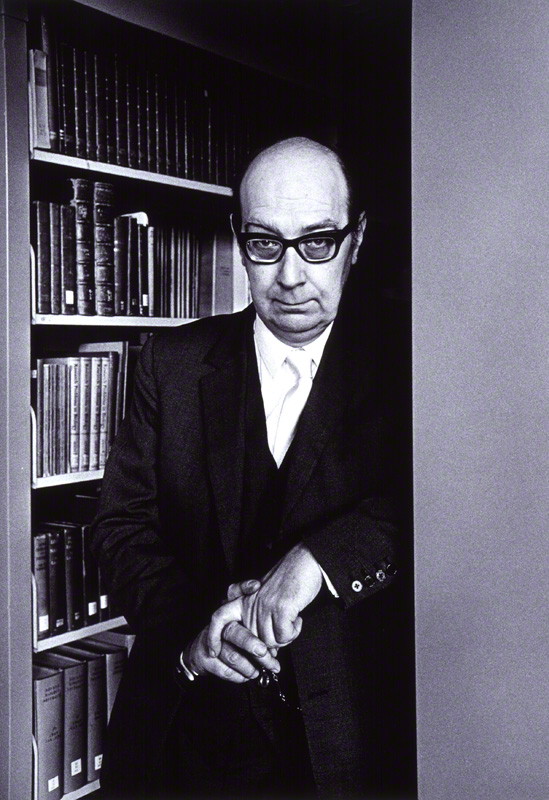
(Photo of Larkin by Fay Godwin, via Wiki)
Legalization Crosses The Border

Cannabis Supporters Hope For Legalization

Christopher Ingraham maintains that “the news coming out of Colorado and Washington is overwhelmingly positive.” And that other nations are paying attention:

Countries, particularly in Latin America, are starting to apply these lessons in order to craft smarter policies that reduce violence and other societal harms brought about by the drug war. Uruguay, for instance, has moved toward full national legalization of marijuana, with an eye toward reducing the thriving black market there. Mexico’s president has given signs he’s open to changes in that country’s marijuana laws to help combat cartel violence. The Organization of American States recently issued a statement in favor of dealing with drug use as a public health issue, rather than a criminal justice one.

Regardless the eventual direction of marijuana legalization in the U.S., steps toward reform here are already prompting other countries to seek out more pragmatic solutions to their drug problems. In short, they’re making the world a better place.

However, Ed Krayewski is underwhelmed by Uruguay’s experiment:

Just 378 people registered as of last month, and why would there be more? Uruguay’s president, Jose Mujica, who supported legalization even while warning of the illness marijuana use can lead to, is nevertheless term-limited. The front runner to succeed him, cancer doctor Tabare Vazquez, also his predecessor, is excited about using the registry to “better know who uses drugs and be able to intervene earlier to rehabilitate that person.” Meanwhile, the other candidate, center-right Luis Lacalle Pou, is opposed to legalization. Uruguay’s marijuana legalization experiment may not last much longer than Mujica’s term.

Update from a reader:

Of course legalization is going to spread across the world.  After all, the main reason that draconian drug policies are in place, and have not changed already, is that the US government demanded them.  And had the power to make the rest of the world go along, however reluctantly.

As soon as that driver fades, everybody gets to return to their own preferences.  Which, for a lot of countries (although doubtless not all) means legalization of some drugs, and milder penalties for most.  They are especially motivated, since illegal drugs are what fuels the gangs which make law and order a distant dream in so many places.  Most of Latin America would probably legalize tomorrow if US policy didn’t demand that they enlist in the War on Drugs, and be grateful to be able to devote their resources to the real problems that their countries face.

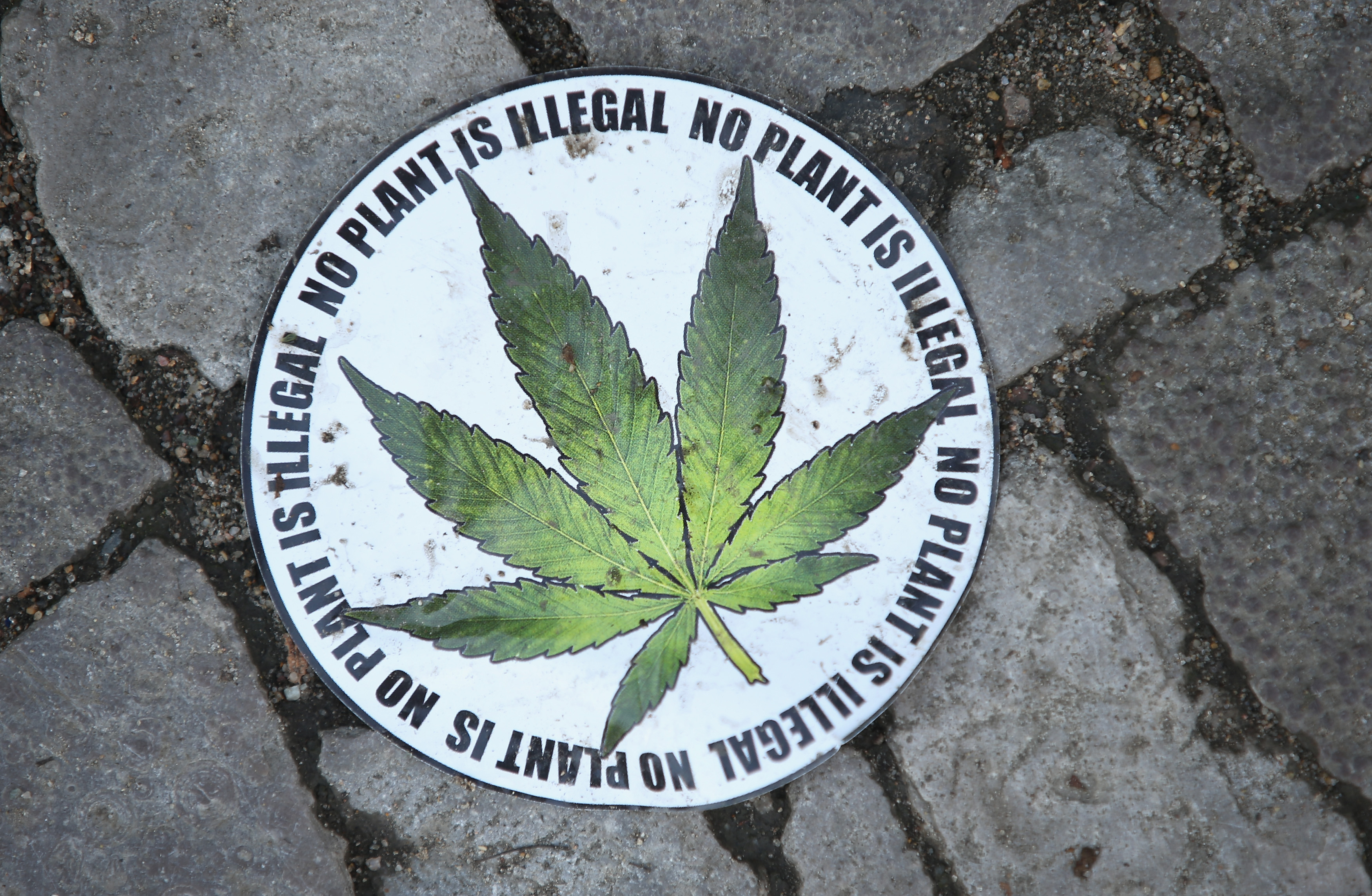
(Photo: A sticker calling for the legalization of marijuana lies on the street at the annual Hemp Parade (Hanfparade) on August 9, 2014 in Berlin, Germany. Supporters of cannabis legalization are hoping legalized sale in parts of the USA will increase the likelihood of legalization in Germany. The city of Berlin is considering allowing the sale of cannabis in one city district. By Sean Gallup/Getty Images)

The Grave Risks Of A Travel Ban, Ctd

Yesterday, House Republicans dragged CDC Director Thomas Frieden and other health officials onto the floor for a little grilling and grandstanding about why we haven’t instituted an Ebola travel ban yet:

“None of us can understand how a nurse who treated an Ebola-infected patient, and who herself had developed a fever, was permitted to board a commercial airline and fly across the country,” said Rep. Fred Upton (R-Mich.), the House Energy and Commerce Committee Chairman. “It’s no wonder the public’s confidence is shaken.”

Upton joined other lawmakers, including Rep. Tim Murphy (R-Pa.) and House Speaker John Boehner, who want the Administration to consider travel restrictions between the U.S. and West African countries, where the outbreak has killed more than 4,500 people. “It needs to be solved in Africa but until it is, we should not be allowing these folks in, period,” Upton said at the hearing. … Frieden countered that the Administration can better track people from the most vulnerable countries in West Africa without restrictions on travel.

Dr. Steven Beutler, an infectious disease specialist, favors quarantining everyone who travels to the US from an Ebola-afflicted country:

This obviously will result in considerable inconvenience and some expense, and in this respect I realize that it sounds draconian. But the fact is, it will prevent most importation of the disease.

If the quarantine could be established prior to travel, then virtually no cases would be imported from West Africa. Ultimately, it will diminish the total number of people being quarantined and being tracked, since there will be fewer contacts and less transmission. …

Note that I am not advocating travel bans. It is hard to disagree with Dr. Anthony Fauci, the National Institutes of Health director of infectious diseases, and CDC Director Thomas Frieden when they point out the necessity of engaging the outbreak at its source, and being able to provide material support to the affected regions.

John Cassidy sees politics pushing the administration toward a “tougher” response:

The President’s problem is that he appears to be reacting to events rather than dictating them. Initially, his Administration resisted calls to screen visitors from West Africa; the day Duncan died, it announced a system of screening. Until yesterday, the White House insisted that the C.D.C. had established proper protocols and systems for hospitals dealing with Ebola victims. Now it is beefing up federal oversight and promising to fly in SWAT teams.

Will that be enough? In terms of fighting the disease and protecting health workers, we can only hope so. For political reasons, however, Obama will almost certainly have to do more—a point conceded by one of his former spokesmen, Jay Carney, who on Thursday advised the White House to reconsider its opposition to banning flights from West Africa.

Morrissey backs Obama’s decision to focus on containing the outbreak at its African source, partly because he doesn’t trust the CDC to prevent things from getting out of hand once more cases arrive in the US:

In its own way, the CDC’s fumbles over the last few weeks proves the wisdom of Obama’s warning here. Just like terrorism, it is better to fight Ebola on its own ground rather than ours, because once it gets here, it’s almost impossible to contain effectively — or at least at the moment. That is one reason that support for a travel ban from Ebola-impacted countries has become a nearly consensus position outside of the White House. People understand that the first and best defense is to keep the bug from getting to the US at all.

Yuval Levin, who supports a travel ban and expects the administration to impose one eventually, nonetheless argues that we aren’t thinking about the threat correctly:

The very nature of the debate we are now having, including the debate over the travel ban, is evidence of the fact that we probably have not yet learned not to underestimate this outbreak. We are still thinking about it in terms of a crisis in Guinea, Liberia, and Sierra Leone that could reach our shores by the various means that connect us to them.

But the real danger, to us and to others, is probably far greater than that. Our greatest worry should not be that the disease could get to the United States from those West African nations but that it will get to Nigeria’s larger population centers or to, say, India or other places with massive population density and weak public-health systems, and from there will become an epidemic throughout the third world. The scale that this outbreak is now likely to reach in West Africa will make it rather difficult to prevent that, raising the risk of a far more colossal human catastrophe than the nightmare we are already witnessing and of a greater threat to the U.S. population.

That has not yet happened, and so it is likely preventable, but what the world is doing at this point in West Africa is probably not sufficient to prevent it.

Update from a reader, who comments on the original tweet we posted:

I was hoping for you to lay down some sanity regarding the whole “You can give but not get Ebola on a bus” thing, but you posted the tweet without comment, and since I’ve seen the point ridiculed elsewhere already, I’d like to point out what seems like the obvious message behind saying something like that:

If you don’t have Ebola, go ahead and ride the fucking bus. But if you think you might have Ebola, just to be goddamn sure, don’t ride the fucking bus.

Is that such a crazy interpretation? I mean, can you imagine what people would say if Frieden had said something like: “Yeah, if you have Ebola, go ahead and take the bus, who cares, right?” What do people want from the director of the CDC besides a reassurance that if you’re healthy and at low risk you should go about your daily lives, but if you’re sick you should take more precautions than may be necessary?

I haven’t been following the details closely enough to have an opinion on whether the rest of the administration’s Ebola response has been a giant cock-up or not (although it seems like maybe yes), but it seems like people are being lazy in making fun of Frieden’s comment without doing even a little bit of thinking.

“2016’s Premier Novelty Act”

Phil Mattingly covers Carson’s budding presidential campaign:

[S]upporters launched the National Draft Ben Carson for President Committee. It raised more than $7 million in less than a year of existence. It has deployed staff members to Iowa and South Carolina and purchased tables at Republican events throughout the country. The group, according to Federal Election Commission filings, is gathering reams of supporter, fundraising and digital data that could be purchased and utilized by Carson’s campaign should he decide to give the green light. It’s a little like Ready for Hillary, the outside group pushing for the former secretary of State to jump into the 2016 race.

Except the Carson group actually outraised Ready for Hillary last quarter.

Francis Wilkinson remarks that Carson’s candidacy “promises to be a (traditional) marriage of Michele Bachmann’s personal loopiness and Herman Cain’s professional ignorance of public policy”:

In his book, Carson called the Affordable Care Act “the biggest governmental program in the history of the United States.” (So much for Social Security, Medicare, the Pentagon.) And if he can’t be bothered to learn much about government, he has an all-purpose rationale: “I would choose common sense over knowledge in almost every circumstance,” he wrote. It’s just too much to ask for both.

Carson, who is poised to be 2016’s premier novelty act, is already following the script from Cain’s 2012 Republican presidential run. He is a successful black man who tells conservative white audiences that there are no meaningful structural impediments to success: There are only character failings. That should be enough to keep him on the stage, at least until the Iowa caucuses.

Update from a reader:

Loopiness?  Professional Ignorance?  Premier Novelty Act? REALLY? I’d expect better from the Dish. For many of your readers, who may not even know who Ben Carson is, how about being fair, rather than simply trashing him? His resume is second to none:

  • Raised by a single mom in Inner City Detroit.
  • Director of Pediactric NeuroSurgery at Johns Hopkins Hospital at age of 33.
  • In 2001, CNN and Time magazine named Ben Carson as one of the nation’s 20 foremost physicians and scientists.
  • In 2001, the Library of Congress selected him as one of 89 “Living Legends.”
  • In 2006, he received the Spingarn Medal, the highest honor bestowed by the NAACP.
  • In February 2008, President Bush awarded Carson the Ford’s Theater Lincoln Medal and the Presidential Medal of Freedom, the U.S. highest civilian honors.
  • In 2009, actor Cuba Gooding, Jr. portrayed Carson in the TNN television production Gifted Hands.
  • Because of his unflagging dedication to children and his many medical breakthroughs, Carson has received more than 50 honorary doctorate degrees and is a member of the Alpha Honor Medical Society, the Horatio Alger Society of Distinguished Americans and sits on the boards of numerous business and education boards.

Find me 10 Americans alive today that are more admired, successful and accomplished. Yet you lead with Novelty Act, Loopy and Professional Ignorance.

Carson is clearly an incredible physician and humanitarian. But politician? On the Dish alone, we’ve seen Carson call Obamacare “the worst thing since slavery“, champion creationism, and compare homosexuality to bestiality and pedophilia.

What The Hell Is Happening In Houston?

News dropped on Tuesday that pastors’ sermons had been subpoenaed in the ongoing legal maneuvering over the city of Houston’s equal rights ordinance (HERO), which includes prohibitions against discriminating on the basis of sexual orientation and gender identity:

Opponents of the equal rights ordinance are hoping to force a repeal referendum when they get their day in court in January, claiming City Attorney David Feldman wrongly determined they had not gathered enough valid signatures to qualify for the ballot. City attorneys issued subpoenas last month during the case’s discovery phase, seeking, among other communications, “all speeches, presentations, or sermons related to HERO, the Petition, Mayor Annise Parker, homosexuality, or gender identity prepared by, delivered by, revised by, or approved by you or in your possession.”

To add to the story, Mayor Annise Parker is openly lesbian – creating an irresistible opportunity for the usual suspects. Fox News hack Todd Starnes declares that, if pastors are arrested for refusing to obey the subpoenas, then “Christians across America should be willing to descend en masse upon Houston and join these brave men of God behind bars.” Dreher is having his usual cow. The issue is a little more complicated, though:

When the city rejected the petition on the ground that the signatures were invalid, some opponents of HERO—not the pastors themselves—challenged the city’s decision in court. The city issued the subpoenas in connection with that litigation.

The theory, as I understand it, is that because these pastors helped organize the petition drive and hosted meetings, the pastors’ statements about the petition are important. I guess the idea is that the pastors may have said something that induced phony signatures … So when the city says it would like to know what the pastors may have said about the petition drive itself, that’s not a completely untenable position, given the freewheeling rules of American pretrial litigation.

Still, the subpoena is disturbing to me – and way too broad, as Eugene Volokh notes. But the story falls a little flat because, well, the mayor herself claims she first heard about the subpoenas yesterday and agrees with the critics. Katie Zavadski investigated and found out the following:

The subpoenas were sent by outside attorneys working for the city pro bono. They were looking into what instructions pastors gave out to those collecting signatures for a referendum on the non-discrimination law. (What exactly the pastors said, and what the collectors knew about the rules, is one of the key issues in pending litigation around whether opponents of the law gathered enough signatures for a referendum.)

“There’s no question, the wording was overly broad. But I also think there was some deliberate misinterpretation on the other side,” Parker said at a press conference Wednesday. “The goal is to find out if there were specific instructions given on how the petitions should be accurately filled out. It’s not about, ‘What did you preach on last Sunday?'”

Katie also notes that the mayor’s office confirmed via email “that the city will narrow the scope of inquiry into the pastors’ communications to more directly target HERO petitions.” Which is a relief.

Update from a helpful reader:

I’m an attorney who does civil litigation, so subpoenas like this are very familiar to me. One important point is that the City has no ability to enforce these subpoenas itself. Any party in civil litigation can issue a subpoena on its own and without court permission. If the people who receive the subpoena think it is too broad, they can object, and the party who issued it then has to convince the judge in the litigation that the subpoena is appropriate.

Also, the typical process for dealing with an issue like this is that the person (or their attorney) who receives a subpoena would call the attorney who issued it, express their concern, and the two sides would try to reach a mutually agreeable compromise. Such “meet and confer” sessions are routine in civil litigation, and would be required before the issuing party could ask the judge to enforce the subpoena.

Thus, there are very reasonable safeguards in place against abuse.

A Virtual Physical

James Hamblin makes the case for telemedicine:

If some basic needs were addressed remotely, doctors could focus on more dire cases during their busy office hours. Patients could ask simple questions without needing to take an afternoon off work for an office visit. As of last year, only 12 percent of Americans had ever texted or e-mailed with a doctor, according to a survey conducted for The Atlantic. But about a third of people under 30 were open to having their primary communication with their doctors be online. …

Under the current model, doctors don’t see patients on an ongoing basis. As a result, a patient is inevitably getting advice from a doctor who, because she hasn’t seen what he looks like when he’s not sick, can’t tell whether he really “looks sick”—a gut valuation that remains crucial to effective primary care.

Yet, with the American Association of Medical Colleges projecting a national shortage of more than 90,000 doctors by 2020—especially in rural areas—there simply may not be enough doctors to provide this kind of ongoing care. Telemedicine could play a crucial role in addressing basic needs, particularly in settings where long-term relationships don’t come into play, like emergency rooms. Already, to take one example, a company called Avera Health makes physicians in cities available via video to hospitals in small towns, where they are remotely helping to staff emergency rooms overnight. (They work in concert with people who are on-site. So, for instance, a nurse might perform hands-on work at the direction of an onscreen doctor until a local doctor can arrive.)

Previous Dish on telemedicine, as applied to abortion, here. Update from a reader:

Haven’t we had telemedicine for like a decade now?

Heh. Another reader:

Personal anecdote: the Fortune 100 company I work for rolled out a telemedicine option (“free for 2014!”), so I tried it for a persistent cough I’ve had this week. The doctor told me that in most states you’re required by law to have a webcam, so the doctor can see you and look down your throat, I guess. After hearing my symptoms, she wrote a prescription to my local pharmacy for a strong cough suppressant. Pretty handy, huh?

I decided to get a second opinion. After being told to wear a mask in the office, the Nurse Practitioner did a nose swab (just as much fun as it sounds), diagnosed me with Influenza B, and signed me up for Tamiflu

I have an 18-month-old daughter. I’m sure telemedicine will have it’s place, but I’m gonna stick with the clinic for now.

A Premature Peace Prize?

Although much of the recent criticism of Malala Yousafzai’s Nobel win has been lazy and predictably contrarian, Tabish Khair makes a convincing case that the committee should have waited to honor the young advocate:

What kind of burden rests on her 17-year-old shoulders now, I wondered? Is it fair to put that sort of burden on such a young person? Is it fair to award the prize for what might be achieved, rather than what has been achieved – because, unlike [Global March Against Child Labor founder Kailash] Satyarthi, Malala has not had the time to organize anything of substance, despite her brave personal example and her visibility as a symbol. To date, Satyarthi and his organization are credited with rescuing and educating about 100,000 such child laborers in India. She has not had the time to rescue 100,000 children from the darkness of Taliban and its ilk.

Now she might never get that chance. The adulation of well-meaning but largely ignorant people has put her beyond the pale. One original reason why she became such a fresh and enabling symbol – unlike the thousands of men or women who share her opinions in Delhi or Karachi or New York – was that she was “in the field.” Real change – in Pakistan or elsewhere – will be brought by people in the field, as Malala was when she was shot, as the anti-polio workers and hundreds of educators continue to be. …

Now, I realize, Malala has been taken over by the superior circles. I won’t call it the West. I call it the superior circles – people with lots of good opinions, and the inability to operate in the field.

Update from a reader:

Tabish Khair seems to be nitpicking. A girl who had been shot by the Taliban and lived to become an activist might have been an internet sensation for a few days, a la #saveourgirls. The Nobel selection process has brought lasting attention to her cause. Those “people with good opinions and the inability to operate in the field” are called rich people and their support can buy many supplies and operatives. Whether that support is due to the merits of the cause or the cachet of a Nobel is irrelevant.