Colorado’s Black-Market Cannabis

Jacob Sullum reports on its persistence:

“The black-market prices are definitely lower than recreational prices,” says Michael Elliott, executive director of Colorado’s Marijuana Industry Group. “The taxes are a big reason why, the new testing requirements, the packaging requirements, and basically this whole hurdle of the extraordinary expenses people have had to go through to open these businesses. Another reason is that the businesses have had limited supply.”

But, as prices fall, the black-market is going to shrink:

Kayvan Khalatbari, co-owner of Denver Relief, a medical dispensary that started serving recreational consumers in July, says after-tax prices in that market average $50 to $60 per eighth. He expects those prices to plummet by next year, however, as growers ramp up production and new suppliers enter the market. As of October 1, dispensaries no longer have to grow 70 percent of their inventory, and businesses dedicated to cultivation will be allowed.

“I would not be surprised, given the flood that’s going to happen, if we see $10 and $15 eighths by early next year,” Khalatbari says. “I would believe that. I could see ounces being sold for $50. I truly see that happening, because there is going to be so much competition [and] people are becoming so efficient in their production. They’re automating much more. We’re seeing best practices settle in. There’s less risk in operating because people are operating at a higher level. I think we’re going to become a very efficient industry very quickly. We’re going to see competition, and we’re going to see prices hit rock bottom early next year.” At that point, he predicts, the black market will dwindle away.

Serial Killers Aren’t That Sharp

Criminologist Scott Bonn concludes that “the image of the evil genius serial killer is mostly a Hollywood invention”:

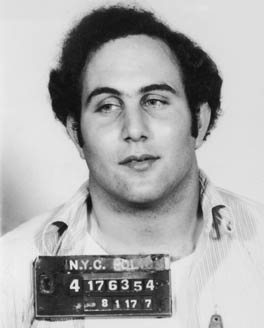
Hollywood has established a number of brilliant homicidal maniacs like John Doe in the acclaimed 1995 film Se7en. Doe personifies the berkowitz_arrest201stereotype of the evil genius serial killer who outsmarts law enforcement authorities, avoids justice and succeeds in his diabolical plan. … Real serial killers generally do not possess unique or exceptional intellectual skills. The reality is that most serial killers who have had their IQ tested score between borderline and above average intelligence. This is very consistent with the general population. Contrary to mythology, it is not high intelligence that makes serial killers successful. Instead, it is obsession, meticulous planning and a cold-blooded, often psychopathic personality that enable serial killers to operate over long periods of time without detection.

One famous example of less-than-brilliant planning:

David Berkowitz is one of the most infamous serial killers of all time, though he is more commonly referred to as the Son of Sam. In the 1970’s, the Son of Sam terrorized the people of New York City, murdering six people and prompting a police operation known as Operation Omega, comprised of 200 detectives trying to stop him before he could kill again.

So how did they finally catch the infamous murderer? A parking ticket. Berkowitz had parked his car in front of a fire hydrant before heading off to get his murder on, and a woman witnessed him tearing up the parking ticket and later reported it to the police. Just think about the fact that the Son of Sam may very well never have been caught were it not for his easily avoidable mistake of parking in front of a fire hydrant.

(Photo of Berkowitz via Wiki)

Over-Salt Of The Earth

Brian Merchant flags a study claiming that salt degradation “has caused tens of billions of dollars worth of damage, mars an area of cropland the size of Manhattan every week, and has hit nearly one-fifth of the world’s farmland so far”:

“Salts have damaging effects whether they are in excess amounts in the human body or in agricultural lands,” Manzoor Qadir, the lead author of an eye-opening new study on the subject, published by the United Nations’ Institute for Water, Environment and Health, told me in an email conversation. “If salt degradation goes on unchecked, more and more land will be highly degraded leading to wasteland,” he said. “Restoring such lands will not be economically feasible at all.”

Alison Bruzek provides more details:

Rainfall and irrigation systems designed for lots of drainage usually keep salt from building up in the soil. But as climate patterns shift and more farmers irrigate without sufficient drainage, evaporated salt is crusting on top dirt clumps around the world — especially in places like Central Asia. Normally, soil has anywhere from zero to 175 milligrams of salt per liter. Once that level exceeds 3,500 milligrams per liter, it’s next to impossible to grow anything, including major crops like corn, beans, rice, sugarcane and cotton. …

No one had really studied the economic impacts of salt-damaged land, says Qadir. But now that the UN Food and Agriculture Organization has projected that we need to produce 70 percent more food by 2050, the salinity problem is becoming a much higher priority issue. On the 1-to-10 scale of land sustainability problems, “erosion is an 8 … high-saline soils is a 2 problem,” Chuck Benbrook, research professor at the Center for Sustaining Agriculture and Natural Resources at Washington State University, tells The Salt in an email.

The Trappings Of Mourning

https://twitter.com/Paste_Design/status/526825773991079936

Hillary Kelly muses on an exhibit at the Metropolitan Museum:

Mourning clothesalong with other facets of griefwere highly regimented in Victorian England and nineteenth-century America. As the curator’s note explains, “Mourning through sartorial display, a duty chiefly assumed by women, followed a series of stages marked by changes in fabrics and colors.” Exacting codes defined which fabrics and colors were acceptable at particular stages of grief: For the first months after a death, only “lusterless” black dresses were acceptable. As time passedand for a widow one expected to wear mourning clothes for a full two yearsthe strictures slowly loosened, and the severity of the attire deceased.

The loss of such traditions has its drawbacks:

The mourning period is a nebulous and tricky thing to navigate in modern life. The boyfriend of a very close friend died in an accident the summer after our freshman year of college. The most agonizing conversations I remember having with her revolved around the expectations others placed on her grief rather than the death itself: When would she “get over it”? How long was she going to remain single? Did she ever think she’d get married? When she began dating another person, she confronted all kinds of unkind judgment from those who thought she’d “moved on” too quickly and wondered (yes, out loud) if she’d really loved the boyfriend who had died.

Would mourning clothes have helped her or hindered her? So often we think of the strictures of the Victorians as constraining, but there is a sense in which their very formal propriety feels appropriate and even comforting. If you exclude certain religious traditionssitting shiva, for examplein which the processes immediately following death are heavily prescribed and demand an explicit and relatively lengthy interruption of everyday life, modern grief is missing a sense of etiquette and deliberatenessa set of outward signs for the bereaved to use as signals.

No Relief For America’s Sickest State

Sarah Varney covers Mississippi’s experience with Obamacare:

“There are wide swaths of Mississippi where the Affordable Care Act is not a reality,” Conner Reeves, who led Obamacare enrollment at the University of Mississippi Medical Center, told me when we met in the state capital of Jackson. Of the nearly 300,000 people who could have gained coverage in Mississippi in the first year of enrollment, just 61,494—some 20 percent—did so. When all was said and done, Mississippi would be the only state in the union where the percentage of uninsured residents has gone up, not down.

Why has the law been such a flop in a state that had so much to gain from it? When I traveled across Mississippi this summer, from Delta towns to the Tennessee border to the Piney Woods to the Gulf Coast, what I found was a series of cascading problems: bumbling errors and misinformation; ignorance and disorganization; a haunting racial divide; and, above all, the unyielding ideological imperative of conservative politics. This, I found, was a story about the Tea Party and its influence over a state Republican Party in transition, where a public feud between Governor Phil Bryant and the elected insurance commissioner forced the state to shut down its own insurance marketplace, even as the Obama administration in Washington refused to step into the fray. By the time the federal government offered the required coverage on its balky HealthCare.gov website, 70 percent of Mississippians confessed they knew almost nothing about it.

Beutler finds it “all the more galling when you recognize that, for the time being at least, Mississippi is actually paying for this outcome”:

For the next couple years, the Medicaid expansion would cost Mississippi $0. … The combined effects of non-expansion are striking. State spending on Medicaid will grow faster next year in states that declined the expansion than in states that accepted it. As Kevin Drum wrote for Mother Jones on Monday, non-expansion states “actually prefer spending more money if the alternative is spending less but helping their own poor with medical coverage.”

The Best Of The Dish Today

Today, I compared the current mid-terms to a “primal moan“. A reader differs:

I see it as a long belch prompted by indigestion, with a bile finish. And it will only get worse with the prospect of Hillary vs. the GOP nut jobs looming on the horizon. I’m 49 years old and I’ve always been highly engaged politically, but I am perilously close to saying “fuck it” and not paying attention anymore. I will always vote but I feel my energy is better spent elsewhere.

I feel his pain and blog through it every day.

Meanwhile, the “catcalling” video remained a Rorschach test for Dish readers; as did the question of “sexual assault” while both parties are drunk. In another fascinating round of responses to our book club discussion of Waking Up, Sam Harris’ scientific Buddhism got knocked around a bit today by actual Buddhists. I rather enjoyed the spectacle. Oh, and this helps.

The most popular post of the day was Catching Catcalls On Camera; followed by A Declaration of War On Francis.

Many of today’s posts were updated with your emails – read them all here.  You can always leave your unfiltered comments at our Facebook page and @sullydish. 22 more readers became subscribers today. You can join them here – and get access to all the readons and Deep Dish – for a little as $1.99 month. Gift subscriptions are available here. Dish t-shirts are for sale here, including the new “Know Dope” shirts, which are detailed here.

See you in the morning.

Prescriptive Measures

Virginia Hughes investigates the purpose of drug warning labels:

Does anyone actually read them?

There doesn’t seem to be a lot of research on that question, though the data that does exist suggests that some patients are more conscientious than I am. One report I stumbled on, surveying 1,500 patients from a community pharmacy in Germany in 2001, found that 80 percent always read the inserts. A 2007 study looked at 200 patients in Israel who were prescribed antibiotics, analgesics or antihypertensives. It found that just over half of participants read the inserts. And a 2009 study in Denmark found that 79 percent of patients “always or often” read them. On the other hand, a 2006 report of American consumers reported that just 23 percent looked at this info.

Even if patients are interested in reading those materials, they might not understand the information.

A 2011 study asked 52 adults with a high-school education or less to read the package insert and similar materials describing an antidepressant medication. Afterwards, less than 20 percent could name the the rare-but-dangerous side effect of the drug. A report from the Institute of Medicine similarly concluded that drug labeling is a big part of why patients often use drugs incorrectly.

Studies like those have led some researchers to propose ways to make labels more useful to patients. But the reason Pfizer was so concerned with the black box warning for Chantix has little to do with consumer behavior. The company was worried because of the warning’s potential influence on doctors and their prescribing habits.

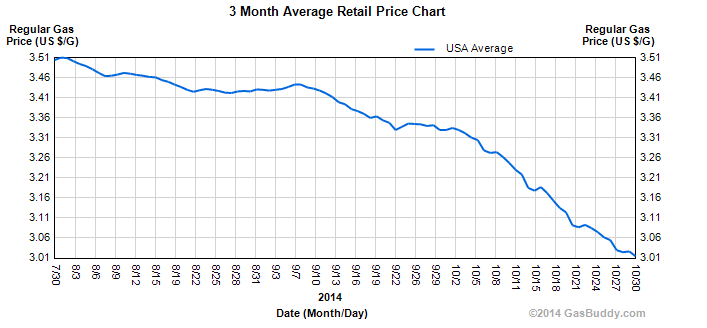
Is $3-A-Gallon Gas Good News?

Screen Shot 2014-10-30 at 2.36.45 PM

Mataconis argues that overall, the ongoing decline in oil prices is a boon to the US and other advanced industrial nations:

Falling prices for oil will eventually filter through to the prices of the products derived from oil itself, including not only gasoline but also home heating oil and jet fuel. In the short and medium term, this would provide some relief for consumers and for companies that depend on transportation such as Wal-Mart, Amazon, airlines, and shippers such as UPS and Fed-Ex. If prices continue to fall, those benefits will become more apparent and could help to boost economic growth at least slightly, which would be good news for the jobs market and even tax revenues and the Federal Budget Deficit. Other nations that are oil dependent would likely experience similar benefits, which would be good news for areas like Europe where the economy seems to be slowing down a bit and for the world as a whole, which in turn would be good news for nations that are dependent on international trade, which is pretty much every major industrialized nation at this point.

Derek Thompson, who believes prices might fall even further, points out that some industries and regions will be hurt even as consumers celebrate:

It’s hard to say how the sliding price of gas will affect the United States, as a whole, because the economy is a messy mix of cities, industries, and consumers behaviors, each of which experience falling prices differently. In cities with lots of driving and not much energy production—e.g. throughout California—cheaper gas is simply good, the end. Three-buck gasoline gives back as much as $500 a year to the typical family with two cars, compared to the $4.50 gallons from a few years ago. But mining and energy jobs have been the fastest-growing sector of the labor market, and thinner profits for energy producers will hurt states like North Dakota and New Mexico, who have relied on energy exports to pay for new jobs and higher wages.

Jared Gilmour posits that the falling prices are “threatening to make costly US shale extraction uneconomic”:

Limited pipeline capacity and overproduction of natural gas in the Marcellus shale has pushed prices down, making it hard for producers to turn a profit. Drillers are taking on ever increasing amounts of debt to finance their operations. And there may not be as much shale oil and gas as the US government forecasts, according to a new report from the Post Carbon Institute, a California-based think tank that promotes sustainable energy. “Shale will be robust for the next four or five years, but because of declines at the well-level and field-level, it’s not sustainable in the medium and longer term,” says study author David Hughes in a telephone interview Tuesday. “Policymakers should be aware of that before they try to cash in on a bounty that may not exist ten or fifteen years down the road.”

But industry experts tell the WSJ that prices would have to fall quite a bit farther to endanger the shale industry:

Marianne Kah, chief economist of ConocoPhillips , said oil prices would need to fall to $50 a barrel “to really harm oil production” in U.S. shale basins. She said 80% of the American shale sector—in which ConocoPhillips is a major operator—is profitable at prices between $40 and $80 a barrel for benchmark West Texas Intermediate crude. Jason Bordoff, director of Columbia University’s Center on Global Energy Policy, said he believed prices would have to fall much further to put significant pressure on the U.S. energy boom. “I am not sure if $80 is enough,” he said. “You might need $60 or $65 to really see a stress test.”

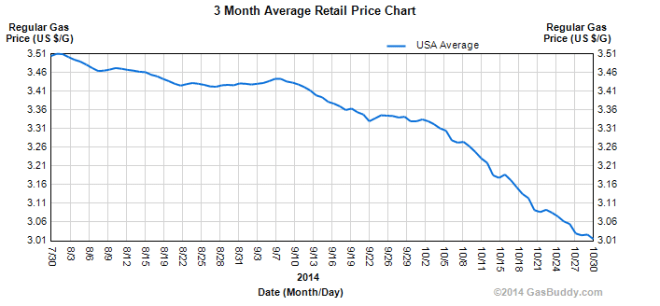
(Chart via GasBuddy.com)
What The Midterms Won’t Teach Us

Sabato’s Crystal Ball spells it out:

The 2014 midterm, no matter the outcome, does not hold real predictive value for 2016. We’ve often compared this year with 1986, where Democrats bounced back to capture the Senate on a highly favorable map in President Reagan’s “sixth-year itch” second midterm. Of course, two years later, the country elected a Republican president for the third straight time. Could the current GOP meet with a similar fate? The results next Tuesday certainly won’t tell us.

Alternately, 2014 might prove to be like 2006, a great Democratic year that foreshadowed another great Democratic year. For all the legitimate talk of the Democrats’ growing demographic edge in presidential elections, the advantage could be blunted by an unpopular President Obama, who like then-President George W. Bush could drag down his party in consecutive elections. Obama’s approval rating is very important in the outcome of the next presidential election: If his approval rating continues to stagnate or sinks even lower, his standing will once again imperil Democrats, just as it did in 2010 and 2014. Democrats in and out of Congress will need to find ways to help Obama leave office on a high note, because their fortunes — and that of the Democratic nominee picked to succeed him — will still be linked to his.