How Not To Handle An Ebola Patient

Barbie Latza Nadeau remarks on how Spain bungled the case of Teresa Romero Ramos, the nurse who contracted Ebola, noting that “now Europe is grappling with its worst fear—the threat of an Ebola outbreak. And even the authorities can’t argue it won’t happen”:

That Romero was allowed to mingle in public after reporting a fever when she was within the known incubation period for the virus is unacceptable.  But what makes Romero’s case particularly troubling is that Spanish health authorities and the hospital where she worked appear complicit in not immediately isolating her. … According to Spanish press reports quoting the Spanish nurses’ union, Romero called Carlos III hospital several times between September 30 and October 2 when her fever finally hit the 38.6 threshold.  Still, it took until October 6 when she had become so deathly ill she was begging for an Ebola test before anyone at the hospital where she worked reportedly reacted.

Then, rather than immediately isolating her and rushing her to the special ward used to treat the previous Ebola patients, they told her to go to the nearby emergency room at Alcorcón, where press reports say she sat in the public waiting room for several hours absent of any protective gear. “I think I have ebola,” she reportedly told anyone who would listen.  But no one took notice until her first test came back positive. By then, dripping with fevered sweat, she would have been inarguably contagious.

And now the Spanish government wants to euthanize her dog – but not if the Internet can help it:

Excalibur, a 12-year-old rescue with soulful brown eyes, was left at home by the nurse’s husband, Javier Limón, as he checked into a quarantine unit. Before leaving, he left the dog water and 33 pounds of food — enough to last it through any observation period — while spreading pleas to help the dog on social media. “The dog is fine. He has the whole house to himself, with the open terrace so he can do his business,” he told Spanish paper El Mundo. “Are they going to put me to sleep, too?” The pleas were heard. A Change.org petition to spare the dog received more than 190,000 signatures within a day. …

Excalibur was fine and at home as of Tuesday night in Madrid. The hashtag #SalvemosaExcalibur is trending locally on Twitter.

Jazz Shaw relays some research that helps explain the concerns over Excalibur:

The coverage on CNN this morning clearly missed something (as did I) in terms of transmission through dogs. A reader notes that a study was already done on this and some dogs can, in fact, be infected.

Naina Bajekal has more:

The researchers concluded that “dogs could be a potential source of human Ebola outbreaks and of virus spread during human outbreaks,” but they did not test their hypothesis that human infection could occur through licking, biting or grooming. Instead, the study assumed dogs would transmit the infection in the same way as other animals observed in experiments; those animals excreted viral particles (in saliva, urine, feces) for a short period before the virus was cleared. David Moore, an expert in infectious diseases from the London School of Hygiene and Tropical Medicine, said that since no dogs showed symptoms of the Ebola virus “there is absolutely no evidence to support a role for dogs in transmission.”

By the way, like the Spanish nurse, the case of Thomas Eric Duncan, who today became the first person to die of the disease in the US, was hardly handled in the best way:

[He] started developing symptoms of the disease once he arrived in the US. He went to a Dallas emergency room and told a nurse that he had recently been in West Africa — a region that has been ravaged by an unprecedented Ebola epidemic — but that information was not “fully communicated” to the rest of his medical team. Duncan was diagnosed with a minor infection and sent away from the hospital. He returned days later via ambulance, when his symptoms had worsened considerably.

The Geography Of Bedtimes

Bedtimes

Sarah Kliff captions the above map:

Jawbone … put together a map of when people go to sleep. And there you see mostly people who live in large cities and college towns staying up later. That shows that people in Brooklyn, NY tend to have the latest bed time in the United States (they turn down, on average, at 12:07 a.m.) where as people living in Maui, Hawaii get to bed the earliest at 10:31 p.m.

While Brooklynites do stay up late for the United States, separate Jawbone datashows they pale in comparison to urbanites in other major cities. In Moscow, the average Jawbone wearer goes to bed at 12:46 a.m.

Roberto A. Ferdman adds some important context:

To be clear, the people Jawbone analyzed are those who own and use a Jawbone device, meaning that they are likely of a higher socio-economic background, and, imaginably, inclined to exercise or at least monitor their health.​

There’s also the likelihood that not all counties are represented equally. While Jawbone hasn’t divulged how many people  were observed in each county, it’s pretty reasonable to assume that far more were tracked in New York City than rural Montana.

Countrywide, some of the trends Jawbone unearthed merely confirm what we already suspected. People who live on the West Coast, for instance, are pretty good about getting to bed early, and people who live on the East Coast, generally speaking, are not. Cities also tend to go to sleep later than rural counties—again, no surprise here.

Over at Jawbone’s blog, Tyler Nolan Jawbone notes that “it’s also clear how our sleep can be shaped by daylight”:

On the western extremes of time zones, people tend to go to bed later, and on the eastern edges they go to bed earlier (for example, look at the Central Time Zone). The starkest difference can be seen on the Kentucky/Tennessee borders between Eastern Time and Central Time …

Our Priorities At The End Of Life

In an excerpt from his new book, Atul Gawande shares what he has learned about death and dying:

As recently as 1945, most deaths occurred in the home. By the 1980s, just 17 percent did. Lacking a coherent view of how people might live successfully all the way to the very end, we have allowed our fates to be controlled by medicine, technology, and strangers.

But not all of us have.

That takes, however, at least two kinds of courage. The first is the courage to confront the reality of mortality—the courage to seek out the truth of what is to be feared and what is to be hoped when one is seriously ill. Such courage is difficult enough, but even more daunting is the second kind of courage—the courage to act on the truth we find.

His conclusion:

[O]ur most cruel failure in how we treat the sick and the aged is the failure to recognize that they have priorities beyond merely being safe and living longer; that the chance to shape one’s story is essential to sustaining meaning in life; and that we have the opportunity to refashion our institutions, culture, and conversations to transform the possibilities for the last chapters of all of our lives.

Recent Dish on Gawande’s book here.

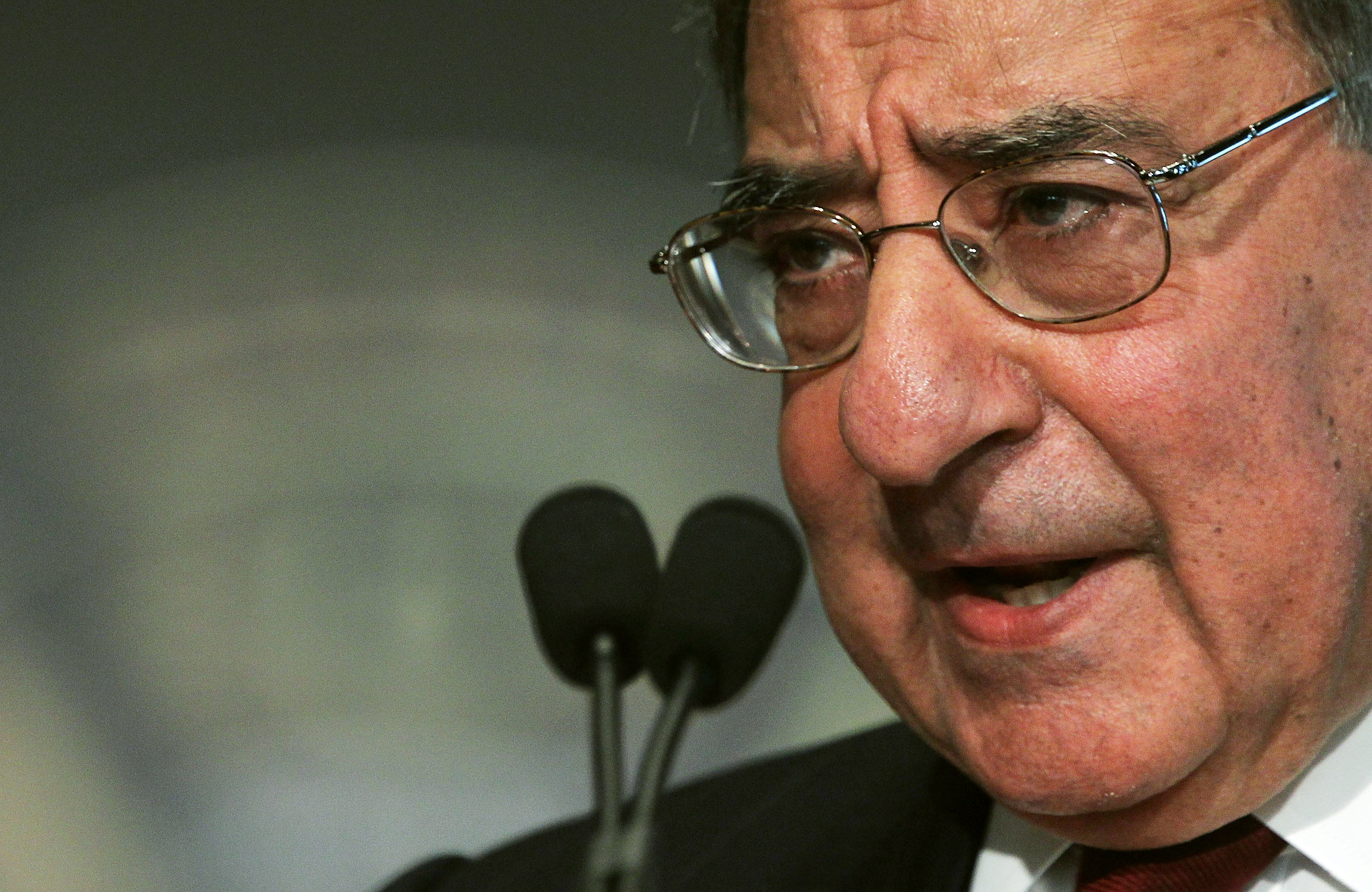
Panetta’s Plaint

Panetta Gives Speech On  Leadership and Public Service

In his new book Worthy Fights: A Memoir of Leadership in War and Peace, the former defense secretary harshly criticizes Obama’s handling of Iraq and Syria:

Mr. Panetta, who was C.I.A. director before taking over the Pentagon, recounted decisions that he disagreed with, including the withdrawal of all troops from Iraq in 2011, the failure to intervene in Syria’s civil war by arming rebels and the abrupt reversal of Mr. Obama’s decision to strike Syria in retaliation for using chemical weapons on civilians. Mr. Obama “vacillated” over the Syria strike and “by failing to respond, it sent the wrong message to the world,” he wrote. Had the president followed different courses, Mr. Panetta said in the interview, the United States would be in a stronger position as it now tries to counter the rise of the extremist Islamic State in Iraq and Syria. He added that he believed the president has turned a corner and “is going a long way in terms of repairing some of the damage I think took place as a result of the credibility issue that was raised on Syria.”

Beinart finds the “credibility” argument about Syria silly:

Since he declared war on ISIS, the Obama administration has been recruiting other countries to join the United States. And whatever you think of the war itself, that diplomatic effort has been remarkably successful. Ten different Arab countries have agreed to participate in the anti-ISIS campaign. Even John McCain and Lindsey Graham have praised the administration’s coalition-building skills. All this illustrates the silliness of Panetta’s claim.

It was one thing to speculate a few months ago that Obama’s chemical-weapons about-face would make it harder for the U.S. to convince allies to join a military coalition the next time. But the next time is now here. Roughly a year after supposedly squandering America’s credibility by standing down on chemical weapons, Obama has mustered enough credibility to convince a bevy of Arab countries to help us bomb fellow Arab Muslims in the heart of the Middle East.

And Drum responds to Panetta’s assertion about working in the Obama admin, that “for the first four years, and the time I spent there, I thought he was a strong leader on security issues. … But these last two years I think he kind of lost his way”:

Think about this. Panetta isn’t even a super hawkish Democrat. Just moderately hawkish. But his basic worldview is simple: as long as Obama is launching lots of drone attacks and surging lots of troops and bombing plenty of Middle Eastern countries—then he’s a “strong leader on security issues.” But when Obama starts to think that maybe reflexive military action hasn’t acquitted itself too well over the past few years—in that case he’s “kind of lost his way.”

That’s the default view of practically everyone in Washington: Using military force shows strong leadership. Declining to use military force shows weakness. But most folks inside the Beltway don’t even seem to realize they feel this way. It’s just part of the air they breathe: never really noticed, always taken for granted, and invariably the difficult but sadly necessary answer for whichever new and supposedly unique problem we’re addressing right now. This is what Obama is up against.

Panetta also believes that the fight against ISIS could turn into a “30-year war” and will likely require the deployment of ground forces. That statement understandably upsets Greenwald:

Only in America are new 30-year wars spoken of so casually, the way other countries speak of weather changes. He added that the war “will have to extend beyond Islamic State to include emerging threats in Nigeria, Somalia, Yemen, Libya and elsewhere.” And elsewhere: not just a new decades-long war with no temporal limits, but no geographic ones either. … At this point, it is literally inconceivable to imagine the U.S. not at war. It would be shocking if that happened in our lifetime. U.S. officials are now all but openly saying this. “Endless War” is not dramatic rhetorical license but a precise description of America’s foreign policy.

Panetta is, of course, not the first former cabinet member to come out with a book critical of the president’s leadership. Dana Millbank wonders why this is:

The lack of message discipline is puzzling, because Obama rewards and promotes loyalists. But he’s a cerebral leader, and he may lack the personal attachments that make aides want to charge the hill for him. Also, as MSNBC reporter Alex Seitz-Wald tweeted in response to a question I posed, Panetta, Gates and Clinton didn’t owe their careers to Obama. Clinton was a rival, Gates was a Bush holdover, and Panetta is a Democratic eminence grise. Loyalty didn’t trump book sales — or Clinton’s need to distance herself from Obama before a presidential run.

(Photo: Leon Panetta delivers remarks at Gaston Hall of Georgetown University February 6, 2013 in Washington, DC. By Alex Wong/Getty Images)

To Make A Long Story Short

It’s an idea worth keeping in mind, according to Ben Yagoda:

It’s not that books should never be long. Who would demand cuts in War and Peace, Moby-Dick, Ulysses, or Shakespeare, even though Ben Jonson wrote that “whatsoever he penned, he never blotted out a line”? Beyond the great books, it’s clear that in some fiction genres, fans demand thickness. People seem to want to get immersed in a story, and length adds to the feeling.

In nonfiction, certain subjects are important enough to call for comprehensiveness. Part One of Mark Lewisohn’s history of the Beatles, Tune In, is 932 pages long, and when it’s over the lads haven’t yet set foot in America. (Lewisohn pared for the U.S. market; at Amazon’s U.K. site, you can buy the “Extended Special Edition,” which is 1,728 pages.) But it’s OK. It’s the Beatles. Robert Caro’s multivolume biography of Lyndon Johnson, which is actually nearing completion, gets a pass for the same reason.

But those are, or should be, exceptions. The Great Gatsby is 48,000 words, for criminy’s sake! So many door-stopping novels would find their best form as novellas, so many nonfiction extravaganzas … as long New Yorker articles. They do not, for two main reasons. The first is that authors generally like to hear themselves talk, and editors, with so much on their minds, especially these days, aren’t sufficiently ready and willing to pare the extraneous. Also, since the market, as it’s been defined for a pretty long time, doesn’t have a place for novellas and 25,000-word nonfiction works, ideas that would work best at such length get artificially bulked up, like an offensive lineman on steroids.

Why Lineups Don’t Line Up

Virginia Hughes flags “helpful guidance” from the National Academy of Sciences about the accuracy of eyewitness identification:

One thing all of these scientists agree on—and was underscored repeatedly in the NAS report—is the importance of recording the witness’s level of confidence immediately after making a photo identification. As many studies have shown, witnesses’ confidence in their memories tends to inflate over time, which is obviously problematic if they’re testifying in court long after the event took place. As [John Wixted, a memory researcher at the University of California, San Diego] points out, most of the people who were wrongly convicted and then exonerated with DNA were initially identified with low-confidence witness ratings. Making sure to record confidence immediately “is a fantastic recommendation that will do far more to protect innocent suspects” than switching from one lineup type to another, Wixted says.

The Small Print On Health Insurance

Many Americans have difficulty understanding it:

This year, many people appear to have signed up for narrow plans unwittingly. A survey from the health research group the Commonwealth Fund found that about 25 percent of people with new exchange plans didn’t even know whether they’d bought a narrow network plan. So far, overall satisfaction seems relatively high, though most people are still fairly new to their plans. There are consumers in some states who are suing over their inability to get the care they need.

Stories like those recently chronicled by my colleague Elizabeth Rosenthal, of patients surprised to learn after the fact that they had been treated by out-of-network doctors, seem likely to proliferate if poor transparency about networks prevails.

Jordan Weissmann covered unexpected medical bills last week:

Surprise medical bills are an old issue, yet the Affordable Care Act mostly ignored them. Just a fraction of states have passed laws to protect patients in these circumstances, according to the Kaiser Family Foundation, and some of those statutes are extremely narrow in scope.

The problem, according to [professor Jack] Hoadley, is that it’s incredibly difficult to make insurers and health providers reach a compromise on how much out-of-network doctors should be paid. Some patient advocates hope that a new law that will soon go into effect in New York state could serve as a national model for how to strike the right balance. But just like most obviously outrageous problems in the U.S. health care system that make you pine for a life in Canada, surprise medical bills don’t have a simple solution.

This problem is particularly nasty with regard to ER visits. Nicholas Bagley explains:

How can it possibly be legal for your doctor to charge you out-of-network rates when you show at up an in-network emergency room? And how can we change the law to get at the problem? … Briefly: when you show up at an ER, you’re given an incomprehensible contract to sign. Among the terms you don’t read, you agree to pay the on-call ER physician for her services, whether or not the physician happens to be in-network. Given this “agreement,” the out-of-network physician can name her price.

He proceeds to suggest a few potential solutions.

When Does Spanking Become Abuse? Ctd

A reader is furious:

Yesterday I read your readers’ tale of abuse and wept at my desk.  I endured the same torture.  I had the bruises and the welts to prove it.  It has caused me great mental havoc over the years.  And then to read the stories trying to justify the readers’ own abuse?  I wept again.

To those readers, guess what: Corporal punishment is not ok – it’s never been ok – and your parents were wrong, just like past generations have been horribly wrong about a lot of things. So stop fucking hitting your kids.  And stop justifying abuse of defenseless human beings.  Battery, as a crime, has been on the books for a very, very long time.  See Cal. Penal Code 242: “A battery is any willful and unlawful use of force or violence upon the person of another.”  If a non-parent hit a kid the same way your parents hit you, not only would they be charged with battery but you would have a civil case against them.  Parenting should not impart special immunity from the law.

So yes, your parents should have gone to jail or, the most likely result, paid a fine.  And they should have had the discipline to think of better ways to teach their kids.  Hitting is lazy and stupid.  And yes I’m parent, and I have NEVER EVER hit my kids.  And guess what: they are incredibly well behaved and lovely human beings and will not bringing the emotional scars of abuse into adulthood.  Imagine that!

Several readers, on the other hand, illustrate the cycle of abuse:

I grew up in the 1960-70s. My two younger brothers and I were physically and emotionally abused as a children by a parent in ways similar to some of your readers descriptions – belts, fly swatters, wire hangers, wooden spoons. My mother was an angry, depressed, sometimes alcoholic and suicidal woman. Her moods were unpredictable and subject to sudden change. She was not only abusive to us, she was sometimes abusive to my father, who literally was a victim of domestic violence and displayed all the traditional features of that role you might see in women.

Yes, sometimes, during the better times, she could be a very good mother, who cared for our physical needs like cooking healthy food and decent clothing, and giving us opportunities to learn piano, baseball, or swimming. Ao no, she was not all bad all the time. It’s the only reason I have any love or compassion for her now, as she enters her 80s.

I knew from my earliest memories the stories of my mother struggling with her own abusive childhood and it’s terrible results. She grew up with a father who was a very heavy-handed, dominant figure in their rural, Southern household in the 1930s-50s. On one hand, he was a traditional, middle-class “good provider” in his community, but in their home he abused her, her four brothers and sisters, and their very sweet and timid mother. His rationale was always that they didn’t do their expected chores or follow his commands to the letter, or embarrassed him or questioned his authority.

To this day, the “mind fuck” for me is to hear how her father was such a terrible man for doing the EXACT same things to her and her family that she did to ours. It’s as if she still sees herself as a victim who fought back, and that anything she did in our childhoods was something we or our father simply “deserved”. She never, ever has apologized or acknowledged she hurt any one of us to this day, which at one point in my younger life would have been helpful in healing our relationship.

I get so frustrated and sad when I hear or read other people’s descriptions of their childhood abuse in which they have “swallowed the Kool Aid” on the rationalization for that abuse. Just the other night I sat across the dinner table from a young man who was justifying what Adrian Peterson did to that little boy because he himself had been a “really bad kid, and if they hadn’t beat the shit out of me I would be in jail right now”.  When I countered with the idea that a parent should never leave marks on a child and my own history of rarely physically punishing even the most difficult one of my kids, responded “Well, what kind of person is he today?” as if my kid had to be in prison because I never beat him with a belt.

I know these people from the inside. I know they did what they had to do: that they survived by internalizing their parent’s view of them as bad, deserving of pain, deserving of punishment for every little thing that made them angry, reasonable or not. When one of your writers described how terrible it would have been for her parents to have been held accountable by legal or social services means, it’s not because it would have been terrible; it’s because the writer has never moved passed that helpless, childlike stage of development she was in when she was abused.

I strongly suspect that had she truly healed, she and several other of your readers who wrote you would no longer defend the very people who harmed them the most. It’s why abuse is so cyclical in nature, being handed down from generation to generation, and it’s sad. But it’s also the biggest reason we need to intervene from outside the dysfunction of families and make hitting children a big, fat no-no.

Another reader broke the cycle:

This thread has been terrible to read.  I am the mother of a five-year-old girl.  I have never laid a hand on her and I believe I never will.  In my family there is line of understanding that corporal punishment does something terrible to the relationship between parent and child.  My mother got the belt, the switch, the paddle and good old-fashioned spanking from her parents.  She loved them, but they had problems and she swore that she would raise her children differently.

So when she had me – no belt, no switch, no paddle, but spankings – oh yes, spankings are fine, they are an appropriate punishment.  So was screaming “You pig, you pig!” because she was so angry.  When I was 12 she hit me hard across the face and my father had to intervene to prevent further escalation.  My mother loves me and I her, but we have had serious problems relating to each other because of this.

I have never hit my daughter, but I have lost my temper and yelled at her.  I told her she was a stupid and callous little cow.  Then I sent her to her room.  Then I cried.  Then I apologised to her and said that although she had been wrong, I was also wrong.  Just because I was angry I didn’t have the right to belittle her.  I hope that by being aware I will minimise the damage that I do to her.

My mother came to realise that she was inflicting her damage onto me and has long since apologised, I know she approves of the way I am raising my daughter.  Even though Philip Larkin tells us that we fuck our children up, I hope that, in my family, it is less and less.

Another is still struggling:

I’m a recovering depressive. As I’ve received the care that I’ve needed for years, it’s kind of like an alcoholic coming off of a long period of dependency. I’m realizing to my horror that not only has my professional and personal life been stunted, but I’ve been guilty of abuse towards my son. Some might poo-pooh the half-dozen times that I’ve slapped him in the face, because in every case he was being insolent or nasty. But he’s a sensitive kid, and frankly I’ll never know how much permanent damage I caused.

I was never physically abused by my parents, but I’m still pretty emotionally handicapped due to their emotional abuse. As a caring parent, I want to do better than has been done to me. But in one aspect I clearly haven’t, and it will always be my shame. Physically hurting someone weaker than yourself is low, weak, and mean. If there’s anything good that can come out of the NFL abuse stories and your readers’ stories, hopefully a few more people like myself will wake to their own misconduct.

Another reader’s story:

I grew up in a violent family.  My dad hit my mom, and she hit me, and I hit my younger brother.  Shit rolls downhill.

My mother hit us with her hands, and later with the handle of a wooden spoon.  Mostly I was punished for defiance – for questioning her directives, or arguing. I still remember her slapping me hard in the face when I was 13 because I had objected to something and me hitting her back and running like hell.  Thank God my aunt was there to talk to her, or I think she may have really hurt me.  I don’t know what my aunt said to her, but after that, the hitting stopped. From then on she started treating me like an adult, so I went from not being able to make any kind of independent decision to doing pretty much what I wanted.  As a teenager, I had tremendous freedom and that didn’t go so well.

As an adult, I simply shut down when there is any kind of conflict.  I can’t negotiate with people very well. I can’t manage objections, because I’m so frozen. My parents sent me into the world with two tools for managing interpersonal conflict: freezing or lashing out.  It’s taken me 40 years and countless hours of therapy to learn some tools, but it’s not instinctive.  I have to really work on the normal give and take at work and at home.

The reason we discipline kids isn’t to stop a specific behavior; it is to teach them how to manage themselves, teach them how to ask for what they want or need and accept “no” for an answer.  Eventually that child, on his or her own, will have to do something they don’t want to do, or stop themselves from doing what they want to do.  If the way you got your kids to behave is with a physical or verbal threat, then you risk raising an adult who will not have the discipline to manage their own life successfully.

Another is also trying to manage:

I am another adult living with the lifelong fallout of an abusive childhood. But it’s not all bad. You cannot go through these types of experiences without being transformed and I have earned some incredible life skills – skills that those of you who haven’t been beaten with a metal pole or dragged out of bed in the middle of the night and beaten on the floor of your room or beaten with a horse whip or beaten with whatever the hell was nearby… well you may not be able to do:

I can see into the future. Usually only about 5-10 seconds but one of the biggest “gifts” I received from the constant and unpredictable childhood abuse was hyper vigilance. While this is often associated with PTSD it’s also common in abused children and is expressed as extreme sensory sensitivity focused on detecting environmental threats. I’m the guy at the party standing in a place where I can see everyone else, as well as all entrances and exits. I may be talking to you, and even listening to what you’re saying, but I’m also tracking every other conversation in the room. When something is about to go down I’m either already gone or have stepped in to redirect – often before the participants realize they are about to cross a line.

I am also tough. I can take a beating. I have fallen off a cliff, been hit by a speeding truck, had viral meningitis, scarlet fever, seven concussions. You can hit me, cut me, burn me and beat me, but you can’t ever touch me. People say that I am intense – they have no idea, unless they touch me on the shoulder when I don’t see them coming. Then, for just a split second, they catch a glimpse. But that almost never happens.

My abuse started when I was five and lasted for about five years. Then I grew big enough that I wasn’t such an easy target and it stopped. Unfortunately the damage was already done – hard wired into my brain and unchangeable. I am, quite literally, broken. But I don’t feel like a victim and I don’t want, or need, anyone’s pity or help. My mother was also abused as a child and was not able to overcome the behavior that was modeled to her. I will never forgive her but I understand.

Now I am a father. I remember one night, shortly after my son turned five, standing in his room watching him sleep. And a wave of anger, dangerous and intense, washed over me as my knees went weak and I backed out of the room. Because I realized in that moment that my mother had stood in much the same way over a child that looked just like mine, sweet and innocent and beautiful. And then, screaming, she had grabbed me by the hair, yanked me from the bed and beat me with her fists on the floor of my room. I just couldn’t understand how that was possible. I still don’t.

And yet we debate it as if there were pros and cons. As if beating our children is not only justified and necessary, but a societal good, so long as we beat within reason. But how to measure what is reasonable? What locations are acceptable? What implements correct? How much swelling is permissible? What amount of blood is appropriate? Should we vary based on weight, gender, offense? Ask these questions about another adult and see what happens.

So when I read the two reader’s impassioned defense of their own abuse, and by extension their endorsement of this abuse for other kids who need to be “toughened up” and “learn some discipline” I cried for the first time in years. Not for myself, but for all those innocent children out there for whom there is still time. Still hope. Still a chance for happiness. Because even though I have found value in my hard earned skill set, and used it effectively to better my life, I would trade it all for a shot at feeling happy.

Thanks from a longtime reader and subscriber.

Follow the ongoing thread here.

Marriage Equality’s Red State Test

YouGov maps public opinion on marriage equality state-by-state:

Marriage Map

After this week’s SCOTUS news, Dale Carpenter takes note that “gay couples will be able to wed for the first time on an ongoing basis, and have their marriages officially recognized, in politically red states.” He uses Oklahoma as an example:

Fifty-three percent of Oklahomans are evangelical Christians, 16% are mainline Protestants, and 13% are Catholics. Oklahoma is the 11th most church-going state, although it’s still behind new gay-marriage jurisdictions like Utah (5th), North Carolina (tied for 7th), and South Carolina (tied for 1st). A recent poll showed that two-thirds of Oklahomans strongly oppose (58%) or somewhat oppose (8%) gay marriage. The state’s gay-marriage ban passed with 76% of the vote ten years ago, which suggests that change is coming very slowly in some parts of the country.

Among others, Family Research Council President Tony Perkins predicts a watershed moment of resistance ahead, followed by an erosion of support for same-sex marriage itself …

Dale doesn’t buy it – and neither do I. Many opponents of marriage equality have responded with civility:

The Church of Jesus Christ of Latter-day Saints, which six years ago played an important role in supporting California’s voter-approved ban on same-sex marriage known as Proposition 8, said that the new legal landscape in Utah did not affect its belief that “only a marriage between a man and a woman is acceptable to God.” “Nevertheless, respectful coexistence is possible with those with differing values,” the church said in a statement. “As far as the civil law is concerned, the courts have spoken.”

Nonetheless, the arrival of marriage equality in deeply red states is a new thing, and will for a while revive some of the culture war polarization of the 2000s. Already, you have Mike Huckabee going off the deep end in response to the court’s inactivism:

It is shocking that many elected officials, attorneys and judges think that a court ruling is the ‘final word,’. It most certainly is not. The courts are one branch of government, and equal to the other two, but not superior to either and certainly not to both. Even if the other two branches agree with the ruling, the people’s representatives have to pass enabling legislation to authorize same sex marriage, and the President (or Governor in the case of the state) has to sign it. Otherwise, it remains the court’s opinion. It is NOT the ‘law of the land’ as is often heralded.

Er, yes it is. But the impulse to become George Wallace didn’t come from nowhere. Ted Cruz knows this, which is why he may well ride the winning issue of 2004 in the GOP primaries. I think what we have to emphasize in this social transition is support for religious liberty, toleration of each other, and a focus on the actual reality that will now unfold: the simple fact that a tiny minority is now granted equality in a core human right long since denied them, and that, so far as everyone else is concerned, virtually nothing will change.

In response to paranoia, reason; in the face of hatred, calm; at the prospect of victory, magnanimity; and in the moment of our liberation, joy.