How To “Contain” A Problem Like Jihadism?

Unauthorized demonstrations against the advance of ISIL in Turkey

A reader quotes me:

Except, of course, it was Kennan’s careful and conservative case for containment that ultimately won the Cold War without the near-Armageddon that the predecessors of today’s chronic interventionists (Kennedy especially) nearly brought us to.

As someone who advocated a continuation of the containment policy towards Saddam Hussein rather than an invasion as you did, I think it needs reminding that “containment” during the Cold War did not mean isolationism, or doing nothing, but instead involved a very complex series of actions and alliances, including using force as an option. Keenan’s containment policy, as actually put into action, was a very active form of engagement with the entire world. It’s during that time that our entire “military-industrial complex” rose to prominence and influence.

So invoking Kennan and Cold War containment makes the opposite case in terms of our foreign policy in the Middle East, or against ISIL or Syria or whomever. Containment is a way of actively engaging these military threats, while being under no illusion that full-scale invasions and occupations are the solution.

I see Obama’s strategy in relation to ISIS and the Iraq to be one, essentially, of the same kind of active containment that our country used during the Cold War. Engagement, not isolationism, is the key. And that includes some use of force, and the arming ofiraq2 various groups, realistically understanding that we are not going to “win” by these means, but that we can at least prevent anyone else from winning either, and by drawing out the conflict over decades, we can ensure that the natural superiority in the underlying cultural and economic conflicts will resolve themselves in our favor.

It’s clear that preventing ISIS or any other radical Islamist group from taking power over a country such as Iraq is in America’s interests. That doesn’t mean that we should re-invade the country, but it does mean that we should remain militarily engaged to make sure it doesn’t happen, without of course going overboard on the idealism and machismo.

It’s of course debatable as to which containment strategies will work best in any given set of circumstances, but I don’t think one of the options is just walking away from the Middle East and assuming all will work out best without our involvement. That’s the first kind of isolationism Keenan described and criticized. The second kind, isn’t even one that Keenan himself advocated, given his endorsement of large US military bases in Europe and around the world, and military engagements in local clashes as Cold War proxies. So don’t go hiding behind Keenan as some sort of shield for advocating that the US should just disengage from these sorts of wars and conflicts.
My reader makes some excellent points, so let me explain why I still do not agree. There is a core difference between the threat we face today and the threat we confronted during the Cold War. The threat today is asymmetrical, whereas the face-off between the US and the USSR was eerily symmetrical. This means that the use of force against our current enemy is much more easily turned back against us – and the zero-sum assumptions of the Cold War can easily splinter into a myriad complications and unintended consequences when confronting global Jihad.

We did not have to worry in the battle against communism that we would somehow create many more spontaneous support for communism by resisting it; and we were confronting a huge multi-nation state, with a unitary command structure and global allies and puppets.

With Jihadism, we are beset by countless more complexities. The entities we are fighting change, melt away, re-group, and are capable of coming back from the near-dead in any anarchic place on earth they can find (and there are many). We are dealing with a world of disorder, not of frozen order. We are not confronting an advanced nation-state seeking to control large swathes of territory by conventional means. We’re dealing with asymmetrical terrorism which cannot be deterred the way the Soviets were, and which can even gain strength by our opposition. This requires a much nimbler, subtler touch – one few statesmen or women can muster for long.

The Jihadists are not suppressing large previously democratic populations with totalitarianism like the Soviets either; they are exploiting deep conflicts within the Muslim world – the Sunni-Shi’a divide pre-eminent among them – which refuels them in a way the bankrupt doctrines of Soviet Communism couldn’t, and in a culture where Western democracy is deeply alien. They are able to exploit all the resentments of those who see the West as a looming tower of decadence and wickedness – a huge f0rce in our modern world.

And they harness (even as they pervert) the immense power of fundamentalist religion, which, unlike communism, has roots deep in many cultures, and is resurgent in part because of the perceived threat of modernity (something that is not going to go away soon). The kind of raw military power that could deter the Soviets – as in the nuclear stand-off – simply does not work against the kinds of insurgencies we have been tackling.

We know this. The Sunni insurgency in Iraq – which I fear may be a permanent feature of that region unless the Sunnis retake control of what’s left of the central government – was bribed and charmed into quiescence for a brief period – while we had tens of thousands of troops in country. Once we left – and even if we had stayed with a residual force – we had no leverage to keep it at bay, as the deeper contradictions of the imperial construct of Iraq unfold. Our allies, unlike in the Cold War, also have many different agendas. Take Turkey, a NATO stalwart against the Soviets. Today, Turkey is beset with a much more complex set of problems – a Rubik’s Cube of how to control Kurdish separatism and depose Assad while resisting ISIS. And we expect an alliance as in the olden days? In the Cold War, moreover, we had no major NATO allies actually funding communist ideology and secretly arming the Soviet Union – while many of our so-called allies in the Middle East, like Saudi Arabia, are both the cause and purported solution to our dilemma.

In my opinion, we have learned these past few years that a conventional attempt to defeat Jihadism – by invasion and occupation – will fail, unless we construct a permanent imperial presence, which we neither want nor can afford. We have learned that drones and air-power can help at times – but also over time hurt, by incurring civilian casualties which emboldens our enemies, or splintering insurgencies into ever-more extreme and fringe groups; we have learned that funneling arms to our supposed allies can easily backfire – as ISIS’ plentiful supply of purloined US hardware attests to; and we have learned – and are fast re-learning – that when local governments lack legitimacy – like Baghdad’s or Kabul’s – the use of air-power against an insurgency is even less effective. In those circumstances, I believe we simply have to accept that, whatever our motives and power, there are some problems we cannot solve. And my concern with the president’s ISIS policy is that he has led Americans to believe that we can “ultimately destroy” something that we simply cannot.

Until Iraq’s Sunnis really believe Baghdad can represent them, there will be no progress against ISIS. The one sliver of hope I see is the current desperation of some Sunni tribes in the face of ISIS’ brutality. There’s a report in the NYT today on those lines. Money quote:

After enduring weeks of abuse by insurgents of the group called Islamic State, members of the Aza tribe struck a secret deal last month with local police and military officials: The authorities would supply weapons to two tribal regiments totaling about 1,150 fighters, and in return the tribe would help government security forces fight Islamic State.

Several days later, the tribal regiments, in collaboration with Iraqi government troops and Shiite militia fighters, liberated 13 villages in Diyala Province from Islamic State, which is also known as ISIS, officials said. “ISIS has humiliated the top sheikhs of Diyala and has done horrible and unforgivable crimes against people here,” said Abu Othman al-Azawi, an Aza sheikh and a member of the provincial council. “They tried to vandalize the tribal system and break its ties.”

But even this is a very tricky business:

The geometry of tribes and tribal loyalties in Iraq is byzantine. Allegiances — even within tribes — can vary from province to province, district to district, village to village. Iraqi officials have also been concerned that arming Sunni tribes could enable the formation of paramilitary organizations that could turn quickly against the Shiite-led government.

But note one essential thing about this potentially good sign. It happened not because we made it happen; it emerged out of a convergence of interest among the relevant parties. That’s the only way this will find some kind of resolution – and our neo-imperial meddling can actually impede it as easily as help it. Less is sometime more; more is sometimes less. But at some point, amid these dizzying complexities in regions the locals know far far better than we do, we have to ask ourselves if this kind of challenge is simply too hard for us to overcome, and whether less intervention can do more to undermine our enemies than more. We may well be better off keeping our heads down, bolstering our defenses (which is why I am not a huge critic of the NSA), and occasionally pivoting to exploit an opening on the ground.

I cannot prove this, no more than the interventionists can prove that more meddling will help. But I cannot look at the past decade and draw the conclusion that more intervention is the real solution to our woes. In fact, I think it is close to madness to believe so.

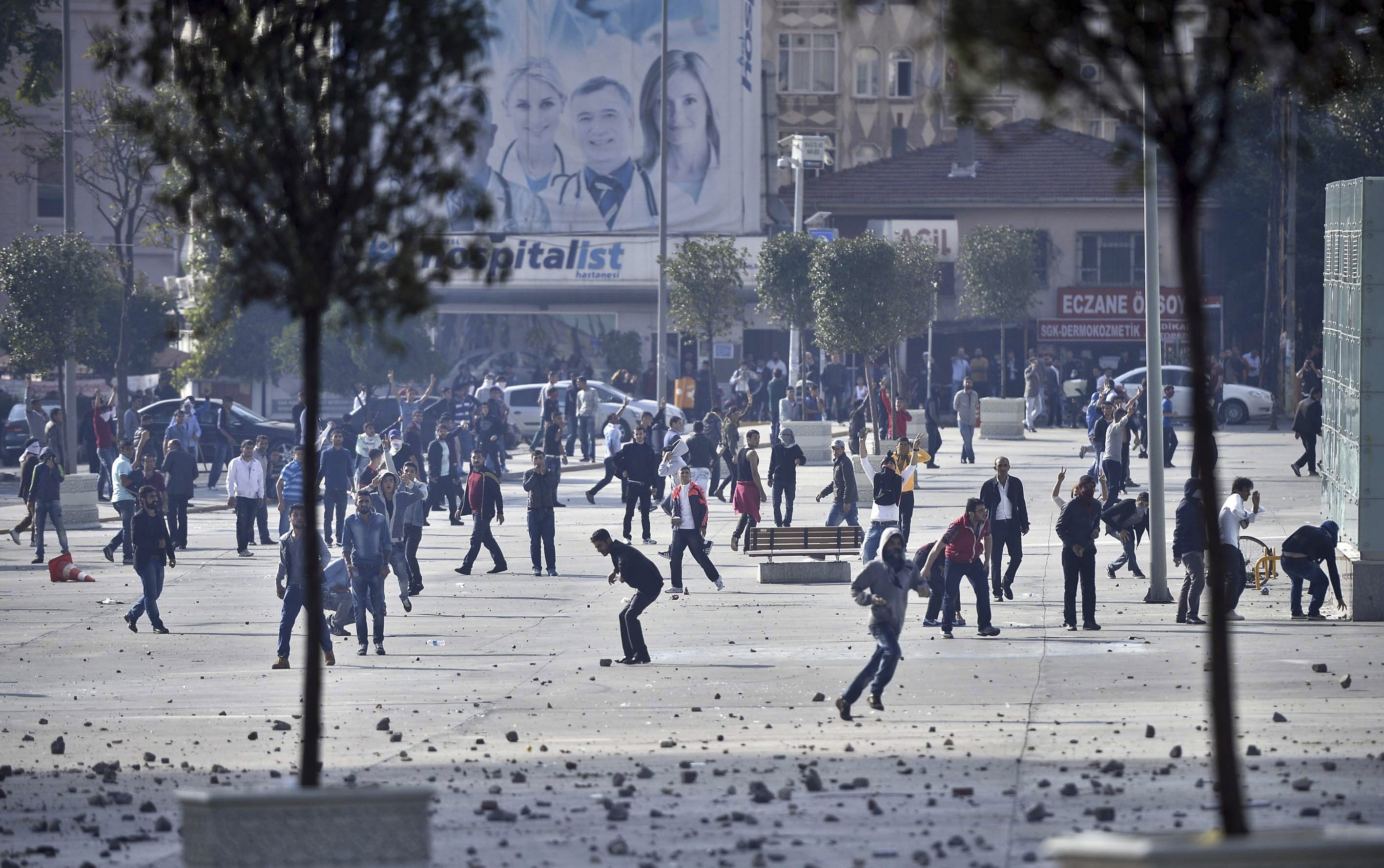
(Photo: Protesters take streets across Turkey to hold unauthorized demonstrations against the advance of Islamic State of Iraq and the Levant (ISIL) militants toward central Kobani, in Istanbul, Turkey on October 7, 2014.  By Sebnem Coskun/Anadolu Agency/Getty Images.)

The View From Your Window Contest: Winner #225

VFYW-C-225

A wistful reader gets us started:

Priest Lake, Idaho. No good reason, except the photo reminds me of this place I love. It’s really heaven on earth. I wish I could be there now.

Another spins the globe:

Looking towards The Remarkables from Halfway Bay, New Zealand?

Another is thinking Canada:

I’m unfortunately short of time to do a thorough search. But I am living in the Okanagan area of British Columbia right now, and it sure looks like the territory around here, especially the dry bare hills. This is all assuming the U.S. flag is a red herring.

It isn’t. Another reader thinks he’s got it:

Finally something I know at a glance. It is the iconic mountain to all New Englanders, Mt. Washington. You can tell by the building at the summit. But where? Not north or south, and east is not likely since the view is blocked by Wildcat Mountain, so West we go and it seems to be at Forest Lake Rd. Where exactly? I don’t care, because it’s a beautiful day in the state of Maine and I’m going outside to enjoy that air.

Another gets us back where we belong, the American West:

I was pretty proud of myself for being correct that last week’s tree house view was in Costa Rica. This week, I may have to content myself with being correct that this lake house view is in the United States. OK, lake in the mountains. Probably not National Forest land, based on what look to be sparse settlements around the lake. The mountains are a little bit perplexing … they are shaped like Appalachians, but are relatively bare, like ranges further west. The vegetation looks more Western, too (though I am certainly no expert on this.) I can’t help but think that the key to this is the (apparent) structure on the mountain in the distance. An observatory, maybe? My best guess is the Meyer-Womble Observatory, near the peak of Mt. Evans in Colorado, but I cannot seem to find a big enough lake nearby to make sense of the view.

As Det. Bunk would say, this is a stone fucking whodunit.

Wendell Pierce, the actor who plays Detective Bunk in The Wire, was also in the movie Sleepers, which means he’s only one degree from this October-themed guess:

Any child of the ’70s and ’80s knows that spot. Camp Crystal Lake in Sussex County, New Jersey, home of the Friday the 13th films and a young Kevin Bacon’s demise.

A less murderous entry:

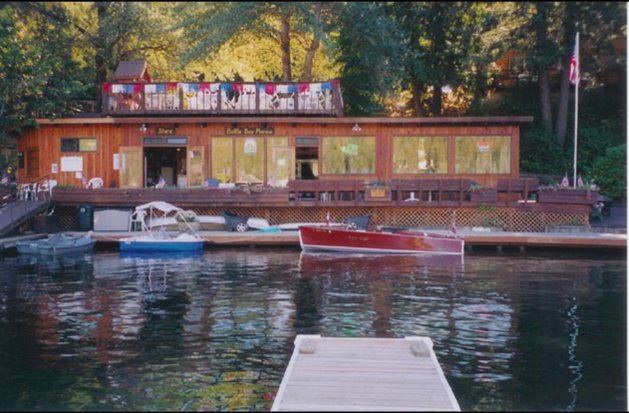
OK – this was a fun one. The trees looked northwestern. There was a snowy mountain, with a bump on the top that looked like a ski lift. Some scanning of Google maps revealed Schweitzer in Montana being near Lake Prend Oreile. This photo shows the top of Schweitzer and a comparable mountain range. Trying to triangulate the VFYW photo from there, it appeared Bottle Bay was the best location. And Bottle Bay Resort appears in a search for lodging:

image001

My official guess: Cabin #6 at the Bottle Bay Resort, in Sagle, ID.

Another really struggled:

I know this isn’t right, but I had to throw something out into the VFYW Contest universe after nearly five hours of futile searching.

First of all, there is the American flag. Then I focused on whatever the hell that white thing is at the top of the distant mountain. Oh Dish Team, please tell me what that thing is.  I looked at observatories, old hotels, power plants, radio towers, mansions – I couldn’t figure it out. There seems to be a stone arch bridge in the background (maybe). I googled those for a while to no avail. The only other clue was the pine tree to the left. Did I google types of pinecones to figure out what kind of tree it was? Absolutely.  Is it a Sugar Pine? I think so. They mainly grow in California, Nevada and Oregon. The biggest body of water near those is Lake Tahoe. So I picked a city on that lake, and that was as close as I got.

I am eagerly awaiting the answer to this one. I’m hoping for lots of labels so I can learn what everything I couldn’t find actually is!

Our fave entry this week:

I thought “what if it’s not a lake, but a wide river?” So I traveled down the Columbia to the ocean. Lots of scenes that look similar, but nothing matched. Snake River. Klamath. Illinois. Nothing. Nothing. NOTHING!

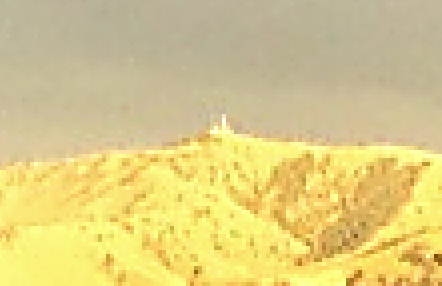
Then there’s this object on the top of the mountain range in the distance:

E75A8FF9-EB49-4C38-896C-5251D9D0AC79

What the fuck is that? Is it a building? A natural rock formation? A remote Mormon temple? None of the photos I looked at (and I looked at thousands) had anything like that. It sits there like a big middle finger, taunting me.

Lol. Another reader doubts the master:

I think even Chini won’t be able to pin this one done.

Not without some consternation:

You do this long enough and you start to break the views down into sub-groups. This week’s shot, for example, belongs to the “seemingly hopeless lake view” category, prior members of which include VFYWs #166, #114 and #125. These views tend to have few clues and no clear place to start searching. But once you get over the initial panic (for me this always involves running to Wyoming and looking desperately at Yellowstone Lake from every angle), the water views turn out to be surprisingly easy:

chini

Another names that lake:

I’m just going to guess Lake Chelan, WA, because we got married on a dock on the lake and it was beautiful.

The town is Manson, Washington. Even when we try to stump even our most veteran players, we come away even more impressed with the caliber of play this contest inspires. A former winner takes us to school:

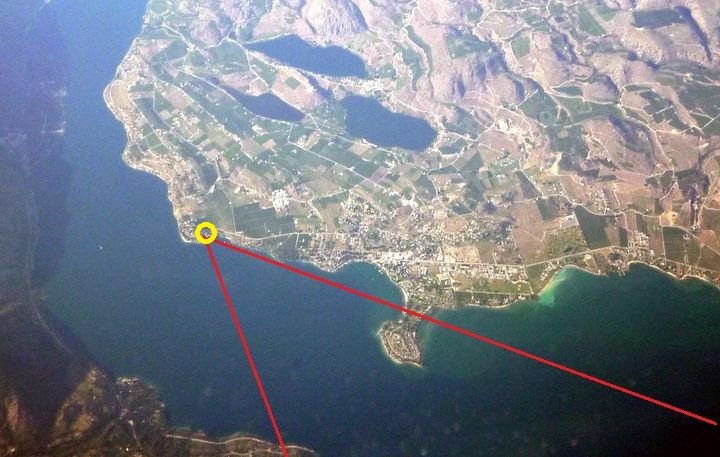
The search began by identifying the large trees by the cones visible in the contest photograph. Not much help, as the naturalized and cultivated Norway spruce is widely disturbed in many, mostly Northern states. I then looked for a large body of water with significant fluctuations in water level, which is apparent on the shoreline in the photograph and in the elevated docks with ladders. I assumed it was a lake created by a dam or one that fluctuated naturally. By chance, I began in Washington State in the area east of the Cascades but west of the drier parts of eastern Washington. Lake Chelan was a prominent candidate and fortunately a Google Earth photograph had a view with landmarks similar to that of the contest.

vfyw_collage_10-4-2014

The rest was narrowing down the approximate location based on visible landmarks and searching for accommodations that might provide helpful images. The latter proved useless (at least for me). I eventually relied on Google Earth to identify the most plausible house along the most likely stretch of the lake’s northern shore.

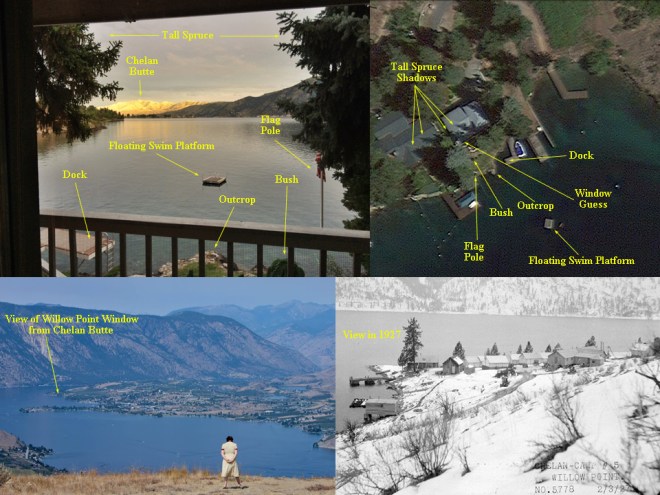
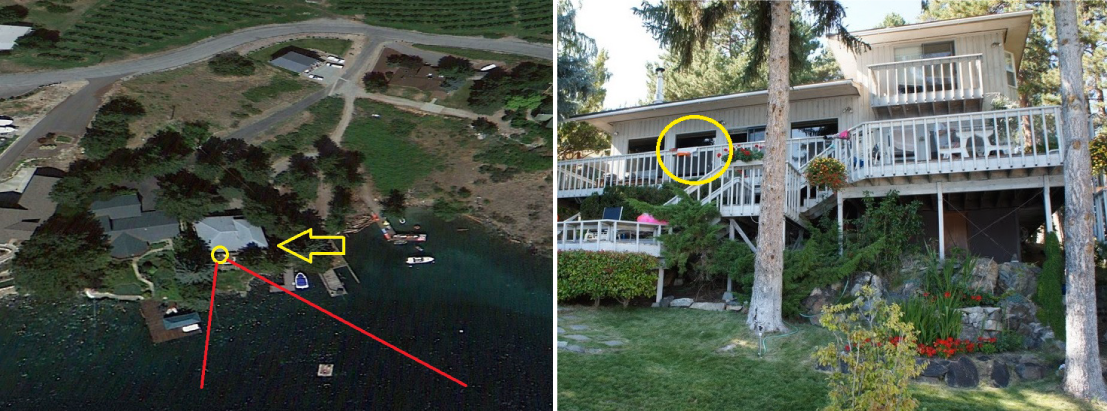
A big clue is that large stretches of the northern shoreline have been hardened or walled while that in front of the house and visible in the contest photograph had not. Finally I found a combination of features that resembled those in the contest photograph. These are illustrated in the attached (tall trees close to house, flag pole, bush in yard sloping to lake, prominent outcrop on shoreline, floating swim platform that is gray with white trim, and dock in the same location although apparently replaced recently). My window guess simply points to that part of the house which seems most probable. This is the only position that allows a view between the large trees while also capturing the flag pole, a portion of the dock, the neighboring shoreline, and distant landmarks. I assume the window is on the second floor.

The photograph is lovely.

Another former winner submits an equally impressive entry, and he was, aside from Chini, the only contestant to nail the exact address:

Window with labels

Back in Washington State this week.  Instead of the shores of Puget Sound, we are on Willow Point looking out over Lake Chelan towards the Chelan Mountains.  Specifically, we are admiring the view out of the back of 1841 Lakeshore Drive in Manson, WA 98831.  Various online maps lacked an address for the home, but the county assessor’s office came through with a number.  The window is the large window, furthest to the west on the main floor just above the porch.  The attached picture identifies the window.

This week’s contest took time to solve.  Obviously, the American flag ruled out Canada, New Zealand or South America.  The combination of the lake, pine trees, and arid hillsides across the water focused the search on the boundary where the temperate forests of the west coast abruptly transition to the arid steppes of eastern California, Oregon and Washington.  The Cascade and Sierra Nevada ranges cause the stark differences in rainfall between west and east.  Unfortunately, I started in at the southern end of the line in the Sierra Nevada and worked my way north.  And Lake Chelan is almost at the end of the line.

As for why I ended up on Lake Chelan, the combination of the numerous private docks and the communications towers on the mountain in the distance excluded many lakes and reservoirs along the way. Only Lake Chelan, it seemed, fit the bill.

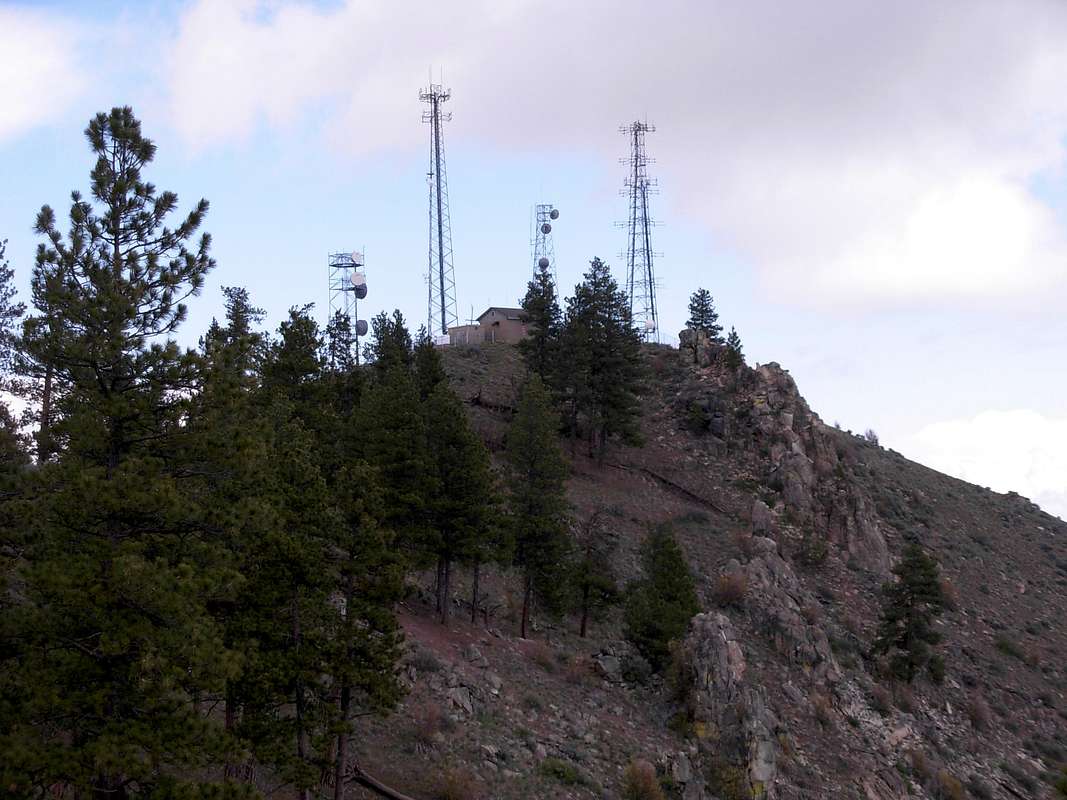
The array of communications equipment on the far hill sits atop Chelan Butte.  Also on the mountain live a herd of bighorn sheep.  In 2004, the state’s Department of Fish and Wildlife released thirty-five bighorns to repopulate the area.  Today, the state permits hunters to kill a handful of them each year (examples here and here).

Our resident neuroscientist calls this week’s view a “fairly tough one”:

fig3

The American Flag significantly constrains the search area, and the semi-arid landscape looks like various parts of the American West. The blue spruce on the photo’s right further indicates this. California can probably be excluded because draught conditions there make for much lower water levels that this lake. Similarly, the terrain is not quite as dramatic as the rockies, thereby excluding CO, it’s not as verdant as pacific NW locales like Coeur D’Alene area, and it’s not arid enough to be around Roosevelt lake near Yellowstone. Instead, the area looks a lot like the rain shadow of the Cascades, and indeed lake Chelan in WA turned up a hit based on landmarks in the photo.

Here is the heatmap of this week’s guesses:

This embed is invalid

And readers have been around there, of course:

I have two sets of fond memories of this area.  My wife was waiting tables 40 miles uplake at Stehekin Lodge in North Cascades Park back in 1986 – till she crossed the owner’s son and got fired two weeks before the season’s end.  I bailed on my job and joined her for some spectacular backpacking – even bad things sometimes work out right.  Chelan is nice, but Stehekin and the North Cascades behind it are on a whole other level.  As close to an Alaska-type remoteness as you’ll find in the Lower 48.

I also helped on a dam licensing project for Lake Chelan in the 2000s – trying to figure out how much water to release into Chelan Gorge for fish, whitewater boating, and aesthetics.  It’s a tricky situation trying to keep the lake levels good for lake tourism, hydropower, flood control, and river values.  The lake is natural, but has been raised about 20 feet.  They drop it every spring so they can handle the runoff from the mountains and then try to keep it stable for the summer so all those people on the lake can use their boat docks.  The “bathtub ring” in the photo is what gave the View away to me – I’ve spent a lot of time looking at rivers and reservoirs around the west, and knew we had to be on one of the few that are not incredibly low from the drought (most of those in California and the southwest), and had some pretty small lake level limits to work with.  The spruce in the near view and the arid cascades basalt on the far side were the final tipoffs that we were in central WA.

Here’s a video of the whitewater boaters taking on Chelan Gorge just downstream from the lake.  This is the flow releases provided for whitewater boating two weekends a year.  Might make an interesting add-on mental health break:

Of the handful of players that guessed the right building this week, our winner had the most previous entries:

This is the SSW window of the guest house/annex at 1845 Lakeshore Dr Manson, Washington, looking southeast toward sunlit Chelan Butte, late afternoon. No doubt mine is one of literally thousands of correct answers.  Savvy contestants will note the flag. OK, somewhere in the USA. I recognized Washington State right off the bat. The light vegetation on the sunlit highest peak suggests this view is somewhere along the north side of the south end of Ebola virus shaped Lake Chelan. That is Chelan Butte catching the last sun of the day and most of Lake Chelan is in shade at this time of day.

A close look at the photo shows what Google Maps IDs as Wapato Point jutting into the lake in between the window and Chelan Butte. So a bit of triangulation with Chelan Butte and the secondary peak to its west points us to the small bay at Lakeshore Dr and Willow Point Rd in Manson. The sunbathing platform is visible on Google, and its design and orientation match the photo. So this is the guest house/smaller unit at 1845 Lakeshore Dr. Which window? The one at the SSW corner, it’s the only window with a clear view to the platform given the large trees, and with the ladder of the “L” shaped dock visible in the lower left of the shot:

Screen Shot 2014-10-04 at 11.15.37 PM

Missed it by one window, but still close enough for a win – congrats! This week’s view was actually submitted by last week’s winner, who also sends this entry-like explanation:

Winning last week and now my submission this week?  #blessed.

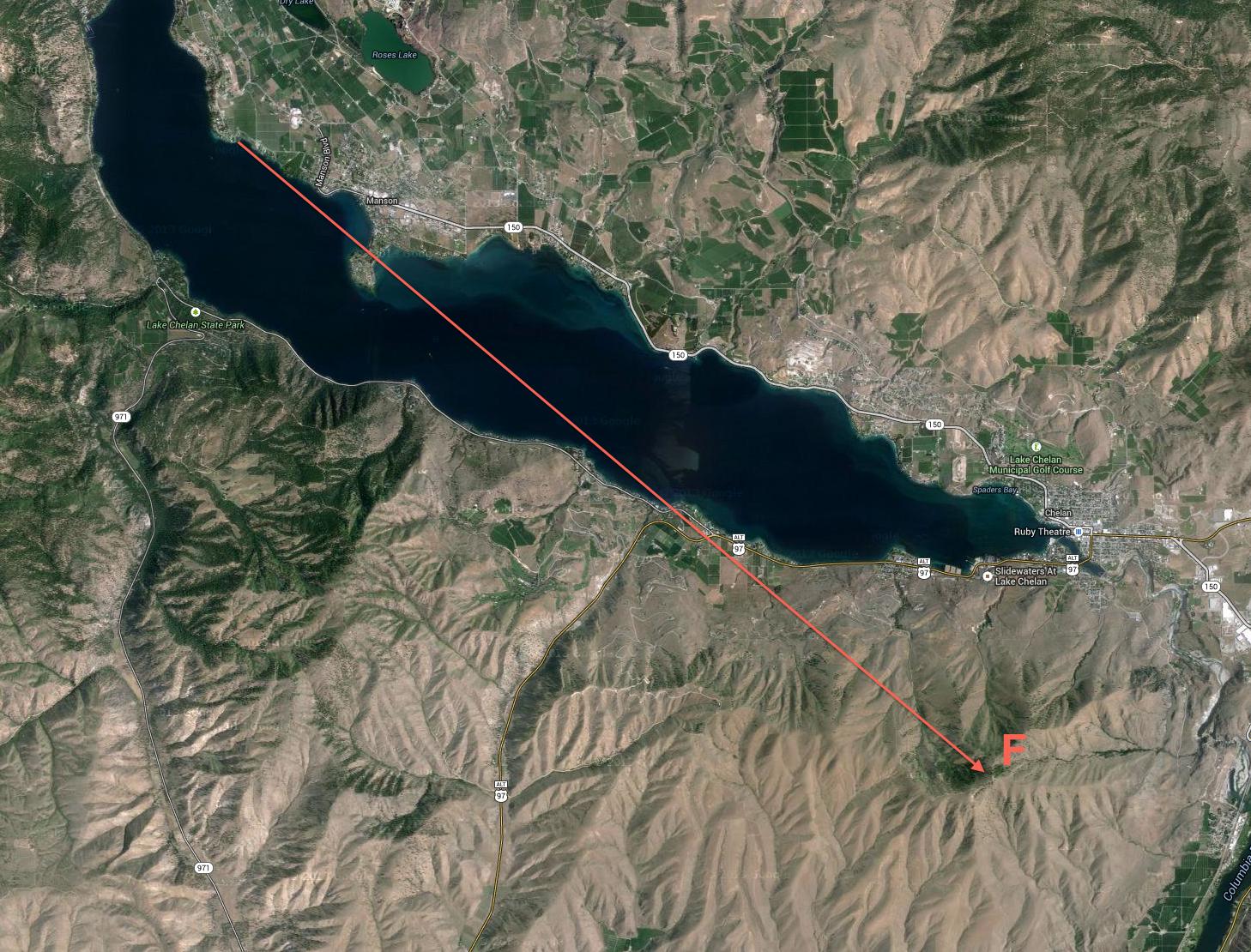
It’s hard to look at this photo objectively because it’s a view that is so baked into my psyche.  The view is looking southwest toward the foot of Lake Chelan (Shuh-LAN), the City of Chelan and Chelan Butte looming above it. In the middle distance, barely discernible, is Wapato Point, a peninsula-type feature that juts out into the lake.  The white cut just above the lake on the right side is the state highway that runs along the South Shore of the lake.  I’ll leave it to Chini to figure out the compass vectors. [Obliged: Southeast along a heading of 134.64 degrees.]

labeled VFYW

I’m conflicted about bragging too much about Lake Chelan because I don’t want to spoil what is, without a doubt, the jewel of Washington State.  The stats themselves are pretty impressive:  It’s the 3rd deepest lake in the country (after Crater and Tahoe) at almost 1,500 feet deep, a fact made more impressive in that it is a 1/2 mile across at its deepest point with 8,000 foot mountains that rising straight up from the shore. It’s 55 miles long. The head of the lake is in the North Cascades National Park and the location of a small town, Stehekin, that is only accessible by float plane, boat or foot.  The City of Chelan, at the arid south end of the lake, sees a good amount of tourist activity (especially from Washingtonians from the wet side of the mountains looking for a respite from the rain and gloom).  Lots of wine grapes and fruit are grown in the area.  If you’ve ever eaten an apple, it was likely grown here.

The lake level is controlled by a dam near the City of Chelan.  In the fall and winter months, the water goes down about 15 feet, leaving docks and boats high and dry. The glacial run-off from the surrounding peaks fill it back up for the summer.  That’s why the ladder on the dock is out of the water. The black looking rocks on the left side of the picture show the high-water mark.  The apparatus on the floating dock is simply to keep ducks and geese from resting there and shitting.  They are prodigious shitters.

Chelan Butte is also a world-class paragliding venue.  The photo below gives you an idea of the topography, although there is about a 800 foot differential between the Columbia River and the Lake Chelan valley. The star marks where the view photo was taken:

Task3Crossing2

Another interesting fact:  In November 1945, along the white cut on the other side of the lake, a school bus plunged into the lake during a snowstorm, killing 16 (15 kids and the driver, who had just returned from the war). Here’s a newsreel about the tragedy. There’s a roadside memorial that most people obliviously drive past on their way to taste local wine.

This aerial view gives a good perspective of Wapato Point:

aerial chelan

The green orchards are either apples, cherries, peaches or grapes. Unfortunately, many of the orchards are being ripped out to put in housing developments. The village of Manson, home of the world famous Buddy’s Tavern, is tucked into the armpit of Wapato Point. The view is taken from the living room window. The street address is 1841 Lakeshore Drive, Manson Wa, although I’ll note that the Google address machine is not very good in rural locations.  Any street address in the 1840s is acceptable.

sidebyside-chelan

Thanks again!

Thanks to you, and all our players. Come back Saturday at noon for next week’s contest.

Update from the reader behind our favorite entry, who is clearly relieved to have now identified the mountain-top middle finger:

There you are, you little fucker:

EB1CAFAA-5DB8-418F-BF07-1EC80F926D11

There’s actually a bit of history behind the Chelan Butte Fire Lookout. Built in 1938 by the Civilan Conservation Corps, it was manned until 1984 and provides a 360-degree view of the area, which includes Lake Chelan, the town of Chelan, the Wenatchee National Forest and the Columbia River. I did look at Lake Chelan, among several thousand other lakes, but never found a view that looked similar enough, and there just aren’t a lot of pictures of this structure from a distance.

Ah well … there’s always next week.

See you Saturday!

(Archive: Text|Gallery)

Hardly Anyone Cares About The Midterms

Cillizza faces facts:

Just 15 percent of Americans said they were following the 2014 midterm elections “very closely” in the past week, according to polling released Monday by the Pew Research Center. That’s less than half the number that said they were tracking the Ebola virus (36 percent) story or the reports on the U.S. airstrikes against the Islamic State in Syria and Iraq (31 percent). It’s also less than the 21 percent of people paying close attention to the problems at the Secret Service. …

Most people do not care about midterm elections. Like, at all. I can’t emphasize this strongly enough.  The election is in one month from tomorrow and it remains a back-of-the-mind story for most people. Midterms are largely battles between the two party bases, the most energetic partisans who follow this stuff as closely as, well, me.

But Ponnuru urges us to pay attention:

[S]ome races have an importance for our political future that goes beyond the question of who runs the Senate.

The Senate race in Arkansas, for example, is not only one of the most competitive contests in the country. It’s also a race that will tell us whether Democrats are beginning to have the kind of turnout success in midterm elections that they’ve had in presidential ones. Black turnout in Arkansas has been low — which means that if Democrats’ efforts to get out the vote are going to succeed, we ought to see the evidence there.

The Kansas governor’s race will tell us whether it’s possible to go too far with an agenda of tax cuts even in a reliably Republican state. If Republican Governor Sam Brownback — whose aggressive tax cuts have led to deepening revenue shortfalls and a debt downgrade — loses, others in his party will conclude that the answer is yes. They will take that lesson especially seriously if Brownback brings down Republican Senator Pat Roberts with him.

Fighting Ebola On Multiple Fronts

hptm6ebnfpwdnxj1o5dy (1)

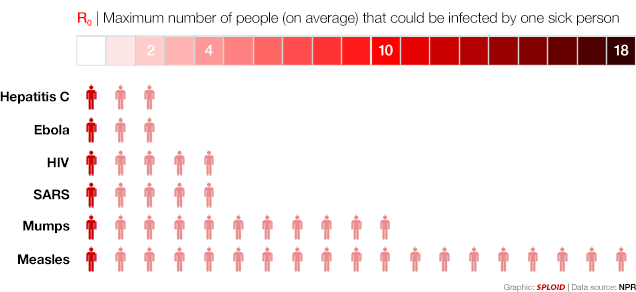
With cases in Texas and Spain raising alarms about potential Ebola outbreaks in the US and Europe, it’s worth remembering, as the above chart illustrates, how slowly the virus spreads relative to other contagious diseases, and therefore how unlikely a major outbreak is in a developed country with proper sanitation and extensive healthcare infrastructure. It’s also worth remembering that the situation in West Africa is, and will remain, far worse. In an interview with Julia Belluz, epidemiologist Lina Moses outlines why the number of Ebola cases there is probably underreported:

The cultural and socioeconomic setting have an impact on case counts. So do basic emotions. The chain of events for reporting cases has been interrupted by the fact that some Ebola victims go underground for fear of being taken away from their families. Imagine being the mother of a son who you think might have Ebola. You know your child might die, and you know that if you call authorities, he will most certainly die alone, far away from you, in an isolation ward where you can’t console him. Do you call that hot-line? “Communities are so afraid, so distrustful about what’s going on,” says Moses. “It’s hell. It’s devastating to the social fabric in communities, in towns and villages.”

This is compounded by denial about the disease. Though denial is less prevalent now, more than six months into the epidemic, for a period at the beginning — when Ebola emerged for the first time ever in West Africa — people just didn’t believe it was real.

Danny Vinik relays the scientific community’s worst fears:

[T]here’s a long-term concern, too, that Ebola will become endemic to West Africameaning it will be there forever with small outbreaks occurring frequently.

In September, the World Health Organization’s Ebola Response Team warned of such an outcome in the New England Journal of Medicine. “[W]e must therefore face the possibility that EVD (Ebola virus disease) will become endemic among the human population of West Africa, a prospect that has never previously been contemplated,” they wrote.

Many other health experts share their concerns. “That’s our biggest fearthat it will be endemic,” said Howard Markel, a medical historian at the University of Michigan. “That’s where you worry there will be little pockets of Ebola, whether in human beings or in bats or other animals, and that we’ll have little outbreaks or big outbreaks for years to come.”

Turning to the US, Laurie Garrett reiterates the need for a quick diagnostic test:

Such an assay would help quell the rising panic in the United States, prevent passage of laws that could be viewed as discriminatory against people of color and/or Africans, and provide nearly instantaneous hospital diagnosis. Rather than rattling the nerves of hundreds of Dallas parents afraid to return their children to classrooms visited by Duncan’s youngest contacts, public health officials could simply test the Duncan clan and assure the public that none are carrying Ebola.

Several tests are now in development, but the wheels of discovery, clinical testing, and federal approval require greasing. A point-of-care assay must be at the absolute top of the Ebola-control innovation agenda. Although compassion might dictate that the search for a treatment is of greater importance, the fact is that no tool — short of a 100 percent effective vaccine — can slow the spread of Ebola quite so dramatically. And though a vaccine may eventually emerge from the R&D process sometime in 2015, a rapid diagnostic could be in commercial production before Thanksgiving (with proper greasing of financial and regulatory wheels). Finger-prick tests for Ebola are in development now at Senova, a company in Weimar, Germany; at a small Colorado company called Corgenix; and at California-based Theranos.

And Jesse Singal touches on the challenges of fighting Ebola panic in the digital age:

Experts have actually known for a while that Ebola was going to show up in the U.S. Ever since the scope of the West African epidemic became clear, said [Columbia University epidemiologist Abdulrahman] El Sayed, American public-health officials have been hammering home the same message: “’There is gonna be an Ebola case here, but there’s probably not going to be a transmission.’” But before experts can effectively explain this, they first have to face down the biggest, scariest images of the disease lodged in the public’s imagination thanks to both fictionalized accounts and sensationalistic news coverage. “You have to address everybody’s worst fears before you can have a logical conversation about it,” said El-Sayed.

Update from a computational biologist:

That chart giving R0 values for various pathogens is kind of misleading, since it leaves off an important virus that most people are familiar with: influenza. R0 for influenza varies from around 1.0 to 2.4, i.e. right around the value for this Ebola outbreak. That doesn’t stop influenza from spreading everywhere pretty much every year and causing pandemics when novel strains appear. Ebola outbreaks can be brought under control because its transmission can be interrupted easily, not because its R0 is low.

Obama Beats Reagan On Private Job Growth, Ctd

Readers push back on this post:

I think you are reading your chart wrong. Reagan is the yellow line, Obama the royal blue. The yellow line is above the royal blue at all times. Even if you adjust both so that both lines start at zero, the yellow line is still above. Even Bill McBride’s table from the article you cited bears that out. Reagan’s total over two terms was 14,717,000, while Obama’s current total is 6,127,000; even using the projected, he comes up short (11,908,000).

Another looks closer:

You tortured the data quite a bit!

After 10 minutes of poking around the linked article, I finally figured out that what you mean is that job growth in Obama‘s second term – extrapolated out to a full four year term! – is sliiiightly higher than job growth in Reagan’s second term.

So what about the first term, does that not matter?  Certainly in the world of “my guy” vs “your guy”, Democrats vs Republicans, you don’t have much to stand on.  And of course historical periods are not so simply compared, as though one eight-year period has the same economic circumstances as another – or, in this case, another six year period – oops!  Actually, what you are really doing is comparing a four-year term to a two-year term.  OOPS!

This comparison is pretty sloppy.  And one must note that blame falls solely upon you, as Bill McBride does not reach the same charged conclusion that you do. All he says is “Currently Obama‘s 2nd term is on pace for the third best term for these Presidents.”

I’ll take the hit. We’ll make sure this post is linked to in the first one. There was a lot going on yesterday and I screwed up. Another piles on:

This graph uses raw job numbers.  The population of the US and the total workforce are significantly larger now than under Reagan.  As a percentage of the workforce, job creation under Obama would be significantly less than under Reagan.  Frankly I don’t know why Bill McBride even used raw job numbers for his graph; it’s misleading and lazy.

Also, the graph treats all jobs as being created equal.  Two 5-hour-a-week jobs at minimum wage look superior on this kind of graph to one full time job at minimum wage let alone a full time job above minimum wage, but in terms of money to working families they are not.  That sort of data is needed to make a real assessment of the jobs “added” under the various presidents.

The Battle For Kobani, Ctd

Since yesterday, ISIS militants in northern Syria have penetrated farther into the town of Kobani (also known as Ain al-Arab) on the Turkish border, driving back the Kurdish militias defending it and sending thousands of civilians fleeing for their lives to safe havens in Turkey:

Mustafa Bali, a spokesman for Kurds in Kobane, told Agence France-Presse that 2,000 civilians were evacuated on Monday and that all civilians were ordered to leave. More than 180,000 refugees from around Kobane have already poured over the border into Turkey since the siege on the city started three weeks ago, the Wall Street Journal reports. IS fighters have already captured more than 300 Kurdish villages around Kobane, but the street-to-street fighting on Monday put them within a mile of the city center. They now surround the city on three sides.

New coalition air strikes reportedly launched today may not be enough to turn the battle against the jihadists, but there are signs that Turkey is preparing to act:

President Recep Tayyip Erdogan of Turkey suggested Tuesday afternoon that the strikes may have come too late, telling Syrian refugees at a camp in Gaziantep Province, near the border, that Kobani was about to fall, The Associated Press reported. “There has to be cooperation with those who are fighting on the ground,” he was quoted as saying, while adding that airstrikes might not be enough. The latest fighting is taking place in full view of Turkish forces who have massed tanks with their cannons pointing toward Syria but who have not opened fire or otherwise intervened.

Marc Champion urges more support and arms for the Syrian Kurds:

Kobani is the main town in the Westernmost of three areas that make up the self-proclaimed Kurdish-run autonomous region of Rojava. Kobani sits across the main road that runs along the Turkish-Syria border, and if Islamic State can take it, the group can pass through it to get directly from Aleppo in the West to other territories it holds in the east. Plus, the area controls a border crossing. So Islamic State wants to take Kobani, followed by the other parts of Rojava, to make their safe haven safer. Denying Islamic State this victory should therefore be important to the coalition’s goals.

But an effective defense would require assistance from Ankara, and “Erdogan appears to be holding the town, and the coalition, hostage to his broader fights with the PKK and with Syrian President Bashar al-Assad”:

I’m not sure what the answer is for the Kurds of Kobani. They deserve sympathy for their plight, but their leaders are making a choice, too: To fight and die rather than give up their dream of Kurdish self-rule in a pocket of Syria. It seems clear that without Turkish support, the coalition can’t or won’t unleash its full air power to save Kobani, and that this support won’t materialize until the Kurds agree to a buffer zone. That, surely, is by now Rojava’s least bad option.

Goldblog fears a massacre in Kobani if ISIS is not beaten back:

I just got off the phone with a desperate-sounding Kurdish intelligence official, Rooz Bahjat, who said he fears that Kobani could fall to ISIS within the next 24 hours. If it does, he predicts that ISIS will murder thousands in the city, which is crammed with refugees—Kurdish, Turkmen, Christian, and Arab—from other parts of the Syrian charnel house. As many as 50,000 civilians remain in the town, Bahjat said.

“A terrible slaughter is coming. If they take the city, we should expect to have 5,000 dead within 24 or 36 hours,” he told me. “It will be worse than Sinjar,” the site of a recent ISIS massacre that helped prompt President Obama to fight ISIS. There have been reports of airstrikes on ISIS vehicles, but so far, Bahjat said that these strikes have been modest in scope and notably ineffective.

Zack Beauchamp explains how the jihadists advanced on the town so rapidly:

Why did things change? Most analysts say it’s about Iraq. When ISIS swept northern Iraq beginning June 10, its militants captured enormous amounts of advanced, American-made military equipment that had been dropped by the Iraqi army, including mortars and frontline battle tanks, which they’ve brought to the fight in Syria. The Kurdish forces are now outgunned. And because they’re surrounded, they can’t resupply.

But William Gourlay believes that “the brave fight of the PYD has demonstrated the military shortcomings of ISIS”:

That local militias – with only light arms and little outside support – can hold off a major ISIS offensive, including a great deal of heavy weaponry of US and Russian origin, indicates that ISIS’s military prowess is vastly overstated. The PYD militias are tenacious and are fighting to hold their homeland, to be sure, but one can only wonder how easily ISIS may have been defeated in this arena if the might of the US-led coalition had been effectively brought to bear.

“As Long As We’re Not Against It We Should Be Okay”

 hears from “Republican lawmakers who can’t wait to stop talking about gay marriage”:

Advisors to multiple likely 2016 candidates told TIME after the news broke that they are hopeful that swift action by the Supreme Court will provide them cover. “We don’t have to agree with the decision, but as long as we’re not against it we should be okay,” said one aide to a 2016 contender who declined to be named to speak candidly on the sensitive topic. “The base, meanwhile, will focus its anger on the Court, and not on us.”

But Vinik expects Ted Cruz to keep the issue alive:

As we’ve seen with Obamacare and immigration, when Cruz finds himself on the wrong end of public opinion, he doubles down on that position. That’s because conservative votersthe ones that will have an outsized impact on the GOP’s 2016 presidential candidateare heavily opposed to Obamacare, to immigration reform, and, yes, to same-sex marriage. Cruz has reasoned that his best chance of winning the Republican nomination is to stake out positions as far to the right as possible. Whether or not he’s right, he will pull the entire Republican field to the right and make it even harder for his party to retake the White House.

Sargent argues along the same lines:

Some Republican operatives recognize the danger Cruz poses. GOP consultant Rick Wilson tells me:

“Putting the paddles on the chest of a divisive issue with absolutely no hope of the outcome he promises is a hallmark of Ted Cruz. When a plurality of Republicans in most polling is past this issue, it will only distract from more salient and compelling messages.”

Some GOP presidential hopefuls, such as Ohio Senator Rob Portman, plainly grasp that evolving on this issue is crucial to GOP hopes of evolving along with the country’s cultural and demographic shifts in ways that boost the party’s chances in national elections. But, as Ed Kilgore details, there will also be a powerful incentive for anti-gay demagoguery and opportunism from those — such as Cruz and Bobby Jindal — who hope to compete for a far right slice of activist social conservatives in key early states such as Iowa. And white evangelical protestants still overwhelmingly oppose gay marriage. So this issue may not fade away as quietly as more culturally and demographically attuned Republicans might like.

This Time He’s Serious?

UN-GENERAL ASSEMBLY-PALESTINE

On the heels of a UN speech that pissed off Israel to no end by accusing the country of committing “genocide,” Palestinian President Mahmoud Abbas is circulating a draft Security Council resolution that would compel Israel to withdraw from all occupied Palestinian lands by November 2016. The resolution is almost guaranteed to fail by way of a US veto, but Colum Lynch examines the strategic thinking behind the move:

The Palestinian strategy is driven by two basic assumptions, according to senior diplomats. The Palestinians believe they can never achieve agreement on the creation of a Palestinian state as long as Prime Minister Benjamin Netanyahu is in power. At the same time, they doubt that President Barack Obama is prepared to invest the sufficient personal political capital needed to even revive meaningful peace talks. “They don’t believe they can make a deal with the Israelis as long as Netanyahu is president,” said one senior Western diplomat who maintains close contacts with the Palestinians. “They want to tell the international community that they have done everything on the diplomatic front.”

Juan Cole outlines the stakes for Israel:

If the US does veto the resolution, then Washington is clearly saying that it is all right with American elites if Israel goes on stealing Palestinian land on a vast scale and expropriating and oppressing the stateless Palestinians under its boot. In that case, Palestinian circles are suggesting that Mahmoud Abbas will have no choice but finally to go to the International Criminal Court to charge Israel with crimes against humanity (i.e. systematic war crimes). This step is serious, since the US cannot block the ICC and any judgment it delivered against Israel would be taken seriously in the European Union and many other countries.

But Shlomi Eldar considers this a mistake by Abbas, who he says is alienating badly needed allies among moderate Israelis:

The man who chose a different path than the twisted road of predecessor Yasser Arafat, and a totally different route than the rival Hamas movement, did not succeed in convincing the Israelis of the veracity of his intentions. Thus, as far as he is concerned, Abbas is embarking on a new path, his last path — a diplomatic battle to persuade members of the UN Security Council to support the establishment of a Palestinian state and its acceptance into the various UN organs. Thus, he will also attempt to placate Palestinian public opinion, which demands indicting senior Israelis responsible for the “genocide,” (according to Abbas and his advisors).

But this new path of Abbas also does not guarantee success. In fact, Abbas has almost no chance of making it to the finish line after fulfilling his promises to his nation. The UN will not determine the borders of a Palestinian state and cannot force Israel to accept conditions for withdrawal and evacuation of settlements, certainly not to partition Jerusalem. The UN will not be able to grant Abbas a Palestinian state on a silver platter.

But Ben White doesn’t see much anything new in Abbas’ threats:

Much of the Palestinian leadership’s strategy for the past two decades has been based on the assumption that “good behaviour” will convince the US, as well as European nations, to back Palestinian independence and call time on Israeli occupation. This has proven to be a dismal failure, and it remains to be seen whether another plan based on the idea of “embarrassing” the White House into declining to use its veto will be successful.

Mr Abbas’s headline-generating accusation of genocide thus actually spoke more about his weakness than his strength. Despite the grandstanding, Mr Abbas’s decisions to date indicate that he still views the ICC and other tools available to the Palestinians as cards to be played or held back for the sake of a bankrupt peace process, rather than as elements of a more comprehensive strategy for liberation and decolonization.

Ali Jarbawi proposes that Abbas also threaten to dissolve the PA, as a way of making Israel and the world take the situation seriously:

The international community must be convinced to move beyond managing the conflict to solving it. This will not happen until Israel and America fear that the situation within Palestine and Israel will deteriorate. And this will only happen if Mr. Abbas declares that he will dissolve the Palestinian Authority unless there is a set time frame to end the occupation.

As it stands, the Authority performs a role that comforts Israel. Israel gets the Authority to keep it safe through “security cooperation,” while Israelis are absolved of responsibility for their occupation while avoiding its costs. Indeed, until Mr. Abbas takes a tangible step toward dissolving the Authority, the international community, especially Israel and America, will not take him seriously, and his demands will remain nothing but complaints.

In any case, Haviv Rettig Gur notes, Netanyahu is ready with a counteroffensive:

For Israel, the Palestinians now present two choices, and hope to box Israel in with these choices: Hamas’s permanent war or Abbas’s maximalist (in Israel’s view) demands backed by the threat of international isolation. In response to this Palestinian “plan of attack,” Netanyahu has begun a subtle strategy of his own — one which addresses the other side’s internationalization with his own version of the same.

“I think that there are opportunities. And the opportunities, as you just expressed, is something that is changing in the Middle East, because out of the new situation, there emerges a commonality of interests between Israel and leading Arab states,” he told President Obama in the White House on Wednesday. … If the Palestinians won’t parley, Israel would take the Palestinian issue to the larger Middle East — where Netanyahu believes, particularly after the Egyptian experience in Gaza, that there is little more than rhetorical sympathy for their cause.

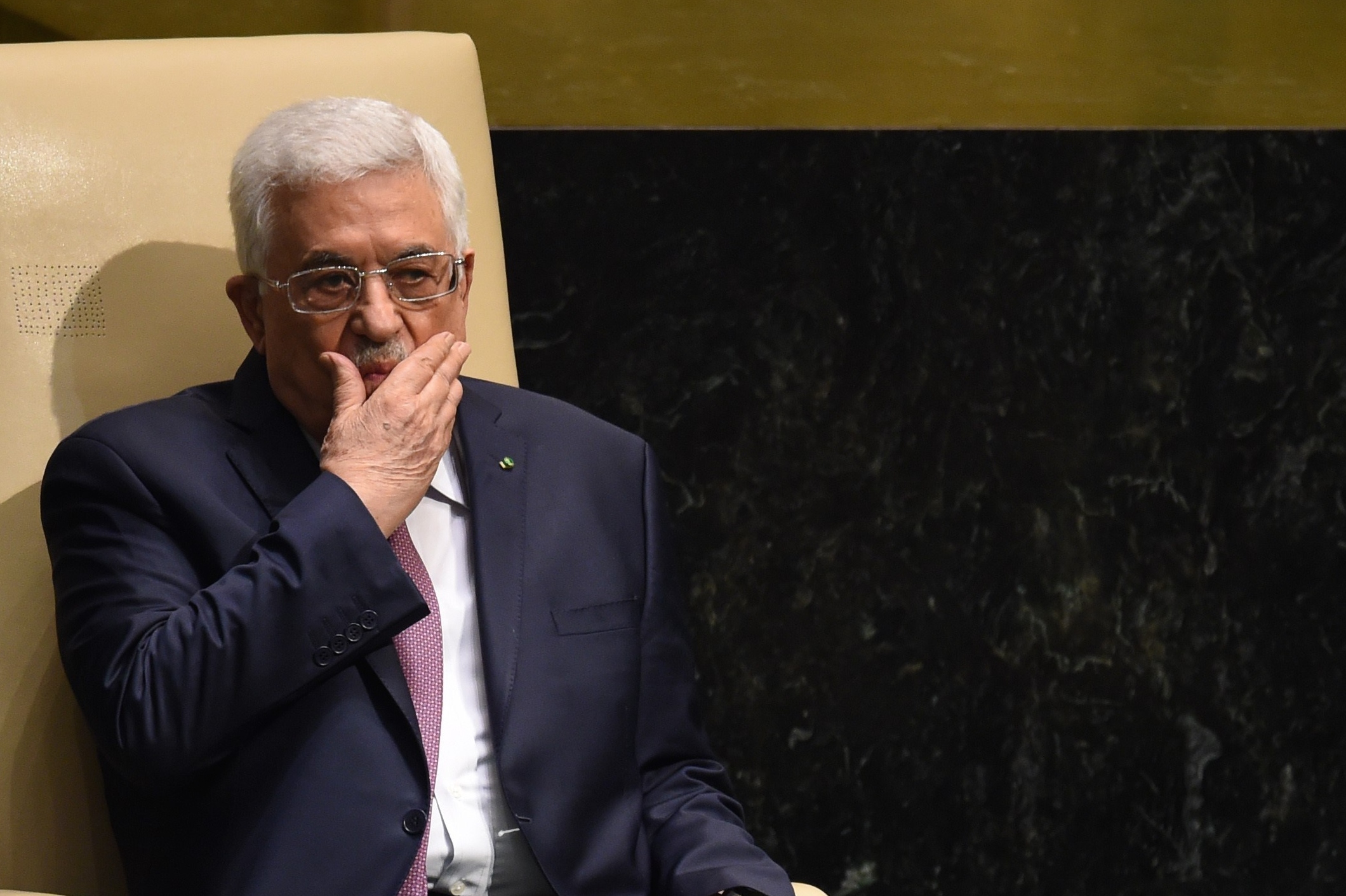
(Photo: Palestinian president Mahmoud Abbas sits after addressing the 69th Session of the UN General Assembly on September 26, 2014 in New York. By Timothy A. Clary/AFP/Getty Images)

How Marriage Equality Can Still Lose

Waldman outlines “one scenario by which what today seems like an inevitable forward movement for marriage equality could be undone”:

It involves a Republican winning the White House in 2016 and a liberal justice retiring, to be replaced by a conservative. This isn’t some remote possibility.

We have no idea what the election of 2016 will be like, and while as a liberal you probably think that the current crop of Republican contenders are a bunch of bozos, people thought that about any number of people who ended up winning the White House (see Bush, George W.). As of now, Ruth Bader Ginsburg is 81, Stephen Breyer is 76, Sonia Sotomayor is 60, and Elena Kagan is 54. Any one of them could retire for any number of reasons. And once President Rand Paul appoints Ted Cruz to take that retiree’s place, things look very different.

Ilya Somin says that “while this scenario is possible, I don’t think it is all that likely”:

Even if the GOP does win the presidency in 2016 (which is far from a sure thing), Ginsburg and Breyer would likely try to stay on the Court long enough to decide the gay marriage issue. It could very well be decided even before the 2016 election happens. Finally, a close 5-4 decision upholding laws banning gay marriage may not last for long. If public and elite sentiment continues to turn against such laws, the ruling would likely suffer the same fate as Bowers v. Hardwick (1986), which upheld anti-sodomy laws, but was widely reviled and got overruled in 2003. In this case, the tide of opinion is moving faster, and a reversal could happen sooner than that.

Is Lightning That Lethal?

Nope – 90 percent of people hit by lightning survive. One reason is that, unlike high-voltage accidents that happen indoors, lightning strikes last “less than a half-millionth of a second [and] often scorch the skin but don’t cause internal burns.” More fascinating details:

Just as crucial, most of the electricity in a lightning bolt does not pass through the body. Rather, it dissipates over the skin in what’s known as a flashover. Vernon Cooray, a lightning scientist at Uppsala University in Sweden, explains the phenomenon by contrasting the ways a human body and a tree react when struck.

Both trees and people are filled with a soup of water and minerals that conduct electricity pretty well. But because trees are covered in dry, inelastic bark, lightning traveling through the trunk has no escape route. It must stay its course. In the process, it superheats the water and sap inside the tree into explosive steam, which can rip apart the trunk and branches.

Compared with tree bark, human skin is much more pliant and moist. Sweat and rainwater make it extra conductive, providing an alternate external path for voltage. Most of the electricity can pass over strike victims rather than coursing through them. “The path through the body has much greater resistance than the path around the body,” says Vladimir Rakov, a University of Florida researcher and one of the world’s leading authorities on lightning physics. “Current always chooses the path of least resistance.”