The former folks have foundered for years on the difficulties of understanding the fractal contours of human consciousness. The latter just want you to open up their damn mail.
Comprehending the mysteries of human thought and behavior is hard. Emulating it? Not so much! It’s partly why Turing’s test is so unsettling: Man, are we really that easy to copy?
Mind you, this particular Blade Runner dimension of modern life could quickly diminish in relevance, because frankly, postal mail is itself declining rapidly. The amount of upright, breathing humans who regularly write letters by hand has been shrinking steadily for years. So maybe it’s not long before handwriting flips its its existential polarity. A handwritten envelope will become not a litmus test of humanity but sure-fire proof that we were sent a form letter by an impersonal database. We’ll sort through our paper mail with the inverse logic of today, tossing aside immediately all the letters addressed with pen-script (robot, robot, god, another one sent by a robot) but then pausing at the sudden, startling appearance of an envelope addressed by a dot-matrix printer. Hmmm, we’ll say to ourselves: Now this might be real.
Reviewing Darrin M. McMahon’s Divine Fury: A History of Genius, Tamsin Shaw relays his understanding of why the term “genius,” in its modern sense, arose in the 18th century:
McMahon’s account is not, as we might expect, rooted in the inexplicability of certain human achievements, the perceived inability to comprehend them in purely natural terms. Rather, he suggests that two fundamental transformations in human thought created the need for such a conception. The first was the process of disenchantment through which God came to seem increasingly remote from human life as belief in his intermediaries among us—spirits, angels, prophets, apostles, and saints—was eroded. McMahon hypothesizes that this created a sense of abandonment, a need for “assurance that special beings still animated the universe.”
The second relevant transformation, he tells us, was the emergent belief, from the seventeenth century on, in the natural equality of all human beings, a belief that provoked as a powerful reaction an insistence that we recognize naturally superior beings. The cult of the genius arose as a response to this dual challenge, identifying a species of being “who walked where the angels and god-men once trod.”
Two columns and a revealing concurrence between MoDo and Krauthammer. The Friday Krauthammer piece was one of those larded with barbs at Obama but effectively ends up endorsing the anti-ISIS policy. I mean – how often do you read Krauthammer saying the following?
If Obama can remain steady through future fluctuations in public opinion, his strategy might succeed.
I know, right? But after a while, you see why Krauthammer is suddenly backing Obama. Because he reminds him of Netanyahu:
What kind of strategy is that? A compressed and more aggressive form of the George Kennan strategy of Soviet containment. Stop them, squeeze them, and ultimately they will be defeated by their own contradictions … Or to put it in a contemporary Middle East context, this kind of long-term combination of rollback and containment is what has carried the Israelis successfully through seven decades of terrorism arising at different times from different places proclaiming different ideologies. There is no one final stroke that ends it all. The Israelis engage, enjoy a respite, then re-engage.
The president should just drop the flowery talk and cut to the chase. Americans get it. Let’s not pretend we’re fighting for any democratic principles here. America failed spectacularly in creating its democratic model kitchen with Iraq. So now we have to go back periodically and cut the grass, as they say in Israel, to keep our virulent foes in check.
I just want to note that America has become Israel; and Iraq is becoming our Gaza. And I’m not the first person to make that analogy:
The Israeli modus operandi that became obvious during the war in Gaza—using Israel’s technological edge and superior air power to “crush” Hamas (a term that Netanyahu used quite frequently during the military campaign) while cooperating with local partners (Egypt, in the case of Israel) to pressure and isolate the enemy and create a more favorable balance of power—may become the model for American military operations on Iraq and Syria in the coming years.
So if you cannot—or are not willing to—defeat them, then “crush” them with drones, missiles, and air power, and try through ad-hoc cooperation with the occasional partner (the Jordanians), proxy (the Kurds), and even rival (Iran) to put pressure on the enemy du jour (al-Qaeda; ISIS). In the make-believe world of spin and media, in the meantime, try to market the outcome of your policies as military wins and pretend that all of this will create the conditions for a diplomatic solution. At best, it will tilt the balance of power in your favor; at a minimum, it will help maintain the status quo and contain the perceived threat.
And at worst, without an Iraqi government that can actually represent the Shi’a, you have Gaza: bombing one extremist group, while creating countless more, and slowly turning into what Israel has become – a barricaded country, with less and less legitimacy, fomenting Islamism as potently as it attempts to “crush it”. Or, when the civilian casualties mount, and victory seems elusive, the logic for another ground invasion – like Israel’s many into its neighbors – becomes inescapable.
A huge thanks to Jessie Roberts who has helped create our weekend coverage and to Matt Sitman who finds and elevates much of our religious content. This really is a team effort. To help us keep this show on the road, please subscribe if you haven’t yet. You alone make all this possible.
Growing up, David Zahl noticed “how friendship didn’t seem to be an overwhelming priority for people in their 30s and 40s, men in particular.” Now that he’s approaching middle age, he finds this passage from Tim Kreider’s essay “The Referendum” an apt account of why this might be so:
The Referendum is a phenomenon typical of (but not limited to) midlife, whereby people, increasingly aware of the finiteness of their time in the world, the limitations placed on them by their choices so far, and the narrowing options remaining to them, start judging their peers’ differing choices with reactions ranging from envy to contempt. The Referendum can subtly poison formerly close and uncomplicated relationships, creating tensions between the married and the single, the childless and parents, careerists and the stay-at-home… So we’re all anxiously sizing up how everyone else’s decisions have worked out to reassure ourselves that our own are vindicated — that we are, in some sense, winning…
Zahl riffs on this insight:
In other words, the real reason certain types of relationships tail off during middle age is because these are the years when we are doing most of our “achieving”, when our capacity for comparison is arguably at its zenith, when the discrepancies are most pronounced. Not surprisingly, the Referendum is exacerbated rather than assuaged by erstwhile closeness.
Meaning, we can and do spend plenty of (happy) time in middle age with peers with whom we don’t share many natural affinities–the difficulty comes with those with whom we once did; the degree to which we identified with someone in college or high school will be the degree to which their current trajectory makes us feel uncomfortable. That goes for the church they attend and theology they espouse just as much as the car they drive. Not exactly rocket science, I know, nor the only reason why people grow apart, but a prevalent factor nonetheless, and perhaps part of what accounts for the U-Bend of Happiness.
Kreider takes things a little further, though, claiming that our once-and-future comrades represent alternate versions of ourselves. The “control group” in the experiment of our life–scary! I can only speak for the ministry-nonprofit side of this equation, but the dynamic is as widespread as it is transparent–which is to say, embarrassingly so. It’s occasionally even used as a bludgeon against those closest to us (i.e. “if you only knew how much money I left on the table when I signed up for this” or conversely “I gave up my dreams to support you!”). I’m sure social media is not helping things, especially when it comes to Marriage and Kids, which Kreider locates as the biggies.
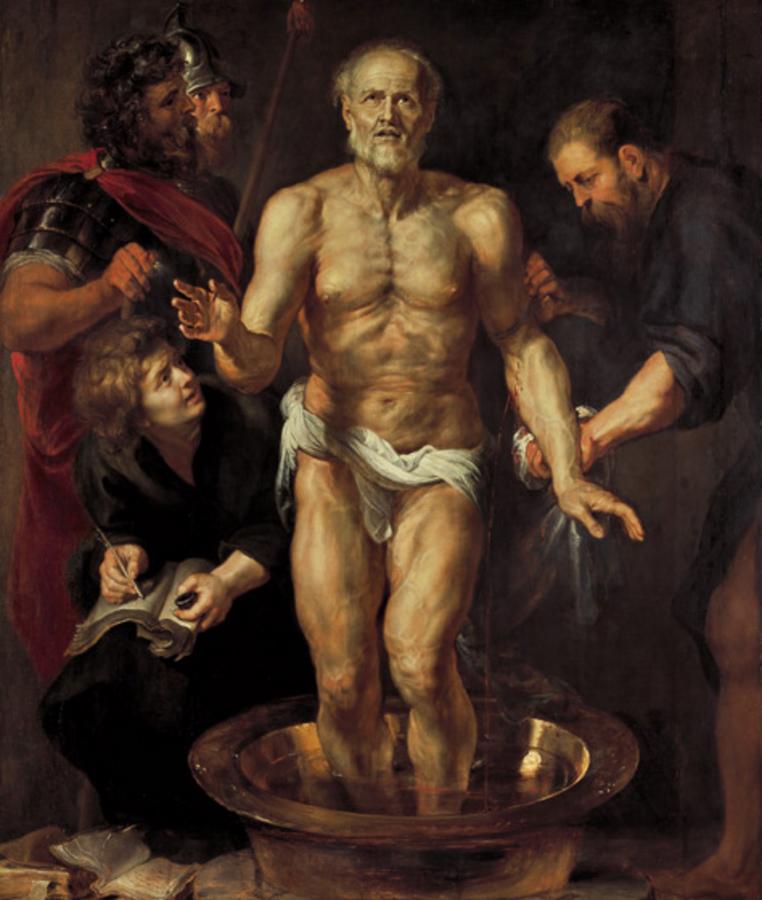
In a review of a pair of newbooks about Seneca, Mary Beard explores the less-than-virtuous life of the famed philosopher, claiming that the “contradictions in this career are obvious and they troubled many ancient observers, just as they have troubled many later ones.” She reconsiders the Roman Stoic’s perspective toward his death:
In his suicide, fighting against the recalcitrant frailty of his own body, he met unwaveringly the death to which he has been cruelly sentenced [by emperor Nero]; and he turned it into the ultimate lesson in how to die (not for mere show was he dictating his last philosophical thoughts on his long-drawn-out deathbed, but for the true edification and education of future generations). This is presumably the message of Rubens’s famous painting, which shows Seneca standing almost naked in his small bath, in a pose strikingly reminiscent of the suffering Jesus in many Ecce homo scenes from medieval and later art: so suggesting triumph over death, not defeat by it.
Yet as both [Dying Every Day author James] Romm and [Emily] Wilson in The Greatest Empire insist, it is impossible not to see some ambivalence, at the very least, in Tacitus’s version of Seneca’s last hours, and in his evaluation of the man more generally. Romm focuses in particular on that phrase imago vitae suae (“the image of his own life”), which was to be, as Tacitus put it, Seneca’s bequest to his followers. Roland Mayer has argued that we should detect here a reference to the kind of imago that was displayed in elite Roman houses: one of those series of ancestor portraits intended to spur on future generations to imitate the achievements of their great predecessors. That is very likely one resonance of the phrase: Seneca was offering a positive example to be followed in the future. But, as Romm rightly observes, “Imago is a multilayered word,” and like “image” in English, it also suggests “illusion,” “phantom,” or “false seeming.”
(Image of The Death of Seneca by Rubens, c. 1615, via Wikimedia Commons)
Bua Noi, the only gorilla in the Pata Zoo in Bangkok, Thailand, is seen in her enclosure on September 25, 2014. Located on the 6th and 7th floors of the aging Pata Department Store, the zoo is being criticized by animal rights activists for having cramped, inadequate facilities. A recent campaign to free Bua Noi has received over 35,000 signatures and the chief of Thailand’s Department of National Parks, Wildlife and Plant Conservation has agreed to meet with activists to discuss the matter. By Taylor Weidman/Getty Images.
Patrick Spaet argues that the Western obsession with work ethic strains credulity:
Our attitudes towards work are extremely schizophrenic: we secretly aspire to sloth, while we loudly praise work. There isn’t an election poster that doesn’t promise more jobs. The call for more work is similar to the Stockholm syndrome, in which the victims of hostage-taking eventually develop a positive relationship with their captors. We constantly hear the drivel of “growth,” “competition,” and “local prosperity,” to convince us that we have to “tighten our belts,” because only that way are “secure jobs” possible–while everything else presents “no alternative.” A wage increase isn’t in the cards, because otherwise the company will go broke. We can’t tax too much, because otherwise the job generators will go abroad. All of these things have become the consensus–even among the wage slaves themselves.
This situation is all the more schizophrenic in that we take every opportunity every day to escape toil and work: who voluntarily uses a washboard, if he has a washing machine? Who copies out a text by hand, if he can use a photocopier instead? And who mentally calculates the miserable columns of figures on his tax return, if he has a calculator? We are bone idle, and yet we glorify work. The Stockholm syndrome of work fetishism has befuddled our minds. It is the paradox of the present: the religion of work has attained the status of a state religion, at exactly the point in time when work is dying. The sale of labor power will be as promising in the 21st century as the sale of stagecoaches in the 20th century.
Spaet, who published a version of this piece in the German paper Die ZEIT over the summer, goes on to remark on the considerable debate it stirred:
Some commentators pointed out that a lot of work is unpaid as well as underappreciated, like housekeeping, care work, and parenting. Yes, it’s a shame that this work, which is mostly done by women, doesn’t get the credit it deserves. It’s a vicious result of the pervasive work fetish that holds that only paid work is valuable work.
Other commentators were quite hostile: “Nobody has a right to be lazy,” they argued. “Those who don’t work are doing harm to society. They are just social parasites.”
Well, this is a prime example of the work fetish. And commentators like this one overlook the fact that most existing jobs are bullshit jobs. As Henry David Thoreau put it: “Most men would feel insulted, if it were proposed to employ them in throwing stones over a wall, and then in throwing them back, merely that they might earn their wages. But many are no more worthily employed now.”
That’s the lesson Ferdinand Mount draws from Karen Armstrong’s Fields of Blood: Religion and the History of Violence, citing her claim that every major faith tradition “has tracked the political entity in which it arose; none has become a ‘world religion’ without the patronage of a militarily powerful empire and every tradition would have to develop an imperial ideology”:
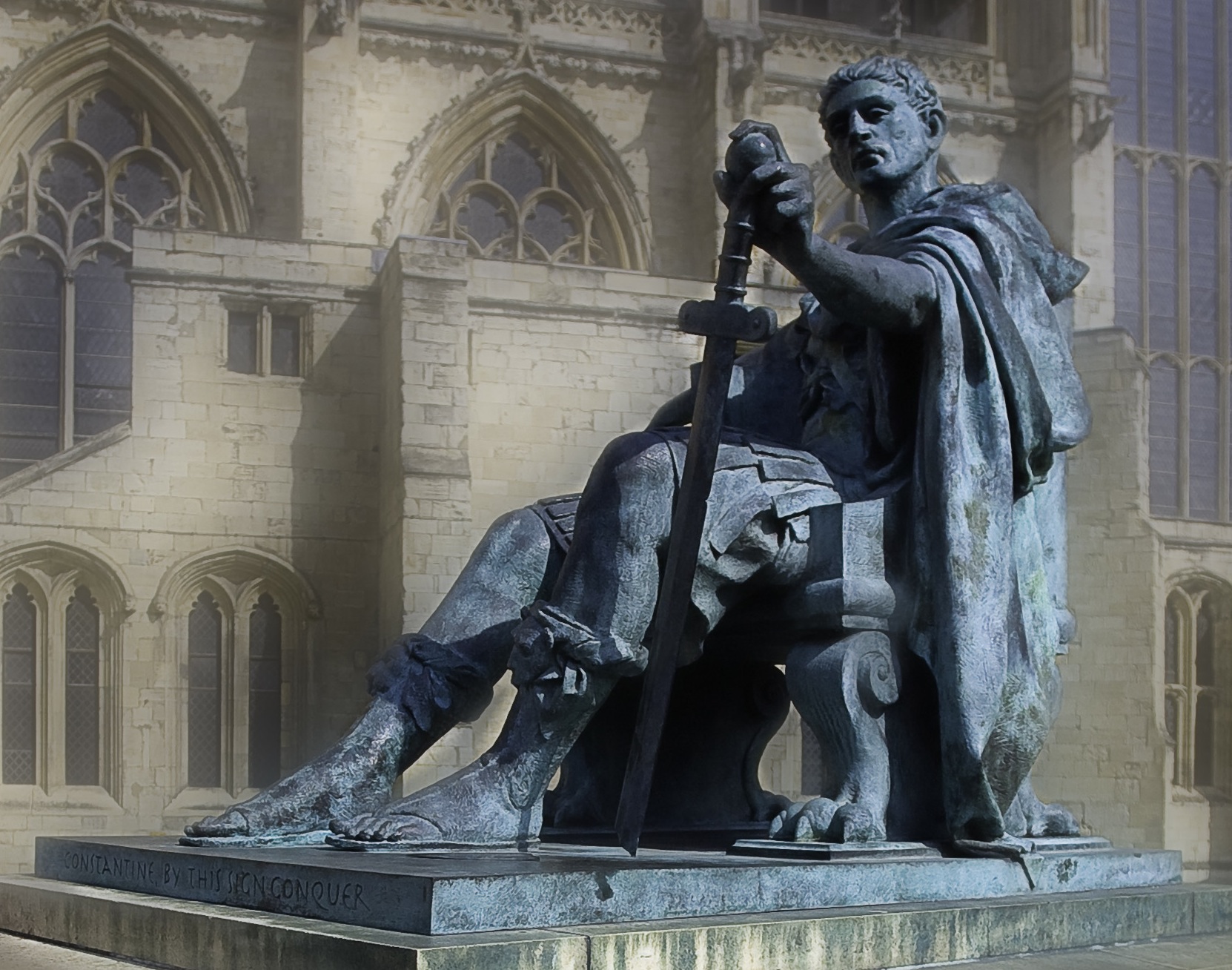
The conversion of Constantine also meant the conscription of Christianity. It was not long before Augustine of Hippo was developing the convenient theory of the ‘just war’. Similarly the ahadith, the later reports of the Prophet’s sayings, confer a spiritual dimension on warfare which it doesn’t have in the Koran. Militant Sikhs today prefer to quote the martial teachings of the Tenth Guru rather than those of their founder Guru Nanak, who taught that only ‘he who regards all men as equals is religious’.
Christopher Hitchens had it the wrong way round in his subtitle to God is Not Great. It should have been, not ‘How Religion Poisons Everything’ but ‘How Everything Poisons Religion’. This is the misunderstanding which drives fanatical secularists to demand that faith be driven out of the public square and permanently banned from re-entry, like a drunk from the pub he always picks a fight in.
The demand was first heard in the 17th century from Hobbes and Locke, and it became an article of faith for the American revolutionaries. Jefferson believed that Church and State had proved ‘a loathsome combination’, and he was determined to build a ‘wall of separation’ between them. What he could not foresee was that nationalism would effortlessly take over the mantle of self-righteousness, and the apocalyptic language too. Within 60 years, the first explicitly non-sectarian republic exploded in the most modern and deadly civil war, its cause immortalised by the rhetoric of the non-religious Abraham Lincoln.
In an essay drawing from her book, Armstrong emphasizes one aspect of her argument in particular – that the modern understanding of religion as a distinctly private pursuit is not the historical norm:
Before the modern period, religion was not a separate activity, hermetically sealed off from all others; rather, it permeated all human undertakings, including economics, state-building, politics and warfare. Before 1700, it would have been impossible for people to say where, for example, “politics” ended and “religion” began. The Crusades were certainly inspired by religious passion but they were also deeply political: Pope Urban II let the knights of Christendom loose on the Muslim world to extend the power of the church eastwards and create a papal monarchy that would control Christian Europe. The Spanish inquisition was a deeply flawed attempt to secure the internal order of Spain after a divisive civil war, at a time when the nation feared an imminent attack by the Ottoman empire. Similarly, the European wars of religion and the thirty years war were certainly exacerbated by the sectarian quarrels of Protestants and Catholics, but their violence reflected the birth pangs of the modern nation-state.
Noel Malcolm, however, questions Armstrong’s reliance on this amorphous understanding of what religion really is:
Writing about ancient Persia, she declares that “a religious tradition is never a single, unchanging essence; it is a template that can be modified and altered radically to serve a variety of ends”. That sounds reasonable enough, but then she makes a much bolder claim. Until about 1700, she says, people were simply unable to distinguish between religious issues and political, social or economic ones. There was no such separate thing as religion. Ergo, it is wrong to single out “religion” as something to blame.
If that were true, it would also mean that you can’t single out religion as something to excuse, or at least partly exonerate. But when she discusses medieval Christian anti-Semitism, for example, Armstrong is quick to say that not only “religious conviction” but also “social, political and economic elements” were to blame. The violence of the Spanish Inquisition, likewise, “was caused less by theological than political considerations”. What was all that about it being impossible to distinguish religious issues from non-religious ones?
Eric Frith finds fault with Pope Francis for not going far enough in his critiques of capitalism, arguing that his calls for generosity and deep sympathy for the poor don’t address the structural problems at work:
By invoking John Paul II’s formulation of the “option for the poor” as a call to Catholic charity, Francis obscures what should be plain. He denounces the neoliberal mythology of the autonomous and self-regulating market and the market-based commoditization of human life. But his refusal to take on the state, his insistence that charity is the only remedy for the excesses and materialism of capitalism, is in effect an acquiescence to neoliberal logic.
This does not just reflect a paucity of social theory. One does not need Marxist economics to see that encouraging the free flow of commodities while criminalizing the flow of labor will trap the poor between a rock and a hard place. One does not need to stake out a theological position on the efficient markets hypothesis to see that arming police like soldiers will lead to collateral damage. Francis prays for politicians who will take inequality seriously, but never makes reference to liberation theology’s cornerstone scriptural story: the Exodus, when with God’s help the Hebrews freed themselves from slavery.
“Charity,” St. Augustine wrote, “is no substitute for justice withheld.” If the Vatican truly wishes to engage with liberation theology, rather than eulogize it in its sunset moments, Pope Francis will have to address the power behind the markets—the police, the military, and the whole military-carceral state—as [Oscar] Romero, [Miguel] D’Escoto, and indigenous communities in Chiapas did.


 The Dish

