Just Like The Real Thing

Reviewing a career-spanning exhibition of the photorealist painter Richard Estes, Amy Henderson puts his distinctive style in its cultural context:

By the early 1960s, America’s marketing phenomenon was setting off cultural earthquakes. Social critics like Daniel J. Boorstin warned about the rise of a culture based on “simulation” and “illusion” rather than on reality. In his landmark The Image: A Guide to Pseudo-Events in America (1962), Boorstin pointed an angry finger at “Madison Avenue, Washington bureaucracy, the eggheads” for turning America into a land dominated by “pseudo-culture.”  

The idea of “simulation” had an impact in the art world as well. Warhol, after establishing himself as a highly successful commercial artist, began making “replications” of consumer products such as Brillo boxes and Campbell’s Soup cans. … By blurring the lines between commercial art and high culture, Warhol took direct aim at high-art snobs and proclaimed: We live in a supermarket world!

When Richard Estes ventured away from commercial art in the mid-to-late-’60s, he, too, carried the Mad Men brand with him. According to the exhibition catalogue, pop art amused Estes, but as “witty commentary more than art.” Instead, his lifelong love of photography led him to anchor himself in photorealism. The sense of simulation and illusion that were instrumental in his earlier career as a commercial artist would reemerge as central tenets of his photorealist art.

No Place Like Rome

Michael Auslin reflects on the enduring relevance of Augustus, the first Roman Emperor:

640px-Bust_of_augustusAfter the Ides of March, the teenaged Octavian figured in no one’s political calculations. Mark Antony was the dominant figure, and Brutus and Cassius retained significant forces. Yet within just a few years, it would be Antony and Octavian fighting for the ultimate supremacy of the Western world. To read of Octavian’s cautious, calculating, and sure moves during the two decades of civil war, leading to his victory at Actium in 31 B.C., is to encounter political genius of the rarest kind. With his indispensable partner, Agrippa, Octavian then did what had escaped even the great Caesar: establish a durable and impregnable political system to capitalize on his military victory. Thus ended both a century of civil war and Rome’s traditional freedoms. To a world desperate for stability, Augustus was accepted as the unquestioned and irreplaceable arbiter of order.

Augustus’s legacy did not stop with politics, for the Rome of our dreams, too, is largely his creation, carried to its ultimate expression by his successors. The world might not still be fascinated with a city of brick had not Augustus left it one of marble, to paraphrase his famous saying. The fora, baths, Colosseum, and palaces of eternal Rome maintained, even enhanced, their spell over men’s imaginations by their ruins, as much as in their pristine prime. Even the anti-monarchical Americans drew legitimacy from Rome’s material forms. Washington, D.C. is modeled more on imperial Rome than Greece, with its Capitol Hill and classic architecture.

(Photo of a bust of Augustus in the Musei Capitolini, Rome, by Xuan Che)

A Fresh Start For Sri Lanka?

SRI LANKA-POLITICS

In a surprise upset on Friday, the country’s strongman president, Mahinda Rajapaksa, was voted out of office, losing to his opponent Maithripala Sirisena, who had promised much-needed reforms and reached out to the country’s marginalized Tamil and Muslim communities:

Sirisena, a one-time ally of Rajapaksa who defected in November and derailed what the president thought would be an easy win, took 51.3 percent of the votes polled in Thursday’s election. Rajapaksa got 47.6 percent, the Election Department said. … Like Rajapaksa, Sirisena is from the majority Sinhala Buddhist community, but he has reached out to ethnic minority Tamils and Muslims and has the support of several small parties.

Kate Cronin-Furman stresses what a mess of things Rajapaksa made during his decade in office:

Over the course of 10 years in power, Rajapaksa had undermined the institutions of South Asia’s oldest democracy, beefing up Sri Lanka’s already robust executive presidency. He also consolidated power in the hands of his family. One brother served as secretary of defense, a second the speaker of Parliament, a third a cabinet minister, and numerous sons and nephews were installed in positions of power. Potential opponents to the dynastic project were bought off or brutally silenced. Election Day fell on the sixth anniversary of the killing of well-known journalist Lasantha Wickrematunge, who accused the Rajapaksas of his killing in a chilling posthumous editorial. Independent media have since learned to self-censor. …

The first few days of Sirisena’s presidency have already brought change.

By Saturday, long-blocked Web sites were suddenly viewable, surveillance of journalists had been officially discontinued, and political exiles had been invited home. Word spread that a reinstatement of impeached Supreme Court Justice Shirani Bandaranayake was in the works.

The editors of the Christian Science Monitor pray Sirisena will move Sri Lanka forward in the healing process after its lengthy and bitter civil war:

While his victory was a rejection of the power grabs and corruption under his predecessor, Mahinda Rajapaksa, just as noteworthy is the fact that he won a majority of votes from the country’s major ethnic and religious groups. This brings some hope that Sri Lanka will finally allow a full accounting of a war that lasted nearly three decades and took an estimated 80,000 to 100,000 lives. Sri Lanka’s government has not come clean on civilian casualties toward the end of the war. It needs that kind of truth-telling for social healing, as other conflict-scarred nations, such as South Africa and Brazil, have discovered.

The editors of Bloomberg View are excited at the prospect of turning the South Asian island nation away from China’s sphere of influence:

Whether the U.S. and India can exploit this opportunity, however, will depend on whether they recognize what’s unique about Sri Lanka. The first thing to appreciate is that voters weren’t necessarily driven by resentment of China. They elected Maithripala Sirisena as president because they had tired of the opacity and perceived cronyism of Rajapaksa’s administration, symbolized in part by multibillion-dollar projects handed out to Chinese companies with little oversight. Elites had begun to fear that Beijing would soon demand more political and military influence as part of its largesse. Yet, unlike Myanmar, which shares a land border with China, such concerns remain somewhat theoretical. Sri Lanka has vast infrastructure needs — and therefore good reason not to reject Chinese money entirely.

Harsh Pant observes that it won’t be easy to disentangle Sri Lanka’s extensive ties to the Middle Kingdom:

China’s support was crucial for Sri Lanka during the last phase of the war against the LTTE [Liberation Tigers of Tamil Eelam]. Chinese support has also been invaluable for Sri Lanka to Screen Shot 2015-01-12 at 10.00.42 PMconfront U.S.-backed resolutions at the UNHRC [United Nations Human Rights Council]. As a result, the two nations now have a declared “strategic cooperation partnership.” For China, its ties with Sri Lanka give it a foothold near crucial sea-lanes in the Indian Ocean, as well as entry into what India considers its sphere of influence. China is financing more than 85 percent of the Hambantota Development Zone, to be completed over the next decade. This will include an international container port, a bunkering system, an oil refinery, an international airport and other facilities.
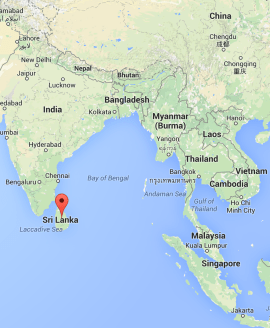
Indian policymakers will be mistaken if they think that a change of regime in Colombo will lead to a dampening of Sino-Sri Lanka ties. China’s role is now firmly embedded in Sri Lanka – economically as well as geopolitically. India will have to up its game if it wants to retain its leverage in Colombo.

Alyssa Ayres links the China question back to Sri Lanka’s lingering challenges regarding good governance, human rights, and transitional justice:

Sirisena defeated Rajapaksa with a platform focused on ending corruption, restoring Sri Lanka’s image and its relations abroad, and renewing a “compassionate governance” in the country. The perception of the Chinese financing itself became part of the Rajapaksa regime’s weakness—the perception that Sri Lanka’s ruling family had not only mortgaged the country’s economic security but had enriched themselves. Sirisena’s manifesto speaks of a 90 percent pilfering, for example (p.8). (These are all allegations, not proven facts.)

We can expect a Sirisena government to launch inquiries, and likely cancel the more than $1 billion contract with China to build a new port city, as promised by then-opposition leader Ranil Wickramasinghe, now prime minister, in mid-December. While the new Sri Lankan government is not looking to end its relations with China—after all, it is the second priority country listed in the election manifesto—it will be very difficult to mount anti-corruption investigations and unwind these sorts of contracts without introducing tension into Sri Lanka’s relations with China.

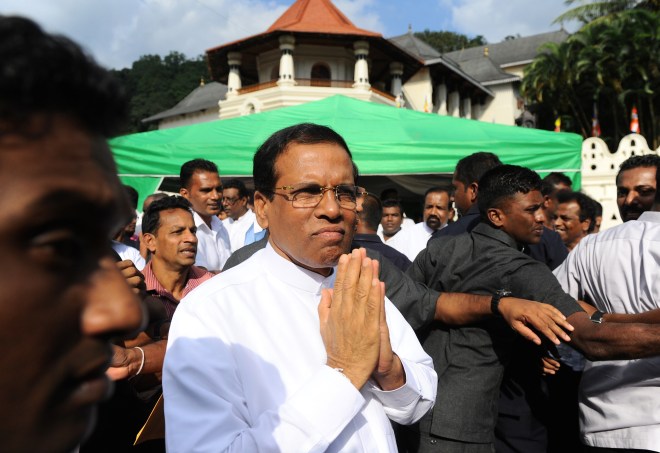
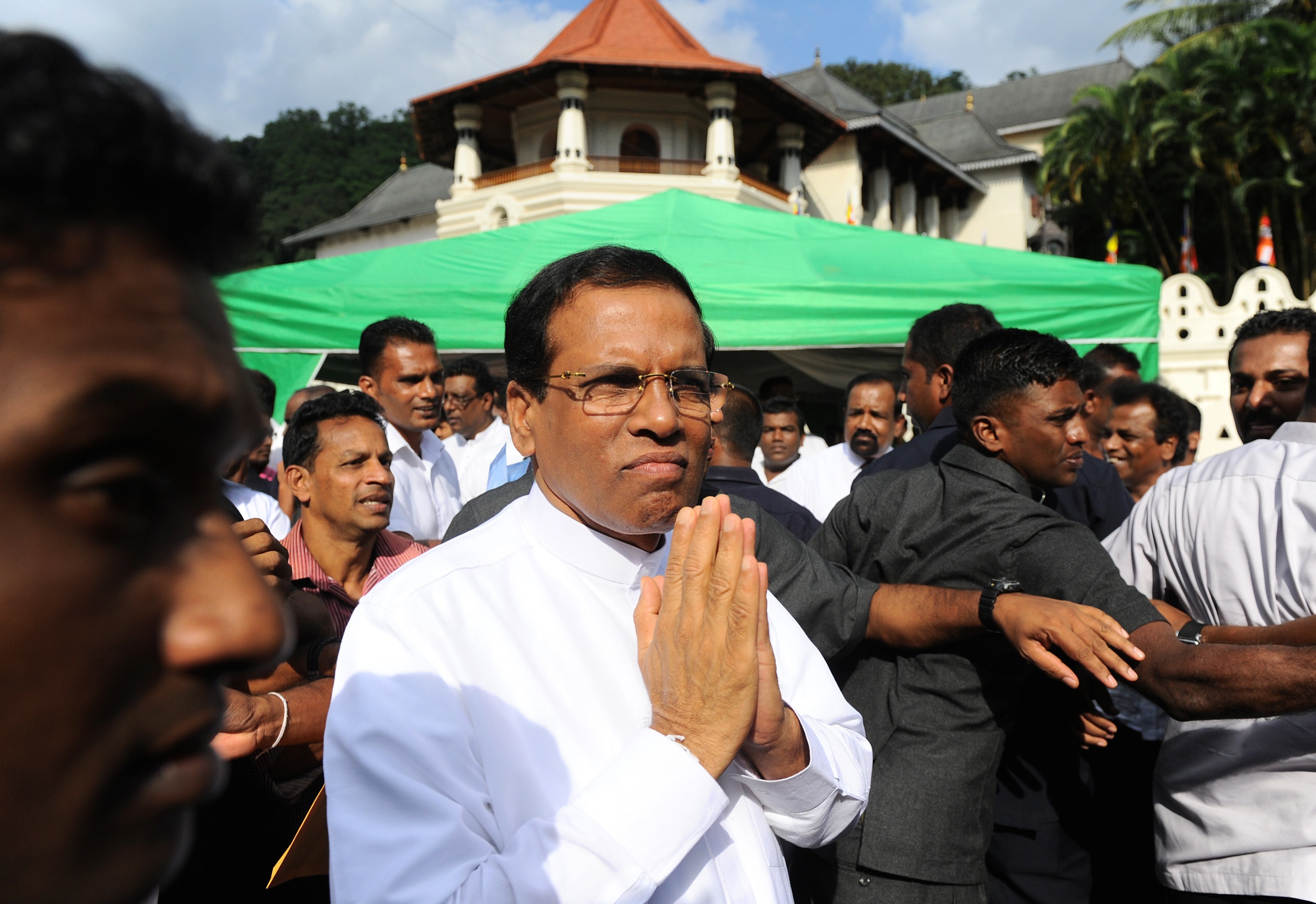
(Photo: The new president of Sri Lanka, Maithripala Sirisena, gestures to supporters after speaking outside of the Buddhist Temple of Tooth in the central town of Kandy on January 11, 2015. Sri Lanka’s new government on January 11 accused toppled strongman Mahinda Rajapakse of having tried to stage a coup to cling to power after losing last week’s presidential election. By Ishara S. Kodikara/AFP/Getty Images)

Face Of The Day

o-CHARLIE-COVER-570

Magnifique:

Charlie Hebdo revealed their cover image for this week’s issue, printed just days after two gunmen opened fire on the newspaper’s Paris office, killing 12 people. Four of the Charlie’s cartoonists were killed in the attack. The cover shows the Prophet Muhammad holding a “Je Suis Charlie” sign with the caption, “All is forgiven.” The newspaper said that it will print over 1 million copies this week, with financial help from Google, Le Monde and other organizations. It usually prints around 60,000.

The Plan To Make Community College Free, Ctd

Danielle Douglas-Gabriel cautions that Obama’s proposal still falls short for many would-be students:

Free tuition, even for two years, is not nearly enough to cover the cost of attending college. Tuition and fees counted for just 21 percent of the budget for students who attend two-year public college and pay for off-campus housing, according to a recent study from College Board. While the average tuition and fees at a community college is $3,347 for the 2014-2015 academic year, housing cost another $7,705, books averaged $1,328 and transportation added up to $1,735. Keep in mind, too, that Obama’s plan also doesn’t cover fees, which schools routinely charge for using labs, campus health centers and computer labs.

Libby Nelson addresses such concerns:

[Obama’s plan] would apply before Pell Grants. That means that poor students would have more Pell Grant money left over to help them pay for books and other life expenses. But Obama’s college plan would also help a constituency largely ignored by federal aid programs: families who earn too much for federal financial aid but aren’t wealthy enough to afford thousands of dollars of college bills.

Douglas-Gabriel acknowledges the Pell Grant factor but finds that “many students could still wind up working full time or taking out loans, albeit smaller amounts, to pay the difference.” Mike Konczal’s take:

Everyone—poor and middle class—would benefit from college cost control. Indeed this addresses one of the main conservatives complaints about student aid.

If the supply of education is hard to move, then subsidizing education through aid will raise the price of education, as colleges capture some of that as a subsidy. Worse, it also increases costs for students who don’t receive the subsidy, resulting in price inflation.

Fair enough. But if that’s true, then it must also be true that lowering the price of tuition directly with a public option will reduce prices across the board. Suddenly state and private colleges will have to consider if they offer enough value to make their price over community colleges a reasonable value. This is what the economist JW Mason refers to as progressive supply-side economics, and it’s part of the reason public options are so valuable. There’s a reason the CBO keeps scoring the public option as a major cost saver in healthcare. It’s not just the lower price of the public option; it’s that a public option “would tend to increase the competitive pressure on [other] insurers” in the exchanges, leading them ”to lower their premiums, which would further reduce federal subsidies.” This won’t break the back of rising higher-education costs, but it will help.

Scott Shackford, on the other hand, is deeply critical of Obama’s plan:

It’s not the students being subsidized, it’s the college. So they’re going to do everything in their power to keep these students attending, even if it results in students leaving college with associate’s degrees they can barely read, which will subsequently devalue the degrees in the eyes of employers.

Even in an era of grade inflation, though, community colleges also have terrible completion rates for students seeking two-year degrees. The Chronicle of Higher Education offers a handy map showing completion rates lower than 10 percent in states like Indiana and Rhode Island after three years of attendance. The best state, South Dakota, has a 52.9 percent completion rate. For-profit colleges [like Bryman College], for all their criticism for taking advantage of students (and federal subsidies), have a higher graduation rate than community colleges. … If a student falls into the extremely high drop-out rate for students, the government (and the taxpayers) don’t get the money back. So the White House is promoting a program funded by taxpayers to subsidize—wait, I mean further subsidize—a system that has baked in an extremely high failure rate.

But again, this program is not a subsidy for students. It’s a subsidy for faculty and college level administrative bloat.

And Andrew Flowers shows how such colleges are in more need now than in recent years:

As my colleague Ben Casselman pointed out in April, college enrollment is declining for recent high school graduates (those 16 to 24 years old). And it’s falling fastest for community colleges. This drop comes after a surge in enrollment during the Great Recession. For those graduating high school between 2007 and 2009, the share enrolled at two-year colleges rose to 27.7 percent from 24.1 percent. After reaching a high with the 2012 graduating class, the share of these young people at two-year colleges dropped sharply in 2013, to 23.8 percent. …

With better employment opportunities available for high school graduates, community colleges might just need the incentive of free tuition to lure more students.

Follow the entire Dish debate on the topic here.

Taking The Measure Of Man

Steven Pinker praises Shakespeare as “one of our first and greatest psychologists,” especially dwelling on the wisdom of a few lines from Measure for Measure:

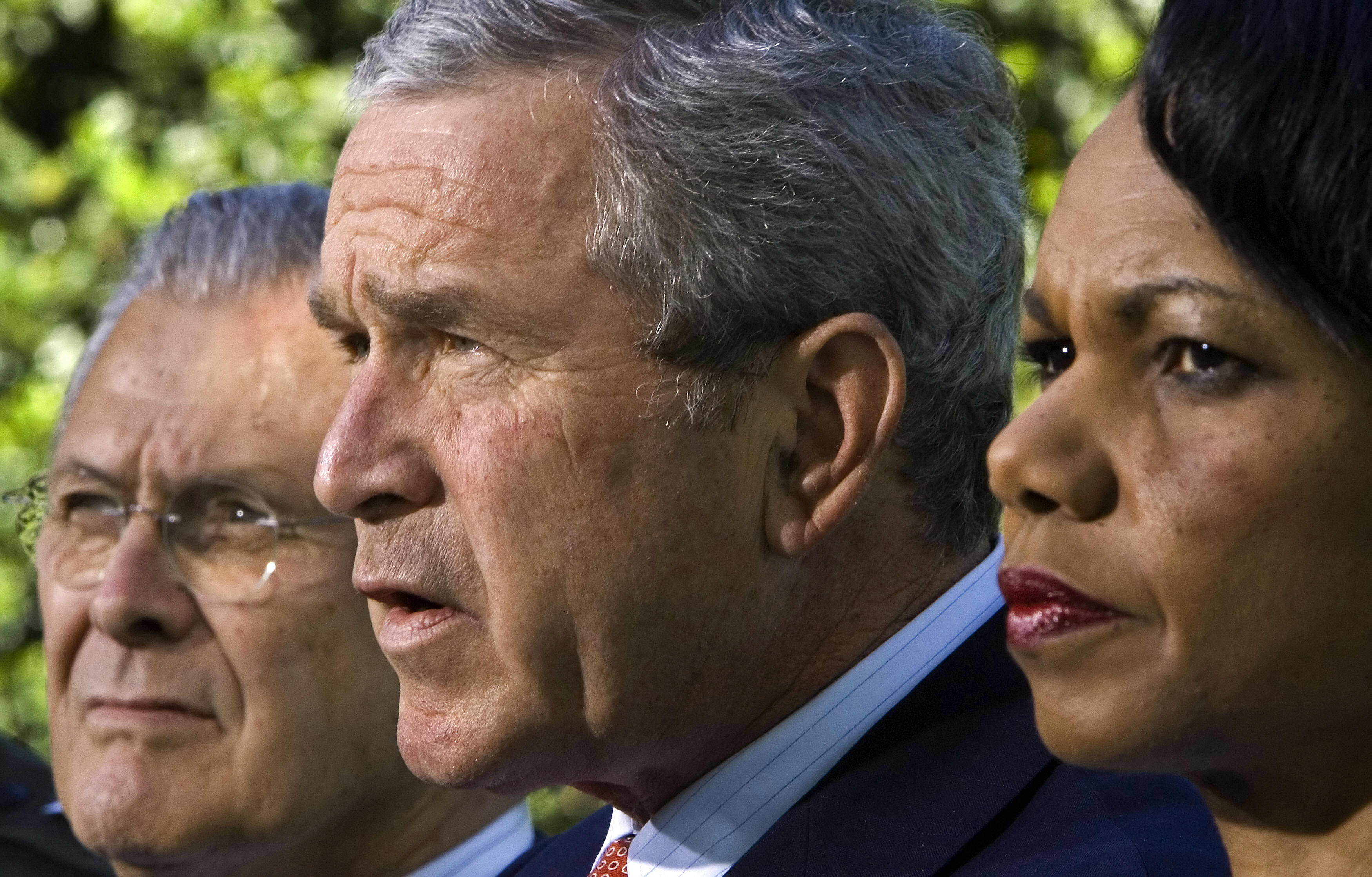
[W]e humans are the last to notice our own limited nature. In seven words, Shakespeare sums US President George W. Bush (C) deliversup a good portion of the findings of modern psychology: “most ignorant of what he’s most assured.” A recurring discovery of social and cognitive psychology is that human beings are absurdly overconfident in their own knowledge, wisdom, and rectitude. Everyone thinks that he or she is in the right, and that the people they disagree with are stupid, stubborn, and ignorant. People reliably overestimate their own knowledge, and misjudge their own accuracy at making predictions. A common theme of both Shakespeare and modern social psychology is the human species’ overconfidence.

Remarkably, Shakespeare identifies this darker side with what we now know to be our evolutionary ancestry. With “like an angry ape,” he compares us to our primate cousins (an impressive 250 years before Darwin). What a striking simile for human impetuousness and foolishness! We tend to dignify displays of human emotion; presented with a burst of feeling, we seek its cause. But an angry ape we look on with amusement—the rage is infantile, comic, the result of ape’s own limited understanding. The detached amusement at the absurdity of human acts continues in the next line—“plays such fantastic tricks before high heaven.” “Playing a trick” refers to something lighthearted, trivial. Our feeble attempts at wisdom and justice, our petty exercise of power, appear ridiculous to wiser, celestial onlookers.

(Photo: US President George W. Bush delivers remarksfrom the South Lawn of the White House on May 1, 2006 regarding a recent trip to Iraq by US Secretary of Defense Donand Rumsfeld and US Secretary of State Condoleezza Rice. Three years after his famous photo-op before a banner hailing “Mission Accomplished” in Iraq, Bush declared that the war-torn country had finally turned a corner in establishing security and democracy. Paul J. Richards/AFP/Getty Images)

Trickle-Down Trickery?

Alex Fradera surveys research into how cheating executives harm the whole company:

In a series of online studies, Takuya Sawaoka and Benoît Monin presented participants with information about a hypothetical company employee involved in unethical activity such as deceptive marketing. When the culprit’s position in the company was senior rather than low-ranking, participants were more likely to see his behaviour as representative and go on to make assumptions about other dodgy company practices.

It’s probably not hard for people to believe that ripping off clients is a company-wide policy, especially if they hear that their boss is doing it. But what about less likely policies that directly harm the company? In fact, when bosses were presented as rigging performance data to maximise their bonuses, participants continued to suspect the wider organisation – and not just in a linear, cause-and-effect fashion. A bonus-fiddling boss made people suspicious of mid-ranker’s motives for giving investment advice that turned out to be poor. The assessment seems a more fundamental one: people assume a dishonest leader means a dishonest organisation.

Sledding Runs Into Legal Trouble, Ctd

Last week, Will Wilkinson called the “flinching risk-aversion” of sledding bans “profoundly embarrassing.” But, even if one prioritizes safety, Melinda Wenner Moyer believes such bans are wrongheaded:

The Consumer Product Safety Commission reported that approximately 10,000 sledding-related injuries in children under the age of 14 were treated in hospital emergency departments in 2012. That’s a lot. But by comparison, consider that trampolines caused nearly 79,000 ER-worthy injuries in kids under 14 in 2012, and television sets caused 26,000. (That doesn’t include the permanent hearing loss kids got from watching Dora the Explorer.)

Sledding becomes much less dangerous when it’s done a certain way, too—and that’s precisely why these park sledding bans are a problem:

Open spaces such as parks are among the safest places for kids to sled. One study found that the odds of going to the ER for sledding injuries were five times higher in children who had been sledding on the street compared with in the park. Injuries sustained while street sledding are often much worse, too, and are more likely to involve traumatic brain injuries. But where are kids without big backyards going to sled if they can’t do it in the park? The street, of course.

On that note, a reader writes:

I laughed when I read your post, because I had just read the following passage in the January 3, 2015 edition of the Cook County News Herald (Minnesota, not Illinois). It is from their weekly column, “Down Memory Lane,” and was first published 90 years ago, January 8, 1925:

The children of Grand Marais are requested to slide on Monroe Street where there are not so many cars nor so much danger of accidents. The automobile drivers are also asked to avoid Monroe Street with their cars as much as possible and help make sliding safe there for the children.

Another snapshot from the in-tray:

The reader from Dubuque wrote, “Who takes their kids sledding anymore? What kids venture out of their homes to sled on their own?” Well, here in Normal, Illinois, a few hours’ drive from Dubuque, Iowa, the answer to the first question is, “A lot of people.” When it snows thickly enough, parents, children, and teens on their own go to the top of the main sledding hill in town, Jersey Hill, and sled down. If it doesn’t melt within a few days (always a possibility here), it gets packed down by repeated sledding from hundreds of people, many of whom spend hours on the hill. That just makes it faster and, of course, more more appealing.

As for safety issues, the crest of the hill is in a sort of L-shape, and at the bottom is a creek that parallels the crest in a similar L-shape. The potential for going into the creek is high on the bottom of the L – from top to creek is not even 100 yards, but a lot lower along the main hill, because the creek is farther away – over 100 yards, maybe 200, plus there is a berm before the creek. Parents and children prefer the long hill; teens prefer the shorter one – it’s faster, and one has to bail out before going into the creek – or onto it, because it usually freezes over in January.

I have yet to hear of one lawsuit or one death, but I think I do remember hearing about a major injury. But we still like to sled here!

The Politics Of “Fertility Fog”

Amy Klein investigates why many women remain steeped in misinformation about their reproductive health:

The Committee Opinion [of the American Congress of Obstetricians and Gynecologists (ACOG)] recommends education about age and fertility for ‘the patient who desires pregnancy’ – and that is a quote. In other words, only women who are already trying to get pregnant or thinking about it should be counselled about how age affects fertility.

But what about the other women – the ones who do not realise their fabulous health might not protect them from age-related declining fertility; the ones who might want to start thinking about freezing their eggs while they’re still young enough; the ones who are waiting for one reason or another to have a baby and don’t know that perhaps, like me, they don’t have that much time. Does ACOG believe it’s the doctor’s responsibility to bring up the subject?

‘We feel that women should be able to talk to their ob/gyn about fertility,’ said Sandra Carson, ACOG’s vice president for education. ‘We certainly want to remind women gently that, as they get older, fertility is compromised, but we don’t want to do it in such a way that they feel that it might interfere with their career plans or make them nervous about losing their fertility.’ In other words, there are no guidelines for talking to a woman about her fertility unless she herself brings it up.

All this talk of ‘gentle’ reminders and ‘appropriate’ counselling has a history – a political one. Back in 2001, the [American Society of Reproductive Medicine (ASRM)] devoted a six-figure sum to a fertility awareness campaign, whose goal was to show the effects of age, obesity, smoking and sexually transmitted diseases on fertility. Surprisingly, the US National Organization for Women (NOW) came out against it. ‘Certainly women are well aware of the so-called biological clock. And I don’t think that we need any more pressure to have kids,’ said Kim Gandy, then president of NOW. In a 2002 op-ed in USA Today, she wrote that NOW ‘commended’ doctors for ‘attempting’ to educate women about their health, but thought they were going about it the wrong way by making women feel ‘anxious about their bodies and guilty about their choices’.

Although the ASRM denies the backlash is connected, its spokesman Sean Tipton says the organisation has not done a fertility awareness campaign since.

Walking Like A Man

Or at least the dickish ones:

Jessica Roy covers an experiment carried out by Beth Breslaw:

She spent most of November and all of December colliding with dozens of men, on sidewalks and in train stations and outside of cafés. On one particularly eventful instance in early January, every single man who came across her path on the stretch of narrow East Village sidewalk between the N train and her sister’s apartment smacked right into her, she says. It was like that for the whole experiment, wave after wave of men knocking into her with an elbow or a shoulder or a full-on body-check.

“I can remember every single man who moved out of the way, because there were so few,” Breslaw told me. And though she refused to reposition herself for anyone — including women — Breslaw found that while she did end up running into some females, most cleared a path for her.

Update from a reader:

I’m afraid I have to call bullshit on Breslaw’s experiment of “walking like a man” to see what happens.

She should have said “walking like a jerk” because that’s what she did. My scholarship involves urban spaces and how people share them, and the behavior she describes – refusing to give way at all, just barging ahead – is not exclusive to men, nor is it the correct way to behave in general. Sharing crowded spaces means zillions of quick decisions, including last-second mutual giving-way/pivoting/angling to keep moving among many other people.

My own practice – as a 6’/230 pound pedestrian – is to always share the space, except with one sort of pedestrian: those who aren’t giving way to me in turn. For these jerks, I just stop cold, and get walked into all the time, by men and women, young and old. It’s more prevalent when people are walking two, three, or four abreast on narrow sidewalks, having their conversations and acting like they own all the space, but solo pedestrians of both genders (though, admittedly, more often men) act as though their preferred trajectory was somehow their private property. It isn’t. It’s a shared public space, and we all gotta play nice if we’re going to get along.

Had Breslaw walked towards me in the way Roy’s story describes, I would not have given way (I also would not have walked into her: I’d’ve stopped in my tracks). Had she turned ever-so-slightly, I’d’ve done the same, and we’d’ve passed politely enough.

It’s literally a two-way sidewalk out there. Can’t we all get along?

P.S. My favorite collision ever: a teenaged skateboarder who just ran right into me. Laying on the ground, he said his dad was a lawyer and he was going to sue me.  Even his buddies laughed: if you want to be tough enough to own the sidewalk, you need to be tough enough to take a fall and not go to Daddy for legal assistance.