How To Write A WaPo Column

Pareene pwns Milbank:

Today in quintessential sentences from The Washington Post's Dana Milbank: "Legal merits aside, trying the terrorist leader in New York would be a political disaster — something everybody seems to grasp but Holder." Hah. Way to tackle the important bit. Writing columns about complicated matters of justice and law is so easy when you can just put the essential questions "aside" to focus on what you imagine people like you will think of how the issue will eventually be spun to people like you!

Brit Debate Reax: The Liberal-Democrats Won!

The overwhelming consensus is that the Liberal Democratic leader, Nick Clegg, emerged the strongest. I thought he did great in laying out specifics and in offering a "real" change, but perhaps missed his breakthrough without living in Britain these past few years.

In many ways, the TV rostrum that put all three leaders equally on the same stage gave Clegg's party the boost in recognition and standing it has always lacked. The british electoral system punishes third parties – even when they garner 20 percent of the vote in polls. Out of power for eighty years, the Lib Dems do have some strong arguments, and came across as more fiscally credible and more devoted to cutting defense and believing in civil liberties than either Labour or the Tories. The Telegraph worries that Clegg's success could be lethal for the right:

Even though Mr Cameron does have a realistic chance of entering No 10 in three weeks' time, he remains an unknown quantity to many voters. He did well, especially with his peroration, and will be keen to use the two further debates to reinforce his claim for the job. But he knows now, if he did not know it before, that a significant obstacle to that ambition is Mr Clegg.

Tory supporter Janet Daley worries that

it will take a pretty sophisticated viewer to appreciate that the LibDems have an absurdly unfair advantage in being able to offer an utterly unrealistic programme. Clegg could attack both the real alternatives without worrying about the credibility of his own policies. So it is scarcely surprising that he “won” most of the instant polls. My guess is that this will make scarcely any difference to the outcome of the election except to confirm that Brown is a dead man walking.

The Guardian's Martin Kettle thought Clegg broke through:

His final pitch was significant. Yes, he said, there is an alternative. It's not true that the parties are all the same. There's another option which Labour and the Tories will never give you. Liberal Democrats always say that, of course. But here was a Lib Dem leader saying it to a volatile electorate at a moment when, if he makes the sale, could change a lot of assumptions in the 2010 contest.

All of this is tactically grim for the Conservatives. If Tory swing voters, disgusted with Labour, nonetheless give the Liberal Democrats a chance, the effect on the marginal seats, where the Tories have been doing well, could be brutal. Cameron's nightmare is that the LibDems do well enough to enable Labour to get back into office, with a majority of seats but a miserable share of the vote. That nightmare seems closer to reality now than it did yesterday.
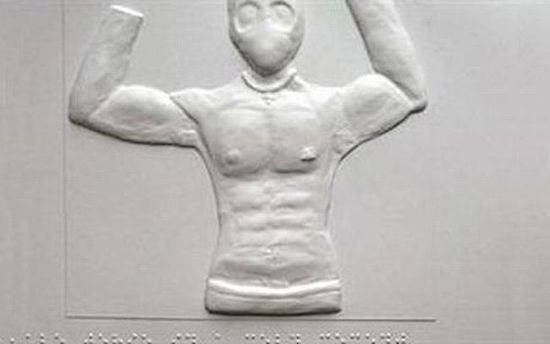
“KO’d By The IRS”

Henry Fetter describes how shifting tax rates changed boxing:

The 1950s was the era of the 90 percent top marginal tax rate, and by the end of that decade live gate receipts for top championship fights were supplemented by the proceeds from closed circuit telecasts to movie theaters. A second fight in one tax year would yield very little additional income, hardly worth the risk of losing the title. And so, the three fights between Floyd Patterson and Ingemar Johansson stretched over three years (1959-1961); the two between Patterson and Sonny Liston over two years (1962-1963), as was also true for the two bouts between Liston and Cassius Clay (Muhammad Ali) (1964-1965). Then, the Tax Reform Act of 1964 cut the top marginal tax rate to 70 percent effective in 1965. The result: two heavyweight title fights in 1965, and five in 1966. You can look it up.

The British Election Debate: The Chastening

My live-blogging of the first American-style debate between British party leaders is here. My bottom line: Cameron narrowly won this. But, apart from the tedium and politeness of the thing, my biggest take-away is about the boundaries of the debate. They are remarkably constrained compared with the current debate in the US. In some ways, that's a reversal of historic norms. The Brits used to look at the US and see almost no difference between the GOP and the Dems: they were all broadly capitalist and anti-communist, all within the conservative brand in Britain. The Brits, meanwhile, actually debated the merits of real socialism in the 1970s and balance-the-budget capitalism in the 1980s. Their left extended far beyond America's tame Democrats and their right, from 1975 on, pushed the boundaries of low-taxes and smaller government in Europe.

Now, the Brits all sound as if the national debate is within the US Democratic party, while the American right has veered back to the nineteenth century, with a healthy dose of McCarthyism thrown into the mix. In that sense, American politics is now far more interesting than anything in the UK. But the British consensus seems to reflect a country more at peace with itself and more realistic about the limits of change.

The debate felt – how can I put this – like the fruit of a great chastening, as the Tories flee their Thatcherite past and Labour absorbs the legacy of a brutal recession, a divisive war and 13 years in power. My gut tells me this election will swing strongly toward the Tories in the final stretch. When a government has been in power for more than a decade and its central argument for re-election is fear of an untested opposition, it's in trouble.

Colonial Tweeters

A reader writes:

Speaking of 18th- and 19th-century diaries, I have been following John Quincy Adams' twitter feed for over a year now.  The Massachusetts Historical Society posts his short daily diary entries every morning, 200 years to the day that Adams penned them.  Short, quick, to the point.  Today's tweet from Russia: "4/14/1810: Met and walked an hour with Pardo. Emperor passed us in a Sleigh. Evening at de Bray's. Chess with Maclure 1:30."

JQA has nearly 17,000 followers.