The Dems’ Playbook Is Getting Stale

Joe Klein is struck how Democratic candidates have “emphasized women’s issues–equal pay, parental leave, abortion rights–in the hope of luring undecided, independent women to the fold”:

[Campaigning on women’s issues] has been effective and still may be–but it has never before carried the electoral burden that it does this year. The alleged toxicity of Barack Obama has made it unsafe for Democrats to discuss much else.

The party was boosted by the failed Bush wars in 2006, 2008 and 2012, but Democrats have been boggled by what to say about ISIS in 2014. They’ve had no significant new ideas, foreign or domestic, on offer. And they’ve been too afraid to tout Obama’s complicated successes–the stimulus package that prevented a depression, the health care plan that may actually be working, and relative order at the border (a result of many years of security enhancements and a diminished flow of illegals during recent rough economic times). The argument on women’s economic issues is strong. It remains to be seen whether baby boomers who boast remarkable three-month, 3-D sonograms of their grandchildren will be quite so militant about abortion rights in the future. The fate of women’s issues, in the South and elsewhere, will have an impact on whether the party has to start rethinking its message going forward. It may not be able to count on Republicans’ continuing their boorish ways. Unless, of course, the conservatives win and overread the results this year.

Elizabeth Nolan Brown identifies why the Democrats’ War on Women demagoguery isn’t working very well:

As many political strategists, writers, and pundits have noted over the past few weeks, issues like birth control and abortion simply rank low among the list of current concerns for female voters. This likely isn’t an expression of how important women consider their availability—the vast majority of American women will use birth control in their lifetimes and one in three will have an abortion—but the fact that they genuinely aren’t pressing political matters right now at Congressional level.

The federal Life at Conception Act—which several Democrats have used as a cudgel against GOP opponents who did (Gardner) or do (Ernst) support it—has about as much chance of being enacted as your dog does of becoming president; it would take passing both chambers of Congress with two-thirds support and ratification by 75 percent of state legislatures. And as George Will noted in a recent Washington Post column, “access to contraception has been a constitutional right right for 49 years” while “the judiciary has controlled abortion policy for 41 years.”

The idea that this country will ban birth control entirely or amend the Constitution to define fertilized eggs as people is simply not plausible.

Book Club: Waking Up The Buddha

Siddharta_Gautama_Borobudur

Our first installment of reader commentary on Sam Harris’ Waking Up addressed the question of the self’s existence – or lack thereof. More emails along those lines here and here. Many of the following do the same, while offering clarifications and critiques from a Buddhist perspective. The first reader emphasizes the practical effects of rejecting our usual notions of the self:

Twenty years of meditation in the Dzogchen tradition have convinced me that the self, as it is conceived in the West, does not exist. With regard to your reaching different conclusions from Harris based on the same experiences, there is an old Zen saying “Words are a finger pointing at the moon – be careful not to confuse the finger with the moon.” I might describe the experience as one of realizing immaculate Buddha nature, but the important question is: what effect does this experience have? Am I a wiser, more compassionate human being because of it?

The concepts about the experience are just that – concepts. They no more objectively prove your experience of the love and existence of God than they prove Harris’ rejection of God. The experience belongs to no belief system. It is what it is.

Another reader wants “to clarify something about Buddhist (Mahayana) philosophy that Sam doesn’t explain”:

In Buddhist thought, there are two sorts of frames of truth. Relative truth is the truth of bookclub-beagle-trappearance, and absolute truth is how things truly exist. Computers are an excellent example of this; there’s an apparent reality to email, blogs, the internet, but we know that those things don’t exist in any true sense – they are just conceptual representations of electrical activity. The key point is that relative reality is still real, it’s just real as appearance, in the same way that a dream or videogame might be real as a dream or videogame. Relative reality from a Buddhist perspective is all of the stuff we relate with, self, other, trees, greenery etc. Ultimate reality is reality free from concept, which is therefore impossible to describe.

When Buddhists talk about the non-existence of self, what they mean is that self is a mere appearance. In particular it doesn’t have the qualities of separateness, permanence, or solidity that we ascribe to it. From a relative perspective, self exists as an appearance, but it has no reality from an ultimate point of view. Suffering arises because we try to relate with this ephemeral, shifty, appearance of self and other as though they were more than appearances.

The benefit of meditation from this standpoint is that you awaken to the unreality of self, other, and perception. This isn’t to say that those things vanish, just that are revealed to be stories we’ve told ourselves after the fact. Interestingly, this is the same puzzle that Heidegger, Heraclitus, and other Western philosophers ran into: Being seems to be fundamental, but we can’t investigate it without presupposing the verb “to be”. The Buddhist answer is that a conceptual description of being is impossible, but it’s easy to be.

This idea of ultimate reality as simply being, with no confusion about the nature of self or other, is probably compatible with certain notions of God. I can’t really comment on that, but it seems to be that if you hold the view that God is identical to reality (i.e. is not a personality) you might equate God with what ultimate reality.

I think a lot of the puzzles Sam points to are helpful in that they show that our notions of self don’t make any sense. You can do this without science by asking questions like “Where does the self reside? When did is start? When does it end?” The trouble I think is that he doesn’t take the next step and acknowledge that there’s something there, something meditating, something writing a book etc. This puzzle of how these appearances can arise from emptiness is a real conundrum, and it’s worth spending some time on.

Another questions Sam’s dismissal of the more speculative elements of how Buddhists understand the universe:

Harris basis his rejection of the “silly” parts of Buddhism on a kind of scientific rationalism. The parts of the tradition that accord with math and science get treated as truths, while the parts that don’t line up get discarded as ridiculous superstitions. The problem is that Buddhist thought profoundly disrupts these modes of thinking.

Consider the principle of non-contradiction. This holds that it’s impossible for a single mind to believe a sentence P and also believe not-P. This principle is a foundation of scientific thought, but really only operates within the borders of the self. If one person believes P and another believes not-P, they aren’t being irrational; they just disagree. The problem is that from a Buddhist point of view, the self is borderless. There’s no real distinction between a contradiction and a disagreement. Walt Whitman noted the same feature when he said “Do I contradict myself? Very well I contradict myself. I am vast, I contain multitudes.”

Now, admittedly, this make no sense conceptually. At the level of concepts, we have self and other, and rationality is important. Meditation starts from the notion that there’s actually a rich world taking place before concept, to relate directly to that world you have to have openness and curiosity.

For me, I think this is where faith comes into it, even when you don’t believe in God. There is a sense of uncertainty and wonder that takes place in genuine meditation practice, or when you interact with someone like Tulku Urgyen. The sense is that you’re relating with a world that is much much larger than the boxes you try to fit it into.

My advice for someone who’s starting to practice on the basis of this book is to not decide on anything ahead of time. It’s always possible that faith and sacredness are pointless, and that eventually we’ll invent an enlightenment drug, but it’s also possible that the lineage of meditators has some wisdom, and that you can’t really understand it until you try. I think a key to meditation is to stay in that uncertain place without collapsing into either view.

Every good meditator I’ve know has become softer, kinder, and more open as they’ve practiced. By contrast, Waking Up left me with this feeling that spirituality should be approached with aggression and intellectual fixation. I don’t think that’s right.

Another has more pushback on that front:

Sam Harris’s meditation is from the Theravadan Buddhist tradition of Vipassana. This is important. In this tradition, the dropping away of self and attainment of nirvana does not give one any insight into any wider story of meaning, or of origin, or anything like that. In the Pali canon, the Buddha is always either silent when asked metaphysical questions, or he states that the question doesn’t fit the case.

In one famous episode, some muckity muck said he’d study with him if the Buddha could tell him the origin of the universe and what happens when you die. The Buddha responded by saying that he was a like a man with a poison arrow stuck in him telling the doctor that he wouldn’t let the doctor take the arrow out until the doctor told him the history of his family, his families families, what he liked to eat, what tribe he was from, etc.

There are other Buddhist traditions, however. And there are non-Buddhist traditions that teach non-duality: Kabbalah, Vedanta, Christian gnostics, Sufism, Zen. In these traditions, when the self drops away what remains, the reality that one identifies with, is the manifestation of God. Jesus called it heaven on earth. Dogen, the founder of Soto Zen in Japan, called it “It”.

Harris’ position is a minority position in contemplative traditions, and a minority position within Buddhism itself. Harris wants to argue that his position isn’t Buddhist, but that it is scientific.  But it’s not. It is a philosophical assertion.

Moreover, what Harris calls “waking up” is not the “waking up” of Zen, for example. What Harris has done is attained an absorbed state of concentration in which his sense of self drops away. But he then immediately conceptualizes it. He states that he is not sad, but that he is the observer of sadness.  But what is the observer?  He doesn’t get to this. He hasn’t gone deep enough. But the experience is so remarkable to him that he thinks he’s jumped into the deep end of the pool when he’s really just gotten his toes wet.

More readers on meditation here. Follow the whole discussion here.  And join in by emailing your thoughts to bookclub@andrewsullivan.com.

(Photo: A bas-relief panel at Borobudur, Java, Indonesia, in which Prince Siddharta Gautama, who would become known as the Buddha, shaves the hair off his head as a sign that’s declined his status as part of the warrior class to become. an ascetic hermit. His servants hold his sword, crown, and princely jewelry while his horse Kanthaka stands on right. By Gunawan Kartapranata)

The Case Against A Clinton Coronation

Charles Pierce doesn’t want Hillary to get the nomination without a fight. He identifies “the worst thing about accepting as axiomatic the notion of the cleared field”:

It makes effective coalition-building beyond the mainstream impossible. Change within nothing but acceptable parameters is stillborn, and the really serious problems affecting the country get sanded over and obscured by tactics. People whose lives have been ground up over the past decade have their appeals drowned out by the hoofbeats of the horse race. …

To accept the idea that Hillary Clinton has cleared the field is not merely to put the Democratic party on the razor’s edge of one person’s decision. It also is to give a kind of final victory to tactics over substance, to money over argument, to an easy consensus over a hard-won mandate, and ultimately, to campaigning over governing. It is an awful, sterile place for a political party to be.

Meanwhile, Haberman and Thrush report on a meeting between Hillary and former Obama campaign guru David Plouffe. They discussed why she lost in 2008:

Plouffe told Clinton and two of her closest advisers—longtime aide Cheryl Mills and John Podesta, Bill Clinton’s chief of staff and now Obama’s White House counselor—what she needed to do to avoid another surprise upset. His advice, according to two people with knowledge of the session, looked a lot like Obama’s winning strategy in 2012: First, prioritize the use of real-time analytics, integrating data into every facet of her operation in a way Clinton’s clumsy, old-school campaign had failed to do in 2008. Second, clearly define a rationale for her candidacy that goes beyond the mere facts of her celebrity and presumed electability, rooting her campaign in a larger Democratic mission of economic equality. Third, settle on one, and only one, core messaging strategy and stick with it, to avoid the tactical, news cycle-driven approach that Plouffe had exploited so skillfully against her in the 2008 primaries.

In Plouffe’s view, articulated in the intervening years, Clinton had been too defensive, too reactive, too aware of her own weaknesses, too undisciplined in 2008. His team would goad her into making mistakes, knowing that run-of-the-mill campaign attacks (like Obama’s claim she merely had “tea,” not serious conversation, with world leaders as first lady) would get under her skin and spur a self-destructive overreaction (Clinton responded to the tea quip by falsely portraying a 1990s goodwill trip to Bosnia with the comedian Sinbad as a dangerous wartime mission). She was too easily flustered.

Plouffe’s last and most pressing point was about timing. … Plouffe, with the politesse of a man accustomed to padding around a president,  implored her to start assembling a campaign as soon as possible and to dispense with the coy fiction that she’s not running in 2016. “Why not?” he asked. “They are already going after you.”

Catching Catcalls On Camera, Ctd

A reader pinpoints another unintentionally revealing aspect of that Hollaback video:

The elephant in the room here that no one is discussing is the racial aspect.  It’s pretty clear that the vast majority of men catcalling in that video, and the most egregious examples, are displayed by minorities – either African-American or Latino men. I’m not saying that harassment like this is exclusive to non-whites, as any women that has encountered a gaggle of drunk frat boys can attest. But whether intentional or not, the video presents a particular theme that people seem to be conveniently avoiding discussing. This is somewhat reminiscent of the inconvenient truth of minority support of Prop 8.

Many more readers comment along those lines:

The desire to criminalize catcalling is a classic example of two progressive causes heading on a collision course, because it would almost certainly have a disproportionate impact on young minority males, particularly African Americans.

I can’t be the only person to notice that a lot of the catcalling in that video was done by black males.  I’m not claiming that we got a representative sample from the video, but it showed 23 encounters, of which I identified 10 of the males as black and 6 as white (the other 7 I counted as ambiguous, either because the male was off screen or his ethnic background wasn’t clear to me by his appearance).  In an area of New York that is (according to Wikipedia) 13% black, 43% of the “assailants” I could identify were black.  In the two creepiest cases, where the man followed the woman down the street for some distance, both men where black.

Mark my words, if Hollaback gets its way and catcalling becomes a crime, within 10 years we’ll be reading reports of how negatively the law is affecting minority youth.  And the irony is that the people who are most the most concerned about that disproportionate impact will probably be the ones who are the most concerned about street harassment today.

Another cites the reaction of Hollaback:

The creator of the video has protested that, sure, they got white guys on camera doing this but there was always something wrong with the shot, like a siren blaring in the background, etc. But does that sound credible to you?

Unless this was a specific attempt to paint blacks and Latinos as particularly prone to this type of harassment, which I doubt, my bet is that based on the neighborhoods they chose to film in, there simply weren’t as may white harassers. So why didn’t they go into stereotypical white/middle to upper class areas? But what if they did so, or had done so – and also didn’t get as many catcallers?

In other words, is this a class issue? Are men from the lower economic rungs of society more apt to call out to women this way? If that’s the case, can we be grown-up enough to admit that, or do we instead ignore that and insinuate that “all men” do it, that catcalling is equally distributed along the spectrum? And if we do that, isn’t the message that this isn’t OK ultimately going to be too diffuse to really hit home where it needs to be heard the most?

The race/class issues inherent in the catcalling video is unavoidable – though I think liberals in particular will strain themselves to avoid it.

Another drills down on the class issue:

I fear that middle- and upper-class progressives are once again taking up a very difficult cause whose primary aim is policing the internal mores of working-class life, mores that offend the sensibilities of the wealthier and better educated because it occasions one of the few cross-class interactions where the middle classes don’t have a home-field advantage. As ever, it centers on different understandings of what is and is not acceptable to do in public space.

Living in working-class areas of south Brooklyn, I’ve been struck both by how common it is for a man to catcall and the fact that the women in these areas engage with it as a normal part of life. Something you often hear when this topic comes up is “What one earth are these guys thinking? This never works!”

But you know what: it does work. I’ve seen it often enough trudging back from the subway. A guy hanging with his friends outside of their building calls out at a girl. Often enough, she stops for a bit and has a laugh. Or she yells back a joke and keeps on. Or tells him to go fuck himself. But what I rarely see is anyone just completely blanking the guys and keeping their heads down.

This isn’t to say that women who object to catcalling just need to learn to grin and bear it, or convince themselves that yelling on the street is actually a charming practice. It’s not, and I’ve had to coach myself to not flush and feel intimidated when I, a 6’4″ man, gets yelled at when I’m waiting for a bus. But it is to say that changing this won’t be easy when what’s at stake here isn’t just a question of how men treat women, but also the differing understanding of how to act in shared spaces.

Another is more succinct:

She is walking through neighborhoods where the cultural norms don’t match those she grew up with, and she is demanding that those people change their everyday behavior, in their own neighborhoods, where she is a guest, because it inconveniences her. It all smacks of white privilege to me.

Follow the whole discussion here. And for another long thread from readers, check out “The Terror of Catcalling“, with examples far more intimidating than the ones presented in that Hollaback video.

What Do These Midterms Mean?

President Obama Delivers Statement In East Room Of White House

It seems safe to say that the GOP will pick up the Senate this year. No one can quite know the details yet, and the scale and extent of the wave (or not) remains again up in the air. But what this actually means – for policy and this presidency – is a more complicated question.

Here’s what we know empirically. The public is underwhelmed by these elections and engagement is low; the average Senate seat gain for a midterm in a second presidential term is six seats for the opposing party (which is a highly likely scenario right now); the president is unpopular and many Republican candidates have made this election about him, while most Democrats (as is their wont) are running fast away; the GOP itself remains, however, also deeply unpopular; wrong-direction numbers are at a high. No great policy debate has defined these races, and when such issues have risen – such as illegal immigration or the ACA – they tend to be virulent reactions to existing law or proposed changes, rather than a constructive, positive agenda. I see no triumph for conservative or liberal ideas here, no positive coalition forming, no set of policies that will be vindicated by this election.

So these midterms mean nothing? That can’t be right either. They seem to me to be reflecting at the very least a sour and dyspeptic mood in the country at large, a well of deepening discontent and concern, and a national funk that remains very potent as a narrative, even if it has become, in my view, close to circular and more than a little hysterical. So what is the reason for this mood – and why has Obama taken the biggest dive because of it?

Here’s my stab at an answer. Even though the economic signals in the US are stronger than anywhere else in the developed world, even as unemployment has fallen, and as energy independence has come closer than anyone recently expected, the underlying structure of the economy remains punishing for the middle class. This, in some ways, can be just as dispiriting as lower levels of growth – because it appears that even when we have a recovery, it will not make things any better for most people. This shoe falling in the public psyche  – a sense that we are in a deep structural impasse for the middle class, rather than a temporary recessionary hit – means a profound disillusionment with the future. And the fact that neither party seems to have a workable answer to this problem intensifies the sense of drift.

Events overseas have had another, deeply depressing effect.

The last great triumph of the US – the end of the Cold War, the liberation of Central Europe, the emergence of a democratic Russia – is now revealed as something more complicated. If Americans thought that the days were long gone that they had to worry about Russian military power, they’ve been disabused of that fact this past year. Then the other recent success: getting out of Iraq and defeating al Qaeda. For many of us, this was one of Obama’s greatest achievements: to cauterize the catastrophe of the Iraq War, to decimate al Qaeda’s forces in Af-Pak, and to enable us to move forward toward a more normal world. The emergence of ISIS has dimmed that hope as well. It does two things at once: it calls into question whether our departure from Iraq can be sustained, and it presents the threat of Jihadist terror as once again real and imminent. So ISIS is a reminder of the worst of 9/11 and the worst of Iraq. Any sense that we have moved beyond those traumas has been unsettled, at the very least.

So the core narrative of the Obama presidency – rescuing us from a second Great Depression and extricating us from a doomed strategy in response to Jihadism – has been eclipsed by events. And that’s why Obama has lost the thread. He has lost the clear story-line that defined his presidency. And he has, as yet, been unable to construct another, consumed, as he has been, by the pragmatism of the moment.

You can argue, and I would, that Obama is not really responsible for the events behind this narrative-collapse. The forces that have suppressed the median wage in this country for decades now are beyond his or any president’s power to change – and his economic record is about as impressive as it gets under the brutal circumstances he inherited. Putin, for that matter, was emerging as a neo-fascist dictator in the Bush years, and the roots of his rage lie, in many ways, in events in the 1990s. As for Iraq, another bout of sectarian warfare was utterly predictable, given the inevitable failure to construct a multi-sectarian government in the wake of our decapitation of the Iraqi state in 2003. The Sunni insurgency that we fought for ten years has just bided its time and is now back again in our absence. Did anyone but fantastists like McCain ever really doubt this would happen?

But most Americans are not going to parse these trends and events and come to some nuanced view. They see the economy as still punishing, Jihadist terror just as frightening, and they are increasingly unable to avoid the fact that we lost – repeat, lost – the Iraq War. They’re also aware that the US, after Iraq, simply has historically low leverage and power in the world at large, as the near-uselessness of our massive military in shaping the world as we would like has been exposed in the deserts of Iraq and mountains of Afghanistan. Now throw in a big bucket of Ebola, and what on earth is there to be cheerful about? And who else do you hold responsible if not the president?

All of this has been exacerbated by the natural inclination of the opposition party to pile on and use this to promote their favorite themes, if not their actual policies. They want to create a Carter-like narrative that can bring down the Democrats and turn the Obama presidency into an asterisk. But the difference between now and the late 1970s is that Obama is not a Carter and the GOP have no Reagan, or, more importantly, no persuasive critique of Obama that is supplemented by a viable alternative policy agenda that isn’t just a warmed-over version of the 1980s. Rand Paul’s foreign policy vision is the exception to this rule – which is why he probably has no chance in the primaries against the Jacksonian blowhards who command a belligerent majority of the base.

Hence the mood, I’d argue. And the depression behind it. The future as yet seems to contain no new or rallying figure to chart a different course. Ever-greater gridlock seems the likeliest result of the mid-terms; polarization continues to deepen geographically and on-line; the Democrats have only an exhausted, conventional dynasty to offer in 2016; and the Republicans either have dangerous demagogues, like Christie or Cruz, or lightweights, like Walker or Rubio or Paul, or, even another fricking Bush.

So I see this election as more of a primal moan than anything else. Its core meaning is both hard to pin down and yet all around us. Maybe venting will make the atmosphere a little less gloomy. That’s one function of elections, after all. But after that, the harder but more vital task of deciding how to address that gloom with policy and direction is up for grabs. And it is not too late for Obama to lead the way, to construct a new narrative that is as honest and as realist as it is, beneath it all, optimistic. It’s a hard task – but since his likeliest successors are failing to do so, he has as good a shot as any. In these circumstances, treating the last two years of a presidency as irrelevant could not be more wrong. They could, with the right policies and the right message, be the most relevant of them all.

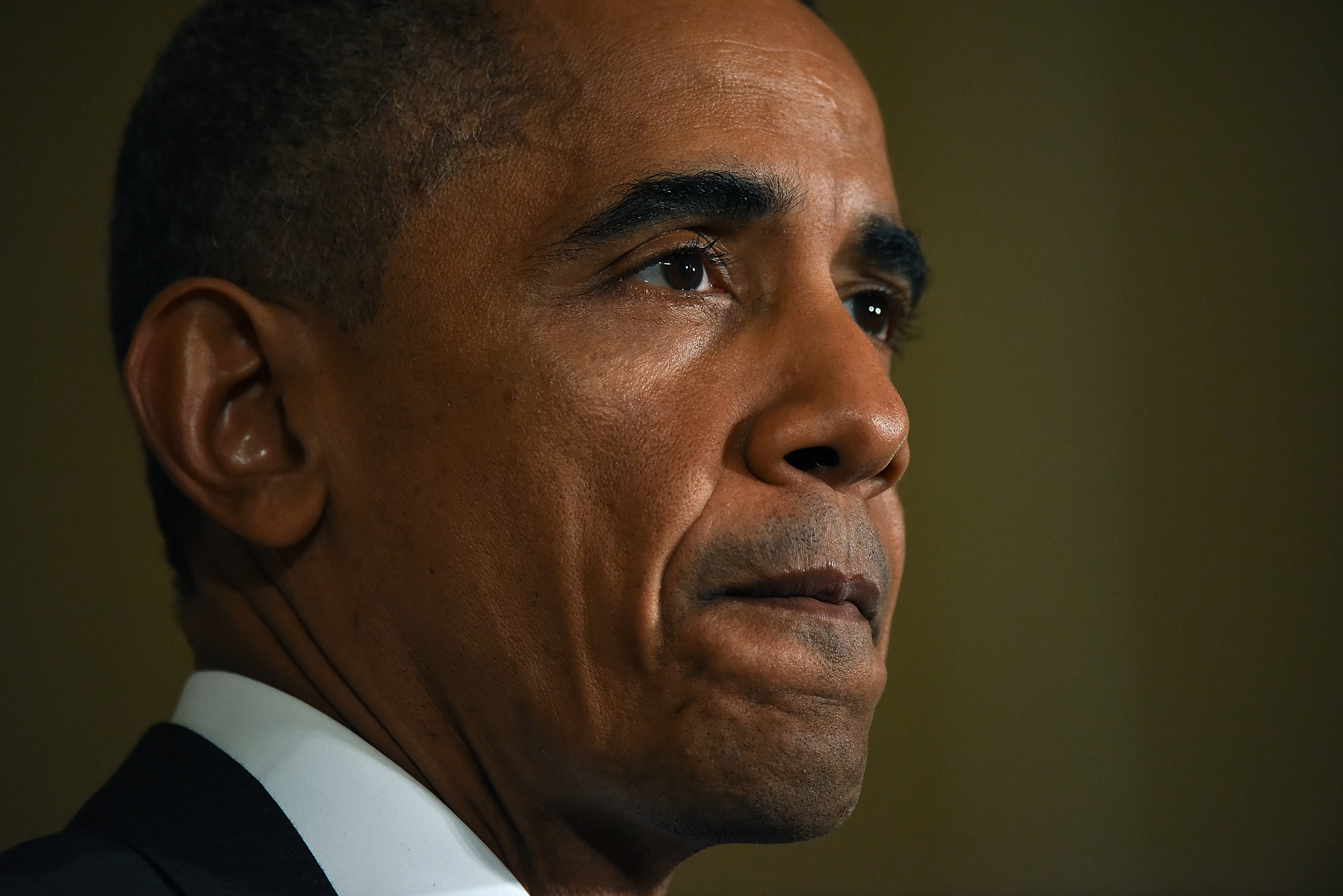
(Photo: U.S. President Barack Obama delivers remarks on the U.S. government’s response to the Ebola virus during an event in the East Room of the White House October 29, 2014 in Washington, DC. Obama praised efforts by members of the American medical community in the fight against Ebola during his remarks. By Win McNamee/Getty Images.)

The Gluten-Free Fad

This embed is invalid


Michael Specter tackles it:

While there are no scientific data to demonstrate that millions of people have become allergic or intolerant to gluten (or to other wheat proteins), there is convincing and repeated evidence that dietary self-diagnoses are almost always wrong, particularly when the diagnosis extends to most of society. We still feel more comfortable relying on anecdotes and intuition than on statistics or data.

Since the nineteen-sixties, for example, monosodium glutamate, or MSG, has been vilified.

Even now, it is common to see Chinese restaurants advertise their food as “MSG-free.” The symptoms that MSG is purported to cause—headaches and palpitations are among the most frequently cited—were initially described as “Chinese-restaurant syndrome” in a letter published, in 1968, in The New England Journal of Medicine. The Internet is filled with sites that name the “hidden” sources of MSG. Yet, after decades of study, there is no evidence that MSG causes those symptoms or any others. This should surprise no one, since there are no chemical differences between the naturally occurring glutamate ions in our bodies and those present in the MSG we eat. Nor is MSG simply an additive: there is MSG in tomatoes, Parmesan, potatoes, mushrooms, and many other foods.

Our abject fear of eating fat has long been among the more egregious examples of the lack of connection between nutritional facts and the powerful myths that govern our eating habits. For decades, low-fat diets have been recommended for weight loss and to prevent heart disease. Food companies have altered thousands of products so that they can be labelled as low in fat, but replacing those fats with sugars, salt, and refined carbohydrates makes the food even less healthy.

Always Tell Kids The Truth? Ctd

Dahlia Lithwick argues that it’s no longer possible to hide scary news from one’s children:

At a dinner party recently, pondering the tsunami of bad and worse news this summer, a group of parents I know wondered whether the world is just a much more terrible place than it used to be (ISIS, Ebola, Hannah Graham, Ray Rice, Ferguson, Ottawa) or whether our parents just did a better job of lying to us as kids (Watergate, the Challenger crash, the Easter Bunny, Iran-Contra). The consensus seemed to be that lots of awful stuff happened when we were children too, but access to information was limited and slow, and schools and parents managed crises in such a way as to shelter us from the gruesome details.

Those times are decidedly over.

… We are no longer the gatekeepers of our children’s nightmares, nor are their schools. They are now, instantly and irrevocably, as well-informed as their most connected classmate and neighbor. (Or they are that classmate/neighbor.) As we make decisions about how we are going to protect them from the dangerous world in which they reside, we should understand that we can’t manage the information they receive. Different people may feel differently about how much information you need to convey to a child about an ongoing crisis. But we no longer have the luxury of being the first responders when it comes to breaking down complicated and frightening ideas for our kids. By the time they get home from school it’s already too late. They already know more than we would have ever shared.

The Dish’s thread on lying to children is here.

Catching Catcalls On Camera, Ctd

Many readers are scratching their heads over this video:

Oh c’mon – street harassment? I watched the video, read the posts, and I don’t see what the fuss is all about.  Yes, it is cringe-worthy, especially where the guy walks along beside her for too long, but she is on the crowded streets of NYC.  I never felt any kind of actual fear for her, mainly because none of the comments were really all that threatening.  They appreciated her young beauty, and expressed it, so what’s the big deal?  OK, gee, she felt “uncomfortable”, but so what?  We have all kinds of things to feel uncomfortable about – that’s life in the 21st century.  Deal with it.

Now I’m of a certain age where I can say that I was in the more or less in the first wave of feminism.  I was young, blond and attractive, and all kinds of comments were made to me at school, at work, and while traveling.  They never really bothered me, and I’m certainly not psychologically scarred by it.  As women, being told one is pretty is the least of our problems. Yes, I know, it “objectifies” us, but oh, gee, so do lots of things.

I’m not going to contribute to Hollaback, no thank you. My feminist dollars are better spent at Planned Parenthood, or any of the host of other worthy organizations that support women’s health and well-being.

Another:

I’d love to see the full 10 hours of footage. If all they could get is a boiled down two minutes of mostly guys saying hello, good morning, god bless, it seems like the world is not quite as hostile as they hoped it would be. I wonder how many thousands of men she walked by in that 10 hours that said nothing, didn’t notice her at all.

Granted, that guy following her was creepy as hell, and a minute into it he should have been told to back the fuck off. But really, is all of this honestly sexual harassment? No one grabbed at her; no one physically touched her in any way. No one even said anything overtly sexual. Do we really want to make it a crime to say hello to a stranger on the street?

There are some people in this world who really relish being the victim, it gives them a sense of power. I think that’s what’s behind this video.

Another reader wants the creators to pan out:

To the producers of this video, maybe you can try their little social experiment in perceived unfairness by walking down a street in Bogota, Mogadishu, Baghdad, Kabul, Cape Town or a hundred other places that treat women with genuine, bone-crunching contempt without getting dragged into an alley and killed while people call you an infidel or Sharmuta [whore].  Would that alter your conception of “abuse” in any way?

Another sees the focus too narrow even here at home:

The video really is appalling, mostly because the woman seems largely unsurprised. Maybe it’s acting, but I fear this is really how it is for a woman walking by herself through the city. (I’m sending the video to my girlfriend, and I’m anxious to get her response.) But if you look at the shabby clothes the catcallers are wearing, it’s a pretty fair bet that most are not well-educated. So these guys probably aren’t checking in on feminist blogs every other day, or talking to feminist friends. Which means the feminists who blog or who rant at the independent coffee shop counter really aren’t getting their message out to the demographic that needs it most.

In short, most feminists preach to the choir: to other feminists and their friends, on blogs and on social media, within earshot of the educated straight guys who agree on an intellectual / moral level but feel the terrible weight of their own thought crimes when they see a woman in public they’re attracted to. What good comes of this?

I’ve been waiting for the web’s feminist luminaries to go beyond proving that they have it rough and begin talking about what they’re going to do about it. Isn’t that what a civil rights movement is supposed to do? (To their credit, the organization that made this video seem like they’re interested in real world results.)

Better yet, bring this message to inner city classrooms, public parks and community centers. With their vast supply of creative snark, feminists should be able to come up with some terrific billboards and TV ads that would be seen by the men who commit this kind of harassment. And if the feminists can convey this message without thoroughly shaming a male sexual impulses that are permanently, hopelessly hardwired into the brain, that would be aces. Because we’ve seen exactly how far feminism can go via essays typed on a MacBook Air while waiting for yoga class to begin – and it’s not far enough.

One more female reader sounds off:

Ouch. As a woman, Hollaback’s campaign makes me cringe. It’s so sad to see that in 40 years, feminism has gone from a radical protest movement addressing issues of importance to women in their role as half of the human race, like endless war and oppressive poverty, to a PC crusade by middle class women to make life less uncomfortably “lifey” for women as individuals.

None of the progress of the last half century would have been possible without the unqualified right to free speech, including advances in women’s rights. Free speech means free speech for everyone, including assholes and drunks, and for every kind of statement, including those an individual might disagree with or using words they might find offensive. There is no right to be shielded from unwanted communication, and frankly, life would be less rich if there were.

I can’t believe people are seriously suggesting regulating who can speak to whom in public, let alone calling it a “gateway crime” to chat someone up. I am in no way defending lewd or crass behavior, and have felt harassed myself on many occasions. However, a good chunk of the offenders shown in this video are merely saying hello in one form or another. There are regions and cultures in the US where it’s rude NOT to say hello to passersby, and neighborhoods where a compliment on a street corner is a perfectly normal way to flirt.  In my opinion, many of the interactions in this video don’t rise beyond that level.

Besides, it is simply a fact of life that men and women evolved differently, one as pursuers and one pursued. One result of millennia of conditioning is that in the mating game, guys are expected to make the first move and may end up without partners if they don’t.

What’s most depressing to me is that issues like this one, such as crusading for affirmative consent or against fat-shaming, highlight why the progressive left doesn’t resonate with more independents; taken to this extreme their agenda simply conflicts with our hard-won civil liberties, not to mention common sense and human nature.

Let’s be clear, Hollaback is quite seriously lobbying for public communication to be regulated, for the initiation of an unwanted conversation with a woman to be criminalized. We hear a lot about the right’s so-called “war on women”, but the left doesn’t recognize that proposals like this feel an awful lot like a “war on men” and leave a bad taste in the mouth for fair-minded people of all political stripes.

Getting The Real Ebola Crisis Under Control

ebola_cases_cumulative.0

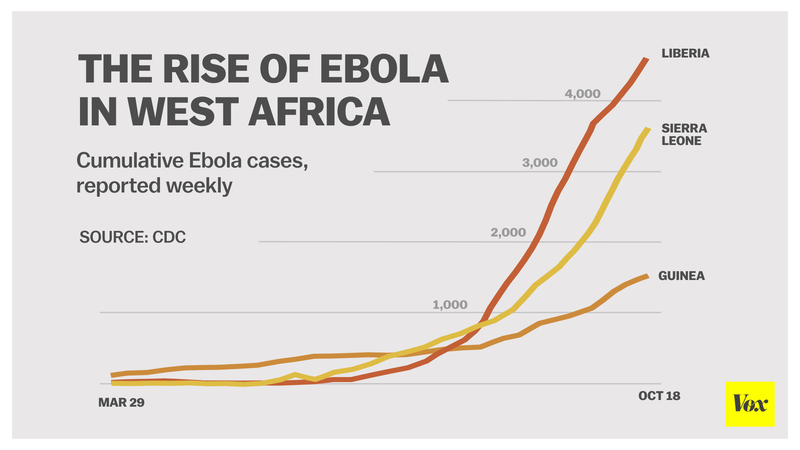
As the above chart illustrates, the epidemic remains a serious public health crisis in parts of West Africa. Nonetheless, Helen Epstein sees signs that the tide may be turning in Liberia, where “the number of new cases each week … is falling, not rising”:

In August, the streets of Monrovia were strewn with bodies and emergency Ebola clinics were turning away patients. Today, nearly half of the beds in those treatment units are empty. I’ve been here a week and have yet to see a single body in the street. Funeral directors say business is off by half. Of course, the situation remains very serious. More than two thousand have succumbed to the disease here since the outbreak began—along with thousands more in neighboring Sierra Leone and Guinea, according to the CDC—and Liberia faces looming economic and political crises. This fragile country urgently needs help—both for the well being of its own people, and for the safety of the rest of this interconnected world. But the epidemic is far from the cataclysmic disaster currently on display on American TV screens.

How did things get so bad in Liberia in the first place? Shikha Dalmia blames “a hopelessly dependent political class that stays in business by ignoring good governance and appealing to its Western benefactors”:

Unlike Nigeria, Liberia’s immediate reaction was not to marshal its domestic resources but to hold press conferences and appeal for international aid, points out Johannesburg-based Yale World Fellow Sisonke Msimang. Liberian President Ellen Johnson Sirleaf, a Nobel peace laureate, even penned an open letter to the “world” this week, plaintively crying that Ebola wasn’t a domestic problem but a global one that “governments to international organizations, financial institutions to NGOs, politicians to ordinary people in the street in every corner of the world” had a “duty” to combat through “emergency funds, medical supplies, or clinical capacity.” But the “world” has been supplying all of this and more to Liberia in spades. Indeed, Liberia is among the largest aid recipients on the continent, with about 75 percent of its budget supplied by aid agencies. It receives $139 per capita in loans and grants, according to World Bank figures, compared with Nigeria’s $11 per capita.

If Liberia has indeed reached a turning point, that’s likely in part because the extremely poor communities where the virus has spread most rapidly, and whose residents often mistrust the government and aid workers (recall August’s attack on an Ebola treatment center in Monrovia), are becoming more knowledgeable about the disease. Abby Haglage profiles a UNICEF initiative called Adolescents Leading an Intense Fight Against Ebola, or A-LIFE, which has put some very dedicated Liberian teenagers on the front line of the information war:

UNICEF’s group was formed in 2012, with the intention of teaching young girls how to protect themselves from sexual violence. The worsening of the Ebola epidemic forced them to teach the girls about a new enemy. They learned what the disease is, how people get it, what happens then. Most important, they learned what they could do to protect themselves. Learning that gave them something the rest of their community, still reeling from the violent government-imposed quarantine, did not have: knowledge. So they walked. From house to house, day by day, teaching the community what they had learned. Ebola is real. It is deadly. Don’t shake hands. Wash them. …

The impact, to [UNICEF’s representative in Liberia Sheldon] Yett, is one only these girls have the authority to make. “They are far more powerful as spokespeople and educators than a public-health official could ever hope to be because they come from that community, they’re known by that community,” he says. “People understand where these girls are coming from, and people believe their messages.”

Yet even if things are looking up for Liberia, Keating cautions, there is still a ton of work to be done to get the regional outbreak under control:

All the same, we’re far from out of the woods in the fight against the disease that has already killed in the neighborhood of 5,000 people around the world. There have been no similar reports of drops in the other countries affected by Ebola. In fact, the number of cases has risen sharply in Western Sierra Leone this month. The disease also may have spread to yet another country—82 people in Mali who came in contact with a toddler who died of Ebola last week are currently being monitored for signs of the disease. The collateral damage from the outbreak—including the impact on the economies and political institutions of some of the world’s most fragile states and the setback in the fight against diseases like malaria—will continue to mount.

Update from a reader:

I work at a large hospital associated with a famous university and medical school. Both hospital and the university are routinely listed toward the top of all rankings of such institutions. My hospital has carefully laid out practice and policy set up for handling Ebola patients. Both my hospital and the university have long traditions of public service, and are not-for-profit. Both entities are renowned for commitments to humanity, education, research, and the elevation of the impoverished. Justice, beneficence, and respect for persons, as it were.

And both have explicitly forbidden any medical staff from traveling to West Africa to participate in Ebola treatment, public health, and eradication efforts. Nevermind quarantines and pay for time off. It is forbidden even if we have the time and don’t want the money (Though, I’m a researcher and not a clinician, so I’d have little to offer on the ground on site in West Africa.).

We talk about the need to prevent this epidemic from growing by addressing the situation at the heart of the outbreak. And it seems that people with the currently active strain of Ebola who are treated from the onset of symptoms with competent and comprehensive medicine are very likely to survive. Yet the death rate in Africa has been as high as 70% in places, because access to even basic medical care, must less excellent care as we have here (access to that care being a conversation for another day), is deplorably lacking. We will not contain this epidemic, and Ebola will become a daily fact of life in many places, unless more resources are brought immediately to bear at the source of the outbreak.

And yet, our esteemed institutions of medicine and science are issuing edicts that thwart any discussion of that possibility, regardless of our federal policies.

A Rocket Launch Gone Wrong

On Tuesday, the unmanned Antares rocket exploded seconds after launching:

Ioffe highlights Russia’s reaction:

Russia Today reported that the Antares rocket was “American-Ukrainian,” and other outlets ran with it. The spectacular failure, wroteone Russian tabloid, “is the work of Ukrainian and American specialists.” The rocket, based loosely on the Soviet Zenit rocket, was designed by the originally Soviet, now Ukrainian, Yuzhnoe Design Bureau, according to various Russian news sites. … It would be perfectif only the Russians were right about the Antares’ origins. But it turns out that the rocket’s engine, like the engines of other privately-made American rockets, was made in … Russia.

Justin Bachman provides more background on the rocket design:

The Soviet-era AJ-26 engine was designed in the 1960s as part of Russia’s space race with the U.S., originally envisioned as a way to propel cosmonauts to the moon. The engines are “refurbished and Americanized,” Frank Culbertson, the Orbital Sciences executive in charge of the NASA program, said Tuesday night in a news conference, defending the AJ-26 as “very robust and rugged” and with a successful track record.

At least one person in the industry disagrees.

Elon Musk, the founder of rival launch company SpaceX, ridiculed the Antares AJ-26 engine in an interview with Wiredmagazine two years ago. Musk said most commercial space companies seek “to optimize their ass-covering” by avoiding risk and employing antiquated but proven technologies. SpaceX builds an “octaweb” of nine of its own Merlin engines for its Falcon 9 rocket. Here is Musk’s riff on the AJ-26:

“One of our competitors, Orbital Sciences, has a contract to resupply the International Space Station, and their rocket honestly sounds like the punch line to a joke. It uses Russian rocket engines that were made in the ’60s. I don’t mean their design is from the ’60s—I mean they start with engines that were literally made in the ’60s and, like, packed away in Siberia somewhere.”

Fox News interviewed professor John Logsdon of George Washington University’s Space Policy Institute. His take on the rocket:

“When Orbital Sciences decided to develop what turned out to be the Antares rocket almost ten years ago, it examined the supply of rocket engines from around the world and decided that the former NK-33 engines, which another U.S. company had already purchased from Russia, gave the best mix of cost and performance,” he explained, in an email. “One can criticize that choice in retrospect, but it was a commercial decision, not symptomatic of anything except the U.S. not investing for many years in new propulsion capabilities.”

Michael Lemonick expects “things will get dicier in 2017 … when two private companies, SpaceX and Boeing, begin carrying astronauts to the I.S.S.”:

[S]pace capsules and shuttles have never been more than experimental. There were fifteen Apollo missions, and the Space Shuttles flew just a hundred and thirty-five times—far too few to work out all the kinks. In this way, the Apollo 1 fire that killed three astronauts on the ground in 1967, and the Challenger and Columbia disasters in 1986 and 2003, were, in a sense, inevitable. Problems were going to arise—the tragedy was one of timing, not of chance.

Similarly, no matter how carefully they focus on safety, Boeing and SpaceX will be operating experimental spacecraft. So will Virgin Galactic, if and when it begins flying tourists into space. Failures won’t necessarily happen at a greater rate than they have on government spacecraft; private space companies have at least as much incentive as NASA to keep mishaps at a minimum, but given the scope of vision of some of what’s been proposed, both by NASA and by private companies, there may be a point where great risk becomes impossible to avoid.