The Web’s Heart Of Darkness

Last summer, Andrew O’Hagan undertook the peculiar experiment of borrowing “a dead young man’s name and see[ing] how far I could go in animating a fake life for him.” In the resulting meditation on identity and “the ghostliness of the internet and the way we live with it,” O’Hagan describes how he plunged his fictionalized “Ronald Pinn” into the dark web, “where one can be anybody one wants to be”:

There were areas I wouldn’t allow him to go into – porn, for instance – but the Ronnie who existed last summer was alive both to drugs and to the idea of weaponry.

It’s one of the contradictions of the dark web, that its love of throwing off constraints doesn’t always sit well with its live-and-let-live philosophy. There are people in those illicit marketplaces who sell ‘suicide tablets’ and bomb-making kits. ‘Crowd-sourced hitmen’ were on offer beside assault weapons, bullets and grenades. One of the odd things I discovered during my time with cyber-purists – and Ronnie found it too – was how right-wing they are at the heart of their revolutionary programmes. The internet is libertarian in spirit, as well as cultish, paranoid, rabble-rousing and demagogic, given to emptying other people’s trash cans while hiding their own, devoted not to persuasion but to trolling, obsessed with making a religion of democracy while broadly mistrusting people. Far down in the dark web, there exists an anti-authoritarian madness, a love of disorder as long as one’s own possessions aren’t threatened. The peaceniks come holding grenades. The Manson Family would feel at home.

When Ronnie Pinn went to see this world he found it welcoming and vile. He saw Uzis and assault rifles, bomb-making kits, grenades, machetes and pistols. As a man with cyber-currency, he was welcome in every room and was never checked. He was anybody as well as nobody. He could have been a teenager, a warrior, a terrorist or a psychopath. So long as he had currency he was okay.

Memoirs Of A Compulsive Moviegoer

In his new memoir Silver Screen Fiend, Patton Oswalt recounts his multi-year “addiction to film.” Elbert Ventura appreciates that the comedian is “unsparing in evoking the condition of on-the-spectrum obsessiveness”:

Oswalt has a good angle—a portrait of the artist as a young film buff—and the book underscores a point often lost in talking about movie love: the sheer work of being a real cinephile. Oswalt’s immersion in movies really did deliver a thorough education: He trusted authorities like [New Beverly Cinema proprieter Sherman] Torgan and [Cult Movies author Danny] Peary and saw everything they suggested; he went to rep screenings instead of settling for video; he sought out hard-to-find entries in forgotten directors’ filmographies. At once confessional and curatorial, the book portrays Oswalt as not just a celluloid sybarite, but someone dead serious about the art.

Linda Holmes remarks that “one of the best things about Silver Screen Fiend is that Oswalt doesn’t always seem very likable in it”:

The easiest way to enjoy a memoir, at times, is when it makes a famous person seem like an awesome best friend you’d love to have. Patton Oswalt, on the other hand, in his own stories, can seem not just prickly, but full of explanations of things he’s learned to rise above:

hack comedy by people who are successful but untalented, inferior art, boring people, uncool venues (“giggle-shack” is his most devastating putdown). The book is not an argument for his personable nature, as books by famous people often are. …

It is, however, an interestingly aggressive, restless attempt – sometimes successful and sometimes less so – to get to the bottom of his own fascination with dark theaters and old movies, and how it dovetailed with his developing comedy career. The farther he gets from the theaters, and from the attempt to convey their grandeur and the grandeur of film itself, the better the book is.

David Brusie finds that the book “has its faults”:

The book’s structure isn’t always clear, which sometimes makes for an unwieldy read, and a 33-page appendix listing every movie he saw over four years, while interesting at a glance, ultimately feels like padding. But Oswalt’s ample writing talents push the narrative past these shortcomings (a section with no punctuation depicting Oswalt’s thoughts while bombing onstage is particularly vivid). His decision to write almost entirely in the present tense makes the memoir feel immediate and vital. …

The book’s resolution, which includes the birth of Oswalt’s daughter, makes clear that the story is a kind of fable about the dangers of immersion in any cultural interest. By the end, when Oswalt stumbles out of the dark and squints in the light of his new life, it’s enough to make any reader seek out the many films that made him hibernate in the first place.

In a recent interview about the book, Oswalt elaborated on one of the events that finally led him out of addiction – the release of Star Wars Episode I: Phantom Menace:

It’s not that it killed the addiction; it made me look at the addiction from such a different angle that it didn’t hold any power over me anymore. I’ll put it this way — I was the worst kind of movie fan. I’m the kind of guy who saw 6 movies a day, didn’t write any movies, didn’t make any movies, but then could be armchair quarterbacking on a movie that I had no hand in making.

Yes, I thought [Phantom Menace] was a failure, but the dude took a shot at it. It hit me that I was spending days and days and nights and nights with my friends, arguing back and forth about this film but this guy made a movie. Good or bad, he made a movie. He’s on a different relam than you.

Is The “Creative Class” Dying?

Scott Timberg, an arts reporter for the LA Times who was laid off in 2008, has now written a book, Culture Crash, investigating “the killing of the creative class.” He names anti-intellectualism, celebrity culture, and the decline of print as culprits:

Probably the boldest claim that Timberg advances is his indictment of postmodernism as a destructive attack on culture with broadly deleterious consequences. This attack has emanated from the academy, not our profession—most journalists wouldn’t know postmodernism from a doorpost—but Timberg argues that we are all its victims. He offers a whirlwind tour of various critical schools—structuralism, “deconstruction,” feminist criticism, cultural studies—and says that they have leached the joy out of reading and other cultural pursuits.

Even the avowedly populist Pauline Kael comes in for some bashing, for allegedly “championing the kind of work that did not really need a critic’s advocacy or interpretation.” In fact, Timberg’s crankiness is reminiscent of the reaction by earlier critics of modernism, who also lamented that the cultural world as they knew it was coming to an end. Thanks largely to postmodernism, Timberg writes, we are graduating fewer (novel-reading, theatergoing) humanities majors. One could argue, of course, that practical considerations—including a spate of recessions and the sexiness of high-paying Wall Street, consulting, and tech jobs—have been more decisive in this decline.

Evan Kindley finds that “there is, ultimately, an unnerving sense of entitlement to Culture Crash, well-intentioned as it is, and that entitlement is largely generational”:

The real sting in the tail of Timberg’s polemic is not, as he would have us believe, that things are worse for creative people than they’ve ever been before. It’s that things are considerably worse than they were 20 years ago.

Throughout Culture Crash, the 1990s function as a go-to belle époque: “the peak years of journalistic employment, especially for newspapers,” the height of architectural innovation, the heyday of indie rock. His choice of interview subjects (David Lowery, Dean Wareham, David Byrne) betrays an obvious bias toward aging Gen X icons. Timberg makes clear that he’s “not particularly interested in James Cameron … or Kanye West: Celebrity and corporate entertainment—good and bad—hardly needs defenders.” Yet he’s not very interested in the genuinely marginal, obscure, or underprivileged, either—or in anyone under 40: Timberg’s interviews are all with white men who did extraordinarily well in the 1990s (or occasionally the 1980s or early 2000s), and are doing worse (but still reasonably OK) now.

One can hardly blame folks like Lowery or Byrne for complaining about the relative decline of their industries: They have firsthand experience of an age d’or to share and probably (even correctly) view themselves as spokesmen for the many suffering artists who don’t have a comparable platform. But Timberg certainly could have tried harder to talk to a wider swath of the creative class beyond his personal social circle and those he comes into contact with on his promotional rounds.

Never Forget The Muslim Victims Of Islamic Terrorism

Wednesday’s attack on Charlie Hebdo has already inspired a backlash against France’s Muslim community, with several incidents targeting mosques, businesses, and even individuals:

Three grenades hit a mosque in Le Mans, in the early hours of Thursday while in Aude, southern France, two gunshots were fired at an empty prayer room. A Muslim family in their car in Vaucluse came briefly under fire but escaped unharmed, and a mosque in Poitiers was daubed with graffitti saying “Death to Arabs”. In Villefranche-sur-Saône, an explosion blew out the windows of a kebab shop next door to the town mosque. …

Nourredine, a taxi driver, said the cold-blooded attack on Wednesday at Charlie Hebdo had left him very saddened and angry. It had reminded him of his home country, Algeria, in the 60s and 70s, he said, where “journalists were often the first to be targeted” by extremists. “But you know, we will become victims of this atrocity,” he said. “There is real stigmatisation in France. I love this country, really I do, but this stigmatisation, this amalgamation, this tarring all Muslims with the same brush – all it does is feed the extremists. It helps the Front National, the people who hate and fear Islam.”

This tweet says it better than anything else:

https://twitter.com/misshibhop/statuses/553603082425475072

H.A. Hellyer is dismayed that French Muslims are being called upon to condemn an act that, in the long run, stands to hurt them as much as anyone else:

While the attackers may claim to have killed in the name of the Prophet’s honor, they killed someone with the Prophet’s name in the process: a French policeman called Ahmed Merabet.

As a Frenchman, he was targeted by extremists; as a Muslim, his community is targeted by extremists worldwide; and as a French Muslim, his local community stands at risk of an anti-Muslim backlash. Muslim terrorists kill far more Muslims than non-Muslims, and far more Muslims than non-Muslims are fighting these extremists. The day of the Charlie Hebdo attack, several dozen Muslims were killed by radical extremists in Yemen. Many others die every day in Iraq and Syria. …

The disgraceful attacks on Charlie Hebdo may have further consequences, such as entrenching the false notion that Muslims and non-Muslims simply cannot coexist, or that civil liberties need to be rethought, with yet more powers given to the state, diminishing the commitment to human rights. That is merely giving the attackers a further victory, rather than honoring the loss of life that took place.

Merabet is being held up as a hero on Twitter with the hashtag #JeSuisAhmed:

“The story of Merabet’s confrontation with the Paris terrorists,” Jim Edwards writes, ” is turning out to be one of the most poignant in the whole affair”:

And it’s proof, if further proof were needed, that Muslims are much more frequently the victims of Islamic terrorism than Westerners are. According to the Global Terrorism Index, 80% of all the deaths from terrorism in 2013 were in Muslim-majority countries Iraq, Afghanistan, Pakistan, Nigeria, and Syria. Since 2000, only 5% of all deaths from terrorism have been in developed countries — although they have been among the deadliest. …

Merabet is the officer seen in the heartbreaking video of the shooters’ attack on the Charlie Hebdo office, as seen through a mobile phone from across the street. The worst part of the video — aside from the moment in which the gunmen finish him off with a shot to the head — is where Merabet, lying injured on the pavement, tries to raise his arms in surrender. He is clearly no threat to the gunmen. And they kill him anyway.

This is why, in John Cassidy’s opinion, the “clash of civilizations” narrative that some are trying to superimpose on this tragedy misses the point entirely:

But to interpret things in such black-and-white terms is to distort reality. Although Islam largely missed out on the Reformation and the Enlightenment, a point frequently made by its critics, it is far from a monolithic religion. And many ordinary Muslims, rather than being on the side of the jihadis, are taking up arms against them, and sometimes paying with their lives. In Iraq, the Iraqi, Kurdish, and Iranian soldiers battling ISIS are mostly Muslims. In Pakistan and Afghanistan, the government forces fighting jihadis are also almost all Muslims.

On top of this, most of the victims of jihadi atrocities are Muslims. In Iraq last month, more than eleven hundred people were killed in acts of terrorism and violence, including nearly seven hundred civilians. It’s fair to assume that almost all of them belonged to the Islamic faith.

A Computerized Card Shark

It’s a reality:

Two-player limit Texas hold’em poker has finally been solved, according to a study published in Science today. Scientists have designed a computer program, named Cepheus, with a strategy for the game that is so close to perfect that statistical analysis shows it can’t be defeated by a human poker player, even if that player competed against the computer for an entire lifetime. This means that no matter how the game starts out, the computer will win or break even in the long run — making it essentially unbeatable.

Jason Koebler provides more details:

[Co-creator Neil] Birch said that if he, someone who is very bad at poker, were to play against a professional poker player, the professional poker player could possibly end up winning more money than if Birch were to play against Cepheus.

That’s because human poker players are often trying to maximize on the mistakes of their opponents in doing so, that human player can end up winning big with larger bets, but could also miscalculate and end up losing. Cepheus, meanwhile, is just trying to make the mathematically logical play, every single hand, regardless of opponent and is unlikely to overly penalize other players for their mistakes with large bets. If two Cepheus machines play, the winner will be whoever ends up getting the best cards, over the time period the two play.

The Economist points out that Heads-Up Limit Hold’Em (HULHE) was picked “because, in poker terms, it is about as simple as it gets”

Only two can play, and betting is heavily restricted. This means only 1.38×10¹³ (13.8 trillion) different circumstances can arise within it. … Whether computers will ever be able to solve other forms of poker remains doubtful. Merely removing the betting restrictions on HULHE, for instance, boosts the range of possibilities to 6.38×10161, a figure so mind-bogglingly big that it far exceeds the number of subatomic particles in the observable universe. No amount of improvement in computer hardware will ever make such a problem tractable. The only hope is an enormous, and unlikely, conceptual breakthrough in how to attack the question.

Philip Ball reminds us that a “few other popular games have been solved before”:

In particular, in 2007 a team from the same computer-science department at Alberta — including Neil Burch, a co-author of the latest study — cracked draughts, also known as checkers.

But poker is harder to solve than draughts. Chess and draughts are examples of perfect-information games, in which players have complete knowledge of all past events and of the present situation in a game. In poker, in contrast, there are some things a player does not know: most crucially, which cards the other player has been dealt. The class of games with imperfect information is especially interesting to economists and game theorists, because it includes practical problems such as finding optimal strategies for auctions and negotiations.

Best Friends, Forever

overall-how-satisfied-are-you-with-your-life-nowadays-unmarried-married_dishedit

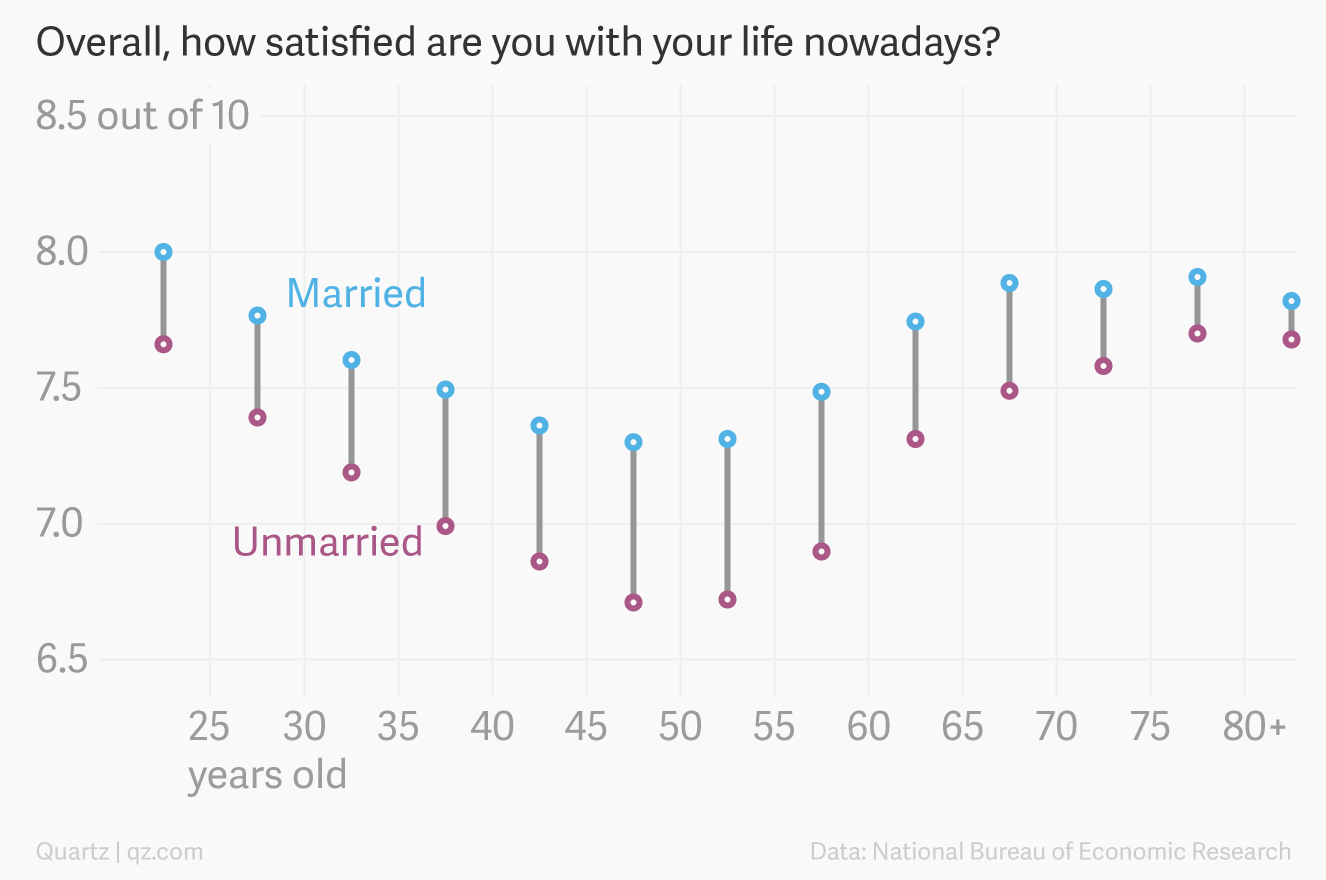
Hanna Kozlowska passes along some new research indicating that marriage-based happiness has some serious staying power:

Analyzing three different databases, (two British population surveys and the Gallup World Poll), [Canadian economists Shawn Grover and John F. Helliwell] found that the reported life satisfaction of married and single people follows a similar pattern – high in their youth, dropping in their 40s and 50s, and rising again towards the end of their lives. But, even when controlled for happiness levels before tying the knot, married people consistently report that they are happier than those who are unmarried.

What’s more, the dip in happiness during the middle of their lives is less pronounced, indicating that having a spouse moderates the effects of the mid-life crisis that everyone goes through.

Christopher Ingraham adds an important qualifier:

It’s not simply enough to be married — it has to be a good marriage.

The study finds that the happiness benefits of marriage are strongest among spouses who consider each other their best friends, and that this “best friend effect” is substantial. “The well-being benefits of marriage are on average about twice as large for those (about half of the sample) whose spouse is also their best friend,” the authors conclude.

The paper also finds good evidence to support the notion that the effect of marriage on well-being is causal. After controlling for individuals’ self-reported happiness before getting married, the authors found that those who get married end up happier than those who stay single.

Leonhardt wants liberals who downplay the importance of marriage to face facts:

In recent years, there have been more than a few policy debates in which liberals have had this greater claim on the evidence — climate change, tax increases on the affluent, Federal Reserve policy or health care. As journalists, we should be willing to say so. We should also be willing to say when we think liberals don’t have a claim on the evidence — such as when they argue that education is overrated (but still send their own children to expensive colleges) or when they argue that marriage isn’t very important.

Where Death For Blasphemy Is The Norm

The staff of Charlie Hebdo were not the only people killed on Wednesday for blaspheming Islam. In Pakistan, 52-year-old Aabid Mehmood, a mentally disturbed man who had served two years in jail for claiming he was a prophet, was kidnapped and murdered – a sadly common occurrence in a country where blasphemy is a capital crime:

Mehmood was spared a death sentence, but he spent more than two years in prison. He was released several months ago because of his medical condition, said Muhammad Ayub, a local police official. On Wednesday, according to Ayub, unknown gunmen took Mehmood from his home and shot him in the head and chest before dumping his body. …

Thirty-eight people in Pakistan are serving life sentences or are on death row after being accused of blasphemy, according to Knox Thames, director of policy and research at the U.S. Commission on International Religious Freedom. Five of them were convicted in 2014, the same year that a high court upheld the death sentence for a Christian woman accused of defaming Muhammad during a 2010 argument with co-workers. For many blasphemy suspects, however, the real death sentence all too often comes at the hands of enraged mobs.

And just today, a liberal blogger in Saudi Arabia was publicly flogged for “insulting Islam”:

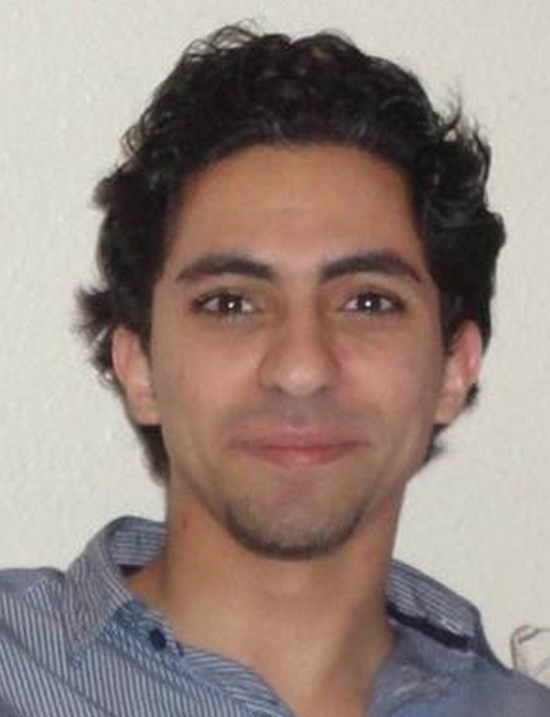
Screen Shot 2015-01-10 at 1.32.07 AM[Raif] Badawi, 30, was arrested in June 2012 and charged with offenses ranging from cyber crime to disobeying his father and apostasy, or abandoning his faith. He was sentenced to 10 years in prison, a fine of 1 million Saudi riyals ($266,666) and 1,000 lashes last year after prosecutors challenged an earlier sentence of seven years and 600 lashes as being too lenient. Witnesses said that Badawi was flogged after the weekly Friday prayers near Al-Jafali mosque as a crowd of worshipers looked on.

Badawi got off easy, in the sense that Saudi Arabia also considers apostasy a capital crime. So as bad as France’s blasphemy laws are, they’re nothing compared to many in the Muslim world. In the search for some constructive response to the Charlie massacre, Tomasky suggests we focus our ire on the latter laws:

[S]urely at least part of the reason that terrorists think it’s okay to kill people who blaspheme the Prophet is that too many Arab or Muslim states say it’s okay. It would be nice to see a concerted international effort to change these laws grow out of this week’s calamity.

At least Western governments like Ireland and Canada are getting that message:

Blasphemy laws are harshest and most common in the Muslim world, but aren’t exclusive to it. In the wake of Pussy Riot’s church performance, Russia’s parliament passed a new law mandating jail terms for insults to religion. Nearly a quarter of the world’s countries have blasphemy laws on their books, according to Pew, and one out of 10 bans apostasy. The Charlie Hebdo killings have already prompted some Western governments, notably Ireland and Canada, to announce that they will reconsider the blasphemy laws on their books. But in much of the world, governments, not terrorists, will continue to be the biggest threat to freedom of and from religion.

(Image of Badawi via a GlobalPost tweet)

Meanwhile, In Nigeria …

Over the past few days, Boko Haram has massacred hundreds of people in what Amnesty International is calling the deadliest attack in the jihadist group’s history:

Mike Omeri, the government spokesman on the insurgency, said fighting continued Friday for Baga, a town on the border with Chad where insurgents seized a key military base on Jan. 3 and attacked again on Wednesday. “Security forces have responded rapidly, and have deployed significant military assets and conducted airstrikes against militant targets,” Omeri said in a statement. District head Baba Abba Hassan said most victims are children, women and elderly people who could not run fast enough when insurgents drove into Baga, firing rocket-propelled grenades and assault rifles on town residents. … An Amnesty International statement said there are reports the town was razed and as many as 2,000 people killed.

Emphasis added. Aryn Baker provides some background:

The offensive started on Jan. 3 with a daring raid on a multinational military base near Baga that had been established to combat crime in the lawless border region where Nigeria, Niger, Chad and Cameroon meet. It has since been repurposed to address the growing regional threat of Boko Haram, a militant Islamist group that got its start in northeastern Nigeria in 2002 and has used kidnapping—most notably of more than 200 schoolgirls last year—as an effective tactic. The base fell to the militants early Sunday morning, Jan 4, after several hours of intense fighting.

The second assault, which started in Baga itself on Jan. 6, appears to be an attempt by the rebels to assert their authority in an area of divided loyalties, according to Roddy Barclay, senior Africa analyst at Control Risks, a political risk consultancy based in London. “Boko Haram has frequently attacked communities perceived to support the government,” he says. “The use of violence is designed to drive community fear and compliance in order to further Boko Haram’s agenda.”

Jessica Schulberg adds that Boko Haram’s last headline-grabbing atrocity remains unresolved:

Meanwhile, the more than 200 Nigerian girls who were abducted by Boko Haram last year are approaching their ninth month of captivity. The U.S. has contributed hostage negotiators, surveillance drones, and intelligence analysts to the search. In May, Robert Jackson, a State Department specialist on Africa told the Senate Foreign Relations subcommittee, “Resolving this crisis is now one of the highest priorities of the US government.”

Terrence McCoy is at a loss for what to do about this bloodthirsty insurgency:

It’s hard to find contemporary precedent for the delight Boko Haram takes in killing. Even the Islamic State, which has killed thousands and purposely targets minorities, doesn’t seem to be as wanton in its acts of carnage. It appears everyone — Muslim, Christian, Cameroonian, Nigerian — is a target for Boko Haram. … Is there any stopping it? For the time being, it appears not. The administration of Nigerian President Jonathan Goodluck and his military, beset by corruption and ill-equipped, have been unable to match both Boko Haram’s firepower, discipline and fundraising. And now, with Boko Haram’s campaign to control northeast Nigeria complete, analysts said its territorial ambitions have outgrown Nigeria’s porous borders.

A Poem For Friday

5289569464_ea8bfdd2b8_b

Dish poetry editor Alice Quinn – giving us a brief respite from all the mayhem in France right now – builds on this poem and this one from last weekend:

Our last choice (so far!) from the Irish anthology, Lifelines: New and Collected, Letters from Famous People About Their Favourite Poem, is Elizabeth Bishop’s poem “Manners,” chosen by contemporary Irish poet Vona Groarke, who wrote, “It records an age and a state of mind entirely without cynicism: a secure, small world in which no-one can lose his way. The child-like speaking voice is brilliantly achieved with rudimentary, sing-song rhymes which accommodate the jolly generosity and good faith of the child and her grandfather….

Hovering at the edge of its simplicity is something much darker, suggested by the obscured faces of the passengers in the cars: a future in which the values of the child and her grandfather will be as outmoded as their wagon seat; an impersonal, technological world which will have no place for the gentle intimacy of manners. The poem marks the belated transition from the nineteenth to the twentieth centuries, and from innocence to painful experience. Its success lies, I think, in doing so without the slightest trace of either rhetoric or sentiment.”

“Manners” by Elizabeth Bishop (1911-1979):

For a Child of 1918

My grandfather said to me
as we sat on the wagon seat,
‘Be sure to remember to always
speak to everyone you meet.’

We met a stranger on foot.
My grandfather’s whip tapped his hat.
‘Good day, sir. Good day. A fine day.’
And I said it and bowed where I sat.

Then we overtook a boy we knew
with his big pet crow on his shoulder.
‘Always offer everyone a ride;
don’t forget that when you get older,’

my grandfather said. So Willy
climbed up with us, but the crow
gave a ‘Caw!’ and flew off. I was worried.
How would he know where to go?

But he flew a little way at a time
from fence post to fence post, ahead;
and when Willy whistled he answered.
‘A fine bird,’ my grandfather said,

‘and he’s well brought up. See, he answers
nicely when he’s spoken to.
Man or beast, that’s good manners.
Be sure that you both always do.’

When automobiles went by,
the dust hid the people’s faces,
but we shouted ‘Good day! Good day!
Fine day!’ at the top of our voices.

When we came to Hustler Hill,
he said that the mare was tired,
so we all got down and walked,
as our good manners required.

(From Poems by Elizabeth Bishop © 2011 by the Alice H. Methfessel Trust. Publisher’s Note and compilation © 2011 by Farrar, Straus and Giroux. Reprinted by permission of the publisher. Photo by David Prasad)

Nous Sommes Charlie, But Do We Really Want To Be? Ctd

https://twitter.com/RaniaKhalek/statuses/553261940223778818

Update from a reader on the above image:

That cartoon looks bad, but if you understand the French, the meaning seems to me to be actually anti-racist. “La GPA” is “la gestation pour autrui,” or in English “surrogate motherhood.”  The point of the cartoon is that when wealthy white couples pay poor women of color to be their surrogates, they are exploiting them. The point is somewhat bluntly and crudely made, but not at all offensive to my sensibilities. Others may differ, I suppose.

Jordan Weissmann urges us not to be afraid to criticize Charlie Hebdo‘s over-the-top (and often lame) humor even as we stand in solidarity with the victims of Wednesday’s terror attack:

So what should we do? We have to condemn obvious racism as loudly as we defend the right to engage in it. We have to point out when an “edgy” cartoon is just a crappy Islamophobic jab. We shouldn’t pretend that every magazine cover with a picture of Mohammed is a second coming of The Satanic Verses.

Making those distinctions isn’t going to placate the sorts of militants who are already apt to tote a machine gun into a magazine office. But it is a way to show good faith to the rest of a marginalized community, to show that free speech isn’t just about mocking their religion. It’s hard to talk about these things today, when so many families, a country, and a profession are rightfully in mourning. But it’s also necessary.

In Arthur Chu’s viewCharlie often violated satire’s unspoken rule to “punch up, not down”:

I mean, Muslims in France right now aren’t doing so great. The scars of the riots nine years ago are still fresh for many people, Muslims make up 60 to 70 percent of the prison population despite being less than 20 percent of the population overall, and France’s law against “religious symbols in public spaces” is specifically enforced to target Muslim women who choose to wear hijab—ironic considering we’re now touting Charlie Hebdo as a symbol of France’s staunch commitment to civil liberties.

Muslims in France are clearly worse off overall than, say, Jean Sarkozy (the son of former president Nicholas Sarkozy) and his wife Jessica Sebaoun-Darty, but Charlie Hebdo saw fit to apologize for an anti-Semitic caricature of Ms. Sebaoun-Darty and fire longtime cartoonist Siné over the incident while staunchly standing fast on their right to troll Muslims by showing Muhammad naked and bending over—which tells you something about the brand of satire they practice and, when push comes to shove, that they’d rather be aiming downward than upward.

The firing of Siné indeed showed a shameful double standard. Jonathan Laurence’s concern is that the chorus of “je suis Charlie” will play into the hands of the far right and normalize nastiness toward Muslims:

When the shock and sadness recede, it will become apparent that despite hashtags to the contrary, not all French “are Charlie Hebdo.” Numerous Catholic and Muslim groups offended by their cartoonists regularly filed lawsuits for incitement of racial or religious hatred against the newspaper—including after they republished the Danish prophet cartoons. Despite the understandable temptation to enter into a clear-cut opposition of “us versus them,” we can only hope that other political leaders will emerge to urge caution and respect while rejecting the murderers with every fiber of their being. It would be an unfortunate irony, and a distortion of these satirists’ legacy, if “politically incorrect” became the new politically correct.

Dreher asks whether Americans would be so quick to say “je suis” if the victims were from an organization we were more familiar with:

I can’t speak for French sensibilities, obviously, but here in America, it’s easy for us on both the Left and the Right to join the Je suis Charlie mob, because it costs us exactly nothing. Nobody here knows what Charlie Hebdo stands for; all we know is that its staff were the victims of Islamist mass murder, of the sort with which we are all familiar. We know that this murder strikes at one of the basic freedoms we take for granted: freedom of speech, and freedom of the press. Feelings of solidarity with those murdered souls are natural, and even laudable.

But what makes it kitschy is that we love thinking of ourselves standing in solidarity with the brave journalists against the Islamist killers. When the principle of standing up for free speech might cost us something far, far less than our lives, most of us would fold. You didn’t see liberals wearing “I Am Brendan Eich” slogans; many on the Left think he got what he deserved, because blasphemers like him don’t deserve a place in public life. Nor did you see conservatives brandishing “I Am Brendan Eich” slogans, because they feared they might be next.

Hear hear. Beutler, for his part, doesn’t think we need to praise Charlie in order to stand against terrorism:

The massacre in Paris has awakened a liberal tendency to valorize all objects of illiberal enmity. If an Islamist kills a westerner for a particular blasphemy, then the blasphemy itself must be embraced. We saw something similar just last month when countless Americans, rightly aggrieved by the extortion of a U.S.-based movie company, became determined to find reason to praise a satirical film they would’ve otherwise panned. This is clearly not always the correct reaction to terrorism or extortion. Here, liberals can learn a lesson from Second Amendment absolutists who nevertheless condemn open-carry demonstrations in fast food restaurants.

Likewise, Drum objects to the Dish’s framing of decisions by the WaPo and other news outlets not to republish Charlie’s cartoons as “capitulations”:

Anyone who wishes to publish offensive cartoons should be free to do so. Likewise, anyone who wants to reprint the Charlie Hebdo cartoons as a demonstration of solidarity is free to do so. I hardly need to belabor the fact that there are excellent arguments in favor of doing this as a way of showing that we won’t allow terrorists to intimidate us. But that works in the other direction too. If you normally wouldn’t publish cartoons like these because you consider them needlessly offensive, you shouldn’t be intimidated into doing so just because there’s been a terrorist attack. Maintaining your normal policies even in the face of a terrorist attack is not “capitulation.” It’s just the opposite.

But the WaPo is a news organization, and these cartoons are at the heart of the news story of the Western world right now. News outlets can post the Charlie cartoons simply to show what all the fuss is about, without endorsing the images in the slightest. But as Dan Savage rightly asserts, they refuse to do so out of fear – the kind of fear that terrorists thrive on. The Dish, as it happens, has never posted anything from Charlie Hebdo outside the context of Islamists threatening or attacking them, mostly because their satire isn’t terribly good. Several years ago we posted a few cartoons from Carlos LaTuff before discovering that he’s a vile anti-Semite and that many of his cartoons reflect that (though not the two we posted), so we have since refused to feature any of his work. But if LaTuff became part of a news story like Charlie Hebdo has, we would certainly post his offending cartoons – like we did earlier this afternoon. Stephen Carter gets it right:

Many news organizations, in reporting on the Paris attacks, have made the decision not to show the cartoons that evidently motivated the attackers. This choice is sensibly prudent — who wants to wind up on a hit list? — but from the point of view of the terrorist, it furnishes evidence for the rationality of the action itself. Killing can be a useful weapon if it gets the killer more of what he wants. Terror seeks to raise the price of the policy to which terrorists object. In that sense it’s like a tax on a particular activity. In general, more taxes mean less of the activity. If you don’t want people to smoke, you make smoking more expensive. If you don’t want people to mock the Prophet Muhammad, you kill them for it. The logic is ugly and evil, but it’s still logic. …

The terrorist knows what scares us. He believes he also knows what will break us. Our short-run task is to prove rather than assert him wrong. In the long run, however, the only true means of deterrence is the creation of a new history, in which the terrorist is always tracked to his lair, and never gets what he wants.