A Middling Jobs Report

Job Losses

Jordan Weissmann analyzes the new jobs data:

The U.S. added a solid 175,000 jobs in February, despite the nasty spate of winter weather that some thought would put more of a damper on hiring. But the real relief may be that in spite of that growth, the unemployment rate actually ticked up slightly, to 6.7 percent. Why celebrate a rising jobless rate? Because it gives the Federal Reserve an excuse to lean back and let the economy keep gathering steam without worrying too much about inflation.

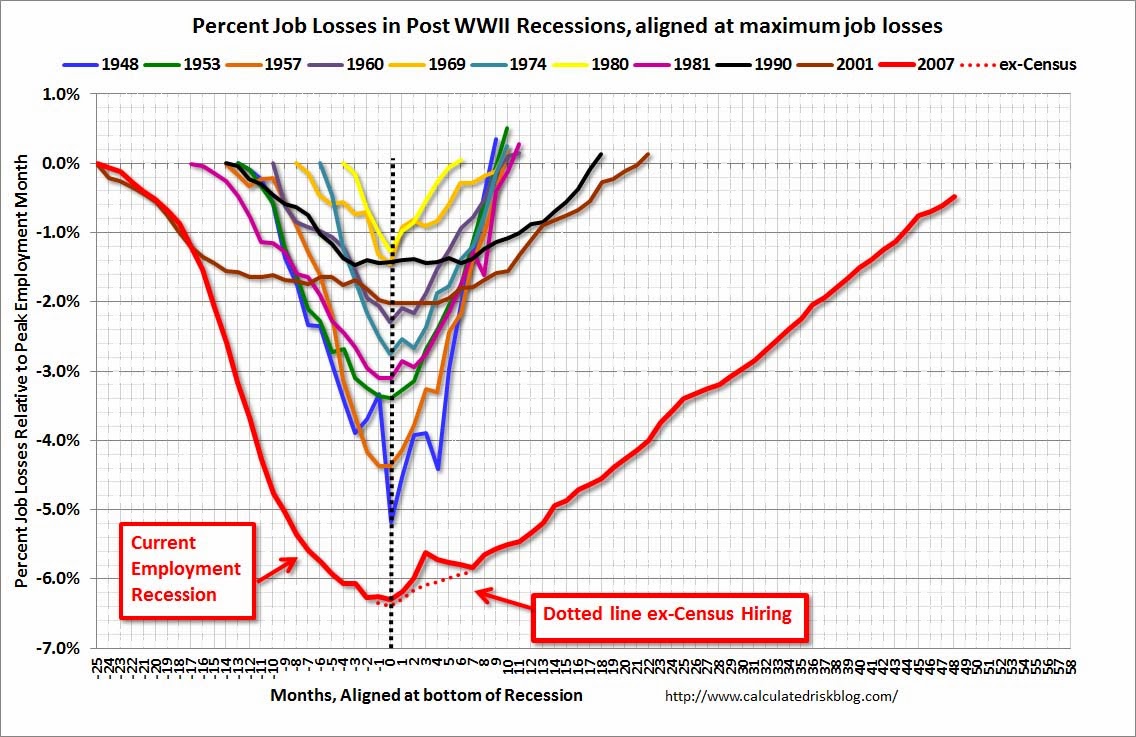
Bill McBride, who provides the above chart, zooms out:

This graph shows the job losses from the start of the employment recession, in percentage terms – this time aligned at maximum job losses. At the recent pace of improvement, it appears employment will be back to pre-recession levels mid-year (Of course this doesn’t include population growth).

Kilgore wonders if the weather is depressing jobs numbers:

The bigger picture is that economists are very conflicted about the impact of this winter’s unusually bad weather on the numbers, and what that might mean for the underlying strength or weakness of the economy. So there’s a great deal of anticipation of the March and April jobs reports as perhaps resolving some of those arguments.

Danny Vinik calls it “a fairly strong report, particularly if the weather is holding back the economy”:

More than 600,000 people were unemployed due to the weather, the most since 2010. If the weather really is holding back the economy right now, that makes this report even stronger in comparison.

Ylan Mui downplays the importance of the weather. She claims that “that those 600,000 people are still considered employed”:

The argument here isn’t that this abysmal winter has had no impact on the economy. There are other economic factors, such as housing starts, that are more sensitive to changes in the temperature. But pointing fingers at Old Man Winter for every lousy jobs report is a misreading of the data.

Benen focuses on government jobs:

In a rare occurrence, public-sector layoffs did not drag down the overall employment figures. Though most months in recent years have shown monthly government job losses, in February, the private sector added 162,000 while the public sector added an unusually high 13,000.

Drum’s take:

Bottom line: we continue to plod along. Things could be worse, but they still aren’t very good.

Putin’s Annexation Of Crimea

UKRAINE RUSSIA-UNREST-POLITICS-CRIMEA

The worst outcome now seems likely:

MPs [in the Crimean parliament yesterday] voted by 78 votes to nil for the territory to leave Ukraine, further escalating what has become the most serious crisis in Russian relations with the west since the cold war.

At the same time, a referendum on more autonomy for the region due on 30 March was brought forward to 16 March, and the question was changed to give residents the option to unify the Black Sea peninsula with Russia. Crimea’s deputy prime minister, Rustam Temirgaliev, said the referendum was now only to “confirm” parliament’s decision, and he considered Crimea to be part of Russia already. He said that all Ukrainian troops on the territory should either leave or be treated as occupiers. Crimea is planning to introduce the rouble and readopt Russian state symbols.

Brian D. Taylor’s sees the referendum as a Kremlin provocation:

[The] fast-tracking of a Crimean referendum on unification with Russia, if Putin is behind it, suggests that he decided to speed right past the “off ramp” and head straight for formal annexation.

In that case, the prospects for positive-sum outcomes will have shrunk considerably. If Russia does formally annex Crimea, the United States and Europe should go ahead with sanctions, in order to hit Russian elites in their pocketbooks. In the medium term, the United States should help Central and Eastern European governments to diversify their energy supplies, away from their dependence on Russian gas.

The Bloomberg View editors take a similar stand:

Any plebiscite held within 10 days of its announcement is by definition a joke, yet the implications here are serious: No major country has annexed territory since World War II. Unless it can be prevented, the damage will extend to everyone concerned. The move would, first of all, destabilize a fragile Ukraine, not least by encouraging pro-Russians in other regions to follow Crimea’s example. Civil war would become difficult to avoid.

Helena Yakovlev-Golani and Nadiya Kravets believe the annexation “could be problematic for Russia in a number of important ways”:

First, annexing Crimea would be a costly enterprise. The peninsula is not self-sustainable and heavily depends on Kiev to balance its budget. Crimea has no fresh water supplies and it does not generate its own electricity; in fact, it receives 90 percent of water, 80 percent of electricity, 60 percent of other primary goods and 70 percent of its money from Kiev. Building or creating these capacities in Crimea will put a huge strain on the Russian budget, and given the ongoing slide of the Russian currency due to calamities in Ukraine, the decline is likely to continue together with the fall of foreign direct investment into Russia. Crimea with its 2 million person population would become an economic drain on Russia even more than the breakaway republics of Abkhazia and South Ossetia, whose populations totals some 250,000 and 45,000 respectively. In addition, economic problems would magnify due to reactions from Turkey and Europe.

But Bershidsky thinks annexation would be a win for Russia, despite the costs:

About 60 percent of Crimea’s natural gas comes from a Ukrainian company that extracts it in the Black Sea and the Sea of Azov. The peninsula gets 80 percent of its water and power from Ukrainian territory. These supplies will not be cut off, but Ukraine will probably want to charge more for them. Russia will either have to negotiate with an unfriendly government in Kiev or build parallel infrastructure, which will take years and billions of dollars.

All told, it looks like a good deal for Putin compared with the $50 billion price for the Winter Olympics that just ended in Sochi. At taxpayer expense, the Russian president is acquiring a priceless resource: an explosion in public support. According to the VTsIOM sociological service, Putin’s approval rating has reached new highs in the last two weeks, and is now at 68 percent. That’s worth more to the Russian leader in his 14th year in power than any accolades from the West could ever be.

Juan Cole questions the US’s credibility in opposing the secession:

It is not clear if Russia’s supporters in Crimea are serious about this accession to Russia or if they are just playing a bargaining chip intended to wring long term concessions from the interim Ukrainian government, such as a permanent lease of naval facilities in Crimea to the Russian navy. …

But those pundits (and President Obama himself) who are suggesting that a Crimean secession from Ukraine would be contrary to international law or unprecedented, or that the US would always oppose such a thing, haven’t been paying attention. The US position on secessions depends on whether Washington likes the country affected. And Washington itself toyed with partitioning Iraq while it was a colonial possession.

Posner assesses whether international law would prohibit it:

Crimea is currently occupied by Russian troops, and the question of secession was (as far as I know) put on the agenda only because of Russia’s illegal intervention. Unlike places like Quebec, the Basque Country, and Scotland, the question of secession is entirely new; there was never a live secession movement that sought reunification with Russia. Ukraine itself does not appear to favor secession of Crimea. The world ought to be skeptical about the Crimean Parliament’s intentions, but if a fair referendum is held, and there is overwhelming sentiment in favor of unification with Russia, then a major geopolitical victory will be within Russia’ grasp.

Adam Taylor looks at survey data that suggests Crimeans already largely identify with Russia:

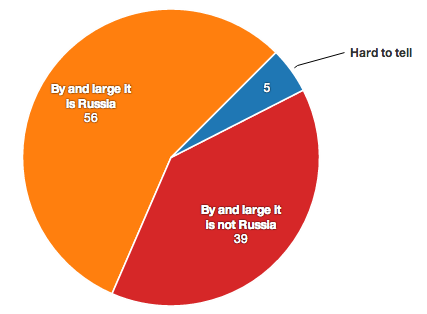
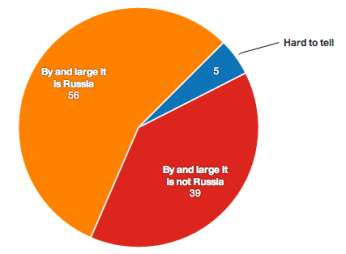
This poll, conducted by a well-respected agency linked with the Russian state, found that a majority of Crimea Russiarespondents view Crimea as part of Russia. There are a few fascinating elements to this one. First, it was conducted in August, long before Ukraine’s situation blew up, so it appears to show some deep-rooted feelings about Crimea (which was, after all, part of Russia until 1954). It’s also worth noting that in this poll, more people thought Crimea was a part of Russia than Dagestan (41 percent) and Chechnya (39 percent) – both of which are republics in the Russian Federation.
Another survey complicates the identity issue further:
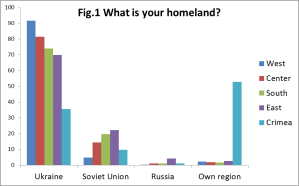
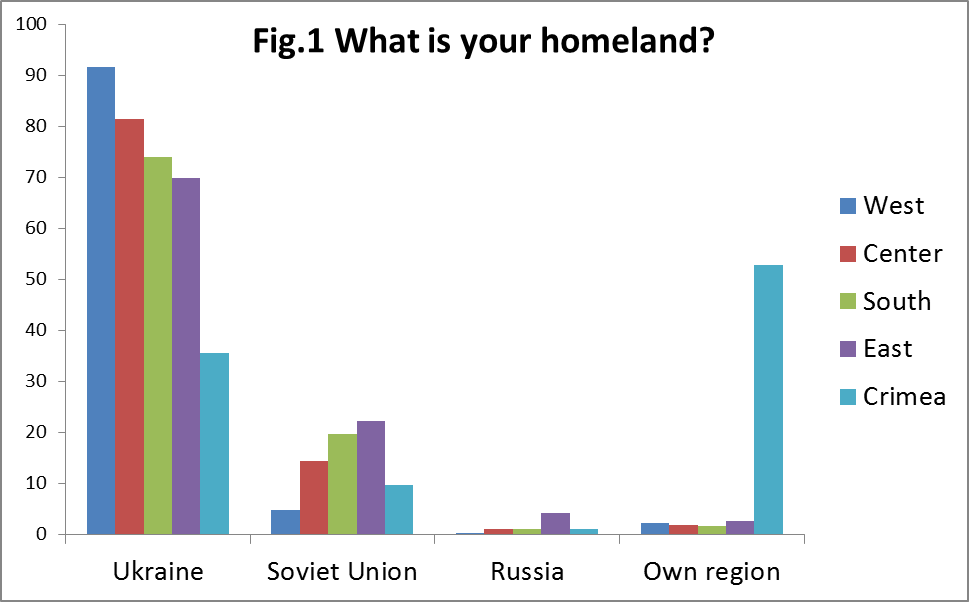
TMC-Figure-1Asked an open-ended question about where respondents considered their “homeland” to be, Crimeans, unlike easterners or other southerners, showed fairly little affiliation with the Ukrainian state. More than half of Crimean respondents replied by naming Crimea, while almost no one else mentioned their own region. Some 35 percent of Crimeans did volunteer Ukraine, and while allegiance to Ukraine was higher — around 50 percent — among ethnic Ukrainians and Tatars living in Crimea, these figures were considerably below the support in eastern Ukraine. In short, levels of attachment to Ukraine in Crimea are noticeably out of line with the rest of the country.

Natalia Antelava fears for the Crimean Tatars, who want the region to remain part of Ukraine:

Eskandar Baiibov, a deputy in the Crimean Tatar Mejlis, told me firmly that his community is unanimous in its backing for the government in Kiev, and that Crimean Tatars would boycott any referendum on joining Russia. But he is also terrified, he admitted, of the price that they might have to pay for refusing to give the Kremlin the support it wants.

“We are already seeing signs that they are trying to intimidate us, to split us, to stir trouble,” Baiibov said. “Ukrainians are also vulnerable, but at least they have Ukraine to go to. Where will we go? Crimea is our only home.” After the regional parliament voted to merge Crimea into Russia on Thursday, the chairman of the Mejlis, Refat Chubarov, released a statement to the press, calling for the United Nations to “immediately consider” sending a contingent of international peacekeepers into Crimea, “in order to deëscalate the military conflict … which can lead to mass casualties among the entire civilian population of the peninsula.

Previous Dish on the Tatars here.

(Photo: One of several pro-Russian demonstrators blocking the entrance to the Ukranian Navy headquarters in Sevastopol holds Soviet flags, on March 7, 2014. By Filippo Monteforte/AFP/Getty Images)

Surrender Douthat! Ctd

I argued that opponents of marriage equality should stop playing the victim and instead of focusing on gays “make a positive argument about the superior model of a monogamous, procreative, heterosexual marital bond”:

There is enormous beauty and depth to the Catholic argument for procreative matrimony – an account of sex and gender and human flourishing that contains real wisdom. I think that a church that was able to make that positive case – rather than what is too often a merely negative argument about keeping gays out, or the divorced in limbo – would and should feel liberated by its counter-cultural message.

Dreher responds:

Andrew asks us to make a “positive case,” but I submit to him that this is impossible now. The climate that now exists, and that will only grow in intensity, is one in which any dissent from the pro-gay consensus, no matter how nuanced or irenically stated, amounts to “hate” that cannot be tolerated. … If Andrew believes that Christians should tell positive stories, then the best thing he can do for us dissenters, now that he is on the verge of victory (and I can’t think of a single figure who has done more than he has to achieve victory), is to explain to his side what he perfectly well knows from being friends with Ross and me: that not every Christian who opposes same-sex marriage is a hater, and it does none of us any good to pretend that they are.

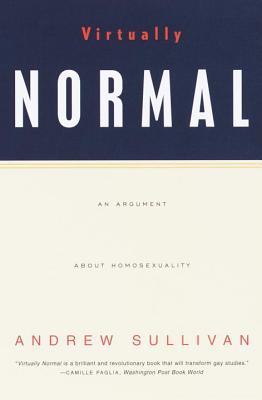
Well, I have done so on many occasions, did so in my books from the 1990s onward, and will continue to do so. I’ve spent a large part of my career angering gays by insisting that a crude “hater!” response to arguments about homosexuality is both deeply flawed and counter-productive. That was the whole point of Virtually Normalvirtually-normal and why it provoked such ferocious hostility from the left. Here’s an essay I wrote for the NYT attacking the whole concept of “hate” as a legal or political phenomenon. My record against “hate-crimes” is also pretty clear. I’ve aired vital reporting that complicates the iconic case of alleged anti-gay hate, in the Matthew Shepard case. Rod knows all this. He must also know that maintaining my loyalty to the Catholic church has not made my life easier in the gay community these past few decades. Why, given some social ostracism in the gay world for being a believing Christian, would I have clung on to a church that I believe is motivated by “hate”? Human beings – and hostility or opposition to gay civil rights – are much more complicated than that absurdly reductionist label. I am not Mark Joseph Stern.

But it remains the case that hatred and fear of gay people is deep and real and alive among many of Rod’s allies on the Christianist right. Not all, by any means. But it would be crazy not to acknowledge this. Rod wants to divide the anti-gay-rights coalition into a tiny fringe of Westboro Church loons and otherwise reasonable, nice Christians who oppose marriage equality for principled reasons. But this is a whitewash. The way gay people have been denigrated, derided, trivialized and demonized by mainstream figures in the Christianist right is appalling. The Christianist campaign to persecute gay people in Africa is horrifying. The callousness and double standards of Pope Benedict XVI – the man who declared gay people inherently sinful in our nature – cannot be denied.

And the only way to distinguish yourself from these hateful factions is to make a positive case for your position. That’s always possible. From the very beginnings of our faith, Christians have made such a positive case, even as they were being thrown to the lions. And Rod won’t do it because someone might say something mean at the office! How delicate and sensitive these Christianists can be.

Sure, insisting that you oppose my right to marry may lead at times to others viewing you as inhumane or bigoted or cruel. But that’s the price of entering the public square. You think I was given a hero’s welcome among conservatives when I first made the positive case for gay marriage? Please. It was open season from right and left.

And if Rod wants to know what persecution is like, imagine showing up to work and being fired simply for being a Christian. Or serving your country, risking life and limb, and then being told you are dismissed, denied any benefits, and thrown out on the street. Much of this has happened and still happens to gay people across the country, in ways no Christian qua Christian rarely faces and could barely conceive of. In Arizona, where Rod feels Christians are under siege, gays can be fired at will just for being themselves, and have no right to marry. When Rod receives that treatment, his self-pity may have some merit. But his obliviousness to the suffering of others is more than a blind spot.

I imagine, however, that he is dimly aware that his version of human flourishing – heterosexual sex only within marriage that is open to procreation – may not win the day in the public debate. Indeed, all the many arguments for such a view of how human beings can reach our fullest potential have tended to lose and lose badly in the last half-century in the free West. The equality of women, the emergence of gays, the fact of widespread contraception, the impact of no-fault divorce … all these prove that Rod’s argument is not succeeding, even when it had the legacy of centuries behind it. Even in the delicate pronouncements of Pope Francis, you can feel the equivocation. It is as if the prohibition against gay people simply cannot survive the scrutiny of reason or the Christian standard of mercy. And this is true for Catholics as much as any other group (just look at the polls of Catholics on marriage equality). And I think this realization that the argument has been lost is what motivates the panic – and leads to the current wave of self-pity.

In response to an earlier post by Dreher, Douthat argues against the religious right claiming “persecution”:

[U]sing the “persecution” label too promiscuously, I think, carries three risks beyond intellectual inaccuracy. First, as Dreher sort of concedes, it doesn’t do enough to acknowledge the vast gulf separating the situation of Western Christians and the incredible heroism of our co-believers overseas, who face eliminative violence on an increasingly-dramatic scale. Second, as I tried to suggest in the column, it doesn’t do enough to acknowledge the gulf separating the situation of Western Christians and the situation of gays and lesbians, past and present, facing persecutionat the hands of religiously-motivated actors. And finally, it doesn’t actually prepare conservative believers for a future as a (hopefully creative) religious minority, because it conditions them/us to constantly expect some kind of grand tribulation that probably won’t actually emerge.

Readers’ thoughts on the post here.

Propping Up Mitch McConnell

https://twitter.com/AlexKoppelman/status/441604933444304897

John Cassidy watched McConnell’s performance yesterday:

[W]hen you want to boost your bona fides with conservatives, many of whom regard you as a hopelessly compromised establishment figure, there’s still nothing like putting on your hunting jacket, grabbing your rifle, and paying homage to the N.R.A.

This being the Gaylord Convention Center rather than a rifle range or a field in Kentucky, McConnell went without the hunting jacket. His official purpose was to present a “lifetime achievement award”—that would be the rifle—from the National Rifle Association to Senator Tom Coburn, the Oklahoma senator who is retiring this year with a hundred-per-cent approval rating from the gun-rights lobby. McConnell handed Coburn the gun, they both admired it, and then McConnell delivered a lengthy attack on President Obama and the Democrats.

Paul Waldman is jealous that conservatives get all the cool props:

[C]onservatives have lots of these kinds of identity markers that can easily and quickly communicate a whole set of beliefs to an audience when they’re mentioned, like the Bible or Ayn Rand or country music.

The fact that Democrats don’t have these things is probably because their coalition is more diverse, made up of people with a variety of cultural backgrounds and life experiences. The markers that may unite certain portions of the Democratic coalition—like, say, the music of the recently departed Pete Seeger—are not anything close to universal within that coalition, so politicians can’t use them so easily.

Drum joins the conversation:

Conservatives have guns, pocket copies of the Constitution, and the Bible to use as really handy props that instantly demonstrate their tribal affiliation. So why don’t liberals have similar, universally-recognized totems? Waldman may be right that it’s because our coalition is more culturally diverse, but I’d toss out one other possibility: almost by definition, conservatives are in favor of tradition and liberals are in favor of change. So it’s easy to find simple conservative props because every culture has lots of recognizable traditional icons that it’s developed over the centuries. It’s a lot less easy to find liberal props because icons of progress change every decade or two.

Should Congress Stem “Big Weed”?

Mark Kleiman, fast becoming the biggest buzz-harsher on the planet, worries that our state-by-state approach to legalization will end badly unless the federal government steps in to regulate the pot market:

The systems being put into place in Washington and Colorado roughly resemble those imposed on alcohol after Prohibition ended in 1933. A set of competitive commercial enterprises produce the pot, Kush_closeand a set of competitive commercial enterprises sell it, under modest regulations: a limited number of licenses, no direct sales to minors, no marketing obviously directed at minors, purity/potency testing and labeling, security rules. The post-Prohibition restrictions on alcohol worked reasonably well for a while,but have been substantially undermined over the years as the beer and liquor industries consolidated and used their economies of scale to lower production costs and their lobbying muscle to loosen regulations and keep taxes low (see Tim Heffernan, “Last Call”).
The same will likely happen with cannabis. As more and more states begin to legalize marijuana over the next few years, the cannabis industry will begin to get richer—and that means it will start to wield considerably more political power, not only over the states but over national policy, too. That’s how we could get locked into a bad system in which the primary downside of legalizing pot—increased drug abuse, especially by minors—will be greater than it needs to be, and the benefits, including tax revenues, smaller than they could be. It’s easy to imagine the cannabis equivalent of an Anheuser-Busch InBev peddling low-cost, high-octane cannabis in Super Bowl commercials. We can do better than that, but only if Congress takes action—and soon.

Kleiman makes some good points about the radical insecurity of the legal regimes in Colorado and Washington, but I have to say I find his worst case scenarios a stretch. This, for example, is Kleiman’s understanding of federalism:

Justice Louis Brandeis’s praise for states as the “laboratories of democracy” has been widely quoted … Dr. Frankenstein also had a laboratory.

Oy. Pete Guither offers a must-read and detailed rebuttal. On the federalism point, is Kleiman honestly saying that the federal government is to be trusted in this area? The entire reason the states have taken the lead is that the feds still can’t change its absurd classification of the drug. Then Kleiman has a bugaboo about marketing, as if nurturing and cultivating a customer base for marijuana is some kind of a crime, or inherently damaging. Guither responds:

Sure, if marketing causes an increase in the overall number of users, and you assume that the same percentage of those new users will become dependent as in the original class, then marketing could lead to dependency indirectly. But that assumption is flat-out contradicted by evidence and common sense, since prohibition laws, to the extent that they deter at all, are more likely to deter casual non-problematic use than problematic use.

I know that it’s popular to claim that marketing is used to cause dependency, but there’s really very little evidence to support that claim.

But Reihan agrees with Kleiman that federal oversight is needed:

It’s easy to see why Congress doesn’t want to touch cannabis legalization. Though support for legalization has increased, the issue remains contentious, and it raises difficult questions regarding U.S. treaty obligations. But the federal government needs to step in to see to it that the emerging cannabis markets don’t spiral out of control. One of the central purposes of our federal republic is to regulate interstate commerce, and it would be foolish to deny that legalization in some states will have spillover effects in others.

By “spiral out of control” he means that lots of people may buy the product. It’s so weird to read a conservative making a case for socialized non-profits. Jon Rauch compares legalization to Obamacare, noting that much depends on the implementation:

[E]arly indications are that Colorado and Washington are faring reasonably well. If they pass the implementation test, marijuana legalization could prove that obituaries for effective, adaptive government—some of them written by me—are premature. But if they yield chaos or crisis, they would discredit the policy they seek to promote.

As of now, I’m cautiously optimistic that the states’ experiments will be made to work, not perfectly but well enough. But liberaltarians and drug reformers need to get it through their heads that just passing legalization initiatives is not enough. They need to stick around once the vote is over and commit to the hard slog of making the policy succeed.

Agreed. But I see no reason why reforming, adjusting and monitoring the impact of legalization isn’t best done by the states that have had the cojones, unlike the frozen-in-aspic feds, to actually deal with the issue in a way that isn’t transparently self-defeating.

What Class War?

John Dickerson tells the One Percent to stop worrying about Democrats trying to seize their hard-earned millions (except perhaps in the form of campaign donations):

It’s not just the president who has removed hints of class warfare from his language. Democratic candidates are being coached to do this, too. Polls consistently show that Americans of both parties believe that income inequality exists and that it is a problem, but as Democratic pollster Mark Mellman explains, when you ask voters to rank “income inequality” among other issues, only 1 percent say it is a priority. “The polling imperative is to make sure you’re attacking opportunity inequality, not income inequality,” says one veteran Democratic strategist. “Obviously, one creates the other. But the public sees a distinction. One seems American. The other, Communist.”

Voters are more likely to back specific items that address inequality, like raising the minimum wage, extending unemployment insurance, or ensuring equal pay for women. These are the kinds of policies the president and Democrats are pushing, but none of those items actually represent a broad attack on the wealthy. The limits of this agenda are why Jason Furman, chairman of the White House Council of Economic Advisers, recently said that the 1 percent’s fears that they are under assault were “just hyperventilation around not paying attention to specific facts and data.”

The Triumph Of The Western Diet

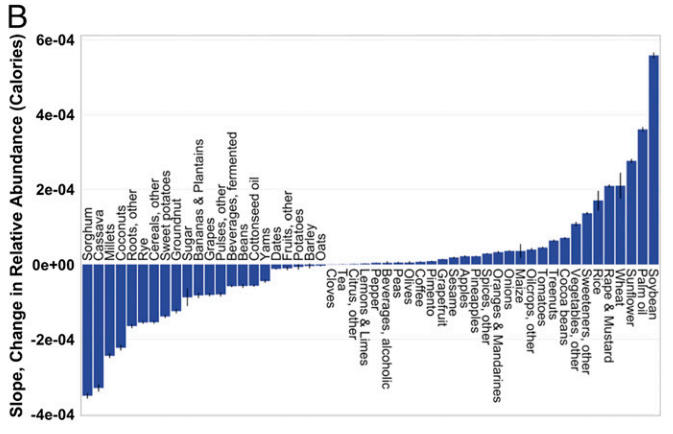
Western-diet

More and more, a new study finds, people around the world are eating like we do:

Between 1961 and 2009, the global consumption of soybeans, sunflower, and palm oil-based products—”staples” of a classic Western diet—grew several orders of magnitude, while traditional diets based on crops such as sorghum, millets, sweet potatoes, and cassava declined, according to researchers at the International Center for Tropical Agriculture. The data, gleaned from the Food and Agriculture Organization of the United Nations, backs up the idea that the world is increasingly relying on processed and other “Western” foods. Lead researcher Colin Khoury calls it “Western plus,” because foods like potatoes, rice, and wheat are still eaten worldwide. But, more than ever, humans are now using those big three: soybeans, sunflowers, and palm oil, to create processed foods for people around the world.

Dan Charles discusses the problems of over-reliance on mega-crops:

The trend toward greater dependence on fewer crops continues, Khoury says. And so do the risks. It’s dangerous to depend on just a few crops because any one of them could be hit by some disaster, such as disease. But governments and international organizations can still help to safeguard diversity in our food sources. They can act to preserve the many genetic varieties of mega-crops that still exist, and also preserve and encourage cultivation of minor crops, he says.

Update from a reader:

Soybeans, sunflower and safflower oil are “‘staples’ of the classic American diet”? What are those guys talking about?

Soybeans are from East Asia. They weren’t planted in the US until the latter part of the 19th century, and even then were used almost entirely as feed for livestock. (Supposedly George Washington Carver discovered they could be used for oil.) Not until after the Second World War did they become a part of the US diet, mostly in the form of additives. Even today, relatively few Americans eat soybeans directly, whether it’s in the form of beans or soy products like tofu. The exception, of course, is soy sauce, but soy sauce is a symbol of Asian food, not American.

Palm oil is from Africa. Hardly any is produced in this country; the world’s biggest palm-oil producer is Indonesia. In this country, it is used mainly as an additive to processed foods. As with industrial soy, nobody but people who study food labels knows they are eating it. How is an increase in its consumption to be considered a sign of Americanization?

Safflower oil is grown in the US, but it, too, is of African origin. As a food, it is mostly used in salad dressing and margarine (although this is declining). Margarine is a minor product outside the English-speaking world – try buying it in Japan! It’s sufficiently uncommon in India that the last time I was there I came across an article in the Times of India explaining to its readers what margarine is (the government periodically goes into anti-butter campaigns, and the newspaper was examining whether this strange foreign stuff could be substituted for it). Again, how is this evidence of “Americanization”?

Nutrtionally speaking, much more important are the rise in the big staple cereals – wheat, rice, and corn (maize). Consumption of the first two is driven by increasing affluence in East and South Asia, where both wheat and rice have been grown for thousands of years. Again, no evidence of Americanization. Corn actually is American – I guess you have to give them that one. But overall the graph they produce shows the opposite of what they allege.

Building A Bigger House?

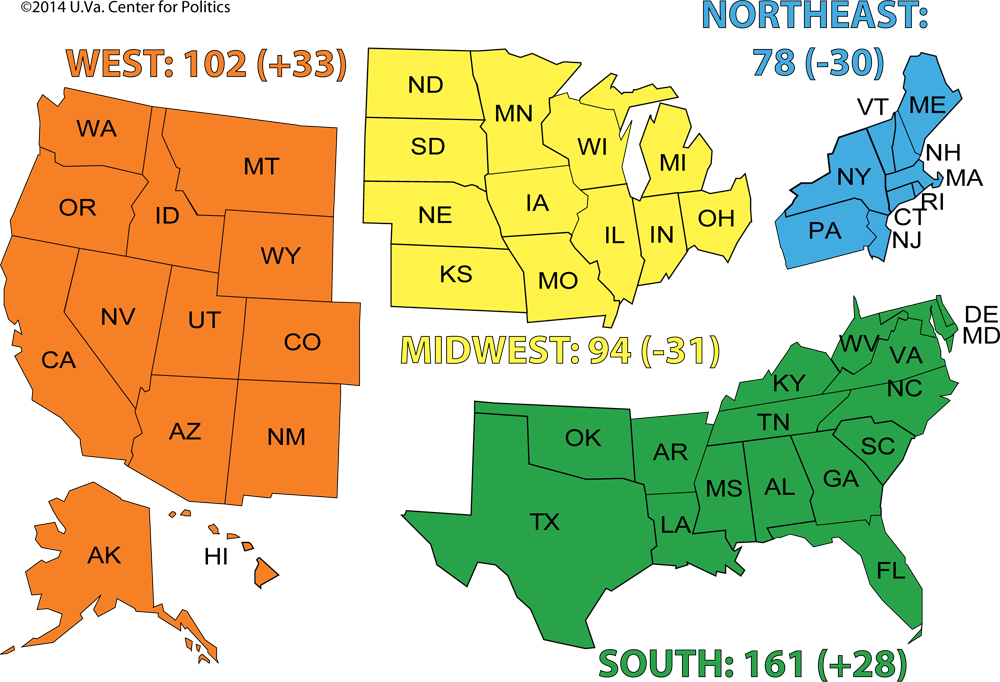
Geoffrey Skelley looks at how congressional representation has changed between 1960 and 2010:

Congressional Seats

Trende wants more congressmen:

Today a representative answers to over 700,000 constituents, well over 10 times the number of constituents deemed appropriate by the First Congress. While it seems unwise to adhere to the strict letter of Article the First, the time has likely come to abide by its spirit and increase the size the House.

The United States is supposed to be the world’s premier representative democracy, yet India’s Lok Sabha is the only lower chamber on the globe where representatives have more constituents. Indeed, Pakistan’s National Assembly and Indonesia’s People’s Representative Council are the only other lower chambers with a population-per-seat ratio exceeding even 400,000.

Among his reasons for increasing the size of the House:

[It] could help mend some of the detachment that is felt between Washington and the states. Campaigns would be less expensive, so politicians would have to spend less time fundraising, and representatives would have fewer constituents to answer to, allowing for more personalized representation. It may even be that smaller constituencies allow for the election of more ideologically diverse members. Indeed, there is some correlation between the size of state legislative chambers and the number of third-party/independent candidates elected.

Bernstein is against the idea:

For elections, it would probably mean fewer voters in competitive districts, and less media attention to each individual election. Given the way redistricting works in most states, competitive districts are what’s left after both parties have grabbed the solidly partisan areas. That means there are often are as few competitive districts in California and Texas as there are in states with only a handful of seats. So a bigger House would likely leave us with about the same number of competitive districts as we have now, but with fewer people in each. And with more races to cover and each one a little less important, the resources devoted by the media to individual elections probably would decrease. That’s good news for incumbents, but bad news for competition and democracy.

“Who Needs World War I?”

Tom Streithorst poses the question:

Few events are more central to the history of the 20th century than the First World War.  Without Sarajevo, Tannenberg and the Somme, we have no Hitler, no Lenin, dish_wwibookcover no Hemingway.  The history of the past hundred years flows directly from the happenstance series of events that led to Europe destroying itself for little reason between 1914 and 1918.

And yet, if we imagine a German diplomat or general falling asleep in February 1914 and waking up today to see a prosperous Germany dominating a peaceful Europe, he would be pleased but not be surprised. The fall of the multiethnic Austrian Hungarian and Ottoman empires and their replacement by nation states was also predictable. No one in 1914 would have been astonished to learn that 100 years later Russia would remain an exporter of raw materials and its politics would be authoritarian, oligarchic, and corrupt. Britain’s half-hearted relationship towards the rest of Europe would startle no one.  What would shock our German general is the realization that it took two brutal world wars and the rise and fall of communism to achieve this outcome. Disastrous defeat twice over did not impede Germany’s rise.

So we have a conundrum.

On the one hand, even deeply important historical events can be seen as accidents or flukes.  On the other, over the longer term history seems tied to the profound processes of demographics, technology, culture and institutions that have little to do with the actions of mere men.  To put it another way, even if Christopher Columbus had never gone to sea, cassava would nonetheless be a staple crop in Africa today and a Nahuatl speaking emperor would not be ruling Mexico.  If we explore the counterfactual and assume that World War I had not broken out in 1914 and so the Russian Revolution not occurred in 1917 and Hitler not come to power in 1933, we might still end up with a world pretty close to what we have today.  I’m not sure what that tells us about the value of the study of history.

Update from a reader:

Well what a provocation to a historian! Let’s focus on Germany. So if we had a liberal German emperor in the lead up to World War I – say the emperor Friederich III had lived – his challenges in creating a liberal, parliamentary and peaceful Germany in a peaceful Europe would have been enormous.

It is difficult to exaggerate the degree to which Germany and German-Austrians (among others) were saturated with Darwinist racial politics before and after the Great War. This was accompanied by an understandable awe at German economic and technological progress since 1871, an over-optimistic confidence in the army as a decisive and speedy instrument of policy, and vociferous popular demand in Germany for colonial expansion, either in the tropics, or to the east, coupled with fear of a growing Russia.

Friederich would have had to swim against all these currents. He would have had to face down his own ruling class to liberalise German politics and constitutional structures and progressively reduce himself to a constitutional monarch in the style of the Scandinavians, Low Countries, or British. He would have had to help Austria-Hungary, racked by ethnic conflict, through to some new, better state, and successfully manage rivalries in the Balkans. He would have had to counter-intuitively tamp down the enormous temptation to view the army as an instrument capable of producing easy triumphs over other great powers à la 1866 and 1870. He would have had to promote some kind of de-escalation of the arms race through CFE or START-style reductions and confidence building measures. He would have to face down strong popular and aristocratic urges in Germany for territorial expansion. He, or his new liberal or social-democrat chancellor, would have had to somehow, single-handedly, reform the international trade environment from imperial protection to free trade, through some sort of pan-European zollverein, so that German and Austro-Hungarian industry could access the raw materials they needed.

Needless to say, such an agenda seems far beyond the capabilities of Friederich and the pre-war European ruling class.

Conversely, how would racism have been so thoroughly discredited if not for the horrors of Nazism? How could Europeans nations put aside imperial rivalry and world dominance and settle for a brotherly confederation, if not in recoiling from the utter destruction of the world wars? How could democracy have spread so widely?

In short, we have the world we have, in some ways much better than it might otherwise be, because of the great struggle between democracy and its enemies in the twentieth century. How much worse would it be if all that sacrifice had been in vain.

(Image of cover of book for WWI veterans by William Brown Meloney, 1919, via Wikipedia)

Can You Copyright Coffee Pods?

Cory Doctorow explains why Keurig is planning to fight off-brand coffee pods:

The reason they’re adding “DRM” to their coffee pods is that they don’t think that they make the obviously best product at the best price, but want to be able to force their  customers to buy from them anyway. So when, inevitably, their system is cracked by a competitor who puts better coffee at a K-Cups & Podslower price into the pods, Keurig strikes me as the kind of company that might just sue. And not only sue, but keep on suing, even after they get their asseshanded to them by successive courts. With any luck, they’ll make some new appellate-level caselaw in a circuit where there’s a lot of startups — maybe by bringing a case against some spunky Research Triangle types in the Fourth Circuit.

Now, this is risky. Hard cases made bad law. A judge in a circuit where copyright claims are rarely heard might just buy the idea of copyright covering pods of coffee. The rebel forces that Keurig sues might be idiots (remember Aimster?). But of all the DRM Death Stars to be unveiled, Keurig’s is a pretty good candidate for Battle Station Most Likely to Have a Convenient Thermal Exhaust Port.

McArdle compares Keurig’s move to that of printer companies:

That’s why printer manufacturers have been waging a long war against knockoff toner cartridges. Most people think that this is a case of companies trying to “gouge” you on the ink, but from the firms’ point of view, if they can’t make it on the consumables, they have to charge more for the printer, which consumers hate. However, the reason that printer manufacturers have been waging such a long war against knockoffs is that it’s hard to win. “Educate” the consumer all you want about the benefits of genuine Hewlett-Packard Co. ink; a lot of them still want to save a few bucks.

Olivia Solon notes that coffee makers are “quite the litigious bunch”:

This may be because the global coffee capsule market is estimated to be worth $6.6 billion (£3.9 billion). In April 2013, Nespresso (well, parent company Nestec) took Dualit to court in the UK for infringing a European Patent for supplying coffee capsules that worked with the former’s machines. In August 2012, Nestec took the Ethical Coffee Company to court in Germany for making coffee capsules under the brands “Espresso” and “Esprimo” that could fit into Nespresso machines. In both cases, judges ruled that there had been no infringement.

In October 2013, Nestec took its case to the European Patent Office, taking on several companies making pods for Nespresso machines. These included DEMB Holding, Distribution Casino France, the Ethical Coffee Company and Casa del Caffe Vergano. While the case in the US is an antitrust one, the European cases all focus on patent law, particularly on whether if you make replaceable coffee capsules you are “making” the patented technology as a whole or not. The courts seem to think not.