“They Have Assassinated Syria”

Zaher Sahloul bears witness to the atrocities of Assad’s snipers and tells an upsetting tale:

Almost every doctor I met at the hospital told me another horrific story about a young mother who tried to make the crossing with her two children.

When she hastened through the corridor, holding one child in each hand, a sniper targeted her 4-year-old son, killing him instantly. She started screaming in agony. Then a bullet hit her second son, a 3 year-old, and killed him, too. She sat down between the bodies of her sons, waiting for the sniper to shoot her… but the shot did not come. He spared her to live a life without her children, to be consumed by a gnawing emptiness — something snipers have done to countless Syrian mothers. When she finally arrived at M-1 with the dead bodies of her two sons, she was in the middle of a complete mental breakdown.

The snipers, and the regime that deploys them, have succeeded in transforming a peaceful movement for democratic revolution into a civil war, planting fear and deep psychological scars, displacing tens of thousands of civilians fleeing for safety, creating hatred among different ethnic and religious groups, fuelling sectarianism, and attracting extremism. Their bullets have not only killed my compatriots, but also my homeland.

The Minority That Thinks It’s A Majority

gay-marriage_v1

Most marriage equality opponents don’t realize that a majority of Americans disagree with them:

What’s going on here? For starters, Americans overall don’t realize how widespread support for same-sex marriage has grown — only 34 percent of the public correctly believe that most of their peers support gay marriage. This is at least partly a function of how rapidly public opinion has shifted. Ten years ago, only 32 percent of Americans supported same-sex marriage, compared to 53 percent in favor today — a 21-point shift. But same-sex marriage opponents are unique in the depth of their misunderstanding of the issue. Because they skew strongly conservative and deeply religious, this may be a manifestation of what Andrew Sullivan has termed “epistemic closure.” Think of this as an extreme case of confirmation bias — that tendency of people to filter out information that challenges their beliefs and preconceived notions.

Looking at the same poll, Emma Green concludes that the most surprising change over the last decade is that people “have concluded that what happens in other people’s bedrooms is none of their business”:

A majority of those surveyed said that sex between adults of the same gender was morally wrong. It was a slim majority—only 51 percent—and roughly 43 percent said that gay sex is fine. There were regional differences, too. About half of Californians and Floridians had no objection to gay sex, while only a third of Texans were okay with it.

Compare this to the proportion of people who support gay marriage: 53 percent of Americans for, 41 percent against. This suggests that roughly a tenth of Americans don’t like gay sex but think gay people should be able to get married anyway. In other words, they don’t think public policy should necessarily mirror their private beliefs.

A decade ago, this distinction between public and private was virtually non-existent.

Things look good for equality in state polls as well. Tom Jensen summarizes the latest from PPP in Arizona:

Only 22% of Arizonans say they support Senate Bill 1062, compared to 66% who opposed it. Opposition to the bill is bipartisan with majorities of Democrats (11/86), independents (18/64), and Republicans (34/51) alike against it. 72% say they agree with Jan Brewer’s veto of it, compared to only 18% who disagree with her action. …

For the first time in our polling we find that a plurality of Arizonans support gay marriage. 49% are in favor of it to 41% who are opposed, a net 9 movement in favor of gay marriage in the state since November of 2011 when there was 44/45 opposition to it. Voters under the age of 45 support it 55/36 with seniors the only age group against it at this point. 77% of Arizonans support at least civil union for same sex couples, including 69% of Republicans, with only 19% opposed to any form of legal recognition at all.

And Iowans are OK with their marriage law:

Almost 5 years after gay marriage became legal in Iowa, 78% of voters in the state say it’s either had a positive impact or no impact at all on their lives. Even among Republicans, 61% grant that its being legal hasn’t had a negative effect on them. Iowans remain closely divided on the issue- 46% think it should be legal to 45% who believe it should be illegal- but that represents a net 8 point increase in support from October of 2011 when only 41% of voter supported it to 48% who thought it should be illegal.

The Ways We Die

Paul Waldman puts gun deaths in perspective:

There were 606 accidental deaths by shooting in 2010, or 1.66 per day. There were another 252 firearm deaths that were “undetermined,” which I guess means that the police never figured out whether it was an accident or intentional. You can look at this number in two ways. On one hand, there are over 300 million of us, so only one in 500,000 Americans is killed every year because his knumbskull cousin said “Hey Bert, is this thing loaded?” before pulling the trigger. You can see that as a small number. The other way to look at is that each and every day, an American or two loses his or her life this way. In countries with sane gun laws, that 606 number is somewhere closer to zero.

Aaron Carroll thinks we focus on the wrong risks:

Update from a reader:

I was shocked by the number of “unintentional” poisoning deaths – 33,041 in 2010! How, I wondered, could that many people be accidentally poisoned? A bit of googling found that, per the CDC, “91% of unintentional poisoning deaths are a result of drug overdose. Drugs commonly involved in unintentional poisoning deaths include opioid pain medications such as methadone, hydrocodone, or oxycodone.” Apparently the “unintentional poisoning” category increased 160% between 1999 and 2009.

So this chart, in addition to showing the relatively small (yet still too large) number of accidental gun deaths, also shows the massive increase in prescription drug addiction, overdose and death in the United States in the last decade. This, more than anything I’ve read lately, illustrated the enormity of this problem to me. Perhaps it will do the same for others.

The Spirit Of Stowe

Reviewing Nancy Koester’s new biography, Harriet Beecher Stowe: A Spiritual Life, Harold K. Bush highlights the under-appreciated religious convictions that informed the abolitionist’s work:

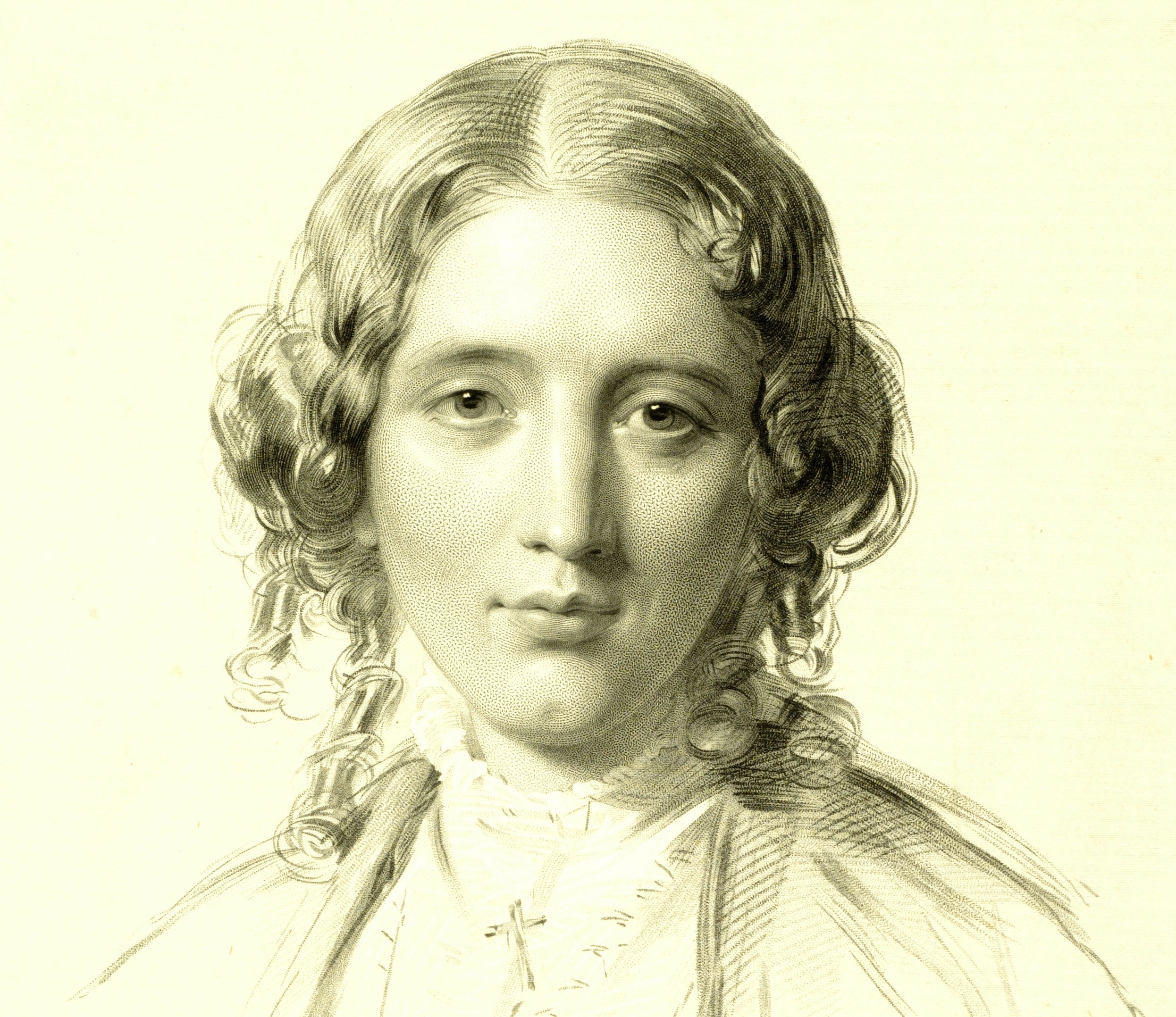
Everyone knows about Stowe’s anti-slavery emphasis. Often forgotten, however, are the deep Harriet_Beecher_Stowe_by_Francis_Holl spiritual currents at work beneath it. In Uncle Tom’s Cabin, a variety of characters have mystical experiences, and Scripture is sprinkled throughout. Tom seems to hear Eva’s voice at times after her death, as in a dream. By the time she wrote the novel, Stowe was confirmed in her conviction that faith has supernatural elements, including the dreams and visions mentioned throughout the Old Testament prophetic books, the Gospels, and the Book of Acts. She believed, moreover, that both sexes could experience these phenomena:

“I will pour out my spirit upon all flesh; and your sons and your daughters shall prophesy, your old men shall dream dreams, your young men shall see visions” (Joel 2:28, Acts 2:17). She had written in letters of yearning to be “baptized in the Spirit,” and she took a keen interest in the many variations and quirks of American Christianity.

And so, despite her rather conservative and even stodgy reputation, Harriet Beecher Stowe was quite the spiritual adventurer. In the midst of antebellum America’s vital and inventive religious landscape, she fit right in. Indeed, as Koester shows, Stowe can be viewed as a key contributor to that landscape: a deep religious thinker whose novels and voluminous spiritual writings both mirrored and shaped the thinking of American Christianity, for better or worse. Koester is at her best, and is most original, when she locates Stowe’s writing in the context of this churning spirituality. She reveals Stowe’s engagement with the religious questions of her day, and how her answers are manifested in her fiction.

(Image of portrait of Harriet Beecher Stowe, circa 1855, via Wikimedia Commons)

The Currency Conundrum In Caracas

Francisco Toro connects Venezuela’s chronic shortages of basic goods to its “deliriously dysfunctional currency exchange control system”:

Unlike a normal country, where you can trade U.S. dollars with local currency at whatever price the market will bear, the Venezuelan bolivar is fixed at 6.30 per dollar, and sold discretionally, only to those the government deems worthy. This worthiness is established on the basis of an enormously cumbersome and corruption-prone administrative process.

The real problem isn’t the red tape, though. The real problem is that 6 bolivars and 30 cents is an insanely low price for a U.S. dollar. Venezuelans will gladly pay 85 bolivars for a dollar, even though doing so is technically a crime punishable by up to 6 years in prison.

Having two prices for the dollar makes figuring out what things cost in Caracas something of a philosophical imponderable.

In another post, Toro explains how far one US dollar can go in the black market:

First, take your crisp new dollar bill to a black market currency dealer and buy yourself Bs.85.

Did you make sure to get travel insurance before you trip? Good. Now go to a doctor and buy yourself Bs.85 worth of medical attention. Any pretext will do. Don’t forget to get a receipt, though: your insurance company back home will reimburse your 85 bolivar claim at the official rate, giving you back $1 for every 6 bolivars and 30 cents you spent. So after one doctor’s visit, your $1 has already turned into $13.50. Not too bad.

But we’re just getting going here. Needless to say your next step is to take your $13.50 right back to the currency tout and buy yourself 1,150 bolivars.

Next, take your 1,150 bolivars to any reputable Caracas jeweller. There, you can get about 5.7 grams of 18-karat gold for that. As it turns out, back stateside those 5.7 grams of gold are worth $182.29. Your Caracas black market dollar dealer will be expecting your call by now: the $182.29 you netted for the gold buys you 15,495 bolivars.

This is fun, isn’t it?

Surrender Douthat! Ctd

A reader writes:

I find I have little sympathy for the protestations of Douthat, Dreher, etc., and here’s why: what they’re protesting is their fading ability to dictate to others how to live their lives. They have not actually lost any rights, but rather lost a position of privilege and authority from which they have called the tunes to which others have been forced to dance. What they’re upset about isn’t the loss of power over their own lives; it’s about the loss of power over others’ lives. To which I say, “Boo-freaking-hoo.”

Another is on the same page:

You quoted Rod Dreher:

American Christians are about to learn what it means to live in a country where being a faithful Christian is going to exact significant costs. It may not be persecution, but it’s still going to hurt, and in ways most Christians scarcely understand.

No. American Christians are about to learn what it means to live in a country whose culture and values and attitudes don’t fully replicate their own. That is all.

I’m sure it’s painful to discover that your world view is actually just one among many, rather than Reality Itself, and I can sympathize with the pain since I was once a child and had to endure many such painful realizations as I grew up and learned that I was not actually the central character in the universal drama.  Indeed, I’m still confronting such humbling realizations, well into my forties, on a routine basis.

As a Dish completist, I’ve been following this and related discussions carefully, and I’ve tried to exercise as much compassion as possible for those who perceive themselves to be on the losing side of a “culture war”.  That very perception is worthy of compassion – namely, that what most of us experience as progress towards a fairer, more tolerant, more enlightened society should be perceived by some as a defeat in a war.

But I’m finding my resources of compassion seriously over-taxed by Douthat’s et al. reaction to the coming of the age of marriage- equality because it is rooted in the moral and intellectual complacency of privilege.  Douthat, especially, is expending all his intellectual energy on rationalizing his prejudices rather than attempting to examine them. Even so, nobody is forcing him, or anybody, to change his attitudes or behavior – conservative Christians remain free to profess and practice their beliefs.  Indeed, this really isn’t about them at all.  And there’s the rub.

Suddenly they and their views are not the American Unum, but merely part of the Pluribus.  Their outrage (or, in Dreher’s case, apprehension and sadness) is really a reaction to a loss of prestige, a loss of a sense of centrality, a loss of the sense that this is their country and they are the normal ones, and it’s only natural and correct that the culture and the law should reflect their values and their attitudes.

Suddenly, the culture and the law are not on their side – that must be very painful.  Except that this is not about “sides”.  It’s about justice.  There aren’t actually any losers here in practical terms.  Unless by losers you mean people who have lost the privilege of denying rights to some of their fellow citizens because those citizens fail to conform to their particular standards and values.

Another quotes me:

Rod wonders if being the counter-culture “will be good for us.” In my view, it really could be. Since Constantine, Christianity’s great temptation has been to doubt the power of its truths and to seek to impose them by force. And its greatest promise has been when it truly has been the counter-culture – in the time of Jesus and the decades after, or, say, in the subversive appeal of Saint Francis’ radical vision. Why see this era as one of Benedictine retreat rather than of Franciscan evangelism? Why so dour when you can still be the counter-cultural salt of the earth?

This is a good point, yet I don’t think it gets at why conservative Christians face such a distressing conjuncture now.

For decades, they have assured us that homosexuality must be stigmatized, both in popular culture and law, because the Bible and our own natural reasoning (viz. “natural law”) are clear that it is inextricably evil and a civilization that openly tolerates it is destined for destruction. Well, they’re here, they’re queer and … life goes on, and most people have come, sometimes grudgingly, to accept that Craig and Bruce next door are not the horsemen of the Apocalypse. In fact, they’re distressingly upstanding members of the community and make a killer raspberry crumble for the library bake sale. What they were claiming to be one of the great truths of human history handed down by Yaweh himself appears to have been, shall we say, overstated.

It’s like the doomsday cultists who predict the end of the world with absolute certainty and then find themselves utterly flummoxed when the predicted day comes and goes and nothing happens. The handwaving and excuse-making are pretty lame: Oh, you don’t see the effect now, but in 20 years, we’ll find out how much gay parents damage their kids, or in 20 years, we’ll see how polygamy and incestuous marriages are the norm, etc. The apocalypse is always just over the horizon. We’re not wrong; our timeline was just off.

The larger issue at stake is the truth claims of Christianity, at least in the view of its most stringent interpreters. If the Bible can’t be trusted to be right about whether or not gay people are horrible monsters on par with murderers, swindlers, and slave dealers, what can we trust it for? Now, conservative Christianity endured (mostly) coming to terms with desegregation and interracial marriage and now evanglicals run around acting like they practically championed those things back in the day, so perhaps Dreher and Douthat and others are overstating things. But I’ve often wondered whether, as gays and gay marriage become more mainstream and, well, banal, many Christians won’t find themselves wondering why the apocalypse hasn’t come after all and what that says about Scriptural authority in a lot of other areas. That’s what’s not sitting well with a lot of Christian culture warriors right now.

More thoughts from readers on our Facebook page.

Psychedelics As Medicine

MDMA researcher Michael Mithoefer discusses the drug’s promise in treating PTSD:

Meanwhile, the first study in decades on the psychotherapeutic benefits of LSD found that it could help patients cope with life-threatening illnesses:

The controlled, double-blind study, which was conducted in Switzerland under the direction of Swiss psychiatrist Peter Gasser, measured the impact of LSD-assisted psychotherapy on 12 people with life-threatening diseases (mainly terminal cancer). “The study was a success in the sense that we did not have any noteworthy adverse effects,” Gasser says. “All participants reported a personal benefit from the treatment, and the effects were stable over time.”

Initially eight subjects received a full 200-microgram dose of LSD while the other four got one-tenth as much. After two LSD-assisted therapy sessions two to three weeks apart, the subjects in the full-dose group experienced reductions in anxiety that averaged 20 percent, as measured by the State-Trait Anxiety Inventory, while the other subjects became more anxious. When the low-dose subjects were switched to the full dose, their anxiety levels went down too. The positive effects persisted a year later. “These results indicate that when administered safely in a methodologically rigorous medically supervised psychotherapeutic setting, LSD can reduce anxiety,” Gasser and his colleagues conclude, “suggesting that larger controlled studies are warranted.”

The Predicament Of Ukrainian Jews

Eli Lake addresses it:

Ukraine has never been a very good country for the Jews. The 19th and early 20th centuries were marred by pogroms against Jewish communities. Under Soviet occupation, many Jews that stayed in Ukraine faced the state sponsored anti-Semitism of the Communist system. More recently, a few neo-Nazi groups have openly participated in the popular uprising that ousted President Viktor Yanukovych baring at times swastikas.

Nonetheless, leaders of Ukraine’s small Jewish community (experts estimate there are between 80,000 and 350,000 Jews in Ukraine) say they are more worried about anti-Semitic attacks from Russian operatives and Yanukovych loyalists than the nationalists who gathered in Kiev and other cities to oust him.

Marc Tracy’s take:

Both sides are using Ukraine’s Jewish community as a symbolic pawn, in which the credibility of the other side can be diminished by accusations of anti-Semitism. And that is remarkable. In a sense, it’s even laudatory. Babi Yar—in which, outside Kiev, over just two days Nazi Einsatzgruppen shot more than 33,000 Jews—was barely 70 years ago. 900,000 Ukrainian Jews, more than half the country’s pre-war Jewish population, were murdered in the Holocaust. This was in no small part because occupying Germans were able to secure the cooperation of homegrown anti-Semites, who had been carrying out pogroms in parts of their country that at the time were a designated region for Jews to settle in for decades preceding World War Two.

He bets that “it would be better for Ukraine’s Jews for Ukraine to retain its sovereignty and territorial integrity”:

If Ukraine is divided along ethnic lines, then ethnic minorities—most of all the Muslim-majority Tatars but also, potentially, Jews—could find themselves the odd peoples out.

Meanwhile, Jeffrey Veidlinger points to the history showing that “before Crimea was an ethnic Russian stronghold, it was a potential Jewish homeland.”

What Does AIPAC Really Want?

At the lobbying group’s annual policy conference, Judis takes their temperature on the peace process:

AIPAC doesn’t poll its attendees, so there was no way to measure directly support for Kerry’s efforts. But I heard some grumbling in the workshops that the West Bank, if allowed to become a state, would turn into Gaza. When Kerry, who spoke at the conference, and two Israeli business leaders attempted to justify the negotiations, they got at best tepid applause. The discussion of the peace process by Netanyahu and by AIPAC leaders was also extremely one-sided. They did not utter a word about settlers, outposts and the occupation, or about Naftali Bennett’s Jewish Home Party, which is opposed to a Palestinian state.

Instead, Netanyahu and the AIPAC leaders dwelled entirely on the concessions that the Palestinians would have to make. “The Palestinians must prepare their population to make the necessary compromises with Israel,” Robert A. Cohen, AIPAC’s new president, declared. Netanyahu hinted at some of those compromises. Israeli troops would have to be able to patrol the Jordan Valley for decades. And Jerusalem would remain “the eternal undivided capital of Israel and the Jewish people.” If Netanyahu and AIPAC stick to those demands, they would probably doom the negotiations.

MJ Rosenberg examines Netanyahu’s decision to spend a quarter of his speech excoriating the BDS movement:

Netanyahu is using BDS as just one more excuse to avoid making tough decisions about the occupation. And he is giving a hostile movement infinitely more credibility than it deserves. The prime minister of Israel should not be giving speeches about a fringe movement that, so far, has accomplished almost nothing — including on U.S. campuses. It’s as if Lyndon Johnson gave a speech denouncing the Trotskyists for its opposition to the Vietnam war.

All Netanyahu did was use BDS as another excuse to avoid the issue of the ugly, immoral, illegal occupation itself. So typical. Anything to avoid talking about peace.

Paul Pillar notes Bibi’s enduring obsession with vilifying Iran:

Outside of the anti-Americanism that is heard so widely and often, it is hard to think of any other leader or government so dedicated to heaping calumnies unceasingly on another nation, at least one not currently waging war on the heaper’s country. Maybe some American Cold Warriors fixated on the Evil Empire came close. Attacks on Iran occupied most of the first half of Netanyahu’s speech Tuesday to AIPAC. Haaretz accompanied a transcript of the speech with one of those graphics depicting the frequency with which particular words have been used. For the entire speech Iran was mentioned far more than any word other than Israel.

Another, Deeper Conservatism

reeds

Reviewing Yuval Levin’s The Great Debate: Edmund Burke, Thomas Paine, and the Birth of Left and Right, Elizabeth Corey comes to a striking conclusion – “Paine has won” – and longs for a more counter-cultural conservatism:

[M]uch of modern conservatism provides a vision of a good life that differs little from that advocated by the most energetic progressives. The ends might be different, but the means are the same.

A substantive alternative would require a much more radical reorientation of the modern soul. Even as everything in contemporary culture pushes us to look forward, to “aim high” and relentlessly pursue change, we might remember that there are truly countercultural ways of living that ask for patience, gratitude, and satisfaction instead of impatience, discontent, and constant desire for what does not yet appear. Such an attitude does not entail our becoming inactive, boring, or staid, but it requires a willingness to preserve rather than tear down and build anew. Reform would be, as Burke suggested, more cautious than radical, with careful attention to the familiar and the tried. We might begin by learning to appreciate and even to love, as Michael Oakeshott has put it, the “gentle, endearing imperfection of all living things,” including ourselves.

And so a truly counter-cultural conservatism would regard play as the highest of human activities and homo ludens a great cultural achievement – and play is indeed a deep, underlying virtue in Oakeshott’s thought. But so too is a reinvigorated modernist Christianity, the religion of unachievement, the faith that has no time with the American “cult of wellbeing“. This is a conservatism in love with nature, with friendship, with humor – and all those things that can never be reduced to the level of the “useful”. And of course it includes the voice of art, of imagination, of poetry, as Mark Signorelli explains:

The key, I think, lies in relishing the extraordinary power of [Burke’s] language, a political and moral rhetoric that effectively models the kind of conservatism Corey calls for, with its “radical reorientation of the modern soul.” Other writers describe the sort of principles that would constitute a viable conservative vision—the grateful piety towards God and land and family—but only Burke realizes that vision in his words, conveying to us some sense of what it must be like to live according to such principles. His superb eloquence, which is often noted as something incidental to his thought, is really at its heart. It is the means by which he manifests the full experience of constructing a political order out of the particular affections of time and place.

Burke is, in effect, the poet of conservatism. And, like any good poet, he is capable of arousing the elemental affections from which civilized life grows.

Richard Reeves appreciates that Levin doesn’t ignore the parts of Burke’s thinking that today’s conservatives might not want to emulate:

Not that Burke is sanitised here for modern consumption. While many contemporary conservatives cite his famous line about the need “to love the little platoon we belong to” as an argument for local, civic associations, Levin reminds us that the platoons in question were in fact “very clearly a reference to social class”. Burke thinks that, in a flourishing society, people know their place in the hierarchy – and learn to love it.

By offering us Burke warts and all, Levin in fact makes a stronger claim for his continued importance. In his hands, Burke forces us to think again about the wisdom that can inhere in the institutions and customs of a nation, sometimes even after rational scrutiny has done its work.

Previous Dish on Levin’s book here and here.