[Jürgen Aschoff’s] experiments in a disused Munich bunker in the 1960s were the first to reveal the body’s independent sleep-wake cycle in its naked state. For several weeks, Aschoff’s subjects lived in isolation, collecting their own urine and monitoring their body temperatures. Dim lights were entirely under their control, but no time information from the outside world was allowed, and when Acshoff’s staff arrived with supplies, they even randomized the stubble-length on their faces so as not to give away clues.
Out of that gloom emerged the first proof of the body’s independent clock, cementing Aschoff’s standing as a founder of chronobiology. With no sunrise to provide external calibration, his subjects still tended to sleep for about eight hours. However, their waking period stretched slightly beyond 16 hours, revealing an internal clock that ran 20 minutes slower than the 24-hour day. Their days settled into a pattern of about 24.3 hours. And so with each passing day, the bunker residents went to sleep later and later until they were entirely out of sync with the rhythms of German life bustling above their heads.
The news that New York Magazinewill go bi-weekly is a bit of a stunner. I know I shouldn’t be faintly surprised given the broader trends in the industry formerly known as journalism, but this is different. It’s different because New York is, to my mind, the best weekly magazine in America. It has a clear identity, an established mission, a devoted readership, a unique sensibility, great writing, a legendary past, and the best editor of my generation in Adam Moss. Adam, more to the point, is a genius when it comes to what print can do: the combination of graphics, photography, text, and writing that is very hard to replicate online. If New York cannot hack it as a weekly, no magazine can. And most won’t, given the collapse in ad revenues over the last four years.
But of course it would be foolish to count New York or Adam Moss out. Perhaps a biweekly can work; if any magazine can pull that off, New York can. But it’s a very different rhythm, and magazines are a little like TV shows. When they don’t appear regularly and often, they can lose traction and identity. There are, alas, some asinine gloaters. Prominent among whom is the writer of the following grace note:
The worst thing about it is the loss of jobs that will hit the print lifers who were unlucky enough to be too old to get rehired elsewhere (though those jobs will be replaced, to some extent, by jobs online). The second-worst thing about it is all the dewy paeans to print that we will all be forced to endure by nostalgic media people. None of these should be read, or written. The best thing about it is the satisfaction of knowing that Adam Moss is now basically a website editor.
Really? Are we in the business of finding ways to generate an informed and intelligent conversation about the world – or in the business of mindless online triumphalism and gratuitous swipes at journalism that isn’t, well, up to Gawker’s lofty standards? You can be neck-deep in online journalism as I’ve been for a long time now and still value the legacy and continued excellence of New York. And of print.
I’ve long believed that the survivors of this mass media death will be monthlies (and yet TheAtlantic seems much more focused on digital than print and Harpers is as willfully obscure as ever) or a few weeklies like The Economist or The New Yorker. But I’m beginning to wonder how a handful of magazines can really sustain an ecology of reading habits alone. At some point the landscape they make sense in evaporates. They become a novelty rather than a central part of a reading public’s life.
I don’t find that satisfying. I find it terribly worrying if we care about sustaining the kind of informed discourse a democracy needs (and, sorry, but listicles and copy-writing disguised as journalism doesn’t count). Hence our attempt to build out and up from a blog and its readership. Will it work in the end? I don’t know. All I know is that it’s a duty to try. And try. And try again. And it’s good to know that as we struggle and improvise in the coming months and years, Adam Moss will be the proof of principle if print can survive at all.
Don Peck looks at how big data is transforming the labor market:
The application of predictive analytics to people’s careers—an emerging field sometimes called “people analytics”—is enormously challenging, not to mention ethically fraught. And it can’t help but feel a little creepy. It requires the creation of a vastly larger box score of human performance than one would ever encounter in the sports pages, or that has ever been dreamed up before. To some degree, the endeavor touches on the deepest of human mysteries: how we grow, whether we flourish, what we become. Most companies are just beginning to explore the possibilities. But make no mistake: during the next five to 10 years, new models will be created, and new experiments run, on a very large scale. Will this be a good development or a bad one—for the economy, for the shapes of our careers, for our spirit and self-worth?
His conclusion is largely positive:
When I began my reporting for this story, I was worried that people analytics, if it worked at all, would only widen the divergent arcs of our professional lives, further gilding the path of the meritocratic elite from cradle to grave, and shutting out some workers more definitively. But I now believe the opposite is likely to happen, and that we’re headed toward a labor market that’s fairer to people at every stage of their careers.
For decades, as we’ve assessed people’s potential in the professional workforce, the most important piece of data—the one that launches careers or keeps them grounded—has been educational background: typically, whether and where people went to college, and how they did there. Over the past couple of generations, colleges and universities have become the gatekeepers to a prosperous life. …
But this relationship is likely to loosen in the coming years. I spoke with managers at a lot of companies who are using advanced analytics to reevaluate and reshape their hiring, and nearly all of them told me that their research is leading them toward pools of candidates who didn’t attend college—for tech jobs, for high-end sales positions, for some managerial roles. In some limited cases, this is because their analytics revealed no benefit whatsoever to hiring people with college degrees; in other cases, and more often, it’s because they revealed signals that function far better than college history, and that allow companies to confidently hire workers with pedigrees not typically considered impressive or even desirable.
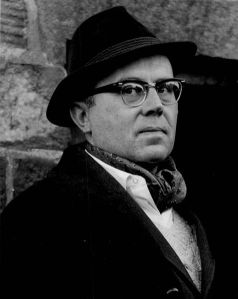
Timothy Goeglein marks Russell Kirk’s 1953 “minor-classic,” one of the founding texts of post-WWII American conservatism:
With precision and finesse, Kirk illustrates that, beginning with the British parliamentarian Edmund Burke in the eighteenth century, there is an identifiable, unique, and manifestly conservative tradition in the arts, letters, morals, manners, and politics that is, if not ideologically consistent, singular in its own excellence of shared first principles. Kirk’s conception of tradition is quite distinct from the Whig view of history as a natural, inevitable progression toward centralization and consolidation in a variety of spheres, including government. According to Kirk, this conservative tradition has its own intellectual and imaginative architecture, born of ardor and brilliant writing and thought. It springs from the natural law, integrating variety and mystery with hierarchy and order. The conservative tradition emphasizes the close associations between property and liberty, and custom and prudent change, that favor reform over rebellion or revolution.
The cast of conservative luminaries that filled Kirk’s narrative:
Kirk was particular in choosing his canon, selecting not only Burke, Coleridge, and Eliot, but also a veritable cavalcade of worthies: John Adams, Alexander Hamilton, Walter Scott, Alexis de Tocqueville, Nathaniel Hawthorne, John Henry Newman, James Fenimore Cooper, and Samuel Johnson. Kirk also included two now-obscure Harvard professors, Paul Elmer More and Irving Babbitt; the students influenced by these professors constitute a veritable Who’s Who of American political and literary leadership. Not the least of these students is Eliot himself, who won the Nobel Prize for Literature in 1948. Kirk etches finely wrought mini-biographies of all these great men, with a special emphasis on their ideas.
Bradley J. Birzer emphasizes that Kirk’s conservatism put culture before politics:
Kirk presented almost nothing about defense policy, economic policy, or educational policy. Instead, throughout the book, he created a list of conservative venerables, from Edmund Burke through George Santayana. In his definition of conservative, the poetic, literary, and theological superseded the political. As Kirk explained to [publisher Henry] Regnery in a personal letter in 1952, he did not think a writer or publisher should “exclude political essays.” Instead, he continued, the author and publisher should “recognize the greater importance, in literature as in life, of religion, ethics, and beauty.”
After the first reviews began to appear, Kirk grew frustrated with the political analysis and emphasis on The Conservative Mind. Not even the followers of Irving Babbitt had laid “stress enough upon the ethical aspect of” The Conservative Mind, he worried. “Politics, I never tire of saying, is the diversion of the quarter-educated, and I do try to transcend pure politics in my book.” … Kirk’s attempt to put politics back in its proper sphere was, to say the least, admirable, but even he could not convince the innumerable advocates and reviewers of his work to follow him down a non-political path. Kirk gave them poetry, history, and philosophy, but they wanted cold, utilitarian social science.
TNC rebuts Wes Alwan’s defense of Baldwin’s bigotry:
The most telling—and bizarre—portion of Alwan’s essay is the idea that “homophobic feelings are no more of a choice than homosexuality itself.” This is a really terrible thing to write, but more importantly it’s false. And I know it’s false because I was once a homophobic bigot. When I was a teenager, my anger almost certainly manifested itself in the same way as Baldwin’s. Calling someone towards whom you meant violence a “faggot” was what you did. The fact that it was what “you did” doesn’t make it any less bigoted. It means that bigotry was that much more pervasive. “Faggot” littered our understanding of English. Crews who were worthy of beat-downs were “faggot-ass niggas”; when our friends were behaving in weird ways they were “acting like fags”; when a boy shook a man’s hand and it was weak, he was told to not “shake hands like a faggot.”
I have often thought back on those days. How many gay men were actually around, silently watching all of this, fearfully keeping their peace? I never bullied anyone for being gay. But that isn’t because I wasn’t bigoted, it’s because I was an active agent in a world that made it dangerous to be yourself. The couple of kids who tried, who were bravely game, hung out with girls and were the subject of snickers. Those snickers were mine, too. And who knows what else they were subject to that I simply never witnessed?
The only thing that changed in my life was that, as an adult, I was forced to confront gay men on an equal plane. Sometimes it wasn’t even equal. One of my most influential editors was gay. I was 21. He was a great editor. What values did I hold that would allow me to see him as weak? What right had I to be disgusted by anyone? I was kid who’d seen West Baltimore and little else. What did I know about anything?
Alwan responds to TNC and me (my response after the jump):
The problem with these responses is that they redefine “bigot” away from its well-established common usage.
In fact, the primary function of a word like “bigot” is to very precisely exclude more conflicted, doubtful states of mind, as in: a bigot is “a person who is obstinately or intolerantly devoted to his or her own opinions and prejudices; especially: one who regards or treats the members of a group (as a racial or ethnic group) with hatred and intolerance” (Merriam-Webster). The obstinate devotion to certain avowed, intolerant beliefs is critical to the way that “bigot” traditionally has been used. The word has its origins in the general notion of close-mindedness: the idea is that a bigot is someone who is un-persuadable, who cannot be argued out of their beliefs. But accusing someone of being close-minded and un-persuadable requires that they adamantly hold the beliefs in question in the first place: it cannot be the case that they’re conflicted or akratic – that for example they sincerely favor gay rights as a matter of principle yet betray this principle during bouts of homophobic rage. Having unsavory impulses and poor impulse control is simply not the same thing as being closed minded and systematically intolerant. To extend the word “bigot” to someone like Baldwin is just to pervert it in order for the sake of exploiting its toxicity to his reputation.
Perhaps the best synthesis of all of our reactions to a consistent pattern of bigoted statements directed at actual individuals, often with a veiled or implicit threat of violence, is that Baldwin was being a bigot at the time of those incidents, which is not the same thing as saying he is a bigot through and through as some sort of cosmic, ontological reality. The problem I have with this notion is that it doesn’t make sense of a repeated pattern of homophobic slurs directed at actual people, along with a veiled or explicit threat of violence. It also doesn’t make sense of Baldwin’s reflexive lies about his slurs, as in the ridiculous claims that he had no idea that the word “queen” or “cocksucking” had anything to do with homosexuality, or the idea that he said “fathead” instead of “fag.” Why would someone not a bigot not simply confess he lost his temper in ways that made him sound bigoted and he now regrets it? The pattern of homophobic slurs, the refusal to own them, the righteous fury and deception about his own record: all these are not what you’d expect from a man who, like TNC, has learned about his own bigotry and ended it.
Look, as I said before: it’s almost never a good idea to use the word bigot if you are trying to persuade anyone. That’s why I have long been very sparing in the use of the term. And secondly, we’re all sinners, me more than most. But excusing obviously bigotry by euphemizing it or dismissing it because of progressive public positions is not something I’m comfortable with as a public writer. But I do believe in forgiveness and our common brokenness. And in that, my heart and open hand goes out to Baldwin, and to anyone with such a past.
Ben Crair demonstrates how the use of the period has evolved in the age of texting:
Say you find yourself limping to the finish of a wearing workday. You text your girlfriend: “I know we made a reservation for your bday tonight but wouldn’t it be more romantic if we ate in instead?” If she replies,
we could do that
Then you can ring up Papa John’s and order something special. But if she replies,
we could do that.
Then you should probably drink a cup of coffee: You’re either going out or you’re eating Papa John’s alone.
This is an unlikely heel turn in linguistics. In most written language, the period is a neutral way to mark a pause or complete a thought; but digital communications are turning it into something more aggressive. “Not long ago, my 17-year-old son noted that many of my texts to him seemed excessively assertive or even harsh, because I routinely used a period at the end,” Mark Liberman, a professor of linguistics at the University of Pennsylvania, told me by email. … “In the world of texting and IMing … the default is to end just by stopping, with no punctuation mark at all,” Liberman wrote me. “In that situation, choosing to add a period also adds meaning because the reader(s) need to figure out why you did it. And what they infer, plausibly enough, is something like ‘This is final, this is the end of the discussion or at least the end of what I have to contribute to it.’”
Jess Zimmerman reviews her own messages and arrives at a different conclusion:
Crair is totally right that “sorry about last night” is qualitatively different from “Sorry about last night.” and that “no” is definitely worlds away from “No.” A quick scan of my iMessage buffer, though, turned up punctuated texts including “A fat corgi. Super best.” and “OMG burrito.” Surely these are things nobody can be mad about; the period here is not expressing displeasure. … One [messager] is earnest and puts a lot of thought into everything he says (he feels strongly about a burrito, I guess); one is playful but argumentative (he just dares you to disagree that a fat corgi is best). The fact that they punctuate lends weight to the things they say, even if it’s on the subject of food and pups—or at least, it lends the appearance or tone of weight. … The period is the equivalent of banging your fist on the table for emphasis: A fat corgi is the best … PERIOD.
Eschewing the period, then, is avoiding emphasis, dodging declarativeness. It’s declining to speak with a tone of authority. It is, in short, the text equivalent of uptalk or vocal fry, the speech patterns that young people (especially young women) use to introduce a sense of accommodating uncertainty into their statements.
Meanwhile, Matthew J.X. Malady suggests a way that punctuation could reduce typographic uncertainty in English: inverted exclamation points, like the ones used at the beginning of sentences in Spanish:
When you’re reading a sentence the writer intended as an exclamation, by the time the exclamation point comes in, you’ve already read all the information that was supposed to have received emphasis! When your eyes reach the punctuation, you already know your wife got the big promotion, or the Pittsburgh Pirates finally made the playoffs, and you’ve missed the chance to read the relevant sentence from start to finish for the first time with the appropriate tone. … The punctuation marks in these instances function like pseudo-footnotes, coming in after the fact to tell you: By the way, you should’ve gotten excited about that last thing you just read…
Happy AIDS Day! To mark the, er, occasion, Hugh Ryan argues that statistics about high risk groups can “conceal as much as they seem to reveal.” He wants a more granular approach:
What if we focused more on marginalization (and its real-world effects) and less on identities? What if we understood AIDS not as a disease affecting certain types of people, but rather, as a disease that affects those living at the intersection of a constellation of conditions, such as poverty, lack of access to education, inadequate health care, stigmatized sexual practices, drug and alcohol abuse (legal or illegal), and political disenfranchisement? This would not only reduce the stigmatization of identity groups with high rates of HIV infection, it would also allow us to tailor our health remedies to those who really are most at-risk. For example, in a further breakdown of that statistic regarding rates of infection among MSMs, the CDC notes that the numbers of new infections among white and black MSMs were almost identical—despite the fact that non-Latino whites represent 63 percent of the U.S. population and blacks only 12 percent. Additionally, the greatest number of infections was seen in the youngest age group. Again and again, it is those who sit at the intersection of marginalized identities—those with the least social capital and political agency—who are most at risk. We must discard generic categorical bromides in favor of health remedies targeted to their specific needs.
After reflecting on the plague years, Michael Specter makes related points:
[O]f the more than a million Americans who are infected with HIV (there are fifty thousand new cases a year), many have no decent health care, and nearly a third are not even aware they are infected. Racism, homophobia, and poverty continue to drive much of the epidemic. Minorities have the highest infection levels and are least likely to have access to satisfactory medical attention or drug treatments. Obamacare will help, but how fast or how well, nobody yet knows. This should be repulsive to us all; those people need education immediately, but there is little public funding available to teach young gay African-American men how to have sex with each other safely. That’s the society we seem to have become.
(Photo: Indian volunteers and members of the West Bengal Voluntary Health Association (WBVHA) light candles in the shape of a red ribbon during the closing ceremony of an AIDS awareness campaign on the occasion of World AIDS Day in Siliguri on December 2, 2013. World AIDS Day is celebrated every year on December 1 to raise awareness about HIV/AIDS and to demonstrate international solidarity in the face of the pandemic. By Diptendu Dutta/AFP/Getty Images.)
Instead of having to get in your car and go to the store, or ordering something online and waiting a couple days or more for an item to be delivered, people will be able to receive many purchases almost immediately. That isn’t just a useful convenience for the books, batteries, cables, and gadgets that Amazon is known for selling. This kind of system could be used to quickly deliver things like medicine, hot or cold food, or even toilet paper to the elderly or disabled who can’t easily travel. There is potentially a huge social good in home delivery by commercial drone.
Let’s say 30-minute drone delivery to your home were legal, well-run, and, for purposes of argument, free or done at very low cost. You would buy smaller size packages and keep smaller libraries at home and in your office. Bookshelf space would be freed up, you would cook more with freshly ground spices, the physical world would stand a better chance of competing with the rapid-delivery virtual world, and Amazon Kindles would decline in value.
First, just how many orders are delivered within 30 minutes drone flight of a fulfillment center? I live in a top 20 metropolitan center, and my Amazon orders almost all come from somewhere else via UPS. Drones avoid traffic but don’t travel all that much faster than cars do, so a 30-minute radius is not going to be far from a warehouse. Operating a drone air force for such a small slice of the market doesn’t sound like a brilliant financial move, not even for a man who just bought the Washington Post. (Maybe drone delivery of the morning edition makes some sense, though.)
And that’s just the customer end. If this takes place on any scale, the FAA would have fits over the air traffic.
And the drone service can’t launch until FAA regulations are rewritten. Noreen Malone hopes it never gets off the ground:
It’s possible, I suppose, that getting airspace regulated for more and more drones will be a thing we’ll want, or maybe the monitoring required will result in technological leaps and important digital investments by the FAA. But the drones look loud and annoying to me. And what they definitely don’t do is place pressure on the government from a big American company to improve the country’s underlying transportation structure, because the drones say that Amazon is willing to go around that problem.
On a business level, I think the interesting thing here is not so much the opportunity for Amazon as the threat. Suppose some robotics firm somewhere develops quadrotor drones that can reliably execute parcel delivery missions over the relevant range for a metropolitan area, and the product becomes broadly commercially available. Amazon would be facing a pretty major disaster. Suddenly every Walmart and Target and Macy’s in America would be equipped with a small fleet of drones, and all the hard work Amazon’s done over the past 15 years to be the leader in online ordering and fulfillment would be for naught.
The first issue is whether this means Amazon will have serious competition. That seems unlikely. The drone mechanism only gets you to the last mile. The goods still have to get to the distribution centre. That is something Amazon has a lock on. Then again, other firms such as Walmart have distribution systems too. So it seems to me that you would need to leverage that. This could, of course, make every local retailer into a drone delivery point. My point here is that Amazon will have no more competition than it already has for what it is good at — getting goods close to consumers and relying on generic delivery from that point. If drones become part of that system, Amazon’s competitive advantage doesn’t change.
The aerial drone is actually the perfect vehicle—not for delivering packages, but for evoking Amazon’s indomitable spirit of innovation. Many customers this holiday season are considering the character of the companies where they spend their hard-earned dollars. Amazon would rather customers consider the new products and inventions coming down the pipeline and not the ramifications of its ever-accelerating, increasingly disruptive business model.
Patriotism is a funny thing, and mine is somewhat complicated. On the one hand, I’m a classic American immigrant, in as much as I tend to idealize this country more than many who were born here, still get enthralled by the idea of going to Dallas or Miami or even Detroit (they’re just so American!), and get very defensive and angry in the presence of dumb-ass European anti-Americanism. But I cannot find it in me not to keep loving the place I was born and grew up in. I remain intensely loyal to England, and the longer I live, the more its quiet, sturdy virtues (and vices) appeal. I was never that comfortable in it – I’m much more characterologically American – but I now find it a crucible of accumulated human wisdom that looms larger than ever in my imperfect understanding of the world. Its stoicism, humor, empiricism, and pragmatism all seem more valuable to me now than when I was an ambitious youngster, chafing against the restraints they all imposed.
But when I go back, it’s the little things that really warm your soul. Of course, my New York experience may have made me more susceptible to London’s charms, and the astonishing idea that a cab might voluntarily stop to let you cross a street is still reverberating around my head. But then you realize this small set of manners is a cumulative collective achievement. Beneath the packed busy streets, there’s a quiet, low-level order that can become so familiar you lose sight of it. On the tube, for example, despite being crammed in like a container of skinny McDonald’s fries, people actually wait for passengers to get off the train before getting on (with some helpful corralling from conductors). On the escalators, people reliably stand on the right, while the left lane is for striders. Parks are ubiquitous, and convey a constant sense of the English countryside in the densest of urban neighborhoods. Buildings, from domestic architecture (I was constantly struck by simple Georgian beauty or Edwardian elegance) to commercial buildings (some of the new structures are breathtakingly good), are not obviously disposable or purely utilitarian. The exceptions are those constructed when post-war austerity met architectural isms – but mercifully those are slowly being demolished. The resulting affect is a constant struggle for a livable city, as well as a workable one. Maybe that is what has made London perhaps the premier global city. The whole world can find a home here and increasingly does, from the newest Polish immigrant and Brazilian dreamer to the Russian oligarch and the American banker.
Perhaps London has honed these habits so relentlessly because it has no serious British competitor. London is it. So people have made the best of it – over twenty centuries of communal living. The level of politeness you see had to be learned through the centuries, as the least disagreeable way of getting along in such close crammed quarters, and passed along to successive generations. It simply makes life easier en masse, even if it can be inconvenient in any one case for the individual. It reminds me of the wonderful and probably apocryphal conversation between a gardener in an Oxford College and an American tourist. The American asks: “Tell me how you get the lawn so amazingly smooth and perfect?” The gardener replies: “Well, you find the best sod, fertilize carefully, weed constantly, and mow religiously. Do that for about three hundred years and you’ll get the same result.” Yes, my dear late Lady Thatcher, there really is something called society. And England played a huge part in creating it.
And then the specifics that never get old: the reliable, crisp proficiency of the theater (now in a boom); the candy (my new love is something called the Twirl, which is essentially a Flake covered in chocolate); the radio (a constant unifying force of middle Britain); the tabloids, recently atwitter with a great story that united the “naughty vicar” staple, the “crooked banker” reliable, and “the decadent gay” classic. Take it away, the Daily Mail! And all propelled by the great power of a simple English pun. Yes, he was the “Crystal Methodist.” Which hack could resist that story … for days and weeks on end?
Other English imperishables:
Hyde Park at dusk at 3.45 pm. A country walk with my brother and a Springer Spaniel. A reunion with old grammar school friends. A fancy awards dinner with the British political establishment. A series of cuppas with my family. A Doctor Who episode that both charts a totally new future for the Doctor and yet is dripping with nostalgia for the past. Two cabbies: one a classic Private Eye cockney who proceeded to tell me how over-run England is by foreigners, especially “gippos” from the new EU states of Romania and Bulgaria; the other a Muslim immigrant in my home town of East Grinstead who peppered me with questions about the mechanics of gay sex. And now with a Starbucks on every corner, and a gluten-free Pizza Express in the Tudor beamed high street.
In whatever shape England emerges from the war it will be deeply tinged with the characteristics that I have spoken of earlier. The intellectuals who hope to see it Russianized or Germanized will be disappointed. The gentleness, the hypocrisy, the thoughtlessness, the reverence for law and the hatred of uniforms will remain, along with the suet puddings and the misty skies. It needs some very great disaster, such as prolonged subjugation by a foreign enemy, to destroy a national culture. The Stock Exchange will be pulled down, the horse plough will give way to the tractor, the country houses will be turned into children’s holiday camps, the Eton and Harrow match will be forgotten, but England will still be England, an everlasting animal stretching into the future and the past, and, like all living things, having the power to change out of recognition and yet remain the same.
It has and it will. And its role in shaping the future of humankind is far from over.
A Congressional Quarterly count of the current Congress finds that just 86 of the 435 members of the House are veterans, as are only 17 of 100 senators, which puts the overall rate at 19 percent. This is the lowest percentage of veterans in Congress since World War II, down from a high of 77 percent in 1977-78, according to the American Legion. For the past 21 years, the presidency has been occupied by men who didn’t serve or, in the case of George W. Bush, served in a capacity designed to avoid combat. It’s no coincidence that this same period has seen the gradual collapse of our ability to govern ourselves: a loss of control over the nation’s debt, legislative stalemate and a disabling partisanship. It’s no coincidence, either, that Americans’ approval of Congress has dropped to just 9 percent, the lowest since Gallup began asking the question 39 years ago.
Because so few serving in politics have worn their country’s uniform, they have collectively forgotten how to put country before party and self-interest. They have forgotten a “cause greater than self,” and they have lost the knowledge of how to make compromises for the good of the country. Without a history of sacrifice and service, they’ve turned politics into war.
Off the top of my head, it’s not even obvious that current Members of Congress who are veterans are more willing to “make compromises for the good of the country” than their non-veteran peers. Certainly, recently-departed Representative Allen West, a former Army lieutenant colonel allowed to retire after escaping conviction for war crimes, didn’t fit that bill. Nor did Todd “Legitimate Rape” Akin, who served in the Army Reserve. Looking at a slightly dated list of veterans in the House and Senate, one sees plenty of firebrands. Spencer Bachus. John Conyers. John Dingell. Louie Gohmert. Duncan Hunter. Darrell Issa. Peter King. Charlie Rangel. Bobby Rush. Joe “You Lie!” Wilson. Jim Inhofe.
Jazz Shaw, a veteran himself, piles on Milbank’s theory by calling it “the worst argument in favor of the draft ever”:
Personally, I find military service to be a significant plus on the resume of any candidate for elected office, but it won’t be my only consideration. The willingness to actually serve your nation, even at the cost of placing your own life in peril, speaks volumes about the person’s character when they come along later asking to serve in a different, less physically dangerous capacity. But I’m equally positive that prior service not only doesn’t need to be a requirement, but that it shouldn’t be. We keep the leadership of the civilian and military worlds separate for a reason, and we keep a very close eye on the one place where they overlap. (That being the dual nature of the President of the United States also being the Commander in Chief of the armed forces.)
Instituting the draft would still only affect a tiny portion of the civilian population under the most optimistic of Milbank’s envisioned circumstances. The odds that any significantly larger portion of the electoral candidate pool would wind up being veterans are too low to calculate.
Depending on how Milbank’s expanded military is used, bringing back the draft could produce large numbers of radicalized citizens angry that they were forced to fight in the latest foolish and unnecessary war. Universal conscription guarantees nothing except the diminution of the freedom of Americans. Bringing it back would yield nothing but greater disaffection from and hostility to the government than already exists.

 tradition in the arts, letters, morals, manners, and politics that is, if not ideologically consistent, singular in its own excellence of shared first principles. Kirk’s conception of tradition is quite distinct from the Whig view of history as a natural, inevitable progression toward centralization and consolidation in a variety of spheres, including government. According to Kirk, this conservative tradition has its own intellectual and imaginative architecture, born of ardor and brilliant writing and thought. It springs from the natural law, integrating variety and mystery with hierarchy and order. The conservative tradition emphasizes the close associations between property and liberty, and custom and prudent change, that favor reform over rebellion or revolution.
 The Dish
